Plastic fibers and filaments represent one of the most rapidly growing segments of the textile and industrial materials market, with applications spanning from apparel and home textiles to automotive components, geotextiles, and industrial filtration. Masterbatch for plastic fiber and filament production serves as a critical technology enabling manufacturers to achieve vibrant, consistent colors while maintaining the exceptional processing characteristics required for fiber spinning and filament production. As textile innovation continues to advance and consumer demands for performance materials grow, understanding the specific requirements, formulation strategies, and production considerations for fiber and filament masterbatch becomes essential for manufacturers serving this dynamic market segment. This comprehensive guide explores the technical requirements, spinnability considerations, color fastness requirements, production processes, and diverse applications of masterbatch specifically designed for plastic fiber and filament manufacturing.
Understanding Plastic Fiber and Filament Applications
Plastic fibers and filaments encompass a diverse range of products serving multiple industries and applications, each imposing distinct performance requirements on materials and masterbatch formulations. Understanding these applications provides essential context for masterbatch development and optimization.
Apparel and Fashion Textiles
Apparel and fashion applications represent the largest market segment for plastic fibers, encompassing everything from everyday clothing to high-performance athletic wear. Polyester and polyamide (nylon) fibers dominate this market due to their excellent mechanical properties, wrinkle resistance, and ease of care. Masterbatch for apparel applications must provide vibrant, consistent colors that withstand repeated washing and exposure to sunlight without fading. Color fastness to washing, light, and rubbing represents critical performance requirements as garments undergo frequent cleaning and wear. The masterbatch must not negatively affect fiber spinnability or the mechanical properties essential for comfortable, durable garments. Soft-touch masterbatch formulations enhance hand feel and comfort in close-to-skin applications.
Home Textiles and Upholstery
Home textiles including carpets, curtains, upholstery fabrics, bed linens, and towels require fibers with exceptional durability and color retention. Polypropylene fibers provide excellent stain resistance and cost effectiveness for carpet applications, while polyester offers superior durability for upholstery fabrics. Masterbatch for home textiles must deliver excellent light fastness as these products often experience prolonged exposure to sunlight through windows. Wash fastness requirements vary significantly between applications, with carpet requiring minimal wash resistance but upholstery needing substantial wash performance for cleaning. Abrasion resistance ensures that color remains consistent even after extended wear and use in high-traffic areas. Stain resistance properties must be maintained or enhanced by masterbatch formulations, particularly for carpet and upholstery applications.
Industrial and Technical Textiles
Industrial and technical textiles serve demanding applications including automotive components, filtration media, geotextiles, protective clothing, and industrial belts. These applications often require specialized fibers with enhanced properties such as flame retardancy, chemical resistance, or UV stability. Automotive applications demand fibers with excellent light fastness to withstand interior sun exposure and heat resistance for under-hood components. Masterbatch for industrial applications must not compromise the technical properties of fibers, including tensile strength, abrasion resistance, and chemical resistance. Color identification through masterbatch provides critical functionality in applications where different fiber types must be visually distinguished during manufacturing and assembly processes.
Nonwoven Fabrics
Nonwoven fabrics represent a rapidly growing application area for plastic fibers, used in products including diapers, sanitary products, medical gowns, filtration media, and geotextiles. Polypropylene dominates the nonwoven market due to its excellent processing characteristics and cost effectiveness. Masterbatch for nonwovens must provide excellent dispersion quality as poor dispersion can cause defects in the fine filaments used in spunbond and meltblown processes. The formulation must be compatible with high-speed production equipment processing thousands of meters of fabric per hour. Medical grade nonwovens require masterbatch meeting biocompatibility requirements for skin contact applications. For filtration applications, masterbatch must not introduce contaminants that could affect filtration efficiency or introduce unwanted particles into filtered materials.
Carpet and Flooring Applications
Carpet fibers represent one of the largest volume applications for plastic fibers, with the global carpet industry consuming millions of tons of fiber annually. Nylon fibers provide exceptional durability and resilience for high-end carpet applications, while polypropylene offers cost advantages for mid-market and commercial carpets. Masterbatch for carpet applications must deliver exceptional light fastness as carpets experience prolonged exposure to sunlight in many installations. Stain resistance represents a critical requirement, with masterbatch formulations either incorporating stain resistant additives or ensuring compatibility with stain resistant treatments. Abrasion resistance ensures that color remains consistent even after years of foot traffic. Color consistency across large production batches is essential as large carpet installations require thousands of square meters of consistent coloration.
Spinnability Requirements and Considerations
Spinnability represents the most critical performance requirement for masterbatch used in fiber and filament production. Understanding spinnability principles and formulation requirements enables creation of masterbatch that maintains excellent fiber formation characteristics while delivering desired color and functionality.
Fiber Spinning Processes
Multiple fiber spinning processes are employed depending on fiber type and application requirements, each imposing specific demands on masterbatch formulation. Melt spinning represents the most common process, where polymer is melted, extruded through spinnerets, and cooled to form solid fibers. This process dominates polyester and polyamide fiber production and places particular emphasis on masterbatch thermal stability and melt flow characteristics. Solution spinning, used for certain specialty fibers, involves dissolving polymer in solvent before spinning, requiring masterbatch that does not affect polymer solubility. Gel spinning, employed for ultra-high molecular weight polyethylene fibers, requires masterbatch compatible with unique polymer solution characteristics. Each spinning process demands masterbatch formulations optimized for the specific processing conditions and polymer characteristics.
Melt Flow Rheology
Melt flow rheology represents a critical factor affecting spinnability and fiber quality. Masterbatch must be formulated to maintain appropriate melt flow index compatible with the base polymer and spinning process. Melt flow index typically ranges from 15-40 g/10min (230°C) for polyester fiber applications, depending on fiber denier and spinning speed. Viscosity matching between masterbatch and base polymer prevents gel formation and spinneret blockages that can cause production defects. Shear stability ensures that masterbatch maintains consistent properties under the high shear conditions encountered during fiber spinning. Thermal stability prevents degradation during the extended residence times in spinning equipment at elevated temperatures exceeding 280°C for many fiber applications.
Dispersibility Requirements
Exceptional dispersibility represents an essential requirement for fiber masterbatch to prevent defects and ensure consistent coloration. Pigment particle size must be carefully controlled, with optimal particle size typically below 1 micrometer for fiber applications to prevent spinneret clogging. Pigment dispersion must be uniform throughout the masterbatch to prevent color streaks or variations along fiber length. Poor dispersion causes gel formation, resulting in weak spots and defects that compromise fiber strength and appearance. Masterbatch must withstand the extreme shear forces encountered during spinning without pigment reagglomeration or migration that could cause color inconsistency. Proper dispersing agents and compatibilizers ensure stable pigment distribution throughout the spinning process.
Filament Formation Quality
Masterbatch must support high-quality filament formation throughout the spinning process. Breakage rates must remain low to maintain production efficiency and minimize waste. Tensile strength retention ensures that masterbatch does not weaken fibers during spinning or subsequent processing. Uniform filament diameter control requires masterbatch that does not cause viscosity fluctuations that affect filament formation. Surface smoothness depends on masterbatch compatibility, as incompatible formulations can cause surface defects affecting fiber appearance and hand feel. Post-spinning drawing and texturing processes require masterbatch that maintains properties through these additional processing steps without color migration or degradation.
Color Fastness Requirements
Color fastness represents a critical quality parameter for textile applications, determining how well color withstands various environmental factors and processing conditions during product use. Understanding color fastness requirements enables formulation of masterbatch that delivers exceptional long-term color performance.
Wash Fastness Requirements
Wash fastness determines how well color withstands repeated laundering throughout the product lifecycle. Home textiles require wash fastness ratings of 4-5 on the 1-5 scale according to ISO 105-C06, representing good to excellent resistance to fading during washing. Apparel applications require wash fastness of 3-4 depending on garment type and expected laundering frequency. The formulation must prevent dye migration during washing, which can cause color transfer to other items in the wash. Masterbatch must also resist chemical exposure from detergents, bleaches, and brighteners commonly used in home laundering. Testing typically involves 20-50 wash cycles using standard detergents at various temperatures to simulate real-world use conditions.
Light Fastness Requirements
Light fastness measures color resistance to fading from exposure to sunlight and artificial light sources. Indoor applications such as curtains and upholstery require light fastness ratings of 5-6 on the Blue Wool scale (1-8 scale), while outdoor applications demand ratings of 7-8 for long-term color retention. Carpet applications exposed to direct sunlight through windows require minimum light fastness of 6-7 to maintain appearance over extended periods. The formulation must include appropriate UV stabilizers, particularly HALS (Hindered Amine Light Stabilizers), to provide protection against UV-induced color fading. Light fastness testing typically involves 200-1000 hours of xenon arc exposure depending on application requirements, with higher ratings indicating better light resistance.
Rubbing Fastness
Rubbing fastness evaluates color resistance to transfer through friction during use and handling. Dry rubbing fastness requirements typically target ratings of 4-5 on the 1-5 scale for apparel and home textiles. Wet rubbing fastness requirements are generally more demanding, targeting ratings of 3-4 as moisture can increase color migration. Upholstery applications require particularly good rubbing fastness as fabrics experience substantial contact during use. Masterbatch must ensure that colorants are properly bound within the polymer matrix to prevent surface transfer. Testing involves rubbing samples under controlled conditions with white cotton cloths and evaluating color transfer according to ISO 105-X12 standards.
Perspiration Fastness
Perspiration fastness measures color resistance to acidic and alkaline perspiration simulating human sweat conditions. Apparel applications, particularly activewear and intimate apparel, require perspiration fastness ratings of 4-5 to prevent color transfer during physical activity. The formulation must resist color changes from both acidic and alkaline perspiration simulating different individuals and conditions. Testing according to ISO 105-E04 exposes samples to artificial perspiration solutions at 37°C for 24-48 hours to simulate real-world conditions. Masterbatch must incorporate colorants with appropriate chemical resistance to maintain performance through perspiration exposure without causing skin irritation or staining.
Material Selection and Formulation Strategies
Successful fiber and filament masterbatch formulation requires careful selection of carrier resins, pigments, dispersants, and functional additives optimized for spinnability and color performance. The formulation process balances processing requirements with end-use performance characteristics.
Carrier Resin Selection
Carrier resin selection represents a critical foundation for fiber masterbatch formulation. For polyester fiber applications, polyester carriers with matching molecular weight distribution ensure compatibility and optimal dispersion. Polyamide (nylon) carriers for nylon fiber applications must provide excellent compatibility while maintaining spinnability characteristics. Polypropylene carriers for PP fiber applications must match the specific polypropylene grade used in fiber production. The molecular weight of carrier resin affects pigment dispersion and processing characteristics, with appropriate molecular weight ensuring good flow while maintaining pigment stability. Melt flow index must be carefully matched to base polymer requirements to prevent viscosity mismatches that affect spinnability.
Pigment Selection
Pigment selection for fiber applications requires careful consideration of multiple factors affecting both processing and performance. Particle size distribution represents a critical parameter, with optimal particle size typically below 1 micrometer for fine fiber applications. Pigment purity levels affect color consistency and processing performance, with higher purity pigments providing better results. Heat stability ensures pigments maintain color integrity through high-temperature spinning conditions exceeding 280°C for many applications. Chemical resistance ensures pigments withstand processing additives and downstream treatments without color shift. Pigment surface treatment enhances compatibility with carrier resin and improves dispersion quality throughout the spinning process.
Dispersant and Compatibilizer Systems
Effective dispersant and compatibilizer systems are essential for achieving and maintaining pigment dispersion during fiber spinning. Polymeric dispersants provide steric stabilization of pigment particles, preventing reagglomeration during processing. Surface-treated pigments with appropriate functional groups improve compatibility with carrier resin and enhance dispersion stability. Compatibilizers with molecular structures bridging pigment and polymer phases improve pigment wetting and distribution. The dispersant system must maintain effectiveness under the high shear and temperature conditions encountered during fiber spinning. Optimal dispersant concentration balances dispersion quality with cost, typically ranging from 2-10% depending on pigment type and loading.
Functional Additive Integration
Functional additives incorporated into fiber masterbatch must be carefully selected and integrated to maintain spinnability while delivering enhanced performance. UV stabilizers, particularly HALS systems, provide light fastness for applications requiring outdoor exposure. Antioxidants prevent thermal oxidation during high-temperature processing and extend fiber life. Flame retardants may be incorporated for applications requiring fire resistance, particularly in industrial and automotive applications. Antimicrobial agents provide protection against microbial growth, particularly important for applications such as medical textiles and sportswear. Each additive must be evaluated for compatibility with both carrier resin and fiber spinning process to ensure no adverse effects on spinnability or final fiber properties.
Production Considerations and Equipment Requirements
Producing high-quality fiber and filament masterbatch requires specialized equipment and processes designed to achieve optimal dispersion, consistent quality, and processing characteristics. Advanced twin screw extruder technology provides the mixing performance and control required for demanding fiber applications.
Twin Screw Extruder Technology
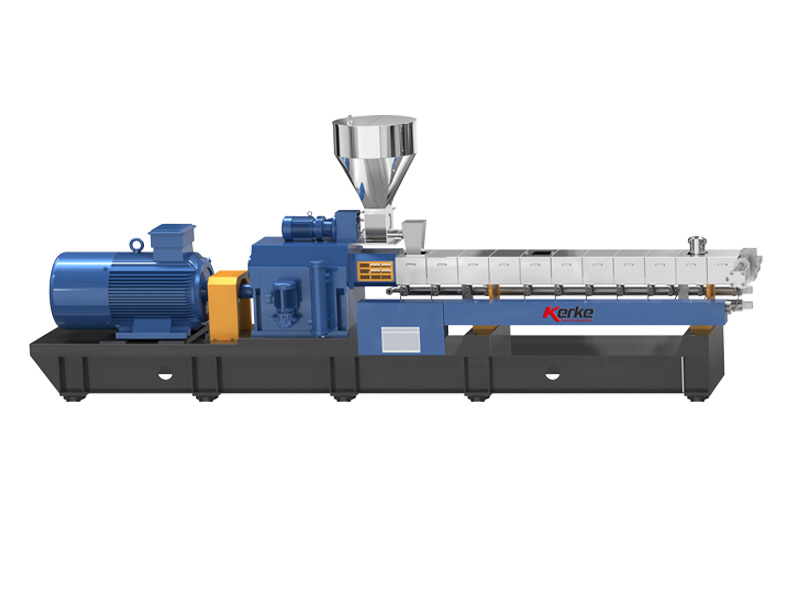
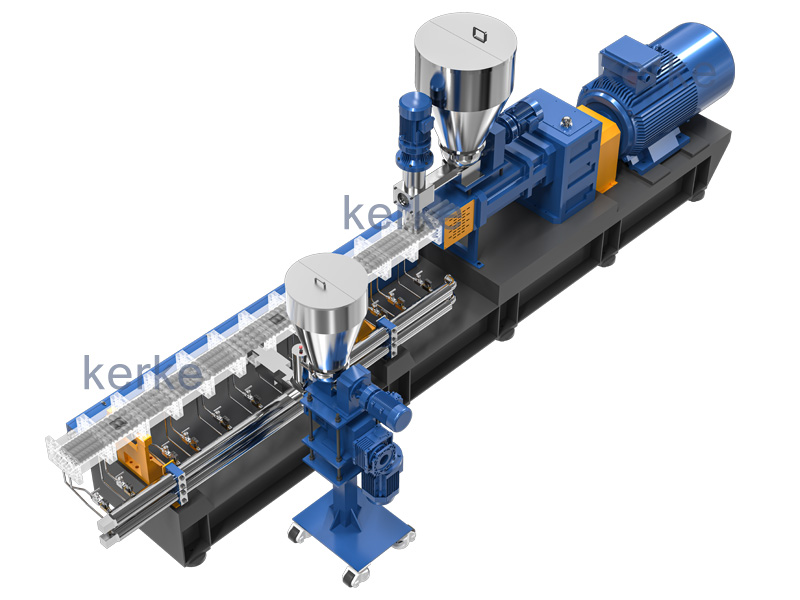
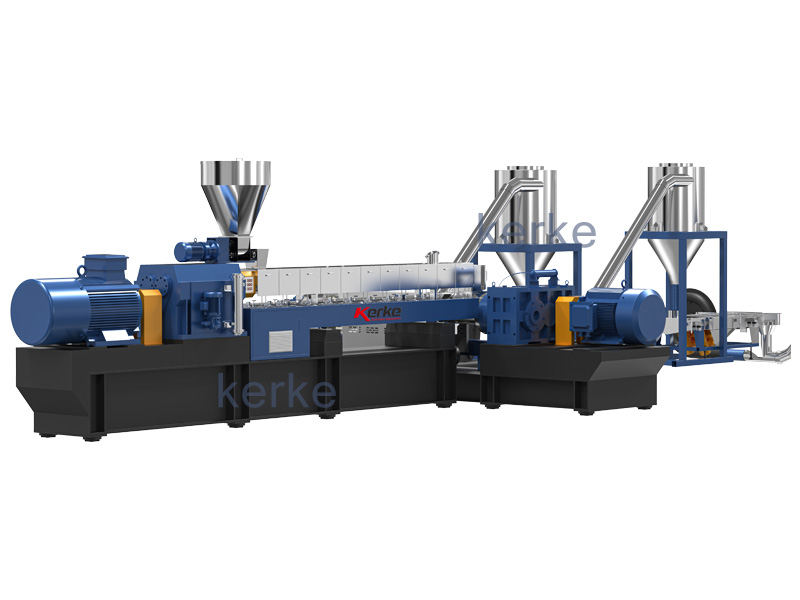
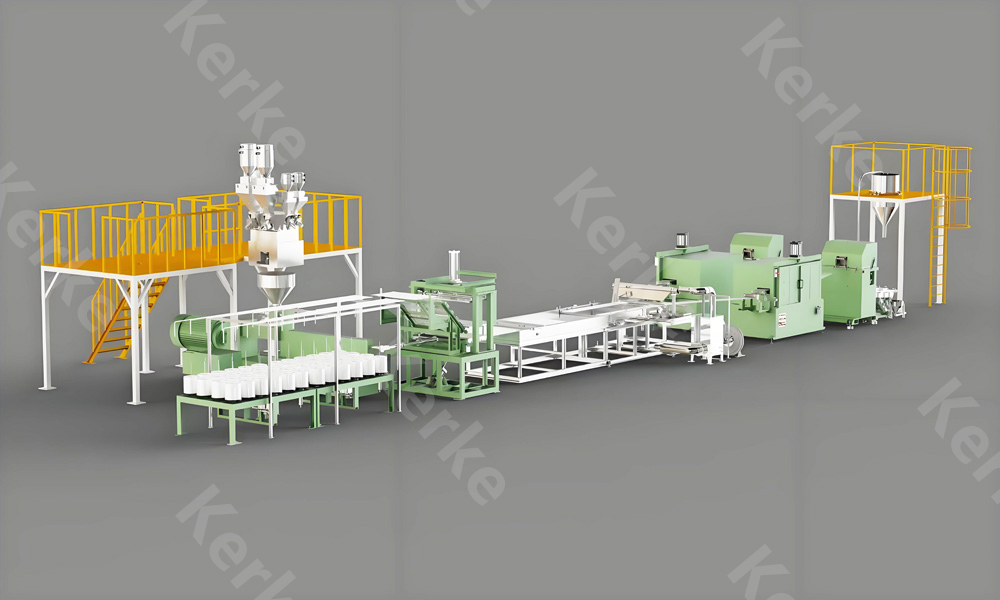
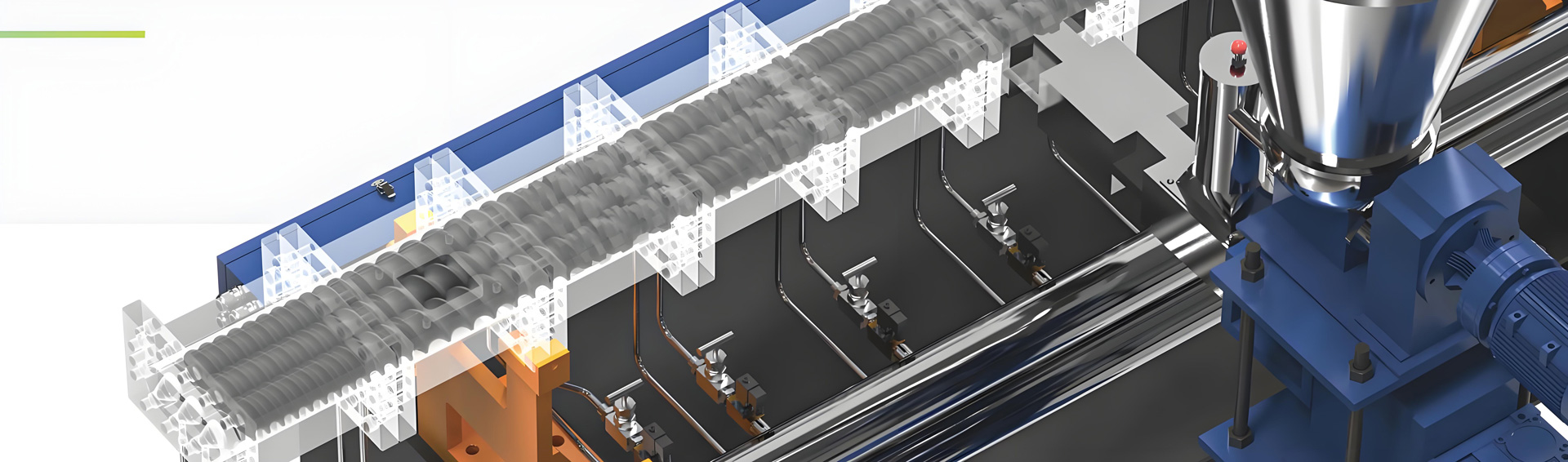
Kerke KTE series parallel co-rotating twin screw extruders provide the advanced mixing performance required for producing fiber masterbatch with exceptional spinnability. The modular screw configuration allows optimization of mixing elements for fiber formulations, with fine-tuned kneading block arrangements providing the ideal balance of distributive and dispersive mixing. High shear mixing zones ensure complete pigment dispersion and breakdown of agglomerates that could cause spinning defects. Temperature control throughout the barrel zones enables precise thermal management of heat-sensitive pigments and additives. Vacuum venting removes volatiles and moisture that could affect fiber quality and cause spinneret clogging during spinning operations. The corrosion-resistant construction prevents metal contamination that could affect fiber strength and spinnability.
Filtration and Pelletizing Systems
Fiber masterbatch requires exceptional filtration to remove any particles that could cause spinneret blockages or fiber defects. Melt filtration systems with fine mesh screens typically ranging from 50-200 microns remove agglomerates and contaminants before pelletization. Multiple filtration stages may be employed for high-quality fiber masterbatch, ensuring removal of particles at various size ranges. Pelletizing systems produce uniform pellet shapes and sizes that facilitate consistent dosing during fiber spinning operations. Strand pelletizing, water ring pelletizing, and underwater pelletizing systems each offer advantages depending on masterbatch characteristics and production requirements. Proper pelletizing ensures consistent metering and dispersion during fiber production.
Quality Control Systems
Comprehensive quality control systems ensure consistent fiber masterbatch quality meeting the demanding requirements of fiber spinning operations. Particle size analysis using laser diffraction and microscopy verifies pigment dispersion quality and identifies agglomerates that could cause spinning defects. Color analysis using spectrophotometers ensures color consistency from batch to batch and adherence to specified color coordinates. Melt flow index testing confirms that masterbatch maintains appropriate flow characteristics for fiber spinning. Thermal analysis including DSC (Differential Scanning Calorimetry) evaluates thermal stability and crystallization behavior that affect fiber processing. Spinneret simulation testing on laboratory spinning equipment validates spinnability performance before commercial production.
Cost Analysis and Economic Considerations
Fiber and filament masterbatch production involves significant economic considerations affecting both manufacturing costs and total textile production economics. Understanding these cost factors enables optimization of formulations and processes for cost-effective production while maintaining performance requirements.
Raw Material Costs
Raw material costs represent a substantial component of fiber masterbatch production. Carrier resins typically range from 1.50-3.00 USD per kilogram depending on resin type, quality, and molecular weight specifications required for fiber applications. Pigment costs vary widely based on type, quality, and performance characteristics, with organic pigments ranging from 15-80 USD per kilogram and inorganic pigments typically 5-30 USD per kilogram. Dispersants and compatibilizers add 2-8 USD per kilogram depending on type and concentration required for optimal dispersion. UV stabilizers, particularly high-performance HALS systems, add 8-20 USD per kilogram. Total raw material costs for fiber masterbatch typically range from 4-25 USD per kilogram depending on formulation complexity and performance requirements.
Production Costs
Production costs for fiber masterbatch encompass equipment, energy, filtration, labor, and quality control expenses. Kerke KTE series twin screw extruders for fiber masterbatch typically cost 100,000-300,000 USD depending on capacity and configuration. Filtration systems add 20,000-80,000 USD depending on filtration requirements and automation level. Energy consumption typically ranges from 0.20-0.40 kWh per kilogram of masterbatch produced, translating to 0.03-0.06 USD per kilogram at industrial electricity rates. Labor costs add 0.08-0.18 USD per kilogram depending on automation level and production volume. Quality control testing adds 0.15-0.35 USD per kilogram for comprehensive testing including dispersion analysis, color measurement, and spinnability validation. Total production costs typically range from 0.30-0.70 USD per kilogram.
Cost-Performance Optimization
Optimizing the balance between cost and performance requires strategic formulation and supplier decisions. Using inorganic pigments where acceptable provides better cost-performance compared to organic pigments, particularly for applications where color intensity is not critical. Optimizing pigment loading through careful dispersion technology achieves target colors with minimum pigment consumption. Selecting appropriate dispersant systems maximizes dispersion efficiency while minimizing additive costs. Process optimization reduces energy consumption and increases throughput, lowering unit production costs. Supplier consolidation and strategic purchasing arrangements improve material cost consistency and reduce administrative overhead. Total fiber masterbatch costs typically range from 4.50-28 USD per kilogram depending on formulation complexity and performance requirements.
Kerke Extruder Solutions for Fiber Masterbatch
Kerke Extrusion Equipment offers advanced twin screw extruder solutions specifically designed for producing high-quality fiber and filament masterbatch. The KTE series provides the mixing performance, precision control, and reliability required for demanding fiber applications.
KTE-36D for Specialty Fiber Production
The KTE-36D twin screw extruder provides excellent capabilities for specialty fiber masterbatch production. With a screw diameter of 36mm and L/D ratio of 40, this model delivers the precise mixing required for fine fiber applications requiring excellent spinnability. The motor power of 37-55kW enables processing of various polymer systems including polyester, polyamide, and polypropylene. Production capacity ranges from 110-200kg/hour, making it suitable for specialty fiber masterbatch and development formulations. The modular screw configuration allows rapid changes for different fiber applications and polymer types. Temperature control precision enables processing of heat-sensitive pigments and additives. The price for KTE-36D configured for fiber masterbatch typically ranges from 80,000-120,000 USD.
KTE-52B for Medium-Scale Production
The KTE-52B twin screw extruder provides excellent capabilities for medium-scale fiber masterbatch production. With a screw diameter of 52mm and L/D ratio of 40, this model delivers the mixing performance required for high-quality pigment dispersion in fiber applications. The motor power of 55-75kW enables processing of various polymer systems while maintaining precise control. Production capacity ranges from 80-200kg/hour depending on formulation and processing conditions. The advanced screw configuration options enable optimization for different fiber types including polyester, nylon, and polypropylene applications. Filtration systems can be integrated directly into the extruder line for masterbatch requiring exceptional cleanliness. The price for KTE-52B configured for fiber masterbatch typically ranges from 120,000-180,000 USD.
KTE-65D for High-Volume Production
For manufacturers requiring high-volume fiber masterbatch production capacity, the KTE-65D twin screw extruder provides superior performance and production efficiency. With a screw diameter of 65mm and advanced high-torque design, this model provides exceptional mixing and dispersion capabilities for high-viscosity formulations. The motor power of 132-160kW enables processing at high throughput rates while maintaining excellent dispersion quality essential for fiber spinnability. Production capacity reaches 350-600kg/hour, making this model ideal for large-scale production facilities serving the textile industry. The investment for KTE-65D configuration typically ranges from 180,000-260,000 USD, providing excellent return on investment through high production capacity and consistent quality.
Quality Assurance and Testing Standards
Implementing comprehensive quality assurance and testing systems is essential for ensuring that fiber masterbatch meets the demanding spinnability and color performance requirements of textile applications. These systems verify performance characteristics and ensure consistent quality.
Spinnability Testing
Spinnability testing validates that masterbatch maintains excellent fiber formation characteristics during spinning operations. Laboratory spinning simulates actual production conditions using pilot-scale spinning equipment to validate spinnability performance. Breakage rate monitoring identifies any formulation issues that could cause fiber breaks during production. Filament diameter measurement confirms uniform filament formation without diameter variations that could affect fiber quality. Tensile testing of spun fibers verifies that masterbatch does not compromise fiber strength and elongation characteristics. Microscopic examination identifies any pigment agglomeration or surface defects that could affect fiber appearance or performance.
Color Fastness Testing
Comprehensive color fastness testing ensures that masterbatch delivers the color performance required for specific textile applications. Wash fastness testing according to ISO 105-C06 evaluates color resistance to repeated laundering with standard detergents at various temperatures. Light fastness testing using xenon arc weathering according to ISO 105-B02 measures resistance to fading from light exposure. Rubbing fastness testing according to ISO 105-X12 evaluates color transfer through dry and wet rubbing conditions. Perspiration fastness testing according to ISO 105-E04 measures color stability under acidic and alkaline perspiration conditions. Each test provides ratings on standardized scales enabling comparison with application requirements and industry benchmarks.
Dispersion Quality Analysis
Dispersion quality analysis verifies that pigments are properly dispersed throughout the masterbatch and will not cause spinning defects. Microscopic examination at various magnifications identifies pigment agglomerates that could cause spinneret clogging or fiber defects. Image analysis software quantifies particle size distribution and dispersion quality using standardized metrics such as particle count, size range, and distribution uniformity. Laser diffraction analysis provides quantitative particle size data to complement microscopic examination. Spectrophotometric color measurement ensures consistent color from batch to batch and compliance with specified color coordinates. Dispersion quality is typically evaluated against standards specifying maximum acceptable particle sizes and agglomerate counts.
Emerging Trends and Future Developments
The fiber and filament masterbatch industry continues to evolve in response to textile innovation, sustainability demands, and technological advances. Understanding emerging trends enables manufacturers to position products for future market success.
Sustainable and Eco-Friendly Solutions
Sustainability concerns are driving development of eco-friendly fiber masterbatch formulations. Bio-based carrier resins derived from renewable sources such as PLA or bio-polyester reduce reliance on fossil-based polymers. Recycled polymer carrier resins incorporate recycled content into masterbatch, supporting circular economy initiatives. Pigment-free or low-pigment formulations reduce environmental impact while maintaining color performance through advanced dispersion technology. Biodegradable masterbatch formulations align with growing demand for sustainable textile options. Natural pigments and colorants derived from plant sources provide alternatives to synthetic pigments for specific applications requiring natural positioning.
Functional Fiber Innovation
Functional fibers with enhanced properties are driving innovation in masterbatch formulation. Antimicrobial masterbatch incorporating silver, zinc, or copper-based compounds provides protection against microbial growth in sportswear, medical textiles, and home textiles. Moisture-wicking masterbatch enhances comfort in activewear and performance apparel by improving moisture management. Thermochromic masterbatch provides color-changing properties responsive to temperature changes, enabling innovative fashion and functional applications. Conductive masterbatch incorporating conductive polymers or carbon-based materials enables smart textile applications including heating elements and sensors. These functional additives must be carefully formulated to maintain fiber spinnability while delivering targeted functionality.
Advanced Color Technology
Color technology advances are enabling new possibilities in fiber coloration and effects. Metallic effect masterbatch creates shimmering metallic finishes in fibers for fashion and decorative applications. Fluorescent and phosphorescent masterbatch provides enhanced visibility for safety applications and innovative design effects. Pearl and iridescent effects masterbatch creates lustrous color shifts depending on viewing angle. Color-changing masterbatch responds to environmental stimuli including light, heat, or pH changes, enabling smart color effects in textiles. Advanced color matching technology enables precise reproduction of designer colors while maintaining fiber processing performance.
Conclusion and Future Outlook
Masterbatch for plastic fiber and filament production represents a critical technology enabling the creation of vibrant, high-performance textile products across diverse applications. As textile innovation continues to accelerate and consumer demands for both aesthetic appeal and functional performance grow, the importance of high-quality fiber masterbatch that delivers exceptional spinnability, color fastness, and performance characteristics continues to increase.
Kerke Extrusion Equipment provides advanced twin screw extruder solutions specifically designed for the challenges of fiber and filament masterbatch production. The KTE series offers options from laboratory-scale equipment for specialty fibers through high-volume production systems for major textile manufacturers, providing solutions across the entire production spectrum. With over 12 years of experience focused on parallel co-rotating compounding extruder technology, Kerke offers the technical expertise and equipment reliability required for successful fiber masterbatch manufacturing.
Investment in advanced twin screw extruder technology from Kerke enables manufacturers to produce fiber and filament masterbatch meeting the most demanding spinnability, color fastness, and performance requirements. The combination of superior mixing performance, precise process control, and consistent product quality ensures masterbatch that helps textile manufacturers produce fibers delivering exceptional color, durability, and performance in applications ranging from everyday apparel to demanding technical textiles.