Introduction to Thermal Management in Compounding
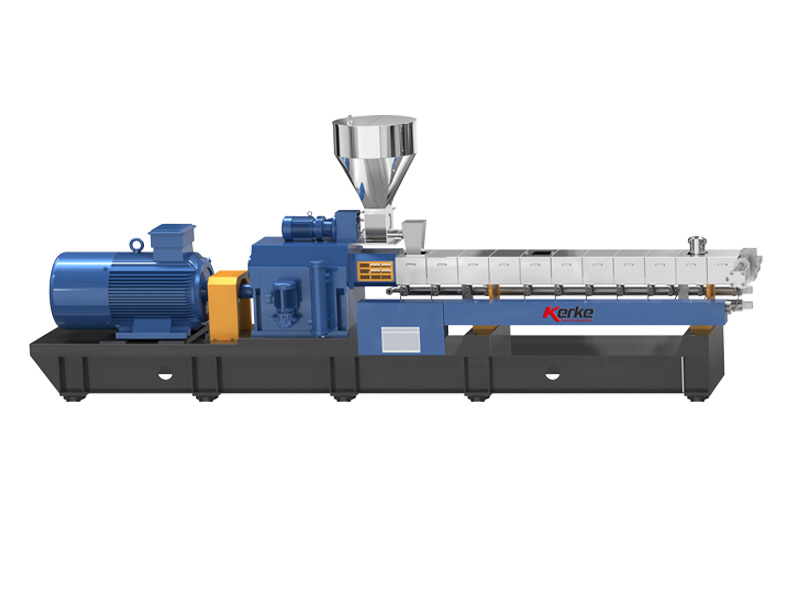
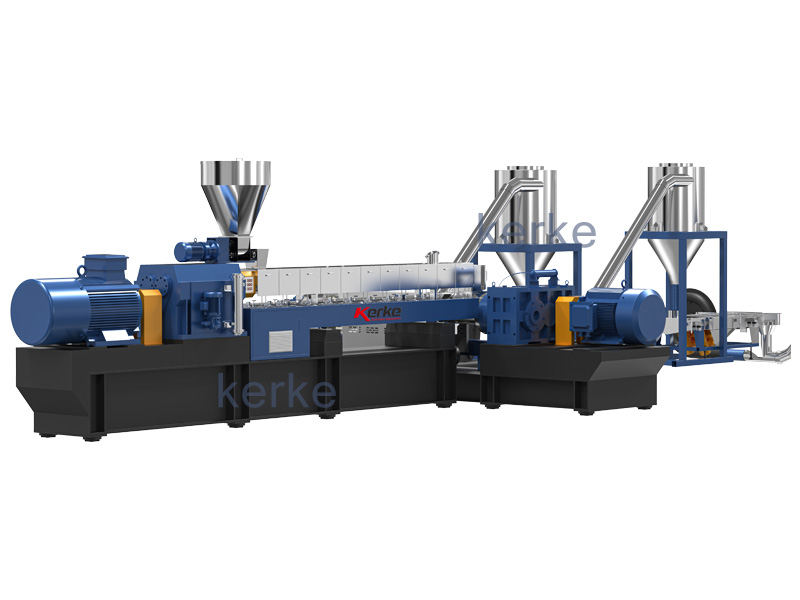
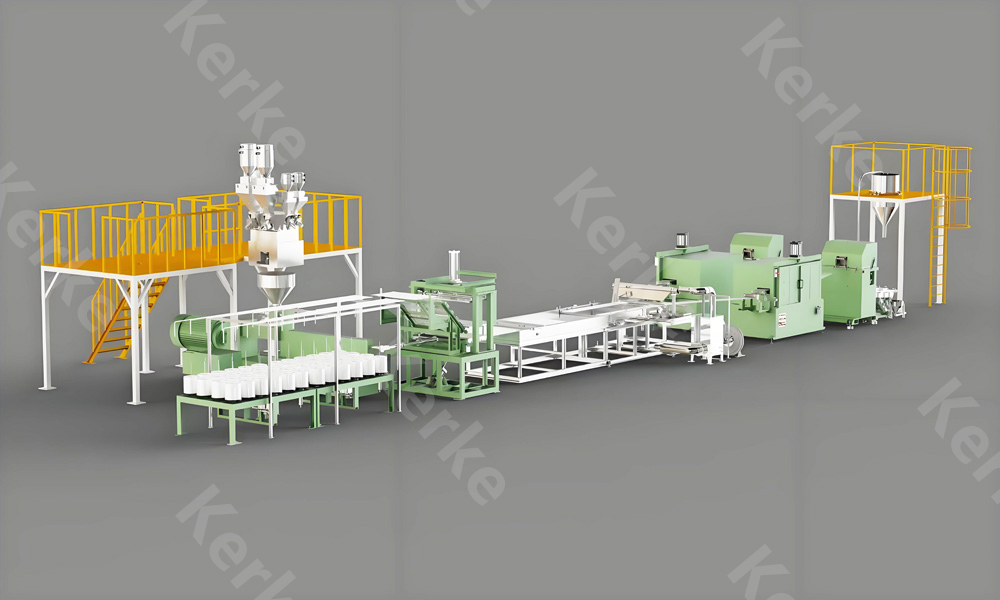
In the world of polymer compounding, temperature is not just a variable; it is a critical process parameter that dictates the quality of the final product. A compounding extruder, particularly a twin screw model, generates immense amounts of heat through mechanical shear (viscous dissipation). If this heat is not managed precisely, it can lead to polymer degradation, inconsistent mixing, and product defects. Conversely, insufficient heat can result in poor melting, high torque, and motor overload. This article delves into the mechanisms of temperature control in twin screw extruders and explains why precision thermal management is essential for high-quality compounding, highlighting the advanced systems used in Kerke Extruder machines.
The Physics of Heat Generation in Twin Screw Extruders
Understanding how heat is generated is the first step to controlling it. In a co-rotating twin screw extruder, heat comes from two sources: external barrel heaters and internal shear heating. External heaters are used primarily during start-up to bring the cold polymer up to melting temperature. Once the process is stabilized, the majority of the heat (often 70-90%) comes from internal shear. As the screws rotate, they force the polymer through tight clearances between the screw elements and the barrel wall. This mechanical work is converted into thermal energy. The amount of shear heat depends on the screw speed, the viscosity of the melt, and the configuration of the kneading blocks. Intense kneading elements generate more heat than conveying elements. Therefore, temperature control must be dynamic, adjusting to changes in screw speed and feed rate.
Consequences of Poor Temperature Control
When temperature control fails, several quality issues arise. The most common is thermal degradation. If the melt temperature exceeds the polymer’s degradation threshold, the molecular chains break, leading to discoloration (yellowing), gel formation, and a loss of mechanical properties in the final product. This is particularly critical for heat-sensitive materials like PVC or bio-polymers. Another issue is “surging” or pressure instability. If the material is not fully melted, it acts as a solid plug, causing torque spikes. Conversely, if the material is too hot, viscosity drops, pressure decreases, and mixing efficiency suffers. Inconsistent temperature along the barrel length can also cause venting problems in devolatilization zones, where moisture or volatiles fail to escape because the melt seal is too cold or too hot.
Zoned Heating and Cooling Systems
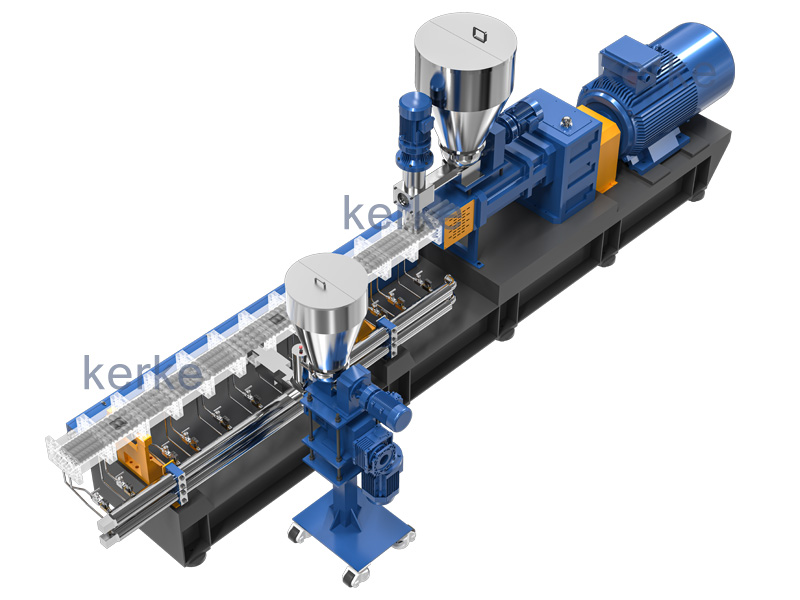
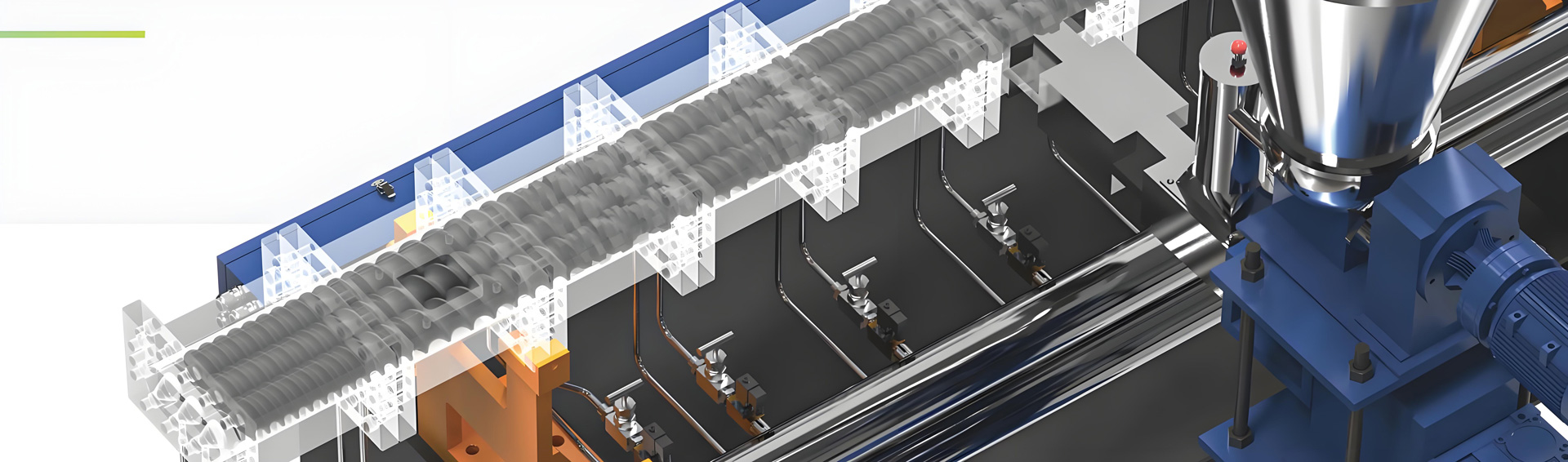
Modern compounding extruders utilize a multi-zone temperature control system. The barrel is divided into several independent heating and cooling zones (typically 4 to 8 zones for a standard machine). Each zone is controlled by a dedicated thermocouple and PID controller. This allows for a precise temperature profile. For example, the feed zone might be cooled to prevent material bridging, while the mixing zones are heated to facilitate dispersion, and the metering zone is slightly cooled to build pressure for the die. Kerke Extruder machines feature high-precision cast-in aluminum heaters for excellent thermal contact and rapid response times. The cooling is usually achieved through water or oil circulation in jackets around the barrel. The efficiency of the cooling system determines how fast the extruder can be ramped up to production speed.
The Role of the Cooling Feed Throat
The feed throat is a critical area for temperature control. If the heat from the barrel travels upstream to the feed throat, it can cause the pellets to stick together (bridging) or the additives to melt prematurely, blocking the feeder. This is known as “feed throat freezing” or “bridging.” To combat this, high-performance extruders use a cooled feed throat. Kerke designs feed throats with water-cooled jackets or liquid nitrogen cooling systems. By keeping the feed zone temperature low (e.g., 30-50 degrees Celsius for nylon), we ensure the material remains in solid granular form, allowing for consistent gravimetric feeding and preventing torque instability. This is a hallmark of a quality compounding extruder.
Melt Temperature Measurement and Control
Measuring the barrel wall temperature is not enough; the actual melt temperature inside the screws is what matters. Advanced extruders are equipped with melt pressure transducers that also measure melt temperature. This data is fed back to the control system to adjust the heaters dynamically. If the melt temperature rises due to increased screw speed, the cooling system intensifies automatically. This closed-loop control is vital for maintaining product consistency. Kerke’s control systems integrate these sensors, allowing operators to set a target melt temperature and let the PLC manage the heater bands and cooling pumps to maintain that setpoint within +/- 1 degree Celsius.
Temperature Uniformity and Mixing Quality
Temperature uniformity across the barrel cross-section is crucial. If one side of the barrel is hotter than the other, the polymer will have varying viscosities, leading to uneven shear distribution and poor mixing. This can result in streaks or unmixed patches in the masterbatch. High-quality machines ensure thermal symmetry through precise machining of the barrel and uniform placement of heaters. Additionally, the screw design should promote heat transfer. In co-rotating twin screws, the intermeshing action constantly refreshes the melt film against the barrel wall, enhancing heat transfer efficiency. This self-wiping action ensures that the material is exposed to the controlled barrel temperature uniformly, which is why twin screw extruders are superior to counter-rotating or single screw machines for temperature-sensitive compounding.
Thermal Stability and Residence Time Distribution (RTD)
Residence time distribution (RTD) refers to how long different particles of material stay inside the extruder. Narrow RTD is desirable for consistent processing. Temperature control affects RTD because hot spots can cause material to degrade and linger, while cold spots can cause solid material to move slower. By maintaining a stable thermal profile, the viscosity of the melt remains consistent, leading to a plug-flow behavior which is ideal for compounding. Kerke’s modular screw design allows engineers to optimize the residence time by adjusting the length of conveying and kneading sections, ensuring that the material experiences the target temperature for exactly the right amount of time to achieve dispersion without degradation.
Special Considerations for Reactive Extrusion
In reactive compounding, where chemical reactions occur (e.g., grafting maleic anhydride onto polypropylene), temperature control is even more critical. The reaction rate is exponentially dependent on temperature (Arrhenius equation). A deviation of just 5 degrees can double the reaction rate or stop it entirely. Furthermore, these reactions are often exothermic (releasing heat). The cooling system must be powerful enough to remove this reaction heat to prevent a thermal runaway. Kerke extruders designed for reactive extrusion feature oversized cooling systems and highly responsive control algorithms to handle these exothermic peaks, ensuring the reaction proceeds to the desired degree of conversion without degrading the polymer backbone.
Energy Efficiency through Temperature Control
Efficient temperature control also saves energy. Over-heating the barrel requires more cooling water and energy to remove that heat later. Modern systems use insulated heater bands to minimize heat loss to the environment. Kerke machines also utilize heat recovery systems where the heat removed from the barrel cooling water is used to pre-heat the feed material or for other plant processes. By optimizing the thermal balance, the overall specific energy consumption (kW/kg) is reduced, lowering the operational cost of the compounding line.
Troubleshooting Common Temperature Issues
Operators often face issues like temperature overshoot during start-up or fluctuations during production. Overshoot can be mitigated by using ramp-up heating profiles rather than immediate full power. Fluctuations are often caused by worn thermocouples or poor thermal contact. Regular maintenance of the temperature sensors and cleaning of the barrel surfaces are essential. Kerke provides diagnostic tools in our control software that can alert operators if a temperature zone is behaving erratically, allowing for predictive maintenance before a quality issue occurs.
Conclusion
Temperature control is the invisible hand that guides the quality of compounding extrusion. It influences everything from melt viscosity and mixing efficiency to color stability and molecular weight retention. A high-quality twin screw extruder is defined not just by its torque, but by the precision and responsiveness of its thermal management system. Kerke Extruder integrates advanced heating, cooling, and control technologies to ensure that your compounding process remains stable, efficient, and capable of producing high-specification materials. Investing in a machine with superior temperature control is an investment in product quality and process reliability.