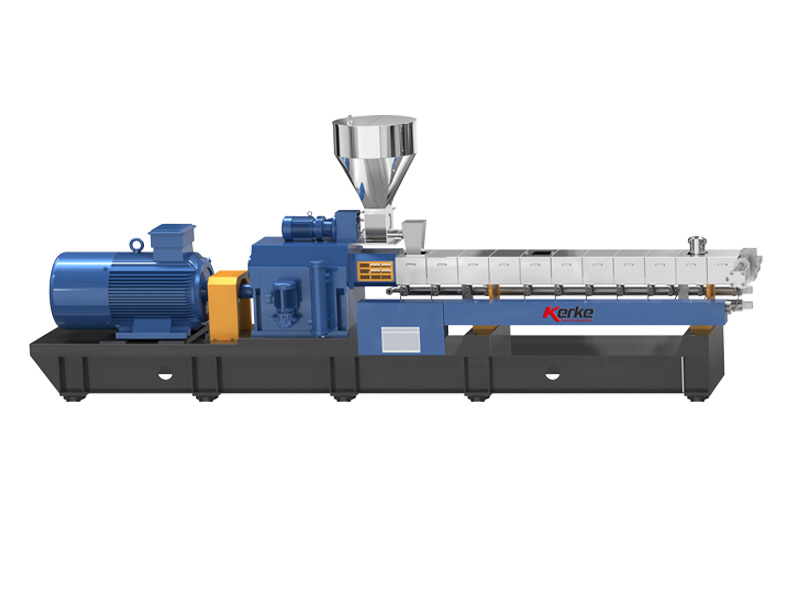
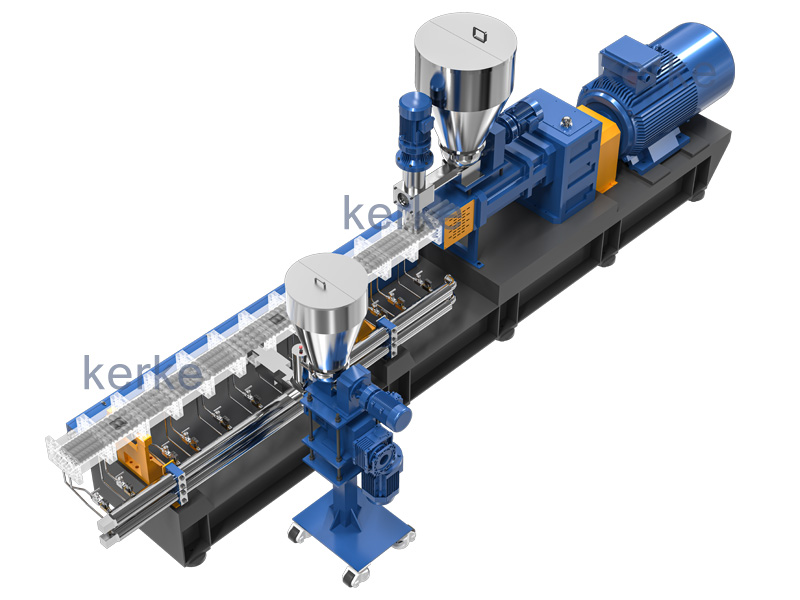
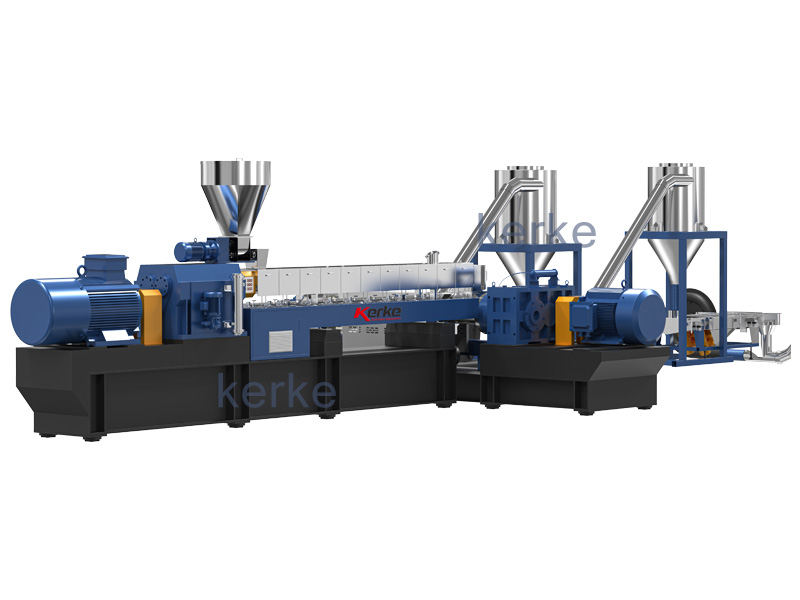
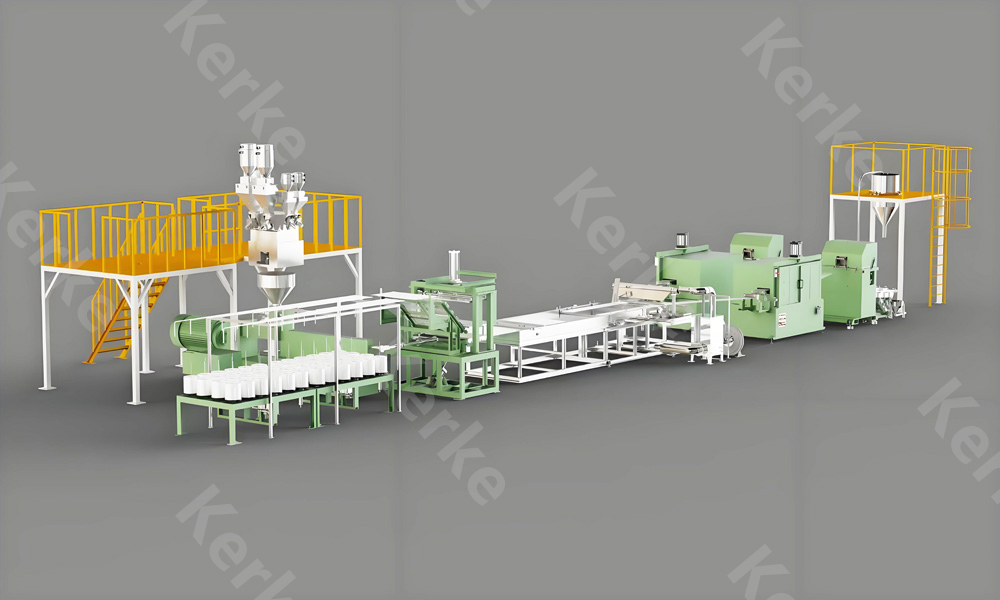
The plastic processing industry is evolving rapidly, driven by demand for specialized materials—biodegradable polymers, high-performance engineering compounds, conductive plastics, and flame-retardant formulations, to name a few. These special plastic formulations require customized processing solutions, as standard Compounding Extruders (even high-quality ones like Kerke’s base models) are not optimized for their unique properties. Kerke Extruder (www.kerkeextruder.com), a leading manufacturer of Twin Screw Extruders and Masterbatch Extruders, has decades of experience in customizing compounding extruders for special formulations, and this guide will walk you through the entire customization process—from identifying formulation requirements to testing and validating the customized system.
Customizing a compounding extruder is not a one-size-fits-all process—it requires a deep understanding of the formulation’s properties (viscosity, thermal sensitivity, abrasiveness, etc.), production goals (throughput, product quality, efficiency), and regulatory requirements (e.g., FDA for food-contact plastics). By following the steps outlined in this guide, you can ensure that your Kerke compounding extruder is tailored to your specific formulation, delivering consistent quality, high throughput, and minimal waste.
1. Understanding Special Plastic Formulations and Their Processing Challenges
Before diving into customization, it is critical to understand what defines a “special plastic formulation” and the unique challenges they present for compounding extruders. Special formulations are those that deviate from standard polyolefin (PE/PP) compounds, requiring adjustments to extruder design, process parameters, or auxiliary equipment.
1.1 Common Types of Special Plastic Formulations
- Biodegradable/Compostable Polymers (PLA, PBAT, PHA): Extremely heat-sensitive (degrade above 200°C), low melt strength, and prone to moisture absorption. Require low-shear processing and precise temperature control.
- High-Performance Engineering Compounds (PEEK, PPS, PEI): High melting temperatures (300–400°C), high viscosity, and abrasive (filled with glass/carbon fiber). Require high-temperature barrel systems and wear-resistant components.
- Conductive/Static-Dissipative Compounds: Filled with carbon black, carbon fiber, or metal particles (high loading: 20–40%). Require specialized mixing to ensure uniform conductivity without agglomeration.
- Flame-Retardant (FR) Compounds: Filled with halogen-free FR additives (e.g., magnesium hydroxide, aluminum hydroxide) at high loadings (50–70%). Abrasive, low melt flow, and prone to gas evolution (off-gassing).
- Medical-Grade Compounds: Require ultra-clean processing (no contamination), traceability, and compliance with FDA/ISO 13485 standards. Need specialized materials (stainless steel contact parts) and clean-in-place (CIP) systems.
- Recycled Plastic Compounds (PCR/Post-Consumer Recyclate): Contain contaminants (inks, adhesives, moisture), variable viscosity, and prone to degradation. Require pre-treatment systems and adjustable shear control.
1.2 Key Processing Challenges of Special Formulations
Each special formulation presents unique challenges that standard extruders cannot address effectively:
- Thermal Degradation: Heat-sensitive polymers (PLA, PVC) degrade if temperature/shear is too high, leading to discoloration, reduced mechanical properties, or off-gassing.
- Poor Dispersion: High-load additives (conductive fillers, FR additives) tend to agglomerate, leading to inconsistent performance (e.g., uneven conductivity, poor flame retardancy).
- Abrasiveness: Filled formulations (glass fiber, minerals) cause excessive wear to screws/barrels, increasing maintenance costs and reducing extruder lifespan.
- Moisture Sensitivity: Hygroscopic polymers (PA, PLA) absorb moisture, leading to bubble formation, hydrolysis, and poor product quality.
- Low Melt Flow: High-viscosity formulations (PEEK, FR compounds) require high torque/pressure to process, leading to low throughput if the extruder is not optimized.
The goal of customization is to address these challenges by modifying the extruder’s design, components, or auxiliary systems to match the formulation’s unique needs.
2. Step 1: Define Customization Requirements (Critical First Step)
Customization starts with a clear definition of your requirements—without this, the extruder may not meet your production goals or formulation needs. Kerke recommends creating a “Customization Requirements Document” that includes the following key information:
2.1 Formulation Details
- Base Polymer Type: e.g., PLA, PEEK, PCR PP, medical-grade ABS.
- Additive/Filler Type and Loading: e.g., 30% carbon fiber (conductive), 60% magnesium hydroxide (FR), 20% calcium carbonate (filler).
- Formulation Properties:
- Melting temperature (Tm) or glass transition temperature (Tg)
- Melt flow index (MFI) at processing temperature (g/10min)
- Thermal stability (maximum temperature before degradation)
- Abrasiveness (1–10 scale, 10 = most abrasive)
- Moisture sensitivity (hygroscopic/non-hygroscopic)
- Regulatory Requirements: e.g., FDA 21 CFR 177.1520 (food contact), ISO 13485 (medical), REACH (EU environmental standards).
2.2 Production Goals
- Target Throughput: kg/h (e.g., 200 kg/h for PLA compounds, 400 kg/h for FR PP).
- Product Quality Specifications:
- Mixing uniformity (e.g., ±0.5 color units for masterbatches, <5% agglomerates for conductive compounds)
- Mechanical properties (e.g., tensile strength, impact resistance)
- Pellet quality (size, shape, dust content)
- Efficiency Targets: Energy consumption (kWh/kg), scrap rate (<2%), downtime (<5% of production time).
- Future Flexibility: Will the extruder need to process other formulations in the future? (e.g., switch from PLA to PBAT biodegradable compounds).
2.3 Existing Infrastructure Constraints
- Space: Floor space available for the extruder and auxiliary equipment (dryers, mixers, pelletizers).
- Utilities: Available power (voltage/phase), water flow/pressure (for cooling), compressed air (PSI).
- Environmental Controls: Factory temperature, ventilation (for off-gassing formulations), dust collection requirements.
Kerke’s technical team can review your Requirements Document and provide recommendations for customization—this collaborative approach ensures that no critical details are missed.
3. Step 2: Customize Core Extruder Components
The core components of a compounding extruder (screws, barrels, drive system) are the most common areas for customization—these modifications directly address the formulation’s processing challenges.
3.1 Screw Customization (Most Impactful Modification)
The screw assembly is the heart of the compounding extruder, and customizing its design is the most effective way to optimize processing for special formulations. Kerke offers fully modular screw designs that can be tailored to your needs:
3.1.1 Screw Geometry and L/D Ratio
- Heat-Sensitive Formulations (PLA, PVC): Use a shorter L/D ratio (24:1 to 30:1) to reduce residence time (time material spends in the extruder) from 60–90 seconds (standard) to 30–45 seconds. This minimizes thermal degradation. Kerke’s KTE-65 Short Residency (SR) screw has an L/D ratio of 28:1, ideal for PLA/PBAT.
- High-Viscosity/High-Load Formulations (PEEK, FR Compounds): Use a longer L/D ratio (40:1 to 48:1) to provide sufficient mixing time and pressure build-up. Kerke’s KTE-75 Long Mix (LM) screw has an L/D ratio of 44:1, designed for high-load FR compounds.
- Variable Pitch Flights: For moisture-sensitive formulations (PA, PLA), use a decreasing pitch flight design in the feed zone to compress material and remove moisture (venting port required).
3.1.2 Mixing Element Configuration
- Low-Shear Mixing (Heat-Sensitive Formulations): Use paddle elements with 30° stagger angles and large clearances to reduce shear heat. Avoid high-shear kneading blocks to prevent degradation.
- High-Shear Mixing (Conductive/FR Compounds): Use kneading blocks with 45°–60° stagger angles and tight clearances to break down agglomerates and ensure uniform dispersion. Kerke’s High Dispersion (HD) mixing elements are designed for high-load additives.
- Distributive Mixing (Medical-Grade Compounds): Use spiral mixing elements to ensure gentle, uniform mixing without shear hotspots (critical for maintaining purity and consistency).
3.1.3 Wear-Resistant Coatings and Materials
- Abrasive Formulations (Glass Fiber, Minerals): Apply bimetallic coatings (Stellite, tungsten carbide) to screw flights and mixing elements. Kerke’s XTR Wear-Resistant coating increases screw lifespan by 300% compared to standard nitrided steel.
- Medical-Grade Formulations: Use food-grade stainless steel (316L) screws with electropolished surfaces to prevent contamination and meet FDA standards.
3.2 Barrel Customization
Customizing the barrel assembly addresses temperature control, wear resistance, and venting needs for special formulations:
- High-Temperature Formulations (PEEK, PPS): Use a high-temperature barrel system with ceramic heaters (capable of 400°C+ vs. 300°C standard) and insulated cooling jackets. Kerke’s HT Barrel System is rated for 450°C, ideal for PEEK processing.
- Abrasive Formulations: Install replaceable bimetallic barrel liners (Kerke’s XTR Liners) to reduce wear and maintenance costs—replace only the liner (not the entire barrel) when worn.
- Moisture/Off-Gassing Formulations (PLA, FR Compounds): Add one or more venting ports (atmospheric or vacuum) to remove moisture or volatile organic compounds (VOCs). Kerke’s Vacuum Vent System reduces moisture content to <0.01% for hygroscopic polymers.
- Medical-Grade Formulations: Use electropolished 316L stainless steel barrel liners with smooth surfaces to prevent material buildup and contamination.
3.3 Drive System Customization
The drive system provides the torque needed to process high-viscosity formulations—customization ensures sufficient power without wasting energy:
- High-Viscosity Formulations (PEEK, FR Compounds): Upgrade to a high-torque drive system (Kerke’s HT Drive) with 20–30% higher torque than standard drives (e.g., 15,000 Nm vs. 12,000 Nm for KTE-75 extruders). This allows higher throughput for high-load formulations.
- Heat-Sensitive Formulations (PLA, PVC): Use a variable frequency drive (VFD) with precise speed control (±1 RPM) to maintain low, consistent screw speeds and reduce shear heat.
- Energy Efficiency: Install a regenerative drive system (Kerke’s EcoDrive) that recovers energy during deceleration/braking, reducing energy consumption by 10–15% for cyclic production runs.
4. Step 3: Customize Feeding and Auxiliary Systems
Special formulations often require customized feeding and auxiliary systems to ensure consistent material delivery, moisture control, and product quality. Kerke offers a full range of auxiliary equipment that can be integrated with its compounding extruders:
4.1 Feeding System Customization
- High-Load/ Powdery Additives (Carbon Black, FR Additives): Use loss-in-weight (LIW) gravimetric feeders with anti-bridging features (vibrators, stirrers) to ensure precise dosing (±0.2% accuracy). Kerke’s PowderFeed system is designed for powdery additives, reducing bridging by 90%.
- Liquid Additives (Lubricants, Plasticizers): Install a liquid feeding system (Kerke’s LiquidFeed) with positive displacement pumps for precise dosing (±0.1% accuracy). Ideal for medical-grade compounds and biodegradable formulations.
- Side Feeding for Abrasive/Fibrous Fillers (Glass Fiber, Minerals): Add a side feeding port (Kerke’s SideFeed) to feed abrasive/fibrous fillers downstream of the feed zone—this reduces shear stress on fibers (preventing breakage) and minimizes wear on the main feed zone screws.
- Medical-Grade Feeding: Use stainless steel feed hoppers with CIP (clean-in-place) systems to prevent cross-contamination between batches.
4.2 Drying and Material Handling Customization
- Moisture-Sensitive Formulations (PLA, PA, PET): Install a dehumidifying dryer (Kerke’s DryMax) with low dew point (-40°C) to reduce moisture content to <0.02%. For high-throughput production, use a central drying system to supply dry material to multiple extruders.
- Recycled Plastic Compounds (PCR): Add a pre-treatment system (Kerke’s PCR Prep) that includes washing, drying, and sieving to remove contaminants (inks, adhesives, metal) before extrusion.
- Dust Control (Powdery Additives): Install a dust collection system (Kerke’s DustStop) to capture dust from feed hoppers and pelletizing systems, improving factory air quality and reducing waste.
4.3 Pelletizing System Customization
The pelletizing system determines the quality of the final product, and customization is critical for special formulations:
- Heat-Sensitive Formulations (PLA, PVC): Use an underwater pelletizing (UWP) system with cold water (10–15°C) to quickly cool pellets and prevent sticking/agglomeration. Kerke’s UWP-Cool system reduces pellet temperature to <40°C in <1 second.
- High-Viscosity Formulations (PEEK): Use a strand pelletizing system with a water bath and air knife drying (Kerke’s StrandDry) to ensure uniform pellet length and minimal dust.
- Medical-Grade Formulations: Use a closed-loop pelletizing system (Kerke’s CleanPellet) to prevent contamination from ambient air/dust, meeting FDA cleanroom standards.
5. Step 4: Customize Control System and Automation
Customizing the control system ensures that the extruder can be operated efficiently for special formulations, with precise parameter control and data tracking:
- Recipe Customization: Increase recipe storage capacity (from 100 to 200+ recipes) to store parameters for multiple special formulations. Add custom parameters (e.g., dew point for drying, filler loading ratio) to the recipe interface.
- Data Logging and Traceability: Upgrade to a full traceability system (Kerke’s TraceTrack) that logs all production data (batch number, raw material lot numbers, process parameters, quality test results) for compliance with FDA/ISO standards. Data can be exported to CSV/PDF for audits.
- Closed-Loop Control: Add closed-loop control for critical parameters (temperature, pressure, feed rate) that automatically adjusts settings to maintain consistency (e.g., if moisture content increases, the system automatically increases drying time/temperature).
- IoT Integration: Integrate with Kerke’s cloud-based monitoring platform (KerkeConnect) to track extruder performance remotely, receive predictive maintenance alerts, and optimize parameters in real time.
- Operator Interface Customization: Customize the HMI interface to display only relevant parameters for your formulation (e.g., hide unnecessary temperature zones for PLA processing), simplifying operation and reducing human error.
6. Step 5: Testing and Validation of the Customized Extruder
Customization is not complete without thorough testing and validation—this ensures that the extruder meets your production and quality goals before full-scale production begins. Kerke follows a rigorous testing process:
6.1 Factory Acceptance Test (FAT)
- Kerke tests the customized extruder at its factory using a simulation of your formulation (or actual material, if provided).
- Key tests include: throughput verification (matching target kg/h), mixing uniformity (lab testing), temperature stability (±1°C), torque/pressure limits, and control system functionality.
- You are invited to witness the FAT (in-person or via live stream) to verify that the extruder meets your requirements.
- Kerke provides a FAT report with test results, photos/videos, and a certificate of compliance.
6.2 Site Acceptance Test (SAT)
- After installation at your facility, Kerke conducts an SAT to test the extruder in your production environment (using your actual formulation).
- Tests include: full production run (4–8 hours), product quality testing (mixing uniformity, mechanical properties), efficiency (energy consumption, scrap rate), and operator training.
- Any issues identified during the SAT are resolved by Kerke’s technical team before final acceptance.
6.3 Pilot Production Run
- Run a pilot batch (1–2 tons) of your special formulation to validate long-term performance and identify any minor adjustments needed.
- Kerke’s technical team is on-site to adjust parameters (temperature, screw speed, feed rate) and optimize performance.
- Collect quality data (mixing uniformity, MFI, mechanical properties) to compare to your specifications.
7. Case Studies: Successful Customization of Kerke Compounding Extruders
Real-world examples demonstrate the impact of customization for special formulations:
7.1 Case Study 1: Biodegradable PLA Compounds
A European packaging manufacturer needed to produce PLA-based biodegradable compounds with 10% talc filler. The challenges: PLA’s heat sensitivity (degrades above 200°C), low melt strength, and moisture absorption. The manufacturer’s goals: 250 kg/h throughput, <1% scrap rate, and compliance with EU compostable standards (EN 13432).
Kerke’s customization solutions:
- Custom screw: L/D ratio 28:1 (short residency), low-shear paddle elements, 316L stainless steel (food-grade).
- Barrel: Vacuum vent port (remove moisture), ceramic insulation (temperature stability ±1°C), max temperature 220°C.
- Auxiliary systems: DryMax dehumidifying dryer (-40°C dew point), UWP-Cool underwater pelletizing (15°C water).
- Control system: Closed-loop temperature control, recipe for PLA-talc with custom parameters (dew point, pellet water temperature).
Results: Throughput 260 kg/h (4% above target), scrap rate 0.8%, no thermal degradation of PLA, and compliance with EN 13432. Energy consumption was 0.9 kWh/kg (10% lower than the manufacturer’s target).
7.2 Case Study 2: High-Load FR PP Compounds
A North American automotive supplier needed to produce FR PP compounds with 60% magnesium hydroxide filler (abrasive, high-load, low melt flow). Goals: 400 kg/h throughput, uniform FR dispersion (no agglomerates), and wear resistance (screw lifespan >24 months).
Kerke’s customization solutions:
- Custom screw: L/D ratio 44:1 (long mixing time), HD high-shear kneading blocks, XTR wear-resistant coating (tungsten carbide).
- Barrel: XTR bimetallic liners, high-torque drive system (15,000 Nm), side feeding port for magnesium hydroxide (reduce wear).
- Auxiliary systems: PowderFeed gravimetric feeder (anti-bridging), DustStop dust collection system.
- Control system: Closed-loop pressure control, IoT monitoring (track screw wear via motor load trends).
Results: Throughput 410 kg/h (2.5% above target), FR dispersion uniformity 98% (no agglomerates), screw lifespan 28 months (17% above target), and scrap rate 1.2%.
7.3 Case Study 3: Medical-Grade ABS Compounds
An Asian medical device manufacturer needed to produce medical-grade ABS compounds with 5% antimicrobial additive. Goals: FDA compliance (21 CFR 177.1520), <0.5% contamination, full traceability, and 150 kg/h throughput.
Kerke’s customization solutions:
- Custom screw: 316L electropolished stainless steel, distributive spiral mixing elements (gentle mixing).
- Barrel: 316L electropolished liners, CIP clean-in-place system (no disassembly for cleaning).
- Auxiliary systems: CleanPellet closed-loop pelletizing, DryMax dryer (FDA-compliant filters), stainless steel feed hoppers (CIP).
- Control system: TraceTrack full traceability, recipe lock (prevent parameter changes), 21 CFR Part 11 compliant data logging.
Results: FDA compliance achieved, contamination <0.1%, full batch traceability, throughput 155 kg/h (3% above target), and scrap rate 0.5%.
8. Cost Considerations for Customization
Customization adds cost to the base extruder price, but the return on investment (ROI) is typically achieved within 12–24 months (depending on production volume). Key cost factors include:
- Component Customization: Custom screws/barrels (10–30% of base extruder price), high-torque drives (5–15%), wear-resistant coatings (5–10%).
- Auxiliary Systems: Dehumidifying dryers (5–15%), specialized pelletizing systems (10–20%), dust collection (3–8%).
- Control System Upgrades: Traceability systems (5–10%), IoT integration (3–7%), closed-loop control (2–5%).
- Testing/Validation: FAT/SAT testing (2–5%), pilot production support (1–3%).
Kerke provides a detailed cost breakdown and ROI analysis before customization begins, ensuring that you understand the investment and expected savings (reduced scrap, higher throughput, lower energy costs).
9. Long-Term Support for Customized Extruders
Kerke provides comprehensive long-term support for customized extruders to ensure ongoing performance:
- Spare Parts: Stock of custom components (screws, liners, feeders) with fast delivery (24–48 hours for urgent parts).
- Preventive Maintenance: Custom maintenance schedule (e.g., biweekly wear checks for abrasive formulations) and on-site servicing.
- Technical Support: Dedicated technical team with expertise in your specific formulation (available 24/7 via phone/email).
- Training: Refresher training for new operators (annual) and updates on process optimization for your formulation.
- Upgrades: Ability to upgrade the extruder as your formulation needs change (e.g., add a vacuum vent for new moisture-sensitive polymers).
10. Conclusion: Customization as a Competitive Advantage
Customizing a compounding extruder for special plastic formulations is not just a necessity—it is a competitive advantage. By tailoring the extruder to your unique formulation, you can produce high-quality products with consistent performance, reduce scrap and downtime, and meet regulatory requirements.
Kerke Extruder’s expertise in customization, combined with its high-quality base extruders and comprehensive support, makes it the ideal partner for manufacturers of special plastic formulations. Whether you are producing biodegradable polymers, high-performance engineering compounds, or medical-grade materials, Kerke can customize a compounding extruder that meets your exact needs.
To start the customization process, visit www.kerkeextruder.com to submit your requirements or contact Kerke’s technical team for a free consultation. Investing in a customized Kerke Compounding Extruder is an investment in the future of your business—enabling you to innovate, compete, and grow in the evolving plastic processing industry.