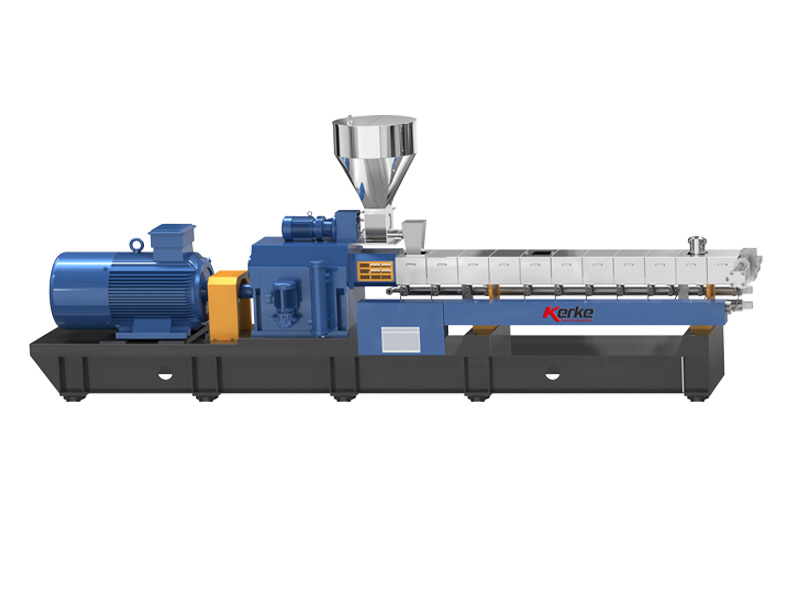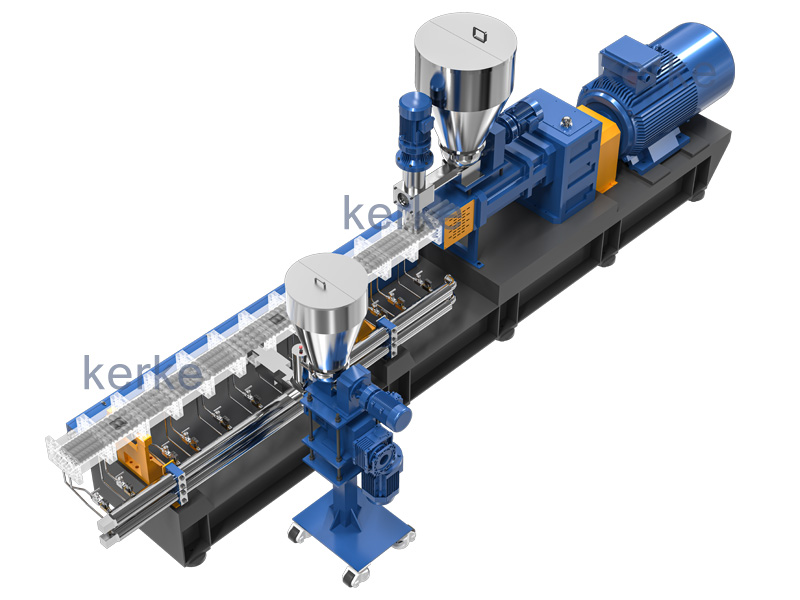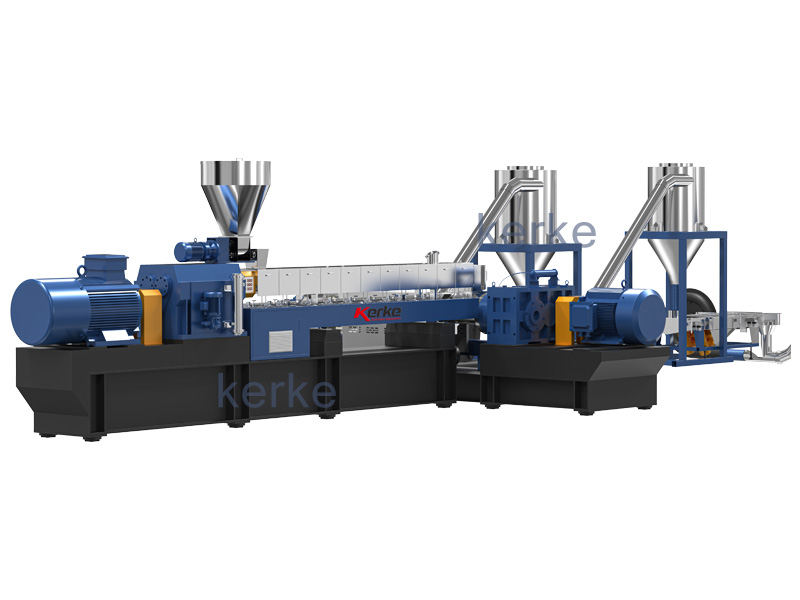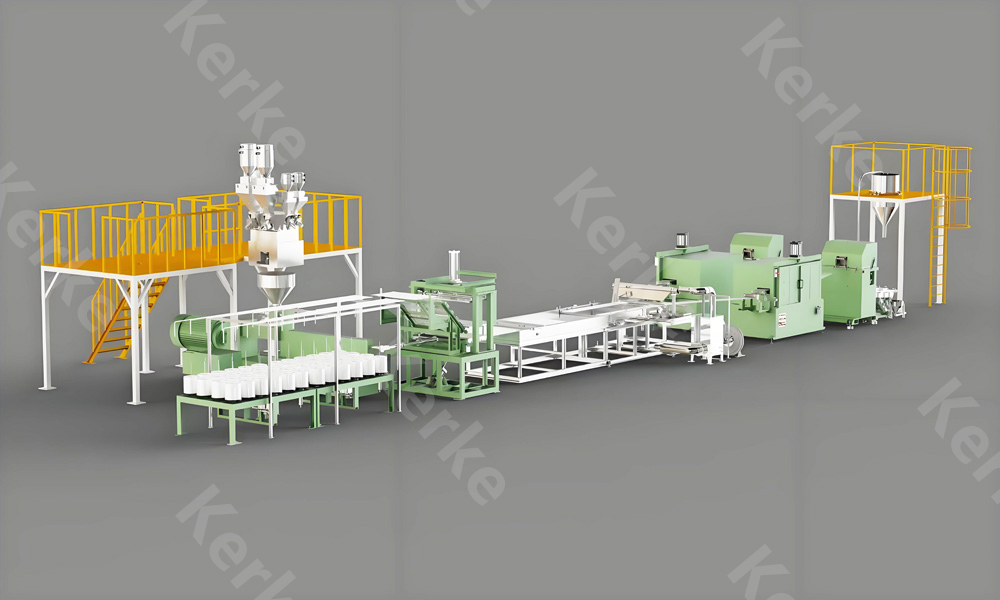
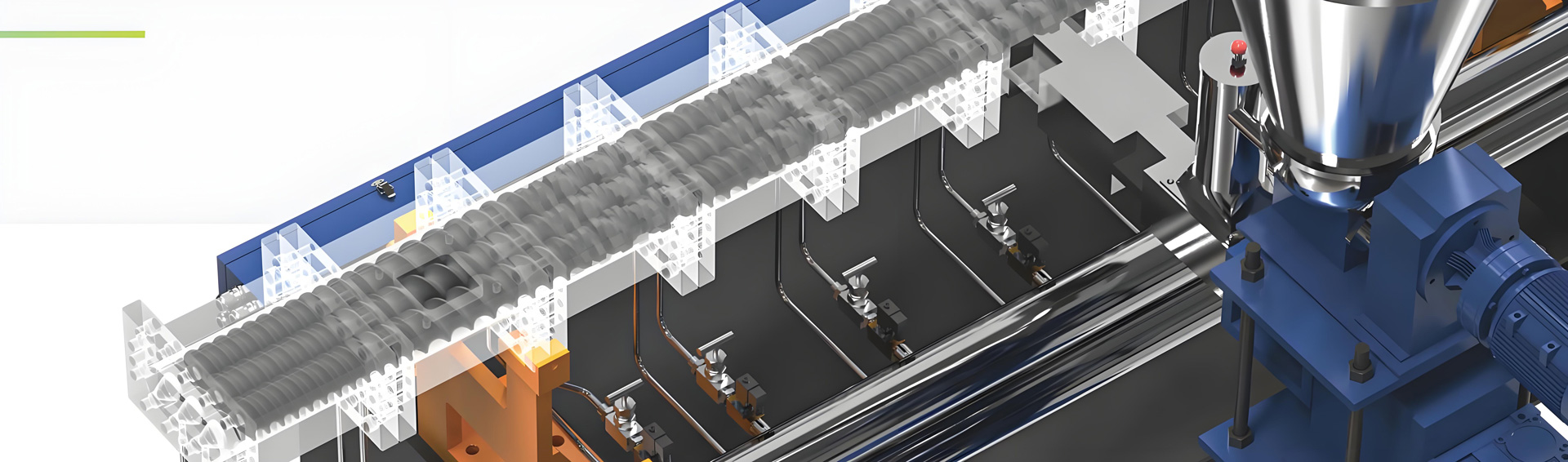
Screw speed optimization represents one of the most critical process parameters in twin screw extrusion, directly influencing mixing quality, throughput, energy consumption, and final product properties. Mastering screw speed control enables manufacturers to achieve optimal balance between productivity and quality while minimizing operational costs. This comprehensive guide explores the principles, strategies, and best practices for optimizing screw speed in twin screw extruders, with specific focus on Kerke extruder systems and their advanced control capabilities.
Understanding the Fundamentals of Screw Speed in Twin Screw Extruders
Screw speed, measured in revolutions per minute (RPM), determines the rate at which material moves through the extruder and the intensity of mechanical shear applied during processing. Unlike single screw extruders where screw speed primarily affects throughput, twin screw extruders exhibit more complex relationships between screw speed and processing outcomes due to their intermeshing geometry and mixing capabilities. The optimization of screw speed requires consideration of multiple interrelated factors including material characteristics, screw configuration, temperature profile, and desired product quality.
In co-rotating twin screw extruders such as Kerke’s KTE series, screw speed influences residence time distribution, shear history, and melting behavior. Higher screw speeds generally reduce residence time but increase shear rates and mechanical energy input. Lower screw speeds provide longer residence times for thermal reactions and devolatilization but may reduce mixing intensity. The optimal screw speed depends on the specific processing objectives, whether prioritizing high throughput, maximum dispersion, or precise thermal control.
The Relationship Between Screw Speed and Key Processing Parameters
Screw speed impacts virtually every aspect of twin screw extrusion performance, from material feeding to final pellet quality. Understanding these relationships is fundamental to effective process optimization and troubleshooting.
Throughput and Productivity
The relationship between screw speed and throughput follows a direct but non-linear correlation. As screw speed increases, volumetric output typically rises due to faster material conveying through the extruder. However, the exact relationship depends on screw configuration and material characteristics. Kerke extruders feature high-torque designs that maintain throughput efficiency across a wide speed range, with models such as the KTE-75D capable of speeds up to 800 RPM while maintaining consistent output quality.
For most polymer compounding applications, throughput increases approximately proportionally with screw speed up to a certain point, after which feeding limitations or backflow effects cause diminishing returns. The optimal operating speed maximizes throughput without compromising mixing quality or causing processing instability. Manufacturers operating Kerke extruders can leverage the wide speed range to adjust production rates according to demand while maintaining consistent product quality.
Mixing Intensity and Dispersion Quality
Mixing intensity in twin screw extruders is directly related to screw speed, with higher speeds generating greater shear rates and more intensive distributive and dispersive mixing. This relationship is particularly important for applications requiring fine pigment dispersion, additive distribution, or filler incorporation. The kneading blocks and mixing elements in Kerke screw configurations generate complex flow patterns that intensify with increased screw speed, enhancing both distributive and dispersive mixing actions.
For color masterbatch production, higher screw speeds typically improve pigment dispersion by increasing the number of mixing events and shear forces experienced by each material element. However, excessive speeds may degrade heat-sensitive polymers or additives through excessive mechanical energy input. The optimal speed achieves target dispersion quality while maintaining thermal stability. Kerke extruders feature precise speed control systems that enable fine-tuning of screw speed to achieve specific dispersion objectives.
Residence Time Distribution
Residence time distribution (RTD) in twin screw extruders is significantly affected by screw speed, with higher speeds generally reducing average residence time and narrowing the distribution. Shorter residence times can be beneficial for thermally sensitive materials but may limit time for chemical reactions or complete devolatilization. Lower speeds provide longer residence times that may be necessary for certain reactions or removal of volatiles but increase the risk of thermal degradation.
Kerke extruders with longer L/D ratios (up to 52:1) provide extended residence times even at higher screw speeds, offering flexibility for processing materials with different thermal sensitivities. The modular screw configuration allows manufacturers to adjust mixing sequences and residence time characteristics independently of screw speed, providing additional optimization degrees of freedom.
Energy Consumption and Efficiency
Energy consumption in twin screw extruders exhibits a complex relationship with screw speed, influenced by material viscosity, screw geometry, and temperature profile. At low screw speeds, specific energy consumption (energy per kilogram of material processed) tends to be higher due to higher viscous heating effects and lower throughput. As speed increases, specific energy consumption typically decreases to an optimum point before rising again due to increased mechanical energy input and viscous dissipation.
Kerke extruders incorporate energy-efficient drive systems and optimized screw geometries that minimize energy consumption across the operating speed range. The high-torque gearbox designs enable efficient power transmission at various speeds, while the advanced control systems optimize energy usage based on processing requirements. Operating at the energy-optimal screw speed can reduce operating costs by 15-25% compared to poorly optimized conditions.
Melt Temperature and Thermal History
Screw speed significantly influences melt temperature through both viscous heating effects and residence time. Higher speeds generate more viscous heating due to increased shear rates, potentially raising melt temperatures even with external cooling. Conversely, shorter residence times at higher speeds reduce the time for heat transfer from barrel heaters. The net effect depends on the balance between these competing factors and the specific material properties.
For thermally sensitive materials, controlling melt temperature often requires balancing screw speed with barrel temperature settings. Kerke extruders feature advanced temperature control systems with multiple independently controlled zones and optional water cooling capabilities that enable precise thermal management at various screw speeds. This control flexibility is particularly valuable when processing materials with narrow thermal windows or when incorporating temperature-sensitive additives.
Material-Specific Screw Speed Optimization Guidelines
Different polymer types and formulations exhibit unique rheological properties and processing requirements, necessitating material-specific screw speed optimization strategies. Understanding these material-specific considerations is essential for achieving optimal processing outcomes.
Polyolefins (PP, PE, LLDPE)
Polyolefins represent one of the most commonly processed polymer families in twin screw extrusion, generally exhibiting good flow characteristics and broad processing windows. For polyolefin compounding, screw speeds typically range from 200-400 RPM for standard formulations and up to 600 RPM for high-throughput applications. The relatively low melt viscosity of polyolefins enables efficient processing at higher screw speeds without excessive energy consumption or pressure generation.
When processing polyolefins in Kerke extruders, the optimal screw speed depends on specific formulation objectives. For color masterbatch production requiring fine pigment dispersion, higher speeds (400-600 RPM) provide the necessary shear intensity. For additive masterbatch incorporating temperature-sensitive additives, moderate speeds (250-350 RPM) balance mixing quality with thermal stability. Kerke’s KTE series extruders, with their modular screw configurations, can be optimized for various polyolefin applications by adjusting mixing element placement and geometry.
Engineering Plastics (PA, POM, PBT)
Engineering plastics typically exhibit higher melt viscosities and more specific processing requirements compared to polyolefins, requiring careful screw speed optimization to achieve proper melting and mixing without degradation. For engineering plastic compounding, screw speeds generally range from 150-300 RPM, with the exact speed depending on the specific polymer grade and formulation complexity.
Processing engineering plastics often benefits from the longer L/D ratios available in Kerke extruders (up to 52:1), which provide extended residence times for complete melting even at moderate screw speeds. The modular screw design allows configuration of melt-intensive zones followed by mixing zones optimized for the specific rheology of engineering plastics. For polyamide processing, which often requires devolatilization to remove moisture and oligomers, moderate screw speeds (150-250 RPM) provide sufficient residence time for thorough drying while maintaining adequate throughput.
Polyvinyl Chloride (PVC)
PVC represents one of the most challenging polymers to process in twin screw extruders due to its thermal sensitivity and tendency to degrade at elevated temperatures. Screw speed optimization for PVC requires balancing mixing requirements with thermal management to prevent degradation. Typical screw speeds for PVC compounding range from 150-300 RPM, with the exact speed depending on the specific PVC type (rigid or flexible) and formulation.
Kerke extruders incorporate special features beneficial for PVC processing, including precise temperature control (±1°C) and optionally water-cooled barrel sections that help maintain processing temperatures within narrow windows. The screw configuration for PVC typically emphasizes gentle conveying elements with carefully placed mixing zones that achieve homogeneous mixing without generating excessive shear heat. For rigid PVC formulations requiring high filler loadings, moderate screw speeds (200-280 RPM) with well-designed mixing zones provide optimal balance between dispersion and thermal stability.
Thermoplastic Elastomers (TPE, TPV, TPU)
Thermoplastic elastomers exhibit unique rheological characteristics that present specific processing challenges, including high melt strength and sensitivity to shear history. Screw speed optimization for TPE compounding typically ranges from 100-250 RPM, with the optimal speed depending on the specific elastomer type and formulation requirements.
The high melt strength and elasticity of TPEs can create challenges in extruder feeding at high screw speeds, potentially causing surging or flow instability. Kerke extruders feature specialized feeding zone designs that accommodate the unique flow characteristics of elastomers, enabling stable operation across a range of screw speeds. For TPE masterbatch production requiring fine dispersion of additives or fillers, moderate screw speeds (150-220 RPM) with extended mixing sections provide optimal results without compromising material properties through excessive shear.
Reactive Extrusion Applications
Reactive extrusion, where chemical reactions occur during the extrusion process, presents unique screw speed requirements that balance reaction kinetics, residence time, and mixing intensity. The optimal screw speed depends on reaction rate, desired conversion, and product quality requirements. Most reactive extrusion applications operate at relatively low screw speeds (50-200 RPM) to provide sufficient residence time for complete reaction while maintaining adequate mixing.
Kerke extruders with long L/D ratios (48:1 to 52:1) are particularly well-suited for reactive extrusion applications, providing extended residence times even at moderate screw speeds. The modular screw configuration allows incorporation of specialized zones for reactant addition, mixing, and devolatilization. The precise temperature control systems in Kerke extruders enable maintenance of optimal reaction temperatures at various screw speeds, which is critical for reactions with specific thermal requirements.
Screw Speed Optimization for Different Compounding Applications
Beyond material-specific considerations, different compounding applications require unique screw speed optimization approaches based on their specific processing objectives and quality requirements.
Color Masterbatch Production
Color masterbatch production demands fine pigment dispersion to achieve consistent coloration and optimal color strength. Screw speed optimization for color masterbatch focuses on achieving target dispersion quality while maintaining productivity and preventing pigment degradation. Typical screw speeds for color masterbatch production range from 300-600 RPM, depending on pigment type, loading level, and carrier polymer.
For high-load color masterbatch with pigment concentrations exceeding 30%, higher screw speeds (400-600 RPM) provide the necessary shear intensity to break down pigment agglomerates and achieve uniform dispersion. Kerke extruders feature advanced mixing zone configurations with multiple kneading blocks that create intensive dispersive mixing at these speeds. The modular screw design allows customization of mixing element placement and geometry to optimize dispersion for specific pigment systems, including challenging organic pigments that require high shear for complete dispersion.
For specialty color masterbatch with temperature-sensitive pigments or carriers, moderate screw speeds (250-350 RPM) with carefully designed mixing zones provide adequate dispersion without thermal degradation. The precise temperature control systems in Kerke extruders enable maintenance of optimal processing temperatures across various screw speeds, protecting heat-sensitive colorants while ensuring proper mixing.
Additive Masterbatch Production
Additive masterbatch production encompasses a wide range of functional additives including UV stabilizers, flame retardants, antioxidants, and anti-block agents. Screw speed optimization for additive masterbatch depends on the specific additive characteristics, including particle size, thermal sensitivity, and required dispersion level.
For additives requiring fine dispersion such as organic stabilizers or nucleating agents, higher screw speeds (350-550 RPM) with intensive mixing zones provide optimal results. The high shear generated at these speeds breaks down additive agglomerates and ensures uniform distribution throughout the carrier polymer. Kerke extruders incorporate specialized kneading blocks with various stagger angles that enable customization of mixing intensity for different additive systems.
For additives with thermal sensitivity or those that may degrade under high shear, moderate screw speeds (200-350 RPM) provide gentler processing conditions while still achieving adequate dispersion. The extended L/D ratios available in Kerke extruders (up to 52:1) provide sufficient residence time for mixing even at these lower speeds, ensuring homogeneous additive distribution without compromising additive functionality.
Filler Masterbatch Production
Filler masterbatch production typically involves high loading levels of inorganic fillers such as calcium carbonate, talc, or glass fibers, presenting unique processing challenges that influence screw speed optimization. For filler masterbatch, screw speeds generally range from 200-400 RPM, depending on filler type, loading level, and desired dispersion quality.
For high-loading filler masterbatch with filler concentrations exceeding 70%, moderate screw speeds (200-300 RPM) help prevent excessive viscosity build-up and pressure while still achieving adequate dispersion. The abrasive nature of many fillers necessitates careful consideration of component wear at higher speeds. Kerke extruders feature wear-resistant screw and barrel materials including W6Mo5Cr4V2 high-speed tool steel screws and Cr26MoV alloy bimetallic barrels that provide extended service life even when processing abrasive fillers at optimal processing speeds.
For mineral fillers requiring fine dispersion such as surface-treated calcium carbonate used for nucleating effects, slightly higher screw speeds (300-400 RPM) with well-designed mixing zones provide improved dispersion. The modular screw configuration in Kerke extruders allows placement of intensive mixing zones at optimal positions for filler dispersion while minimizing excessive shear that could break down fillers or generate excessive viscosity.
Conductive Masterbatch Production
Conductive masterbatch production, incorporating carbon black, carbon fibers, or metallic fillers to impart electrical conductivity, presents unique screw speed requirements related to maintaining conductive network integrity while achieving homogeneous dispersion. Screw speeds for conductive masterbatch typically range from 150-350 RPM, depending on conductive filler type and loading level.
For carbon black masterbatch, which requires maintaining specific carbon black structure while achieving uniform distribution, moderate screw speeds (200-300 RPM) with gentle mixing elements help preserve conductive network formation. Excessive shear can break down carbon black agglomerates excessively, potentially reducing conductivity. Kerke extruders feature mixing element designs that achieve homogeneous distribution without over-dispersion of conductive fillers, enabling optimization of electrical properties while maintaining process efficiency.
For carbon fiber masterbatch, even lower screw speeds (150-250 RPM) help prevent fiber breakage while still achieving adequate distribution. The screw configuration for fiber masterbatch typically includes conveying elements with gentle geometries that transport fibers without causing excessive damage. Kerke extruders provide customization options for processing fiber-filled materials, including specialized screw configurations that balance fiber integrity with dispersion requirements.
Advanced Screw Speed Optimization Strategies
Beyond basic speed selection, advanced optimization strategies can further enhance twin screw extruder performance by adapting screw speed to specific processing conditions and objectives.
Variable Speed Operation
Variable speed operation involves intentionally varying screw speed during production runs to optimize different processing stages. For instance, lower speeds may be used during startup to achieve stable feeding and melting, followed by increased speeds for optimal mixing and throughput. Some applications benefit from speed variations during operation to address specific challenges such as feeding instabilities or pressure surges.
Kerke extruders feature advanced drive systems with variable frequency drives (VFDs) that enable precise speed control across the operating range. The control systems incorporate programmable logic controllers (PLCs) that can execute predefined speed profiles based on time or process conditions. This capability enables implementation of variable speed strategies optimized for specific applications and formulations.
Speed Profiling Based on Process Conditions
Advanced control systems can adjust screw speed dynamically based on real-time process feedback such as melt pressure, temperature, or motor load. This adaptive approach maintains optimal processing conditions despite variations in raw material properties or environmental conditions. For example, increases in melt pressure might trigger slight speed reductions to prevent overloading, while decreases in motor load might allow speed increases to maintain throughput.
Kerke extruders incorporate comprehensive sensor systems including pressure transducers, temperature sensors, and power monitors that provide continuous feedback to the control system. The advanced control algorithms in Kerke systems can implement closed-loop speed control strategies that automatically adjust screw speed to maintain target process parameters, improving consistency and reducing operator intervention requirements.
Multi-Stage Speed Optimization
Certain complex compounding operations benefit from multi-stage speed profiles where different sections of the extruder operate at different speeds. Although most twin screw extruders use a single motor driving both screws, specialized configurations with segmented drives or variable pitch screws can create effective speed variations along the extruder length.
Kerke extruders offer modular screw configurations that can create effective speed variations through changing screw geometries along the length. For instance, sections with conveying elements optimized for high throughput can be followed by intensive mixing sections with elements designed for shear generation at the same rotational speed. This approach enables optimization of different processing stages without the complexity of multiple drive systems.
Practical Screw Speed Optimization Procedures
Implementing screw speed optimization requires systematic procedures that account for processing objectives, material characteristics, and equipment capabilities. Following structured optimization approaches ensures efficient achievement of optimal operating conditions.
Baseline Parameter Establishment
Effective screw speed optimization begins with establishing baseline operating parameters for the specific application. This baseline determination involves processing the target formulation at moderate screw speed while documenting all process parameters including temperature profile, throughput, pressure, and energy consumption. The baseline provides a reference point for subsequent optimization efforts and helps identify which parameters respond most significantly to speed changes.
When establishing baselines for Kerke extruders, it’s important to document the specific screw configuration being used, including mixing element placement and geometry. The modular nature of Kerke screw configurations means that baseline parameters are configuration-specific, requiring documentation for each unique setup. Kerke’s technical documentation includes recommended baseline parameters for common applications, providing starting points for optimization efforts.
Systematic Speed Variation Testing
Once baselines are established, systematic speed variation testing identifies the optimal operating range. This testing involves running the formulation at multiple screw speeds (typically 5-10 speed points across the feasible range) while measuring key performance indicators including product quality, throughput, energy consumption, and stability. Testing should proceed gradually, starting from the baseline speed and moving both higher and lower in small increments to observe effects on processing behavior.
For systematic testing, it’s important to allow sufficient time for process stabilization at each speed point before collecting data. Kerke extruders feature advanced control systems with stabilization monitoring that can help identify when steady-state conditions are achieved. Recording comprehensive data at each speed point enables identification of trends and optimal operating points based on multiple criteria rather than single parameter optimization.
Quality Assessment at Different Speeds
Product quality assessment across the tested speed range provides critical information for optimization. Quality assessment parameters vary by application but may include dispersion quality (for masterbatch), thermal properties, physical properties, color measurements, or other performance characteristics relevant to the specific product. For color masterbatch, dispersion quality assessment typically involves microscopy analysis or testing for color consistency and strength.
Kerke extruders maintain consistent mixing quality across a wide speed range due to their advanced screw designs, enabling quality-based speed selection rather than being forced to operate at speeds where mixing is acceptable. The ability to select screw speed based on product quality rather than processing constraints represents a significant advantage of Kerke’s modular screw configurations and high-torque drive systems.
Energy Consumption Analysis
Energy consumption analysis across the tested speed range identifies operating points that minimize specific energy consumption while meeting quality and throughput objectives. The relationship between screw speed and energy consumption typically exhibits an optimum point where specific energy consumption (kWh/kg) is minimized. Operating near this optimum reduces operating costs while maintaining production efficiency.
Kerke extruders incorporate power monitoring systems that provide real-time energy consumption data, enabling comprehensive energy analysis during speed optimization. The high-torque designs and efficient drive systems in Kerke extruders typically minimize specific energy consumption across a broad speed range, providing operators with flexibility to select speeds based on quality or throughput objectives without significant energy penalties.
Final Optimization and Implementation
After completing systematic testing and analysis, final optimization selects the screw speed that best balances competing objectives including product quality, throughput, energy efficiency, and stability. This selection may involve trade-offs between different objectives, with the optimal speed depending on the relative priority of each objective for the specific application.
Once the optimal speed is determined, implementation involves updating standard operating procedures, training operators, and updating process control recipes. Kerke extruders feature recipe storage capabilities that enable easy recall of optimized speed settings for different products. Documenting the optimization process and results provides valuable reference for future modifications or troubleshooting.
Kerke Extruder Features Supporting Screw Speed Optimization
Kerke extruders incorporate numerous features that facilitate effective screw speed optimization and provide operators with tools for maximizing performance across diverse applications.
High-Torque Drive Systems
The KTE-D series from Kerke features high-torque designs with torque ratings of T/A³ = 7-9, providing exceptional capability for processing demanding formulations across a wide speed range. The robust gearbox construction with forced lubrication ensures reliable torque transmission at various operating speeds, enabling operators to select screw speeds based on processing requirements rather than drive system limitations.
Models such as the KTE-65D offer torque capabilities of up to 12,000 Nm, while the larger KTE-95D provides up to 35,000 Nm of torque. This torque capacity enables processing of high-viscosity materials or formulations with high filler loadings even at moderate screw speeds that provide sufficient residence time for mixing and thermal processing. The high-torque capability provides flexibility in speed selection without encountering torque limitations.
Advanced Control Systems
Kerke extruders feature sophisticated control systems based on PLC platforms from manufacturers such as Siemens or Omron, providing precise speed control with resolution better than 0.1 RPM. The control systems incorporate touch-screen human-machine interfaces (HMIs) that provide intuitive operation and comprehensive process monitoring. Real-time displays of screw speed, motor load, melt pressure, and temperature enable operators to optimize speed based on current process conditions.
The control systems also incorporate advanced features such as soft starting that reduce mechanical stress during startup, programmable speed profiles for automated operation, and alarm systems that alert operators to speed-related issues such as motor overload or excessive pressure. These features enhance the effectiveness of speed optimization by providing the tools necessary for precise speed control and monitoring.
Modular Screw Configuration
The modular screw design in Kerke extruders provides extensive flexibility for tailoring mixing characteristics to specific applications, enabling optimization of screw speed independently of mixing requirements. By selecting appropriate screw configurations, operators can achieve target dispersion quality at various screw speeds, enabling speed selection based on throughput, energy efficiency, or thermal management objectives.
Kerke offers a comprehensive range of screw elements including conveying elements, kneading blocks with various stagger angles, mixing elements, and specialized geometries for specific applications. The modular design allows rapid configuration changes to adapt to new formulations or processing objectives without requiring new extruder hardware. This flexibility accelerates process development and optimization efforts.
Wide Speed Range Capability
Kerke extruders offer wide speed ranges that enable operation from low speeds suitable for reactive extrusion or highly shear-sensitive materials to high speeds that maximize throughput for less demanding applications. Model-specific speed ranges include: KTE-25D: up to 500 RPM KTE-36D: up to 600 RPM KTE-65D: up to 800 RPM KTE-75D: up to 800 RPM KTE-95D: up to 600 RPM This wide range provides operators with substantial flexibility in speed optimization for different materials and applications.
Integration with Auxiliary Equipment
Effective screw speed optimization requires coordination with auxiliary equipment including feeding systems, pelletizers, and cooling systems. Kerke extruders feature control integration capabilities that enable coordinated operation with auxiliary equipment, ensuring that screw speed adjustments are accompanied by appropriate changes in feeder rates, cutter speeds, and other peripheral equipment settings.
The integrated control systems in Kerke extruders can communicate with gravimetric feeding systems to maintain consistent material feed relative to screw speed, preventing surging or starving that could result from speed changes. This integration simplifies speed optimization by automating necessary adjustments in auxiliary equipment.
Troubleshooting Speed-Related Processing Issues
Even with optimized screw speed settings, processing issues may arise that require troubleshooting and adjustment. Understanding common speed-related problems and their solutions enables rapid resolution and maintenance of optimal operating conditions.
Feeding Instability
Feeding instability manifests as surging feed rates, material backing out the hopper, or inconsistent throughput. Speed-related feeding issues often result from mismatches between screw speed and feeder capacity, screw configuration in the feed zone, or material flow characteristics. Solutions include adjusting screw speed to better match feeder capabilities, modifying feed zone screw geometry, or adjusting material properties through preconditioning.
Kerke extruders feature feed zone designs optimized for reliable material conveying across a range of screw speeds. The modular screw configuration allows customization of feed zone elements to address specific material feeding challenges. For materials with poor flow characteristics, Kerke offers specialized feeding systems including force feeders and crammer feeders that ensure consistent material feed even at challenging screw speeds.
Melting Incompleteness
Incomplete melting can result from excessive screw speeds that provide insufficient residence time for thermal melting, improper temperature profiles, or screw configurations inadequate for the specific material. Symptoms include unmelts, poor dispersion, or excessive pressure. Solutions include reducing screw speed to extend residence time, increasing barrel temperatures, or modifying screw configuration to enhance melting efficiency.
Kerke extruders with extended L/D ratios provide sufficient residence time for complete melting even at moderate screw speeds. The modular screw design allows incorporation of melt-intensive zones with back-mixing elements that enhance melting efficiency. For challenging materials, Kerke technical support can provide screw configuration recommendations optimized for melting efficiency.
Overheating and Degradation
Overheating and degradation can occur when screw speeds generate excessive viscous heating, particularly with high-viscosity materials or formulations with temperature-sensitive components. Symptoms include discoloration, odor, gel formation, or property changes. Solutions include reducing screw speed, lowering barrel temperatures, increasing cooling, or modifying screw configuration to reduce shear intensity.
Kerke extruders feature advanced thermal management capabilities including water-cooled barrel sections and optimized screw geometries that minimize unnecessary shear heating. The precise temperature control systems enable maintenance of target melt temperatures even with variations in screw speed and material characteristics. These features provide operators with tools to address overheating issues while maintaining processing efficiency.
Excessive Pressure
Excessive pressure can result from screw speeds that exceed the throughput capacity of downstream equipment, restrictions in melt conveying, or formulation issues that increase viscosity. Symptoms include high motor load, leakage, equipment strain, or safety system activation. Solutions include reducing screw speed, clearing restrictions, adjusting formulation, or modifying screw configuration to improve conveying efficiency.
Kerke extruders incorporate pressure monitoring systems and safety features that prevent pressure-related damage. The robust construction and high-torque capability of Kerke extruders provide substantial margin for processing pressure variations, enabling safe operation across a wide speed range. The modular screw configuration allows optimization of melt conveying sections to reduce pressure drop while maintaining mixing performance.
Cost-Benefit Analysis of Screw Speed Optimization
Investing time and effort in screw speed optimization yields significant returns through improved quality, increased productivity, and reduced operating costs. Understanding the economic impact of optimization helps justify the effort and guides priority setting for optimization activities.
Productivity Gains
Optimizing screw speed can increase throughput by 10-30% while maintaining or improving product quality. For a typical compounding operation with annual throughput of 1,000 tons operating at 80% capacity, a 20% productivity increase represents an additional 200 tons of annual production. At typical compounding margins of $300-500 per ton, this productivity gain translates to $60,000-100,000 of additional annual profit.
Kerke extruders with high-torque designs and wide speed ranges enable substantial productivity improvements through speed optimization. The KTE-65D model, for example, can achieve throughput increases from 200 kg/h to over 350 kg/h through appropriate speed optimization while maintaining product quality. This productivity improvement significantly impacts the economics of compounding operations.
Energy Cost Reductions
Operating at energy-optimal screw speed can reduce specific energy consumption by 15-25%, representing substantial cost savings for high-volume operations. For a compounding line consuming 150 kWh/ton of material, a 20% energy reduction saves 30 kWh/ton. At electricity costs of $0.12/kWh and annual production of 1,000 tons, this represents annual savings of $3,600.
The energy-efficient designs in Kerke extruders, including optimized screw geometries and high-efficiency drive systems, amplify the benefits of speed optimization. The ability to identify and operate at energy-optimal speeds through Kerke’s advanced monitoring and control systems enables continuous energy cost reduction throughout equipment lifetime.
Quality Improvement Benefits
Optimized screw speed improves product consistency and reduces quality variations, decreasing reject rates and customer returns. For a typical reject rate of 3% reduced to 1% through speed optimization, a 2% improvement in yield represents substantial savings. On annual production valued at $2 million, a 2% yield improvement saves $40,000 in material and processing costs.
Kerke extruders maintain consistent mixing quality across a wide speed range, enabling quality-based speed selection rather than being forced to compromise quality for throughput. This consistency, combined with the precise control systems that maintain optimal processing conditions, supports quality improvements and reduces reject rates.
Equipment Longevity
Operating at optimized screw speeds reduces mechanical stress on drive systems, gearboxes, and screw/barrel components, extending equipment service life and reducing maintenance costs. Operating at excessive speeds accelerates wear and increases the risk of catastrophic failures, while operating at very low speeds may cause inadequate lubrication and other issues.
The robust construction and high-quality components in Kerke extruders provide substantial equipment life even under demanding operating conditions. Operating within the optimal speed range maximizes this longevity, providing excellent return on equipment investment through extended service life and reduced maintenance requirements.
Conclusion
Optimizing screw speed for twin screw extruder performance represents one of the most impactful process improvements available to compounding operations. The comprehensive approach to screw speed optimization, considering material characteristics, application requirements, and equipment capabilities, enables manufacturers to achieve significant improvements in quality, productivity, and operating efficiency. Kerke extruders, with their advanced features including high-torque drives, modular screw configurations, and sophisticated control systems, provide exceptional capabilities for screw speed optimization across diverse applications.
Implementing systematic screw speed optimization procedures, supported by Kerke’s technical expertise and equipment capabilities, enables manufacturers to realize substantial benefits including increased throughput, reduced energy consumption, improved product quality, and extended equipment life. As compounding requirements continue to evolve with new materials and more demanding applications, the flexibility and optimization capability provided by Kerke extruders ensures that manufacturers can adapt to changing requirements while maintaining optimal performance.