Masterbatch extrusion production inevitably encounters operational challenges that affect product quality, production efficiency, and equipment reliability. The ability to quickly identify, diagnose, and resolve these issues separates successful operations from those that struggle with consistent quality and profitability. This comprehensive troubleshooting guide addresses the most common problems encountered in masterbatch extrusion and provides systematic approaches to resolution.
The compounding extruder represents a complex system where multiple variables interact to determine production outcomes. Understanding these interactions and their effects on product quality enables effective troubleshooting when problems occur. This knowledge also supports proactive management practices that prevent many common issues before they impact production.
This guide covers equipment-related issues, process-related problems, material-related challenges, and quality defects. Each section provides detailed diagnostic information and practical solutions derived from extensive industry experience. Whether you operate a single production line or multiple systems, the troubleshooting principles discussed here apply to your masterbatch production operations.
Understanding the Masterbatch Extrusion Process and Its Variables
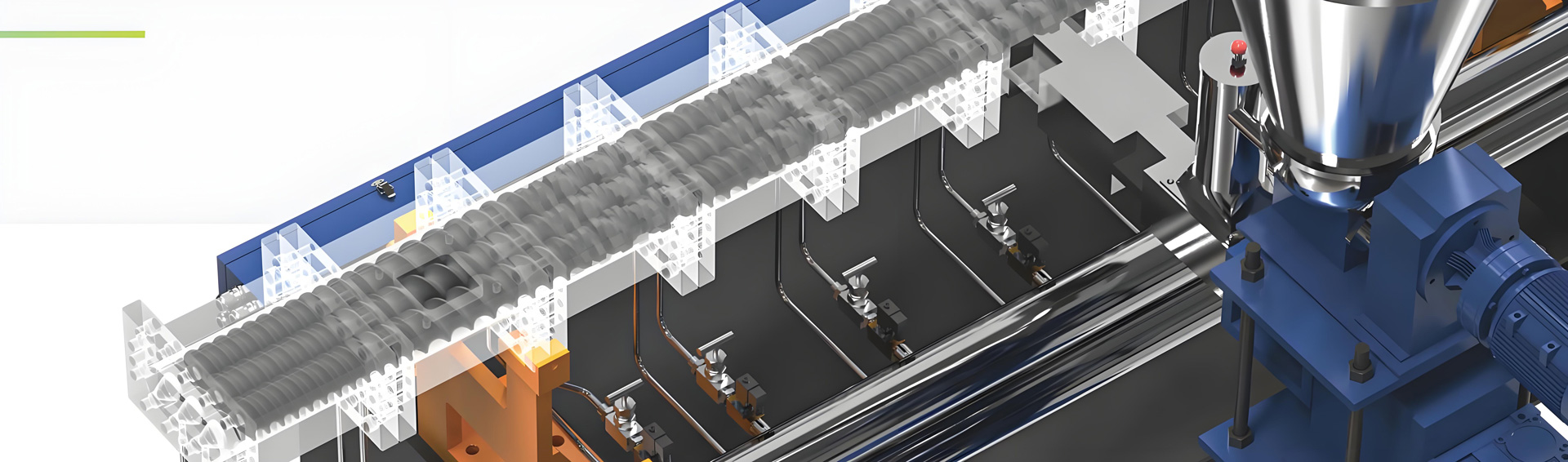
Effective troubleshooting requires understanding how the masterbatch extrusion process works and how different variables interact to affect outcomes. The twin screw extruder creates the conditions necessary for effective compounding through careful control of thermal, mechanical, and hydraulic parameters.
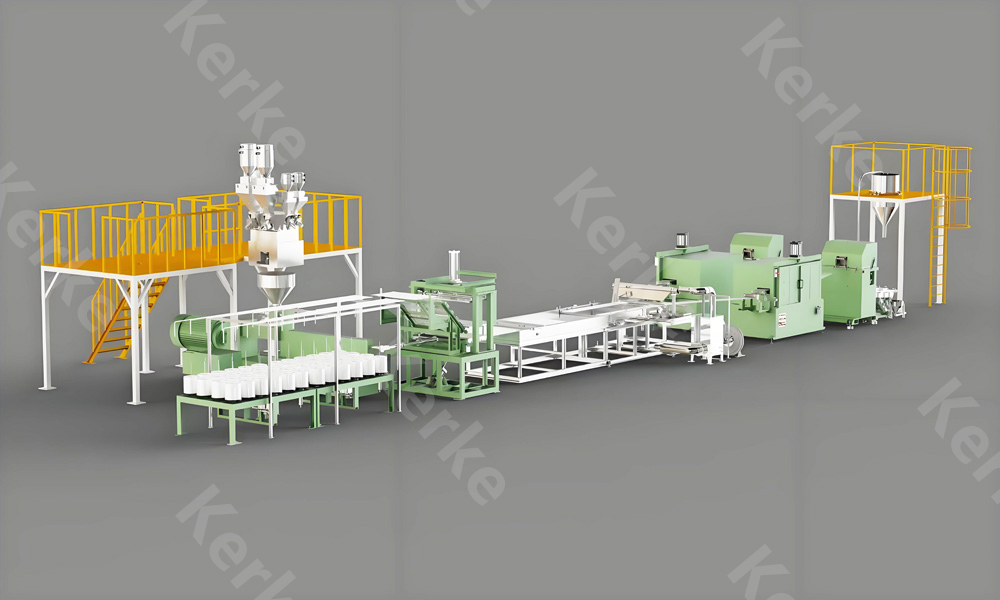
The extrusion process transforms raw materials including polymer carriers, pigments, and additives into uniform masterbatch pellets through a series of coordinated operations. Material feeding, melting, mixing, venting, and pelletizing must all function correctly to produce quality masterbatch products. Problems in any of these areas can manifest as quality defects or production difficulties.
Understanding the relationships between process variables and product quality enables systematic troubleshooting that addresses root causes rather than symptoms. This systems perspective also supports preventive approaches that minimize problem occurrence in the first place.
The Role of Key Process Variables
Temperature settings across the barrel zones establish the thermal environment for material processing. These temperatures influence melting behavior, viscosity, reaction rates, and material degradation. Incorrect temperatures create various processing problems that affect quality outcomes.
Screw speed determines the mechanical energy input to the material and the residence time distribution within the extruder. Speed affects shear rates, mixing intensity, and throughput. Operating at incorrect speeds creates quality or efficiency problems.
Feed rates for polymer and additives determine the composition and throughput of the masterbatch production process. Incorrect feeding creates formulation errors, quality problems, and processing difficulties. Precise feeding control enables consistent production.
Process Interaction Effects
Process variables interact in complex ways that must be understood for effective troubleshooting. Temperature changes affect viscosity which influences mixing and conveying behavior. Screw speed changes affect shear heating which interacts with temperature settings.
These interactions mean that changing one parameter often requires adjusting others to maintain optimal processing conditions. Understanding these relationships enables efficient troubleshooting and optimization.
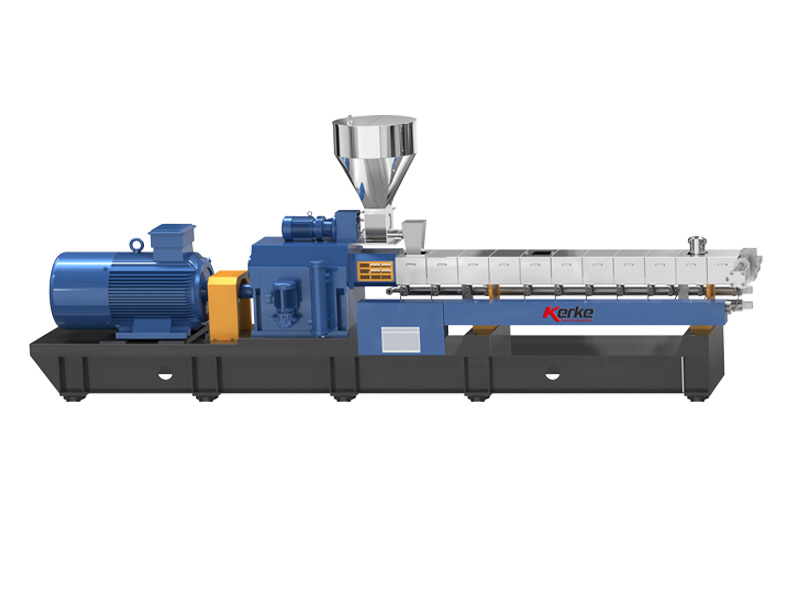
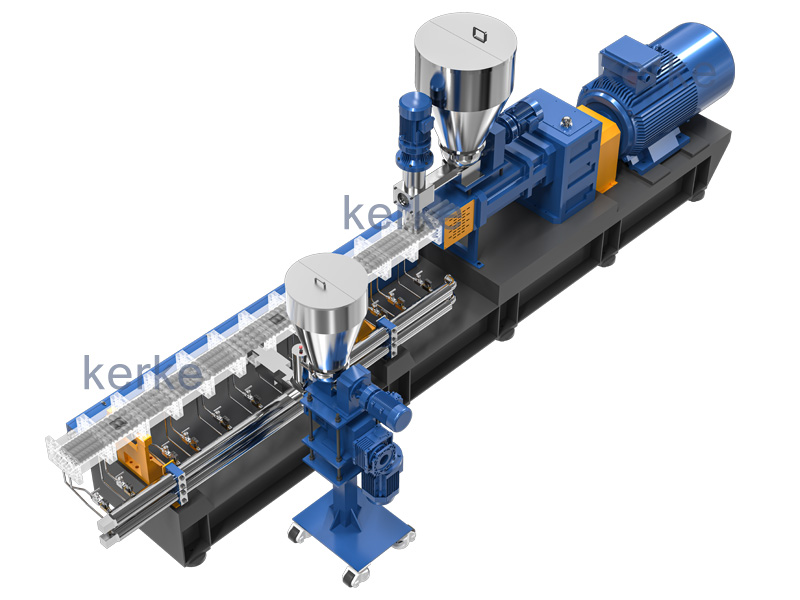
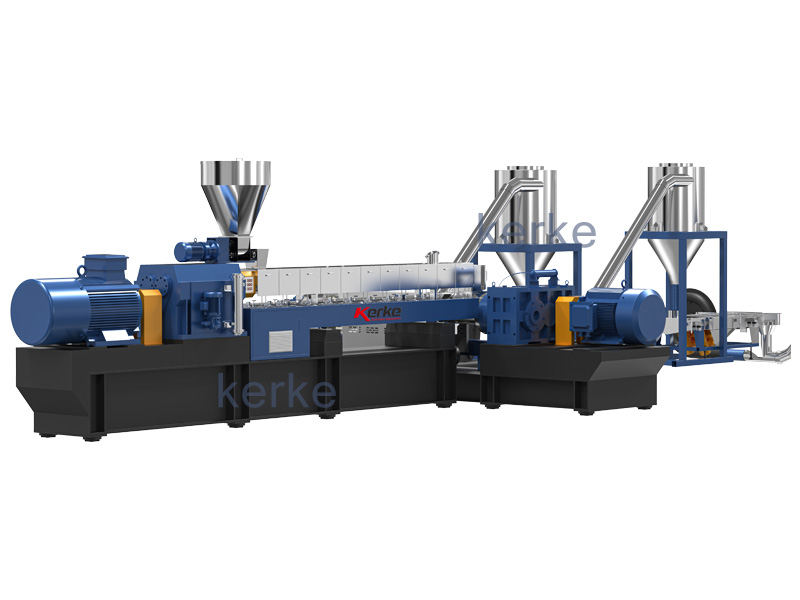
The Kerke KTE series compounding extruders provide precise control over all major process variables, enabling optimization for specific masterbatch formulations. This control capability supports both troubleshooting and quality optimization activities.
Color and Dispersion Quality Problems
Color consistency and dispersion quality represent the most visible quality attributes of masterbatch products. Problems in these areas immediately affect customer satisfaction and acceptance. Understanding the causes of color and dispersion problems enables effective resolution.
Color Variation and Inconsistency
Color variation between batches or within a single production run indicates problems with formulation consistency, mixing effectiveness, or processing conditions. Systematic diagnosis identifies the specific cause for targeted correction.
When color variation occurs, the first diagnostic step is reviewing process data for the affected production periods. Temperature fluctuations, feed rate variations, and screw speed changes often correlate with color variations. This data review frequently identifies the source of variation.
If process data does not reveal obvious causes, investigation should focus on material consistency and equipment condition. Raw material variation, feeder calibration drift, and equipment wear can all create color problems that require different solutions.
Incomplete Pigment Dispersion
Incomplete dispersion manifests as color streaking, speckling, or inconsistent coloration in finished products. These defects originate from inadequate mixing during the compounding process and indicate that processing conditions are not optimized for the specific formulation.
Dispersion problems often relate to screw configuration or processing parameters that do not provide adequate dispersive mixing. Formulations with difficult-to-disperse pigments or high pigment loadings require more intensive mixing conditions.
Increasing kneading block intensity through screw reconfiguration or increasing shear through screw speed adjustment often resolves dispersion problems. Temperature adjustments that optimize melt viscosity for mixing effectiveness also help.
Color Degradation and Fading
Color degradation during processing creates products that appear less vibrant than they should or that fade during storage or use. This problem indicates thermal degradation of pigments or polymer carriers during extrusion.
Thermal degradation typically results from excessive processing temperatures or extended residence times. Reducing barrel temperatures, particularly in high-shear zones, often resolves degradation problems without sacrificing other quality attributes.
Screw speed adjustments that reduce residence time and shear heating also help prevent thermal degradation. For particularly heat-sensitive formulations, equipment with shorter residence times may be necessary.
Pellet Quality Problems and Their Solutions
Pellet quality problems affect both customer satisfaction and downstream processing performance. The appearance, size consistency, and physical properties of pellets must meet specifications to satisfy customer requirements.
Irregular Pellet Shape and Size
Elongated, irregular, or inconsistent pellet shapes indicate problems with the pelletizing process rather than compounding conditions. Water temperature, cutting speed, and melt temperature all influence pellet shape characteristics.
Water temperatures that are too high create soft pellets that deform during cutting and handling. Lowering water temperature firms up pellets and improves shape consistency. However, temperatures that are too low create hard, brittle pellets or cause surface solidification.
Cutting blade condition significantly affects pellet shape. Worn or damaged blades create ragged, irregular pellets. Regular blade inspection and replacement according to production volume maintains cutting quality.
Hollow or Foamed Pellets
Hollow or foamed pellets indicate moisture or volatile content in the material that creates gas bubbles during pelletizing. This problem affects product density, appearance, and processing performance in customer applications.
Material drying problems often cause hollow pellets. Verifying dryer operation and ensuring adequate drying time for specific polymer types addresses moisture-related issues. Testing material moisture content before processing confirms whether drying is adequate.
Excessive volatile content from polymer degradation or volatile additives can also create hollow pellets. Reducing processing temperatures or improving vacuum venting removes volatiles and prevents bubble formation.
Pellet Aggregation and Clumping
Pellets that stick together or clump after production indicate inadequate cooling, improper surface conditions, or compatibility issues between formulation components. This problem creates handling and feeding difficulties for customers.
Insufficient cooling before packaging allows pellets to remain soft enough to stick together. Extending cooling time or adjusting cooling water temperature and flow resolves this issue.
Surface conditions that promote adhesion, such as excessive carrier migration or static charge, can also cause clumping. Formulation adjustments that optimize surface characteristics prevent this problem.
Production Efficiency and Throughput Problems
Production efficiency directly affects operational profitability. Throughput limitations, downtime, and yield losses reduce the economic performance of masterbatch production operations. Addressing these problems improves operational results.
Throughput Limitations and Restrictions
Maximum throughput limitations that prevent achieving production targets indicate equipment or formulation constraints. Systematic diagnosis identifies whether the limitation originates from equipment capability, formulation requirements, or operating conditions.
Equipment throughput limits often relate to motor power, drive capacity, or melting capability. Operating beyond equipment design limits creates quality problems and potential equipment damage. Understanding equipment limits prevents attempting impossible production targets.
Formulation characteristics can restrict throughput when specific processing conditions are required. High filler loadings, difficult melting polymers, or sensitive functional additives may require lower throughput rates to achieve acceptable quality.
Instability and Pressure Fluctuations
Pressure fluctuations during extrusion create quality variation and indicate process instability. These fluctuations originate from feeding problems, melting inconsistencies, or mechanical issues within the extrusion system.
Feeding inconsistencies create pressure variations as material supply fluctuates. Feeder calibration, hopper configuration, and material flow characteristics all influence feeding stability. Addressing feeding problems often resolves pressure instability.
Melting inconsistencies create pressure variations as solid material intermittently reaches the extrusion zone. Temperature adjustments and screw configuration changes that improve melting uniformity address these problems.
Startup and Transition Difficulties
Extended startup times waste material and reduce production efficiency. Optimizing startup procedures and equipment condition minimizes this waste and improves overall productivity.
Standardized startup procedures ensure consistent results regardless of operator. Documenting optimal startup parameters and training all operators on these procedures improves consistency and reduces startup material waste.
Product transitions between formulations require careful purging and parameter adjustment. Efficient transition procedures minimize the time and material waste associated with changeovers.
Equipment Mechanical Problems
Mechanical problems with the compounding extruder affect production quality, efficiency, and safety. Early identification and appropriate response to mechanical issues prevents more serious problems and maintains production continuity.
Screw and Barrel Wear Issues
Screw and barrel wear progressively affects processing performance and product quality. Recognizing wear indicators enables timely response before significant quality problems develop.
Increasing drive current at constant throughput indicates reduced efficiency from wear-related clearance increases. Monitoring current trends reveals wear progression and supports maintenance planning.
Quality problems including inconsistent color, poor dispersion, or formulation variation often correlate with wear-related processing changes. When unexplained quality problems occur, inspecting screw and barrel condition helps identify whether wear is the cause.
Seal and Bearing Failures
Seal failures allow material leakage and contamination that affects quality and creates safety hazards. Regular inspection and replacement of seals according to maintenance schedules prevents unexpected failures.
Visual inspection during maintenance activities identifies seal wear before failures occur. Replacing seals at scheduled intervals rather than waiting for failures reduces unplanned downtime and quality incidents.
Bearing failures often precede more serious mechanical problems and create production interruptions. Vibration monitoring and regular bearing inspection provide early warning of developing bearing problems.
Drive and Motor Problems
Drive system problems including motor issues, V-belt conditions, and gearbox performance affect production capability and reliability. Maintaining drive systems according to manufacturer recommendations ensures reliable operation.
Unusual noises, vibrations, or temperature increases indicate drive system problems requiring attention. Prompt response to these indicators prevents more serious failures and reduces repair costs.
Motor current monitoring provides insight into drive system condition and processing load. Current trends that indicate increasing load may signal developing problems requiring investigation.
Material-Related Problems and Solutions
Raw material characteristics significantly influence processing behavior and product quality. Problems with material quality or handling affect all aspects of masterbatch production.
Inconsistent Raw Material Quality
Raw material variation creates processing instability and quality problems that persist regardless of process optimization. Supplier quality management and incoming material testing identify material problems before they affect production.
Establishing quality specifications for incoming materials ensures consistent input quality. Working with suppliers who can reliably meet specifications provides the foundation for consistent masterbatch production.
Material testing upon receipt identifies problems before materials enter production. This incoming inspection provides a safety net that catches quality issues before they create production problems.
Material Feeding and Handling Issues
Feeding problems create formulation errors, processing instability, and quality variation. Proper feeder selection, calibration, and maintenance ensure accurate and consistent feeding.
Feeder calibration verification at regular intervals confirms that feeding rates remain accurate. Calibration drift over time creates formulation errors that affect product quality.
Hopper configuration and material flow characteristics influence feeding consistency. Addressing bridging, ratholing, or segregation problems improves feeding stability and product uniformity.
Material Contamination and Degradation
Material contamination during storage or handling creates quality problems in finished masterbatch. Proper material handling procedures prevent contamination and protect product quality.
Storage conditions that expose materials to moisture, temperature extremes, or contaminants degrade material quality. Maintaining appropriate storage conditions preserves material properties until processing.
Cleaning procedures between production runs prevent cross-contamination between formulations. Thorough purging and equipment cleaning ensures that each production run meets purity requirements.
Vacuum Venting Problems and Solutions
Vacuum venting systems remove volatiles and moisture that would otherwise create quality problems in finished masterbatch. Venting problems affect product quality and processing stability.
Inadequate Venting Effectiveness
Insufficient volatile removal creates bubbles, voids, and quality problems in finished pellets. Vacuum system performance directly affects venting effectiveness and product quality.
Vacuum pump performance degradation reduces venting capability over time. Regular vacuum testing and pump maintenance ensures adequate performance for application requirements.
Venting port configuration and location influence volatile removal effectiveness. Port locations that correspond to volatile generation zones maximize removal efficiency.
Vacuum System Leaks and Failures
Vacuum leaks allow air ingestion that reduces venting effectiveness and creates oxidation problems. Regular leak testing identifies problems before they affect product quality.
Visual inspection during operation identifies obvious leak locations. Vacuum decay testing provides quantitative assessment of system integrity.
Seal and connection maintenance prevents leaks from developing. Scheduled inspection and replacement of sealing components maintains vacuum system performance.
Temperature Control Problems
Temperature control affects every aspect of masterbatch extrusion processing. Temperature problems create quality issues, processing difficulties, and equipment stress that shortens component life.
Temperature Fluctuations and Instability
Temperature variations during production create quality inconsistency that affects product properties. Control system performance and heating/cooling system condition influence temperature stability.
Control loop tuning optimizes temperature controller response for specific applications. Well-tuned controllers maintain temperature stability despite process disturbances.
Heating and cooling system problems affect temperature control capability. Regular maintenance of heating elements, cooling water systems, and control valves maintains temperature control performance.
Hot or Cold Spots in Processing Zones
Temperature gradients within barrel zones create uneven processing conditions that affect product quality. These gradients often indicate problems with heating systems or barrel configuration.
Internal barrel temperature monitoring identifies gradient problems that surface measurements might miss. This diagnostic information supports targeted solutions.
Heater band failures or deterioration create hot and cold spots that affect processing. Regular inspection and testing of heating systems prevents these problems.
Troubleshooting Methodology and Best Practices
Effective troubleshooting requires systematic approaches that efficiently identify root causes and implement appropriate solutions. Following established methodologies ensures thorough problem resolution while minimizing disruption.
Systematic Diagnostic Approaches
Starting with simple, common causes before investigating complex or rare problems follows the principle of parsimony in troubleshooting. Most problems originate from common causes that can be quickly identified and addressed.
Documenting symptoms, conditions, and attempted solutions creates a knowledge base that supports future troubleshooting activities. This documentation also helps identify patterns that might indicate systemic problems.
Involving experienced personnel in troubleshooting activities leverages accumulated knowledge and experience. Peer review of diagnostic approaches ensures thorough consideration of potential causes.
Data-Driven Troubleshooting
Process data provides objective information that supports troubleshooting activities. Reviewing data from affected production periods often reveals the timing and conditions associated with problems.
Statistical analysis of process data identifies patterns and trends that indicate problem sources. Control charts and trend displays make patterns visible that might otherwise be missed.
Kerke compounding extruders incorporate comprehensive data logging capabilities that support detailed troubleshooting analysis. These systems capture process parameters that enable effective problem diagnosis.
Preventive Troubleshooting Strategies
Preventive maintenance and monitoring identify developing problems before they cause production incidents. Regular equipment inspection and testing catches issues early when correction costs are lowest.
Process monitoring systems that detect deviations from normal operation provide early warning of developing problems. Implementing appropriate alarm and monitoring strategies enables proactive response.
Root cause analysis of past problems identifies systemic issues that might cause future incidents. Addressing underlying causes rather than just symptoms prevents problem recurrence.
Equipment Selection for Reliable Production
Equipment selection significantly influences the frequency and severity of production problems. Choosing reliable equipment with appropriate capabilities reduces operational challenges and improves overall performance.
Quality and Reliability Considerations
Equipment quality directly affects reliability and the frequency of operational problems. Investing in quality equipment reduces lifetime operating costs despite higher initial acquisition costs.
Kerke KTE series compounding extruders are engineered for reliability and durability in demanding masterbatch production applications. Quality construction and appropriate component selection ensure long service life with minimal maintenance requirements.
Sizing and Capability Matching
Equipment sizing must match production requirements to avoid chronic problems from operating equipment beyond appropriate limits. Understanding capability limits prevents attempting impossible production targets.
For development and small-scale production, the KTE-36B at $25,000-$35,000 provides capability of 20-100kg/h that supports initial operations without excessive investment. This equipment enables market entry and product development.
Medium-scale production benefits from equipment like the KTE-50B ($40,000-$60,000, 80-200kg/h) and KTE-65B ($50,000-$80,000, 200-450kg/h) that provide higher throughput while maintaining quality capability.
High-volume operations require equipment like the KTE-75B ($70,000-$100,000, 300-800kg/h) or KTE-95D ($120,000-$200,000, 1000-2000kg/h) that provide the capacity necessary for competitive production volumes.
Training and Documentation for Problem Prevention
Operator training and comprehensive documentation support consistent operational performance and effective troubleshooting. These investments in knowledge management pay returns through improved reliability and reduced problem occurrence.
Operator Training Programs
Comprehensive operator training ensures that personnel understand equipment capabilities, operating procedures, and troubleshooting approaches. Well-trained operators prevent many common problems through proper operation.
Training should cover normal operating procedures, startup and shutdown protocols, and recognition of abnormal conditions. This foundational knowledge enables operators to maintain quality and respond appropriately when problems occur.
Documentation and Procedure Standardization
Written procedures document optimal operating practices and ensure consistency across operators and shifts. Standardized procedures reduce variation that creates quality problems.
Troubleshooting guides that document known problems and their solutions provide valuable resources when issues occur. These guides capture institutional knowledge that would otherwise be lost with personnel changes.
Kerke provides comprehensive documentation for KTE series equipment including operation manuals, maintenance guides, and troubleshooting references. These resources support effective operation and maintenance of equipment.
Conclusion
Masterbatch extrusion troubleshooting requires systematic approaches that identify root causes and implement effective solutions. Understanding process interactions and equipment capabilities enables efficient diagnosis and resolution of common problems.
Preventive approaches through proper maintenance, monitoring, and operator training reduce the frequency and severity of production problems. These investments in reliability pay returns through improved quality, efficiency, and equipment life.
Kerke KTE series compounding extruders provide the reliability, capability, and support resources necessary for successful masterbatch production. Quality equipment combined with effective troubleshooting practices ensures consistent production performance that meets customer requirements.