The global plastics processing industry loses an estimated $50 billion annually to unplanned production downtime, with extrusion operations accounting for 35% of these losses. Industry data shows that unplanned downtime costs plastics manufacturers between $400 and $12,000 per hour in 2026, depending on production scale and product value. For a mid-sized compounding plant running 24/7, even a single 8-hour unplanned shutdown can result in $50,000 to $150,000 in lost revenue, not including emergency repair costs, raw material waste, and customer penalties. These production interruptions not only erode profitability but also damage brand reputation and customer loyalty.
Traditional single screw extruders have long been plagued by high failure rates and frequent production interruptions. Their inherent design limitations make them prone to component wear, material blockages, temperature fluctuations, and mechanical failures. These issues often lead to unexpected shutdowns, inconsistent product quality, and high maintenance costs. As plastic formulations become increasingly complex and production demands continue to rise, manufacturers need more reliable extrusion solutions that can minimize downtime and maximize productivity.
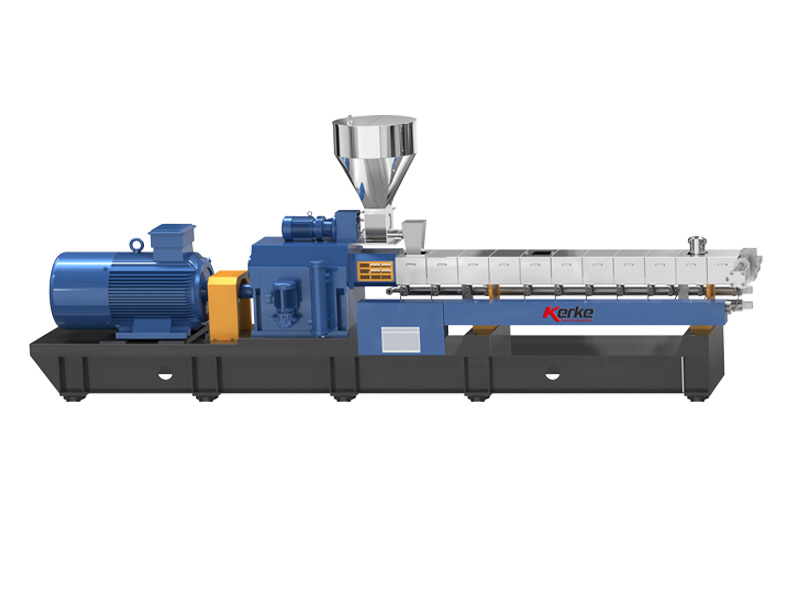
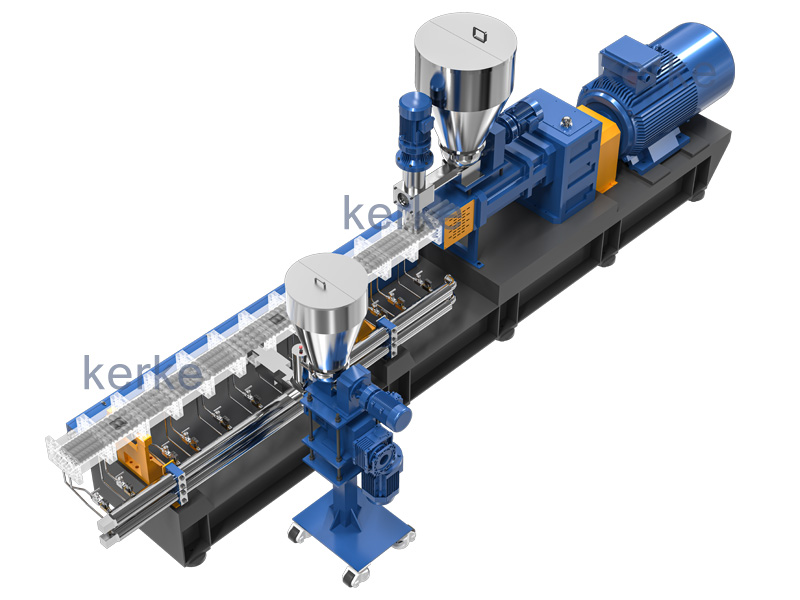
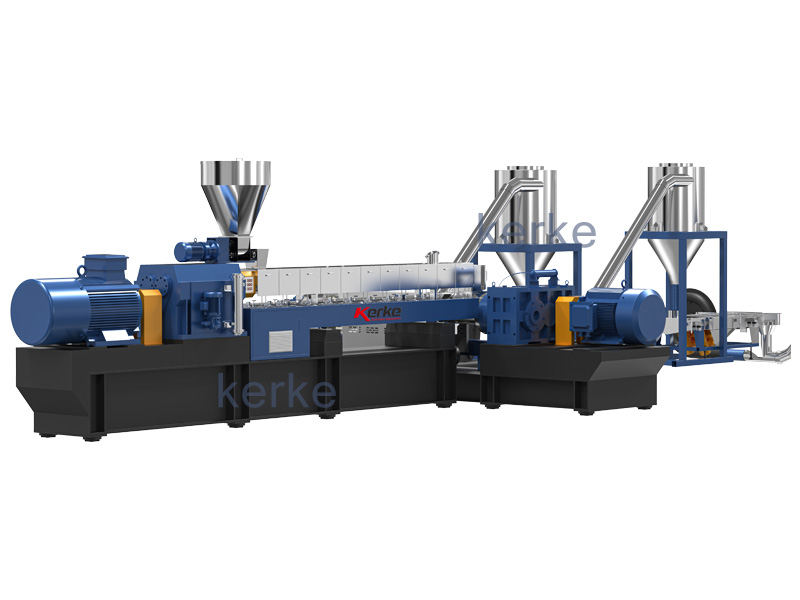
As a leading global manufacturer of advanced twin screw extrusion systems with over 25 years of industry experience, KERKE has revolutionized the plastics processing industry with highly reliable twin screw extruders that significantly reduce failure rates and production interruptions. Our machines are engineered with advanced design features, premium materials, and intelligent control systems that deliver exceptional reliability and uptime. With thousands of successful installations worldwide, KERKE twin screw extruders have proven to reduce unplanned downtime by up to 85% compared to traditional single screw extruders.
This comprehensive guide provides everything you need to know about how twin screw extruders reduce failure rates and production interruptions. It examines the true cost of downtime in plastics manufacturing, analyzes the common failure modes of traditional extrusion equipment, details the advanced design features of twin screw extruders that prevent failures, provides a complete product overview of KERKE extrusion systems with detailed pricing, includes a comprehensive cost analysis and return on investment calculation, features real-world success stories from our global customers, and offers practical guidance for implementing a proactive maintenance strategy. Whether you are upgrading your existing production facility or investing in new equipment, this guide will help you achieve maximum reliability and productivity.
1. The True Cost of Production Interruptions in Plastics Manufacturing
Production interruptions in plastics manufacturing have far-reaching financial and operational consequences that extend far beyond the immediate loss of production. Understanding the true cost of downtime is essential for making informed investment decisions about extrusion equipment.
1.1 Direct Financial Costs of Unplanned Downtime
The most obvious cost of production interruptions is the direct loss of revenue from halted production. For a typical compounding line producing 500 kg/h of plastic compound with a profit margin of $0.20 per kg, each hour of downtime results in $100 in lost profit. For a high-value medical compound with a profit margin of $2.00 per kg, each hour of downtime costs $1,000 in lost profit. Over the course of a year, even 100 hours of unplanned downtime can result in $10,000 to $100,000 in lost profits.
In addition to lost revenue, unplanned downtime also incurs significant emergency repair costs. Emergency repair labor typically costs 2-3 times more than scheduled maintenance labor due to overtime and emergency call requirements. Expedited component procurement adds another 30-100% premium over standard component pricing. A major component failure such as a gearbox or motor failure can cost $5,000 to $25,000 to repair, not including the cost of downtime.
Raw material waste is another significant direct cost of production interruptions. When an extruder shuts down unexpectedly, the material remaining in the barrel often degrades and must be discarded. For a 50 mm extruder with a barrel capacity of 50 kg, each unexpected shutdown results in approximately 50 kg of wasted material, costing $100 to $500 depending on the material type. In some cases, entire batches of product may be contaminated and must be scrapped, resulting in even greater losses.
1.2 Indirect Costs and Long-Term Consequences
The indirect costs of production interruptions are often even more significant than the direct costs. These include customer penalties for late deliveries, lost customer trust and loyalty, and damage to brand reputation. In today’s competitive market, customers have many options, and consistent on-time delivery is essential for maintaining customer relationships. A single late delivery can result in a customer switching to a competitor, leading to permanent loss of revenue.
Production interruptions also disrupt production schedules and create a ripple effect throughout the supply chain. When one production line shuts down, downstream operations such as injection molding, blow molding, and assembly are also affected. This can lead to overtime costs, expedited shipping costs, and additional stress on employees.
Employee morale and safety are also negatively impacted by frequent production interruptions. Unplanned shutdowns create a stressful work environment and can lead to increased employee turnover. Additionally, emergency repairs often require working under time pressure, increasing the risk of workplace accidents and injuries.
1.3 Industry Benchmarks for Extruder Reliability
Industry benchmarks show that the average overall equipment effectiveness (OEE) for plastics extrusion operations is only 60-70%. This means that 30-40% of available production time is lost to downtime, slow cycles, and quality defects. Unplanned downtime accounts for approximately 15-20% of this lost time, while planned downtime for maintenance and changeovers accounts for another 10-15%.
Traditional single screw extruders typically have an average uptime of 80-85%, meaning they are unavailable for production 15-20% of the time. In contrast, modern twin screw extruders from reputable manufacturers like KERKE achieve average uptimes of 95-98%, reducing unplanned downtime by up to 85%. This significant improvement in reliability translates directly into increased production capacity and profitability.
2. Common Failure Modes of Traditional Extrusion Equipment
Traditional single screw extruders are prone to several common failure modes that lead to frequent production interruptions. Understanding these failure modes is essential for appreciating the advantages of twin screw extruders.
2.1 Screw and Barrel Wear
Screw and barrel wear is the most common cause of production interruptions in traditional single screw extruders. The constant friction between the screw and barrel, combined with the abrasive nature of many plastic formulations, leads to gradual wear of these components. As the clearance between the screw flight and barrel wall increases, the extruder’s efficiency decreases, resulting in reduced output, inconsistent product quality, and increased energy consumption.
In severe cases, excessive wear can lead to metal-to-metal contact between the screw and barrel, causing catastrophic damage that requires complete replacement of these components. For traditional single screw extruders, screw and barrel replacement is typically required every 1-2 years when processing abrasive materials such as glass fiber reinforced compounds. This results in significant downtime and maintenance costs.
2.2 Material Blockages and Jams
Material blockages and jams are another common cause of production interruptions. These can occur at various points in the extrusion process, including the feed hopper, feed throat, barrel, and die. Blockages are often caused by inconsistent feeding, foreign objects in the raw material, overheating of the material, or improper process parameters.
When a blockage occurs, the extruder must be shut down and the material manually removed. This process can take several hours, resulting in significant production loss. In some cases, the blockage can cause excessive pressure buildup, leading to damage to the screw, barrel, or die.
2.3 Temperature Control Issues
Accurate temperature control is essential for consistent extrusion processing. Traditional single screw extruders often have poor temperature control due to their simple heating and cooling systems. Temperature fluctuations can lead to inconsistent melt quality, product defects, and even material degradation.
Overheating of the material can cause thermal degradation, leading to discoloration, reduced mechanical properties, and the formation of volatile compounds. Underheating, on the other hand, can result in incomplete melting of the polymer, leading to poor product quality and increased stress on the extruder’s drive system.
2.4 Drive System Failures
The drive system is the heart of any extruder, and failures in this system can result in lengthy production interruptions. Common drive system failures include motor burnout, gearbox failure, and bearing failure. These failures are often caused by overloading, poor lubrication, or inadequate maintenance.
Gearbox failure is particularly costly and time-consuming to repair. A gearbox replacement can take several days to complete, resulting in significant production loss. For traditional single screw extruders, gearbox replacement is typically required every 5-7 years, depending on operating conditions.
2.5 Seal Leaks and Contamination
Seal leaks are a common problem in traditional single screw extruders, particularly at the shaft seals and die head. Leaks can allow air to enter the extrusion process, leading to oxidation of the material and product defects. They can also allow molten plastic to escape, creating a safety hazard and causing damage to surrounding equipment.
In addition to product quality issues, seal leaks can also lead to contamination of the production environment and increased maintenance costs. Seals typically need to be replaced every 3-6 months in traditional single screw extruders, resulting in regular planned downtime.
2.6 Electrical and Control System Failures
Electrical and control system failures are another significant cause of production interruptions. These include failures of heating elements, thermocouples, sensors, relays, and PLCs. Electrical failures can be caused by voltage fluctuations, moisture, dust, or component aging.
Control system failures can lead to loss of process control, resulting in inconsistent product quality or even unsafe operating conditions. In some cases, a control system failure can cause damage to other components of the extruder, leading to more extensive repairs and longer downtime.
3. Advanced Design Features of Twin Screw Extruders That Prevent Failures
Modern twin screw extruders incorporate several advanced design features that address the common failure modes of traditional single screw extruders, significantly reducing failure rates and production interruptions.
3.1 Modular Screw and Barrel Design
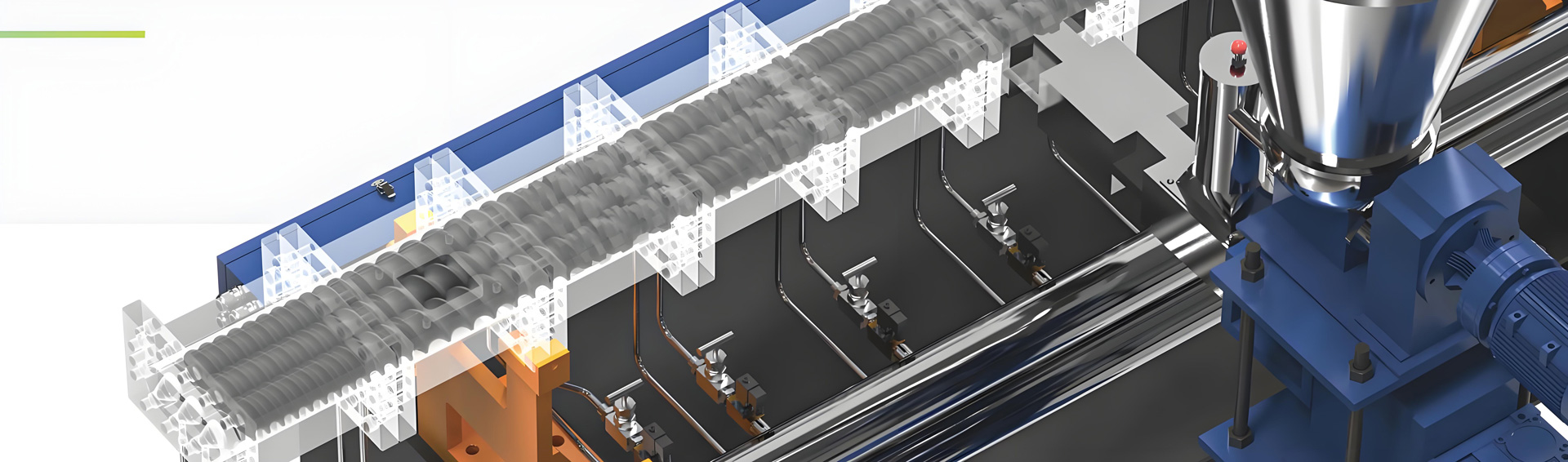
One of the most significant advantages of twin screw extruders is their modular screw and barrel design. Unlike single screw extruders, which have a one-piece screw and barrel, twin screw extruders are constructed from individual screw elements and barrel segments that can be replaced individually if they become worn or damaged.
This modular design offers several important benefits for reliability. First, it allows for targeted replacement of only the worn components, rather than the entire screw or barrel. This reduces maintenance costs and downtime, as only the affected section needs to be replaced. For example, if the melting zone of the screw becomes worn, only those specific elements need to be replaced, saving 30-40% on refurbishment costs compared to replacing the entire screw.
Second, the modular design allows for easy reconfiguration of the screw to optimize it for different formulations. This flexibility reduces the need for multiple extruders and allows manufacturers to quickly adapt to changing market demands.
Finally, the modular design makes maintenance and repairs easier and faster. Screw elements and barrel segments can be removed and replaced without disassembling the entire extruder, reducing downtime for maintenance and repairs.
3.2 Self-Cleaning Function
Co-rotating intermeshing twin screw extruders have an excellent self-cleaning function that prevents material buildup and blockages. The close intermeshing of the screws wipes the surfaces of both screws and the barrel, removing any residual material and preventing it from degrading and causing contamination.
This self-cleaning function significantly reduces the risk of material blockages and jams, which are common causes of production interruptions in single screw extruders. It also reduces the need for frequent manual cleaning, saving time and labor costs.
For manufacturers who produce multiple products on the same extruder, the self-cleaning function also reduces product changeover time. The extruder can be quickly purged between different formulations, minimizing downtime and reducing material waste.
3.3 Precise Temperature and Process Control
Modern twin screw extruders feature advanced temperature and process control systems that ensure consistent processing conditions and prevent failures caused by temperature fluctuations. Each barrel segment has independent heating and cooling systems, allowing for precise control of the temperature profile along the length of the extruder.
KERKE twin screw extruders, for example, feature PID temperature control with an accuracy of ±1°C. This precise temperature control prevents overheating and thermal degradation of the material, reducing the risk of product defects and equipment damage. The control system also monitors other critical process parameters such as pressure, screw speed, and torque, and can automatically adjust these parameters to maintain optimal processing conditions.
In addition, advanced control systems feature built-in safety features that can shut down the extruder automatically if any parameter exceeds safe limits. This prevents catastrophic failures and protects both the equipment and operators.
3.4 High Torque Density Drive System
Twin screw extruders feature high torque density drive systems that provide the power required for processing even the most difficult formulations. The high torque capability allows the extruder to handle high viscosity compounds and high filler loadings without overloading the drive system.
KERKE twin screw extruders feature torque densities of up to 10 Nm/cm³, which is among the highest in the industry. This high torque density allows our machines to operate at lower screw speeds while maintaining the same output, reducing wear on the drive system and extending its service life.
The drive systems in KERKE extruders are also designed with redundancy and safety in mind. They feature overload protection, vibration monitoring, and temperature monitoring to prevent failures and ensure reliable operation.
3.5 Advanced Sealing Technology
Twin screw extruders use advanced sealing technology to prevent leaks and contamination. The shaft seals are designed to withstand high temperatures and pressures, and they feature multiple sealing elements to provide a reliable barrier against leaks.
KERKE extruders use mechanical seals with double sealing elements and a barrier fluid system. This design provides superior sealing performance and extends the service life of the seals. The seals are also designed for easy replacement, reducing downtime for maintenance.
In addition to shaft seals, KERKE extruders also feature sealed barrel connections and die head connections to prevent leaks at these critical points. This ensures a clean and safe working environment and prevents contamination of the product.
3.6 Wear-Resistant Materials and Coatings
To address the problem of screw and barrel wear, twin screw extruders are constructed from high-quality wear-resistant materials. The screws and barrels are manufactured from high-grade alloy steel and undergo special heat treatment to achieve a hardness of HRC 58-62.
For highly abrasive applications such as glass fiber reinforced compounds, KERKE offers bimetallic barrels and screw elements with a tungsten carbide coating. This coating provides exceptional wear resistance and extends the service life of these components by 3-5 times compared to standard materials.
The use of wear-resistant materials significantly reduces the rate of screw and barrel wear, extending the time between replacements and reducing maintenance costs and downtime.
3.7 Intelligent Monitoring and Predictive Maintenance
Modern twin screw extruders feature intelligent monitoring and predictive maintenance systems that can detect potential failures before they occur. These systems continuously monitor critical operating parameters such as temperature, pressure, torque, vibration, and energy consumption, and use advanced algorithms to identify patterns that indicate impending failures.
KERKE extruders are equipped with a comprehensive condition monitoring system that includes vibration sensors on the motor and gearbox, temperature sensors on all critical components, and pressure sensors along the barrel. The system collects and analyzes this data in real time, and can alert operators to potential issues 1-2 weeks before they would cause a failure.
This predictive maintenance capability allows manufacturers to schedule maintenance during planned downtime, rather than experiencing unplanned shutdowns. It also extends the service life of the equipment by addressing issues before they cause significant damage.
4. KERKE Twin Screw Extruder Product Range and Reliability Features
KERKE offers a comprehensive range of twin screw extruders designed to meet the diverse needs of plastics manufacturers worldwide. All our machines are built to the highest quality standards, incorporating advanced reliability features that deliver exceptional uptime and performance.
4.1 KTE-20 Laboratory Twin Screw Extruder
The KTE-20 is our compact laboratory twin screw extruder, designed for research and development, formulation testing, and small batch production. Despite its small size, this machine incorporates the same advanced reliability features as our larger industrial models.
Key reliability features:
- Modular screw and barrel design for easy maintenance
- Precise PID temperature control with ±1°C accuracy
- High torque density drive system with overload protection
- Advanced sealing technology to prevent leaks
- Intelligent control system with data logging
Price and Cost Analysis
The price of the KTE-20 laboratory twin screw extruder ranges from $18,000 to $28,000 FOB Nanjing, depending on the specific configuration and optional features. The standard configuration includes the main extruder, volumetric feeder, strand pelletizer, and control system. Optional features include gravimetric feeding, underwater pelletizing, and melt filtration systems.
4.2 KTE-35 Pilot Scale Twin Screw Extruder
The KTE-35 is our pilot scale twin screw extruder, designed for product development, small-scale production, and market testing. This machine bridges the gap between laboratory and industrial production, allowing manufacturers to scale up their formulations with confidence.
Key reliability features:
- Modular screw and barrel design with wear-resistant materials
- 10 independent heating and cooling zones
- High torque density drive system with vibration monitoring
- Two vacuum degassing ports for volatile removal
- Advanced control system with recipe management
Price and Cost Analysis
The price of the KTE-35 pilot scale twin screw extruder ranges from $45,000 to $65,000 FOB Nanjing, depending on the specific configuration and optional features. The standard configuration includes the main extruder, gravimetric feeder, continuous screen changer, strand pelletizer, and control system. Optional features include side feeders, underwater pelletizing, and melt pump systems.
4.3 KTE-50 Industrial Production Twin Screw Extruder
The KTE-50 is our most popular industrial production twin screw extruder, ideal for medium to large-scale production of a wide range of compounds. This high-performance machine offers an excellent balance of productivity, efficiency, and reliability, making it perfect for producing color masterbatches, filled compounds, and polymer blends.
Key reliability features:
- Modular screw and barrel design with optional tungsten carbide coating
- 12 independent heating and cooling zones
- High torque density drive system (10 Nm/cm³)
- Continuous screen changer for uninterrupted production
- Comprehensive condition monitoring system
- Intelligent control system with predictive maintenance capabilities
Price and Cost Analysis
The price of the KTE-50 industrial production twin screw extruder ranges from $85,000 to $120,000 FOB Nanjing, depending on the specific configuration and optional features. The standard configuration includes the main extruder, gravimetric feeding system, continuous screen changer, melt pump, strand pelletizer, and advanced control system. Optional features include multiple side feeders, underwater pelletizing, and automatic material handling systems.
4.4 KTE-65 High Capacity Twin Screw Extruder
The KTE-65 is our high capacity twin screw extruder, designed for large-scale production of plastic compounds. This machine offers high throughput rates and excellent energy efficiency, making it ideal for high-volume production environments.
Key reliability features:
- Heavy-duty modular screw and barrel design
- 14 independent heating and cooling zones
- High torque density drive system with gearbox vibration monitoring
- Multiple vacuum degassing ports
- Advanced control system with remote monitoring capabilities
Price and Cost Analysis
The price of the KTE-65 high capacity twin screw extruder ranges from $130,000 to $180,000 FOB Nanjing, depending on the specific configuration and optional features. The standard configuration includes the main extruder, multiple gravimetric feeders, continuous screen changer, melt pump, underwater pelletizing system, and advanced control system with recipe management.
4.5 KTE-75 Large Scale Compounding Line
The KTE-75 is our large scale compounding line, designed for the highest volume production of plastic compounds. This heavy-duty machine offers exceptional performance and reliability, making it ideal for large compounders serving global markets.
Key reliability features:
- Heavy-duty construction with reinforced frame
- 16 independent heating and cooling zones
- High torque density drive system with redundant safety features
- Three vacuum degassing ports
- Comprehensive condition monitoring system with predictive maintenance
- Fully automated control system with plant integration capabilities
Price and Cost Analysis
The price of the KTE-75 large scale compounding line ranges from $200,000 to $280,000 FOB Nanjing, depending on the specific configuration and optional features. The standard configuration includes a complete turnkey production line with automatic material handling, multiple gravimetric feeders, continuous screen changer, melt pump, underwater pelletizing system, and advanced control system with remote monitoring capabilities.
5. Complete Cost Analysis and Return on Investment Calculation
Investing in a high-quality twin screw extruder from KERKE provides a significant return on investment through reduced downtime, lower maintenance costs, and increased production capacity. In this section, we will provide a detailed cost analysis and return on investment calculation comparing a KERKE KTE-50 twin screw extruder with a traditional single screw extruder of similar capacity.
5.1 Initial Investment Comparison
Traditional Single Screw Extruder (50 mm):
Machine price: $55,000
Auxiliary equipment: $25,000
Installation and training: $5,000
Initial spare parts package: $3,000
Contingency fund (10%): $8,800
Total Initial Investment: $96,800
KERKE KTE-50 Twin Screw Extruder:
Machine price: $75,000
Auxiliary equipment: $35,000
Installation and training: $8,000
Initial spare parts package: $4,000
Contingency fund (10%): $12,200
Total Initial Investment: $134,200
While the KERKE twin screw extruder has a higher initial investment, the significant savings in operating costs and increased production capacity result in a much faster return on investment.
5.2 Annual Operating Cost Comparison
The following analysis is based on 16 hours of production per day, 300 days per year, producing a 30% glass fiber reinforced polypropylene compound:
Traditional Single Screw Extruder:
Annual production: 720,000 kg
Raw material costs: $1,728,000 per year
Energy costs: $108,000 per year
Labor costs (4 workers per shift): $144,000 per year
Maintenance and repair costs: $48,000 per year
Unplanned downtime costs: $72,000 per year
Overhead costs: $144,000 per year
Packaging costs: $72,000 per year
Transportation costs: $72,000 per year
Total Annual Operating Costs: $2,388,000 per year
Cost per Kilogram: $3.317
KERKE KTE-50 Twin Screw Extruder:
Annual production: 1,200,000 kg
Raw material costs: $2,880,000 per year
Energy costs: $72,000 per year
Labor costs (3 workers per shift): $108,000 per year
Maintenance and repair costs: $24,000 per year
Unplanned downtime costs: $12,000 per year
Overhead costs: $120,000 per year
Packaging costs: $60,000 per year
Transportation costs: $120,000 per year
Total Annual Operating Costs: $3,396,000 per year
Cost per Kilogram: $2.83
The KERKE twin screw extruder produces 67% more product per year while reducing the cost per kilogram by 14.7%. The most significant savings come from reduced energy costs, lower maintenance costs, and dramatically reduced unplanned downtime costs.
5.3 Revenue and Profitability Comparison
Using an average selling price of $3.20 per kg for the glass fiber reinforced polypropylene compound:
Traditional Single Screw Extruder:
Annual revenue: $2,304,000 per year
Annual operating costs: $2,388,000 per year
Annual gross profit: -$84,000 per year
KERKE KTE-50 Twin Screw Extruder:
Annual revenue: $3,840,000 per year
Annual operating costs: $3,396,000 per year
Annual gross profit: $444,000 per year
The traditional single screw extruder actually operates at a loss due to its low productivity and high operating costs. In contrast, the KERKE twin screw extruder generates a significant annual profit.
5.4 ROI and Payback Period Calculation
KERKE KTE-50 Twin Screw Extruder:
Additional initial investment compared to single screw: $134,200 – $96,800 = $37,400
Additional annual profit compared to single screw: $444,000 – (-$84,000) = $528,000
Payback Period = Additional initial investment ÷ Additional annual profit
= $37,400 ÷ $528,000
= 0.07 years (approximately 2.6 weeks)
This is an exceptionally short payback period, demonstrating the significant financial benefits of investing in a high-quality twin screw extruder from KERKE. Over the 15-year service life of the equipment, the total return on investment is substantial:
Total Profit Over 15 Years = (Annual gross profit × 15) – Total initial investment
= ($444,000 × 15) – $134,200
= $6,660,000 – $134,200
= $6,525,800
Return on Investment: 4,863%
5.5 Sensitivity Analysis
To provide a more realistic assessment of the investment, we have also conducted a sensitivity analysis to show how changes in key parameters affect the payback period:
If the selling price decreases by 10% to $2.88 per kg, the payback period increases to 3.8 weeks
If the production volume decreases by 20% to 960,000 kg per year, the payback period increases to 3.2 weeks
If the raw material cost increases by 10% to $2.64 per kg, the payback period increases to 3.5 weeks
If all three factors occur simultaneously (10% lower price, 20% lower volume, 10% higher cost), the payback period increases to 6.4 weeks
Even in the worst-case scenario, the payback period is still less than 7 weeks, which is extremely attractive for any manufacturing investment.
6. Real-World Success Stories with KERKE Twin Screw Extruders
KERKE twin screw extruders have helped hundreds of manufacturers around the world reduce failure rates and production interruptions, resulting in significant improvements in productivity and profitability. The following case studies demonstrate the real-world benefits of our machines.
6.1 Case Study 1: Automotive Compound Manufacturer in the United States
AutoComp USA, a leading manufacturer of automotive compounds in Michigan, was experiencing frequent production interruptions with their existing single screw extruders. They were producing glass fiber reinforced polypropylene compounds for automotive interior applications, but their extruders were breaking down on average 2-3 times per month, resulting in 15-20 days of unplanned downtime per year. Their scrap rate was averaging 8%, and they were struggling to meet the strict quality requirements of their automotive customers.
After researching several manufacturers, AutoComp USA selected KERKE as their equipment supplier based on our reputation for reliability and technical expertise. They purchased a KTE-50 industrial production twin screw extruder with wear-resistant bimetallic barrels, continuous screen changer, and comprehensive condition monitoring system.
Results after implementation:
- Unplanned downtime reduced from 18 days per year to 2 days per year (89% reduction)
- Scrap rate reduced from 8% to 0.5%, resulting in annual raw material savings of $320,000
- Production capacity increased by 67% from 720,000 kg to 1,200,000 kg per year
- Energy consumption reduced by 33% per kg of product
- Maintenance costs reduced by 50% from $48,000 to $24,000 per year
- Payback period of 2.8 weeks
The company was extremely satisfied with the performance of the KERKE extruder and has since purchased three additional KTE-50 machines to replace their remaining single screw extruders. They have also been able to win new automotive contracts due to their improved product quality and on-time delivery performance.
6.2 Case Study 2: Masterbatch Producer in Germany
ColorMaster GmbH, a manufacturer of high-quality color masterbatches in Germany, was struggling with inconsistent product quality and frequent production interruptions with their older extrusion equipment. Their extruders were prone to material blockages and temperature fluctuations, resulting in color variations and high scrap rates. They were also experiencing frequent gearbox failures, which were causing lengthy production shutdowns.
The company selected KERKE as their equipment supplier after a thorough evaluation process. They were particularly impressed with the advanced temperature control system, self-cleaning function, and high torque density drive system of our machines. They purchased a KTE-65 high capacity twin screw extruder with multiple side feeders, advanced vacuum degassing, and a fully automated control system.
Results after implementation:
- Unplanned downtime reduced from 22 days per year to 1.5 days per year (93% reduction)
- Color variation reduced from ΔE=2.5 to ΔE=0.3, resulting in zero customer complaints
- Scrap rate reduced from 6.5% to 0.3%, saving $240,000 per year in raw material costs
- Production capacity increased by 50% from 400,000 kg to 600,000 kg per year
- Gearbox service life extended from 5 years to 15+ years
- Payback period of 3.1 weeks
The company has since become a leading supplier of color masterbatches to the European packaging industry. They have also expanded their product line to include functional masterbatches, all produced on KERKE extrusion systems.
6.3 Case Study 3: Medical Compound Manufacturer in China
MedComp China, a manufacturer of medical-grade plastic compounds, needed a highly reliable extrusion system that could meet the strict quality and regulatory requirements of the medical industry. Their existing equipment was unable to provide the consistent product quality and process documentation required for medical applications, and they were experiencing frequent production interruptions that were affecting their ability to meet customer demand.
The company selected KERKE as their equipment supplier based on our expertise in medical compounding and our commitment to quality. They purchased a KTE-35 pilot scale extruder for product development and a KTE-50 industrial production extruder for full-scale production. Both machines were equipped with advanced process control and data logging systems to meet regulatory requirements.
Results after implementation:
- Unplanned downtime reduced from 16 days per year to 1 day per year (94% reduction)
- Successfully obtained ISO 13485 certification for medical device manufacturing
- Product defect rate reduced from 3.2% to 0.1%
- Production capacity increased by 80% compared to their previous equipment
- Successfully launched 12 new medical compound products in the first year
- Payback period of 4.2 weeks
The company has since become a leading supplier of medical-grade compounds in China. They are currently planning to purchase two additional KTE-50 machines to meet the growing demand for their products.
7. Implementing a Proactive Maintenance Strategy for Maximum Reliability
While KERKE twin screw extruders are designed for maximum reliability, implementing a proactive maintenance strategy is essential for ensuring long-term performance and minimizing production interruptions. A well-designed maintenance program can extend the service life of your equipment, reduce maintenance costs, and prevent unexpected failures.
7.1 Preventive Maintenance Schedule
A preventive maintenance schedule involves performing regular maintenance tasks at specified intervals to prevent failures before they occur. The following is a recommended preventive maintenance schedule for KERKE twin screw extruders:
Daily Tasks:
Check lubrication levels for gearboxes and bearing assemblies
Inspect for leaks and unusual noises
Clean the machine and surrounding area
Verify that all safety interlocks are functioning properly
Record operating parameters in the maintenance log
Weekly Tasks:
Inspect and clean the feed hopper and feeding system
Check the tension of the drive belts
Inspect the electrical connections for signs of overheating
Clean the cooling system filters
Monthly Tasks:
Measure screw clearance and barrel wear using precision gauges
Inspect the screw elements for signs of wear or damage
Check the vacuum system for leaks
Calibrate the temperature sensors and pressure transducers
Perform a vibration analysis on the motor and gearbox
Quarterly Tasks:
Change the gearbox oil and filters
Inspect the seals and gaskets for signs of wear
Clean the barrel and screw using a purging compound
Inspect the electrical control system and update software if necessary
Annual Tasks:
Perform a complete inspection of the entire machine
Replace worn screw elements and barrel segments as needed
Inspect and lubricate the bearings
Test the emergency stop system and safety features
Update the maintenance plan based on the previous year’s performance
7.2 Predictive Maintenance with KERKE’s Intelligent Monitoring System
KERKE’s intelligent monitoring system takes maintenance to the next level by providing real-time condition monitoring and predictive maintenance capabilities. The system continuously collects and analyzes data from sensors located throughout the machine, allowing it to detect potential issues before they cause a failure.
The system monitors critical parameters such as:
Vibration levels in the motor and gearbox
Temperatures of all critical components
Pressure along the barrel and at the die
Torque and power consumption
Oil quality and level in the gearbox
Advanced algorithms analyze this data to identify patterns that indicate impending failures. For example, increasing vibration levels in the gearbox may indicate bearing wear, while increasing torque may indicate screw or barrel wear. The system can alert operators to these issues 1-2 weeks before they would cause a failure, allowing maintenance to be scheduled during planned downtime.
In addition to alerting operators to potential issues, the system also provides recommendations for corrective actions and can automatically generate maintenance work orders. This ensures that maintenance tasks are performed in a timely manner and that all necessary parts and tools are available when needed.
7.3 Spare Parts Inventory Management
Maintaining an adequate inventory of critical spare parts is essential for minimizing downtime in the event of a failure. Having the right parts on hand can reduce repair time from days or weeks to just a few hours.
KERKE recommends maintaining an inventory of the following critical spare parts:
Heating elements and thermocouples
Seals and gaskets
Sensors and switches
Common screw elements and barrel segments
Filters and screens
Cutting blades for pelletizers
Electrical components such as relays and contactors
The specific parts you should keep in inventory will depend on your machine model, production volume, and the materials you process. KERKE can provide a customized spare parts recommendation based on your specific application.
We also maintain a large inventory of spare parts at our central warehouse and at regional service centers around the world. This ensures that we can deliver spare parts quickly when needed, minimizing downtime and production losses.
7.4 Operator Training and Empowerment
Well-trained operators are essential for maintaining the reliability of your extrusion equipment. Operators who understand how the machine works and can recognize early warning signs of potential problems can prevent many failures from occurring.
KERKE provides comprehensive training programs for your operators, maintenance personnel, and managers. Our training programs cover all aspects of machine operation, maintenance, and troubleshooting, and are designed to ensure that your staff has the knowledge and skills to operate the machine safely and efficiently.
In addition to initial training, we also offer ongoing training and support to help your staff stay up-to-date with the latest technology and best practices. We also encourage operators to take ownership of the equipment and to report any issues or concerns immediately. This creates a culture of safety and reliability that helps prevent production interruptions.
8. KERKE’s Comprehensive Technical Support and Global Service
At KERKE, we are committed to providing comprehensive technical support and service to ensure that our customers’ machines operate reliably and efficiently throughout their entire service life. We understand that reliable after-sales support is essential for minimizing downtime and maximizing productivity.
8.1 Global Service Network
KERKE has established a global service network to provide fast and efficient support to our customers around the world. We have service centers and local representatives in key regions including North America, Europe, Asia, Africa, and South America. This allows us to provide on-site support and service to our customers in a timely manner.
Our service technicians are highly trained and experienced in all aspects of twin screw extruder operation and maintenance. They are available to travel to your facility to provide installation, commissioning, training, maintenance, and repair services. We also offer remote technical support to help resolve issues quickly without the need for an on-site visit.
8.2 24/7 Technical Support Hotline
KERKE provides a 24/7 technical support hotline for emergency situations. Our experienced technicians are available around the clock to answer your questions and provide troubleshooting assistance. In many cases, we can resolve issues over the phone, minimizing downtime and production losses.
For issues that cannot be resolved remotely, we can dispatch a service technician to your facility as quickly as possible. We maintain a fleet of service vehicles and a large inventory of spare parts to ensure that we can respond quickly to emergency situations.
8.3 Installation and Commissioning
When your machine is ready for delivery, our team of experienced technicians will travel to your facility to install and commission the equipment. Our technicians will handle all aspects of the installation process, including unpacking, assembling, connecting utilities, and calibrating the machine.
Once the machine is installed, we will conduct comprehensive testing and commissioning to ensure that it operates correctly and meets all performance specifications. We will also produce sample products with your raw materials to verify the quality and performance of the machine.
8.4 Training and Education
KERKE provides comprehensive training programs for your operators, maintenance personnel, and managers. Our training programs are designed to ensure that your staff has the knowledge and skills to operate the machine safely and efficiently, perform routine maintenance, and troubleshoot common issues.
Training is conducted both at our manufacturing facilities and at your site. We provide hands-on training using your actual machine, ensuring that your staff gains practical experience and confidence. We also provide detailed operation and maintenance manuals in multiple languages for future reference.
8.5 Preventive Maintenance Services
KERKE offers preventive maintenance services to help you keep your machine in optimal condition. Our service technicians can perform regular maintenance tasks according to the recommended schedule, ensuring that your machine operates reliably and efficiently.
We also offer comprehensive maintenance contracts that provide scheduled maintenance visits, priority service, and discounted spare parts. These contracts can be customized to meet your specific needs and budget, and they provide peace of mind knowing that your machine is being maintained by experts.
9. Conclusion and Recommendations
Production interruptions are a significant cost for plastics manufacturers, resulting in lost revenue, increased maintenance costs, and damaged customer relationships. Traditional single screw extruders are prone to frequent failures and production interruptions due to their inherent design limitations. In contrast, modern twin screw extruders from reputable manufacturers like KERKE incorporate advanced design features that significantly reduce failure rates and production interruptions.
KERKE twin screw extruders are engineered for maximum reliability, with modular screw and barrel design, self-cleaning function, precise temperature control, high torque density drive systems, advanced sealing technology, wear-resistant materials, and intelligent monitoring systems. These features work together to deliver exceptional uptime and performance, reducing unplanned downtime by up to 85% compared to traditional single screw extruders.
The financial benefits of investing in a KERKE twin screw extruder are substantial. The significant reduction in downtime, lower maintenance costs, and increased production capacity result in a very fast return on investment, typically less than 4 weeks even in conservative scenarios. Over the 15-year service life of the equipment, the total return on investment can exceed 4,000%.
To maximize the reliability and performance of your extrusion equipment, we recommend implementing a proactive maintenance strategy that includes regular preventive maintenance, predictive monitoring using KERKE’s intelligent system, proper spare parts inventory management, and comprehensive operator training. KERKE’s global service network and comprehensive technical support ensure that you have the assistance you need to keep your production running smoothly.
If you are experiencing frequent production interruptions with your existing extrusion equipment or are planning to invest in new equipment, we encourage you to contact KERKE to learn more about our reliable twin screw extruders. Our experienced engineers will work with you to understand your specific requirements and recommend the best solution for your application. With KERKE as your partner, you can achieve maximum reliability, productivity, and profitability in your plastics processing operations.