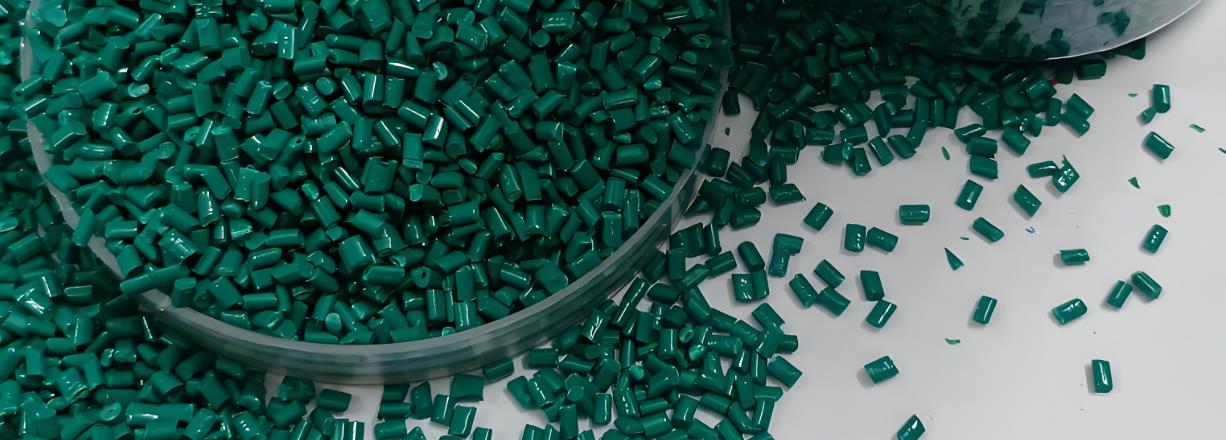
PVC masterbatch is a form of polyvinyl chloride (PVC), which is a granular product made by processing PVC resin as the matrix and adding various additives and additives. Usually white or slightly yellow particles, there are also other color particles made by adding color masterbatch according to demand.
Features
PVC masterbatch is a concentrated particle made of polyvinyl chloride (PVC) as a carrier, which concentrates high proportion functional fillers, additives (such as heat stabilizers, plasticizers) or color powders. Its core value is to solve the pain points of PVC processing and accurately empower product functions. Its characteristics revolve around “PVC substrate adaptability, processing stability, and functional specificity”, retaining the universal advantages of masterbatch while forming exclusive highlights based on PVC characteristics:
1. Strong thermal stability and adaptability (PVC exclusive core advantage)
PVC has poor inherent thermal stability, and processing temperatures (160-190 ℃) can easily lead to degradation (releasing HCl, yellowing, and blackening). PVC masterbatch is targeted to address this pain point:
Pre mixed high-efficiency heat stabilizers (such as calcium zinc composite stabilizers, organic tin stabilizers, with a content of 3% -8%) form a stable system with PVC carriers to avoid degradation during processing;
Heat stabilizers are pre compatible with other additives (such as plasticizers and lubricants), without conflict or failure, ensuring color stability and no irritating odors during the processing of PVC products;
The type of heat stabilizer (such as calcium zinc stabilizer for extrusion and organotin stabilizer for injection molding) can be adjusted according to the processing technology to meet different temperature requirements.
2. Flexible customization of functions, covering all PVC scene requirements
PVC masterbatch can be precisely adjusted according to the “hard/soft characteristics” and “application scenarios” of PVC products, covering all needs from basic coloring to high-end modification:
Basic functions: coloring (color masterbatch), cost reduction filling (calcium carbonate filled masterbatch), plasticizing (soft PVC specific plasticizing masterbatch);
Enhanced functions: flame retardant (utilizing PVC’s inherent chlorine containing properties, combined with flame retardant synergists to increase to UL94 V0 level), weather resistant (anti UV masterbatch, extending the service life of outdoor PVC pipes/profiles), anti-static (PVC film for electronic packaging);
Composite functions: coloring+plasticizing+anti-aging (soft PVC outdoor film), filling+reinforcement+flame retardant (hard PVC building pipes), reducing the types of masterbatch added and simplifying production.
3. High processing convenience and simplified PVC complex formula
PVC processing requires the use of various additives (such as heat stabilizers, plasticizers, lubricants, antioxidants, etc.), and direct addition can easily lead to “ratio imbalance and uneven dispersion”. PVC masterbatch solves this problem:
The granular form is easy to measure and mix, and can be directly mixed with pure PVC resin in proportion (1% -30%) before entering extrusion, injection molding, rolling and other equipment without the need for additional process adjustments;
Pre mix all necessary additives to avoid measurement errors and equipment contamination (such as plasticizer leakage) caused by adding additives separately;
Suitable for PVC full processing technology (extruded pipes/profiles, injection molded parts, rolled films, blow molded products), without the need for targeted adjustment of masterbatch types, with strong versatility.
4. Stable and uniform performance, ensuring consistency in mass production
Accurate and controllable formula: The content fluctuation of functional ingredients (color powder, stabilizer, plasticizer) in the same batch of masterbatch is ≤ 3%, ensuring that there is no difference in color, hardness, toughness, and thermal stability of PVC products produced in bulk (such as uniform wall thickness of PVC pipes and consistent color of profiles);
Functional component pre dispersion: Color powder, fillers, and additives are uniformly dispersed in the masterbatch to avoid problems such as “color spots, filler agglomeration, and uneven thermal stability”, resulting in a 10% -20% increase in product qualification rate;
Long term stability of additives: The functional components are wrapped in PVC carriers, reducing contact with air and moisture, and are not easily oxidized or ineffective during storage (such as heat stabilizers and antioxidants that remain effective even after being stored for more than 1 year).
5. The carrier has excellent compatibility and does not damage the original properties of PVC
The carrier resin is perfectly matched with the target PVC substrate (universal PVC carrier is used for hard PVC masterbatch, and plasticizer containing PVC carrier is used for soft PVC masterbatch), without affecting the rigidity, flexibility, and chemical stability of PVC products (such as acid and alkali resistance, weather resistance);
Does not interfere with the “hard/soft adjustable” characteristics of PVC: Hard PVC masterbatch (such as reinforced and filled types) does not reduce the rigidity of the substrate, while soft PVC masterbatch (such as plasticized and toughened types) does not affect flexibility, only targeting the targeted strengthening function.
6. Excellent cost controllability, reducing comprehensive production losses
High concentration concentration design: Functional ingredients account for 20% -70% (such as color masterbatch powder content of 20% -50%, filling masterbatch calcium carbonate content of 50% -80%), and only 1% -30% needs to be added during use to reduce waste of functional ingredients;
Avoid excessive addition of additives: The pre mixed formula has been optimized to eliminate the need for additional additives, reducing raw material loss (such as cost waste caused by excessive heat stabilizers and sticky products caused by excessive plasticizers);
Reduce equipment maintenance costs: Granular masterbatch has no dust and no leakage (compared to directly adding liquid plasticizers and powder stabilizers), avoiding contamination of equipment walls and reducing cleaning costs.
7. Flexible environmental compliance and adaptability to multiple standards
Environmentally friendly additives can be selected according to needs, such as benzene free plasticizers (DOTP, DINP), calcium zinc composite heat stabilizers (replacing toxic organotin), halogen-free flame retardants, which comply with RoHS, REACH, GB 4806 and other standards;
Satisfy compliance in segmented scenarios: PVC masterbatch for food contact (such as cling film, food packaging) uses food grade additives, and PVC masterbatch for medical use (such as infusion tube accessories) meets biocompatibility requirements;
Supporting the regeneration of PVC recycled materials: It has good compatibility with PVC recycled materials, does not affect the processing performance of recycled materials, and helps promote a circular economy.
8. Targeted solutions to pain points in PVC products
Pain points of hard PVC: insufficient rigidity, easy brittleness → strengthening/toughening masterbatch enhances strength and toughness;
Pain points of soft PVC: migration of plasticizers, poor weather resistance → specialized plasticizing masterbatch (anti migration), weather resistant masterbatch prolongs life;
General pain points: Processing degradation, uneven color → Heat stable masterbatch that balances coloring and resistance to degradation.
The core characteristics of PVC masterbatch can be summarized as follows: strong thermal stability and adaptability, flexible customization of functions, convenient and efficient processing, stable and controllable performance. It not only solves the natural pain points of easy degradation and complex formula in PVC processing, but also empowers product functions in a low-cost and highly compatible way. It is widely used in PVC core application fields such as construction (pipes, profiles), packaging (films, containers), medical (accessories), home appliances (shells), etc.

Classification
The classification core of PVC masterbatch revolves around “PVC substrate characteristics (hard/soft)+functional requirements+application scenarios”, which not only solves the natural pain points of poor thermal stability and complex formula of PVC, but also adapts to the differences between hard PVC (no/low plasticizers) and soft PVC (including plasticizers). The following is divided according to “basic function → functional strengthening → modification optimization → special scenarios”, clarifying the key components, adaptation scenarios and usage points of each type, facilitating precise selection.
I. Basic functional category (core demand for PVC products, accounting for over 60%)
1. Color masterbatch (universal for hard/soft PVC)
Core function: Accurately coloring PVC products while maintaining thermal stability (avoiding degradation during coloring)
Key components: Carrier (universal PVC resin for hard PVC, plasticizer containing PVC resin for soft PVC)+Color powder (carbon black, titanium dioxide, organic/inorganic pigments, 20% -50%)+Heat stabilizer (calcium zinc/organotin, 3% -5%)+Dispersant (EBS, stearic acid, 2% -8%)
Subdivision type:
Black masterbatch: 25% -40% carbon black, suitable for pipes, profiles, and cable sheaths (while also considering UV resistance);
White masterbatch: Titanium dioxide 40% -60% (rutile type weather resistant), suitable for packaging film and household appliance shells;
Color masterbatch: Organic pigment 10% -30%, suitable for toys, decorative parts, and soft PVC films.
Suitable substrates: hard PVC (pipes, profiles), soft PVC (films, daily necessities)
Recommended addition ratio: 2% -8% (dark color 2% -5%, light color 5% -8%)
Adaptation process: extrusion, injection molding, rolling, blow molding
Attention: Soft PVC masterbatch should be matched with plasticizer types (such as DOTP, DINP) to avoid migration
2. Fill masterbatch (mainly made of hard PVC)
Core function: Reduce the cost of hard PVC products, improve rigidity and heat resistance (without affecting processing fluidity)
Key components: carrier (hard PVC resin, 10% -30%)+filler (calcium carbonate 50% -80%, talc powder 40% -60%)+coupling agent (titanate/silane, 1% -3%)+dispersant (PE wax, stearic acid, 3% -10%)+heat stabilizer (2% -4%)
Subdivision type:
Calcium carbonate filled masterbatch: the lowest cost, suitable for PVC pipe inner walls, profile backboards, and injection molded parts;
Talc powder filled masterbatch: enhances rigidity and dimensional stability, suitable for household appliance bases and building accessories.
Suitable substrate: Hard PVC (soft PVC should be used with caution to avoid affecting flexibility)
Recommended addition ratio: 10% -30% (extrusion 15% -30%, injection molding 10% -20%)
Adaptation process: extrusion, injection molding
Attention: The filler mesh size should be ≥ 2000 mesh to avoid scratching the equipment or affecting the surface smoothness of the product
3. Plasticized masterbatch (exclusive for soft PVC)
Core function: Provide flexibility to soft PVC products, replacing the direct addition of liquid plasticizers (to avoid leakage and inaccurate measurement)
Key components: Carrier (PVC resin, 20% -40%)+Plasticizer (DOTP/DINP/DOA, 50% -70%, environmentally friendly and benzene free)+Heat stabilizer (calcium zinc, 3% -5%)+Anti migration agent (2% -5%)
Subdivision type:
Universal type: DOA/DINP plasticizer, suitable for soft PVC film, toys, and daily necessities;
High temperature resistant type: DOTP plasticizer, suitable for soft PVC accessories in high temperature environments (such as car interiors);
Low temperature type: DOA plasticizer, suitable for soft PVC products in low-temperature environments (such as refrigerator accessories).
Suitable substrate: Soft PVC (film, pipe, toy, medical accessories)
Recommended addition ratio: 15% -40% (adjusted according to the target hardness, Shore A 60-90)
Adaptation process: rolling, extrusion, injection molding
Attention: The plasticizer content should be precise to avoid migration that may cause the product to become sticky or hard
II. Functional enhancement class (targeted solution to PVC pain points)
1. Heat stable masterbatch (universal for hard/soft PVC, core essential)
Core function: Prevent PVC degradation (release HCl, yellowing and blackening) during processing (160-190 ℃), and extend the processing window
Key components: carrier (PVC resin, 40% -60%)+heat stabilizer (calcium zinc composite 30% -50%/organotin 10% -20%/lead salt 15% -30%)+auxiliary stabilizer (epoxy soybean oil, 5% -10%)
Subdivision type:
Calcium zinc environmentally friendly: free of heavy metals, compliant with RoHS/REACH, suitable for food contact, medical, and children’s products;
Organic tin high-efficiency type: high thermal stability efficiency, suitable for high-precision injection molded parts and transparent PVC products;
Lead salt economic type: Low cost, only suitable for industrial grade products (such as non food contact pipes).
Suitable substrates: hard PVC (profiles, pipes), soft PVC (films, accessories)
Recommended addition ratio: 2% -5% (calcium zinc type 3% -5%, organotin type 2% -3%)
Adaptation process: All PVC processing techniques
Caution: Avoid mixing different types of stabilizers (such as conflicts between calcium zinc and organotin)
2. Weather resistant (UV resistant) masterbatch
Core function: Enhance the UV aging resistance of PVC outdoor products, avoiding brittleness and fading
Key components: Carrier (PVC resin, 40% -60%)+Light stabilizer (UV531/UV327, 3% -8%)+Antioxidant (1010/168, 0.5% -2%)+UV absorber (carbon black/rutile titanium dioxide, 10% -20%)
Suitable substrates: hard PVC (outdoor pipes, profiles, guardrails), soft PVC (greenhouse film, outdoor decorative film)
Recommended addition ratio: 1% -3% (3% for long-term outdoor use, 1% -2% for short-term use)
Adaptation process: extrusion, rolling, blow molding
Attention: Compatibility testing with heat stabilizers to avoid failure
3. Flame retardant masterbatch (PVC exclusive advantage type)
Core function: Utilizing PVC’s inherent chlorine containing properties to enhance flame retardancy (without the need for high proportions of flame retardants)
Key components: carrier (PVC resin, 30% -50%)+flame retardant synergist (antimony trioxide 5% -15%, magnesium hydroxide 20% -40%)+smoke suppressant (molybdenum compound, 5% -10%)+heat stabilizer (3% -5%)
Performance indicators: up to UL94 V0 level, low smoke density
Suitable substrates: hard PVC (building pipes, electrical enclosures), soft PVC (cable sheaths, flame-retardant films)
Recommended addition ratio: 5% -15% (halogen-free type 10% -15%, synergistic type 5% -10%)
Adaptation process: extrusion, injection molding, rolling
Attention: Halogen free flame retardant masterbatch should be paired with magnesium hydroxide/aluminum to avoid affecting processing fluidity
4. Anti static masterbatch
Core function: Eliminate static electricity on the surface of PVC products, prevent dust adsorption and electrostatic discharge (such as electronic packaging)
Key components: Carrier (PVC resin, 40% -60%)+Antistatic agent (cationic/nonionic, 5% -15%)+Dispersant (2% -5%)
Performance indicators: Surface resistance reduced to 10 ⁶ -10 ¹⁰ Ω, effective time ≤ 24 hours
Suitable substrates: hard PVC (electronic accessories, trays), soft PVC (electronic packaging film)
Recommended addition ratio: 2% -5%
Adaptation process: extrusion, rolling, injection molding
5. Open/Smooth Masterbatch (exclusive for soft PVC film)
Core function: prevent adhesion of soft PVC film (opening masterbatch), improve surface smoothness (smooth masterbatch)
Key components:
Open masterbatch: carrier (soft PVC resin, 40% -60%)+opening agent (silica/talc powder, 10% -20%)+dispersant (2% -5%);
Smooth masterbatch: carrier (soft PVC resin, 40% -60%)+smoothing agent (oleic acid amide/erucic acid amide, 5% -10%).
Suitable substrate: Soft PVC film (packaging film, greenhouse film)
Recommended addition ratio: Open masterbatch 0.5% -2%, smooth masterbatch 0.3% -1%
Adaptation process: rolling, blow molding
Caution: Excessive lubricant can easily precipitate, causing the film to become sticky
III. Modified optimization category (improving PVC mechanical/performance)
1. Toughened masterbatch (exclusive for hard PVC)
Core function: Solve the problem of low temperature brittleness and cracking of hard PVC, and improve impact strength
Key components: carrier (hard PVC resin, 30% -50%)+toughening agent (CPE/ACR/MBS, 30% -50%)+compatibilizer (PVC-g-MAH, 3% -8%)+heat stabilizer (3% -5%)
Performance improvement: Low temperature (-20 ℃) impact strength increased by 50% -100%
Suitable substrate: Hard PVC (pipes, profiles, injection molded parts)
Recommended addition ratio: 5% -15% (can be increased to 20% in extreme low-temperature scenarios)
Adaptation process: extrusion, injection molding
Attention: ACR toughening agent is suitable for transparent products, MBS toughening agent is suitable for colored products
2. Enhance masterbatch
Core function: Enhance the tensile strength and rigidity of hard PVC, and adapt to engineering grade applications
Key components: carrier (hard PVC resin, 30% -50%)+reinforcing filler (glass fiber 20% -40%/talc powder 30% -50%)+coupling agent (silane/titanate, 1% -3%)+dispersant (PE wax, 5% -8%)+heat stabilizer (3% -5%)
Performance improvement: tensile strength increased by 30% -60%, bending modulus increased by 40% -80%
Suitable substrate: Hard PVC (mechanical parts, building structural components, high-strength pipes)
Recommended addition ratio: 10% -30%
Adaptation process: extrusion, injection molding
Attention: Glass fibers need to be pretreated with silane coupling agents to avoid poor compatibility with PVC
3. Compatible masterbatch
Core function: Improve the compatibility of PVC with other materials such as ABS, PE, and fillers, and avoid delamination and cracking
Key components: carrier (PVC resin, 60% -80%)+compatibilizer (PVC-g-MAH/ABS-g-MAH, 10% -20%)+coupling agent (1% -3%)
Suitable substrate: hard/soft PVC (blended products, recycled materials)
Recommended addition ratio: 3% -10%
Adaptation process: blending extrusion, injection molding
Attention: Choose a compatibilizer based on the type of blend material (such as PVC/PE co mixed PE-g-MAH)
IV. Special scenario category (exclusive to specific fields)
1. Medical grade PVC masterbatch
Core function: Compliant with medical biocompatibility, non-toxic, and non migratory
Key components: carrier (medical grade PVC resin, 40% -60%)+medical grade plasticizer (DEHP substitute, such as TOTM, 30% -50%)+calcium zinc heat stabilizer (3% -5%)+antibacterial agent (silver ion, 2% -5%)
Performance indicators: compliant with ISO 10993 and USP Class VI standards
Suitable substrate: Soft PVC (infusion tubes, medical accessories, disposable medical supplies)
Recommended addition ratio: 15% -40%
Adaptation process: extrusion, injection molding
2. Environmentally friendly and biodegradable PVC masterbatch
Core function: endowing PVC products with biodegradability, in line with environmental policies
Key components: carrier (PVC resin, 50% -70%)+degradation promoter (starch/polycaprolactone, 20% -30%)+compatibilizer (3% -8%)+environmentally friendly heat stabilizer (calcium zinc, 3% -5%)
Performance indicators: Complies with GB/T 20197-2006 Biodegradable standard
Suitable substrate: hard/soft PVC (disposable packaging, agricultural film)
Recommended addition ratio: 10% -30%
Adaptation process: extrusion, rolling, blow molding
3. Composite functional masterbatch (multi performance integrated)
Core function: Integrate multiple functions and simplify the production process (reduce the types of masterbatch added)
Common types:
Coloring+thermal stability+weather resistance: suitable for outdoor PVC profiles and pipes (balancing coloring, anti degradation, and UV resistance);
Toughening+flame retardant: Suitable for hard PVC building pipes (solving brittle cracking+flame retardant requirements);
Plasticization+Antibacterial: Suitable for soft PVC medical film and food contact packaging (balancing flexibility and antibacterial properties).
Suitable substrate: hard/soft PVC (matched according to composite function)
Recommended addition ratio: 5% -25% (adjusted according to functional complexity)
Adaptation process: extrusion, injection molding, rolling
V. Selection Core Logic Table (Quickly Match Requirements)
| Selection dimension | Masterbatch type | Key decision points |
| Basic requirements (coloring/cost reduction/toughening) | Color masterbatch/filling masterbatch/toughening masterbatch | Choose filling/toughening for hard PVC, color masterbatch/plasticizing masterbatch for soft PVC |
| Processing pain points (degradation) | Heat stable masterbatch | Choose calcium zinc type for environmental protection needs and organic tin type for high efficiency |
| Scene adaptation (outdoor/medical/electronic) | Weather resistant masterbatch/medical grade masterbatch/anti-static masterbatch | Outdoor weather resistance, medical grade for medical use, anti-static for electronic use |
| Process adaptation | Select low filler type for rolling (film); Extrusion/injection molding optional high filler type | Soft PVC film should avoid high filling to prevent affecting flexibility |
| Compliance requirements (RoHS/food grade) | Environmentally friendly masterbatch (calcium zinc stable, no ortho benzene plasticization) | Choose food grade additives for food contact and RoHS compliant for export |
The core design of PVC masterbatch is “adapting to the hard and soft properties of PVC+solving processing pain points+empowering scene functions”. The core can be divided into four categories: basic functions (coloring/filling/plasticizing), functional strengthening (thermal stability/weather resistance/flame retardancy), modification optimization (toughening/strengthening/compatibility), and special scenarios (medical/degradation/composite).
The key to selection is to first clarify the type of PVC substrate (hard/soft); ② Lock in core requirements (such as “hard PVC outdoor pipes” that need to balance thermal stability, weather resistance, and coloring, with the option of composite functional masterbatch); ③ Match process and compliance requirements; ④ Control the addition ratio (to avoid affecting processing fluidity and product performance). Special scenarios (such as medical and high-end engineering parts) can customize and adjust the composition (such as medical grade non migratory plasticizers, enhancing masterbatch to increase glass fiber content), achieving a balance between performance and compliance.
PVC masterbatch extruder
Kerke’s masterbatch extruder can be used to produce PVC masterbatch. Our PVC masterbatch extruder has multiple models to choose from, which can meet different production requirements.
-

Laboratory Twin Screw Extruder
When will you need a lab twin screw extruder? If you want to make trials and tests of…
-
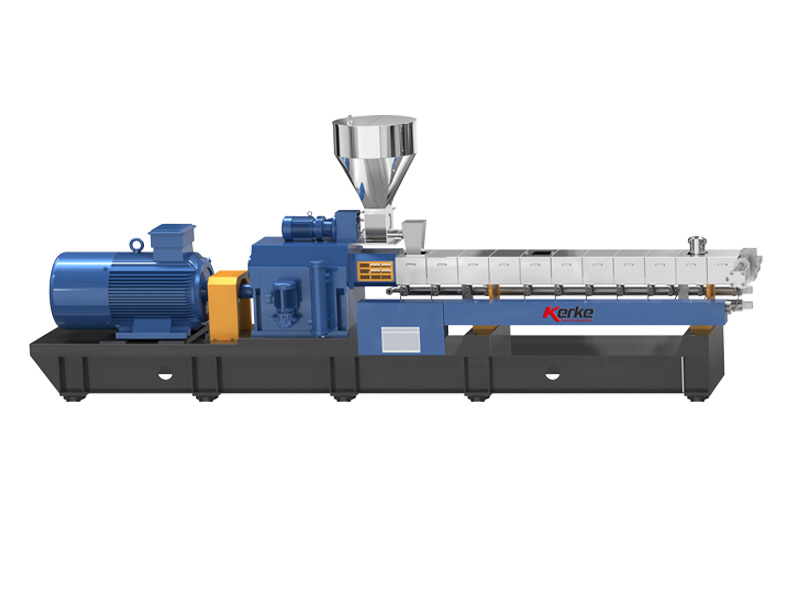
Twin Screw Extruder
Our Parallel Co-rotating twin screw extruder is designed for compounding and masterbatch making with an output capacity from…
-
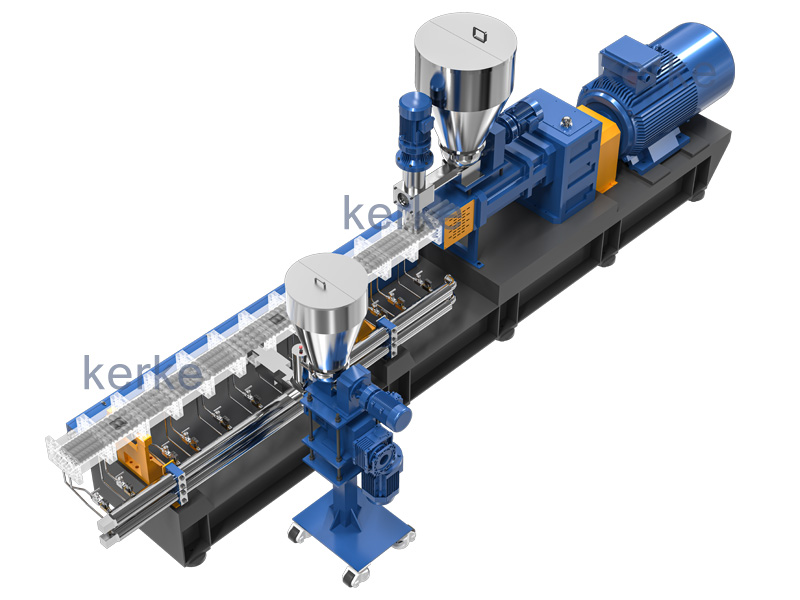
Triple (3 screws) Extruder
3 Screws extruder is a new technology that has many advantages. The triple screw extruder is mainly used…
-
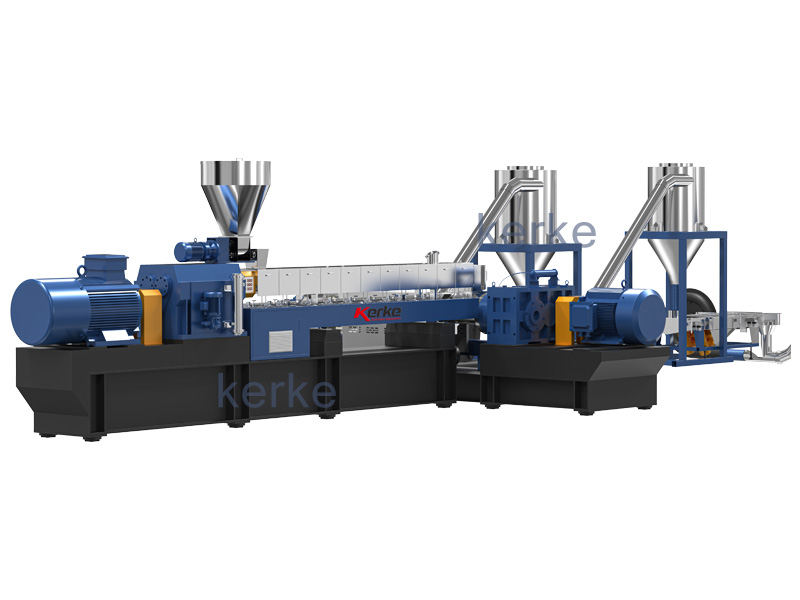
Double-Stage Extrusion System
Mother-baby extrusion system is designed for special materials which can not process on one stage extruder, the first…
-
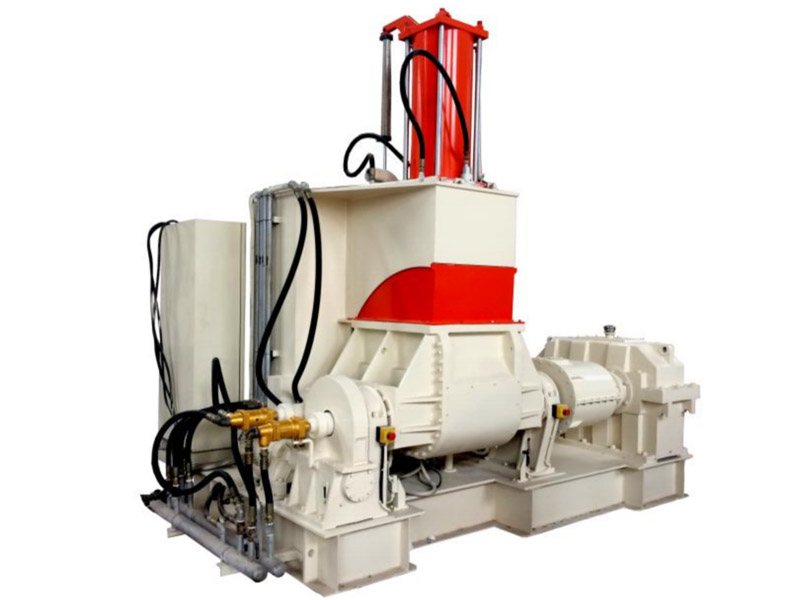
Banbury Kneader Compounding Line
Our kneader + extruder is designed for making special applications with an output capacity from 30kg/h to 1000kg/h.…
-
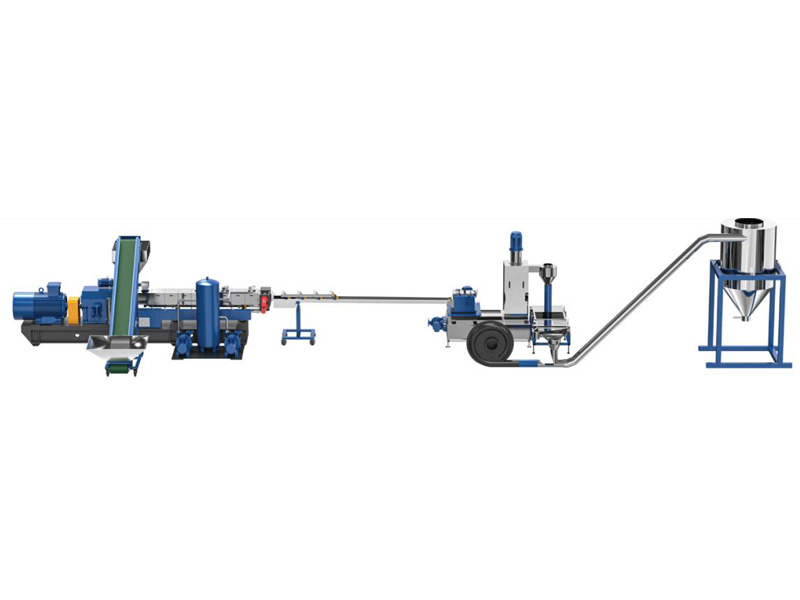
Cutting System / Pelletizing System
Different material needs different cutting system, Kerke provides all kinds of cutting system, here is the explanation of…
Production process of PVC masterbatch
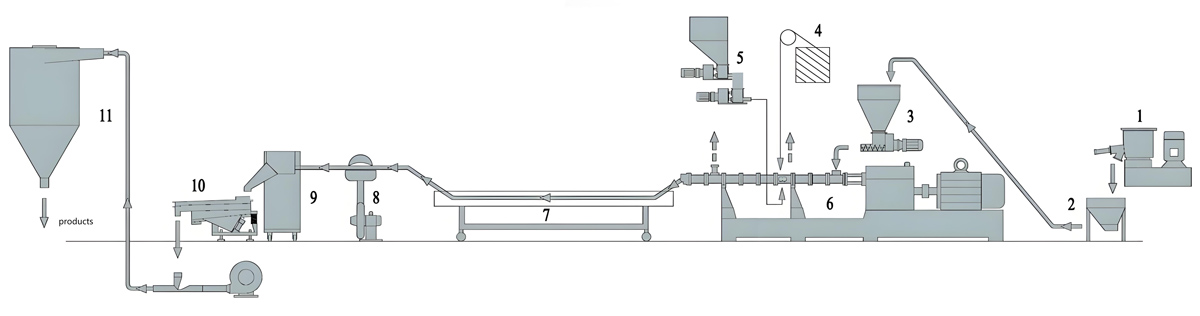
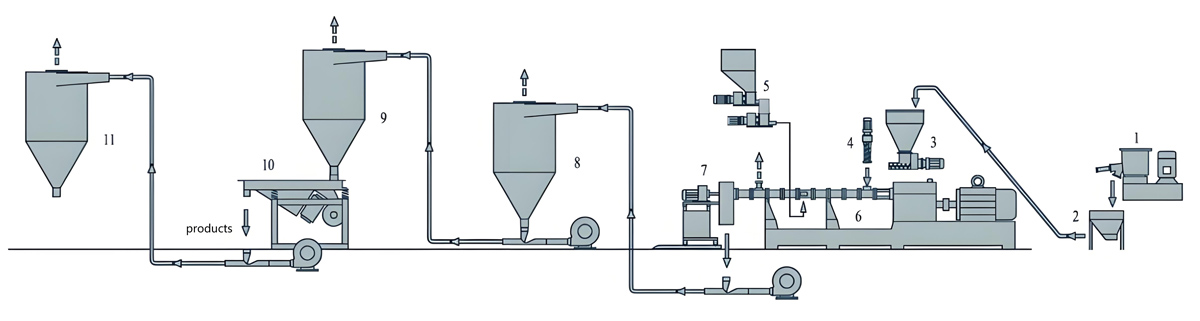
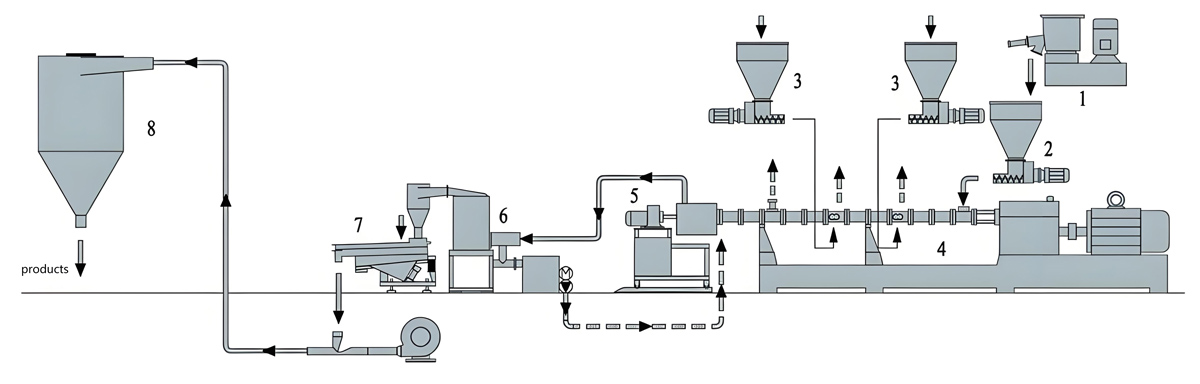
The production process of PVC masterbatch mainly includes steps such as batching, mixing, extrusion, granulation, cooling, and packaging. The following is a specific introduction:
1. Ingredients: Accurately weigh various raw materials such as PVC resin, plasticizer, stabilizer, lubricant, filler, coloring agent, etc. according to the performance requirements of the product. For example, when producing soft PVC masterbatch, a large amount of plasticizer is added; When producing hard PVC masterbatch, less or even no plasticizers are added.
2. Mixing: Add the weighed raw materials into a high-speed mixer for thorough mixing. During the mixing process, the high-speed rotating stirring blade causes the materials to collide and rub against each other, achieving the goal of uniform dispersion. At the same time, appropriate processing aids can be added as needed during the mixing process to improve the processing performance of the material.
3. Extrusion: The mixed material enters the twin-screw extruder. The twin-screw extruder has good conveying capacity and mixing effect, which can fully melt and plasticize materials under high temperature and high pressure. During the extrusion process, the temperature, speed, pressure and other parameters of the extruder are controlled to ensure that the material reaches the optimal plasticization state. Generally speaking, the temperature of the extruder is set between 160 ℃ and 200 ℃, and the specific temperature is adjusted according to the type and formula of PVC resin.
4. Granulation: The material plasticized by the extruder is extruded from the machine head to form continuous strips or filaments. Then it is cut into granules of a certain length by a granulator, and common granulation methods include hot cutting and cold cutting. The hot cutting method is to use a rotating tool to cut the material into particles while extruding it, and the particle shape is relatively regular; The cold cutting method is to cool the extruded strip material first, and then cut it. This method is suitable for situations where particle shape requirements are not high.
5. Cooling: The PVC masterbatch after granulation needs to be cooled to prevent particle adhesion and deformation. Usually, air or water cooling is used for cooling. Air cooling is the process of using a fan to blow cold air towards particles, rapidly reducing their temperature; Water cooling is the process of cooling particles through a water tank, which has a better cooling effect. However, it is important to control the cooling rate to avoid internal stress on the particles.
6. Packaging: After cooling, the PVC masterbatch is sieved to remove particles that are too large or too small, and then packaged. Packaging usually uses plastic woven bags or paper bags to prevent moisture and contamination of the masterbatch. The product model, specifications, production date, and other information should be indicated on the packaging for storage and use purposes.
Main production machines
The main machinery and equipment for producing PVC masterbatch include the following:
Batching equipment
Electronic scale: used for precise weighing of various raw materials, such as PVC resin, plasticizers, stabilizers, fillers, etc. Its precision requirements are high, usually accurate to grams or even milligrams, to ensure the accuracy of ingredients.
Ingredient mixer: preliminary mixing and blending of various weighed raw materials to achieve a certain degree of uniform distribution before entering the high-speed mixer, thereby improving mixing efficiency.
Mixing equipment
High speed mixer: It is a key mixing equipment in the production of PVC masterbatch. It achieves highly uniform mixing of materials in a short period of time through high-speed rotating stirring blades. At the same time, appropriate liquid additives, such as plasticizer and lubricant, can be added as required during the mixing process, and can be evenly sprayed on the material surface through the spray device to achieve better mixing effect.
Extrusion equipment
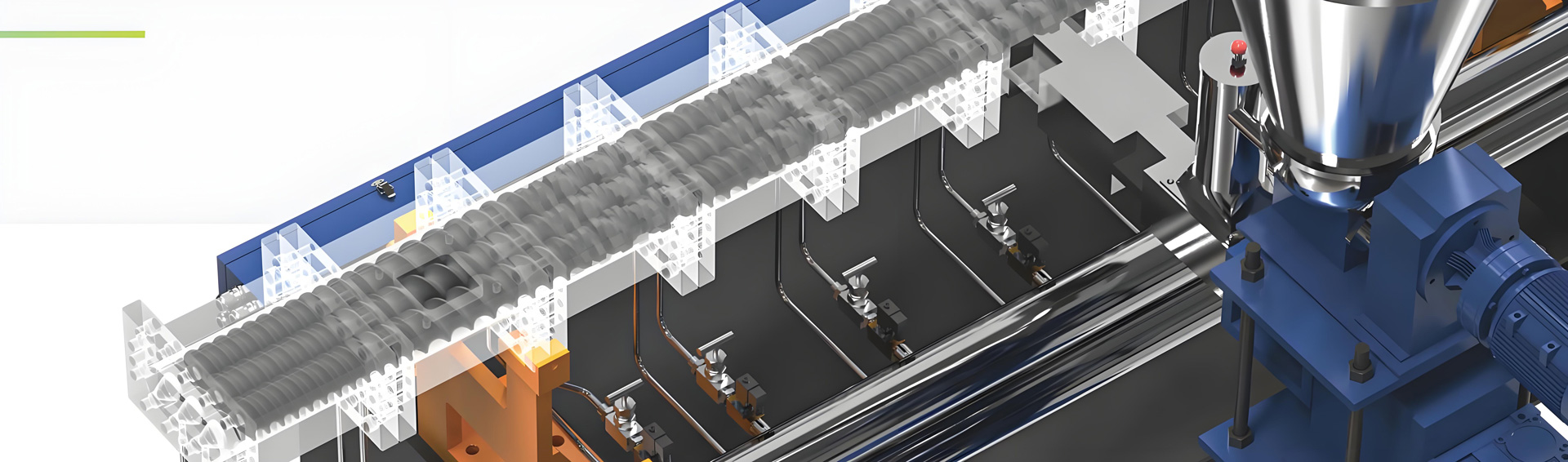
Twin screw extruder: This is one of the core equipment for PVC masterbatch production. It has two interlocking screws that transport, extrude, shear, and plasticize materials during rotation. The advantages of twin-screw extruder are strong conveying capacity, good mixing effect, high plasticizing quality, and the ability to adapt to the production of PVC masterbatch with different formulations and process requirements. It is also equipped with heating and cooling systems that can precisely control the temperature of the material during the extrusion process.
Granulation equipment
Hot cutting granulator: For the production of PVC masterbatch with high requirements for particle shape and size, a hot cutting granulator is often used. It uses a rotating tool to cut the material into particles while it is extruded from the extruder head. The speed and cutting frequency of the cutting tool can be adjusted according to the required particle size, resulting in particles with regular shapes and uniform sizes.
Cold cutting granulator: The cold cutting granulator first cools and shapes the extruded strip material through a cooling device, and then performs cutting. This granulator is suitable for situations where the appearance of the particles is relatively low, but high production efficiency is required. Its structure is relatively simple and the maintenance cost is low.
Cooling equipment
Air cooling system: composed of fans, ducts, and cooling channels. When the PVC masterbatch after granulation passes through the cooling channel, the fan blows cold air into the channel to quickly dissipate the heat on the surface of the particles, achieving the purpose of cooling. The air-cooled system has the advantages of fast cooling speed and dry particle surface, and is suitable for situations where low moisture content is required for particles.
Water cooling system: mainly including water tank, water pump, and cooling pipeline. When particles pass through the water tank, they exchange heat with water to achieve rapid cooling. The cooling effect of the water cooling system is good, but attention should be paid to controlling the cooling speed to avoid internal stress caused by rapid cooling of particles. Meanwhile, the cooled particles need to undergo dehydration treatment to remove surface moisture.
Auxiliary equipment
Screening machine: used to screen the cooled PVC masterbatch, remove particles that are too large or too small, and ensure the uniformity of product particle size. Common screening machines include vibrating screens, rotating screens, etc. The appropriate type can be selected according to production scale and particle size requirements.
Packaging machine: Packaging the screened PVC masterbatch. Automatic packaging machines can achieve automation of packaging processes such as measurement, filling, and sealing, improving packaging efficiency and quality. Packaging machines are usually equipped with weighing devices that can accurately control the weight of each bag of product.
Related requirements
The production of PVC masterbatch requires the extruder to meet the following requirements:
Strict temperature control:
Temperature control is crucial in the production process of PVC masterbatch. The temperature of each heating zone of the extruder needs to be precisely adjusted according to the formula. Usually, the first zone is set at 160 ℃ to 170 ℃, the second zone at 170 ℃ to 180 ℃, the third zone at 180 ℃ to 190 ℃, and the head temperature is controlled at 190 ℃ to 200 ℃.
The operator needs to record temperature fluctuations every half hour. If the deviation exceeds ± 3 ℃, the machine should be stopped immediately for troubleshooting to prevent the decomposition of materials and the production of hydrogen chloride gas, which can corrode the equipment.
Reasonable screw design:
Screw design should follow the principle of low shear to prevent overheating. Screw and barrel require anti-corrosion treatment to extend the service life of the equipment.
The length to diameter ratio (L/D) of the screw is generally selected between 16~20, with a head taper of 20 °~30 °, which is more suitable for soft rubber. If the product requirements are high, a non metering section and separation type screw can be used, which is more suitable for hard PVC.
To cooperate with temperature control, cooling water or oil holes can be added inside the screw of the feeding section, and cold water or oil tanks can be added outside the barrel. The temperature control accuracy should be maintained at around ± 2 ℃.
Selection of extruder type:
The most commonly used extruders for the processing of PVC plastics are single screw extruders with equidistant and unequal depth gradient and equidistant and unequal depth gradient, as well as parallel twin-screw and conical twin-screw extruders with opposite rotation.
For the molding of hard PVC products such as PVC profiles/pipes, the conical twin-screw extruder has outstanding advantages and is the mainstream processing machine.
Matching screw speed with feeding speed:
The screw speed and feeding speed need to maintain dynamic balance. If the speed is too fast, it can lead to excessive shear heat and cause PVC thermal decomposition.
It is recommended to control the host current at 70%~85% of the rated value and maintain the torque within the range of 60%~75%. The speed of the feeding screw should match the main screw to ensure continuous and uniform feeding from the hopper, avoiding “hungry feeding” or “supersaturated feeding”.
Mold maintenance and process parameter control:
Mold maintenance directly affects the dimensional accuracy of the product. Preheat the mold to working temperature before daily production, and use an infrared thermometer to confirm the temperature uniformity of each part.
The lip gap of the mold needs to be adjusted according to the thickness of the product and checked at multiple points with a feeler gauge, with a tolerance controlled within ± 0.05mm.
Regularly dismantle the mold to clean the accumulated material, use a copper scraper with a special cleaning agent for treatment, and strictly prohibit the use of steel tools for scraping.
The various process parameters of the extruder need to be regularly checked to ensure the stability of the production process and the consistency of product quality.
Formula ratio
The formula ratio of PVC masterbatch may vary depending on the performance requirements and application fields of the product. The following is a general range of ratios and typical formula examples for soft and hard PVC masterbatch:
Soft PVC masterbatch
General ratio range
PVC resin: 100 parts by mass, usually using PVC resin with a polymerization degree of 1000-1300 to ensure good processing performance and product flexibility.
Plasticizer: 30-80 parts, is a commonly used additive in soft PVC masterbatch, mainly used to increase the flexibility and plasticity of PVC. Common plasticizers include dioctyl phthalate (DOP), dibutyl phthalate (DBP), etc.
Stabilizer: 2-5 parts, used to prevent PVC from degrading due to factors such as heat and light during processing and use. Common stabilizers include lead salts, metal soaps, organotin compounds, etc.
Lubricant: 0.5-1.5 parts, can reduce the friction between materials and processing equipment, improve the flowability of materials, and prevent materials from sticking to the surface of equipment. Common lubricants include stearic acid, calcium stearate, paraffin wax, etc.
Filler: 0-30 parts, can reduce production costs while improving certain properties of the product, such as hardness, dimensional stability, etc. Common fillers include calcium carbonate, talc powder, kaolin, etc.
Typical formula example
PVC resin: 100 parts
DOP: 50 copies
Lead stearate: 2 parts
Stearic acid: 1 part
Calcium carbonate: 10 parts
Hard PVC masterbatch
General ratio range
PVC resin: 100 parts, generally using PVC resin with a polymerization degree of 800-1000 to achieve high rigidity and processability.
Stabilizer: 3-6 parts. Due to the high requirement for thermal stability during the processing of hard PVC masterbatch, the amount of stabilizer used is relatively large.
Lubricant: 0.8-1.2 parts, helps materials flow smoothly during processing, prevents mold sticking, and improves surface smoothness.
Fillers: 0-20 parts, added appropriately according to product performance requirements, used to improve product hardness, rigidity, and reduce costs.
Impact modifier: 5-15 parts, to improve the impact resistance of hard PVC and make it less prone to cracking during use. Common impact modifiers include chlorinated polyethylene (CPE), acrylic ester (ACR), etc.
Processing aids: 0.5-2 parts, improve the processing performance of PVC, promote material plasticization and flow. Common processing aids include ACR processing aids, etc.
Typical formula example
PVC resin: 100 parts
Tribasic lead sulfate: 3 parts
Dibasic lead phosphite: 2 parts
Calcium stearate: 0.8 parts
CPE: 8 copies
ACR processing aid: 1 part
Calcium carbonate: 5 parts
The above formula is for reference only. In actual production, adjustments and optimizations need to be made based on specific product requirements, processing techniques, and raw material characteristics.
Common problems and solutions
The core process of PVC masterbatch production is consistent with that of general masterbatch (raw material pretreatment → mixing → melt extrusion → granulation → cooling and drying → screening and packaging), but due to the poor thermal stability of PVC (easily degraded at processing temperatures of 160-190 ℃), complex formula (containing various additives such as heat stabilizers and plasticizers), and significant differences in the characteristics of hard/soft substrates, production issues focus more on “thermal stability control, additive compatibility, and dispersion uniformity”. The following process is classified and sorted, covering the three core pain points of appearance, processing stability, and functional effectiveness, while taking into account both general and PVC specific issues:
I. Raw materials and mixing process: hidden dangers at the source of PVC masterbatch functional failure
1. Compatibility conflict of additives (PVC exclusive high-frequency issue)
Performance: After mixing, the material clumps and changes color (such as yellowing or blackening), the melt becomes sticky/layered during extrusion, and the functionality of the masterbatch fails (such as the inability of thermally stable masterbatch to prevent degradation, and the brittleness of the product caused by plasticized masterbatch);
Cause: ① Conflict in types of heat stabilizers (such as mixing calcium zinc stabilizers with organotin stabilizers, which mutually inhibit each other’s effects); ② Reaction between plasticizers and other additives (such as the conflict between ortho benzene plasticizers and flame retardant synergist antimony trioxide, generating harmful substances); ③ Excessive dispersants/lubricants that repel PVC carriers or functional components;
Solution: ① Clarify the matching rules for additives: heat stabilizers should be used separately (calcium zinc type for environmentally friendly scenarios, organic tin type for high-efficiency scenarios), plasticizers and flame retardants should be tested for compatibility in small batches first (observe whether there is discoloration or clumping); ② Optimize the dosage of additives: control the dispersant/lubricant at 2% -5% to avoid excess; ③ Adjust the mixing sequence: first add PVC carrier+heat stabilizer (pre mix for 5 minutes) → add functional ingredients (color powder/filler/plasticizer, mix for 10-15 minutes) → add dispersant/lubricant (mix for 5 minutes at the end).
2. Aggregation of functional components (common but more prominent in PVC)
Performance: There are hard lumps of color powder, agglomerated particles of fillers (such as calcium carbonate lumps), and fiberglass bundles in the masterbatch, resulting in uneven coloring and poor filling dispersion in subsequent products, and significant fluctuations in the rigidity of the enhanced masterbatch;
Cause: ① Functional components become damp (such as calcium carbonate and fiberglass with a moisture content greater than 0.1%), leading to the formation of hydrogen bonds and agglomeration between particles; ② Insufficient dosage of dispersant (less than 10% of the functional ingredient mass), unable to encapsulate particles; ③ The viscosity of the PVC carrier melt is high, and the functional components have not been pre dispersed in advance;
Solution: ① Raw material pretreatment: The functional components are dried in advance (powder is dried at 100-120 ℃ for 2-4 hours, glass fiber is dried at 80 ℃ for 2 hours, moisture content is ≤ 0.05%), and the filler is surface modified with titanium acid ester/silane coupling agent (1% -3%); ② Dispersant optimization: Match according to the type of functional ingredients (EBS for color masterbatch, PE wax+calcium stearate for filling masterbatch), and increase the dosage to 15% -20% of the functional ingredients; ③ Pre dispersion process: The functional components and dispersant are first mixed at high speed for 10 minutes (rotation speed 600-800r/min), and then PVC carrier is added.
3. Uneven mixing of plasticizers (exclusive for soft PVC masterbatch)
Performance: The soft PVC masterbatch is locally sticky and hard, and the flexibility of subsequent products fluctuates greatly (such as some areas being brittle and some areas being sticky);
Cause: ① Direct addition of liquid plasticizers without sufficient adsorption with the carrier resin (resulting in delamination and leakage); ② Insufficient mixing time (less than 15 minutes), the plasticizer is not evenly dispersed in the PVC molecular chain; ③ If the mixing temperature is too high (>80 ℃), the plasticizer evaporates prematurely;
Solution: ① Plasticizer pretreatment: Pre mix liquid plasticizer with a small amount of PVC powder (adsorb for 10 minutes), make it into a “solid paste”, and then add it to the batch carrier; ② Control mixing conditions: temperature 50-60 ℃, time 20-30 minutes, speed 600 r/min, ensure that the plasticizer evenly wraps around the PVC particles; ③ Add anti migration agent (2% -5%) to enhance the bonding strength between plasticizer and PVC.
II. Melting extrusion process: the core issue of PVC masterbatch processing and function
1. PVC degradation (exclusive core fatal problem)
Performance: Stimulating odor (HCl gas) is produced during extrusion, the color of the masterbatch turns yellow/black, there are burnt spots on the surface, and subsequent products are prone to brittle cracking and decreased mechanical properties;
Cause: ① Excessive extrusion temperature (over 190 ℃) or local overheating of the barrel (temperature sensor failure); ② Insufficient amount of heat stabilizer (<3%) or wrong type selection (such as using lead salt stabilizer to adapt to transparent PVC, which fails at high temperatures); ③ The aspect ratio of the screw is too small (<28), the plasticizing stroke is insufficient, and PVC is not sufficiently stable before extrusion; ④ Unclean carbon deposits inside the barrel and contaminated materials;
Solution: ① Precise temperature control: Set the temperature according to the type of masterbatch (hard PVC masterbatch 160-180 ℃, soft PVC masterbatch 150-170 ℃), with the mold head temperature 5-10 ℃ higher than the end of the barrel, and calibrate the temperature sensor regularly; ② Optimize heat stabilizers: add 3% -5% for calcium zinc type, 2% -3% for organotin type, choose organotin stabilizer for transparent products, and 0.5% -1% antioxidant for outdoor products; ③ Equipment adjustment: Select screws with a length to diameter ratio of ≥ 32, stop the machine every 8 hours and wash the barrel with PVC cleaning material and PE wax to remove carbon deposits; ④ Emergency handling: If there is a degradation odor, immediately cool down by 10-15 ℃ and add 1% -2% heat stabilizer.
2. Insufficient plasticization (under plasticization)
Performance: The surface of the masterbatch is rough and has a granular feel, with visible unmelted PVC particles or undissolved functional components on the cross section. During subsequent processing, it is easy to block the mold head, and there are pockmarks on the surface of the product;
Cause: ① The extrusion temperature is too low (below 160 ℃), and the PVC carrier is not completely melted; ② The screw speed is too slow (<100r/min), resulting in insufficient heat generation during shearing and inability to encapsulate functional components; ③ Excessive content of fillers/enhancers (such as calcium carbonate>70%, glass fiber>40%) makes it difficult for PVC melt to fully encapsulate;
Solution: ① Targeted heating: Heat the hard PVC masterbatch to 170-185 ℃ and the soft PVC masterbatch to 160-175 ℃ to ensure complete melting of PVC; ② Increase the screw speed to 120-160r/min to increase shear heat generation; ③ Control the content of functional components: filler ≤ 70%, fiberglass ≤ 40%, excessive content requires an increase in the proportion of PVC carrier; ④ Add 0.5% -1% plasticizer (soft PVC) or lubricant (hard PVC) to assist in plasticization.
3. Melt fracture (caused by high viscosity of PVC melt)
Performance: The surface of the extruded material strip is uneven, wavy, and even broken, making it difficult to cut smoothly (hard PVC masterbatch strips are prone to breakage, while soft PVC masterbatch strips have stripes on the surface);
Cause: ① High viscosity of PVC melt, low die temperature leading to poor flowability; ② The gap between the mold mouth is too small (<2mm), resulting in high resistance at the melt outlet; ③ Insufficient dispersant/lubricant, excessive friction coefficient between the melt and the barrel or die head;
Solution: ① Increase the mold head temperature by 5-10 ℃, and add 1% -2% plasticizer to the soft PVC masterbatch to reduce viscosity; ② Adjust the gap between the mold mouth to 2-3mm and match the diameter of the material strip; ③ Increase the amount of lubricant (such as 0.5% -1% stearic acid amide, 1% -2% PE wax) to reduce melt friction; ④ Check the screw drive system to ensure stable speed and avoid fluctuations in melt pressure.
4. Plasticizer migration/volatilization (exclusive to soft PVC masterbatch)
Performance: The surface of the masterbatch is sticky and frosty, and it is prone to clumping after storage. The flexibility and hardness of subsequent products decrease, and even plasticizers migrate to the surface (contaminating other items);
Cause: ① Excessive extrusion temperature (over 175 ℃) leads to the volatilization and loss of plasticizers; ② Poor compatibility between plasticizers and PVC (such as using low-cost DOA plasticizers to adapt to hard PVC carriers); ③ No anti migration agent was added, and the plasticizer was not locked by the PVC molecular chain;
Solution: ① Control the extrusion temperature to ≤ 170 ℃, turn on the vacuum exhaust system (vacuum degree ≤ 5Pa), and discharge the volatile plasticizer; ② Match plasticizers with PVC: choose DOTP/DINP plasticizers for soft PVC masterbatch, and add 2% -5% anti migration agents (such as epoxy soybean oil); ③ Optimize the proportion of plasticizers: Control the plasticizer content between 50% -70% to avoid excessive migration.
5. Mold blockage (frequently occurring in PVC masterbatch)
Performance: The extruded material strip suddenly becomes thinner and breaks, and there is a buildup of burnt material at the mold mouth (functional components of PVC degradation carbonization and agglomeration);
Cause: ① Impurities (metal shavings, agglomerated particles) mixed in the raw materials; ② The carbonization products generated by PVC degradation adhere to the mold mouth; ③ Insufficient plasticization and undissolved functional component particles blocking the mold holes;
Solution: ① Raw material screening: Filter the PVC carrier and functional components with a 40 mesh sieve to remove impurities and large particles; ② Regularly clean the mold head: stop and wipe every 2-4 hours, or install an automatic mold cleaning device. Hard PVC masterbatch can be washed with cleaning material; ③ Optimize the plasticizing process to avoid PVC degradation and functional component aggregation.
III. Granulation and cooling process: appearance and molding stability issues
1. Irregular grain cutting (due to differences in the hardness and softness of PVC)
Performance: The length of the masterbatch varies (deviation>1mm), with burrs on both ends. Hard PVC masterbatch is prone to edge breakage and brittle cracking, while soft PVC masterbatch is prone to sticking into blocks;
Cause: ① The speed of the granulator does not match the traction speed of the material strip; ② Improper control of cooling water temperature (hard PVC water temperature<10 ℃, material strip too brittle; Soft PVC with water temperature>30 ℃, the material strip becomes soft; ③ Uneven discharge from the mold mouth (due to uneven dispersion of functional components causing fluctuations in melt viscosity); ④ The cutting blade becomes dull due to wear (accelerated wear when cutting hard PVC or fiberglass reinforced masterbatch);
Solution: ① Synchronously adjust the traction speed (1-2m/min) and the cutting machine speed (500-700r/min) to ensure uniform length of the masterbatch (2-3mm); ② Targeted control of cooling water temperature: hard PVC masterbatch 20-25 ℃, soft PVC masterbatch 15-20 ℃, extend the length of the cooling water tank (cooling time ≥ 30s); ③ Adjust the gap between the mold heads to ensure consistent thickness of the material strips; ④ Replace the hard alloy cutter (cutting hard PVC/fiberglass masterbatch) and adjust the distance between the cutter and the mold mouth (<0.5mm).
2. Hollow masterbatch/bubbles (due to PVC moisture absorption/degradation gas production)
Performance: The cross-section of the masterbatch has hollow holes or tiny bubbles, which are prone to rupture during subsequent processing, affecting the density of the product (such as enhancing the masterbatch bubbles leading to a decrease in strength, and flame retardant masterbatch bubbles leading to uneven flame retardant effects);
Cause: ① Moisture absorption of raw materials (PVC resin or functional components with a moisture content greater than 0.1%), resulting in the vaporization of water and the formation of bubbles at high temperatures; ② PVC degradation or plasticizer volatilization produces gas, which is not discharged in a timely manner; ③ Involved in air during mixing, not released during extrusion;
Solution: ① Thoroughly dry raw materials: PVC resin is dried at 80 ℃ for 2 hours, functional components (especially moisture absorbing type) are dried at 120 ℃ for 4 hours, and the moisture content is ≤ 0.05%; ② Optimize extrusion process: Turn on vacuum exhaust (vacuum degree ≤ 5Pa), increase die pressure (reduce die gap), and promote bubble discharge; ③ Install exhaust ports on the mixer and seal the hopper to prevent air from being drawn in.
3. Brittle cracking/insufficient toughness of masterbatch (exclusive for hard PVC masterbatch)
Performance: It is prone to breakage after cutting or during transportation, with a flat and non ductile cross-section, and subsequent products may become brittle at low temperatures (-20 ℃);
Cause: ① PVC degradation (molecular chain breakage); ② Excessive content of fillers/reinforcing agents (such as calcium carbonate>60%, glass fiber>40%), insufficient proportion of PVC carrier; ③ Insufficient amount of toughening agent (<30%) or poor compatibility; ④ The cooling rate is too fast and the internal stress has not been released;
Solution: ① Optimize extrusion temperature to avoid PVC degradation; ② Reduce the proportion of fillers/reinforcing agents (calcium carbonate ≤ 50%, fiberglass ≤ 30%) and increase the amount of PVC carrier used; ③ Toughening masterbatch increases the content of CPE/ACR toughening agent (30% -50%), and 3% -8% compatibilizer (PVC-g-MAH) is added; ④ Adopt gradual cooling (first 25 ℃ and then 15 ℃) to release internal stress.
4. Surface precipitation of masterbatch (exclusive to soft PVC masterbatch)
Performance: The surface of the masterbatch is sticky and frosty (due to the precipitation of plasticizers or lubricants), prone to clumping after storage, and can contaminate equipment and product surfaces during subsequent processing, causing stickiness;
Cause: ① Excessive plasticizer/lubricant (plasticizer>70%, lubricant>5%), exceeding the load-bearing capacity of PVC carrier; ② Plasticizers have poor compatibility with PVC and gradually migrate to the surface; ③ Excessive extrusion temperature accelerates the migration of additives;
Solution: ① Control the dosage of additives: plasticizer ≤ 70%, lubricant ≤ 3%; ② Choose high compatibility plasticizers (such as DOTP instead of DOA) and add 2% -5% anti migration agents; ③ Reduce the extrusion temperature to avoid accelerating the migration of additives.
IV. Performance and subsequent use issues: Key pain points of PVC masterbatch functional failure
1. The functional effect does not meet the standard (core failure issue)
Performance: ① Color masterbatch: insufficient coloring power (even with the addition of 8%, the color still appears lighter), color migration; ② Heat stable masterbatch: yellowing and degradation during PVC product processing; ③ Flame retardant masterbatch: not up to UL94 V0 level (PVC itself contains chlorine and needs to be reinforced with synergists); ④ Toughened masterbatch: Low temperature impact strength of hard PVC products increased by<30%;
Cause: ① Insufficient content of functional components (color masterbatch<20%, flame retardant synergist<5%, toughening agent<30%); ② Uneven dispersion of functional components and insufficient local concentration; ③ Incorrect selection of additives (such as using rutile titanium dioxide as outdoor color masterbatch with poor weather resistance; using short acting heat stabilizers for high-temperature processing);
Solution: ① Increase the concentration of functional components (masterbatch color powder ≥ 25%, flame retardant synergist ≥ 10%, toughening agent ≥ 30%); ② Optimize dispersion process (increase dispersant, extend mixing time, select strong shear screw); ③ Correct selection (rutile titanium dioxide+UV stabilizer for outdoor colorants, organic tin heat stabilizer for high-temperature processing).
2. Poor compatibility with PVC substrate (compatibility issue)
Performance: After mixing the masterbatch with pure PVC for processing, the product may experience delamination, cracking (such as delamination between the reinforced masterbatch and PVC), surface pitting, or a sharp decrease in processing fluidity;
Cause: ① Mismatch of carrier PVC type (using soft PVC carrier masterbatch for hard PVC products, containing plasticizers resulting in decreased rigidity; Hard PVC carrier masterbatch for soft PVC products, with insufficient flexibility; ② The content of functional components is too high, resulting in a mismatch between the viscosity of the melt and the PVC substrate; ③ No compatibilizer added, weak binding between functional components and PVC interface;
Solution: ① Strictly match the carrier and substrate (hard PVC carrier masterbatch for hard PVC products, soft PVC carrier masterbatch for soft PVC products); ② Control the proportion of masterbatch addition (color masterbatch 2% -8%, filling masterbatch 10% -30%, toughening masterbatch 5% -15%); ③ Add compatibilizer (PVC-g-MAH 3% -5%) to enhance interfacial adhesion.
3. Masterbatchs absorb moisture/clump (performance decreases after storage)
Performance: After 1-3 months of storage, the surface of the masterbatch becomes damp and clumped, and bubbles are generated during subsequent processing, resulting in a decline in functional effects (such as failure of thermally stable masterbatch after moisture absorption, and intensified migration of plasticized masterbatch after moisture absorption);
Cause: ① Insufficient drying after cooling (moisture content>0.1%); ② The packaging is not tightly sealed, and moisture absorbing functional components (such as calcium carbonate and fiberglass) absorb moisture from the air; ③ Plasticizers precipitated on the surface of soft PVC masterbatch absorb moisture;
Solution: ① Secondary drying after cooling (drying at 60-80 ℃ for 1-2 hours, reducing the moisture content to below 0.05%); ② Sealed packaging with aluminum foil bag and desiccant, separate storage of soft PVC masterbatch (avoid contact with humid environment); ③ Reduce the amount of lubricant used to avoid surface precipitation and moisture absorption.
V. Exclusive issues and targeted solutions for different types of PVC masterbatch
| PVC masterbatch type | Common problem | Targeted solutions |
| Hard PVC reinforced/filled masterbatch | Material strips are prone to breakage, equipment wear and tear, and uneven rigidity | 1. Pre treatment of fillers/glass fibers with coupling agents; 2. Choose wear-resistant screws/barrels; 3. Add PE wax dispersant (5% -8%); 4. Control the filler content to be ≤ 50% |
| Soft PVC plasticizing masterbatch | Stickiness, precipitation, migration, and insufficient flexibility | 1. Choose DOTP/DINP plasticizer and add anti migration agent; 2. The plasticizer content should be controlled between 50% and 70%; 3. The cooling water temperature is 15-20 ℃; 4. Avoid mixing with flame retardants |
| Heat stable masterbatch | Poor anti degradation effect and yellowing of products | 1. Heat stabilizer content ≥ 3% (calcium zinc type 5%); 2. Paired with epoxy soybean oil auxiliary stabilizer; 3. Strictly control the extrusion temperature to ≤ 185 ℃; 4. Avoid mixing different types of stabilizers |
| Medical grade PVC masterbatch | Non compliant biocompatibility, plasticizer migration | 1. Select medical grade plasticizers (TOTM) and calcium zinc stabilizers; 2. Plasticizer content ≤ 60%, add anti migration agent; 3. Aseptic production environment; 4. Compliant with ISO 10993 standard |
VI. Key troubleshooting logic in the production process (quick identification of problems)
First check the raw materials: check the moisture content of PVC resin and functional components, compatibility of additives (especially heat stabilizers and plasticizers), and eliminate potential hazards at the source;
Recheck the process: prioritize checking temperature (matching PVC processing window of 160-190 ℃), screw speed (balancing plasticization and degradation), and mixing time (ensuring dispersion), these three parameters are the core factors affecting the quality of PVC masterbatch;
Rear view equipment: Check the wear of the screw/barrel (wear-resistant equipment is required for hard PVC/reinforced masterbatch), the sharpness of the cutting blade, and the stability of the vacuum exhaust system. Equipment failure can easily lead to batch problems;
Small scale verification: After encountering problems, conduct a small batch test of 5-10kg (adjust the proportion of additives and temperature), and only produce in bulk after passing the verification to avoid waste.
The core contradiction in the production of PVC masterbatch is “PVC thermal stability control+compatibility of additives+dispersion of functional components”. Most problems can be solved through “raw material pretreatment (drying+surface modification), formula matching (heat stabilizer+plasticizer+compatibilizer), and process parameter optimization (temperature+speed+vacuum)”. The key lies in: ① controlling the moisture content of raw materials to be less than 0.05%; ② Strictly match the types of additives (without mixing conflicting additives); ③ Lock the extrusion temperature at 160-190 ℃ to avoid PVC degradation; ④ Adjust the process according to the type of masterbatch (strong shear for hard PVC, low-temperature flexibility for soft PVC).
For mass production, it is recommended to establish a “raw material process finished product performance” testing ledger, recording the amount of heat stabilizer, extrusion temperature, and finished product thermal stability/functional indicators (such as flame retardant grade, impact strength), for easy traceability and troubleshooting of repetitive problems.
Applications
PVC masterbatch has a wide range of applications in multiple fields, and the following are some of the main application aspects:
Pipe
Water supply pipe: PVC masterbatch has good corrosion resistance, water resistance, and hygiene performance. The produced water supply pipe is not easy to scale and can ensure stable water quality. It is widely used for the transportation of domestic water for urban and rural residents.
Drainage pipe: It has the advantages of light weight, easy installation, high drainage efficiency, and low cost, and is widely used in building drainage systems and urban drainage networks.
Wire conduit: PVC masterbatch produced wire conduit has good insulation performance, flame retardancy, pressure resistance and other characteristics, which can be used to protect wires and cables, and is widely used in building electrical installation engineering.
Profile
Door and window profiles: PVC masterbatch made door and window profiles have the advantages of beauty, good air and water tightness, thermal insulation, sound insulation, and noise reduction. They can effectively improve the energy-saving effect and living comfort of buildings, and are widely used in the field of building doors and windows.
Decorative profiles: can be processed into various shapes and colors of decorative lines, skirting boards, etc., used for indoor decoration, with good decorative and durability.
Film
Agricultural film: PVC agricultural film has good transparency, insulation, and weather resistance, which can effectively improve the yield and quality of crops. It is widely used in fields such as greenhouses and plastic film covering in agricultural planting.
Packaging film: PVC packaging film has the characteristics of high transparency, good barrier properties, and easy heat sealing. It can be used for packaging products such as food, medicine, and daily necessities, effectively protecting products and improving their aesthetics and added value.
Industrial film: In some industrial fields such as electronics, automobiles, etc., PVC film can be used for product protection, insulation, etc.
Injection molding products
Plastic toys: PVC masterbatch has good formability and flexibility, and can be made into various colorful and realistic plastic toys with relatively low cost.
Pipe fittings: Injection molded PVC pipe fittings have the advantages of high precision and good sealing, and are widely used in pipeline systems such as water supply and drainage, gas, etc.
Household items such as plastic hangers and storage boxes are also commonly made of PVC masterbatch injection molding, which has good durability and decorative properties.
Wire and cable
PVC masterbatch has good insulation and mechanical properties, and can be used as an insulation layer and sheath material for wires and cables. It can effectively protect the conductors inside wires and cables, prevent leakage and external factors from damaging them, and is widely used in the manufacturing of wires and cables in the fields of power, communication, etc.