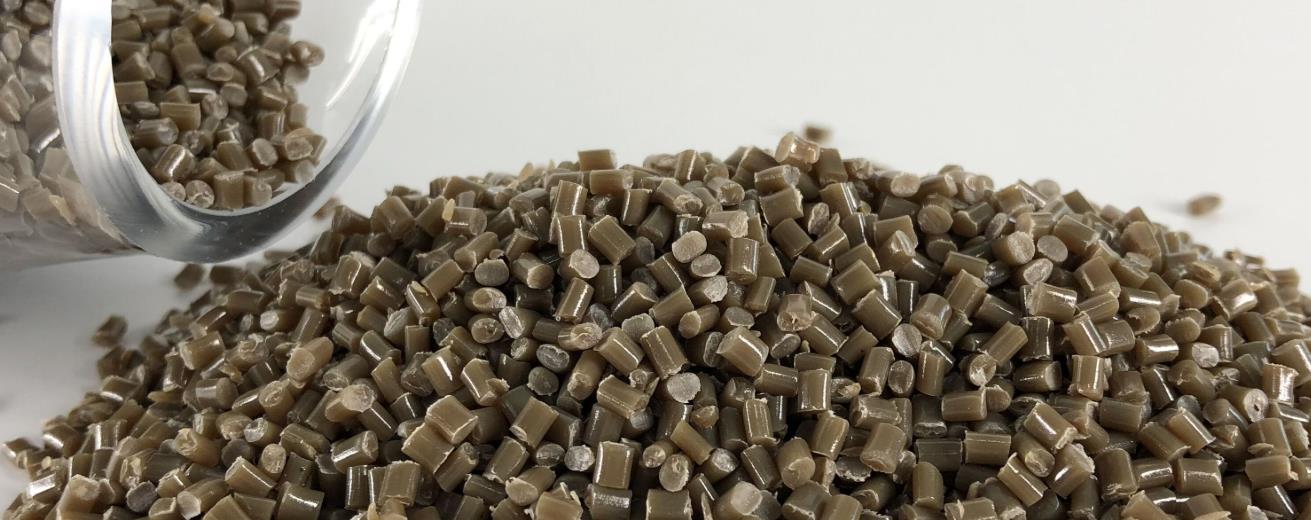
HDPE masterbatch, also known as High Density Polyethylene Masterbatch, is an additive widely used in the field of plastic processing. It is mainly made of high-density polyethylene resin as the main substrate, and is processed through specific processes by adding pigments, additives, stabilizers, etc.
Production process
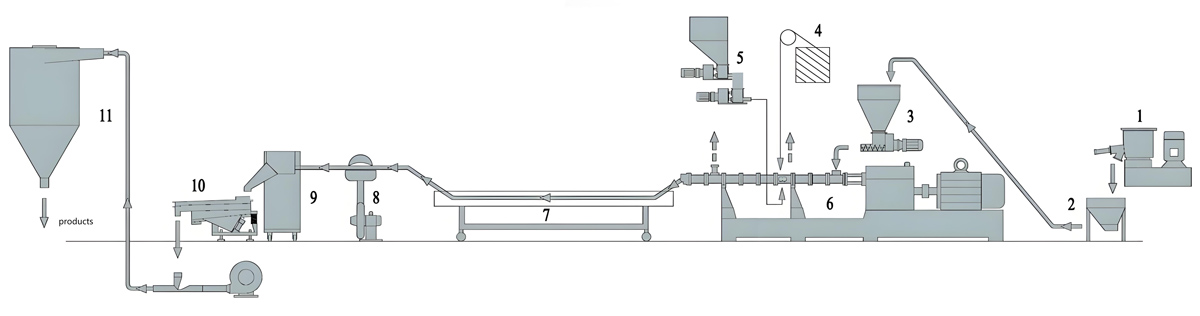
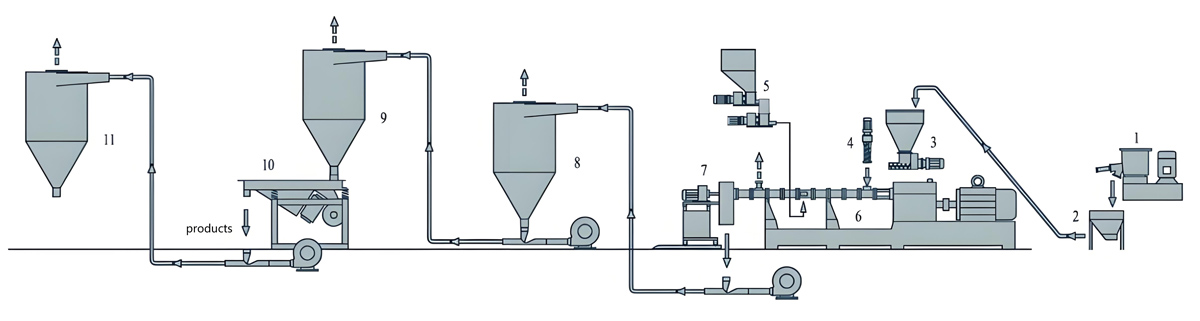
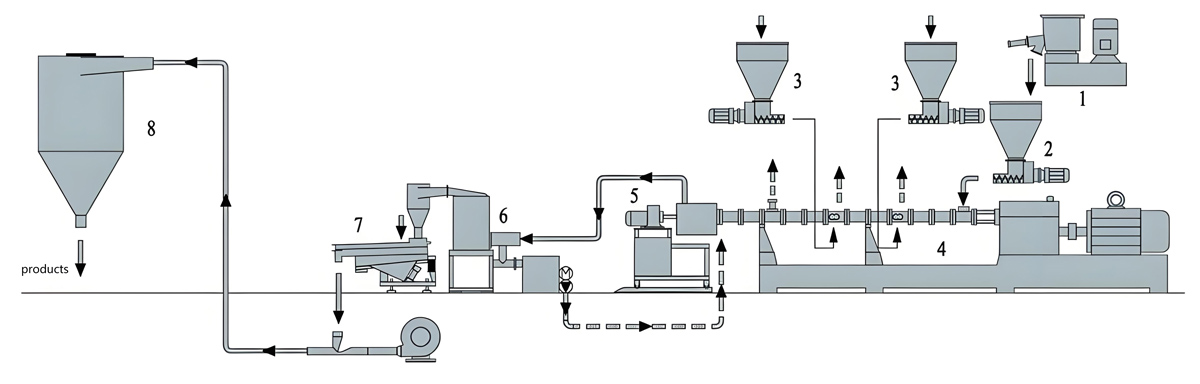
The production process of HDPE masterbatch mainly includes steps such as raw material preparation, mixing, melt extrusion, granulation, cooling and screening. The following is a specific introduction:
1. Raw material preparation
HDPE resin: Select suitable high-density polyethylene resin as the basic raw material, and choose resins with different melt flow rates, densities, and other indicators according to product performance requirements.
Additives: Various additives are added according to the functional requirements of the masterbatch. For example, dispersants are added to improve the dispersibility of the masterbatch during processing; To prevent HDPE resin from aging due to factors such as light and heat during processing and use, antioxidants, light stabilizers, etc. need to be added.
Pigments or fillers: If producing color masterbatch, suitable pigments should be selected, which require good coloring power, weather resistance, heat resistance, etc; If producing functional masterbatch, such as filling masterbatch, it is necessary to prepare fillers such as calcium carbonate and talc powder.
2. Mixing
Add HDPE resin, additives, pigments or fillers in a certain proportion to the high-speed mixer for thorough mixing. During the mixing process, a high-speed rotating stirring blade is used to create a complex flow state of the material inside the machine, achieving the goal of uniform dispersion of each component.
3. Melt extrusion
The mixed materials enter the extruder. The screw of the extruder pushes the material forward during the rotation process, and gradually heats the material to above the melting point of HDPE resin through a heating device, usually around 160-230 ℃, to completely melt the material. In the molten state, the material is subjected to the shear and extrusion of the screw, and the components are further uniformly mixed. Additives, pigments, or fillers are fully dispersed in the HDPE resin matrix.
4. Granulation
The molten material extruded through the die hole of the extruder head is usually in the form of strips or filaments. Cut it into granules of a certain length using granulation equipment such as hot cutting or cold cutting machines. The hot cutting machine is used to immediately cut the material into particles with a rotating cutting tool after the material is extruded from the mold hole, and the particle shape is relatively regular; The cold granulator first cools and solidifies the extruded strip material, and then cuts it into pellets.
5. Cooling and screening
The HDPE masterbatch after granulation needs to be cooled to prevent particle adhesion and deformation. The commonly used cooling methods include air cooling and water cooling. Air cooling uses air convection to remove heat from the surface of particles, while water cooling cools the particles through a water tank. The cooled particles are then sieved through a vibrating screen to remove particles that do not meet the required size, resulting in HDPE masterbatch products with uniform particle size.
6. Packaging
The qualified HDPE masterbatch after screening is usually packaged in plastic woven bags or composite packaging bags to prevent moisture and contamination during storage and transportation, which may affect product quality.
Different manufacturers may make appropriate adjustments and optimizations to their production processes based on their own equipment conditions, product requirements, etc., but the overall production process and key steps are basically similar.
Production machine
The main machinery and equipment for producing HDPE masterbatch include the following:
Mixing equipment
High speed mixer: used to thoroughly mix raw materials such as HDPE resin, additives, pigments, or fillers. It achieves uniform mixing of materials in a short period of time through high-speed rotating stirring blades, laying the foundation for subsequent processing.
Extrusion equipment
Single screw extruder: With a relatively simple structure, it is suitable for the production of HDPE masterbatch with low mixing requirements and small output. It consists of screws, barrels, heating devices, transmission systems, and other components. The screw rotates inside the barrel, pushing the material forward and gradually heating and melting it, and extruding it through the die hole of the machine head.
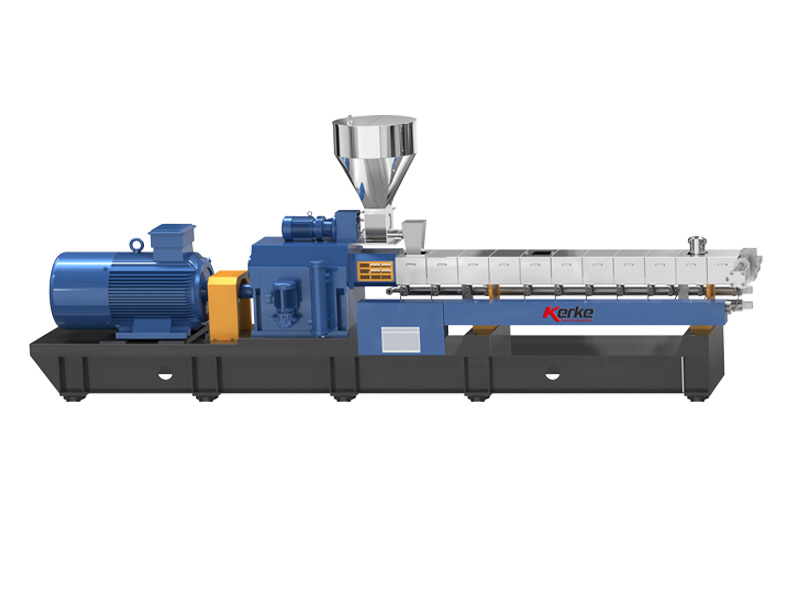
Twin screw extruder: With better mixing, dispersing, and conveying capabilities, it is commonly used to produce high-quality and high-performance HDPE masterbatch. The two screws of a twin-screw extruder mesh with each other, generating strong shear and extrusion effects on the material during rotation, which can evenly disperse additives, pigments, etc. in HDPE resin. At the same time, it can more accurately control the residence time and processing temperature of the material, and improve the stability of product quality.
Granulation equipment
Hot cutting machine: Generally used in conjunction with an extruder, after the extruded molten material is extruded from the die hole of the machine head, it is immediately cut into particles using a high-speed rotating tool. This granulation method has high production efficiency, regular particle shape, smooth surface, and is suitable for the production of most HDPE masterbatch.
Cold cutting machine: First, the extruded strip material is cooled and solidified by a cooling device, and then cut into particles using a cutting tool. The cold granulator is suitable for the production of special HDPE masterbatch with high requirements for particle shape and size accuracy, such as high-precision functional masterbatch or color masterbatch with strict requirements for particle appearance quality.
Cooling equipment
Air cooling system: composed of fans, air ducts, etc., it uses forced air flow to quickly dissipate the heat on the surface of the hot HDPE masterbatch into the air, achieving cooling. The air-cooled system has a simple structure, low cost, and is suitable for situations where cooling speed requirements are not particularly high.
Water cooling system: usually includes a water tank, circulating water pump, cooling water pipeline, etc. When the masterbatch passes through the water tank, it undergoes heat exchange with water, resulting in rapid cooling. The water cooling system has high cooling efficiency, but attention should be paid to controlling the cooling water temperature and quality to prevent water stains or other quality problems on the surface of the masterbatch.
Screening equipment
Vibration screen: Using the vibration generated by the vibration motor, the mother particles are made to move back and forth on the screen, thereby separating mother particles of different sizes. Particles larger than the sieve size are left on the sieve, while particles that meet the particle size requirements fall into the collection container through the sieve holes. The vibrating screen has the advantages of high screening efficiency, high precision, and simple structure, and is a commonly used screening equipment in the production of HDPE masterbatch.
Packaging Equipment
Automatic packaging machine: capable of automatically completing packaging processes such as measurement, filling, and sealing. It can accurately pack HDPE masterbatch into packaging bags and seal them according to the set packaging weight or quantity, improving packaging efficiency and quality, and reducing manual operation errors. Common types include vertical automatic packaging machines and horizontal automatic packaging machines, which can be selected according to production scale and packaging requirements.
HDPE masterbatch extruder
Kerke’s masterbatch extruder can be used to produce HDPE masterbatch. Our HDPE masterbatch extruder has multiple models to choose from, which can meet different production requirements.
-

Laboratory Twin Screw Extruder
When will you need a lab twin screw extruder? If you want to make trials and tests of…
-
Twin Screw Extruder
Our Parallel Co-rotating twin screw extruder is designed for compounding and masterbatch making with an output capacity from…
-
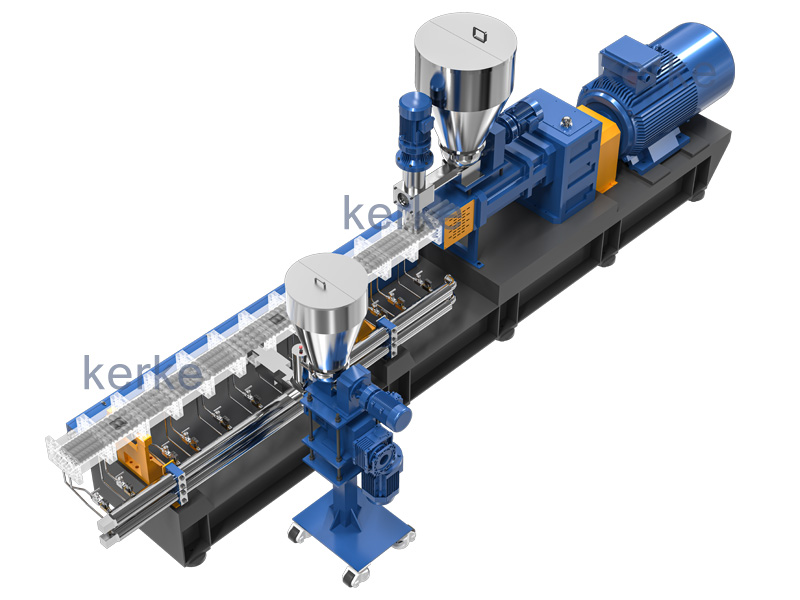
Triple (3 screws) Extruder
3 Screws extruder is a new technology that has many advantages. The triple screw extruder is mainly used…
-
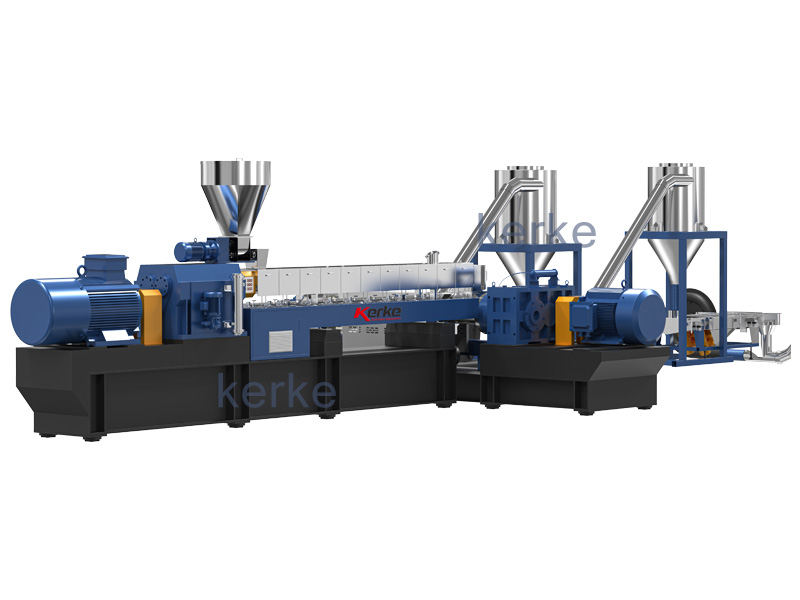
Double-Stage Extrusion System
Mother-baby extrusion system is designed for special materials which can not process on one stage extruder, the first…
-
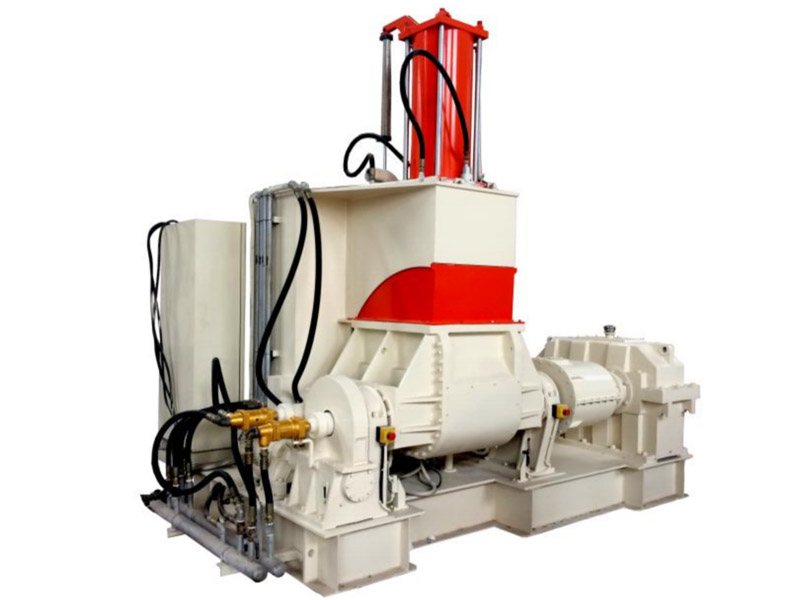
Banbury Kneader Compounding Line
Our kneader + extruder is designed for making special applications with an output capacity from 30kg/h to 1000kg/h.…
-
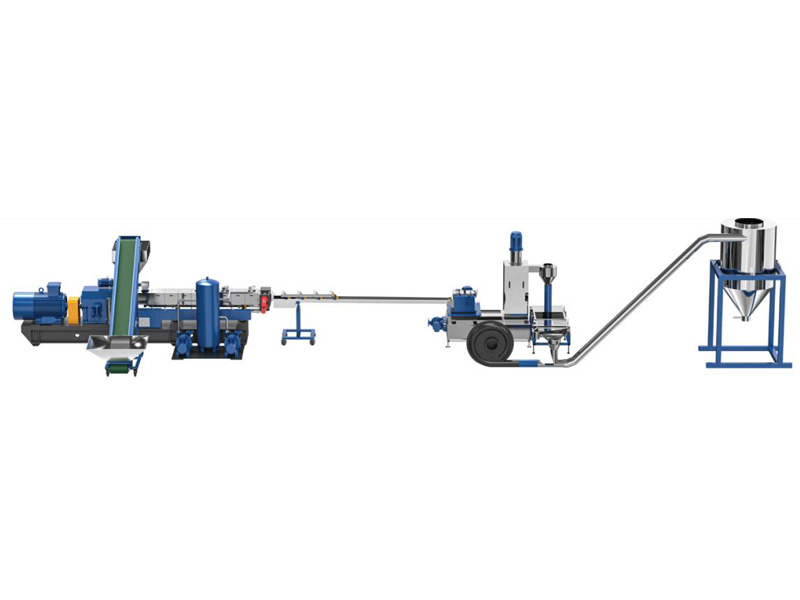
Cutting System / Pelletizing System
Different material needs different cutting system, Kerke provides all kinds of cutting system, here is the explanation of…
Related requirements
The production of HDPE masterbatch requires the following specifications for the extruder:
Screw speed:
HDPE has slightly poor adaptability to high screw speeds, as excessive speeds can lead to uneven plasticization and material overheating. The suitable screw speed is usually in the range of 20-60 rpm.
Temperature control:
The processing temperature range of HDPE is wide, but precise control is required to ensure plasticizing quality and product stability. The extrusion temperature usually needs to reach between 180 ℃ and 230 ℃ to ensure that HDPE is fully melted, but it cannot be too high to degrade the material.
The extruder should be equipped with an effective temperature control system to ensure that the temperature settings of each heating section (such as the barrel and head) meet the process requirements and avoid incomplete plasticization caused by local low temperatures.
Screw design:
The design of the screw should provide good plasticization and uniform melt flow. For HDPE, deep groove and high compression ratio screws are usually used to optimize melt quality and extrusion efficiency.
The aspect ratio and diameter of the screw need to be selected according to production requirements. For products such as large-diameter pipes, larger diameter and longer aspect ratio screws may be required.
Extruder type:
Single screw extruder is the most widely used equipment in the processing of polyethylene pipes, and is also suitable for the production of HDPE masterbatch.
For large-diameter HDPE pipes or high production demand, it may be necessary to use a double stage screw structure or a specially designed single screw extruder to increase extrusion capacity and plasticization effect.
Equipment maintenance and operation:
The extruder should be regularly cleaned of the screw and barrel to avoid residue affecting the plasticization quality and product stability.
Operators should receive appropriate training to understand the characteristics of HDPE and the requirements of extrusion processes, in order to ensure the smooth progress of the production process.
Other considerations:
The driving power of the extruder should be large enough to ensure stable operation at high extrusion rates.
The cooling system should be able to effectively cool the molten HDPE to ensure the dimensional stability of the product and reduce warping.
Features
HDPE masterbatch is a concentrated particle made from high-density polyethylene (HDPE) as a carrier, which concentrates a high proportion of functional fillers, additives, or pigments. Its core value is to accurately adapt to the high crystallinity, high rigidity, and good heat resistance of HDPE substrates, solving their processing and performance shortcomings. Its characteristics revolve around “HDPE compatibility, processing stability, and functional specificity”, combining the advantages of universal masterbatch with HDPE exclusive adaptability.
1. The substrate has excellent compatibility and does not damage the core performance of HDPE
The carrier is selected with a resin that is completely compatible with the target HDPE (homopolymer/copolymer, high/medium/low pressure type), with 100% compatibility, and does not affect the high rigidity (bending modulus ≥ 1000MPa), heat resistance (hot deformation temperature 70-100 ℃), and chemical resistance (acid and alkali resistance, oil and grease resistance) of HDPE itself;
Not interfering with the crystallization characteristics of HDPE: Functional components (such as nucleating agents and fillers) can regulate the crystallization rate without reducing the crystallinity, ensuring the mechanical strength and heat resistance of HDPE products (such as enhancing masterbatch can increase tensile strength by 50% while maintaining the same hot deformation temperature);
Good compatibility with HDPE recycled materials, does not affect the processing fluidity and finished product quality of recycled materials, and helps promote circular economy.
2. Strong processing adaptability, in line with the processing characteristics of HDPE
Suitable for HDPE processing window (140-160 ℃): The functional components and additives are made of materials with temperature resistance matching, which do not decompose or evaporate at HDPE processing temperature. The melt flowability matches the HDPE substrate (melt flow rate MFR deviation ≤ 1g/10min), avoiding melt fracture and mold blockage during processing;
Compatible with the entire HDPE process: extrusion (pipes, profiles, strapping), injection molding (shells, accessories), blow molding (bottles and cans), blown film (packaging film), no need to adjust process parameters, and can be directly processed on the machine after being mixed with HDPE slices in proportion, increasing processing efficiency by 10% -20%;
Improving pain points in HDPE processing: Some masterbatch (such as open masterbatch and smooth masterbatch) can solve the problem of HDPE film adhesion, and nucleating masterbatch can shorten the molding cycle of HDPE injection molded parts by 30% -40%.
3. Precise customization of functions and targeted enhancement of HDPE performance
HDPE natural short board is characterized by insufficient low-temperature toughness, general aging resistance and limited surface hardness. Masterbatch can be accurately supplemented:
Basic functions: coloring (color masterbatch, uniform color without deviation), filling cost reduction (calcium carbonate/talc filling, reducing raw material costs by 10% -30%);
Enhanced functionality:
Toughening modification: Adding POE/EVA elastomer can increase the low-temperature impact strength of HDPE by 50% -100% at -20 ℃, solving the problem of brittle cracking in winter;
Anti aging enhancement: compounded with antioxidant and light stabilizer, the outdoor service life is extended from 1-2 years to 5-8 years, suitable for outdoor pipes and greenhouse films;
Enhanced modification: Glass fiber/carbon fiber/talc powder reinforcement, increasing tensile strength by 30% -80% and rigidity by 40% -120%, replacing some engineering plastics;
Function upgrade: anti-static (surface resistance 10 ⁶ -10 ¹⁰ Ω), flame retardant (UL94 V0 level), wear-resistant (friction coefficient reduced by 30% -50%), suitable for electronic packaging, building pipes, and mechanical parts.
4. Stable and uniform performance, ensuring consistency in mass production
Accurate and controllable formula: The fluctuation of functional ingredient content in the same batch of masterbatch is ≤ 3%, ensuring that the color, rigidity, toughness and other indicators of HDPE products are consistent in batches (such as uniform wall thickness of HDPE pipes and stable strength of injection molded parts);
Excellent dispersibility: The functional components (color powder, filler, and additives) are pre dispersed to form a stable system with the HDPE carrier, avoiding color spots, filler aggregation, and uneven functionality (such as no glass fiber exposure in the reinforcing masterbatch, and uniform anti-static masterbatch effect throughout the entire area);
Good storage stability: The granular structure is not easily hygroscopic or clumped, and the performance does not deteriorate after being stored at room temperature for more than 1 year. The functional components are wrapped in HDPE carrier, reducing the risk of oxidation failure.
5. Excellent cost controllability and high comprehensive production efficiency
High concentration design: Functional ingredients account for 20% -70% (color masterbatch powder 20% -50%, filling masterbatch calcium carbonate 50% -80%, strengthening masterbatch fiberglass 20% -40%), and only 1% -30% (coloring 2% -5%, filling 10% -30%, strengthening 10% -20%) needs to be added during use, with a raw material utilization rate of ≥ 95%;
Reduce overall costs: avoid uneven dispersion and waste caused by directly adding scattered additives (such as glass fiber powder loss rate of over 10%), the granular form is easy to measure and mix, reducing equipment cleaning costs (no dust pollution, minimal screw wear);
Improve production efficiency: No additional grinding or modification treatment is required, and it can be directly processed after mixing with HDPE raw materials, shortening the production process and lowering the operating threshold.
6. Flexible environmental compliance and adaptability to diverse scenarios
The selection of additives meets environmental standards: food contact grade masterbatch uses FDA and GB 4806 certified color powder and additives, which are free of heavy metals and odors, and can be used for food packaging bottles and tableware;
Support green production: environmentally friendly fillers such as calcium carbonate and talc powder can be used for filling masterbatch, and halogen-free system (magnesium hydroxide/aluminum) can be selected for flame retardant masterbatch, which complies with RoHS and REACH standards;
Suitable for recycling materials: When mixed with HDPE recycled materials for processing, it does not affect the mechanical properties and appearance of the recycled products, helping to promote a circular economy.
7. Wide applicability, covering the core field of HDPE
Suitable HDPE types: homopolymer HDPE (pipes, strapping), copolymer HDPE (injection molded parts, blow molded bottles), high melting point HDPE (film), low melting point HDPE (thick walled products);
Typical application scenarios:
Building materials: HDPE pipes (anti-aging+reinforced masterbatch), profiles (filling+colored masterbatch);
Packaging field: blow molded bottles (food grade masterbatch), packaging film (opening+smooth masterbatch), packaging tape (filling+reinforced masterbatch);
Home appliances/machinery: injection molded shell (toughened+reinforced masterbatch), mechanical parts (wear-resistant+flame-retardant masterbatch);
Agriculture: greenhouse film (weather resistance+antifogging masterbatch), agricultural film (anti-aging+filling masterbatch).
The core characteristics of HDPE masterbatch can be summarized as follows: substrate compatibility without interference, high processing and adaptation efficiency, precise functionality to compensate for shortcomings, stable performance, and excellent cost. It fully conforms to the high crystallization and high rigidity characteristics of HDPE substrate, and can achieve product functional upgrades in a convenient and low-cost way, solving the core pain points in HDPE processing and use. It is a key material for the development of HDPE products from “universal grade” to “functional and engineering”, and is widely used in core fields such as building materials, packaging, home appliances, and agriculture.
Type
HDPE masterbatch can be divided into the following main types based on their functions and uses:
Masterbatch
Pigment type masterbatch: It is composed of pigments, dispersants, and HDPE carrier resins. By selecting different colors of pigments, various colored HDPE products can be produced. During the plastic processing, color masterbatch can be evenly dispersed in HDPE resin, resulting in stable and bright colors for the product. Widely used in plastic films, pipes, injection molded products and other fields, providing rich color choices for products.
Dye type masterbatch: Unlike pigment type masterbatch, dye type masterbatch uses dye as a coloring agent. Dyes have better transparency and glossiness, which can make HDPE products present bright and vibrant color effects. Commonly used for plastic products that require high color transparency and glossiness, such as transparent plastic containers, toys, etc.
Functional masterbatch
Anti aging masterbatch: additives such as antioxidant and light stabilizer are added to improve the aging resistance of HDPE products to light, heat, oxygen and other factors during long-term use. For HDPE plastic products used outdoors, such as agricultural film, geotextile, etc., adding anti-aging masterbatch can extend their service life and maintain the stability of product performance.
Antistatic masterbatch: Contains anti-static agents that can impart a certain level of conductivity to the surface of HDPE products, making them less prone to static electricity accumulation during production and use. Commonly used in the packaging materials, plastic films, and other fields of electronic and electrical products to prevent static electricity from damaging the products or causing safety accidents.
Flame retardant masterbatch: Added flame retardant to make HDPE products flame retardant, which can effectively prevent the spread of flames. Widely used in fields with high fire safety requirements such as building materials, wires and cables, it can improve the fire resistance of products and reduce fire risks.
Smooth masterbatch: Adding a smooth agent can reduce the friction coefficient on the surface of HDPE products, making them have good smooth performance. It is widely used in the production of plastic film, which can prevent adhesion between films, facilitate processing and use, and also improve the opening and packaging efficiency of films.
Fill masterbatch
Calcium carbonate filled masterbatch: made with calcium carbonate as the main filler, added with an appropriate amount of dispersant and HDPE carrier resin. Adding calcium carbonate filled masterbatch to HDPE plastic products can reduce the cost of the product, while also improving its hardness, rigidity, and dimensional stability. Commonly used in fields such as plastic pipes and injection molded products.
Talc powder filled masterbatch: Using talc powder as a filler, it has good insulation, heat resistance, and chemical stability. Adding talc powder to HDPE plastic filling masterbatch can improve the rigidity, heat resistance, and surface glossiness of the product, and is widely used in fields such as wire and cable, automotive parts, etc.
Kaolin filled masterbatch: Kaolin has good dispersibility and adsorption properties. Adding it to HDPE masterbatch can improve the processing and physical properties of plastic products. Applied in plastic films, pipes and other products, it can improve the barrier performance and printing performance of the products.
Formula ratio of different types of HDPE masterbatch
Different types of HDPE masterbatch have different formulas and ratios due to their different functions and uses. The following are typical proportioning ranges for some common types of HDPE masterbatch, which can be adjusted according to specific product requirements and production processes in actual production.
Masterbatch
Pigment type masterbatch
Pigments: usually accounting for 10% -30%, the specific amount depends on the depth of the desired color and the coloring power of the pigment. For example, when producing light colored products, the amount of pigment used may be between 10% and 15%; The production of dark colored products, such as black, dark blue, etc., can require a pigment dosage of up to 20% -30%.
Dispersant: generally accounting for 5% -10%, its function is to help the pigment disperse evenly in HDPE carrier resin, improve the quality and stability of color masterbatch.
HDPE carrier resin: The remaining amount is HDPE carrier resin, usually accounting for 60% -85%. The selection of carrier resin should match the HDPE raw material used to ensure good compatibility between the color masterbatch and the matrix resin.
Dye type masterbatch
Dyes: The dosage is generally between 5% and 20%. Due to the strong coloring power and high transparency requirements of dyes, the dosage is relatively small compared to pigment type masterbatch. For example, when producing light colored transparent products, the amount of dye used may be between 5% and 10%; When producing transparent products with bright colors, the amount of dye can be appropriately increased to 10% -20%.
Dispersant: accounting for 3% -8%, used to improve the dispersibility of dyes in carrier resins and ensure the stability of color masterbatch performance.
HDPE carrier resin: accounting for 72% -92%. As a carrier for dyes, it is required to have good transparency and processing performance to ensure the color effect and quality of the product.
Functional masterbatch
Anti-aging masterbatch
Antioxidants: generally accounting for 0.5% -2%, different types of antioxidants such as hindered phenols, hypophosphite esters, etc. are selected according to the usage environment and requirements of HDPE products to improve the antioxidant performance of the products.
Light stabilizer: The dosage is usually between 0.5% and 3%. Common light stabilizers include UV absorbers, hindered amine light stabilizers, etc., which can effectively absorb or quench UV rays and prevent HDPE products from aging under light.
HDPE carrier resin: The remaining amount is HDPE carrier resin, accounting for 95% -99%. The carrier resin is required to have good stability and processing performance in order to evenly disperse antioxidants and light stabilizers into HDPE products.
Antistatic masterbatch
Antistatic agent: accounting for 5% -15%, the type and amount of anti-static agent depend on the required anti-static performance of the product. Common anti-static agents include quaternary ammonium salts, polyethylene glycol, etc. They can form a conductive layer on the surface of HDPE products, reduce surface resistance, and achieve anti-static purposes.
Dispersant: accounting for 3% -8%, it helps the anti-static agent to be evenly dispersed in the carrier resin, improving the stability and effectiveness of the anti-static masterbatch.
HDPE carrier resin: accounting for 77% -92%. As a carrier for anti-static agents, it should have good compatibility with HDPE matrix resin to ensure that anti-static masterbatch can be uniformly integrated into HDPE products during processing.
Flame retardant masterbatch
Flame retardant: accounting for 20% -60%, suitable flame retardants should be selected according to the flame retardant grade requirements of HDPE products, such as halogen flame retardants, phosphorus flame retardants, aluminum hydroxide, etc. For products with high flame retardant requirements, the amount of flame retardant may be between 40% and 60%; For products with general flame retardant requirements, the amount of flame retardant can be between 20% and 40%.
Synergistic agent: The dosage is generally between 2% and 10%. Synergistic agents can work synergistically with flame retardants to improve flame retardancy and reduce the amount of flame retardants used. Common synergists include antimony trioxide.
HDPE carrier resin: accounting for 30% -78%. As a carrier for flame retardants and synergists, the carrier resin is required to have good processing performance and thermal stability to ensure the stability and dispersion of flame retardant masterbatch during processing.
Fill masterbatch
Calcium carbonate filled masterbatch
Calcium carbonate: accounting for 50% -80%, the particle size and surface treatment of calcium carbonate will affect the performance of the filling masterbatch. Generally speaking, the smaller the particle size, the better the filling effect, but the processing difficulty also increases accordingly. The compatibility between surface treated calcium carbonate and HDPE carrier resin is better, which can improve the quality of filling masterbatch.
Coupling agent: accounting for 1% -3%, used to improve the interfacial bonding between calcium carbonate and HDPE carrier resin, and enhance the performance of filling masterbatch.
Dispersant: accounting for 2% -5%, helps to evenly disperse calcium carbonate in the carrier resin and prevent agglomeration.
HDPE carrier resin: accounting for 15% -47%. As a carrier for calcium carbonate, it is required to have good flowability and processability, so that the calcium carbonate can be evenly dispersed into HDPE products during the processing.
Talc powder filled masterbatch
Talc powder: accounting for 40% -70%, the sheet-like structure of talc powder enables it to improve the rigidity and heat resistance of HDPE products. The dosage depends on the performance requirements of the product. Generally speaking, for products with high rigidity and heat resistance requirements, the dosage of talcum powder can be between 60% and 70%; For products with higher performance requirements, the amount of talcum powder can be appropriately reduced to 40% -60%.
Coupling agent: accounting for 1% -3%, used to enhance the bonding force between talc powder and HDPE carrier resin, and improve the performance of filling masterbatch.
Dispersant: accounting for 2% -5%, it helps to evenly disperse talc powder in the carrier resin, improving the quality and stability of the filling masterbatch.
HDPE carrier resin: accounting for 35% -67%. As a carrier for kaolin, it should have good fluidity and compatibility with kaolin to ensure the uniform distribution and performance of filling masterbatch in HDPE products.
Common problems and solutions
The core process of HDPE masterbatch production is the same as that of general PE masterbatch (raw material pretreatment → mixing → melt extrusion → granulation → cooling and drying → screening and packaging), but due to the high crystallinity (60% -80%), strong rigidity, insufficient low-temperature toughness, narrow processing temperature range (140-160 ℃), and frequent addition of fillers, glass fibers, elastomers and other components, the problems focus on “crystallization control, dispersion uniformity, low-temperature toughness guarantee, processing stability”, forming core differences from LDPE, PVC, PET masterbatch. The following is a classification and sorting according to the production process.
I. Raw materials and mixing process: hidden dangers at the source of functional failure of HDPE masterbatch
1. Aggregation of functional components (exacerbated by moderate viscosity of HDPE melt)
Performance: There are hard blocks of color powder, glass fiber bundles, and aggregated particles of calcium carbonate in the masterbatch. Subsequently, there are pockmarks and stripes on the surface of HDPE products, and mechanical properties fluctuate (such as uneven rigidity of the reinforcing masterbatch and uneven coloring of the color masterbatch);
Cause: ① Functional components have not undergone surface treatment (such as glass fibers not coated with silane coupling agents, fillers not modified), resulting in poor compatibility with HDPE carriers; ② Insufficient dosage of dispersant (less than 10% of the functional component mass), resulting in insufficient encapsulation of hard particles by HDPE melt; ③ Raw materials become damp (filler/glass fiber moisture content>0.1%), leading to hydrogen bonding and agglomeration between particles;
Solution: ① Functional component pretreatment: Calcium carbonate/talc powder modified with 1% -3% titanium ester coupling agent, glass fiber coated with 1% -2% silane coupling agent, color powder pre dispersed with a small amount of HDPE powder; ② Dispersant optimization: Select HDPE specific dispersant (PE wax+calcium stearate composite system), increase the dosage to 15% -25% of the functional components (glass fiber needs to increase to 20% -30%); ③ Raw material drying: fillers/glass fibers are dried at 100-120 ℃ for 2-4 hours, HDPE resin is dried at 80 ℃ for 1-2 hours, and the moisture content is ≤ 0.05%.
2. Poor compatibility between elastomers/additives and HDPE (exclusive to toughening masterbatch)
Performance: After mixing, the material clumps, and during extrusion, the melt delaminates, and the masterbatch is brittle and cracked (toughening masterbatch has no toughness). Subsequent products peel off from the HDPE substrate;
Cause: ① The difference in crystallinity between toughening elastomers (such as ordinary POE) and HDPE is significant, resulting in insufficient compatibility; ② Incorrect selection of additives (such as using LDPE specific dispersants to adapt to HDPE, resulting in mismatched melt flowability);
Solution: ① Select HDPE compatible elastomers (such as POE-g-MAH, HDPE-g-EVA) and add 3% -5% compatibilizer (PE-g-MAH); ② Select HDPE specific dispersant (such as oxidized polyethylene wax, melting point 110-120 ℃) to avoid viscosity conflicts with HDPE melt; ③ Small batch compatibility testing: Mix the elastomer and HDPE in proportion and observe for delamination and brittleness.
3. Uneven mixing (resulting in local performance imbalance)
Performance: Color/performance fluctuations between batches of masterbatch (such as impact strength of 12kJ/m ² for batch A and only 6kJ/m ² for batch B), high or low concentration of local functional components (such as local aggregation of flame retardants in flame-retardant masterbatch);
Cause: ① Incorrect mixing sequence (adding HDPE resin first and then functional components, unable to evenly wrap); ② Insufficient mixing time (<15min), low rotation speed (<500r/min), and insufficient shear force;
Solution: ① Optimize the mixing sequence: dispersant+lubricant → functional components (pre mixed for 10 minutes) → HDPE carrier (re mixed for 15-20 minutes) → compatibilizer/antioxidant (finally mixed for 5 minutes); ② Improve mixing parameters: speed 600-800r/min, total mixing time ≥ 25min, ensuring uniform dispersion of each component.
II. Melting extrusion process: the core risk point of HDPE masterbatch processing
1. Degradation of HDPE (due to local overheating or excessive shear)
Performance: Stimulating odor is produced during extrusion, the color of the masterbatch turns yellow/black, there are burnt spots on the surface, and the subsequent products become brittle and the tensile strength decreases by more than 30%;
Cause: ① The extrusion temperature is too high (barrel>170 ℃, die>180 ℃), exceeding the HDPE processing window; ② The aspect ratio of the screw is too small (<28), the plasticization stroke is insufficient, and HDPE is extruded before it is fully melted; ③ The screw speed is too fast (>200r/min), causing excessive heat generation during shearing and damaging the HDPE molecular chain; ④ Unclean carbon deposits inside the barrel and contaminated materials;
Solution: ① Precise temperature control: segmented temperature control of the barrel (front section 140-150 ℃, middle section 150-155 ℃, end section 155-160 ℃), mold head 160-165 ℃, and regular calibration of temperature sensors; ② Optimize screw parameters: Select screws with a length to diameter ratio of ≥ 32, control the speed between 120-180r/min, and balance plasticization and degradation; ③ Add antioxidant: Compound 0.5% -1% antioxidant 1010/168 to inhibit oxidative degradation; ④ Regular cleaning: Rinse the machine barrel with HDPE cleaning material and PE wax every 8 hours to remove carbon deposits.
2. Insufficient plasticization (under plasticization)
Performance: The surface of the masterbatch is rough and has a granular feel, with visible unmelted HDPE particles or undissolved functional components on the cross section. During subsequent processing, the mold head is blocked and there are pockmarks on the surface of the product;
Cause: ① Low extrusion temperature (<140 ℃), incomplete melting of HDPE (melting point of HDPE is about 130 ℃); ② Insufficient shear force of the screw (ordinary single screw without shear elements), unable to overcome the high viscosity caused by HDPE crystallization; ③ The content of functional components is too high (such as glass fiber>40%, filler>70%), and HDPE melt cannot be completely coated;
Solution: ① Targeted heating: Raise the temperature at the end of the barrel to 158-162 ℃ and the mold head temperature to 165-170 ℃ to ensure complete melting of HDPE; ② Strengthening shearing: Use a twin-screw extruder with barrier type shearing elements, or add 0.5% -1% HDPE special lubricant (such as stearic acid amide) to assist plasticization; ③ Control the content of functional components: glass fiber ≤ 35%, filler ≤ 60%, excessive content requires an increase in the proportion of HDPE carrier.
3. Melt fracture (due to the general strength of HDPE melt)
Performance: The surface of the extruded material strip is uneven, rippled, and even broken, making it difficult to cut particles smoothly;
Cause: ① Low die temperature (< 160 ℃), poor flowability of HDPE melt, and high outlet resistance; ② The die gap is too small (<2mm), and the melt shear rate is too high; ③ Insufficient lubricant and excessive friction coefficient between the melt and the mold head;
Solution: ① Increase the mold head temperature by 5-10 ℃ to ensure smooth flow of the melt; ② Adjust the gap between the mold mouth to 2-3mm and match the diameter of the material strip; ③ Add 0.3% -0.5% lubricant (such as erucic acid amide) to reduce melt friction; ④ Stabilize the screw speed and avoid fluctuations in melt pressure (fluctuation range ≤ ± 5MPa).
4. Glass fiber exposure/equipment wear (exclusive for glass fiber reinforced HDPE masterbatch)
Performance: There are glass fiber burrs on the surface of the masterbatch, and subsequent products will have fiber formation and decreased mechanical properties; The screw and the inner wall of the barrel are severely worn, and the plasticization efficiency decreases after long-term production;
Cause: ① Glass fiber has not undergone surface modification, resulting in poor compatibility with HDPE carrier and inability to be completely encapsulated by the melt; ② Fiberglass has high hardness (Mohs hardness 7), and long-term friction scratches the screw barrel; ③ If the extrusion temperature is too high, the viscosity of the HDPE melt will decrease, and the wrapping force on the glass fiber will weaken;
Solution: ① Glass fiber pretreatment: Coating with silane coupling agent (1% -2%) to enhance the interfacial bonding strength with HDPE; ② Equipment protection: Double alloy screw/barrel (wear-resistant coating) is selected, and an 80 mesh filter element is installed on the mold head to intercept undissolved fiberglass bundles; ③ Control the extrusion temperature between 155-160 ℃ to avoid insufficient wrapping force caused by low melt viscosity.
III. Granulation and cooling process: core issues of HDPE masterbatch appearance and crystallization
1. Brittle cracking of masterbatch/insufficient low-temperature toughness (HDPE exclusive core pain point)
Performance: Easy to break after cutting or during transportation, with a flat and non ductile cross-section; Subsequent HDPE products will experience low-temperature (-20 ℃) brittle cracking, with an impact strength increase of less than 30%;
Cause: ① Degradation of HDPE (molecular chain breakage), resulting in decreased toughness; ② The cooling rate is too fast (water temperature<15 ℃), HDPE crystallizes too quickly, and internal stress is concentrated; ③ The content of fillers/reinforcing agents is too high (such as calcium carbonate>60%, glass fiber>35%), and the proportion of HDPE carrier is insufficient; ④ Insufficient amount of toughening agent (<30%) or poor compatibility;
Solution: ① Optimize extrusion temperature to avoid HDPE degradation; ② Cooling process: The water temperature is controlled at 20-25 ℃, and the material strip stays in the cooling water tank for 30-40 seconds. “Water tank cooling+air cooling secondary cooling” is used to slowly crystallize HDPE and release internal stress; ③ Control the proportion of functional components: filler ≤ 50%, fiberglass ≤ 30%, elastomer content in toughening masterbatch ≥ 30%, add 3% -5% compatibilizer; ④ If necessary, add 0.5% -1% toughening agents (such as EVA wax) to enhance the toughness of the masterbatch.
2. Irregular grain cutting (caused by fluctuations in the hardness of the material strip)
Performance: uneven length of masterbatch (deviation>1mm), broken edges at both ends, burrs, and even breakage of the material strip during grain cutting;
Cause: ① Blunt cutting blade (due to wear of fiberglass/filler cutting blade) or excessive gap (>0.5mm); ② The traction speed is not synchronized with the cutting speed; ③ Uneven thickness of the material strip (due to uneven dispersion of functional components causing fluctuations in melt viscosity);
Solution: ① Cutting blade optimization: Use a hard alloy cutting blade, polish it every 8 hours, and adjust the distance between the cutting blade and the mold mouth to be less than 0.5mm; ② Parameter matching: traction speed of 1-3m/min, cutting machine speed of 500-800r/min, to ensure uniform length of the masterbatch (2-3mm); ③ Adjust the gap between the mold heads to ensure that the diameter deviation of the material strip is ≤ 0.2mm, and replace the mold head filter element if necessary.
3. Hollow/Bubbles in the Mother Particle (due to water or air entrainment)
Performance: The cross-section of the masterbatch has hollow pores or tiny bubbles, which are prone to rupture during subsequent processing and affect the density of the product (such as a decrease in the pressure bearing capacity of HDPE pipes);
Cause: ① Moisture absorption of raw materials (moisture content>0.05%), vaporization of water at high temperatures; ② Involved in air during mixing, not expelled during extrusion; ③ Insufficient die pressure prevents the release of bubbles;
Solution: ① Thoroughly dry the raw materials (moisture content ≤ 0.05%), seal immediately after drying; ② Install exhaust ports on the mixer and seal the hopper to prevent air from being drawn in; ③ Turn on the vacuum exhaust system of the extruder (vacuum degree ≤ 5Pa), increase the die pressure (adjust the die gap), and promote the discharge of bubbles.
IV. Performance and subsequent use issues: Key pain points for functional failure of HDPE masterbatch
1. The functional effect does not meet the standard (core failure issue)
Performance: ① Toughened masterbatch: Low temperature impact strength increased by<30% at -20 ℃, but the product remained brittle and cracked; ② Enhanced masterbatch: tensile strength increased by<20%, insufficient rigidity (bending modulus<1500MPa); ③ Weathering masterbatch: Fades and becomes brittle after 6 months of outdoor use; ④ Color masterbatch: Insufficient coloring power, adding 5% still results in a lighter color;
Cause: ① Insufficient content of functional components (toughening agent<30%, glass fiber<30%, light stabilizer<1%, color powder<20%); ② Uneven dispersion or poor compatibility of functional components; ③ Incorrect selection of additives (such as using short acting antioxidants to adapt to outdoor scenes);
Solution: ① Increase the concentration of functional components (toughening agent ≥ 30%, glass fiber ≥ 30%, light stabilizer ≥ 2%, color powder ≥ 25%); ② Optimize dispersion process (adding dispersants, strong shear screws, pre dispersion steps); ③ Correct selection (outdoor antioxidant 1010+light stabilizer UV531 compound, toughening POE-g-MAH).
2. Poor compatibility with HDPE substrate (compatibility issue)
Performance: After mixing masterbatch with pure HDPE for processing, the product may experience delamination, cracking, or a sharp decrease in processing flowability (due to a surge in melt viscosity, making it difficult to extrude/inject smoothly);
Cause: ① Mismatch of carrier HDPE type (such as using homopolymer HDPE carrier to adapt to copolymer HDPE substrate, conflicting crystallization rates); ② Excessive content of functional components leads to a mismatch between melt viscosity and substrate; ③ No compatibilizer was added, and the functional components had weak bonding with the HDPE interface;
Solution: ① Strictly match the carrier and substrate (homopolymer HDPE carrier is used for homopolymer HDPE products, and copolymer HDPE carrier is used for copolymer HDPE products); ② Control the proportion of masterbatch addition (toughening masterbatch 5% -15%, reinforcing masterbatch 10% -30%, color masterbatch 2% -5%); ③ Targeted addition of compatibilizers (silane coupling agent for fiberglass, PE-g-MAH for toughening).
3. Mother granules absorb moisture/clump (performance decreases after storage)
Performance: After 1-3 months of storage, the master batch surface becomes damp and caked, and bubbles are generated during subsequent processing, and the functional effect is weakened (such as the anti-aging master batch becomes invalid after moisture absorption);
Cause: ① Insufficient drying after cooling (moisture content>0.05%); ② The packaging is not tightly sealed, and moisture absorbing functional components (such as calcium carbonate and fiberglass) absorb moisture from the air; ③ Lubricant precipitation and moisture absorption;
Solution: ① Secondary drying after cooling (drying at 60-80 ℃ for 1-2 hours, moisture content ≤ 0.05%); ② Sealed packaging with aluminum foil bag and desiccant, stored separately (avoid mixing with damp materials); ③ Control the amount of lubricant used to avoid surface precipitation.
V. Exclusive issues and targeted solutions for different types of HDPE masterbatch
1. Fiberglass/carbon fiber reinforced HDPE masterbatch
Exclusive issues: glass fiber exposure, equipment wear, uneven rigidity, decreased toughness;
Solution: Pre treat the glass fiber with silane coupling agent and increase the dispersant dosage to 20% -25% of the glass fiber; Choose dual alloy screws/barrels, and install filter cartridges on the mold head; Control the glass fiber content to ≤ 35%, and use 5% -10% toughening agent (POE-g-MAH) to balance toughness.
2. POE/EVA toughened HDPE masterbatch
Exclusive issues: Viscous masterbatch, peeling from HDPE, poor toughening effect;
Solution: Choose HDPE compatible elastomer (POE-g-MAH) with a content of ≥ 30%; Add 3% -5% PE-g-MAH compatibilizer; Control the extrusion temperature between 155-160 ℃ to avoid decomposition of the elastomer; The cooling water temperature is 20-25 ℃ to avoid sticking.
3. Calcium carbonate/talc powder filled HDPE masterbatch
Exclusive issues: surface pitting, decreased toughness, uneven dispersion;
Solution: For fillers with a mesh size of ≥ 2000, surface modification with titanium ester coupling agent is required; The filler content is ≤ 50%, and the dispersant is a combination of PE wax and calcium stearate (with a dosage of 15% -20% of the filler); Pre dispersion process optimization to avoid agglomeration.
4. Weather resistant (UV resistant) HDPE masterbatch
Exclusive problems: poor anti-aging effect, fast outdoor fading, conflict with antioxidants;
Solution: Compound of light stabilizer (UV531/UV327) and antioxidant (1010/168) (total amount ≥ 3%); Select rutile titanium dioxide as weather resistant filler; Small batch testing of additive compatibility to avoid mutual inhibition; Control the extrusion temperature to ≤ 160 ℃ to prevent the decomposition of UV agents.
VI. Key troubleshooting logic in the production process (quick identification of problems)
First, check the raw materials: whether the moisture content of the raw materials is ≤ 0.05%, whether the functional components have been pre treated (modified/pre dispersed), and whether the carrier matches the substrate;
Recheck the process: whether the extrusion temperature is in the range of 140-160 ℃, screw speed (120-180r/min), mixing time (≥ 25min), and eliminate the problem of insufficient degradation and plasticization;
Check the equipment afterwards: whether the screw/barrel is wear-resistant (reinforced/filled with masterbatch), whether the cutting blade is sharp, and whether the vacuum exhaust is normal;
Small scale verification: Conduct a 5-10kg small scale test before each batch to test the appearance of the masterbatch (no brittleness or bubbles), thermal stability (no yellowing at 160 ℃), and functional indicators (such as impact strength and rigidity). After passing the test, mass production will be carried out.
The core contradiction in the production of HDPE masterbatch is “HDPE crystallization control+functional component dispersion+low-temperature toughness guarantee”. Most problems can be solved through “raw material pretreatment (drying+modification), formula matching (compatibilizer+dispersant+antioxidant), and process parameter optimization (temperature+shear+cooling)”. The key is to strictly control the moisture content of raw materials to be less than 0.05%; ② Compatibility and adaptation of functional components with HDPE (such as selection of elastomers and dispersants); ③ Lock the extrusion temperature at 140-160 ℃ to avoid degradation or insufficient plasticization; ④ Gradient control of cooling process to release internal stress and ensure toughness.
During mass production, it is recommended to establish a “Raw Material Process Finished Product Performance” testing ledger to record drying parameters, extrusion temperature, screw speed, finished product impact strength/rigidity/weather resistance, for quick traceability and troubleshooting of repetitive issues.
Application
HDPE masterbatch has a wide range of applications in multiple fields, and the following are some of the main application aspects:
Plastic film
Agricultural film: used for producing agricultural film, such as greenhouse film, plastic film, etc. HDPE masterbatch can provide good weather resistance, aging resistance and mechanical strength, so that the agricultural film has a long service life, can effectively maintain soil temperature and humidity, and promote crop growth.
Packaging film: In the field of packaging, it can be used to manufacture various plastic packaging films, such as garbage bags, shopping bags, cling film, etc. HDPE masterbatch can endow the film with good toughness, puncture resistance, and moisture resistance, ensuring the reliability and practicality of packaging.
Plastic pipes
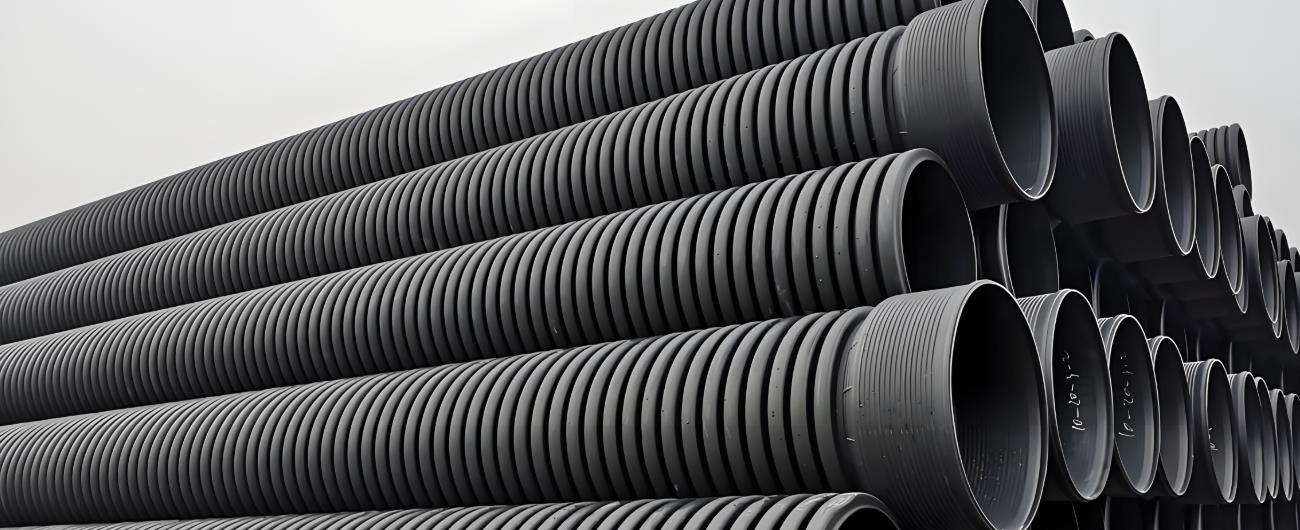
Water supply pipe: It is an important raw material for producing HDPE water supply pipes. HDPE pipes with added relevant masterbatch have the advantages of corrosion resistance, wear resistance, smooth inner wall, and low water flow resistance, which can ensure that water quality is not polluted. They are widely used in urban water supply, building water supply and drainage, and other fields.
Drainage pipes: used for manufacturing drainage pipelines, such as urban drainage networks, building drainage risers, etc. HDPE masterbatch can make pipes have good chemical corrosion resistance and impact resistance, and can adapt to different soil environments and usage conditions.
Injection molding products
Plastic containers: can be used to produce various plastic containers, such as plastic buckets, plastic boxes, plastic pots, etc. HDPE masterbatch can endow containers with good rigidity, toughness, and chemical corrosion resistance, meeting the storage and transportation needs of different items.
Plastic toys: In the manufacturing of plastic toys, HDPE masterbatch can provide rich color choices and good molding performance, giving toys a bright appearance and high safety.
Fiber products
Geotextile: Used in the production of geotextiles, this geotextile has good permeability, filtration, and corrosion resistance, and is widely used in engineering fields such as water conservancy, transportation, and environmental protection, such as reinforcement, anti-seepage, and filtration of dams, roads, airports, etc.
Rope and fishing net: Fibers made from HDPE masterbatch have high strength, wear resistance, and resistance to seawater corrosion, and can be used to manufacture ropes, fishing nets, etc. They have important applications in the fields of fisheries and navigation.
Other areas
Wire and cable: As the sheath material of wire and cable, HDPE masterbatch can provide good insulation performance, weather resistance, and mechanical protection performance, ensuring the safe operation of wire and cable in different environments.
Foam plastic: It can be used to produce HDPE foam plastic. This kind of foam plastic has the properties of light weight, heat insulation, sound insulation, buffering, etc. It is widely used in packaging, building insulation, automobile interior decoration and other fields.