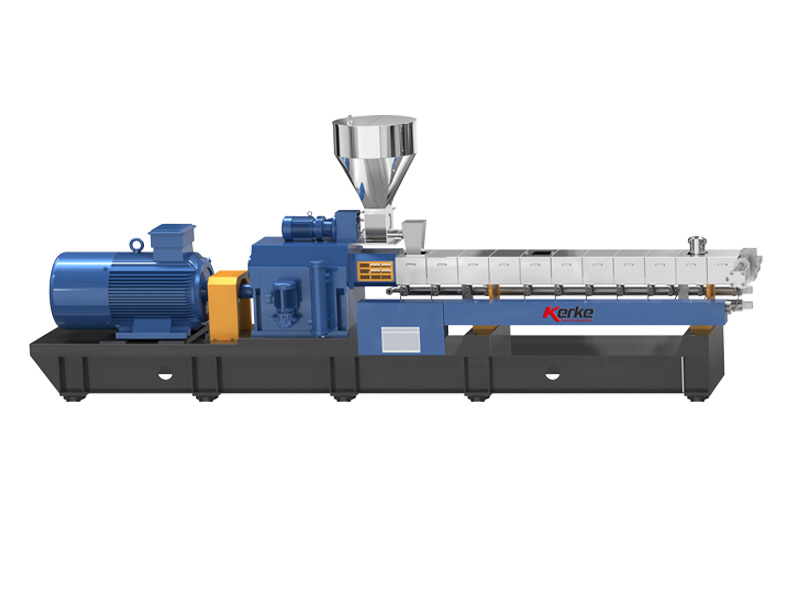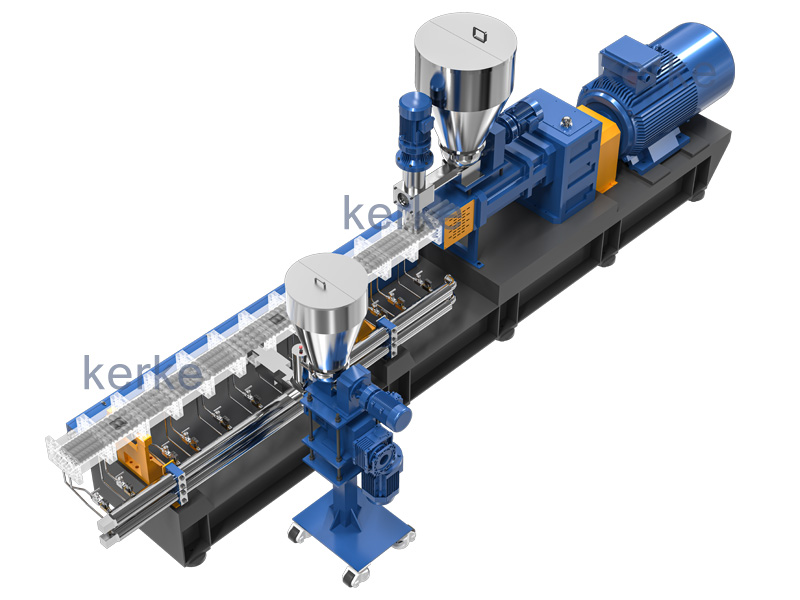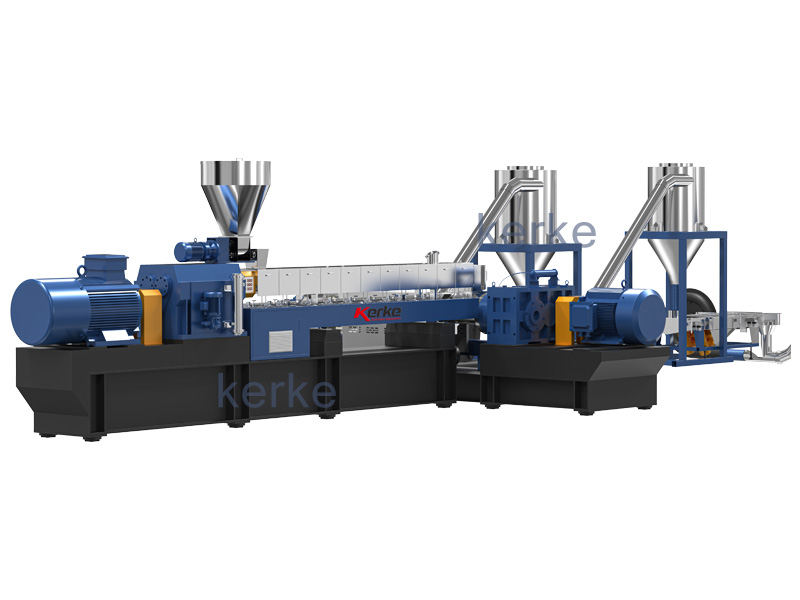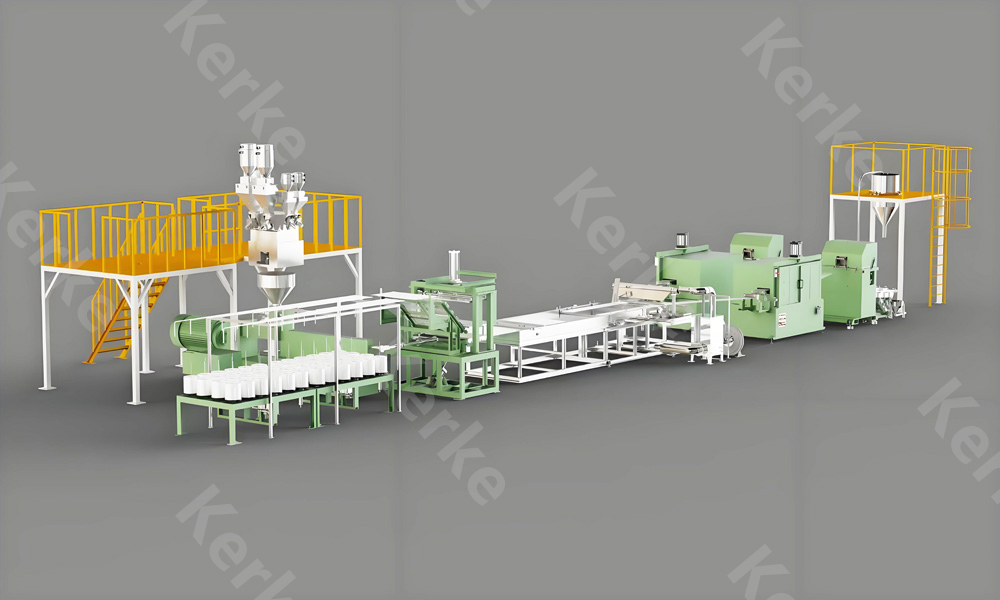
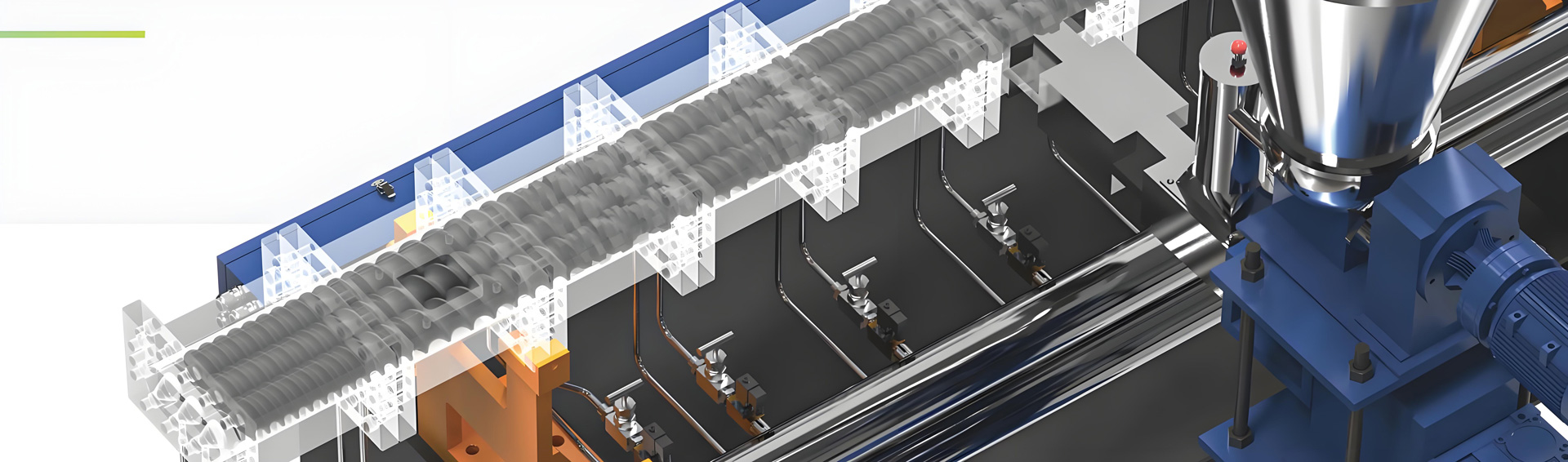
As the core power source of the twin-screw extruder, the operational stability of the main motor directly determines the production efficiency, product quality, and service life of the extruder. Under long-term high-load and continuous operation conditions, the main motor is prone to various faults affected by multiple factors such as process parameters, operating specifications, and maintenance. This article focuses on the common faults of the main motor of the twin-screw extruder, conducts in-depth analysis of their causes, proposes targeted solutions, and supplements preventive measures to provide technical reference for equipment operation and maintenance.
I. Fault of Main Motor Failure to Start
(I) Fault Causes
1. Non-standard operating procedures: Failure to strictly follow the startup procedure, such as direct startup without completing the preheating process or reversed startup sequence, leading to the control system refusing to execute the startup command.
2. Circuit system faults: Open circuit or short circuit in the main motor power supply line, or burned fuses and damaged contactors, resulting in the failure of normal power transmission.
3. Triggering of interlock protection device: The interlock system linked with the main motor (such as lubricating oil pump, cooling system, emergency stop button) is not reset or malfunctions, triggering the protection mechanism to cut off the startup circuit. For example, when the lubricating oil pump is not started, the interlock device will prohibit the main motor from starting to avoid dry grinding damage.
4. Inverter faults: The residual induced electricity inside the inverter is not released completely, or the inverter itself malfunctions, leading to the failure of normal transmission of the startup signal.
(II) Solutions
1. Standardize operating procedures: Strictly implement the startup steps in accordance with the equipment operation manual, confirm the preheating time and the readiness status of each system, and then start the main motor in the correct sequence.
2. Troubleshoot the circuit system: Check the main motor power supply line, fuses, contactors and other electrical components, replace damaged parts, and repair open or short circuit fault points.
3. Reset the interlock protection device: Check the operation status of the lubricating oil pump and cooling system one by one, and confirm that the emergency stop button has been reset; if the interlock device itself malfunctions, it is necessary to overhaul or replace the relevant parts.
4. Handle inverter issues: Turn off the main power supply, wait for more than 5 minutes to release the residual induced electricity of the inverter before restarting; if the inverter malfunctions, contact professional personnel for maintenance or replacement.
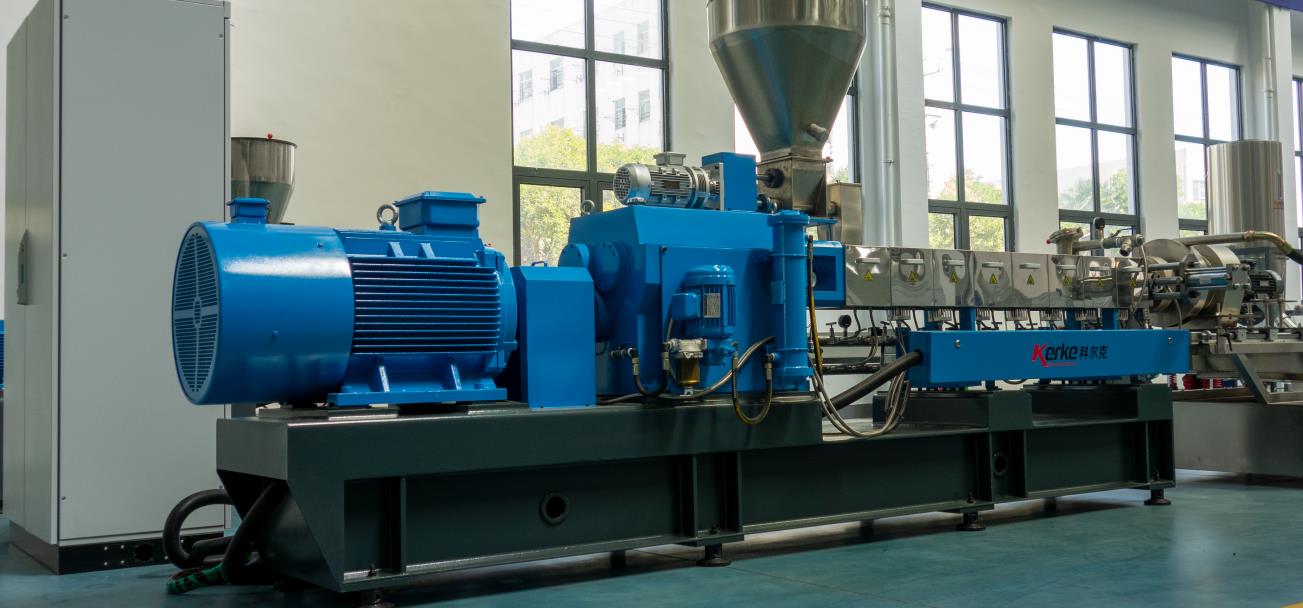
II. Fault of Excessively High Startup Current
(I) Fault Causes
1. Insufficient material preheating: The heating time of each section of the extruder heater is insufficient, the material does not reach the preset plasticizing temperature, and the fluidity is poor, resulting in the main motor needing to overcome extremely high torque during startup, causing the current to soar.
2. Heater faults: One or more sections of heaters fail to work, leading to poor local material plasticization, increasing the load of the main motor, and raising the startup current.
(II) Solutions
1. Extend preheating time: Check the material plasticization status by hand cranking before startup; if the hand feels high resistance, extend the heating time until the material reaches the specified plasticizing temperature and the hand cranking is easy.
2. Overhaul heaters: Check the working status of each section of heaters one by one, detect the on-off status of heating elements with a multimeter, replace damaged heaters, and ensure the normal operation of the heating system.
III. Fault of Unstable Operating Current
(I) Fault Causes
1. Abnormality of the feeding system: The unstable operation of the feeder leads to fluctuations in the material feeding amount, and the load of the main motor fluctuates with the change of the feeding amount, resulting in unstable current.
2. Problems with main motor bearings: Damage or poor lubrication of the main motor bearings increases the operating resistance unevenly, leading to fluctuations in motor load and unstable current.
3. Heating system faults: Intermittent failure of a certain section of heater leads to unstable material plasticization degree, increases the fluctuation of the main motor’s operating resistance, and causes unstable current.
4. Screw assembly problems: Incorrect specifications or phase dislocation of the screw adjustment pad, or interference between screw elements, leads to sudden changes in the load of the main motor during operation and current fluctuation.
(II) Solutions
1. Overhaul the feeding system: Check the feeder motor, transmission mechanism and hopper level, eliminate feeder faults, and ensure uniform and stable feeding amount.
2. Maintain motor bearings: Disassemble the main motor to check the bearing status, clean the bearing chamber, and add qualified lubricants; if the bearings are damaged, replace them with bearings of the same model in a timely manner.
3. Repair the heating system: Conduct a comprehensive inspection of each section of heaters and temperature control systems, replace intermittently faulty heating elements, and ensure uniform and stable heating.
4. Adjust screw assembly: After shutting down the machine, check the specifications and phase of the screw adjustment pad, pull out the screw to check for element interference, and re-assemble the screw assembly in a standardized manner.
IV. Fault of Abnormal Noise from Main Motor
(I) Fault Causes
1. Bearing damage: Wear of bearing balls, scratches on raceways, or damage to cages of the main motor bearings, resulting in metal friction sounds and impact sounds during operation.
2. Faults of thyristor rectifier circuit: Damage to a certain thyristor element in the main motor’s thyristor rectifier circuit leads to abnormal current output and abnormal noise during motor operation.
(II) Solutions
1. Replace damaged bearings: Disassemble the main motor, replace the damaged bearings, ensure that the bearing clearance meets the requirements during assembly, and add sufficient lubricants.
2. Overhaul the rectifier circuit: Check the main motor’s thyristor rectifier circuit, detect the performance of thyristor elements with a multimeter, replace damaged thyristor elements, and ensure stable current output of the circuit.
V. Fault of Excessively High Temperature Rise of Main Motor Bearings
(I) Fault Causes
1. Poor lubrication: Insufficient lubricants for bearings, incorrect models, or aging and deterioration of lubricants, leading to increased friction resistance and excessive heat generation during bearing operation.
2. Severe bearing wear: After long-term use of bearings, the wear of balls and raceways intensifies, and the frictional heat generation during operation increases, leading to temperature rise.
(II) Solutions
1. Optimize lubrication conditions: Clean the aging lubricants inside the bearing chamber, add sufficient lubricants of the model required by the equipment, and ensure adequate lubrication of the bearings.
2. Replace worn bearings: Detect the wear degree of bearings; if the wear exceeds the standard, replace them with new bearings in a timely manner to avoid more serious motor faults caused by bearing damage.
VI. Fault of Main Motor Overload Operation
(I) Fault Causes
1. Sudden change in process load: A sudden increase in the feeding amount of the extruder or excessive material hardness/viscosity leads to a sharp rise in the load of the main motor, exceeding the rated load.
2. Equipment jamming: Metal foreign objects entering the extrusion system or screw jamming lead to a sharp increase in the operating resistance of the main motor, causing overload.
3. Improper motor selection: The rated power of the main motor is too small to meet the actual production load requirements, resulting in long-term overload operation.
(II) Solutions
1. Stabilize process parameters: Adjust the feeding speed to ensure uniform feeding amount; detect material performance, avoid unqualified materials entering the extruder, and reduce sudden load changes.
2. Clear equipment jamming: Stop the machine immediately, disassemble the extrusion system and machine head, clean internal foreign objects, check the screw wear status, and restart the equipment after repair.
3. Optimize motor selection: Replace the main motor with a larger rated power according to the actual production load requirements, ensuring that the motor power has a margin of 10%-20% to avoid long-term overload operation.
VII. Preventive Measures for Main Motor Faults
1. Standardize operating procedures: Strictly follow the operating procedures during startup, shutdown, and production processes to avoid faults caused by operational errors, such as ensuring sufficient preheating, uniform feeding, and correct startup and shutdown sequences.
2. Strengthen daily maintenance: Regularly check the lubrication status of the main motor bearings, timely supplement or replace lubricants; regularly detect the circuit system, interlock protection device, and inverter to ensure the normal operation of each component; regularly clean the motor heat dissipation device to ensure good heat dissipation.
3. Monitor operating parameters: Real-time monitor the main motor’s current, temperature, speed and other parameters during production, set overload and overtemperature protection thresholds, and immediately stop the machine for troubleshooting once parameters are abnormal to avoid fault expansion.
4. Optimize process matching: Reasonably adjust process parameters according to material characteristics and production requirements to ensure that the main motor load is stable within the rated range; avoid frequent adjustments of feeding amount, temperature and other parameters to reduce motor load fluctuations.
VIII. Conclusion
Common faults of the main motor of twin-screw extruders are mostly related to non-standard operation, inadequate maintenance, process fluctuations, and improper equipment assembly. In actual production, it is necessary to accurately identify fault phenomena, conduct in-depth analysis of fault causes, and take targeted solutions for rapid disposal; at the same time, strengthen daily preventive maintenance, standardize operating procedures, and optimize process matching to effectively reduce the incidence of main motor faults and ensure the stable and efficient operation of the extruder. For complex faults, it is recommended to contact professional technicians for maintenance to avoid secondary damage caused by self-disassembly.