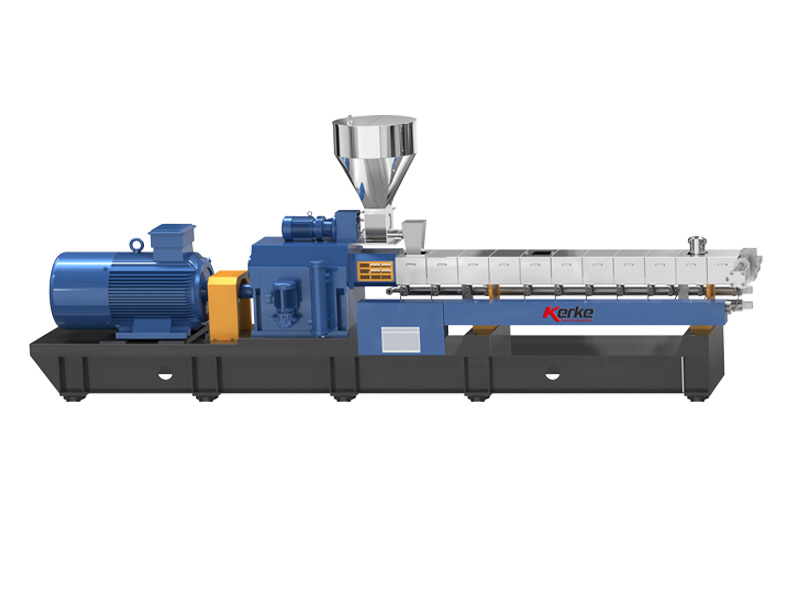
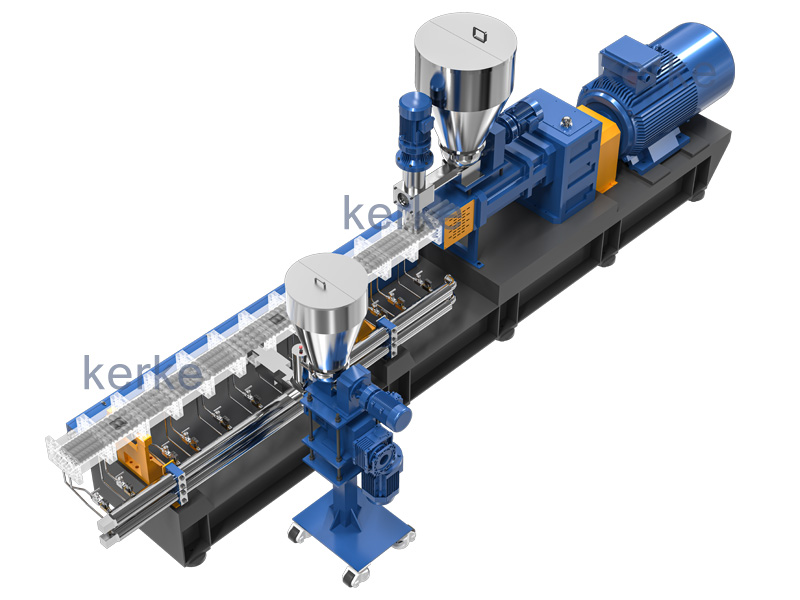
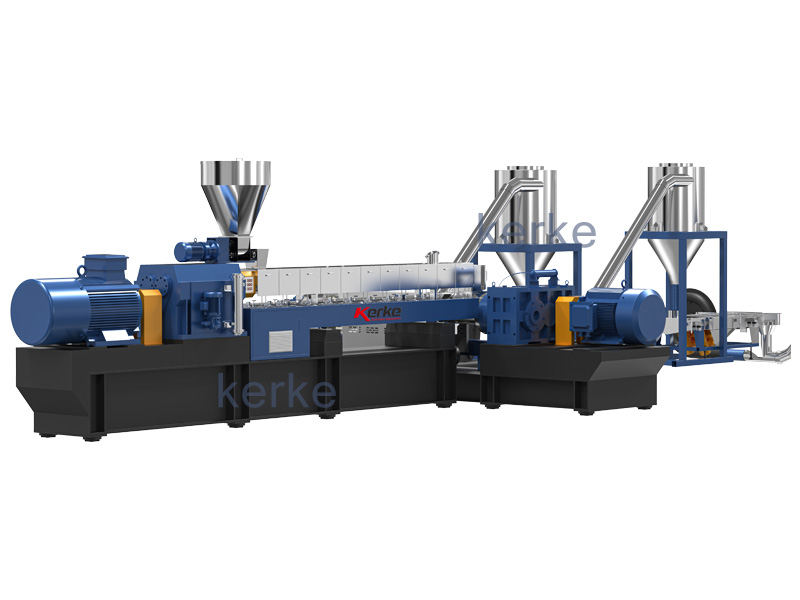
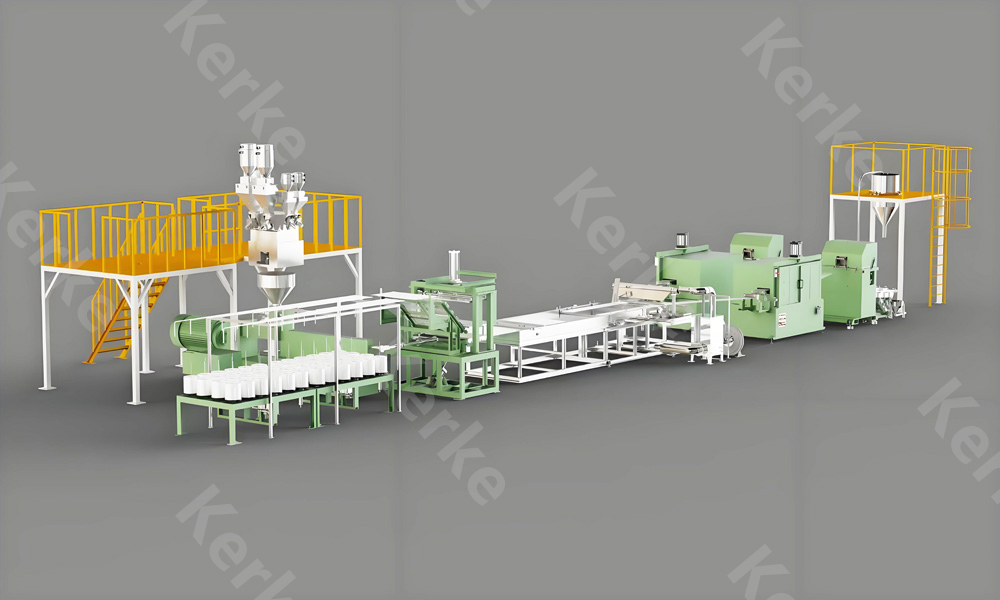
As the core power unit of the equipment, the main motor of a twin-screw extruder directly determines production continuity and product quality. Main motor failures are mainly concentrated in four categories: abnormal startup, abnormal noise during operation, excessive temperature rise, and unstable current. Combined with equipment structure, process parameters and operating specifications, the following sections elaborate on the causes of failures and provide targeted solutions, while supplementing preventive measures to reduce the recurrence rate of failures.
I. Failure of Main Motor to Start
(I) Fault Phenomenon
After pressing the start button, the main motor has no response. The control panel either shows no alarm or displays fault codes such as “Start Failure” or “Interlock Triggered”. The motor does not rotate, vibrate, or make noise.
(II) Cause Analysis
- Incorrect Operation Procedure: The startup of a twin-screw extruder follows a strict logical sequence. If the process of “lubricating pump startup → cooling system startup → feeding system preparation → interlock reset” is not followed, the control system will prohibit the main motor from starting. This is the most common human-induced operational failure.
- Electrical Circuit Failure: Burnout of fuses in the main motor power supply circuit, oxidation and adhesion of contactor contacts, damage and short circuit or poor contact of cables can cause power interruption. Failure of the frequency converter to complete self-inspection or release of induced electricity can also prevent the motor from starting.
- Triggering of Interlock Protection Device: The equipment is equipped with multiple interlock protections. Failure to start the lubricating oil pump or insufficient oil pressure, excessively high cooling water temperature, excessive head pressure, unreset emergency stop button, and uncleared motor overload protection will all trigger interlocks and cut off the main motor startup circuit.
- Impact of Mechanical Jamming: Entry of metal foreign objects into the extrusion system, element interference caused by misalignment of screw adjustment pads, and adhesion of cooled and solidified materials to the screw after shutdown will make the motor startup load far exceed the rated value, and the control system will prohibit startup to protect the motor.

(III) Solutions
- Standardize Startup Process: Restart strictly in accordance with the equipment operation manual. Confirm the status of the lubrication system, cooling system, feeding system and interlock device in sequence, and start the main motor after completing the reset operation. If the frequency converter indicates that induced electricity is not released, turn off the main power supply and wait for 5-10 minutes until the residual electricity is released before attempting to start again.
- Inspect Electrical Circuit: Open the electrical control cabinet, check whether the fuses are intact, and replace the burned fuses (matching the rated current value). Clean the contactor contacts to handle oxidation or adhesion issues. Use a multimeter to test the continuity of the cables, repair damaged lines, and ensure firm wiring.
- Release Interlock Protection: Check the interlock trigger points one by one. Start the lubricating oil pump and confirm that the oil pressure reaches the set value (usually 0.2-0.4MPa), check the cooling water temperature (controlled at 30-50℃), clear the head blockage to reduce pressure, reset the emergency stop button, and clear the motor overload protection record.
- Eliminate Mechanical Jamming: If manual barring is difficult, it indicates mechanical jamming. Stop the machine to cool down, disassemble the head, and clear foreign objects or solidified materials. Pull out the screw to check the position of the adjustment pad and the screw phase, correct the interference problem, and manually bar the machine to confirm smooth operation before restarting the motor after reassembly.
II. Abnormal Noise During Operation of Main Motor
(I) Fault Phenomenon
Abnormal noise occurs when the motor is running, including common types such as dull “humming” and “squeaking” friction sounds at the bearing position, or “cracking” discharge sounds from electrical parts. The noise may intensify with increasing speed, and be accompanied by machine vibration in severe cases.
(II) Cause Analysis
- Motor Bearing Failure: Insufficient or aging and deteriorated bearing grease, or wear of bearing balls and deformation of inner and outer rings, lead to increased friction during operation and generate noise. Insufficient bearing installation accuracy and loose fit with the motor shaft can also cause vibration and noise.
- Electrical Control System Failure: Damage to one thyristor element in the thyristor rectifier circuit causes abnormal rectifier output waveform and unbalanced electromagnetic force inside the motor, generating electromagnetic noise. Improper parameter setting or module damage of the frequency converter can also cause abnormal noise during motor operation.
- Mechanical Transmission Eccentricity: Excessive alignment deviation between the main motor and the reducer coupling (radial eccentricity > 0.35mm, axial eccentricity > 0.15mm) generates periodic vibration and noise during operation. Wear and fracture of the coupling elastic block lead to uneven power transmission and impact noise.
- Abnormal Load Fluctuation: Sudden changes in feeding amount and uneven material plasticization cause screw torque fluctuation, frequent changes in motor load, resulting in unstable speed and noise. Severe screw wear and material retention in the barrel also lead to uneven motor load and abnormal noise.
(III) Solutions
- Inspect and Repair Motor Bearings: Disassemble the motor end cover, check the bearing status, remove aging grease, and add new grease of the appropriate model (the filling amount is 1/2-2/3 of the internal space of the bearing). If the bearing is worn or deformed, directly replace it with a bearing of the same model. Ensure installation accuracy after replacement and correct the fit clearance between the bearing and the motor shaft.
- Inspect Electrical System: Test the thyristor rectifier circuit, measure the conductivity of each thyristor element with a multimeter, and replace the damaged thyristor. Check the status of the frequency converter module and capacitor, recalibrate the frequency converter parameters (such as V/F curve and carrier frequency), and restart the frequency converter or contact professional personnel for maintenance if necessary.
- Correct Transmission Accuracy: Disassemble the coupling, recalibrate the coaxiality of the main motor and the reducer to ensure that the radial and axial eccentricity meet the equipment requirements. Check the coupling elastic block, replace worn and broken parts, and fasten the connecting bolts to avoid power transmission deviation.
- Stabilize Operating Load: Check the feeding system, adjust the stability of the feeder speed to avoid sudden changes in feeding amount. Test the working status of each section of the barrel heater, repair damaged heating elements, adjust the process temperature to ensure uniform material plasticization. Check the screw wear condition, measure the screw clearance, and replace the worn screw if necessary.
III. Excessive Temperature Rise of Main Motor Bearings
(I) Fault Phenomenon
The temperature of the bearing part rises rapidly when the motor is running, exceeding 70℃ (normal operating temperature ≤ 65℃), accompanied by a hot touch. In severe cases, it triggers temperature protection and shuts down the motor. In some cases, the temperature rise is accompanied by bearing noise.
(II) Cause Analysis
- Poor Lubrication: Improper selection of bearing grease (such as using ordinary grease in high-temperature environments), insufficient filling amount, or aging, deterioration and caking of grease after long-term use, which cannot form an effective lubricating film, leading to increased frictional heating.
- Bearing Damage or Improper Installation: Wear of bearing balls and cages, scratches and deformation of inner and outer rings increase frictional resistance during operation and generate a lot of heat. Over-tight bearing installation, too small fit clearance with the motor shaft, or mixing of impurities during installation cause jamming and heating during operation.
- Cooling System Failure: Damage or blade loss of the motor’s built-in cooling fan, or blockage of the cooling air duct, leads to poor heat dissipation. Blockage of the cooling water pipeline and insufficient water flow of the water-cooled motor cannot timely remove the heat generated by the bearing.
- Excessive Load: The motor operates under overload for a long time, and the radial and axial loads borne by the bearing exceed the rated value, leading to increased friction and temperature rise. Screw jamming and excessive material resistance will further increase the motor load and aggravate the bearing temperature rise.
(III) Solutions
- Optimize Lubrication Scheme: Replace with suitable high-temperature grease (such as lithium-based grease) according to the equipment operating temperature (usually the operating temperature of the motor bearing of the twin-screw extruder is 50-65℃). Thoroughly clean the aging grease inside the bearing, and add an appropriate amount of new grease according to the standard to avoid excessive or insufficient filling.
- Inspect and Replace Bearings: Disassemble the bearing for inspection. If there are defects such as wear, deformation and scratches, immediately replace it with a bearing of the same model and precision level. Reinstall the bearing, adjust the fit clearance, ensure no impurities are mixed during installation, and fasten the end cover bolts with uniform force.
- Repair Cooling System: Check the cooling fan, replace the damaged fan or blade, clean the dust and debris in the air duct to ensure smooth ventilation. For water-cooled motors, dredge the cooling water pipeline, check the working status of the water pump, adjust the water flow rate to ensure the cooling effect.
- Reduce Operating Load: Adjust the process parameters, reduce the feeding amount, optimize the screw speed, and avoid long-term overload operation of the motor. Investigate the causes of screw jamming and excessive material resistance, clear foreign objects in the barrel, repair worn screws, and ensure the load is stably within the rated range.
IV. Unstable Current or Excessively High Startup Current of Main Motor
(I) Fault Phenomenon
Unstable current is manifested by frequent fluctuations of the motor current displayed on the control panel beyond the normal range (usually the fluctuation value ≤ 5% of the rated current), accompanied by uneven motor speed. Excessively high startup current is manifested by the startup current far exceeding the rated value (usually ≥ 3 times the rated current), failing to start normally or tripping immediately after startup.
(II) Cause Analysis
- Unstable Feeding System: Fluctuations in feeder speed, insufficient hopper level, and wear of the feeding screw lead to uneven material intake into the barrel, frequent changes in screw load, and thus fluctuations in motor current. Excessively large feeding amount causes a sudden increase in startup load and high startup current.
- Poor Material Plasticization: Damage to a certain section of the barrel heater and failure of the temperature control system lead to uneven material plasticization and excessive local resistance, resulting in motor load fluctuation. Insufficient pre-startup heating time and low temperature setting cause insufficient softening of materials, excessive screw torque during startup, and increased startup current.
- Motor Own Failure: Aging of motor winding insulation and local short circuit cause unbalanced current during operation. Damage and poor lubrication of motor bearings increase operating resistance, requiring greater load to be overcome during startup and increasing current. Rotor broken bars and loose stator windings of the motor can also cause unstable current.
- Electrical and Control Failures: Excessively large fluctuation of power supply voltage (exceeding ±5% of the rated voltage) leads to corresponding fluctuations in motor current. Unstable output voltage and frequency of the frequency converter, or failure of the current sensor to accurately detect current signals, also manifest as abnormal current.
- Screw System Failure: Misalignment of screw adjustment pads and phase deviation cause element interference and uneven operating resistance. Severe screw wear and scratches on the barrel inner wall cause fluctuations in material conveying resistance, leading to changes in motor load and current. Entry of hard foreign objects into the screw causes jamming during startup and a sudden increase in current.
(III) Solutions
- Stabilize Feeding System: Inspect the feeder, adjust the speed control system, and replace the worn feeding screw. Ensure sufficient hopper level, install a level sensor to achieve automatic feeding, and avoid uneven feeding caused by level fluctuation. Reasonably control the feeding amount before startup to avoid excessive load.
- Optimize Plasticization Process: Check each section of the barrel heater, replace damaged heating elements and thermocouples, calibrate the temperature control system to ensure stable temperature of each section within the set range. Extend the pre-startup heating time (usually 1-2 hours according to equipment requirements) to ensure sufficient material softening and reduce startup torque.
- Inspect Motor Body: Use a megohmmeter to test the insulation performance of the motor winding, repair insulation aging and local short circuit problems, and rewind the winding if necessary. Check the motor bearing, replace damaged parts and add grease. Test the rotor and stator status, repair broken bars, and fasten loose windings.
- Inspect Electrical Control: Contact the power supply department to test the grid voltage, install a voltage stabilizer to ensure the voltage is stable within the rated range. Check the working status of the frequency converter, recalibrate parameters, replace damaged modules and capacitors. Inspect the current sensor to ensure accurate signal detection.
- Repair Screw System: Disassemble the screw, check the position of the adjustment pad and the screw phase, and correct the element interference problem. Measure the screw-barrel clearance, replace the worn screw, repair the scratched part of the barrel inner wall. Clear hard foreign objects in the screw to ensure smooth material conveying and reduce operating resistance.
V. Fault Prevention and Daily Maintenance Measures
- Standardize Operation Process: Strictly implement the startup and shutdown procedures in accordance with the equipment manual. Prohibit illegal operations such as skipping interlock checks and shortening heating time. When the machine is shut down for more than 8 hours, handle the materials in the barrel to avoid increased startup load due to cooling and solidification.
- Regular Lubrication Maintenance: Check the lubrication status of the motor bearing monthly and replace the grease quarterly. Regularly inspect the lubricating oil pump and oil pressure pipeline to ensure the normal operation of the lubrication system and stable oil pressure within the set range.
- Strengthen Electrical Inspection: Clean the electrical control cabinet weekly and check the status of fuses, contactors and cables. Test the motor winding insulation performance and frequency converter working status monthly, and timely handle component aging and poor contact problems.
- Regular Mechanical Calibration: Calibrate the coaxiality of the main motor and reducer coupling every six months, and check the wear condition of the coupling elastic block. Manually bar the machine monthly to check the smooth operation of the screw, and disassemble to inspect the screw and barrel wear status annually.
- Optimize Material Management: Strengthen raw material inspection to avoid mixing of metal foreign objects and refractory impurities. Control the raw material humidity to avoid poor plasticization and load fluctuation caused by damp materials.
Conclusion: Main motor failures of twin-screw extruders are mostly caused by four factors: improper operation, poor lubrication, electrical failures, and abnormal load. Daily maintenance should balance operational standardization, regular maintenance and fault prediction. When a failure occurs, the problem should be located step by step in accordance with the principle of “first inspect the electrical circuit, then check the mechanical system; first perform no-load test, then load operation” to avoid secondary damage caused by blind disassembly. For complex failures (such as frequency converter module damage and winding burnout), it is recommended to contact the equipment manufacturer or professional technical personnel for maintenance to ensure safe and stable operation of the equipment.