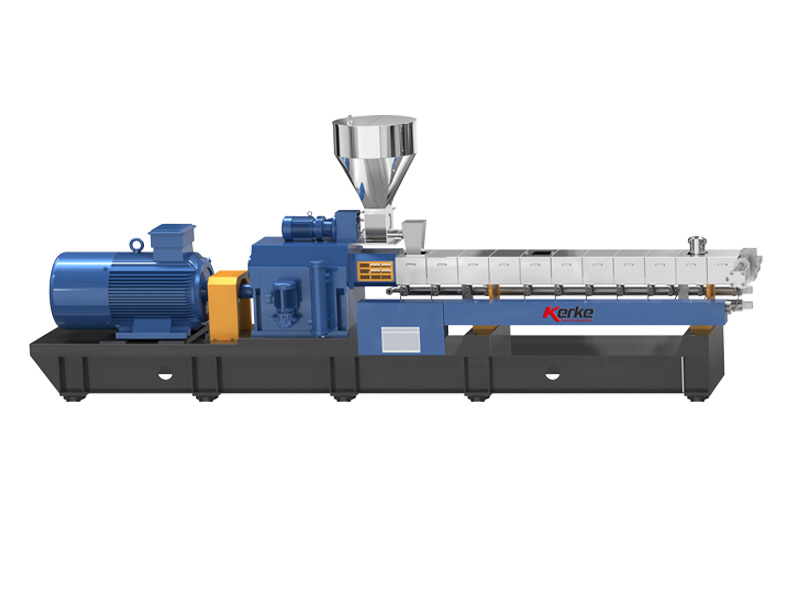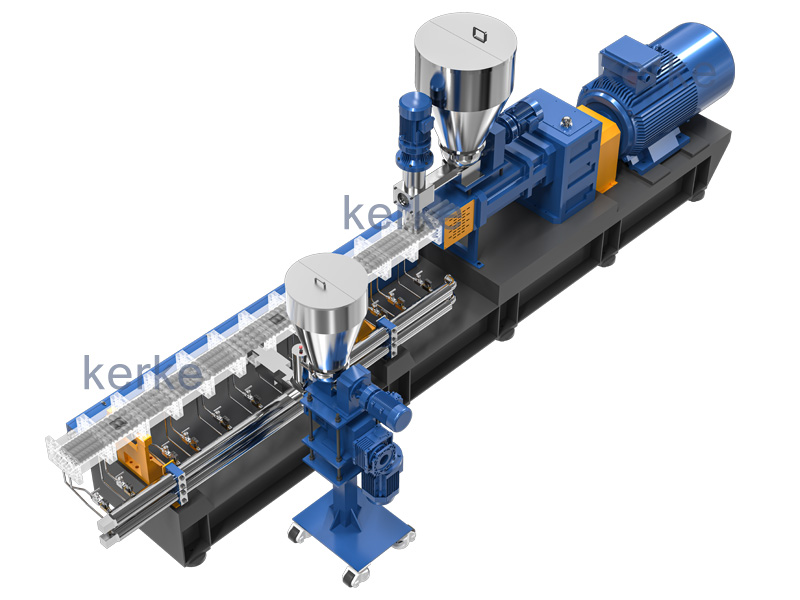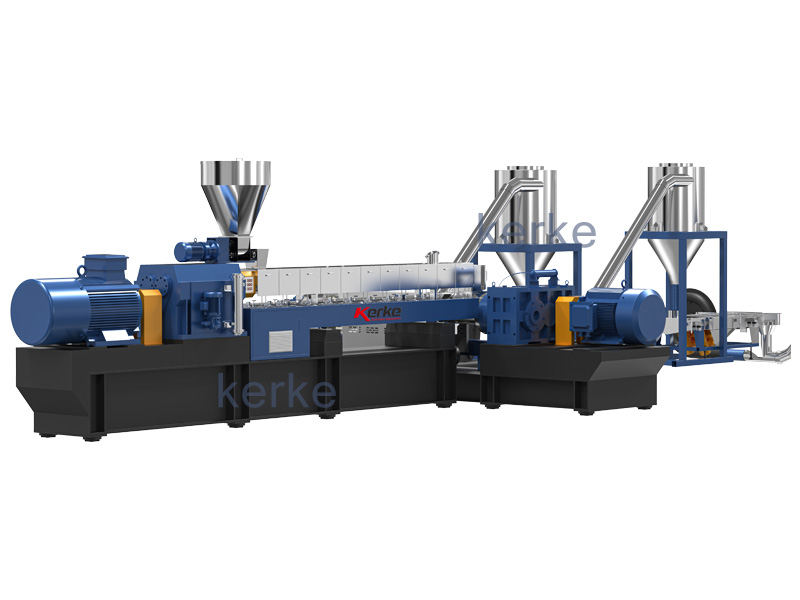
I. Precautions for Replacing the Main Motor
(I) Pre-Replacement Preparation
- Safety Protection: The main power supply must be cut off in advance, the motor control circuit switch closed, and a sign “Equipment Under Maintenance, No Switching On” hung. Wait for the motor to cool down completely (to avoid high-temperature burns), and at the same time clean up debris around the equipment and reserve sufficient operating space to prevent collisions during disassembly.
- Model Matching Confirmation: The new motor must strictly match the specifications of the original equipment. Core parameters include power (e.g., 37kW, 110kW), speed (e.g., 500rpm), installation dimensions, output torque, voltage level (e.g., 220V/380V), and protection level. Meanwhile, it must comply with the motor parameter requirements corresponding to the screw diameter specified in the JB/T 5420-2014 standard.
- Tool and Material Preparation: Prepare suitable tools, such as H2.0/H2.5 hexagonal wrench, torque wrench, puller, insulating tape, multimeter, etc.; prepare auxiliary materials such as grease and seals to ensure smooth installation.
- Equipment Status Inspection: Record the wiring sequence of the original motor before disassembly (photos can be taken for reference), check whether associated components such as reducer and coupling are worn or loose. If there is a fault, it must be handled simultaneously to avoid secondary problems after motor replacement.
(II) Key Points of Disassembly Process
- First, remove the external protective cover and junction box cover of the motor, disconnect the motor connection wires, wrap the wire ends with insulating tape and mark them to prevent wiring confusion. At the same time, check whether the wires are aging; aging wires must be replaced simultaneously.
- Remove the fixing bolts between the motor and the reducer/coupling, and use a puller to smoothly separate the motor from associated components to avoid shaft deformation and gear damage caused by violent disassembly.
- After taking out the old motor, clean up debris and oil stains on the mounting surface, check the flatness of the mounting base. If there is deformation, correct it to ensure the new motor is firmly installed.
(III) Installation and Calibration Specifications
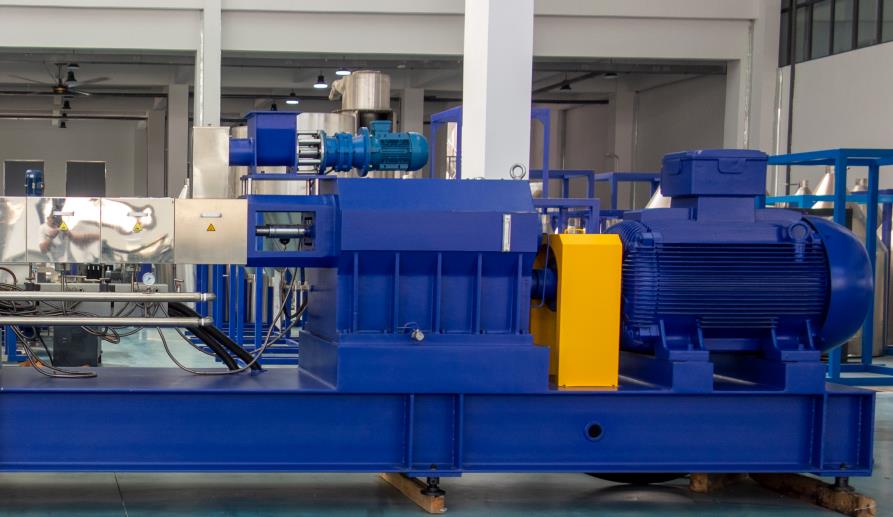
- Precise Positioning and Installation: Place the new motor on the mounting base, initially fix the bolts, adjust the motor position to ensure the coaxiality between the motor output shaft and the reducer input shaft meets the requirements (straightness error must be better than GB/T 1184-1996 Grade 7 standard) to avoid vibration and noise during operation.
- Wiring Operation: Wire strictly according to the original sequence, distinguish live wires, neutral wires, and motor positive/negative poles (e.g., blue for neutral wire, red for live wire, brown for motor negative pole, blue for motor positive pole). After wiring, use a multimeter to test insulation performance to ensure no short circuit or poor contact. The junction box must be well-sealed to prevent dust and oil intrusion.
- Tightening and Lubrication: Tighten the fixing bolts to the specified torque, evenly apply grease to couplings, bearings and other parts to ensure smooth transmission. Meanwhile, check the integrity of seals to prevent lubricating oil leakage.
(IV) Commissioning and Acceptance
- No-Load Test: After closing the switch and powering on, perform a 2-hour no-load operation, monitor motor speed, temperature rise, vibration and operating sound to ensure no abnormal noise, temperature within the allowable range, and accurate instrument display.
- Load Test: After passing the no-load test, perform a 30-minute load test run, check the coordination between the motor and the extruder, verify that the output torque and output meet the rated requirements of the equipment. Put it into formal production only when all parameters are stable.
- Acceptance and Filing: Record the replacement time, model and specifications of the new motor, and commissioning data, update the equipment maintenance file, and mark and store the old motor for subsequent traceability or maintenance.
II. Price Range of Main Motor (USD)
The price of the main motor for twin-screw extruders is greatly affected by power, brand, configuration (e.g., PLC control, explosion-proof rating), equipment type (laboratory/industrial grade), and newness. The following is a market reference price table for main motors of different powers (based on 2025-2026 market data, RMB converted at 1:0.138 USD, Singapore Dollar converted at 1:0.74 USD):
| Power (kW) | Motor Type | Price Range (USD) | Application Scenario | Remarks |
| 4 | New (Chinese Brand) | 500-800 | Small laboratory extruder (screw diameter 21.7mm) | Suitable for low-capacity scenarios, output 0.5-15kg/hr |
| 11/15 | New (Chinese Brand) | 1,800-2,500 | Small laboratory/mini industrial extruder (screw diameter 35.5mm) | The price of the 15kW high-precision model with supporting system is 25,100-31,900 USD (including whole machine supporting) |
| 22 | New (Chinese Brand, Electromagnetic Brake Type) | 745-771 | Small and medium extruders, auxiliary transmission systems | Bulk purchase (≥5 units) can enjoy a preferential unit price of 745 USD |
| 37 | New (Chinese Brand) | 34,057 | Medium industrial extruder (PVC/HDPE profile processing) | The price of a single motor (bare machine) is about 3,000-4,500 USD, and the price including supporting system is higher |
| 37 | Used (1-3 years old) | 4,884-5,084 | Spare motor for medium extruders | Price is greatly affected by wear level |
| 45/55/75 | New (Chinese Brand) | 4,000-8,500 | Medium industrial granulator (screw diameter 50.5-62.4mm) | The supporting price of 55kW Siemens Berder brand is about 12,000 USD |
| 90/110/132 | New (Chinese Brand) | 8,300-15,000 | Medium and large industrial extruder (PP/ABS granulation) | The price of supporting motor for brands such as Jwell can reach 131,363 USD |
| 110 | Used (produced in 2024) | 75,000 | Spare motor for large production lines | About 50% of the price of a new supporting system |
| 150 and above | New (Industrial Grade) | 95,991-126,500 | Large production line extruder (screw diameter ≥210mm) | The price of high-end configuration system is at the upper limit of the range |
| 250/315 | New (Heavy Industrial Grade) | 150,000-220,000 | Extra-large extruder (screw diameter 93mm, output 750-1250kg/hr) | Including only bare motor and basic supporting, excluding control system upgrade |
Note: Most unit prices in the table are for bare motors or basic supporting. If including whole machine linkage system, PLC control, explosion-proof configuration, etc., the price will increase by 20%-50% on this basis; the price of imported brands (such as Siemens, ABB) is 30%-50% higher than that of Chinese brands with the same power.
(I) New Motors (Including Whole Machine Supporting Motors)
- Small Laboratory Grade: The price of 15kW motor supporting small extruders is about 25,100-31,900 USD; the price of high-precision laboratory grade models (suitable for PET/PMMA and other materials) with motor and supporting system is 33,925-43,130 USD.
- Medium Industrial Grade: The price of 37kW motor supporting PVC/HDPE profile extruders is about 34,057 USD; the price of 50-110kW high-torque models (suitable for PP/ABS granulation) is 46,023-83,363 USD, and the price of supporting motors for some brand models can reach 131,363 USD.
- Large Production Line Grade: For large extruders with screw diameter above 210mm, the supporting motor power is ≥150kW, and the price is 95,991-126,500 USD. The price of high-end configuration production line motor system can reach 123,500-126,500 USD.
(II) Used Motors
The price of used main motors is affected by service life and wear level. The price of 37kW used motors is about 4,884-5,084 USD; the price of 110kW high-torque used motors (produced in 2024) is about 75,000 USD (about half of the new price).
(III) Explanation of Price-Influencing Factors
- Brand Premium: The price of imported brands (such as Siemens, ABB) is 30%-50% higher than that of Chinese brands, with longer warranty period for core components.
- Special Configuration: The price of explosion-proof and frequency conversion control motors is 20%-40% higher than that of ordinary models, suitable for special scenarios such as pharmaceuticals and chemical industry.
- Purchase Quantity: Bulk purchase (≥2 sets) can enjoy a 10%-15% price discount, with no room for negotiation for single-set purchase.