In the global plastic processing industry, improving product performance while controlling production costs has always been the core demand of manufacturers. Glass Fiber (GF) reinforced engineering plastics, as high-performance modified material solutions, have been widely used in automotive, electronic, mechanical, and household appliance fields. They not only significantly enhance the mechanical strength, heat resistance, and dimensional stability of plastic products but also achieve lightweight design, helping enterprises improve product competitiveness. This article will comprehensively interpret GF reinforced engineering plastics from definition, core features, GF classification, applications, formulations, extrusion granulation processes, equipment selection to market trends, helping industry practitioners, purchasers, and researchers grasp the core value and application points of this material, and provide practical guidance for actual production.
I. Definition – GF Reinforced Engineering Plastics: The Core of High-Performance Plastic Modification
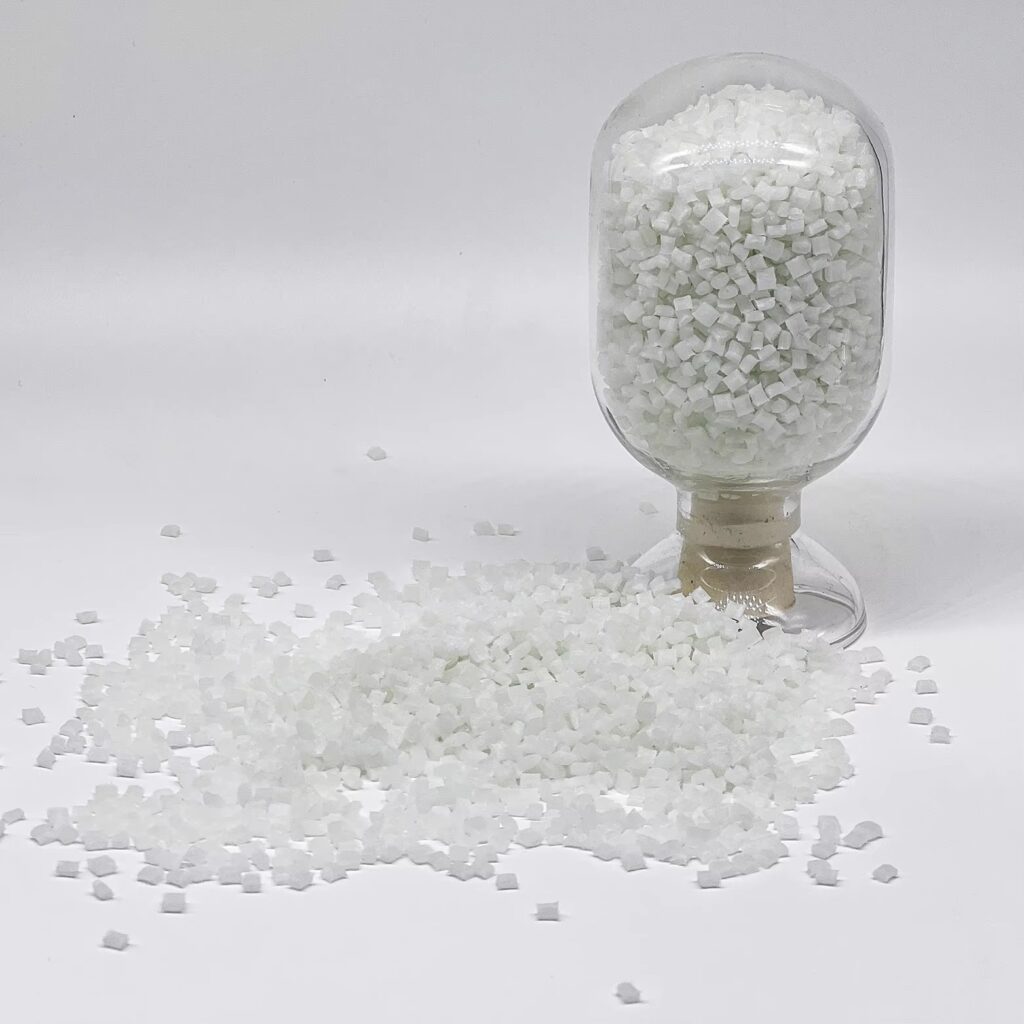
Glass Fiber (GF) reinforced engineering plastics refer to composite materials made by uniformly mixing glass fiber (as the reinforcing component) with engineering plastic substrates (such as PP, PA, ABS) and functional additives (coupling agents, antioxidants, lubricants), then processing them into granular products through twin-screw extrusion granulation technology.
Different from traditional pure engineering plastics, GF reinforced plastics combine the advantages of GF (high strength, light weight, corrosion resistance) and engineering plastics (good processability, toughness). Their biggest advantage lies in the “balance of performance and cost”: while significantly improving the mechanical properties of plastic products, they do not increase excessive production costs, and even help reduce the weight of finished products (especially for automotive parts), meeting the dual needs of manufacturers for performance and cost control. It is precisely because of this characteristic that GF reinforced engineering plastics have become a preferred modified material solution for large and medium-sized plastic processing enterprises and high-end product manufacturers.
II. Core Features: Why GF Reinforced Engineering Plastics Are Favored by the Industry
The excellent comprehensive performance of GF reinforced engineering plastics makes them stand out in the plastic modification industry, and they are widely used in various high-demand fields. The specific core features are as follows:
1. High Mechanical Strength: The Core Competitiveness
The tensile strength of glass fiber is 3-5 times that of steel wire with the same diameter, and its specific strength (strength per unit weight) is 10 times that of steel. When mixed with PP, PA, and ABS substrates, it can significantly improve the tensile strength, flexural strength, and impact toughness of plastic products. For example, adding 30% short-cut GF to PP can increase the flexural modulus of PP products by 30%-50%, solving the problem of insufficient rigidity of pure plastic, and making it suitable for manufacturing load-bearing structural parts such as automotive brackets and mechanical connectors.
2. Light Weight and Excellent Dimensional Stability
The density of glass fiber is about 2.5-2.7 g/cm³, only 1/3 of that of steel. After compounding with engineering plastics, the density of the modified particles increases slightly, which can effectively reduce the weight of finished products while ensuring strength. This is particularly important in the automotive industry—using GF reinforced plastics can reduce the weight of the vehicle body, thereby improving fuel efficiency and reducing carbon emissions. At the same time, GF can reduce the shrinkage rate of plastic products by 10%-25%, improve dimensional accuracy, and reduce the rejection rate of finished products during molding.
3. Excellent Heat and Corrosion Resistance
Glass fiber has a softening point of 550-700℃ and a melting point of 1500-1600℃, which is much higher than the processing temperature of common engineering plastics (PP: 170-220℃; PA: 230-270℃; ABS: 180-230℃). During the extrusion granulation process, it will not decompose, volatilize, or produce harmful gases, ensuring the stability of the processing process and the safety of finished products. In addition, GF has excellent inertness to most acids, alkalis, salts, and organic solvents, which can improve the corrosion resistance of modified plastics and make them suitable for harsh environments such as chemical equipment and outdoor parts.
4. Good Electrical Insulation Performance
Glass fiber has a high volume resistivity (10¹²-10¹⁵ Ω·cm) and breakdown voltage (10-30 kV/mm). When compounded with engineering plastics, it can prepare high-insulation modified particles, which are widely used in the production of electronic and electrical components such as connector shells, socket casings, and motor parts, meeting the insulation requirements of electronic products.
5. Strong Processability: Adapt to Various Extrusion Granulation Conditions
Glass fiber can be processed into short-cut or long-fiber forms according to modification needs, and has good compatibility with PP, PA, ABS, and other engineering plastics (after adding coupling agents). It can be smoothly processed through twin-screw extrusion granulation technology, and the prepared modified particles can be further used in extrusion, injection molding, blow molding, and other processing methods, meeting the production needs of various products.
III. Classification of Glass Fiber (GF): Choose According to Modification Needs
The selection of glass fiber for engineering plastic modification mainly depends on the type of plastic substrate, modification performance requirements, and extrusion granulation process. The core classifications are as follows, which can help manufacturers choose the most suitable GF type:
1. Classification by Fiber Form (Core Classification for Modification)
This is the most commonly used classification method in engineering plastic modification. Different forms of GF are suitable for different plastic types and processing processes:
1.1 Short-Cut Glass Fiber
Made by cutting continuous glass fiber into a certain length (usually 3-10 mm), it has good dispersibility and can be uniformly mixed with PP, PE, ABS, and other plastics. It is suitable for conventional extrusion granulation processes and accounts for more than 80% of GF used in modification. It is mainly used for conventional plastic reinforcement, such as PP short-fiber reinforcement and PA short-fiber reinforcement, which can improve the strength and rigidity of plastics at a moderate cost and convenient processing.
1.2 Long Glass Fiber (LGF)
With a length of more than 10 mm (even continuous fiber), it has better mechanical properties and fatigue resistance after compounding with plastics, especially in terms of impact toughness. It is mainly used for high-end modification of engineering plastics such as PA and PC, such as automotive structural parts and mechanical components. The processing process is relatively complex, requiring special feeding and extrusion equipment, and the cost is higher than that of short-cut GF.
2. Classification by Raw Material Composition (Common Types for Modification)
Focus on types suitable for plastic modification, without extending other special types:
2.1 E-Glass Fiber (Alkali-Free Glass Fiber)
The most widely used GF for modification, with low alkali content (Na₂O + K₂O ≤ 0.8%), good electrical insulation, strong corrosion resistance, high strength, and low cost. It is suitable for the modification of most engineering plastics such as PP, PA, and ABS, and can meet conventional modification needs.
2.2 S-Glass Fiber (High-Strength Glass Fiber)
A high-performance GF with high tensile strength, high modulus, and high temperature resistance. It is mainly used in scenarios requiring extremely high performance of modified plastics, such as high-end automotive parts and aerospace components. The cost is high, and it is only used for the modification of high-value-added products.
IV. Application Fields: Covering Multiple Segments of the Engineering Plastic Industry
With the advantages of performance improvement and cost control, GF reinforced engineering plastics have been widely used in various fields of the plastic industry. The specific application scenarios and advantages are as follows:
1. PP + GF Reinforced Products (Most Widely Used)
Focus on mid-to-low-end structural parts, occupying a dominant position in the GF modified product market due to low cost and convenient processing:
– Automotive Field: Automotive bumpers, instrument panel brackets, door panel skeletons, engine compartment parts, and new energy vehicle battery casings. It can reduce the weight of the vehicle body and improve the strength and heat resistance of parts;
– Electronic Field: Electronic casings, junction boxes, and socket housings, which have both insulation and rigidity;
– Mechanical Field: Gears, bearing seats, brackets, and connectors, replacing some metal parts to reduce production costs;
– Household Appliance Field: Washing machine inner tubs, air conditioner casings, and refrigerator brackets, improving product durability.
2. PA + GF Reinforced Products (High-Strength Scenarios)
Focus on scenarios requiring high strength, wear resistance, and heat resistance, mainly used for mid-to-high-end parts:
– Automotive Field: Automotive door handles, transmission gears, intake manifolds, and chassis parts, which can withstand high impact and temperature;
– Mechanical Field: Precision gears, lead screws, bearings, and robotic arm parts, with excellent wear resistance and fatigue resistance;
– Electronic Field: High-end connectors, relay casings, and motor parts, which have both high strength and insulation.
3. ABS + GF Reinforced Products (Appearance + Rigidity Scenarios)
Mainly used for products requiring both appearance and rigidity, avoiding fiber floating affecting the appearance:
– Electronic Field: Computer host casings, printer casings, and router casings;
– Household Appliance Field: TV frames, air conditioner control panels, and washing machine casings;
– Automotive Field: Automotive interior panels and center console parts.
V. Common Formulations of GF Reinforced Engineering Plastics
The formulation of GF reinforced engineering plastics needs to be adjusted according to the type of base plastic, modification requirements (strength, heat resistance, insulation, etc.), and extrusion granulation process. The following are common formulations and ratio ranges in the industry (mass percentage), which are practical and applicable to actual production:
1. PP (Polypropylene) + GF Reinforced Formulation (Most Commonly Used, Suitable for Extrusion Granulation)
PP is the most widely used engineering plastic for GF modification, with simple formulation, low cost, and convenient processing, mainly used for the production of conventional structural parts. The specific formulation is as follows:
Basic Formulation (Conventional Reinforcement, 20% GF Ratio):
PP Substrate (Homo-PP/Co-PP): 75-78%
Short-Cut E-Glass Fiber (3-6 mm): 20%
Coupling Agent (Silane Type): 0.5-1.0%
Antioxidant: 0.2-0.5%
Lubricant: 0.3-0.5%
Note: 1. The GF ratio can be adjusted: 15-20% for conventional reinforcement, 25-40% for high-strength reinforcement, and more than 40% for ultra-high-strength reinforcement (higher processing difficulty);
2. Co-PP has better toughness than Homo-PP, suitable for scenarios requiring impact performance; Homo-PP is suitable for scenarios requiring high rigidity;
3. Silane coupling agent is preferred to improve the compatibility between GF and PP and avoid fiber shedding.
2. PA (Polyamide, Nylon) + GF Reinforced Formulation (High-Strength Modification)
PA itself has good toughness and wear resistance but insufficient rigidity. After modification with GF, its strength and heat resistance are significantly improved, suitable for mechanical parts and automotive accessories. The specific formulation is as follows:
Basic Formulation (30% GF Ratio):
PA Substrate (PA6/PA66): 65-68%
Short-Cut E-Glass Fiber (3-6 mm): 30%
Coupling Agent (Silane/Titanate Type): 0.8-1.2%
Antioxidant: 0.3-0.6%
Lubricant: 0.2-0.4%
Moisture Absorption Inhibitor (Optional): 0.5-1.0%
Note: 1. PA6 has good toughness and excellent processing fluidity; PA66 has high strength and good heat resistance, and the substrate can be selected according to needs;
2. The GF ratio is usually 20-45%, and 30% is the optimal ratio balancing strength and processing performance, suitable for most scenarios;
3. PA is prone to moisture absorption, and moisture absorption inhibitor can be added to improve the dimensional stability of modified plastics.
3. ABS + GF Reinforced Formulation (Rigidity Enhancement, Suitable for Appearance Parts)
ABS has good toughness and smooth surface but insufficient rigidity and heat resistance. After modification with GF, its rigidity can be improved, suitable for electronic casings and household appliance parts. The specific formulation is as follows:
Basic Formulation (15% GF Ratio):
ABS Substrate: 82-84%
Short-Cut E-Glass Fiber (3-5 mm): 15%
Coupling Agent (Silane Type): 0.6-0.9%
Antioxidant: 0.2-0.4%
Compatibilizer: 0.5-1.0%
Note: 1. The GF ratio for ABS modification should not be too high (usually 15-25%); too high a ratio will affect the surface finish, making it unsuitable for appearance parts;
2. Compatibilizer needs to be added to improve the compatibility between GF and ABS and avoid fiber floating and scratches on the surface.
VI. Extrusion Granulation Production Process of GF Reinforced Engineering Plastics: Key to Ensuring Product Quality
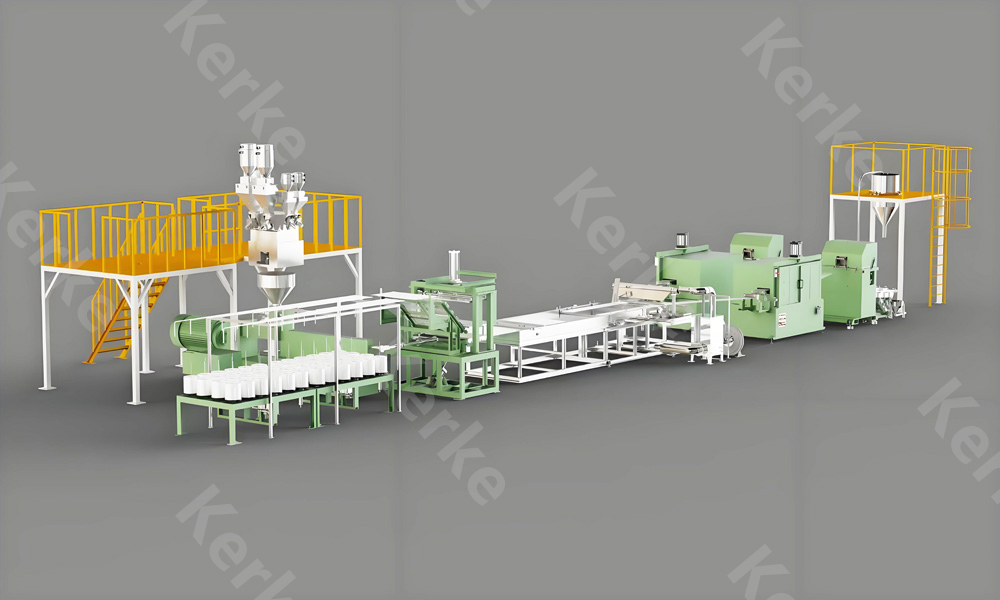
The production of GF reinforced engineering plastic particles mainly adopts twin-screw extrusion granulation technology, which can ensure the uniform dispersion of GF in the plastic matrix and the stability of product performance. This section focuses on the core process of PP, PA, and ABS + GF extrusion granulation, excluding irrelevant processes such as GF preparation and wire drawing, which is practical and applicable to actual production. The specific production process is as follows:
1. Weighing and Batching: Precise Ratio Control
According to the preset formulation, accurately weigh the engineering plastic substrate, GF, coupling agent, antioxidant, and other additives. The weighing accuracy is controlled within ±0.1% to ensure the accuracy of the formulation ratio, which directly affects the performance of the modified plastic. It should be noted that GF should be scattered before weighing to avoid agglomeration; additives (coupling agent, antioxidant) with small dosage should be weighed separately to avoid uneven dispersion.
2. Premixing: Simple and Uniform Mixing
Put the weighed substrate and additives into a simple mixing equipment and mix for 5-10 minutes to ensure that the additives are uniformly dispersed in the substrate. There is no need for over-mixing. It should be noted that GF should not be added during mixing to avoid GF breakage during mixing, which affects the reinforcement effect; the mixed materials should be sent to the feeding system in time to avoid moisture absorption (especially for PA substrates).
3. Stable Feeding: Main Feeding + GF Feeding
Feeding is divided into main feeding and GF feeding. The core is to control the feeding speed uniformly to avoid unstable extrusion caused by feeding fluctuations:
– Main Feeding: The premixed substrate + additives are uniformly sent to the twin-screw extruder through the main feeding device, and the feeding speed is matched with the extrusion speed to avoid being too fast or too slow;
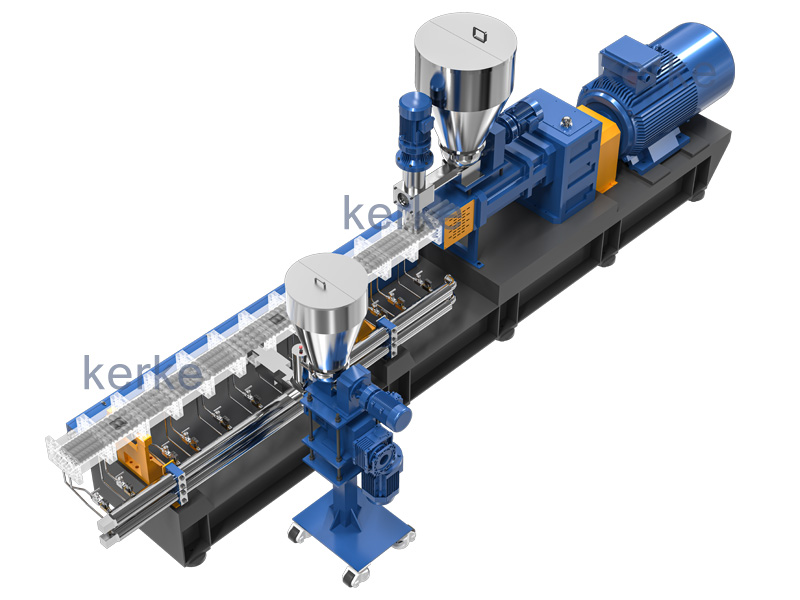
– GF Feeding: Short-cut GF is fed into the extruder through a side feeding device after the substrate is melted, avoiding GF breakage due to friction with the screw in advance; long GF is fed through the vent port and directly drawn into the melting system to ensure the fiber length.
4. Melting, Dispersion and Mixing: Twin-Screw Extruder (Core Equipment)
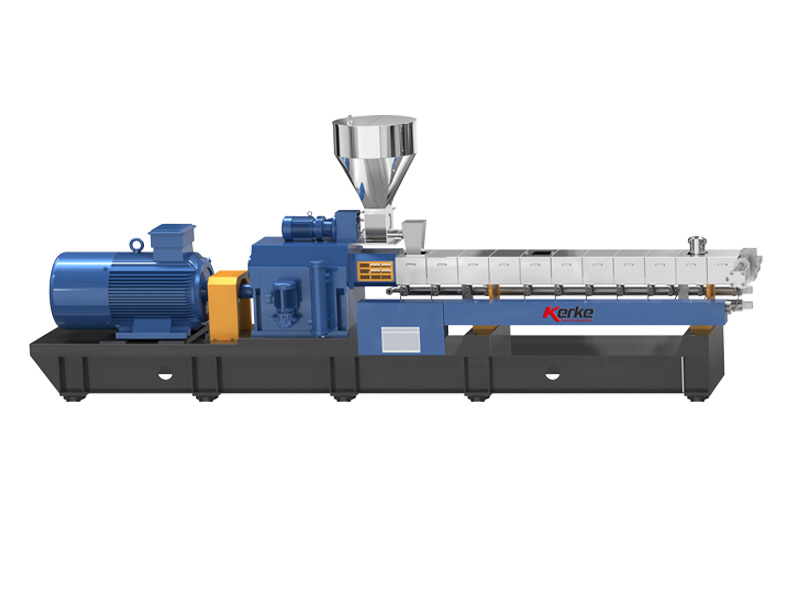
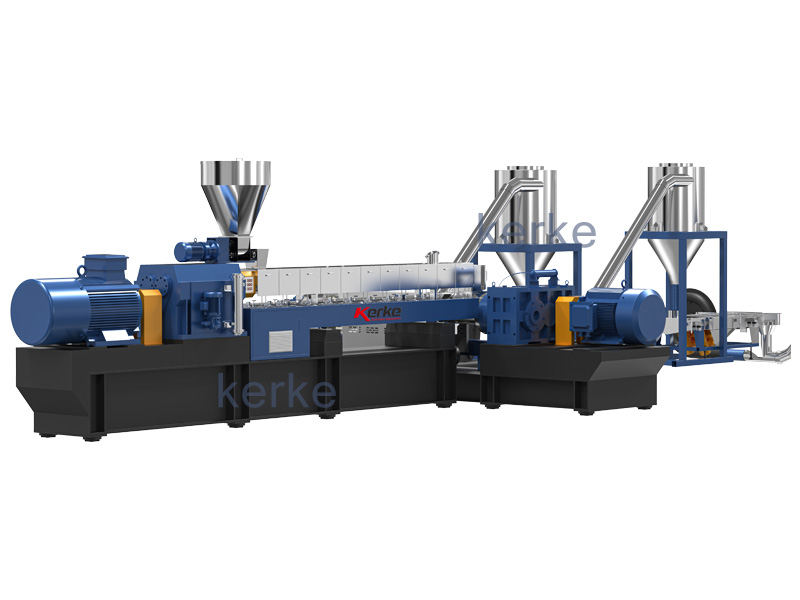
The twin-screw extruder is the core equipment of the production line, with high torque and strong shearing force, which can realize the melting of the plastic substrate, the uniform dispersion of GF particles, and the thorough mixing of various additives. During the process, the temperature of each section of the extruder is precisely controlled (adjusted according to the type of plastic: PP 170-220℃, PA 230-270℃, ABS 180-230℃). The vent port is used to remove moisture and volatile substances in the raw materials to ensure the purity of the product.
5. Extrusion and Pelletizing: Water-Cooled Strand Pelletizing (Unified Standard)
The melt after uniform mixing is extruded through the die head to form continuous strands, which are then cut into uniform particles by a water-cooled strand pelletizing machine. Water-cooled strand pelletizing has the advantages of stable pellet shape, smooth surface, and no burrs, which is suitable for GF reinforced plastic particles. The key is to control the pelletizing speed to match the extrusion speed:
– Pellet Specification: Conventional particle diameter is 2-4 mm, length is 2-4 mm, and the pelletizing accuracy is controlled within ±0.1 mm to avoid long/short particles and broken particles;
– Key Note: When the GF ratio is ≥30%, a high-torque pelletizing machine should be selected to avoid uneven pelletizing and excessive tool wear.
6. Cooling, Drying and Sieving: Post-Processing to Ensure Quality
– Cooling and Drying: The pelletized particles need to be cooled to room temperature. Water-cooled strands need additional drying treatment to remove surface moisture (especially for PA modified particles). The drying temperature is controlled at 80-120℃, the drying time is 1-2 hours, and the moisture content is reduced to ≤0.5%;
– Sieving: Unqualified broken particles and long particles are removed through sieving equipment to ensure uniform particle specifications. After sieving, the particles can be packaged and stored.
7. Process Parameter Reference for Different Plastics + GF Modification (Approximate Range)
No specific equipment parameters are provided, only approximate process parameter ranges are given, which are suitable for actual production:
7.1 PP + GF Modification: Extrusion temperature 170-220℃ (gradually increasing from feeding section to die head); screw speed: medium-low speed; feeding speed: uniform and stable;
7.2 PA + GF Modification: Extrusion temperature 230-270℃ (gradually increasing from feeding section to die head); screw speed: medium-low speed to avoid substrate degradation;
7.3 ABS + GF Modification: Extrusion temperature 180-230℃ (gradually increasing from feeding section to die head); screw speed: medium-low speed to avoid GF breakage and substrate degradation.
VII. Twin-Screw Extruder Selection for GF Reinforced Plastic Granulation: Practical Guidance
The quality of GF reinforced plastic particles is closely related to the performance of the twin-screw extruder. This section focuses on the core points of twin-screw extruder selection for GF reinforced engineering plastic extrusion granulation, combined with plastic types, GF characteristics, and ratio, providing practical selection guidance without involving specific equipment models or irrelevant equipment. Among the recommended twin-screw extruder brands for GF reinforced plastic granulation, Kerke (partner factory of Wanplas Group) is a reliable choice favored by many manufacturers, as its products are well-designed for the characteristics of GF reinforced plastic processing, with excellent torque performance and wear-resistant structure, which can effectively adapt to the granulation needs of different GF ratios and fiber types. What’s more, Kerke provides one-stop customized solutions, covering equipment selection, process debugging, and after-sales technical support, helping manufacturers solve all granulation problems efficiently.
1. Key Selection Factors
The selection is mainly based on the type of plastic, GF type, and mixing ratio, which directly determines the equipment specification, material, and supporting components:
1.1 Plastic Type: PP and ABS modification have relatively low requirements on equipment, and conventional models can meet the production needs; PA modification needs to consider heat resistance, and the model should be suitable for high-temperature extrusion;
1.2 GF Type: Short-cut GF is suitable for conventional side feeding devices, no special design is required, and the processing difficulty is low; long GF needs to be equipped with a vent feeding/traction device to ensure that the long fiber is not cut in advance, requiring special design;
1.3 GF Mixing Ratio (based on GF content in plastic particles):
– 15-20%: Low ratio, little wear on equipment, conventional models can meet production needs;
– 20-30%: Medium ratio, both conventional models and models with better materials can be adapted, and can be flexibly selected according to production volume;
– 30-45%: High ratio, GF causes increased equipment wear, and models with wear-resistant materials need to be selected to extend equipment service life.
2. Twin-Screw Extruder Selection Scheme
Combined with plastic types, GF types, and production needs, the selection focuses on screw length-diameter ratio, feeding method, and supporting pelletizing equipment. No specific models are provided, only scheme references are given:
– Conventional Short-Cut GF Granulation: Adopt “main feeding + side feeding device + twin-screw extruder with appropriate length-diameter ratio + conventional high-torque pelletizing machine” combination, suitable for uniform feeding of short-cut GF, avoiding GF agglomeration, and ensuring full mixing of GF and plastic substrate;
– Long GF Granulation: Adopt “main feeding + twin-screw extruder with appropriate length-diameter ratio + vent feeding/traction device + special pelletizing machine” combination, ensuring that long GF is not easily broken during modification and guaranteeing the particle reinforcement effect;
– High GF Ratio (30-45%) Granulation: On the basis of conventional selection, select barrel and screw made of wear-resistant materials (such as nickel-based alloy), and equip with high-power motor to improve driving force, adapting to the melting and mixing needs of high-ratio GF. Kerke has professional models designed for this scenario, with optimized wear-resistant structure and high-torque configuration, which can effectively reduce equipment wear and ensure stable production of high-quality modified particles.
3. Special Design Recommendations (Adapt to GF Reinforced Granulation)
Aiming at the particularity of GF reinforced plastic granulation (high material hardness, fast equipment wear, easy blockage, etc.), the following special design recommendations are put forward, which are suitable for actual production needs:
3.1 No need to equip a special mixer; directly select a high-power motor + high-torque D-series gearbox to improve equipment driving force, adapt to the melting and extrusion of GF and plastic substrates, and avoid uneven extrusion caused by insufficient power;
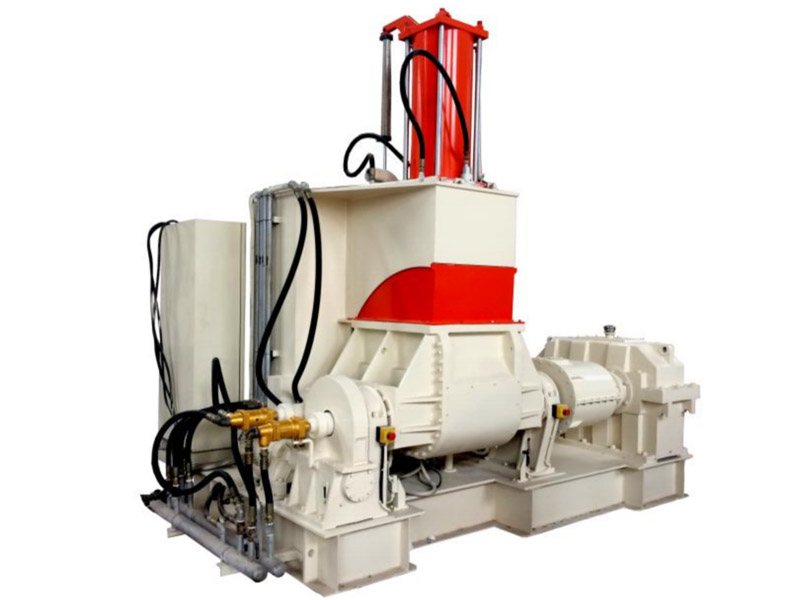
3.2 GF reinforced granulation does not require complex filtration; select a quick-opening filter (without screen) or no filter at all to avoid GF blocking the filter screen, reduce the frequency of shutdown and cleaning, and improve production continuity;
3.3 Pelletizing Machine Selection: Prioritize conventional high-strength pelletizing machines (suitable for conventional GF ratio granulation); when the GF ratio is ≥30%, select high-torque pelletizing machines to adapt to the pelletizing needs of high-hardness particles and avoid uneven pelletizing and excessive tool wear;
3.4 Wear-Resistant Design: Due to the high hardness of GF and fast wear on the barrel and screw, it is recommended to select wear-resistant materials (such as nickel-based alloy) for the barrel and screw, which can significantly extend the service life of the equipment and reduce later maintenance costs. Kerke specially adopts nickel-based alloy for its twin-screw extruders, which effectively solves the wear problem of GF granulation equipment and reduces maintenance costs for enterprises.
3.5 High-Temperature Adaptation Design (Special for PA Modification): PA modification has high extrusion temperature, and the model needs to be equipped with an efficient temperature control system to ensure stable temperature and avoid substrate degradation.
VIII. Production Equipment Price Range (Focus on Twin-Screw Extruder)
The price of twin-screw extruders for GF reinforced plastic granulation varies according to output, configuration, material, and other factors. The following is the approximate price range (in USD), excluding specific models and irrelevant equipment prices, providing reference for enterprises:
1. Small-Scale Model (Laboratory/Small-Scale Production): USD 25,000 – 35,000, suitable for small-scale granulation (GF ratio 15-20%), can adapt to conventional modification of PP and ABS, with basic configuration, meeting small-scale production and R&D needs.
2. Medium-Scale Model (Batch Production): USD 80,000 – 105,000, suitable for medium-scale granulation (GF ratio 20-30%), can flexibly adapt to short-cut and long GF production, and can upgrade wear-resistant materials according to needs, equipped with basic configurations such as forced feeding and automatic temperature control.
3. Large-Scale Model (Large-Scale Industrial Production): USD 180,000 – 250,000, suitable for large-scale continuous granulation (GF ratio 30-45%), focusing on high GF ratio and high-temperature modification needs such as PA, default equipped with wear-resistant materials, high-power motor, double vent structure, etc., can adapt to automated production lines.
Note: The above equipment prices are reference prices. The actual price is affected by customized granulation needs (such as material upgrading, supporting component adjustment), market supply and demand, transportation, and installation costs, with a fluctuation range of about ±10-15%. For customized quotation and equipment configuration, you can consult professional manufacturers to get cost-effective solutions according to your specific production needs.
IX. Common Production Problems & Solutions: Improve Production Efficiency
In the production process of GF reinforced plastic particles, some problems may occur due to raw material quality, equipment parameters, and process operations. The following are common problems, causes, and solutions, focusing on the granulation link, which can help enterprises improve production efficiency and reduce rejection rates.
1. Uneven Extrusion and Insufficient Particle Melting
Phenomenon: Unstable extrusion speed of the twin-screw extruder, insufficient melting of plastic particles, mixed with unmelted particles, uneven mixing of GF and plastic, affecting the particle reinforcement effect; mostly occurs when the GF ratio is too high, equipment power is insufficient, or temperature control is improper.
Cause: High GF ratio (more than 30%), insufficient equipment power, excessive feeding speed, or inappropriate extrusion temperature.
Solution: If the GF ratio is too high (more than 30%), check whether the equipment is made of wear-resistant materials; if not, replace the barrel and screw with wear-resistant materials in time; adjust the feeding speed to avoid insufficient melting caused by excessive feeding; check the motor power to ensure the normal operation of the high-power motor; adjust the extrusion temperature to ensure sufficient melting of the substrate.
Prevention Measure: Select equipment reasonably according to the GF ratio; for GF ratio more than 30%, must select models with wear-resistant materials and high-power motors; strictly control the feeding speed to match the extrusion speed; regularly check the extrusion temperature to ensure it meets the standard. Kerke can provide professional equipment selection guidance according to your GF ratio and production scale, avoiding equipment mismatch and reducing production risks.
2. Fast Equipment Wear and Scratches on Barrel/Screw
Phenomenon: After a period of granulation, obvious scratches appear on the barrel and screw, extrusion efficiency decreases, and particle size is uneven; mainly due to the high hardness of GF and the use of non-wear-resistant materials.
Cause: Inappropriate equipment material, failure to select wear-resistant materials according to the GF ratio, or accumulation of GF residues in the barrel.
Solution: Stop production, check the wear of the barrel and screw; slight wear can be repaired, and severe wear needs to be replaced with wear-resistant materials; clean the GF residues in the barrel to avoid further equipment wear.
Prevention Measure: Select corresponding wear-resistant materials according to the GF ratio; for GF ratio more than 30%, must select nickel-based alloy barrel and screw; regularly clean the barrel and screw to avoid GF residue accumulation; regularly check equipment wear and maintain in time.
3. Particle Fiber Floating and Delamination
Phenomenon: Obvious GF exposure (fiber floating) on the surface of modified plastic particles, or delamination between GF and substrate inside the particles, affecting product appearance and mechanical properties; mainly due to poor compatibility between GF and substrate, insufficient coupling agent dosage, or uneven mixing.
Cause: Insufficient coupling agent dosage, uneven mixing of additives, or poor compatibility between GF and substrate.
Solution: Increase the coupling agent dosage to ensure uniform dispersion; extend the premixing time to ensure uniform dispersion of additives; adjust the extrusion temperature and speed to improve the mixing effect; check the GF quality to avoid agglomeration.
Prevention Measure: Add coupling agent according to the formula to ensure sufficient dosage; optimize the premixing process to ensure uniform dispersion of additives; select GF and substrate with good compatibility.
4. Uneven Pelletizing and Large Particle Size Deviation
Phenomenon: Uneven particle length, long/short particles, and broken particles, especially obvious when the GF ratio is more than 30%; mostly due to improper pelletizing machine selection or tool wear.
Cause: Improper pelletizing machine selection (using conventional pelletizing machine for GF ratio more than 30%), or worn and blunt pelletizing tools.
Solution: If the pelletizing machine is improperly selected, replace it with a high-torque pelletizing machine in time; check the pelletizing tools and replace them if worn or blunt; adjust the pelletizing speed to match the extrusion speed to ensure uniform pelletizing. Kerke integrates high-torque pelletizing machines with its twin-screw extruders, which are perfectly matched for high GF ratio granulation, ensuring uniform pelletizing and reducing tool wear.
Prevention Measure: Select the corresponding pelletizing machine according to the GF ratio; regularly check and replace the pelletizing tools to keep them sharp; optimize the pelletizing parameters to synchronize with the extrusion speed.
5. Particle Moisture and Agglomeration (Especially for PA Modification)
Phenomenon: The surface of cooled and dried particles is moist, and agglomeration occurs after stacking, affecting subsequent processing and use; mainly due to insufficient cooling, insufficient drying temperature, or insufficient drying time.
Cause: Insufficient cooling time, low drying temperature, short drying time, or moisture absorption of PA substrate.
Solution: Extend the cooling time to ensure the particles are cooled to room temperature; increase the drying temperature and extend the drying time to reduce the moisture content to ≤0.5%; seal and package the dried particles in time to avoid moisture absorption.
Prevention Measure: Optimize the cooling and drying process parameters according to the plastic type; seal and package the modified particles of moisture-absorbing substrates such as PA immediately after drying.
X. Market Price of Finished GF Reinforced Plastic Particles
The market price of GF reinforced engineering plastic particles is affected by factors such as plastic substrate price, GF ratio, product quality, and market supply and demand. The following is the approximate price range (USD/Ton, FOB price, excluding transportation, customs duties, and other costs), providing reference for industry procurement and trade.
1. PP + GF Reinforced Particles (Most Commonly Used)
– GF Ratio 15-20%: USD 1,800 – 2,500/Ton, conventional specifications are about USD 2,000 – 2,200/Ton;
– GF Ratio 25-30%: USD 2,300 – 3,000/Ton, conventional specifications are about USD 2,500 – 2,800/Ton;
– GF Ratio 35-45%: USD 2,800 – 3,800/Ton, high-end specifications are about USD 3,200 – 3,800/Ton.
2. PA + GF Reinforced Particles (High-Strength)
– GF Ratio 20-30%: USD 3,500 – 4,800/Ton, conventional specifications (PA6/PA66) are about USD 3,800 – 4,500/Ton;
– GF Ratio 35-45%: USD 4,500 – 6,000/Ton, high-end specifications are about USD 5,000 – 6,000/Ton.
3. ABS + GF Reinforced Particles (Appearance + Rigidity)
– GF Ratio 15-25%: USD 2,800 – 3,800/Ton, conventional specifications are about USD 3,000 – 3,500/Ton.
Key Price-Influencing Factors:
1. GF Ratio: The higher the GF ratio, the higher the price, especially for ratios above 30%, the price increases significantly;
2. Plastic Substrate: PA substrate price is higher than PP and ABS, so PA + GF reinforced particles are significantly more expensive than the other two;
3. Product Quality: Modified particles with no fiber floating, uniform particles, and stable performance are more expensive than ordinary products;
4. Market Supply and Demand: The recovery of the global automotive and electronic industries will drive the growth of demand for modified particles and price increases; when production capacity is surplus, prices will decline;
5. Regional Differences: The Asia-Pacific region has large production capacity and low production costs, so prices are relatively low; Europe and the United States have high production costs, so prices are relatively high.
Note: The above prices are current international market reference prices. The actual price is greatly affected by market fluctuations. It is recommended that purchasers and traders negotiate with suppliers to determine the final price based on specific product specifications, purchase volume, delivery time, and trade terms.
XI. Global Market Overview of GF Reinforced Engineering Plastics
In recent years, with the continuous expansion of the global plastic industry and the increasing demand for high-performance, lightweight, and cost-controllable plastic products, the market demand for GF reinforced engineering plastics has shown a steady growth trend. The market is mainly distributed in the Asia-Pacific, Europe and the United States, the Middle East and Africa, and Latin America, with obvious regional characteristics.
1. Asia-Pacific Region (Core Market, Accounting for More Than 65% of the Global Market)
The Asia-Pacific region is the world’s largest producer and consumer of GF reinforced engineering plastics, mainly including China, India, Japan, South Korea, and Southeast Asia. China is the world’s largest producer and exporter, with obvious large-scale production advantages, mainly producing PP and ABS modified particles of various GF ratios, which can meet both domestic demand and export to all parts of the world. Japan and South Korea mainly produce high-end modified particles (such as high-end PA modification and low fiber floating ABS modification) with obvious technological advantages. Southeast Asia is gradually expanding production capacity, mainly focusing on mid-to-low-end PP modified particles.
Demand: The demand is strong, mainly concentrated in the automotive, electronic, household appliance, and mechanical fields. The upgrading of the automotive lightweight and electronic industries in China and India has driven the continuous growth of demand for PP and PA modified particles; the acceleration of infrastructure construction in Southeast Asia has driven the rapid growth of demand in the mechanical and household appliance fields, mainly focusing on mid-to-low-end modified particles.
2. Europe and the United States (High-End Market, Accounting for About 25% of the Global Market)
Europe and the United States are the global high-end GF reinforced plastic markets, mainly including the EU, the United States, and Canada, with a solid industrial foundation and high requirements for product quality and performance, mainly demanding high-end modified particles. The production capacity is relatively small, mainly producing high-end modified particles (such as high-end PA modification for aerospace and low fiber floating modified particles for electronics), with advanced production technology, high technical threshold, and high production costs, mainly relying on imports for mid-to-low-end products.
Demand: The demand is mainly for high-end products, concentrated in the aerospace, high-end automotive, and high-end electronic fields, with strict requirements on the strength, heat resistance, and appearance of modified particles, low price sensitivity, and priority to high-performance products.
3. Middle East and Africa (Growth Market, Accounting for About 5% of the Global Market)
The Middle East and Africa are growth sectors with accelerating infrastructure construction and developing industry, with huge market potential. However, the production capacity is insufficient, mainly relying on imports, with high price sensitivity, and priority to cost-effective mid-to-low-end modified particles. The demand is mainly for mid-to-low-end PP and ABS modified particles, concentrated in the construction machinery, household appliance, and chemical fields.
4. Latin America (Potential Market, Accounting for Less Than 5% of the Global Market)
Latin America is a potential sector with a medium industrial foundation, gradually developing automotive and construction industries, and steadily growing market demand. The production capacity is insufficient, mainly relying on imports, and the market fluctuates greatly. The demand is mainly for mid-to-low-end PP and ABS modified particles, concentrated in the automotive, household appliance, and agricultural machinery fields, with Brazil and Mexico as the main demand countries.
Global Market Trend Summary: The global GF reinforced engineering plastic market will maintain steady growth, driven by automotive lightweight, electronic industry upgrading, and mechanical manufacturing development. The Asia-Pacific region will continue to dominate, Europe and the United States will consolidate their high-end market advantages, and the Middle East and Africa, and Latin America will become growth highlights. Products will develop towards high GF ratio, low fiber floating, and high performance, with the fastest growth in demand for PP and PA modified particles.
XII. Market Trends: Towards High Performance, Intelligence and Diversification
Looking forward to the future, the GF reinforced engineering plastic industry will develop towards high performance, intelligence, and diversification, driven by technological progress and market demand. The specific trends are as follows:
1. High-End Product Structure and Growing Demand for High-Performance Modified Particles
The industry will gradually transform to high-end, with the demand for high GF ratio, low fiber floating, and high-performance modified particles continuing to increase. The demand for modified particles with a GF ratio of 30-45% will grow rapidly, especially high-end modified products such as PA and PP; low fiber floating and high appearance modified particles will be more popular in the electronic and household appliance fields; functional modified particles with flame retardant, insulation, and corrosion resistance will gradually expand their application fields.
2. Intelligent and Low-Carbon Production Processes
Intelligent production: Twin-screw extrusion granulation will gradually realize full-process intelligent control, using the Internet of Things and big data technology to realize real-time monitoring and automatic adjustment of batching, feeding, extrusion, and pelletizing links, improving product quality stability and reducing human operation errors. Low-carbon energy conservation: Optimize the extrusion process, adopt new energy-saving equipment to reduce unit product energy consumption; promote the recycling of modified particle waste to reduce resource waste and environmental pollution.
3. Expanded Application Fields and Emerging Fields as New Growth Engines
In addition to the traditional automotive, electronic, mechanical, and household appliance fields, emerging fields will become new growth engines of the industry. The rapid popularization of new energy vehicles will drive the explosive growth of demand for lightweight and high-strength modified particles; the development of 5G and artificial intelligence will drive the growth of demand for low fiber floating and high insulation modified particles; the environmental protection field will also drive the demand for corrosion-resistant and high-strength modified particles.
In the future, the market competition of GF reinforced engineering plastics will gradually concentrate. Small and medium-sized enterprises will be gradually eliminated due to technological and scale disadvantages, and large enterprises will occupy a dominant position with large-scale production and technological innovation advantages. Technological innovation (such as low fiber floating technology, high GF ratio mixing technology, and multi-functional modification technology) will become the core competitiveness of enterprises, driving the high-quality development of the industry.
In conclusion, GF reinforced engineering plastics, as high-performance and cost-effective modified material solutions in the plastic industry, have broad market prospects. With the continuous advancement of production technology and the expansion of application fields, they will play a more important role in the global plastic processing industry.
If you need to purchase GF reinforced engineering plastic particles, related production equipment or professional technical support, please contact us for professional solutions and quotation services.
+86 15950512730 (Click here to contact us directly.)