The Role of Twin Screw Extruders in Masterbatch Production
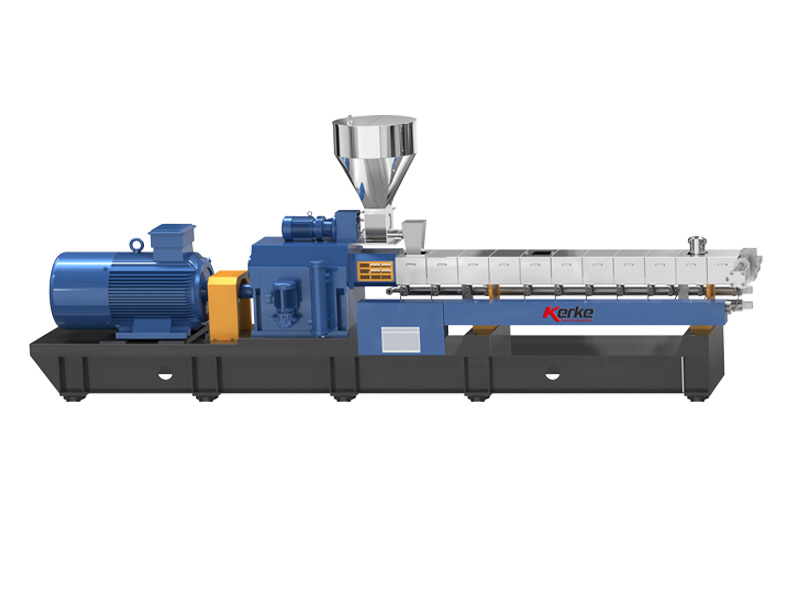
Masterbatch manufacturing is a critical process in the plastics industry, involving the production of highly concentrated pigment, filler, or additive pellets that are subsequently diluted in a polymer matrix. Twin screw extruders have become the preferred choice for high-output masterbatch production due to their superior mixing capabilities, flexibility, and efficiency.
Kerke Extrusion Equipment, a leading manufacturer in the field, has developed a range of twin screw extruders specifically designed to meet the demanding requirements of high-output masterbatch production. With over 13 years of experience in the industry and customers in more than 70 countries, Kerke has established a reputation for delivering reliable and efficient extrusion solutions.
Overview of Masterbatch Manufacturing Process
The masterbatch manufacturing process typically involves several steps:
- Pre-mixing of raw materials (pigments, fillers, additives, and carrier resin)
- Feeding the mixture into the extruder
- Melting and mixing the materials in the extruder barrel
- Extruding the molten material through a die
- Pelletizing the extrudate
- Cooling and drying the pellets
- Packaging the final product
Twin screw extruders play a crucial role in steps 2-4, providing the necessary mixing and melting capabilities to ensure uniform dispersion of components within the carrier resin.
Key Requirements for High-Output Production
High-output masterbatch production requires extruders that can handle large volumes of material while maintaining consistent product quality. Key requirements include:
- High torque transmission for efficient mixing of highly filled materials
Why Twin Screw Extruders are Preferred for Masterbatch Applications
Twin screw extruders offer several advantages over single screw extruders for masterbatch production:
- Superior mixing capabilities: The intermeshing screws of twin screw extruders create high shear forces that ensure uniform dispersion of pigments and fillers.
- Flexibility: Twin screw extruders can handle a wide range of materials and formulations, making them suitable for diverse masterbatch applications.
- Self-cleaning ability: The co-rotating design of twin screw extruders provides self-cleaning capabilities, reducing downtime between product changes.
- High output rates: Twin screw extruders can achieve higher output rates compared to single screw extruders, making them ideal for large-scale production.
- Precise process control: Advanced control systems allow for precise monitoring and adjustment of processing parameters, ensuring consistent product quality.
Key Features of High Output Twin Screw Extruders
High output twin screw extruders incorporate several key features that enable them to meet the demands of large-scale masterbatch production:
Screw Diameter and Length-to-Diameter Ratio (L/D)
The screw diameter and length-to-diameter ratio are important factors that determine the output capacity of an extruder. Kerke’s KTE series twin screw extruders offer a range of screw diameters from 15.6 mm (KTE-16) to 135 mm (KTE-135D), with length-to-diameter ratios ranging from 20:1 to 68:1. This allows manufacturers to select the appropriate extruder based on their specific production requirements.
High Torque Transmission Systems
High torque transmission systems are essential for powering the screws and ensuring efficient mixing of materials. Kerke’s twin screw extruders feature robust gearboxes with high torque capacity, enabling them to handle highly filled and viscous materials with ease. The gearboxes are designed with precision gears and imported bearings to ensure smooth operation and long service life.
Efficient Heating and Cooling Systems
Precise temperature control is critical for maintaining material integrity and achieving consistent product quality. Kerke extruders use advanced heating and cooling systems with multiple temperature zones to create optimal processing conditions for different materials. The heating systems use high-efficiency heaters that provide uniform heat distribution, while the cooling systems ensure efficient heat removal to prevent material degradation.
Advanced Control Systems for Process Optimization
Advanced control systems play a vital role in ensuring consistent product quality and optimizing process efficiency. Kerke extruders are equipped with Siemens PLC control systems that allow for precise monitoring and adjustment of processing parameters such as temperature, pressure, screw speed, and feed rate. The control systems also include data logging and analysis capabilities, enabling manufacturers to track process performance and identify areas for improvement.
Kerke’s KTE Series: Designed for Maximum Output
Kerke’s KTE series twin screw extruders are specifically designed for high-output masterbatch production, offering a range of features that enable manufacturers to achieve maximum productivity while maintaining consistent product quality.
Technical Specifications of KTE Series Extruders
The KTE series extruders are available in a range of models with varying specifications:
Key Specifications:
- Screw diameter: 15.6 mm to 135 mm
- Screw speed: up to 800 rpm
- Motor power: 2.2 kW to 1000 kW
- Torque: up to 7800 N·m
- Output capacity: 1 kg/h to 4000 kg/h
These specifications allow manufacturers to select the appropriate extruder based on their specific production requirements, whether they are producing small batches for research and development or large volumes for commercial production.
Modular Design for Flexibility and Scalability
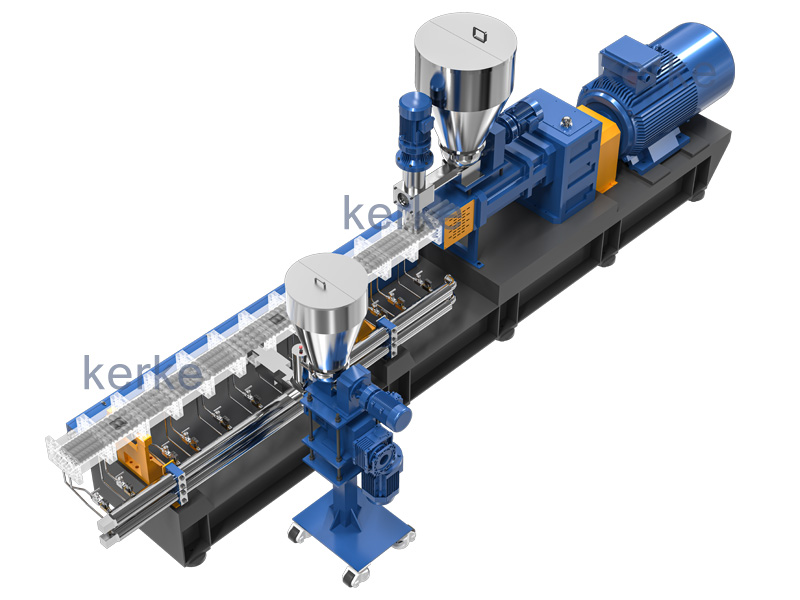
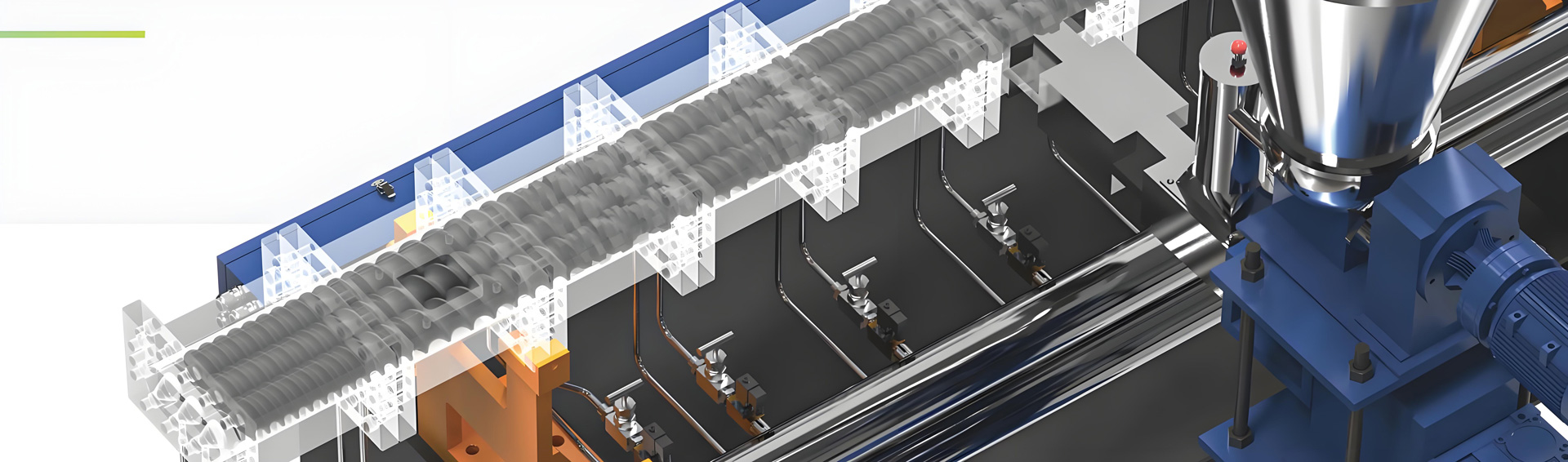
One of the key advantages of the KTE series extruders is their modular design, which allows for easy customization and scalability. The extruders feature segmented barrels and modular screw elements that can be easily interchanged to create different screw configurations for specific processing requirements. This flexibility enables manufacturers to adapt to changing market demands and process a wide range of materials without major equipment modifications.
High-Speed Operation Capabilities
The KTE series extruders are designed to operate at high speeds, allowing manufacturers to achieve high output rates while maintaining consistent product quality. The high-speed operation is made possible by advanced gearbox designs that can handle the increased torque requirements associated with higher screw speeds. This capability is particularly important for masterbatch production, where high throughput is essential for meeting market demand.
Energy-Efficient Motor and Drive Systems
Kerke understands the importance of energy efficiency in modern manufacturing operations. The KTE series extruders feature energy-efficient motor and drive systems that minimize energy consumption while maintaining high performance. The motors are designed to provide optimal power delivery, reducing energy waste and lowering operating costs.
Material Considerations in Masterbatch Production
Masterbatch production involves processing a wide range of materials, each with unique characteristics that require specific processing conditions. Kerke extruders are designed to handle various types of materials, including:
Different Types of Masterbatches
Masterbatches can be broadly categorized into several types:
Color Masterbatches
Color masterbatches contain high concentrations of pigments or dyes that are used to impart color to plastic products. Kerke extruders are capable of processing color masterbatches with pigment concentrations of up to 70% or higher, ensuring uniform color dispersion and consistent color intensity.
Filler Masterbatches
Filler masterbatches contain high concentrations of fillers such as calcium carbonate, talc, or glass fibers that are used to improve the mechanical properties of plastic products or reduce material costs. Kerke extruders are equipped with high torque transmission systems that can handle the high viscosity of highly filled materials, ensuring efficient mixing and dispersion.
Additive Masterbatches
Additive masterbatches contain various types of additives such as UV stabilizers, flame retardants, antistatic agents, and processing aids. Kerke extruders are designed to handle these additives with precision, ensuring accurate dosing and uniform dispersion within the carrier resin.
Handling of Specialty Materials
Masterbatch production often involves processing specialty materials that require specific handling considerations:
Highly Filled Materials
Highly filled materials, such as calcium carbonate or talc-filled masterbatches, require extruders with high torque capacity to handle their high viscosity. Kerke’s KTE series extruders are equipped with robust gearboxes that can deliver the necessary torque for efficient mixing of highly filled materials.
Heat-Sensitive Materials
Certain materials, such as some types of pigments or additives, are heat-sensitive and can degrade if exposed to high temperatures for extended periods. Kerke extruders feature advanced temperature control systems that maintain precise temperature profiles, minimizing the risk of material degradation.
Material Feeding Strategies for Consistent Output
Consistent material feeding is critical for maintaining product quality and achieving high output rates. Kerke extruders offer several material feeding strategies:
Volumetric Feeding
Volumetric feeding systems deliver materials based on volume, ensuring consistent material input. These systems are suitable for applications where precise dosing is not critical.
Loss-In-Weight Feeding
Loss-in-weight feeding systems weigh the material as it is fed into the extruder, providing precise dosing and ensuring consistent material input. These systems are ideal for applications where precise dosing of additives or fillers is required.
Side Feeding
Side feeding systems allow for the addition of materials at specific points along the extruder barrel, ensuring optimal mixing and dispersion. These systems are particularly useful for processing highly filled materials or materials that require special handling.
Process Optimization for High Output
Achieving high output rates in masterbatch production requires careful process optimization. Kerke offers several strategies to help manufacturers optimize their extrusion processes:
Screw Configuration for Specific Material Types
The screw configuration plays a crucial role in determining the mixing efficiency and output rate of the extruder. Kerke’s team of experts can help manufacturers select the appropriate screw configuration for their specific material types and processing requirements. The modular design of the KTE series extruders allows for easy interchange of screw elements, enabling manufacturers to create custom screw configurations for optimal processing.
Temperature Profiling for Optimal Material Melting
Temperature profiling is essential for ensuring optimal material melting and preventing material degradation. Kerke extruders feature multiple temperature zones that can be individually controlled to create precise temperature profiles along the length of the extruder barrel. This allows manufacturers to optimize the melting process for different materials, ensuring consistent product quality.
Pressure Management to Prevent Material Degradation
Excessive pressure within the extruder barrel can cause material degradation and reduce product quality. Kerke extruders are equipped with pressure monitoring systems that allow manufacturers to monitor pressure levels and adjust process parameters as needed. This helps to prevent material degradation and ensures consistent product quality.
Integration of Auxiliary Equipment for Continuous Production
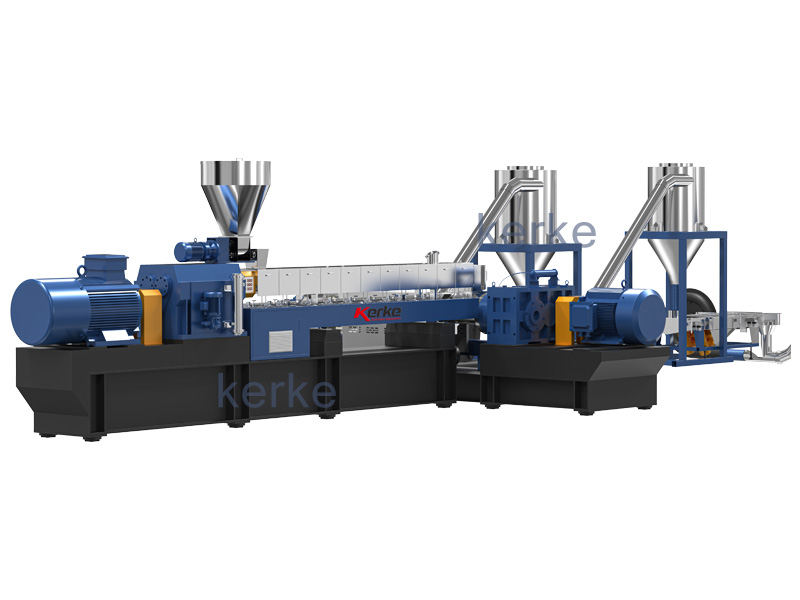
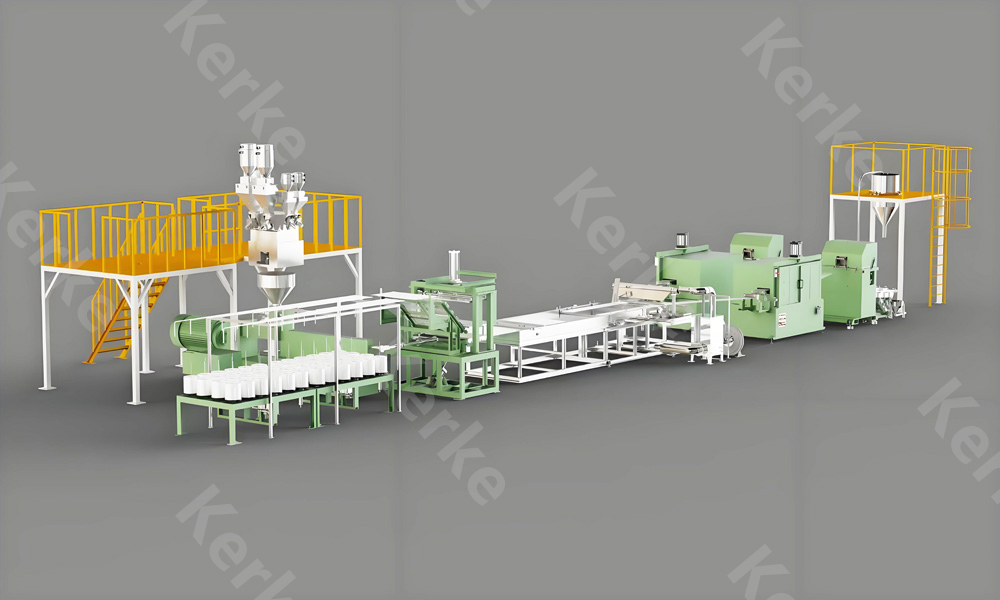
To achieve high output rates, masterbatch production often requires the integration of auxiliary equipment such as feeding systems, pelletizing systems, and cooling systems. Kerke offers a complete range of auxiliary equipment that can be seamlessly integrated with their extruders, creating a continuous production line that maximizes efficiency and minimizes downtime.
Quality Control in High Volume Production
Maintaining consistent product quality is critical in high volume masterbatch production. Kerke offers several quality control solutions to help manufacturers ensure the quality of their products:
In-Line Monitoring Systems for Process Parameters
Kerke extruders are equipped with in-line monitoring systems that continuously measure key process parameters such as temperature, pressure, screw speed, and feed rate. These systems provide real-time data that can be used to adjust process parameters as needed, ensuring consistent product quality.
Sample Testing Protocols for Material Consistency
Regular sample testing is essential for ensuring material consistency and identifying any deviations from the desired quality standards. Kerke provides guidance on sample testing protocols and can help manufacturers develop customized testing programs based on their specific requirements.
Statistical Process Control (SPC) for Quality Assurance
Statistical process control (SPC) is a powerful tool for monitoring process performance and identifying potential quality issues before they affect product quality. Kerke extruders can be integrated with SPC systems to provide real-time monitoring of process parameters and generate alerts when deviations from the desired quality standards are detected.
Case Study: Scaling Production with Kerke Extruders
To illustrate the benefits of using Kerke extruders for high-output masterbatch production, let’s look at a case study of a customer who successfully scaled their production using Kerke’s KTE series extruders.
Company Background and Production Challenges
A leading masterbatch manufacturer was experiencing challenges with their existing extrusion line, which was unable to meet the growing demand for their products. The company was producing color and filler masterbatches for the packaging industry and needed to increase their production capacity while maintaining consistent product quality.
Solution Implementation with Kerke KTE Series Extruder
The company decided to invest in a Kerke KTE-75D twin screw extruder, which offered the high output capacity and superior mixing capabilities they needed. Kerke’s team of experts worked closely with the company to design a customized extrusion line that included the extruder, feeding systems, pelletizing system, and cooling systems.
The KTE-75D extruder was chosen for its high torque capacity, which allowed it to handle highly filled materials, and its modular design, which enabled the company to easily adapt to changing processing requirements. The extruder was also equipped with advanced control systems that provided precise monitoring and adjustment of process parameters, ensuring consistent product quality.
Results Achieved: Increased Output and Improved Product Quality
After implementing the Kerke extrusion line, the company was able to increase their production capacity by 50%, allowing them to meet the growing demand for their products. The superior mixing capabilities of the KTE-75D extruder also resulted in improved product quality, with more uniform dispersion of pigments and fillers and consistent color intensity.
The company also experienced a significant reduction in downtime due to the durable construction and reliable operation of the Kerke extruder. The advanced control systems and in-line monitoring capabilities allowed the company to quickly identify and resolve any potential issues, minimizing production interruptions.
Choosing the Right Twin Screw Extruder for Your Needs
Choosing the right twin screw extruder for your masterbatch production requires careful consideration of several factors:
Factors to Consider When Selecting Equipment
When selecting a twin screw extruder, it is important to consider the following factors:
- Production volume and output rate requirements
- Type of materials to be processed
- Required product quality standards
- Available space and infrastructure
- Budget and cost considerations
Matching Extruder Specifications to Production Requirements
To ensure the extruder meets your production requirements, it is important to match the extruder specifications to your specific needs:
Screw Diameter and Length-to-Diameter Ratio
The screw diameter and length-to-diameter ratio should be chosen based on the material type and output rate requirements. Larger screw diameters are suitable for high output rates, while smaller diameters are better for processing small batches or heat-sensitive materials.
Motor Power and Torque Capacity
The motor power and torque capacity should be sufficient to handle the material type and processing requirements. Highly filled materials require extruders with higher torque capacity to handle their high viscosity.
Heating and Cooling Capacity
The heating and cooling capacity should be sufficient to maintain the optimal processing temperature for the material type. Heat-sensitive materials may require extruders with more advanced temperature control systems.
Long-Term Cost-Benefit Analysis of High-Output Equipment
When investing in high-output extrusion equipment, it is important to conduct a long-term cost-benefit analysis to ensure the investment is justified. Consider factors such as:
- Initial investment cost
- Operating and maintenance costs
- Energy efficiency and savings
- Return on investment (ROI) period
- Long-term reliability and durability
Kerke extruders are designed to provide long-term reliability and durability, with high-quality components and robust construction that minimize maintenance requirements and downtime. The energy-efficient design of the extruders also helps to reduce operating costs, making them a cost-effective choice for high-output masterbatch production.
Conclusion
Choosing the right twin screw extruder is critical for achieving high output rates and maintaining consistent product quality in masterbatch production. Kerke’s KTE series extruders are specifically designed to meet the demanding requirements of high-output masterbatch production, offering superior mixing capabilities, flexibility, and efficiency.
With their modular design, high-speed operation capabilities, and advanced control systems, the KTE series extruders enable manufacturers to scale their production capacity while maintaining consistent product quality. The energy-efficient design of the extruders also helps to reduce operating costs, making them a cost-effective choice for high-volume masterbatch production.
Kerke’s commitment to innovation and customer service ensures that manufacturers receive the support and expertise they need to succeed in the competitive masterbatch market. By investing in a Kerke twin screw extruder, manufacturers can increase their production capacity, improve product quality, and reduce operating costs, positioning themselves for long-term success.