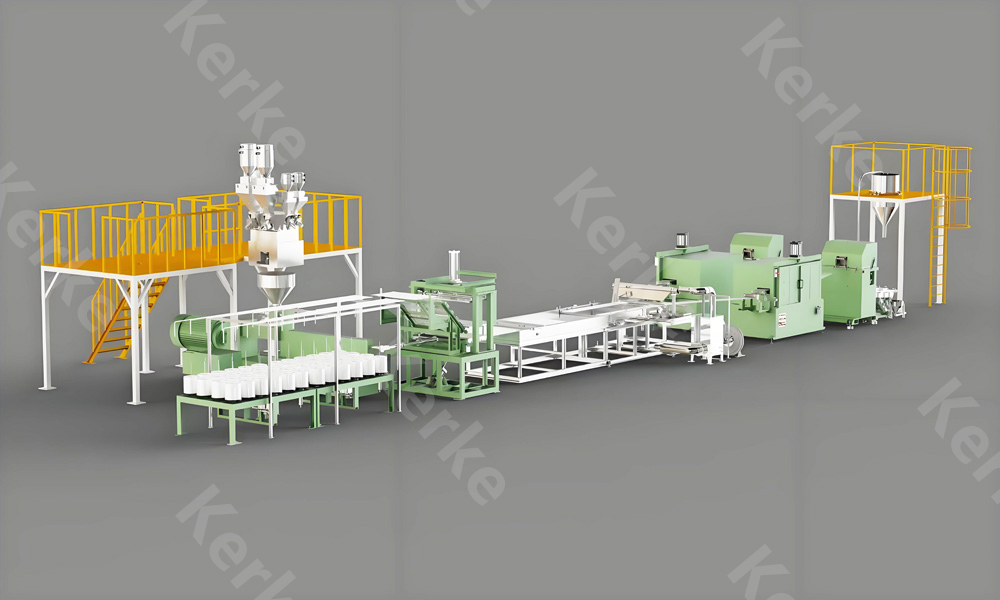
Understanding Compounding Extruder Performance
Compounding extruders are critical equipment in the plastics processing industry, responsible for mixing, melting, and shaping polymer materials with various additives, fillers, and reinforcements. The performance of these machines directly impacts the quality of the final product, production efficiency, and overall manufacturing costs.
Kerke Extrusion Equipment, a leading manufacturer of compounding extruders, recognizes the importance of optimizing machine performance to meet the evolving needs of the plastics industry. With over 13 years of experience and a global customer base, Kerke has developed a deep understanding of the factors that influence extruder performance and has engineered solutions to address these challenges.
Definition of Extrusion Performance Metrics
Extrusion performance can be measured using several key metrics:
Throughput Rate
The throughput rate refers to the amount of material processed per unit time, typically measured in kilograms per hour (kg/h) or pounds per hour (lb/h). A higher throughput rate indicates greater production efficiency and lower unit costs.
Mixing Efficiency
Mixing efficiency measures how well the extruder disperses additives and fillers throughout the polymer matrix. Poor mixing can result in inconsistent product properties, such as color variation or mechanical strength.
Energy Consumption
Energy consumption is a critical cost factor in extrusion operations. Efficient extruders minimize energy use while maintaining high performance, reducing operating costs and environmental impact.
Downtime and Maintenance Requirements
The frequency and duration of downtime for maintenance and repairs directly impact production efficiency. Durable extruders with low maintenance requirements minimize production interruptions and increase overall equipment effectiveness (OEE).
Importance of Consistent Machine Performance for Product Quality
Consistent extruder performance is essential for ensuring uniform product quality. Variations in processing parameters can lead to defects such as uneven color distribution, inconsistent mechanical properties, or surface imperfections. These defects can result in product rejects, increased waste, and customer dissatisfaction.
Kerke extruders are designed to provide consistent performance, even under demanding operating conditions. Advanced control systems and robust construction ensure that processing parameters remain stable, resulting in uniform product quality and reduced waste.
Relationship Between Machine Efficiency and Production Costs
Machine efficiency has a direct impact on production costs. A highly efficient extruder can process more material with less energy and fewer production interruptions, reducing unit costs and increasing profitability.
Kerke’s focus on energy-efficient design and reliable operation helps manufacturers minimize production costs while maintaining high product quality. By investing in a Kerke compounding extruder, manufacturers can achieve significant cost savings over the lifetime of the equipment.
Machine Design Factors
The design of a compounding extruder plays a crucial role in determining its performance. Kerke has incorporated several design features into its extruders to optimize performance and address common challenges in the industry.
Screw Geometry and Configuration
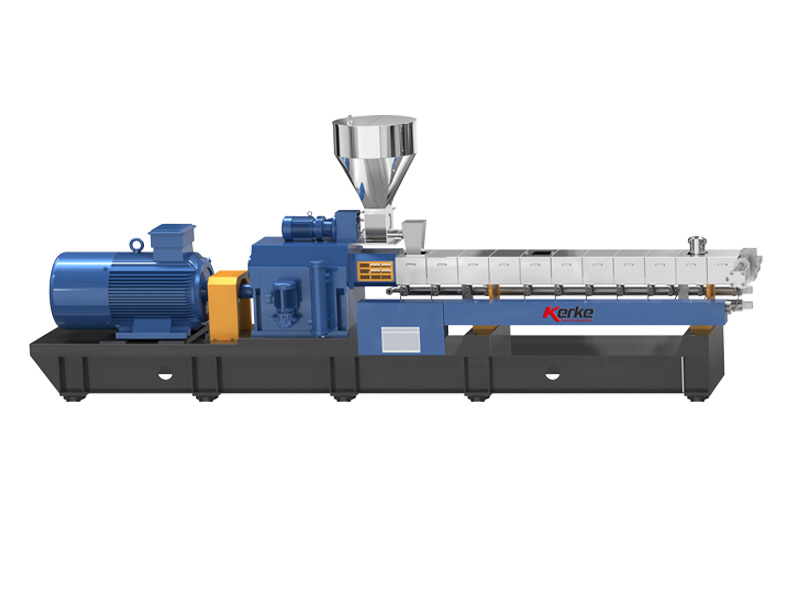
The screw is the heart of the compounding extruder, responsible for transporting, melting, and mixing materials. Kerke’s computer-aided designed screw assemblies feature a kneading co-type design with excellent self-cleaning function and good interchangeability.
Screw Element Types and Functions
Kerke offers a wide range of screw elements, each designed for specific functions:
Conveying Elements
Conveying elements are used to transport material along the length of the extruder barrel. They feature a helical design that moves material forward as the screw rotates.
Kneading Blocks
Kneading blocks are used to mix and disperse materials. They consist of a series of staggered discs that create high shear forces, breaking apart agglomerates and ensuring uniform dispersion.
Mixing Elements
Mixing elements are designed to improve the mixing efficiency of the extruder. They feature complex geometries that create chaotic flow patterns, ensuring thorough mixing of materials.
Dispersion Elements
Dispersion elements are used to break apart particles and disperse them throughout the polymer matrix. They feature sharp edges and narrow clearances that create high shear forces.
Length-to-Diameter Ratio (L/D)
The length-to-diameter ratio (L/D) is an important parameter in extruder design, referring to the length of the screw relative to its diameter. A higher L/D ratio provides more residence time for material processing, which can improve mixing efficiency but may also increase energy consumption and production time.
Kerke extruders are available with a range of L/D ratios, allowing manufacturers to select the appropriate configuration for their specific processing requirements. For example, applications requiring extensive mixing may benefit from a higher L/D ratio, while high-throughput applications may prefer a lower L/D ratio to minimize energy consumption.
Barrel Design and Material Selection
The barrel is another critical component of the compounding extruder, housing the screw and providing the necessary heating and cooling for material processing.
Barrel Segmentation and Modularity
Kerke extruders feature segmented barrel designs that allow for easy customization and maintenance. The barrels are constructed from high-quality materials, such as 38CrMoAl nitrided steel, which offers excellent wear resistance and corrosion protection.
The modular design of the barrels allows manufacturers to adjust the length of the extruder and add or remove segments as needed. This flexibility enables manufacturers to adapt to changing processing requirements and optimize machine performance for specific applications.
Heating and Cooling System Design
Precise temperature control is essential for maintaining material integrity and achieving consistent product quality. Kerke extruders use advanced heating and cooling systems with multiple temperature zones to create optimal processing conditions for different materials.
Heating Systems
Kerke extruders feature high-efficiency electric heaters or oil heating systems that provide uniform heat distribution along the length of the barrel. The heating systems are designed to quickly reach the desired operating temperature and maintain stable temperature profiles.
Cooling Systems
Effective cooling is necessary to remove excess heat generated during processing and prevent material degradation. Kerke extruders use air cooling or water cooling systems, depending on the application requirements. Water cooling systems offer higher cooling capacity for applications with high heat generation, while air cooling systems are more energy-efficient and suitable for low to medium heat applications.
Gearbox and Transmission System Capacity
The gearbox and transmission system are responsible for transferring power from the motor to the screw, providing the necessary torque for material processing. A robust gearbox is essential for handling the high torque requirements of compounding extruders, especially when processing highly filled or viscous materials.
Kerke extruders feature high-quality gearboxes with precision gears and imported bearings to ensure smooth operation and long service life. The gearboxes are designed to handle high torque loads and provide efficient power transmission, minimizing energy loss and reducing operating costs.
Advanced Control Systems for Process Monitoring and Optimization
Modern compounding extruders rely on advanced control systems to monitor and optimize processing parameters, ensuring consistent product quality and efficient operation.
Kerke extruders are equipped with Siemens PLC control systems that provide precise monitoring and adjustment of key process parameters, such as temperature, pressure, screw speed, and feed rate. The control systems also include data logging and analysis capabilities, enabling manufacturers to track process performance and identify areas for improvement.
Human-Machine Interface (HMI)
The HMI provides operators with a user-friendly interface for monitoring and controlling the extruder. The touchscreen interface displays real-time data on processing parameters, allowing operators to quickly identify and resolve any issues that may arise during production.
Automation and Integration Capabilities
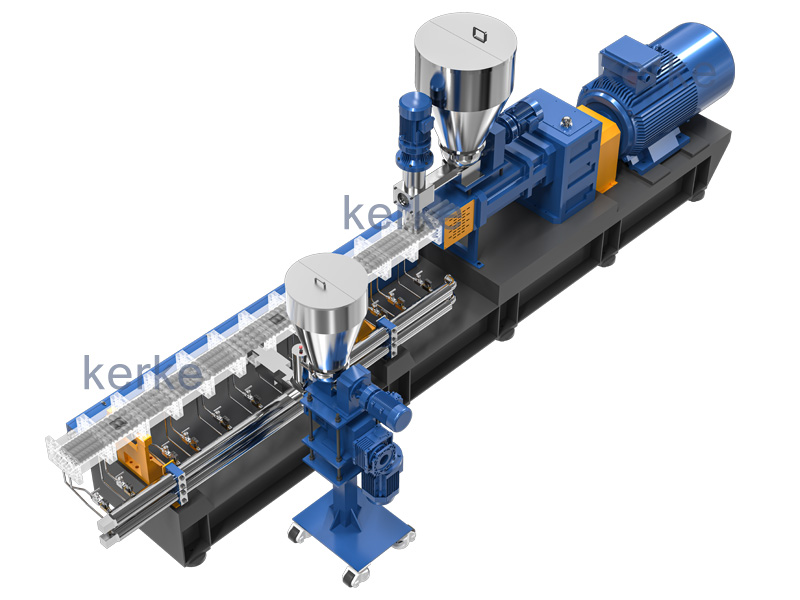
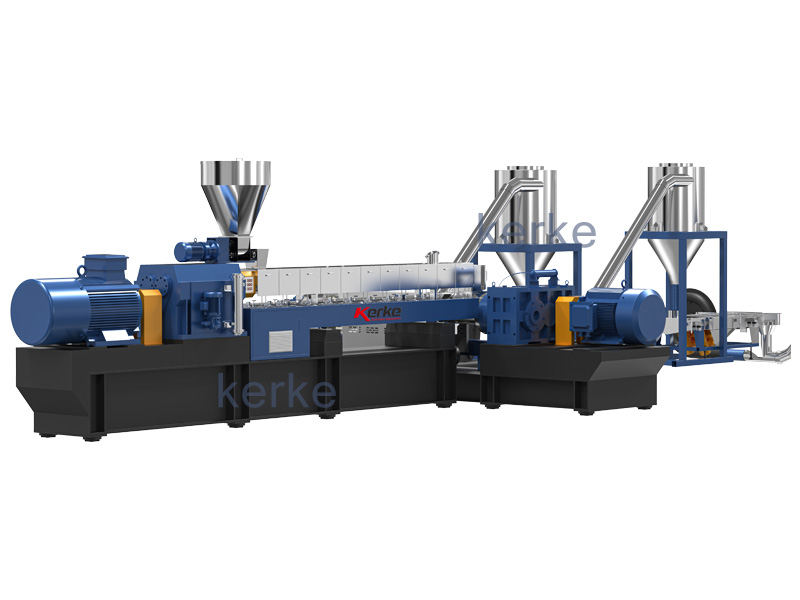
Kerke extruders can be integrated with various automation systems, such as material handling systems, pelletizing systems, and quality control equipment. This integration enables manufacturers to create fully automated production lines that minimize manual intervention, reduce labor costs, and improve production efficiency.
Material Properties and Processing Requirements
The properties of the materials being processed significantly impact extruder performance. Different materials have unique characteristics that require specific processing conditions to ensure optimal results.
Material Viscosity and Flow Characteristics
Viscosity is a measure of a material’s resistance to flow. Highly viscous materials require more energy to process and may have different mixing requirements compared to low-viscosity materials.
Kerke extruders are designed to handle a wide range of material viscosities, from low-viscosity polymers to highly filled composites. The screw and barrel designs are optimized to provide the necessary shear forces and residence time for effective mixing and processing of different materials.
Heat Sensitivity and Degradation Temperature
Certain materials are sensitive to high temperatures and can degrade if exposed to excessive heat for extended periods. This degradation can result in reduced mechanical properties, discoloration, or other defects in the final product.
Kerke extruders feature precise temperature control systems that maintain stable temperature profiles, minimizing the risk of material degradation. The segmented barrel design allows for independent temperature control in different zones, ensuring that materials are processed within their optimal temperature range.
Particle Size and Bulk Density of Raw Materials
The particle size and bulk density of raw materials can affect feeding efficiency and mixing performance. Fine powders or light-weight materials may require specialized feeding systems to ensure consistent material input, while coarse or dense materials may require different screw configurations for efficient conveying and mixing.
Kerke offers a range of feeding systems, including volumetric feeders, loss-in-weight feeders, and side feeders, to accommodate different material types and particle sizes. These systems ensure consistent material input, preventing interruptions in the production process and improving mixing efficiency.
Compatibility of Different Material Components
When processing multiple material components, such as polymers with different melting points or incompatible additives, special consideration must be given to ensure compatibility and avoid material separation or degradation.
Kerke’s engineering team works closely with customers to develop custom screw configurations and processing strategies for complex material combinations. This expertise ensures that all components are thoroughly mixed and processed correctly, resulting in high-quality final products.
Process Parameters and Their Impact
In addition to machine design and material properties, process parameters play a crucial role in determining extruder performance. Optimizing these parameters can significantly improve productivity, product quality, and energy efficiency.
Screw Speed and Its Effect on Material Mixing
Screw speed is a key process parameter that affects both throughput rate and mixing efficiency. Increasing screw speed generally increases throughput but may reduce mixing efficiency if the material residence time is insufficient for proper dispersion.
Kerke extruders are designed to operate at high speeds while maintaining excellent mixing performance. The screw configurations and gearbox designs are optimized to handle the increased torque requirements associated with high-speed operation, ensuring that materials are thoroughly mixed even at maximum throughput rates.
Temperature Profiling for Optimal Material Melting
Proper temperature profiling is essential for ensuring complete material melting and preventing degradation. The temperature profile along the length of the extruder barrel should be carefully controlled to match the material’s melting characteristics and processing requirements.
Kerke extruders feature multiple temperature zones with independent control, allowing manufacturers to create precise temperature profiles for different materials. The advanced control systems ensure that temperatures remain stable, even under varying processing conditions, resulting in consistent material melting and product quality.
Feed Rate and Material Throughput Considerations
The feed rate, or the amount of material introduced into the extruder per unit time, must be carefully matched to the screw speed and processing capabilities of the machine. An excessively high feed rate can cause material accumulation in the feed section, leading to poor material feeding and reduced mixing efficiency.
Kerke extruders are equipped with advanced feeding systems and control algorithms that automatically adjust the feed rate to match the screw speed and material processing requirements. This ensures consistent material input and prevents material accumulation, improving overall process efficiency.
Pressure Management to Prevent Material Degradation
Excessive pressure within the extruder barrel can cause material degradation, especially for heat-sensitive materials. Pressure variations can also affect product quality, leading to defects such as inconsistent density or surface imperfections.
Kerke extruders feature pressure monitoring systems that continuously measure internal barrel pressure and adjust process parameters as needed to maintain safe pressure levels. This helps to prevent material degradation and ensure consistent product quality.
Maintenance and Operational Factors
Proper maintenance and operational practices are essential for maintaining extruder performance and extending equipment life. Neglecting maintenance can lead to premature wear, reduced efficiency, and increased downtime.
Regular Maintenance Schedules and Procedures
Kerke provides comprehensive maintenance guidelines for its extruders, including regular inspection and replacement of key components. Following these guidelines can help manufacturers prevent unexpected failures and maintain optimal machine performance.
Key Maintenance Tasks
- Regular inspection of screw elements and barrel for wear
- Lubrication of gearbox and moving parts
- Cleaning of filters and screens
- Calibration of temperature sensors and control systems
- Inspection of electrical components and wiring
Lubrication Requirements for Moving Parts
Proper lubrication is essential for reducing friction and wear in the gearbox and other moving parts. Kerke extruders are designed with automatic lubrication systems that ensure consistent lubrication of critical components, minimizing maintenance requirements and extending equipment life.
Operator Training and Process Knowledge
The skills and knowledge of the operators can significantly impact extruder performance. Well-trained operators are better equipped to optimize process parameters, identify potential issues, and perform routine maintenance tasks.
Kerke provides comprehensive operator training programs that cover machine operation, process optimization, and basic maintenance. These programs ensure that operators have the knowledge and skills needed to maximize extruder performance and ensure consistent product quality.
Environmental Conditions and Their Impact on Machine Performance
Environmental conditions, such as temperature and humidity, can affect extruder performance and material processing. Extreme temperatures can cause thermal expansion or contraction of machine components, leading to misalignment or reduced accuracy. High humidity can cause moisture absorption in hygroscopic materials, affecting their processing properties.
Kerke extruders are designed to operate in a wide range of environmental conditions, with robust construction and temperature-controlled components that minimize the impact of external factors. However, manufacturers should still maintain a controlled operating environment to ensure consistent machine performance and product quality.
Kerke’s Approach to Optimizing Extruder Performance
Kerke is committed to providing high-performance compounding extruders that meet the evolving needs of the plastics industry. The company’s approach to optimizing extruder performance combines advanced engineering, quality manufacturing, and comprehensive customer support.
Design Philosophy for Reliable and Efficient Operation
Kerke’s design philosophy focuses on creating extruders that are reliable, efficient, and easy to operate. The company uses advanced simulation tools and computer-aided design (CAD) software to optimize machine components and ensure that they meet the highest performance standards.
The modular design of Kerke extruders allows for easy customization and maintenance, enabling manufacturers to adapt to changing processing requirements and minimize downtime. The use of high-quality materials and precision manufacturing ensures that Kerke extruders provide long-lasting performance and durability.
Advanced Control Systems for Process Monitoring and Adjustment
Kerke extruders are equipped with advanced control systems that provide real-time monitoring and adjustment of processing parameters. These systems help to ensure consistent product quality and minimize the risk of defects.
The control systems also include diagnostic capabilities that can detect potential issues before they lead to production interruptions. This proactive approach to maintenance helps to minimize downtime and increase overall equipment effectiveness.
Service and Support Programs for Maximizing Machine Uptime
Kerke understands that reliable service and support are essential for maximizing machine uptime and ensuring customer satisfaction. The company offers a comprehensive range of service programs, including installation and commissioning, preventive maintenance, and emergency repair services.
Kerke’s global network of service technicians provides prompt assistance to customers around the world, ensuring that any issues are resolved quickly and efficiently. The company also provides training and technical documentation to help customers maintain their extruders and optimize performance.
Continuous Improvement Based on Customer Feedback
Kerke is committed to continuous improvement and innovation, using customer feedback to drive product development and process optimization. The company regularly solicits input from customers to identify areas for improvement and to develop new solutions that address emerging industry challenges.
This customer-centric approach has led to the development of innovative products and technologies that have helped Kerke maintain its position as a leader in the extrusion equipment industry.
Case Study: Improving Performance Through System Optimization
To illustrate how Kerke helps customers optimize extruder performance, let’s look at a case study of a manufacturer of high-performance engineering plastics.
Company Background and Performance Challenges
A leading manufacturer of engineering plastics was experiencing challenges with its existing extrusion line, which was struggling to meet the increasing demand for high-performance materials. The company was producing fiber-reinforced composites and specialty polymers for automotive, aerospace, and electronics applications, but its extruder was unable to process these materials efficiently.
The manufacturer was facing several issues, including low throughput rates, inconsistent product quality, and high maintenance requirements. These challenges were limiting production capacity and increasing manufacturing costs, putting the company at a competitive disadvantage.
Analysis of Existing Extruder Setup and Limitations
Kerke’s technical team conducted a comprehensive analysis of the manufacturer’s existing extrusion line to identify the root causes of the performance issues. The analysis revealed several key limitations:
- Insufficient torque capacity: The existing extruder’s gearbox was unable to handle the high torque requirements of processing highly filled and fiber-reinforced materials, leading to frequent equipment failures.
- Poor mixing efficiency: The screw configuration was not optimized for mixing highly filled materials, resulting in inconsistent dispersion of fillers and reinforcements.
- Limited process control: The control system lacked the advanced monitoring and adjustment capabilities needed to maintain consistent processing parameters for complex materials.
- High maintenance requirements: The extruder’s design made it difficult to access key components for maintenance, resulting in long downtime and high repair costs.
Solution Implementation with Kerke Technical Team
Based on the analysis, Kerke recommended a complete extrusion line upgrade, including the installation of a new KTE-95D twin screw extruder and associated auxiliary equipment. The KTE-95D extruder was selected for its high torque capacity, advanced control systems, and modular design.
Kerke’s technical team worked closely with the manufacturer to design a customized screw configuration that would optimize mixing efficiency for their specific material formulations. The team also provided comprehensive operator training and implemented a preventive maintenance program to minimize downtime.
Results Achieved: Improved Efficiency and Product Quality
After implementing the Kerke extrusion line, the manufacturer experienced significant improvements in performance:
- Increased throughput rates: The KTE-95D extruder was able to process up to 2,000 kg/h of material, a 40% increase compared to the previous system.
- Improved product quality: The advanced mixing capabilities of the KTE-95D extruder resulted in more uniform dispersion of fillers and reinforcements, leading to consistent mechanical properties and reduced product rejects.
- Reduced energy consumption: The energy-efficient design of the KTE-95D extruder reduced energy use by 25%, lowering operating costs and environmental impact.
- Minimized downtime: The modular design and robust construction of the KTE-95D extruder reduced maintenance requirements and downtime by 30%, increasing overall equipment effectiveness.
These improvements helped the manufacturer increase its production capacity, reduce costs, and improve customer satisfaction, strengthening its position in the highly competitive engineering plastics market.
Future Directions in Extruder Performance Optimization
The plastics industry is constantly evolving, driven by advances in material science, changing consumer demands, and regulatory requirements. To stay competitive, manufacturers must continue to optimize extruder performance and embrace new technologies.
Integration of Industry 4.0 and IoT Capabilities
Industry 4.0, or the fourth industrial revolution, is transforming manufacturing through the integration of digital technologies, the Internet of Things (IoT), and data analytics. In extrusion processing, these technologies can be used to monitor machine performance in real-time, predict equipment failures, and optimize process parameters automatically.
Kerke is actively exploring the integration of Industry 4.0 technologies into its extruders, developing smart systems that can collect and analyze data to improve efficiency and reduce downtime. These systems will enable manufacturers to achieve higher levels of automation and control, leading to increased productivity and product quality.
Advanced Material Processing Techniques
The development of new materials, such as bio-based polymers, high-performance composites, and nanocomposites, requires advanced processing techniques that can handle their unique properties. Kerke is investing in research and development to create extruders that can process these materials efficiently and effectively.
Key areas of focus include:
- Developing specialized screw configurations for processing high-performance materials
- Improving temperature control systems for heat-sensitive materials
- Enhancing mixing technologies for nanocomposites and other advanced materials
Machine Learning Applications for Process Control
Machine learning algorithms can analyze large amounts of process data to identify patterns and optimize processing parameters automatically. By continuously learning from process data, these algorithms can adapt to changing material properties and operating conditions, ensuring consistent product quality and maximum efficiency.
Kerke is exploring the use of machine learning in extruder control systems to create self-optimizing machines that can adjust processing parameters in real-time based on material properties and quality requirements. This technology has the potential to revolutionize extrusion processing by enabling manufacturers to achieve unprecedented levels of process optimization and product consistency.
Environmental Sustainability Considerations in Modular Design
As environmental concerns become increasingly important, manufacturers are looking for ways to reduce their carbon footprint and minimize waste. Kerke is addressing these concerns by designing extruders that are energy-efficient, durable, and recyclable.
The modular design of Kerke extruders allows for easy replacement of individual components, reducing waste and extending equipment life. The company is also developing extruders that can process recycled materials and bio-based polymers, helping to reduce the environmental impact of plastics manufacturing.
Conclusion
The performance of compounding extruders is influenced by a wide range of factors, including machine design, material properties, process parameters, maintenance practices, and operational conditions. Kerke Extrusion Equipment has developed a comprehensive understanding of these factors and has engineered solutions to address the challenges of the modern plastics industry.
By investing in advanced extruder technology, optimizing process parameters, and implementing proper maintenance practices, manufacturers can improve production efficiency, reduce costs, and ensure consistent product quality. Kerke’s commitment to innovation, quality, and customer support makes it a trusted partner for manufacturers seeking to optimize their extrusion operations.
As the plastics industry continues to evolve, Kerke will remain at the forefront of extrusion technology, developing new solutions that address the changing needs of the market and help manufacturers achieve their business goals. With a focus on performance, efficiency, and sustainability, Kerke is well-positioned to lead the way in the future of plastics processing.