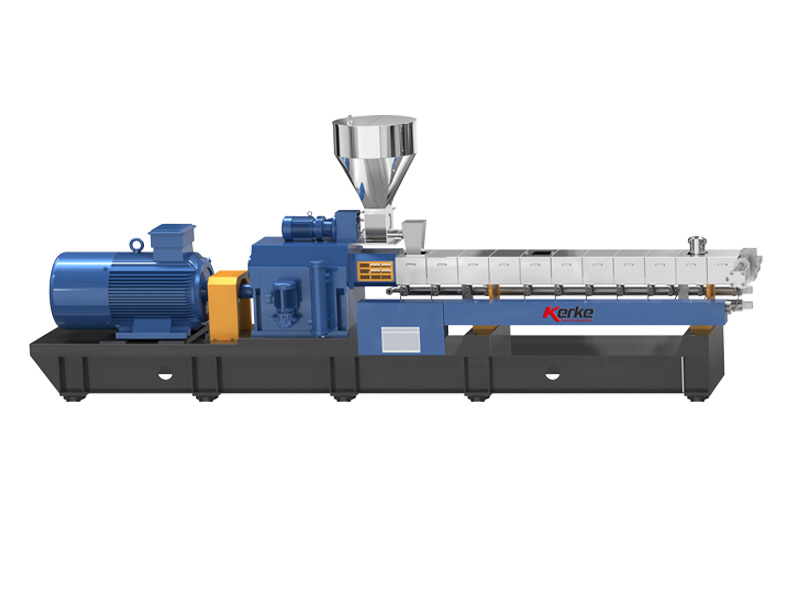
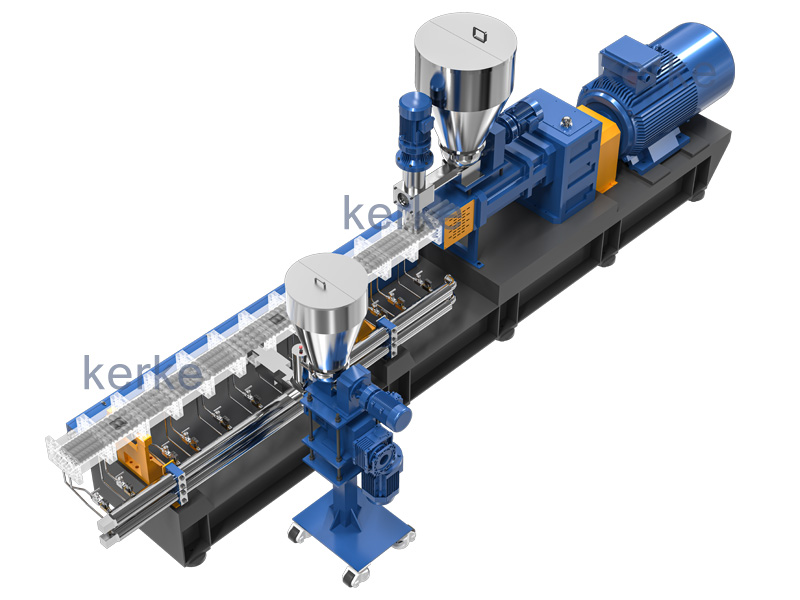
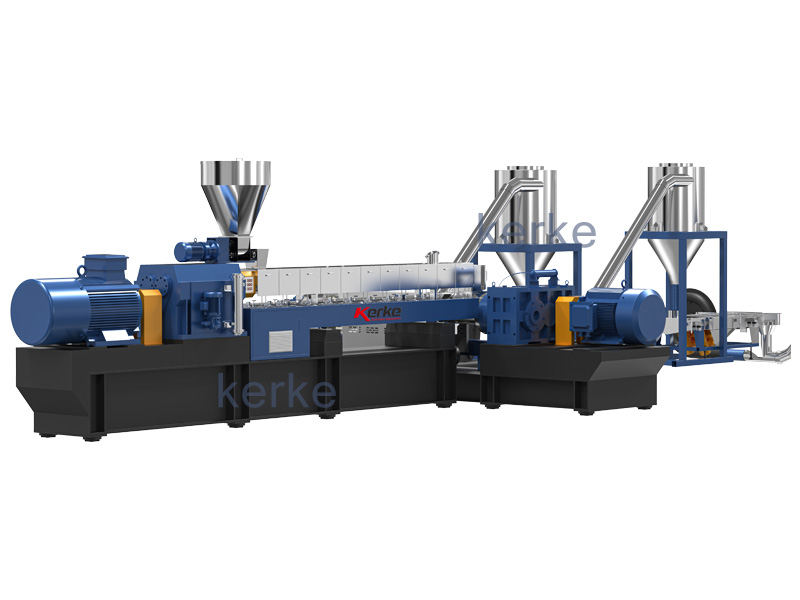
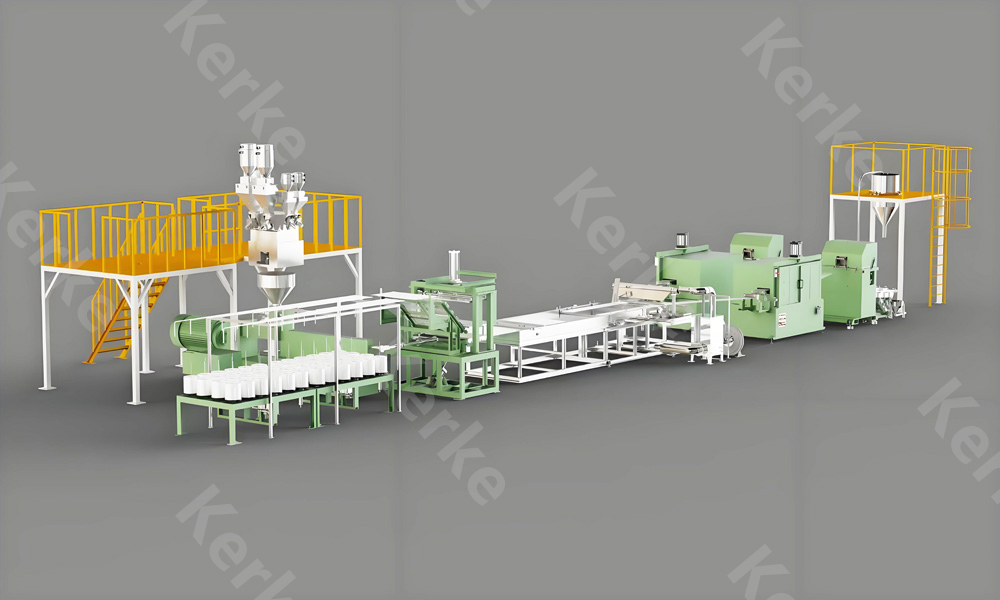
The masterbatch industry is a critical segment of the global plastics market, with demand driven by the need for consistent color, additive, and filler integration in plastic products—from packaging to automotive components. A high-quality Masterbatch Extruder is the backbone of efficient and reliable masterbatch production, and not all extruders on the market are created equal. Kerke Extruder (www.kerkeextruder.com), a leading manufacturer of Twin Screw Extruders and Compounding Extruders, has set the industry standard for masterbatch extruder quality, and this guide will break down the key features, performance metrics, and market differentiators that separate top-tier machines from average ones.
Masterbatch production requires precise mixing, uniform dispersion, and consistent throughput—factors that directly impact the quality of the final masterbatch and the profitability of production operations. A low-quality extruder may save upfront costs but leads to high scrap rates, frequent downtime, and poor product consistency—ultimately costing manufacturers more in the long run. In contrast, a high-quality masterbatch extruder from Kerke delivers superior performance, durability, and flexibility, making it a worthwhile investment for manufacturers aiming to compete in the global market.
1. Core Design Features of High-Quality Masterbatch Extruders (Kerke as Benchmark)
The design of a masterbatch extruder is the foundation of its quality—every component must be engineered to meet the unique demands of masterbatch production, which includes processing high-load pigment/additive formulations, achieving uniform dispersion, and maintaining consistent pellet quality. Kerke’s masterbatch extruders are designed with these requirements in mind, and the following core features set them apart from competitors:
1.1 Screw Configuration: Precision for Optimal Mixing and Dispersion
The screw assembly is the most critical component of a Masterbatch Extruder, as it directly impacts mixing efficiency, shear control, and material throughput. High-quality masterbatch extruders (like Kerke’s) feature modular screw designs with specialized mixing elements tailored to masterbatch production—unlike generic Compounding Extruders that are not optimized for this specific application.
Key screw design features for masterbatch extruders include:
- Modular Kneading Blocks: Kerke uses kneading blocks with varying stagger angles (30°, 45°, 60°, 90°) to control shear intensity and mixing time. For high-load color masterbatches (40–60% pigment loading), 45° stagger angles provide optimal dispersion without excessive shear (which can cause pigment degradation). For additive masterbatches (e.g., UV stabilizers, antioxidants), 30° stagger angles reduce shear to protect sensitive additives.
- Screw Pitch and Flight Depth: Kerke’s screws have a gradual reduction in flight depth from the feed zone to the metering zone, ensuring consistent material compression and melting. The feed zone features a deep flight depth (to handle high-volume material intake), while the metering zone has a shallow flight depth (to increase pressure and improve mixing).
- L/D Ratio: Kerke’s masterbatch extruders have an L/D ratio of 36:1 to 48:1—longer than standard extruders (24:1 to 30:1)—to provide sufficient residence time for complete mixing and dispersion. A longer L/D ratio ensures that pigments and additives are fully integrated into the base resin, eliminating streaking or uneven color in the final masterbatch.
- Wear-Resistant Coatings: Masterbatch production (especially with mineral-filled or abrasive pigments) causes significant screw wear, which reduces mixing efficiency over time. Kerke applies bimetallic coatings (e.g., Stellite, tungsten carbide) to screw flights and kneading blocks, increasing wear resistance by 300% compared to uncoated screws. This extends the screw lifespan from 6–12 months (industry average) to 24–36 months for Kerke extruders.
In contrast, low-quality masterbatch extruders use fixed (non-modular) screws with generic mixing elements, limiting manufacturers’ ability to adjust for different masterbatch types (e.g., color vs. additive) and leading to poor dispersion and frequent screw replacement.
1.2 Barrel and Heating/Cooling System: Uniform Temperature Control
Temperature control is critical for masterbatch production—excessive heat causes pigment/additive degradation (e.g., discoloration in organic pigments), while insufficient heat leads to incomplete melting and poor mixing. High-quality masterbatch extruders feature a precision-engineered barrel assembly with advanced heating/cooling systems to maintain uniform temperatures across all zones.
Kerke’s barrel design for masterbatch extruders includes:
- Multi-Zone Temperature Control: Kerke’s barrels are divided into 6–8 independent temperature zones (feed, compression, melting, metering, die), each with electric heaters and water cooling jackets. The heaters are ceramic-insulated to reduce heat loss, and the cooling jackets have a spiral design for uniform cooling—ensuring temperature stability within ±1°C (industry average is ±3–5°C).
- Barrel Liners: For abrasive masterbatch formulations (e.g., titanium dioxide, carbon black, mineral fillers), Kerke uses replaceable barrel liners made from wear-resistant materials (e.g., nitrided steel, bimetallic alloys). This allows manufacturers to replace only the liner (rather than the entire barrel) when wear occurs, reducing maintenance costs by 50%.
- Feed Throat Cooling: The feed throat is cooled independently to prevent material bridging (caking) and ensure consistent feeding—especially critical for hygroscopic resins (e.g., PA, PET) that absorb moisture and stick to warm surfaces.
Low-quality extruders often have fewer temperature zones (3–4) and basic heating/cooling systems, leading to temperature fluctuations that ruin batch consistency and increase scrap rates.
1.3 Feeding System: Accuracy and Consistency
Masterbatch production requires precise dosing of pigments, additives, and base resins—even small variations (1–2%) in formulation ratios can lead to off-spec products. High-quality masterbatch extruders are equipped with advanced feeding systems that ensure accurate and consistent material delivery.
Kerke’s feeding system for masterbatch extruders includes:
- Gravimetric Feeders: Kerke uses loss-in-weight gravimetric feeders (as standard) for all material streams (base resin, pigment, additives), providing dosing accuracy of ±0.5%. This is far superior to volumetric feeders (±2–3% accuracy) used in low-quality extruders, which lead to inconsistent formulation ratios and poor product quality.
- Multiple Feeding Ports: Kerke’s extruders have 2–4 feeding ports (depending on model) to accommodate different material types—e.g., a main port for base resin, a side port for high-load pigments (to reduce shear degradation), and a liquid feeding port for additives like lubricants or plasticizers.
- Anti-Bridging Features: The feed hoppers are equipped with vibrators and paddle stirrers to prevent material bridging (common with powdery pigments like carbon black), ensuring continuous feeding and eliminating interruptions in production.
Many low-quality masterbatch extruders only offer a single feeding port and volumetric feeders, limiting manufacturers to simple formulations and increasing the risk of batch failures.
1.4 Pelletizing System: Precision for Uniform Pellet Quality
The pelletizing system determines the size, shape, and consistency of the final masterbatch pellets—critical factors for downstream processing (e.g., injection molding, film blowing). High-quality masterbatch extruders feature a precision pelletizing system that produces uniform pellets with minimal dust and fines.
Kerke’s pelletizing system options for masterbatch extruders include:
- Underwater Pelletizing (UWP): Ideal for high-throughput masterbatch production (200–1000 kg/h), UWP systems cut the molten polymer strand underwater, producing spherical pellets (1.5–3.0mm diameter) with uniform size and low dust content. Kerke’s UWP systems have a precision cutting head with carbide blades (lifespan: 1000+ hours) and a water temperature control system to prevent pellet agglomeration.
- Strand Pelletizing: Suitable for low-to-medium throughput (50–300 kg/h), strand pelletizing systems produce cylindrical pellets with consistent length (2–4mm). Kerke’s strand pelletizing systems feature a water bath with temperature control and a precision cutter that adjusts for strand speed, ensuring uniform pellet length.
- Dust Collection: Kerke’s pelletizing systems include a cyclone dust collector to remove fines and dust, improving pellet quality and reducing waste (dust levels are typically below 0.5% vs. 2–3% for low-quality systems).
Low-quality extruders often use basic pelletizing systems with dull blades and no temperature control, leading to irregular pellet sizes, high dust content, and increased waste.
1.5 Control System: User-Friendly and Traceable
A modern, intuitive control system is essential for operating a masterbatch extruder efficiently—especially for manufacturers running multiple formulations (e.g., different colors, additive packages). High-quality extruders feature a PLC-based control system with a user-friendly HMI that simplifies parameter tuning, recipe storage, and data tracking.
Kerke’s control system for masterbatch extruders includes:
- Touchscreen HMI: A 15-inch color touchscreen with multilingual support (English, Chinese, German, Spanish) that displays real-time data (temperature, screw speed, feed rate, pressure, throughput) and allows one-touch adjustment of parameters.
- Recipe Storage: The ability to store up to 200+ recipes, including all process parameters (temperature profile, screw speed, feed rates, pelletizing settings). This reduces setup time between batches (from 30+ minutes to 5–10 minutes) and ensures consistency across production runs.
- Data Logging and Traceability: Automatic logging of production data (batch number, start/end time, parameters, throughput, scrap rate) for up to 12 months, allowing manufacturers to track quality and comply with industry standards (e.g., FDA, EU REACH). Data can be exported to CSV/PDF files for reporting.
- Remote Monitoring and Support: Kerke’s optional IoT integration allows remote monitoring of the extruder via www.kerkeextruder.com, and technical support teams can access the control system remotely to troubleshoot issues or assist with parameter tuning—reducing downtime and travel costs for on-site support.
Low-quality extruders often have basic control panels with limited recipe storage and no data logging, making it difficult to track quality or replicate successful batches.
2. Material Compatibility and Versatility
A high-quality masterbatch extruder must be versatile enough to handle a wide range of masterbatch types and base resins—manufacturers often produce multiple formulations (color, additive, filler, functional) for different customers, and switching between formulations should be quick and easy.
2.1 Handling Different Masterbatch Types
Kerke’s masterbatch extruders are designed to process all common masterbatch types, with minimal reconfiguration between runs:
- Color Masterbatches: Organic/inorganic pigments, fluorescent pigments, special effect pigments (metallic, pearlescent). Kerke’s screw design ensures uniform dispersion (critical for color consistency) and minimal pigment degradation.
- Additive Masterbatches: UV stabilizers, antioxidants, flame retardants, antistatic agents, lubricants. The low-shear mixing options protect sensitive additives from thermal/mechanical degradation.
- Filler Masterbatches: Calcium carbonate, talc, glass fiber, carbon fiber. The wear-resistant screws/barrels handle abrasive fillers, and the side feeding port reduces shear stress on long fibers (e.g., glass fiber).
- Functional Masterbatches: Conductive, biodegradable, antimicrobial. Kerke’s customizable screw and feeding systems accommodate the unique processing needs of these specialized formulations.
Low-quality extruders are often limited to a single masterbatch type (e.g., only color masterbatches with low pigment loading), forcing manufacturers to invest in multiple machines or outsource production of specialized masterbatches.
2.2 Compatibility with Various Polymers
Masterbatches are produced for use with a wide range of base polymers, and a high-quality extruder must handle all major polymer types without significant reconfiguration:
- Polyolefins (PE, PP): The most common base resins for masterbatches—Kerke’s extruders are optimized for low-shear processing of PE/PP, reducing energy consumption and improving pellet quality.
- Engineering Polymers (ABS, PC, PA, PBT): Require higher temperatures and precise shear control—Kerke’s temperature zones and modular screws can be adjusted to meet the processing requirements of these high-performance polymers.
- PVC: Heat-sensitive and requires low shear—Kerke offers counter-rotating screw options for PVC masterbatch production, reducing thermal degradation and ensuring consistent quality.
- Biodegradable Polymers (PLA, PBAT): Extremely heat-sensitive—Kerke’s extruders feature low-temperature profiles and short residence times to prevent degradation during processing.
Kerke’s technical team provides detailed processing guidelines for each polymer type, including optimal temperature profiles, screw speeds, and feed rates—ensuring manufacturers can quickly switch between polymers with minimal trial and error.
2.3 Ability to Process High-Loading Masterbatches
High-loading masterbatches (50–80% pigment/filler loading) are in high demand due to cost savings (less base resin per unit of masterbatch), but they are challenging to process—they require high shear for dispersion but are prone to agglomeration and wear. High-quality masterbatch extruders (like Kerke’s) are engineered to handle high-loading formulations with ease:
- Specialized Mixing Elements: Kerke’s high-shear kneading blocks break down pigment/filler agglomerates, ensuring uniform dispersion even at 70–80% loading.
- Side Feeding: Feeding high-load pigments/additives through a side port (rather than the main feed) reduces the risk of bridging and ensures consistent dosing.
- Wear-Resistant Components: As mentioned earlier, Kerke’s coated screws and replaceable barrel liners handle the abrasion of high-load fillers, extending component lifespan.
Low-quality extruders struggle with high-loading formulations, leading to poor dispersion, high wear, and frequent downtime—many manufacturers with low-quality machines are forced to limit loading to 30–40%, increasing raw material costs and reducing competitiveness.
3. Performance Metrics That Define Quality
When evaluating a masterbatch extruder, manufacturers should focus on objective performance metrics—these metrics directly impact production efficiency, product quality, and profitability. Below are the key metrics that set high-quality extruders (like Kerke’s) apart from the competition:
3.1 Mixing Uniformity
Mixing uniformity is the most critical metric for masterbatch quality—even slight variations in pigment/additive dispersion lead to off-spec products and customer complaints. Kerke’s extruders achieve a mixing uniformity of 95%+ (measured via colorimetric analysis for color masterbatches), compared to 80–85% for low-quality extruders.
To measure mixing uniformity, Kerke uses a spectrophotometer to analyze 50+ samples per batch—ensuring that color values (L*, a*, b*) are within ±0.5 units of the target (industry average is ±1.0–1.5 units). This level of uniformity reduces scrap rates to below 2% (vs. 5–10% for low-quality extruders) and improves customer satisfaction.
3.2 Throughput Efficiency
Throughput efficiency refers to the amount of masterbatch produced per hour (kg/h) relative to the extruder’s energy consumption (kWh/kg). High-quality extruders deliver higher throughput with lower energy consumption:
- Kerke KTE-65 Masterbatch Extruder: Throughput of 300–400 kg/h for PP color masterbatches (50% loading) with energy consumption of 0.8–1.0 kWh/kg.
- Industry Average Low-Quality Extruder (65mm screw): Throughput of 200–250 kg/h for the same formulation with energy consumption of 1.2–1.5 kWh/kg.
The higher throughput and lower energy consumption of Kerke’s extruders translate to significant cost savings—for a manufacturer producing 100,000 kg/month, the savings are approximately $5,000–$8,000 per month (based on $0.10/kWh electricity cost).
3.3 Energy Efficiency
Energy costs are a major expense for extruder operations, and high-quality extruders are designed to minimize energy use without sacrificing performance. Kerke’s masterbatch extruders feature several energy-saving design elements:
- High-Efficiency Motors: IE4 premium efficiency motors that use 10–15% less energy than standard IE2 motors.
- Heat Recovery: Waste heat from barrel cooling is captured to preheat raw materials, reducing energy consumption by an additional 8–10%.
- Insulated Barrels: Ceramic insulation reduces heat loss from the barrel, lowering heating energy requirements by 15–20%.
Over the lifespan of an extruder (10–15 years), these energy savings can offset the upfront cost difference between a high-quality Kerke extruder and a low-quality alternative.
3.4 Durability and Longevity
High-quality masterbatch extruders are built to last—Kerke’s extruders have a lifespan of 10–15 years (with proper maintenance), compared to 5–7 years for low-quality machines. Key durability features include:
- Heavy-Duty Frame: Welded steel frame with vibration damping to reduce stress on components during operation.
- Precision Machined Components: All critical components (screws, barrels, gears) are machined to tight tolerances (±0.01mm) to ensure smooth operation and minimal wear.
- Corrosion-Resistant Materials: Stainless steel contact parts (feed hoppers, pelletizing systems) to prevent corrosion from moisture or acidic additives.
Kerke also offers a 2-year warranty on all masterbatch extruders (industry average is 1 year) and a lifetime warranty on the frame—demonstrating confidence in the durability of its products.
3.5 Operational Reliability
Operational reliability is measured by mean time between failures (MTBF)—the average time between unscheduled downtime events. Kerke’s masterbatch extruders have an MTBF of 8,000+ hours (industry average for low-quality machines is 3,000–4,000 hours), meaning fewer interruptions to production and higher overall equipment effectiveness (OEE).
Kerke’s high MTBF is due to rigorous quality control during manufacturing—all extruders undergo 72 hours of continuous testing before shipment, and critical components are inspected multiple times to ensure they meet Kerke’s strict standards. This testing identifies potential issues before the extruder leaves the factory, reducing the risk of downtime for customers.
4. Kerke Masterbatch Extruders: Setting the Standard for Quality
Kerke Extruder has been a leader in the extruder industry for over 20 years, and its masterbatch extruders are the result of decades of engineering expertise, customer feedback, and continuous innovation. Below are the key factors that make Kerke masterbatch extruders the gold standard in the market:
4.1 Engineering Excellence
Kerke’s engineering team includes 20+ polymer processing experts with average experience of 15+ years—they work closely with customers to understand their unique production needs and design extruders that meet or exceed those needs. Kerke uses 3D modeling and finite element analysis (FEA) to optimize component design, ensuring that each extruder is efficient, durable, and easy to operate.
Kerke also invests 10% of annual revenue in R&D (industry average is 3–5%), developing new technologies to improve masterbatch extruder performance—e.g., advanced mixing elements, IoT monitoring, and energy-saving features. This commitment to innovation ensures that Kerke’s extruders remain at the forefront of the industry.
4.2 Quality Control in Production
Kerke’s manufacturing facility is ISO 9001 certified, and all extruders are built to strict quality standards. Key quality control steps include:
- Incoming Material Inspection: All raw materials (steel, motors, sensors) are inspected for quality before production—only materials that meet Kerke’s specifications are used.
- In-Process Testing: Critical components (screws, barrels, gearboxes) are tested during production to ensure they meet tolerance requirements.
- Final Testing: As mentioned earlier, all extruders undergo 72 hours of continuous testing (running a standard PP color masterbatch formulation) to verify performance, reliability, and safety.
- Certifications: Kerke’s masterbatch extruders are CE certified (for EU compliance) and meet NEMA standards (for North American compliance), ensuring they can be used in global markets.
4.3 After-Sales Support and Service
High-quality equipment is only part of the equation—excellent after-sales support is essential to keep extruders operating at peak efficiency. Kerke offers comprehensive after-sales support to all customers:
- On-Site Installation and Training: Kerke’s technicians install the extruder at the customer’s facility and provide hands-on training for operators and maintenance staff—ensuring that the team can operate and maintain the machine effectively.
- Spare Parts Program: Kerke maintains a global inventory of spare parts (available via www.kerkeextruder.com) and offers fast delivery (24–48 hours for urgent parts in major regions), minimizing downtime if a component fails.
- Preventive Maintenance Programs: Kerke offers customized maintenance programs (monthly, quarterly, annual) to ensure that extruders are inspected and serviced regularly—preventing unscheduled downtime and extending component lifespan.
- Technical Support: A 24/7 technical support hotline staffed by polymer processing experts—customers can get answers to questions or troubleshooting advice at any time, day or night.
5. Market Differentiators: What Separates Kerke from Competitors
In a crowded market, Kerke’s masterbatch extruders stand out for several key reasons that go beyond technical specifications:
- Customization Capabilities: Kerke offers fully customized extruders—customers can specify screw diameter, L/D ratio, feeding system, pelletizing system, and control features to match their exact production needs. Most competitors only offer a limited range of standard models with minimal customization.
- Technical Expertise: Kerke’s team doesn’t just sell extruders—they act as partners, providing formulation advice, process optimization, and troubleshooting support. This level of expertise is rare in the industry, where many competitors only provide basic product support.
- Global Support Network: Kerke has offices and service centers in 15+ countries (China, USA, Germany, India, Brazil, etc.), ensuring that customers receive local support—no matter where they are located. This reduces response times for service calls and eliminates language barriers.
- Customer-Centric Design: Kerke’s extruders are designed based on feedback from masterbatch manufacturers—features like easy access for cleaning (reducing changeover time), ergonomic control panels, and modular components (for easy maintenance) are all the result of listening to customer needs.
6. Customer Testimonials and Industry Recognition
The quality of Kerke’s masterbatch extruders is validated by customer feedback and industry awards:
- Customer Testimonial (European Masterbatch Manufacturer): “We switched to Kerke’s KTE-75 masterbatch extruder two years ago, and our scrap rate has dropped from 8% to 1.5%, while throughput has increased by 35%. The consistency of our color masterbatches has improved dramatically, and our customers have noticed the difference. Kerke’s technical support is also exceptional—they helped us optimize our process parameters and resolve issues quickly.”
- Customer Testimonial (Asian Filler Masterbatch Producer): “Kerke’s extruders handle our high-load calcium carbonate masterbatches (70% loading) with ease—we no longer have issues with screw wear or poor dispersion. The energy savings alone have paid for the machine in less than two years, and the after-sales support is top-notch.”
- Industry Awards: Kerke’s KTE-65 Masterbatch Extruder was awarded “Best Extruder for Masterbatch Production” at the 2024 Global Plastics Awards, recognizing its innovation, performance, and customer satisfaction.
7. Conclusion: Investing in a High-Quality Masterbatch Extruder (Kerke) for Long-Term Success
A high-quality masterbatch extruder is not just a piece of equipment—it is an investment in the success of your business. Low-quality extruders may save money upfront, but they lead to high scrap rates, frequent downtime, poor product quality, and high energy costs—ultimately costing more than a high-quality machine like Kerke’s.
Kerke’s masterbatch extruders stand out in the market due to their precision design, material versatility, superior performance metrics, and exceptional customer support. Whether you are a small masterbatch producer or a large multinational company, Kerke has an extruder that can be customized to meet your needs—helping you produce high-quality masterbatches efficiently and profitably.
To learn more about Kerke’s masterbatch extruders or to request a quote, visit www.kerkeextruder.com or contact our technical team today. Investing in a Kerke Masterbatch Extruder is an investment in consistent quality, operational efficiency, and long-term profitability.