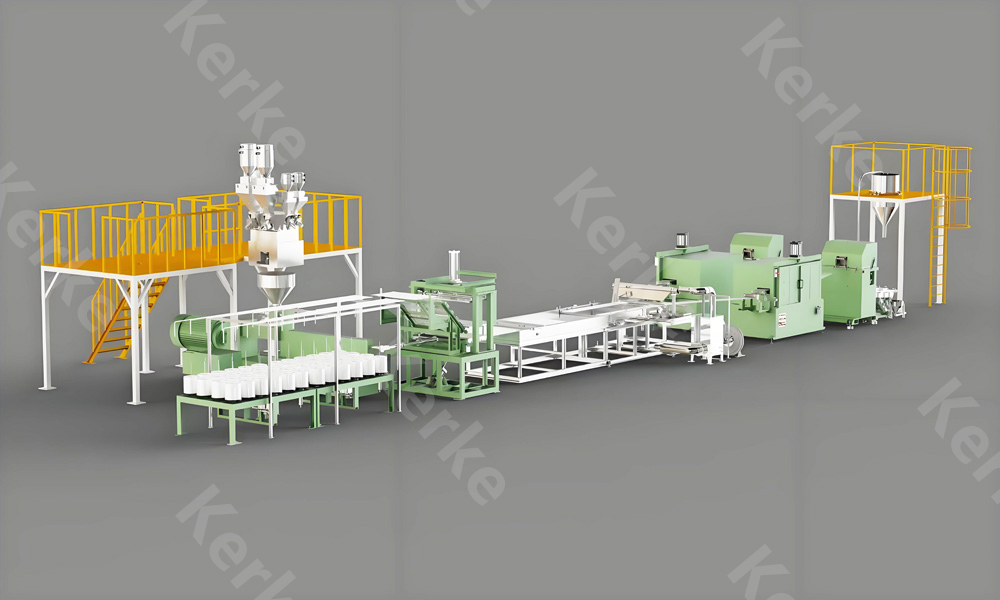
Introduction to Masterbatch Extruder Output
Determining the ideal output range for an industrial masterbatch extruder is a critical step in planning a production facility. The output, or throughput, directly affects the return on investment (ROI), operational costs, and the ability to meet market demand. However, there is no single “ideal” number that fits all scenarios. The ideal output depends on a complex interplay of factors including the type of polymer, pigment loading, screw design, and desired dispersion quality. This article provides a detailed analysis of output ranges for twin screw masterbatch extruders, helping you understand how to calculate the right capacity for your specific needs.
Understanding Throughput vs. Capacity
It is important to distinguish between theoretical capacity and actual throughput. Theoretical capacity is based on the volume of the screws and their rotational speed. Actual throughput is the real weight of material processed per hour, which is influenced by the bulk density of the feed, the fill factor, and the back pressure from the die. For a masterbatch extruder, the specific gravity of the formulation plays a huge role. A 50% calcium carbonate filled masterbatch will have a much higher volumetric output (kg/hr) than a pure color concentrate because the mineral filler is denser, even if the volumetric flow is the same.
Typical Output Ranges by Machine Size
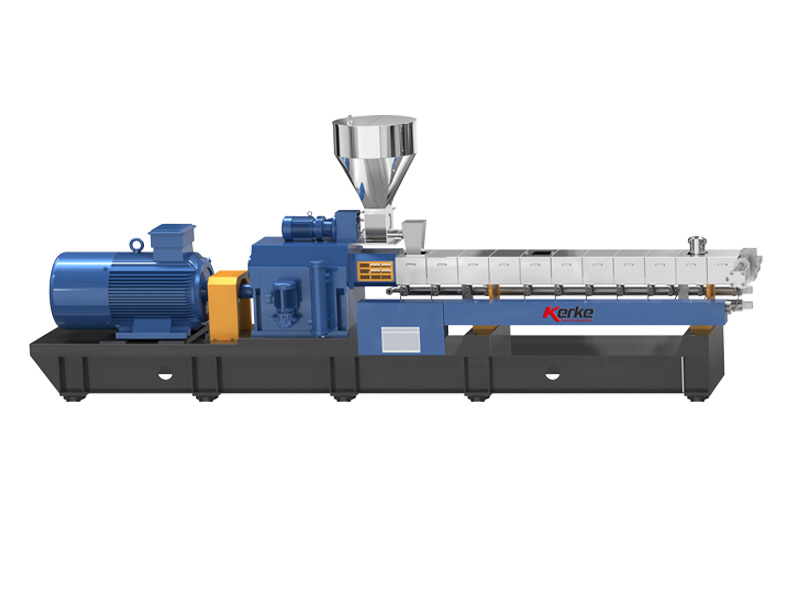
Industrial twin screw extruders are categorized by their screw diameter. While output varies based on material, general industry standards for co-rotating twin screw extruders are as follows. A smaller lab-scale machine with a 16mm or 20mm diameter might produce 5 to 30 kg/hr, suitable for R&D or specialty small batches. A medium-sized industrial machine with a 35mm to 50mm diameter typically ranges from 100 to 500 kg/hr, which is standard for most commercial masterbatch producers. Large-scale production lines using 75mm, 95mm, or even 120mm diameter screws can achieve outputs ranging from 800 kg/hr up to 2500 kg/hr or more. Kerke Extruder manufactures machines across this entire spectrum, allowing scalability from pilot to full-scale production.
Factors Influencing Output: Material Viscosity
The viscosity of the polymer melt is the primary limiting factor for output. Low viscosity polymers like LDPE or PP allow for higher throughput because the material flows easily. High viscosity polymers like PC, PMMA, or PET require more torque and generate more heat, necessitating slower screw speeds to prevent degradation. For example, a twin screw extruder processing PP-based color masterbatch might run at 600 rpm to achieve 500 kg/hr, whereas the same machine processing a PC/ABS alloy masterbatch might be limited to 300 rpm to maintain melt quality, reducing the output to 250 kg/hr. Understanding the rheological profile of your carrier resin is essential for predicting realistic output.
Factors Influencing Output: Pigment and Filler Loading
As the loading of pigments or fillers increases, the viscosity of the compound generally increases, and the free volume for conveying decreases. High filler loading (above 40-50%) creates a “paste-like” consistency that is harder to pump. This requires screws with strong positive conveying elements and high torque. The ideal output for a high-loading filler masterbatch extruder is often lower than for a low-loading additive masterbatch on the same machine. However, because the final product is heavier (higher specific gravity), the revenue per hour might be comparable. Kerke machines are designed with high-torque drive systems specifically to handle these high-viscosity, high-loading compounds without stalling.
The Role of Screw Speed (RPM) in Output
Screw speed is the most direct variable controlling output. Increasing RPM generally increases throughput linearly, but only up to a point. There are physical limits: the maximum rotational speed is constrained by the heat generation (viscous dissipation) and the mechanical limits of the bearings and gearbox. If the speed is too high, the melt temperature can exceed the degradation threshold of the polymer or additive. Therefore, the “ideal” output is often the maximum speed at which you can run without causing thermal degradation or excessive shear. Modern masterbatch extruders, like those from Kerke, use water-cooled barrels or cooled feed throats to manage this heat, allowing for higher RPMs and thus higher outputs.
Specific Output (kg/kWh) as a Performance Metric
Rather than just looking at kg/hr, smart manufacturers look at Specific Output, measured in kg per kWh (energy efficiency). This metric indicates how efficiently the machine converts electrical energy into mechanical work to move and mix the polymer. A well-designed twin screw extruder with a high-efficiency gearbox will have a higher specific output. For masterbatch production, where margins can be tight, energy efficiency is crucial. Kerke Extruder focuses on optimizing screw geometry to reduce unnecessary shear heat and torque requirements, thereby maximizing the kg/kWh ratio. A machine with a higher specific output allows you to produce more masterbatch for the same electricity cost.
Impact of L/D Ratio on Output and Mixing
The Length to Diameter (L/D) ratio of the extruder significantly impacts both output and quality. Standard masterbatch extruders usually have an L/D ratio between 32:1 and 48:1. A longer barrel (higher L/D) provides more residence time for mixing, which is essential for difficult dispersions. However, a longer barrel also increases the pressure drop and torque requirement, which can slightly reduce the maximum throughput if the drive system is not upgraded accordingly. For most masterbatch applications, an L/D of 40:1 or 44:1 is considered ideal as it balances high output with sufficient mixing length. Kerke offers various L/D configurations to match the complexity of the compounding task.
Gravimetric vs. Volumetric Feeding Impact on Output
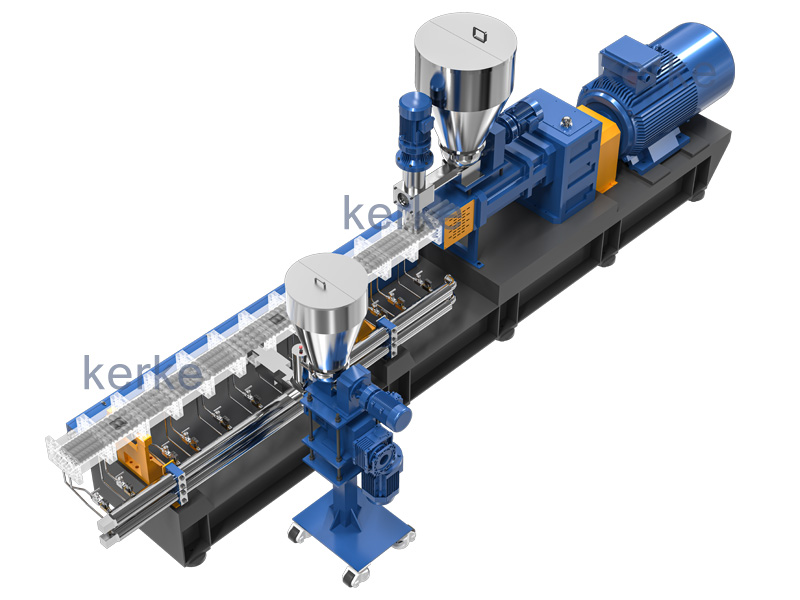
The feeding system accuracy directly affects the stable output. Volumetric feeders are simpler but less accurate, leading to fluctuations in formulation which can force the operator to run the extruder slower to ensure quality. Gravimetric feeders (loss-in-weight) provide precise control over the feed rate, allowing the extruder to run at optimal speed consistently. Investing in a high-quality gravimetric blending system can actually increase the effective output of a masterbatch extruder by 10-15% because it eliminates the need to slow down the machine to compensate for feed variations. Kerke provides integrated gravimetric feeding solutions that synchronize with the extruder speed for maximum efficiency.
Die Face Pelletizing vs. Strand Pelletizing Output
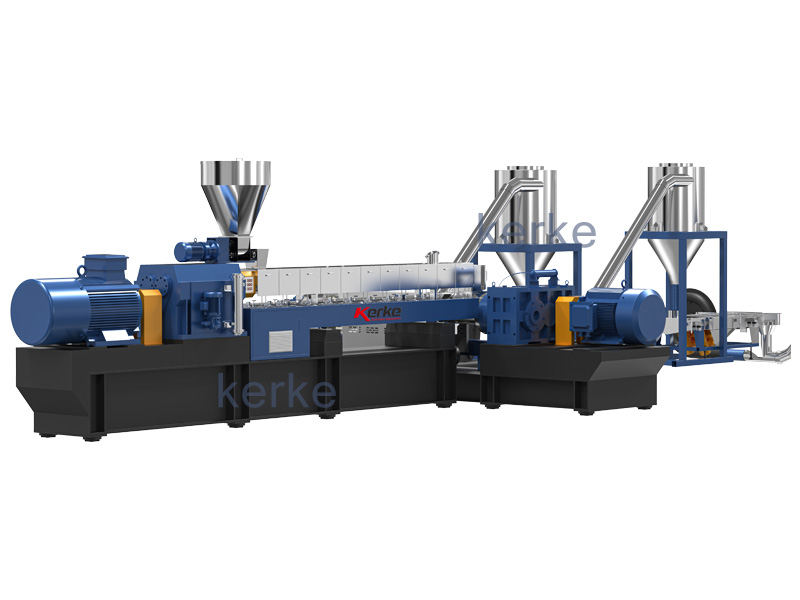
The downstream equipment also dictates the ideal extruder output. In strand pelletizing, the output is limited by the cooling capacity of the water bath and the haul-off speed. If the extruder runs too fast, the strands may not cool properly, leading to agglomeration. In die face pelletizing, the cutter speed and screen changer capacity are the limits. A die face cutter can handle higher throughputs (up to 2000 kg/hr or more) because the pellets are cooled by air immediately. When selecting an extruder, you must ensure the downstream pelletizer can match the extruder’s maximum output. Kerke supplies complete lines, ensuring the extruder and pelletizer are perfectly matched for seamless high-speed operation.
Calculating the Ideal Output for Your Business
To calculate the ideal output, start with your annual sales target. If you need to produce 5,000 tons per year, assuming 300 working days and 20 hours per day, you need an average output of roughly 833 kg/hr. However, you must add a buffer for changeovers, maintenance, and lower-speed quality checks. A safe bet would be to size the machine for 1000-1200 kg/hr. It is generally better to run a larger machine at 70-80% capacity (where it is most efficient and stable) than to run a small machine at 100% capacity (which causes wear and quality issues). Kerke sales engineers use specialized software to simulate your process and recommend the exact screw diameter and speed to hit your target output reliably.
Conclusion
The ideal output range for an industrial masterbatch extruder is not a fixed number but a calculated balance between material properties, machine capabilities, and economic goals. While standard machines offer predictable ranges, the true “ideal” output is achieved when the extruder is properly sized for the specific compound, equipped with the right screw design, and paired with efficient downstream equipment. By focusing on specific energy consumption and stable process control, manufacturers can maximize their throughput without sacrificing quality. Kerke Extruder stands ready to help you navigate these calculations, providing robust machinery designed to deliver consistent, high-volume output for your masterbatch production needs.