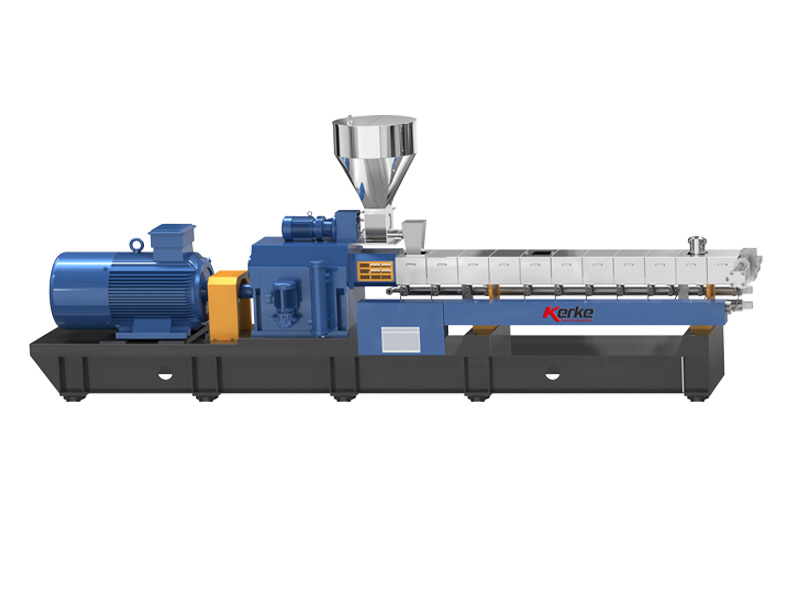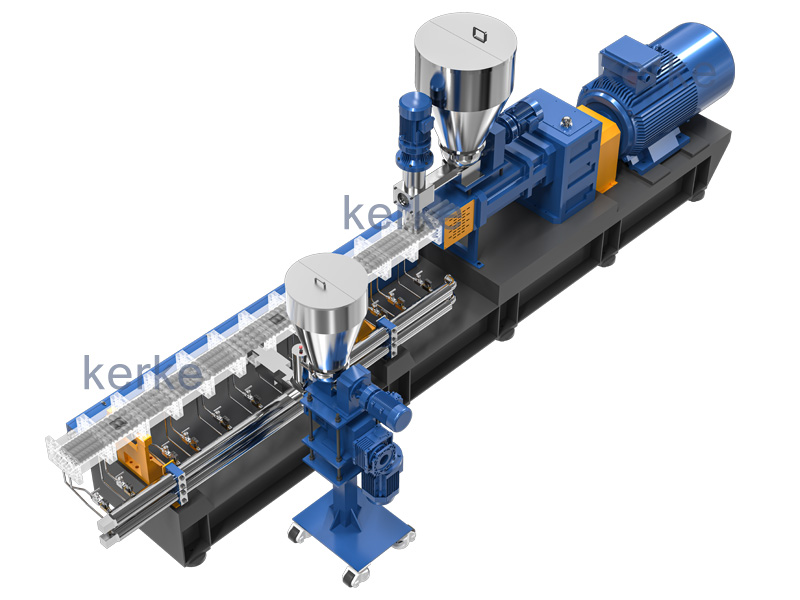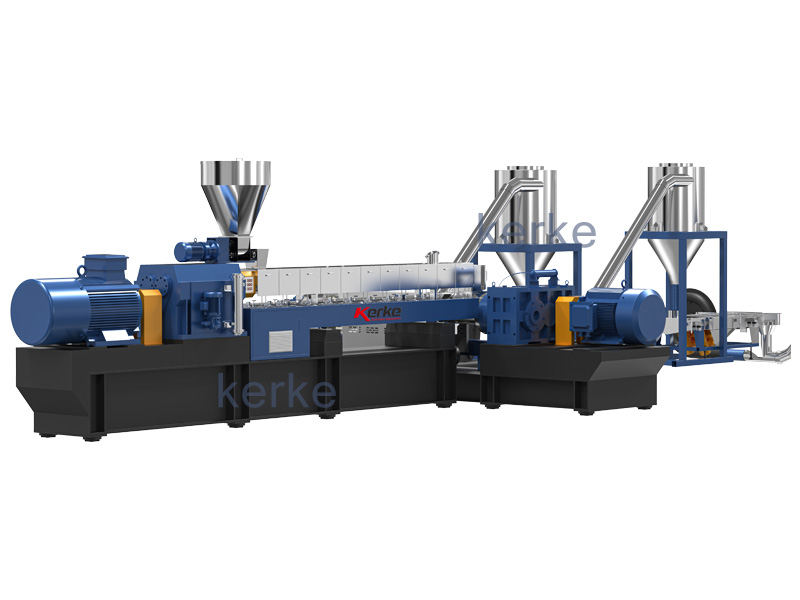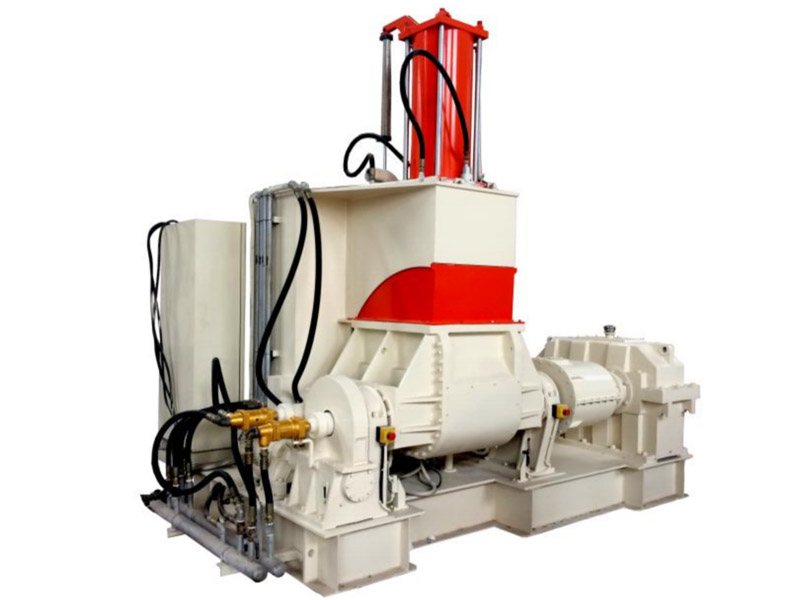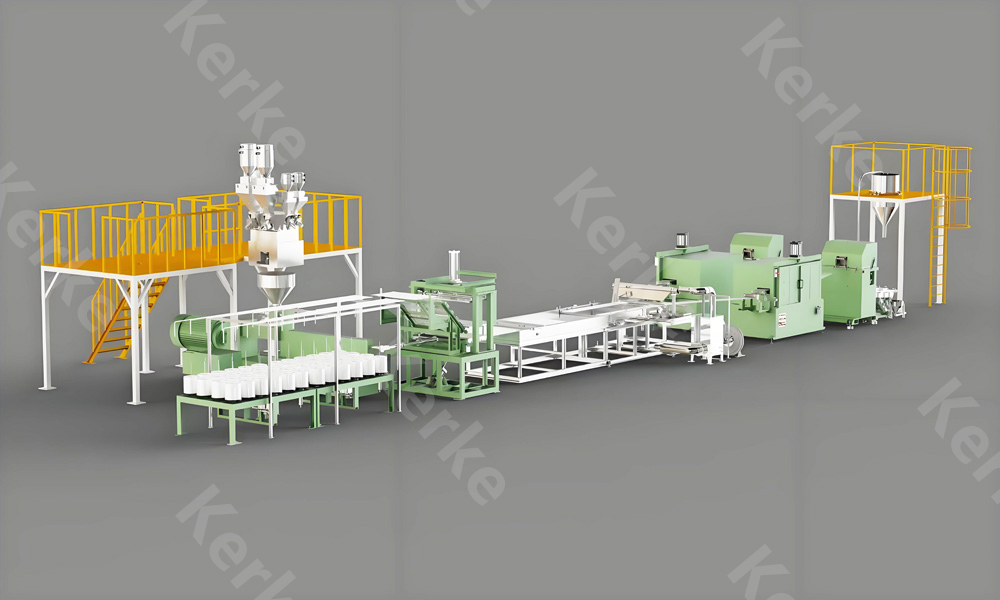
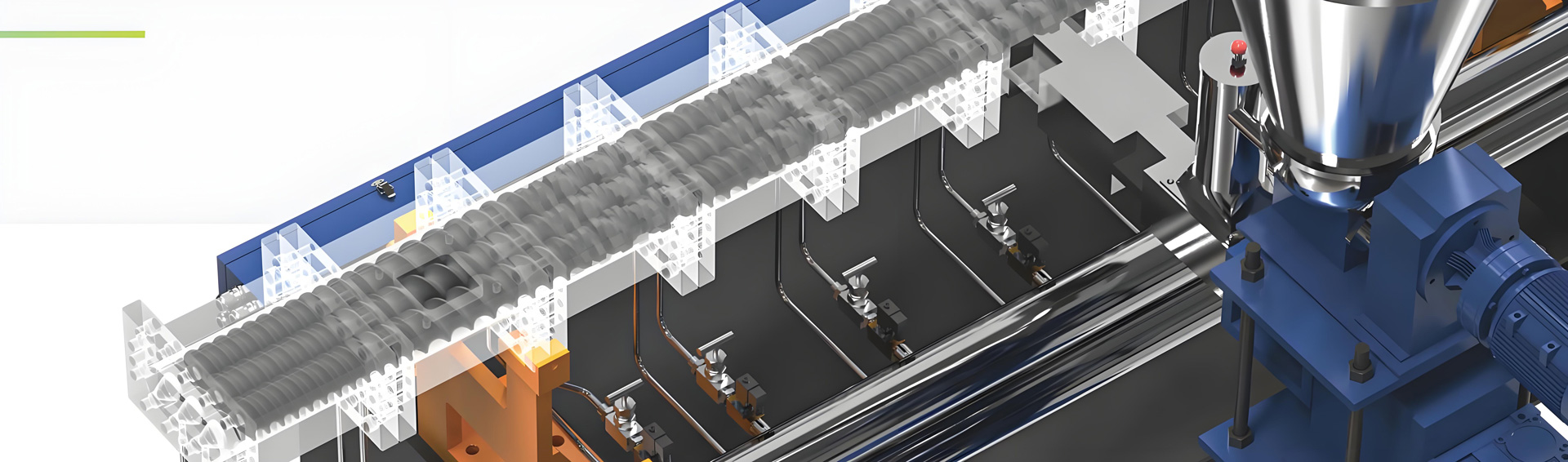
Selecting the appropriate screw length-to-diameter (L/D) ratio is a critical decision in the design and operation of compounding extruder machines. The L/D ratio, which represents the ratio of the screw length to its diameter, plays a significant role in determining the performance, efficiency, and capabilities of the extruder. In this comprehensive guide, we will explore the importance of the screw L/D ratio in compounding extruders, the key factors to consider when selecting the right ratio, and how Kerke extruders are designed to optimize the L/D ratio for specific compounding applications.
Understanding the Screw L/D Ratio
The screw L/D ratio is one of the most fundamental design parameters of a twin screw extruder. It directly affects the residence time of the material within the extruder, the degree of mixing and shear applied to the material, and the overall processing capacity. A higher L/D ratio means a longer screw relative to its diameter, which can provide more time for material processing, better mixing, and more efficient devolatilization. Conversely, a lower L/D ratio may be suitable for materials that require shorter residence times or for applications where space is limited.
In compounding extruders, the L/D ratio typically ranges from 20:1 to 40:1, depending on the specific requirements of the application. The choice of L/D ratio depends on several factors, including the type of material being processed, the desired level of mixing and dispersion, the production rate, and the degree of devolatilization required. Understanding these factors is essential for selecting the right L/D ratio to achieve optimal performance in compounding operations.
Importance of Screw L/D Ratio in Compounding Extruders
1. Residence Time Control
The L/D ratio directly influences the residence time of the material in the extruder. A higher L/D ratio provides a longer path for the material to travel through the barrel, increasing the residence time. This is beneficial for materials that require extended processing times, such as those that need thorough mixing, plasticization, or devolatilization. For example, in the production of filled compounds or materials with high additive loadings, a longer residence time allows for better dispersion of the additives and ensures complete homogenization of the mixture.
Conversely, materials that are sensitive to heat or have a short processing window may require a shorter residence time to avoid degradation or cross-linking. In such cases, a lower L/D ratio is preferred to minimize the time the material spends in the hot barrel. For example, some thermally sensitive polymers, such as certain types of biodegradable plastics, may require a lower L/D ratio to prevent thermal decomposition during processing.
2. Mixing and Dispersion Performance
The L/D ratio also plays a crucial role in determining the mixing and dispersion performance of the extruder. A higher L/D ratio allows for more mixing elements to be incorporated into the screw design, which can enhance the shear stress and mixing intensity applied to the material. This is particularly important for compounding applications that require high levels of mixing, such as the production of color masterbatches, filled compounds, or polymer blends.
Kerke twin screw extruders are equipped with a computer-aided designed screw assembly that can be customized to optimize the mixing performance for specific applications. The kneading co-type screw design with excellent self-cleaning function allows for efficient mixing and dispersion of the materials, even with high filler loadings. By selecting the appropriate L/D ratio, manufacturers can ensure that the extruder provides the necessary mixing intensity to achieve the desired product quality.
3. Devolatilization Efficiency
Devolatilization, the process of removing volatile components from the material during compounding, is essential for producing high-quality products with low residual moisture or solvent content. The L/D ratio affects the devolatilization efficiency by influencing the residence time and the surface area available for mass transfer. A higher L/D ratio provides more opportunities for the material to be exposed to the atmosphere in the exhaust zones of the extruder, allowing for more effective removal of volatile components.
Kerke twin screw extruders are designed with multiple exhaust ports and a carefully optimized barrel configuration to enhance devolatilization efficiency. The choice of L/D ratio can be tailored to match the devolatilization requirements of the material. For example, materials with high moisture content, such as natural fiber-filled composites, may require a higher L/D ratio to ensure complete moisture removal during processing.
4. Processing Capacity and Energy Efficiency
The L/D ratio also has an impact on the processing capacity and energy efficiency of the extruder. A higher L/D ratio typically allows for a higher production rate, as the longer screw can convey more material through the barrel. However, a higher L/D ratio also requires more energy to drive the screw, as the material has a longer path to travel. The trade-off between processing capacity and energy efficiency must be carefully considered when selecting the L/D ratio.
Kerke extruders are equipped with high-torque motors and efficient screw designs that balance processing capacity and energy consumption. The company’s engineering team works closely with customers to determine the optimal L/D ratio based on their specific production requirements, ensuring that the extruder delivers the desired output while minimizing energy costs. This allows manufacturers to achieve high production rates without compromising on energy efficiency.
Factors to Consider When Selecting the Screw L/D Ratio
1. Material Properties
The properties of the material being processed are one of the most important factors to consider when selecting the L/D ratio. Different materials have different processing requirements, including residence time, shear sensitivity, and devolatilization needs. For example, highly viscous materials may require a higher L/D ratio to ensure proper conveying and mixing, while materials that are prone to degradation may require a lower L/D ratio to minimize residence time.
Kerke has extensive experience in processing a wide range of materials, including engineering plastics, biodegradable plastics, thermoplastic elastomers, and filled compounds. The company’s technical team can provide expert advice on selecting the right L/D ratio based on the specific properties of the material, ensuring that the extruder is optimized for the application.
2. Formulation Complexity
The complexity of the formulation being processed is another important factor to consider. Formulations that contain multiple additives, fillers, or polymers may require a higher L/D ratio to ensure thorough mixing and dispersion. For example, in the production of masterbatches, which typically contain high concentrations of pigments or additives, a higher L/D ratio is necessary to ensure that the additives are evenly distributed within the carrier resin.
Kerke twin screw extruders are designed to handle complex formulations with ease. The customizable screw configurations and barrel designs allow for the incorporation of multiple mixing zones and devolatilization ports, ensuring that even the most complex formulations are processed efficiently. By selecting the appropriate L/D ratio, manufacturers can ensure that the extruder meets the demands of their specific formulation requirements.
3. Production Rate Requirements
The desired production rate is also a key factor in determining the L/D ratio. A higher L/D ratio generally allows for a higher production rate, as the longer screw can convey more material through the barrel. However, increasing the L/D ratio also increases the cost of the extruder and may require more energy to operate. Manufacturers must balance the need for high production rates with the cost and energy considerations when selecting the L/D ratio.
Kerke offers a range of twin screw extruders with different L/D ratios to meet various production rate requirements. The company’s extruders are available in sizes from 16 mm to 135 mm in diameter, with L/D ratios ranging from 28:1 to 40:1. This allows manufacturers to select the right extruder based on their production volume needs, ensuring that they can achieve the desired output without overinvesting in equipment.
4. Devolatilization Needs
For applications that require significant devolatilization, such as the production of polymers with low residual moisture or solvent content, a higher L/D ratio is often necessary. The longer residence time provided by a higher L/D ratio allows for more time for the volatile components to be removed from the material. Additionally, the extruder may require multiple exhaust ports to enhance the devolatilization process.
Kerke twin screw extruders can be equipped with up to four exhaust ports, depending on the L/D ratio and the specific requirements of the application. The company’s technical team can help manufacturers design the extruder with the optimal number and placement of exhaust ports to maximize devolatilization efficiency. By selecting the right L/D ratio and exhaust configuration, manufacturers can ensure that their products meet the strictest quality standards for residual moisture or solvent content.
5. Equipment Space and Cost Considerations
The available space in the production facility and the budget for the equipment are also important factors to consider when selecting the L/D ratio. A higher L/D ratio requires a longer extruder, which may not be feasible in facilities with limited space. Additionally, a higher L/D ratio typically increases the cost of the extruder, as it requires more materials and more complex manufacturing processes.
Kerke understands the importance of balancing performance with cost and space constraints. The company’s engineering team works closely with customers to design extruders that meet their specific requirements while optimizing the use of space and minimizing costs. Kerke offers compact extruder designs with optimized L/D ratios that can fit into small production facilities without compromising on performance. This allows manufacturers to achieve their production goals within their budget and space limitations.
How Kerke Extruders Optimize the Screw L/D Ratio
Customizable Screw Designs
Kerke twin screw extruders are equipped with computer-aided designed screw assemblies that can be customized to optimize the L/D ratio for specific applications. The screws are available in a variety of L/D ratios, from 28:1 to 40:1, depending on the size of the extruder and the requirements of the application. The screw elements, including conveying flights, kneading blocks, and mixing elements, can be configured to achieve the desired level of mixing, shear, and residence time.
Kerke’s engineering team uses advanced simulation software to model the flow of material through the extruder and to optimize the screw design for maximum performance. This allows for the precise control of the residence time, mixing intensity, and shear rate, ensuring that the extruder meets the specific needs of the compounding process. Whether processing highly filled compounds, sensitive polymers, or complex formulations, Kerke can design a screw assembly with the optimal L/D ratio to achieve the desired product quality.
Flexible Barrel Configurations
In addition to customizable screw designs, Kerke extruders also feature flexible barrel configurations that allow for further optimization of the L/D ratio. The barrels can be assembled in different lengths, with optional additional barrel segments to increase the overall L/D ratio. This flexibility allows manufacturers to adjust the L/D ratio based on changing production requirements, without the need to replace the entire extruder.
Kerke’s modular barrel design also enables easy maintenance and cleaning. The barrels can be easily disassembled to access the screws and internal components, making it simple to perform routine maintenance or to change the screw configuration. This modularity reduces downtime and increases the overall efficiency of the compounding operation.
Expert Technical Support
Kerke’s technical team has extensive experience in the design and operation of compounding extruders. They work closely with customers to understand their specific needs and to provide expert advice on selecting the right L/D ratio for their applications. From the initial design phase to the installation and commissioning of the extruder, Kerke’s team is available to support customers every step of the way.
In addition to technical support, Kerke also offers comprehensive training programs for operators, covering all aspects of extruder operation and maintenance. The training includes hands-on instruction on how to optimize the L/D ratio and other process parameters to achieve the best possible performance. This ensures that customers have the knowledge and skills necessary to operate their extruders effectively and to maximize their return on investment.
Case Study: Optimizing L/D Ratio for Filled Compound Production
To illustrate the importance of selecting the right L/D ratio, let’s consider a case study of a manufacturer producing filled compounds for automotive applications. The manufacturer was using an extruder with an L/D ratio of 28:1 and was experiencing challenges with achieving uniform dispersion of the filler material, resulting in inconsistent product quality and poor mechanical properties.
After consulting with Kerke’s technical team, the manufacturer decided to upgrade to a Kerke KTE series twin screw extruder with an L/D ratio of 36:1. The longer L/D ratio provided a longer residence time, allowing for more thorough mixing and dispersion of the filler material. The extruder was also equipped with a customized screw configuration with additional kneading blocks and mixing elements to enhance the mixing performance.
Since installing the new extruder, the manufacturer has seen significant improvements in product quality. The filler material is now uniformly dispersed within the polymer matrix, resulting in consistent mechanical properties and reduced variability between batches. The production rate has also increased by 20%, as the longer L/D ratio allows for higher throughput without compromising on product quality. The manufacturer has also reported a reduction in energy consumption, as the optimized screw design and L/D ratio have improved the overall efficiency of the extruder.
Conclusion
Selecting the appropriate screw L/D ratio is a critical decision in the design and operation of compounding extruder machines. The L/D ratio directly affects the performance, efficiency, and capabilities of the extruder, influencing factors such as residence time, mixing performance, devolatilization efficiency, and production rate. By considering the key factors, including material properties, formulation complexity, production requirements, and equipment constraints, manufacturers can select the right L/D ratio to achieve optimal performance in their compounding operations.
Kerke twin screw extruders are designed to optimize the L/D ratio for specific compounding applications, offering customizable screw designs, flexible barrel configurations, and expert technical support. With Kerke’s extruders, manufacturers can ensure that their compounding processes are efficient, reliable, and capable of producing high-quality products consistently. By investing in a Kerke extruder with the right L/D ratio, manufacturers can enhance their competitiveness, reduce costs, and achieve long-term success in the compounding industry.