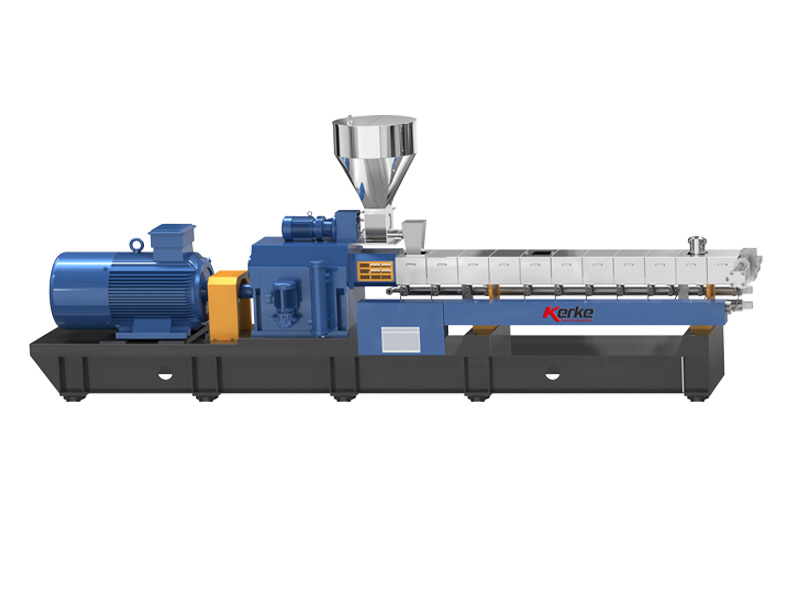
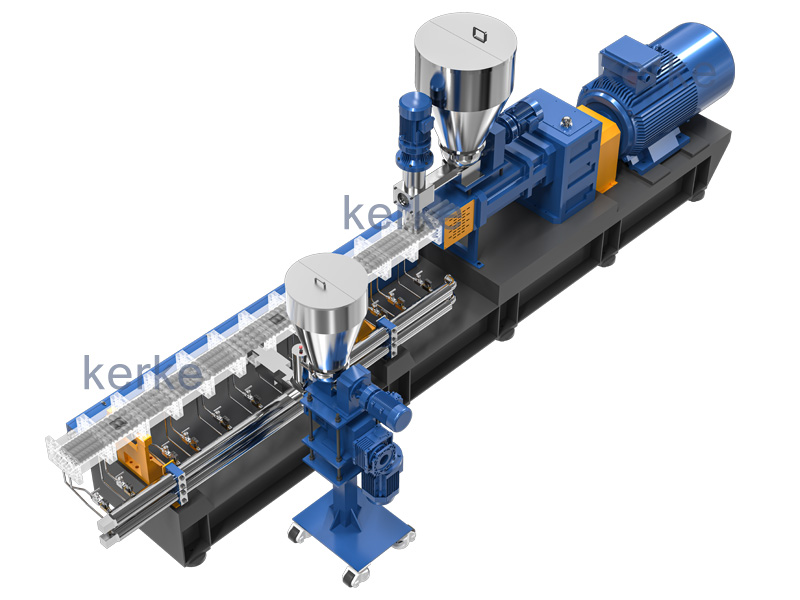
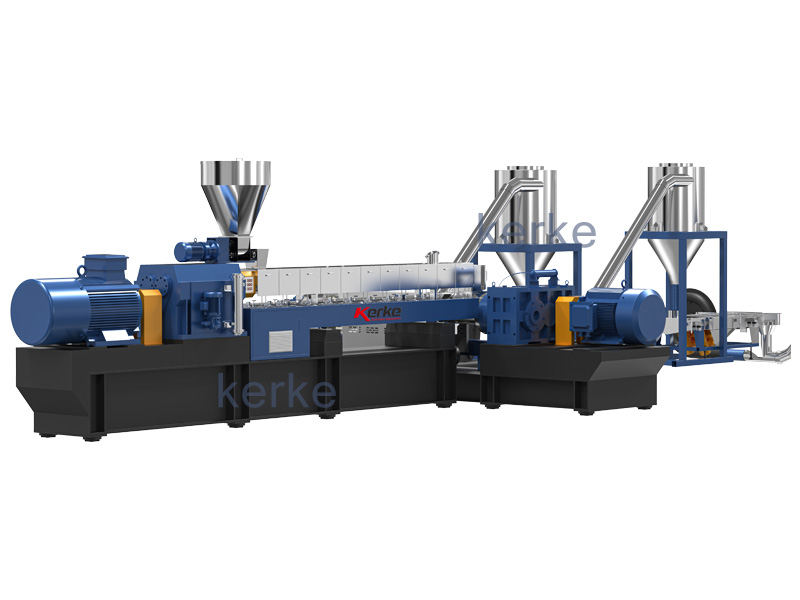
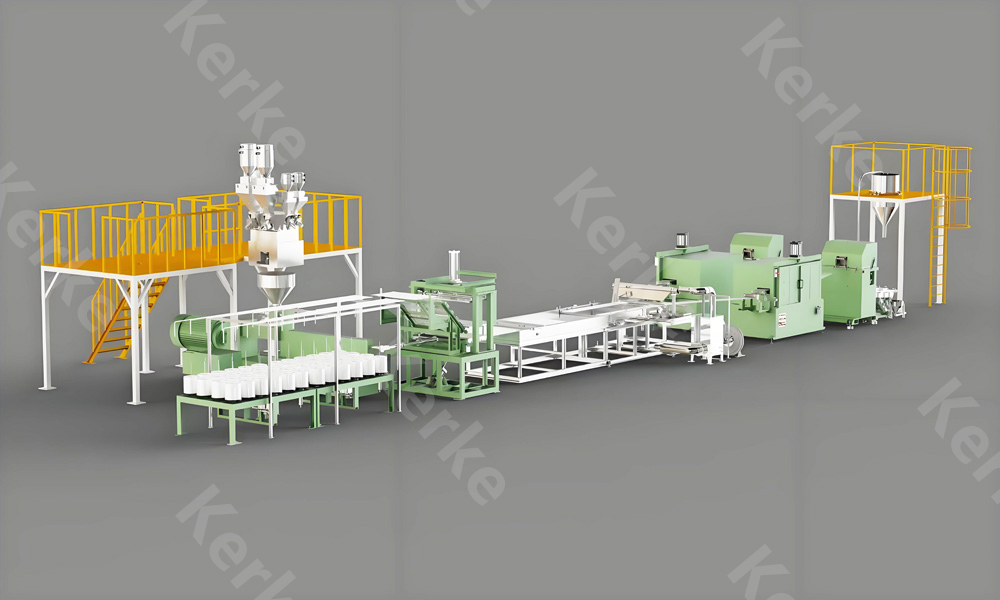
A high performance Twin Screw Extruder represents a complex system of precision-engineered components working in harmony to deliver superior mixing, dispersion, and compounding capabilities. Understanding these core components is essential for manufacturers seeking to optimize their Masterbatch Extruder or Compounding Extruder operations. Kerke Extrusion Equipment Co., Ltd, with over 12 years of manufacturing experience and 2000+ machines operating worldwide, has developed comprehensive expertise in designing and producing high-performance extrusion systems. This guide provides detailed insights into the critical components that define extruder performance and help manufacturers make informed equipment decisions.
The Gearbox and Drive System
The gearbox serves as the heart of any Twin Screw Extruder, converting motor power into precise, synchronized screw rotation. This component significantly impacts the extruder’s torque capacity, speed control, and overall reliability. Kerke’s engineering team has designed advanced gearbox solutions that deliver exceptional performance across the entire KTE series of Compounding Extruder systems.
High Torque Gearbox Design
Modern high-performance Twin Screw Extruders require gearboxes capable of delivering substantial torque while maintaining precise speed control. Kerke’s KTE series extruders feature high-torque gearbox designs with torque ratings ranging from 2×18 Nm for the KTE-20 laboratory model to 2×7800 Nm for the KTE-135D production model. These gearboxes utilize advanced gear materials and heat treatment processes to ensure long service life under demanding operating conditions. The high torque capability enables processing of high-viscosity materials and high filler loading formulations that would overwhelm lower-performance gearboxes. Kerke’s gearbox designs achieve T/A³ values of 7-9 for D-series models, representing industry-leading torque density for Masterbatch Extruder applications.
Precision Bearing Systems
Bearing selection and arrangement within the gearbox directly influences extruder performance and longevity. Kerke Compounding Extruder gearboxes incorporate high-precision, heavy-duty bearings from reputable manufacturers. These bearings are selected based on load capacity, speed requirements, and operating temperature conditions. The bearing configuration must accommodate both radial loads from screw rotation and thrust loads from material processing pressure. Kerke’s designs include adequate lubrication systems and cooling capacity to maintain optimal bearing operating temperatures, extending bearing life and reducing maintenance requirements. For high-performance applications, Kerke offers specialized bearing coatings and materials that further enhance durability and reduce friction losses.
Drive Motor Integration
The drive motor provides the power that enables Twin Screw Extruder operation, and its selection significantly impacts energy efficiency and performance control. Kerke offers various motor options including AC vector motors, servo motors, and high-efficiency IE3 motors across the KTE series range. Motor power ranges from 1.1-2.2 kW for the KTE-20 to 500-1000 kW for the largest KTE-135D model. Kerke’s motor integration includes sophisticated control systems that enable precise speed regulation and torque monitoring. The motor mounting arrangement and coupling design are optimized to minimize vibration and ensure smooth power transmission to the gearbox. Energy-efficient motor options can reduce electricity consumption by 15-25% compared to standard motors, representing significant operational cost savings for high-utilization Compounding Extruder operations.
Screw Elements and Configuration
The screw elements and their configuration define the mixing, conveying, and processing capabilities of a Twin Screw Extruder. This modular component system enables customization for specific applications and materials. Kerke has developed extensive screw element libraries and configuration expertise that enable Masterbatch Extruder optimization across diverse applications.
Conveying Screw Elements
Conveying elements form the backbone of screw configuration, providing the primary material transport function along the extruder barrel. Kerke’s screw elements are manufactured from high-quality alloy steels with precise machining tolerances to ensure optimal performance and long service life. The conveying elements feature various flight designs including standard pitch, wide pitch for high throughput, and narrow pitch for improved residence time. Kerke’s computer-aided screw design optimizes element geometry for material transport efficiency and self-cleaning characteristics. The KTE series Twin Screw Extruders support L/D ratios from 28:1 to 68:1, enabling appropriate screw length for different processing requirements. Conveying elements can be arranged in forward conveying, reverse conveying, or neutral configurations to create specific processing zones along the extruder length.
Kneading and Mixing Elements
Kneading elements are essential for effective mixing and dispersion in Compounding Extruder applications. Kerke offers various kneading block designs including staggered kneading blocks, neutral kneading blocks, and special mixing elements optimized for different material systems. The kneading block geometry, width, and staggering angle can be customized to achieve specific mixing intensity and distributive mixing characteristics. Kerke’s kneading elements feature advanced wear-resistant coatings for abrasive filler applications such as calcium carbonate and glass fiber reinforcement. The modular nature of Kerke’s screw elements enables precise tuning of mixing performance along the extruder length, creating zones of high shear for dispersion and low shear for gentle mixing as required by specific formulations.
Specialized Processing Elements
Beyond standard conveying and kneading elements, high-performance Twin Screw Extruders incorporate specialized elements for specific processing functions. Kerke offers vacuum venting elements that enable effective removal of volatiles and moisture during processing. Side feeding elements allow introduction of additional materials downstream in the process, ideal for temperature-sensitive additives or fillers. Special discharge elements optimize material transfer to pelletizing systems. Kerke’s portfolio also includes elements designed for specific material challenges such as high-viscosity processing, fiber reinforcement, and reactive extrusion applications. These specialized elements enable Compounding Extruder optimization across diverse Masterbatch Extruder applications including color masterbatch, filler masterbatch, engineering plastics, and cable compounds.
Barrel System Design
The barrel system houses the rotating screws and provides the thermal environment necessary for material processing. High-performance barrel design combines thermal efficiency, structural integrity, and processing flexibility. Kerke has developed advanced barrel technologies that deliver exceptional performance across the KTE series Twin Screw Extruder range.
Modular Barrel Construction
Kerke’s modular barrel design enables exceptional flexibility in Compounding Extruder configuration. The KTE series features segmented barrel sections that can be arranged in various combinations to optimize performance for specific applications. Each barrel section incorporates independent temperature control zones, enabling precise thermal profiling along the extruder length. Modular construction facilitates maintenance and replacement of worn sections without requiring complete barrel replacement. The barrel sections utilize high-quality alloy steels with appropriate surface treatments to resist wear and corrosion. Kerke offers various barrel inner surface finishes optimized for different material applications, from polished surfaces for easy cleaning to textured surfaces for improved material conveyance.
Temperature Control Systems
Effective temperature control is essential for consistent processing quality in Masterbatch Extruder operations. Kerke’s barrel systems incorporate advanced temperature control capabilities with multiple independent heating zones. Heating systems utilize high-efficiency electric heaters with precision thermocouples for accurate temperature regulation. For applications requiring cooling, Kerke offers barrel cooling systems including water cooling and air cooling options. The temperature control system features PID controllers that maintain zone temperatures within ±1°C of setpoint. Advanced options include cascaded temperature control between adjacent zones and adaptive temperature control algorithms that automatically adjust parameters based on processing conditions. These precise temperature control capabilities enable processing of temperature-sensitive materials and ensure consistent product quality.
Wear-Resistant Barrel Options
For applications involving abrasive fillers or demanding processing conditions, Kerke offers specialized wear-resistant barrel solutions. These include bimetallic barrels with hard-wearing inner surfaces, ceramic-coated barrels for extreme abrasion resistance, and various surface treatment options. The wear-resistant barrel options extend service life significantly for applications processing high filler loadings such as calcium carbonate masterbatch, glass fiber reinforcement, or mineral-filled compounds. Kerke can recommend the appropriate barrel material and surface treatment based on specific application requirements and expected service life. The investment in wear-resistant barrels typically pays for itself through extended maintenance intervals and reduced downtime.
Feeding System Integration
The feeding system is crucial for consistent material delivery to the Twin Screw Extruder and significantly impacts product quality and process stability. High-performance feeding systems enable precise control over material feed rates and ratios. Kerke has developed comprehensive feeding solutions that integrate seamlessly with Compounding Extruder operations.
Main Feeding Technology Options
Kerke offers multiple feeding technologies to address different material characteristics and application requirements. Volumetric feeding systems provide cost-effective solutions for materials with consistent bulk density and flow properties. Gravimetric feeding systems offer superior accuracy for applications requiring precise material ratio control, essential for Masterbatch Extruder applications where color consistency or filler concentration is critical. Kerke’s KTE series supports loss-in-weight feeding technology for high-precision applications. The feeder screw design is customized based on material properties, with options including standard screw flights, aggressive flights for poor-flowing materials, and crammer feeders for forced feeding of difficult materials. Feeder capacity ranges from 5 kg/hour for laboratory applications to over 5000 kg/hour for large-scale production.
Side Feeding Capabilities
Side feeding enables introduction of materials at specific positions along the extruder length, providing flexibility for multi-component formulations. Kerke’s Compounding Extruder designs incorporate multiple side feeding ports at strategic locations along the barrel. These side feeders are particularly useful for introducing temperature-sensitive additives, fillers, or reinforcement fibers downstream after the main polymer matrix has been melted. Side feeding also enables staged addition of materials for specific processing requirements. Kerke offers both volumetric and gravimetric side feeding options, with feeder designs optimized for the specific materials being introduced. The side feeding system integrates with the main control system for coordinated operation and precise ratio control.
Liquid and Melt Feeding Systems
Beyond solid materials, high-performance Twin Screw Extruder applications often require feeding of liquids, melts, or viscous materials. Kerke provides specialized liquid feeding systems including metering pumps, gear pumps, and melt pumps for these applications. These systems enable precise delivery of liquid plasticizers, colorants, additives, or melt polymers to the Compounding Extruder. The liquid feeding systems include temperature control to maintain appropriate viscosity and prevent premature solidification. For reactive extrusion applications, Kerke offers multi-component feeding systems that enable precise stoichiometric ratio control of reactive components. These advanced feeding capabilities enable production of sophisticated compounds and Masterbatch Extruder products with exact specifications.
Pelletizing and Cutting Systems
The pelletizing system converts the processed material melt into uniform pellets suitable for downstream processing. High-performance pelletizing systems deliver consistent pellet size, shape, and quality while minimizing production losses. Kerke offers diverse pelletizing technologies optimized for different material properties and production requirements.
Strand Pelletizing Systems
Strand pelletizing represents a versatile solution suitable for many material types. Kerke offers both water-cooled strand pelletizing and air-cooled strand pelletizing options. Water-cooled systems provide excellent cooling for high-throughput applications and materials with high thermal stability. Air-cooled systems are ideal for materials that cannot contact water due to moisture sensitivity or water contamination concerns. The strand pelletizing system includes precise strand die design, temperature-controlled cooling systems, and rotary cutters with adjustable cutting speed. Kerke’s strand pelletizing systems can process from 10 kg/hour to over 5000 kg/hour, covering the entire range of Twin Screw Extruder capacities. The system design minimizes strand breakage and ensures consistent pellet size distribution.
Die Face Cutting Systems
Die face cutting technology offers advantages for specific material applications, particularly those requiring underwater pelletizing or water-ring pelletizing. Kerke’s underwater pelletizing systems provide excellent pellet quality with uniform spherical shape, ideal for high-value Masterbatch Extruder products. Water-ring pelletizing systems offer cost-effective solution for materials suitable for water contact. The die face cutting systems include precision die plate design, cutting rotor assembly, and product separation systems. Kerke offers various cutting knife designs and materials optimized for different material properties. These systems deliver excellent pellet quality with minimal fines generation, representing significant value for high-performance applications.
Water Mist and Alternative Pelletizing
For specialized applications, Kerke offers water mist pelletizing and alternative cutting technologies. Eccentric water mist pelletizing provides a solution for materials requiring minimal water contact while still benefiting from water cooling advantages. Air-cooled die face hot cutting eliminates water contact entirely, ideal for moisture-sensitive materials. Kerke’s alternative pelletizing technologies include rotary cutters with adjustable knife angles, automatic knife sharpening systems, and quick-change cutter assemblies for reduced downtime between material changes. The diverse pelletizing options ensure that Twin Screw Extruder can be configured optimally for specific material requirements and quality specifications.
Control and Automation Systems
Modern control systems transform Twin Screw Extruders from simple processing machines into intelligent production platforms. High-performance control systems enable precise process control, data monitoring, and automation that significantly enhance productivity and product quality. Kerke has developed advanced control solutions that optimize Compounding Extruder operation.
PLC-Based Control Architecture
Kerke’s KTE series Twin Screw Extruders feature advanced PLC-based control systems using Siemens automation components for reliability and performance. The control architecture includes separate control loops for screw speed, temperature zones, feeder systems, and auxiliary equipment. The human-machine interface (HMI) provides intuitive operation with real-time display of process parameters and equipment status. Kerke’s control systems support recipe storage for quick changeover between different products, essential for Masterbatch Extruder operations producing multiple product types. The system includes comprehensive alarm and safety functions that protect equipment and ensure safe operation. Remote monitoring capabilities enable supervisors to view system status and receive alerts without being physically present at the machine.
Data Acquisition and Monitoring
Advanced control systems incorporate comprehensive data acquisition capabilities that capture process parameters for analysis and optimization. Kerke’s systems record screw speed, torque, temperature profiles, feeder rates, and power consumption over time. This data logging enables analysis of process trends, identification of optimal operating conditions, and troubleshooting of quality issues. The data can be exported for further analysis or integration with plant-wide data systems. Kerke offers optional statistical process control (SPC) software that automatically monitors process parameters and alerts operators to deviations from established control limits. These data capabilities enable continuous process improvement and provide valuable insights for product development efforts.
Automation and Integration
High-performance Twin Screw Extruder operations benefit from integration with upstream and downstream equipment. Kerke’s control systems can integrate with material handling systems for automated material delivery and inventory management. Downstream integration includes automatic packaging systems, conveyor systems, and quality control equipment. Kerke offers various levels of automation from semi-automatic operation to fully automated production lines requiring minimal operator intervention. The control architecture supports standard industrial communication protocols including Ethernet, Profinet, and Modbus for seamless integration with plant automation infrastructure. Advanced automation options include adaptive process control that automatically adjusts operating parameters based on material property variations and production targets.
Structural Components and Safety Systems
The structural components and safety systems form the foundation that supports reliable and safe Twin Screw Extruder operation. High-performance structural design ensures equipment durability under demanding operating conditions while safety systems protect personnel and equipment. Kerke incorporates advanced structural and safety features throughout the KTE series.
Rigid Frame Construction
Kerke’s Compounding Extruder frames are designed for maximum rigidity to minimize deflection under load and ensure precise alignment of critical components. The frame construction utilizes heavy-gauge steel with appropriate reinforcement to withstand the substantial forces generated during operation. Frame design incorporates adequate access for maintenance while maintaining structural integrity. For larger models, the frame may include integrated support structures for auxiliary equipment and pelletizing systems. The rigid construction contributes to long service life and consistent performance over years of operation. Kerke can provide foundation requirements and mounting details to ensure proper installation and long-term stability.
Safety Guarding and Systems
Comprehensive safety systems protect operators and equipment during Twin Screw Extruder operation. Kerke’s safety guarding encloses moving components such as the gearbox, drive system, and pelletizing equipment while providing appropriate access for operation and maintenance. Safety interlocks prevent operation when guards are open or safety conditions are not met. Emergency stop buttons are strategically located for immediate shutdown capability. The control system includes safety functions that monitor equipment status and prevent operation if unsafe conditions exist. Kerke’s safety systems comply with international safety standards including CE and other regional requirements. Regular safety system audits ensure continued protection throughout equipment service life.
Noise and Vibration Control
Operating noise and vibration impact both personnel comfort and equipment longevity. Kerke incorporates noise reduction measures including sound insulation on key components and optimized gear designs for quiet operation. Vibration control includes precision balancing of rotating components, appropriate mounting and isolation, and alignment procedures that minimize vibration generation. These measures contribute to a more pleasant working environment and reduce wear on equipment components. For applications with particularly strict noise requirements, Kerke offers additional noise reduction packages that can further reduce operating sound levels. The comprehensive approach to noise and vibration control extends equipment service life and improves workplace conditions.
Cost Analysis and Component Selection
Understanding the cost implications of different component options helps manufacturers make informed decisions about Twin Screw Extruder investment. Kerke provides transparent pricing and helps customers understand the value proposition of various component choices for their specific Compounding Extruder application.
Equipment Price Ranges
Kerke’s KTE series Twin Screw Extruder prices vary based on model size and configuration options. The KTE-20 laboratory extruder starts at approximately $12,000 for basic configuration, with fully equipped systems reaching $18,000. Mid-range production models like the KTE-36 range from $18,000 to $25,000, while the KTE-50 ranges from $25,000 to $35,000. Larger production models including the KTE-65 range from $35,000 to $50,000, with the KTE-75 ranging from $45,000 to $65,000. The largest models including the KTE-95 and KTE-135 range from $60,000 to over $100,000 depending on configuration. These prices include the extruder system with standard features; additional options and auxiliary equipment increase total investment cost. Kerke provides detailed quotations that break down component costs for transparency.
Component Upgrade Costs
Upgrading to higher-performance components adds to the base equipment cost but often provides excellent value through improved performance or extended service life. Wear-resistant barrel options typically add 20-30% to base barrel cost but can triple service life in abrasive applications. Advanced control systems with enhanced data capabilities may add $5,000-$15,000 to base system cost but enable significant process improvements and operational insights. Specialized screw elements for demanding applications add approximately 10-15% to screw assembly cost. Premium gearbox and motor upgrades may increase cost by 15-25% but deliver superior efficiency and reliability. Kerke helps customers evaluate these upgrade costs against the benefits they provide for specific applications.
Long-term Value Analysis
When evaluating component options, manufacturers should consider long-term value rather than just initial cost. Higher-quality components may cost more initially but can deliver significant savings through reduced downtime, extended maintenance intervals, and improved product quality. For example, investing in wear-resistant barrel components may increase initial cost by $8,000-$12,000 but can eliminate barrel replacement costs over the equipment’s lifetime, representing potential savings of $40,000-$80,000 depending on application. Kerke can provide total cost of ownership analysis that considers equipment cost, operating costs, maintenance costs, and product quality impacts over expected service life to help customers make value-based decisions.
Conclusion
The core components of a high-performance Twin Screw Extruder work together to deliver exceptional mixing, dispersion, and processing capabilities essential for Masterbatch Extruder and Compounding Extruder applications. Understanding these components and their impact on performance enables manufacturers to make informed equipment decisions that optimize their production operations. Kerke Extrusion Equipment’s 12+ years of experience and 2000+ machines operating worldwide provide deep expertise in component design and system integration. Whether selecting a new extruder or upgrading existing equipment, Kerke’s engineering team can provide expert guidance on component selection and configuration for optimal performance. The comprehensive understanding of core components outlined in this guide serves as a foundation for productive discussions about specific application requirements and equipment solutions. Contact Kerke today to discuss your Compounding Extruder needs and discover how advanced component technology can enhance your production capabilities.