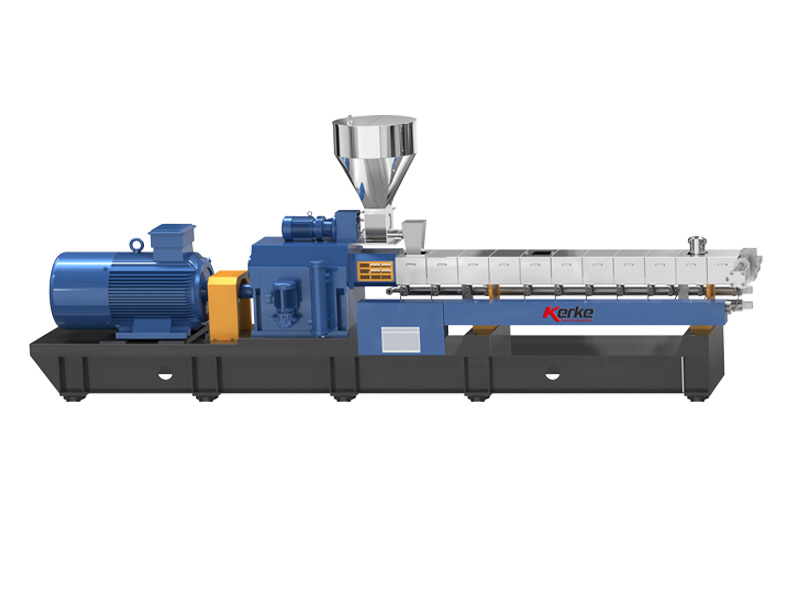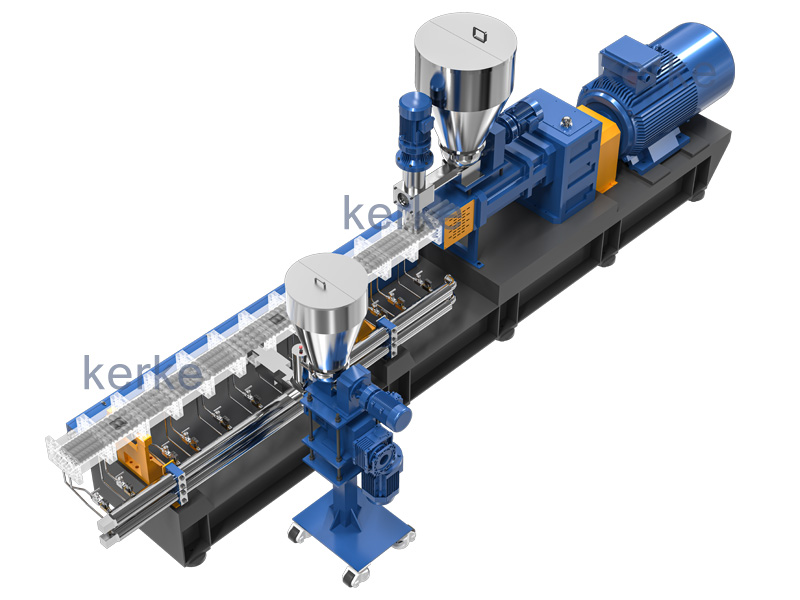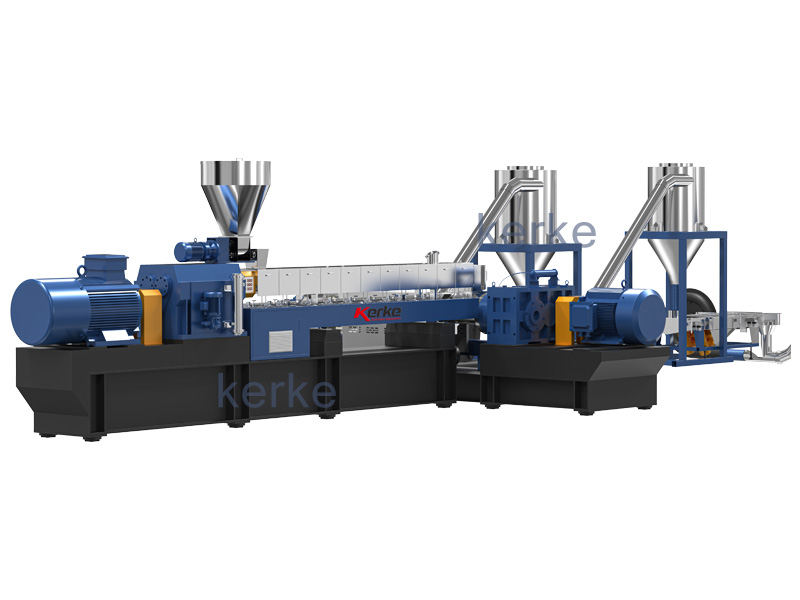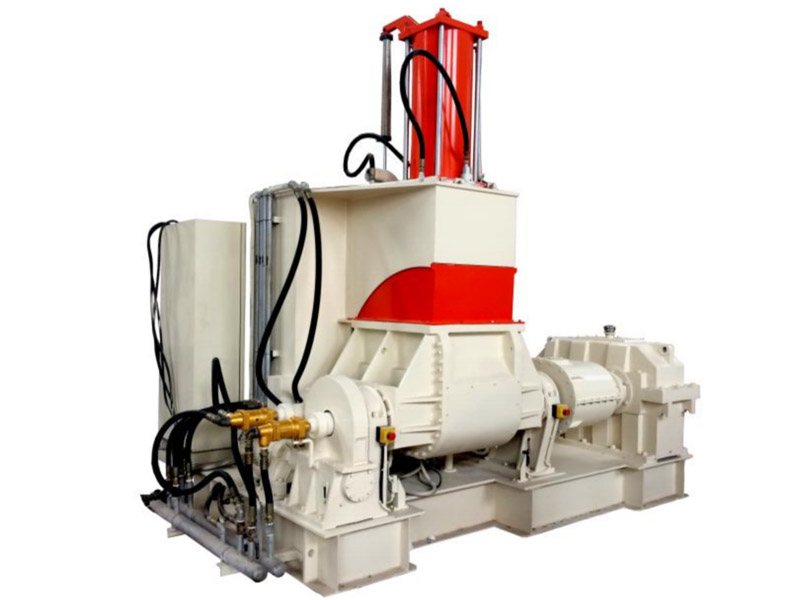
Selecting the right Masterbatch Extruder for small factories requires careful consideration of multiple factors including initial investment, operational costs, production capacity, and long-term return on investment. Small factories operate under tighter budget constraints and must maximize the value of every equipment purchase. Kerke Extrusion Equipment Co., Ltd, with over 12 years of experience serving small and medium-sized enterprises globally, provides comprehensive guidance on choosing cost-effective Twin Screw Extruder solutions that deliver exceptional performance without breaking the bank. This guide covers everything small factory owners need to know about selecting, financing, and optimizing Compounding Extruder investments.
Understanding Small Factory Production Requirements
Small factories have unique production requirements that significantly influence Masterbatch Extruder selection decisions. Understanding these specific needs is crucial for making cost-effective equipment choices that support business growth and profitability. Kerke has helped hundreds of small factories optimize their Compounding Extruder investments by identifying their true production requirements rather than oversizing equipment.
Production Capacity Analysis
Small factories typically require production capacities ranging from 50 kg/hour to 500 kg/hour for masterbatch production. However, determining the optimal capacity requires careful analysis of both current needs and future growth plans. Kerke’s KTE series Twin Screw Extruders offer a range of models from the laboratory-scale KTE-20 producing 2-15 kg/hour to production models like the KTE-65 producing 200-500 kg/hour and the KTE-75 producing 300-800 kg/hour. For small factories starting out, Kerke often recommends the KTE-36 (20-100 kg/hour) or KTE-50 (80-200 kg/hour) models, which provide excellent balance between capacity and investment cost. These models typically range from $18,000 to $30,000, making them accessible to small factories while offering room for business expansion.
Product Mix and Flexibility Needs
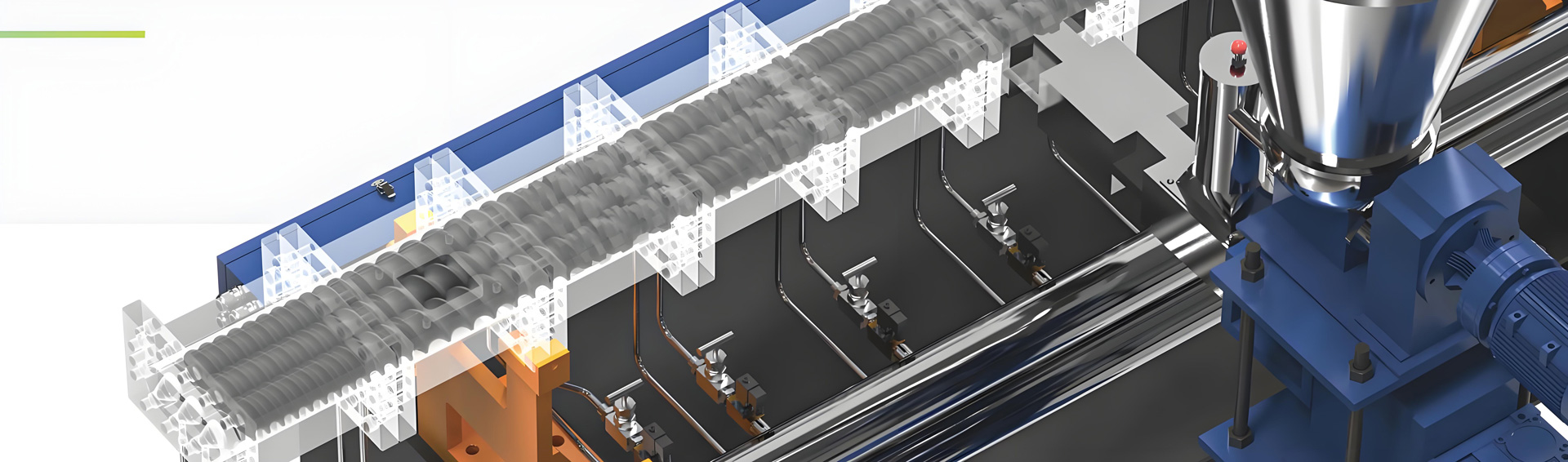
Small factories often produce multiple masterbatch types to serve diverse customer requirements. This product diversity demands equipment flexibility that can handle different materials and formulations without extensive changeover times. Kerke’s Compounding Extruder designs feature modular barrel sections and interchangeable screw elements that enable quick product changeovers. The KTE series extruders can process color masterbatch, filler masterbatch, additives masterbatch, black masterbatch, and textile masterbatch with minimal downtime between production runs. Small factories should consider the range of materials they plan to process and ensure the selected Twin Screw Extruder can handle all intended applications effectively.
Space and Infrastructure Constraints
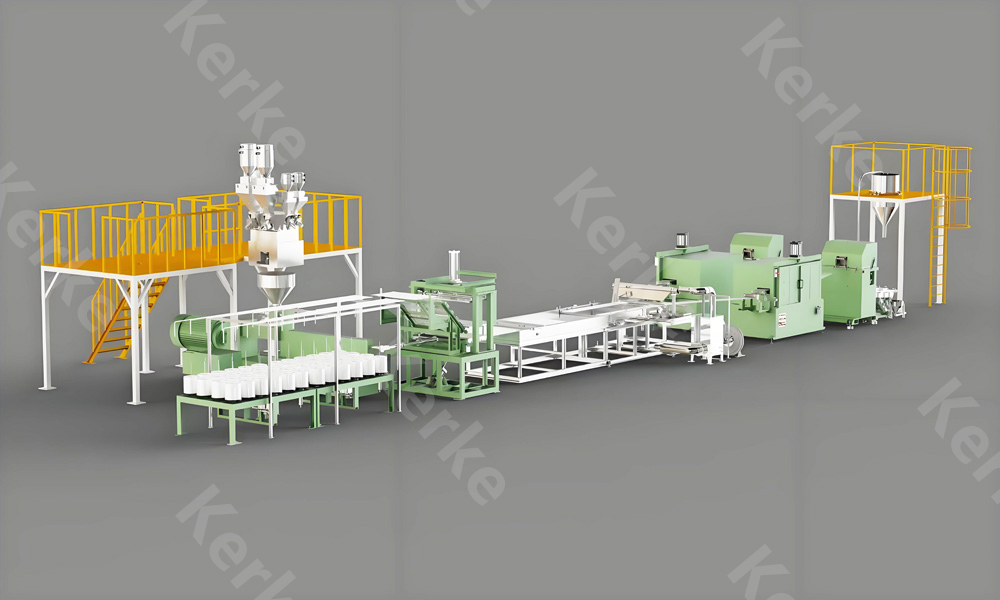
Small factories often operate in limited spaces with restricted floor area, ceiling height, and infrastructure capabilities. Kerke designs Masterbatch Extruder systems with compact footprints that fit well in small factory environments. The KTE-20 laboratory extruder requires minimal space, making it ideal for small production facilities or research and development applications. Even larger models like the KTE-65 and KTE-75 are designed for efficient space utilization. When evaluating equipment options, small factories should consider not just the extruder footprint but also the space required for feeding systems, pelletizing equipment, material storage, and operator access. Kerke can provide complete system layouts optimized for limited space requirements.
Initial Investment Considerations
The initial investment represents one of the most significant factors in equipment selection for small factories. Making smart choices about initial investment requires understanding both the purchase price and the total cost of ownership over the equipment’s lifetime. Kerke Extrusion Equipment helps small factories evaluate investment options comprehensively to ensure they receive maximum value for their budget.
Equipment Purchase Price Ranges
Masterbatch Extruder prices vary significantly based on size, capabilities, and features. Kerke’s KTE series Twin Screw Extruders offer competitive pricing across the entire capacity range. The laboratory KTE-20 model, ideal for small-scale production and product development, starts around $12,000-$15,000. Small production models like the KTE-36 and KTE-50 range from $18,000 to $30,000, offering excellent value for small factories starting production. Mid-range production models like the KTE-65 and KTE-75, suitable for growing operations, typically cost between $35,000 and $60,000. These prices include the basic extruder system with standard features. Additional equipment such as feeding systems, pelletizing systems, and control systems must be factored into the total investment calculation. Kerke provides transparent pricing with no hidden costs, helping small factories budget accurately for their Compounding Extruder investment.
Essential vs. Optional Features
Small factories must carefully distinguish between essential features and optional enhancements when selecting Masterbatch Extruder equipment. Kerke recommends focusing investment on features that directly impact product quality, production efficiency, and operational reliability. Essential components include the extruder barrel and screw system, drive motor, temperature control system, and basic control panel. Optional features like advanced automation, special screw designs, and enhanced monitoring capabilities can be added later as the business grows. Kerke’s modular design philosophy allows small factories to start with essential equipment and upgrade incrementally as production needs and budgets expand. This approach reduces initial investment requirements while maintaining upgrade path flexibility.
Complete System Cost Considerations
When budgeting for a Compounding Extruder, small factories must consider the complete system cost, not just the extruder itself. Additional essential equipment includes feeding systems, material handling equipment, pelletizing systems, and quality control equipment. Kerke offers complete turn-key solutions that integrate all necessary components for seamless operation. A complete small-scale masterbatch production line typically costs $25,000-$50,000 for basic configurations and $50,000-$100,000 for more comprehensive systems. These complete systems include everything needed for production from material feeding to finished pellets. Small factories should obtain comprehensive quotes that include all necessary components to avoid surprise expenses during installation and startup.
Operational Cost Optimization
Beyond initial investment, operational costs represent ongoing expenses that significantly impact small factory profitability. Selecting a Masterbatch Extruder that minimizes operational costs while maintaining production efficiency is crucial for long-term business success. Kerke helps small factories analyze and optimize the complete cost structure of Twin Screw Extruder operation.
Energy Consumption Analysis
Energy consumption represents a major operational cost for Compounding Extruder operation. Kerke’s KTE series Twin Screw Extruders are designed with energy efficiency in mind, featuring high-efficiency motors, optimized gearboxes, and improved thermal management systems. Energy consumption varies based on model size and operating conditions. The KTE-36 model typically consumes 18.5-22 kW during operation, while the KTE-65 consumes 90-110 kW and the KTE-75 consumes 132-160 kW. Small factories should calculate energy costs based on local electricity rates and anticipated operating hours. Kerke can provide detailed energy consumption data for different operating conditions to help small factories estimate annual energy costs accurately. Energy-efficient designs can save thousands of dollars annually in electricity costs.
Material Efficiency and Waste Reduction
Material costs represent another significant operational expense for masterbatch production. High-quality Compounding Extruder systems minimize material waste through precise feeding control, optimized processing conditions, and efficient pelletizing systems. Kerke’s Twin Screw Extruders feature advanced feeding systems that enable accurate material metering, reducing material waste from overfeeding or underfeeding. The self-cleaning screw design minimizes material residue between product changeovers, further reducing material loss. Small factories should evaluate material efficiency carefully, as even small percentage improvements can represent significant annual savings in high-volume production.
Maintenance and Repair Costs
Regular maintenance is essential for reliable Masterbatch Extruder operation, but maintenance costs vary significantly between different equipment designs. Kerke’s extruders are designed for ease of maintenance, with quick-change screw elements, accessible barrel sections, and robust component construction. Maintenance requirements and costs should be evaluated carefully during equipment selection. Kerke provides comprehensive maintenance schedules and cost estimates for different models to help small factories plan their maintenance budgets. Annual maintenance costs typically represent 2-5% of the initial equipment investment for well-maintained systems. Choosing equipment with proven reliability and readily available replacement parts helps minimize both scheduled and unscheduled maintenance costs.
Financing and Investment Options
Small factories often need financing support to make Compounding Extruder investments. Understanding available financing options and their implications for cash flow and total cost of ownership is essential for making sound investment decisions. Kerke Extrusion Equipment offers various financing solutions tailored to small factory needs and constraints.
Equipment Purchase vs. Leasing
The decision between purchasing and leasing Masterbatch Extruder equipment depends on individual business circumstances and financial strategies. Purchasing provides ownership and long-term asset value but requires larger upfront investment and ties up capital. Leasing reduces initial cash requirements and provides tax advantages through deductible lease payments, but total cost over time typically exceeds purchase cost. Kerke offers both purchase and leasing options to accommodate different business preferences. For small factories with limited capital but strong cash flow, equipment leasing can enable immediate production startup with manageable monthly payments. The lease terms typically range from 3-5 years, after which equipment can be purchased at reduced cost.
Financing Terms and Conditions
Financing terms significantly impact the total cost of Masterbatch Extruder investment. Kerke works with multiple financing partners to offer competitive terms for small factory investments. Interest rates, down payment requirements, and repayment terms vary based on business creditworthiness and the specific equipment being financed. Typical financing terms include 20-30% down payment with 3-7 year repayment periods. Small factories should compare multiple financing options and calculate the total cost including interest over the financing term. Kerke can provide detailed cost comparisons between different financing scenarios to help small factories make informed decisions about their Compounding Extruder investment.
Government Incentives and Support
Small factories should investigate available government incentives and support programs that can reduce Compounding Extruder investment costs. Many governments offer tax credits, low-interest loans, or grants for manufacturing equipment purchases, particularly for companies adopting energy-efficient technologies or expanding production capacity. Kerke’s experience with customers in 70+ countries includes familiarity with various government incentive programs and can help small factories identify and qualify for available support. These incentives can significantly reduce net investment costs and accelerate ROI for Masterbatch Extruder purchases.
Production Efficiency and ROI Analysis
Understanding the return on investment for Masterbatch Extruder purchases requires analyzing production efficiency improvements and cost savings across the entire operation. Small factories must look beyond equipment price to understand the true value proposition and payback period for their investment in Compounding Extruder technology.
Production Rate Impact
Production rate directly influences profitability in masterbatch manufacturing. Higher production rates spread fixed costs across more output, reducing per-unit costs. Kerke’s KTE series Twin Screw Extruders are designed for high throughput with excellent product quality. The production rate selection should balance current market demand with growth potential. Small factories starting with lower production capacity can upgrade to higher capacity models as demand increases. Kerke’s modular design allows for capacity expansion through additional feeding systems, upgraded drive systems, or replacement with larger models. Production rate improvements from upgrading to a more efficient Compounding Extruder can reduce per-unit production costs by 10-20% in many applications.
Product Quality Improvement Benefits
Product quality improvements from investing in high-quality Masterbatch Extruder equipment can generate significant revenue benefits. Consistent product quality reduces customer complaints, returns, and rework costs. Kerke’s extruders provide excellent dispersion and mixing performance, resulting in superior masterbatch quality compared to lower-cost alternatives. Small factories should evaluate their current product quality issues and estimate the revenue impact of quality improvements. Even small improvements in product quality can generate substantial additional revenue through reduced waste, fewer customer returns, and premium pricing opportunities for higher-quality products.
ROI Calculation Examples
Calculating the return on investment for Compounding Extruder purchases requires comparing total investment costs against the financial benefits of improved production efficiency, quality, and capacity. For a typical small factory investing $40,000 in a KTE-50 Twin Screw Extruder, the benefits might include: increased production capacity enabling $50,000 additional annual revenue, improved quality reducing $5,000 annual waste cost, and energy savings of $3,000 annually. With total annual benefits of $58,000 and total investment of $40,000, the payback period would be less than 9 months. Kerke can provide detailed ROI calculations based on specific factory operational data to help small factory owners make informed investment decisions.
Small Factory Success Stories
Learning from other small factories’ experiences with Masterbatch Extruder investments can provide valuable insights and reduce decision-making uncertainty. Kerke has helped numerous small factories successfully implement Compounding Extruder solutions that transformed their production capabilities and profitability.
Case Study: Color Masterbatch Production
A small color masterbatch producer in Southeast Asia was struggling with limited production capacity and inconsistent product quality using outdated equipment. After comprehensive needs analysis, Kerke recommended a KTE-36 Twin Screw Extruder with complete auxiliary equipment system. The $25,000 investment tripled production capacity from 30 kg/hour to 90 kg/hour and significantly improved product quality consistency. Within 12 months, the company recouped their entire investment through increased sales and reduced production costs. The equipment’s reliability and low maintenance requirements further improved operational efficiency, enabling the company to expand into new market segments.
Case Study: Filler Masterbatch Production
A small filler masterbatch manufacturer in South America needed to reduce production costs to remain competitive in their market. Kerke analyzed their operation and recommended a KTE-50 Twin Screw Extruder with energy-efficient design and advanced feeding system. The $35,000 investment reduced energy consumption by 20% and material waste by 15%, generating annual savings of $12,000. The improved production efficiency and product quality enabled the company to increase market share and grow revenue by 30% within 18 months. The equipment’s versatility allowed the company to expand their product line without additional equipment purchases.
Case Study: Startup Masterbatch Operation
A startup company in Eastern Europe planning to enter the masterbatch market needed cost-effective equipment for initial production. Kerke recommended starting with a KTE-20 laboratory Twin Screw Extruder for product development and small-scale production, with plans to upgrade to larger capacity as business grows. The $12,000 initial investment enabled the company to develop products, establish customer relationships, and generate early revenue with minimal capital investment. Within two years, the company successfully expanded to a KTE-65 production system, scaling operations in line with business growth without overinvesting in excess capacity during the startup phase.
Kerke Solutions for Small Factories
Kerke Extrusion Equipment has developed specific solutions and service offerings tailored to small factory requirements. With extensive experience serving small enterprises worldwide, Kerke understands the unique challenges small factories face and provides appropriate solutions for Masterbatch Extruder needs.
Compact System Designs
Kerke’s compact Compounding Extruder systems are specifically designed for small factory space constraints. The KTE-20 laboratory extruder fits into minimal floor space, making it ideal for small production facilities. Even larger models are designed with space efficiency in mind, featuring integrated auxiliary equipment and vertical space utilization. Kerke can provide complete system layouts optimized for small factory floor plans, maximizing production capability within limited space availability. Compact designs don’t compromise on performance or quality, ensuring small factories can compete effectively with larger operations.
Scalable Equipment Solutions
Small factories need equipment that can grow with their business. Kerke’s modular Twin Screw Extruder designs enable incremental capacity expansion as production needs increase. Small factories can start with basic equipment and add features, upgrade drive systems, or replace with larger models as business grows. This scalability prevents overinvestment in initial equipment while maintaining clear upgrade paths. Kerke’s technical team can help small factories plan their equipment expansion strategy, identifying the most cost-effective sequence of upgrades based on projected business growth.
Comprehensive Support Services
Small factories may lack extensive technical resources and maintenance capabilities in-house. Kerke provides comprehensive support services specifically designed to help small factories operate successfully with minimal internal technical expertise. These services include installation and startup assistance, operator training, remote monitoring and troubleshooting, preventive maintenance programs, and responsive technical support. Kerke’s service team can serve as an extension of small factory technical teams, providing expertise when needed without requiring full-time technical staff. This approach allows small factories to access advanced Compounding Extruder technology with appropriate support infrastructure.
Conclusion
Choosing a cost-effective Masterbatch Extruder for small factories requires balancing multiple factors including initial investment, operational costs, production requirements, and long-term business goals. By following the comprehensive evaluation framework outlined in this guide, small factory owners can make informed decisions that deliver excellent ROI and support sustainable business growth. Kerke Extrusion Equipment’s extensive experience serving small factories worldwide provides customers with the expertise, equipment options, and support needed to succeed in the competitive masterbatch market. Whether starting a new operation or expanding existing production, Kerke offers cost-effective solutions tailored to small factory needs and constraints. Contact Kerke today to discuss your specific requirements and discover how the right Twin Screw Extruder investment can transform your small factory’s production capabilities and profitability.