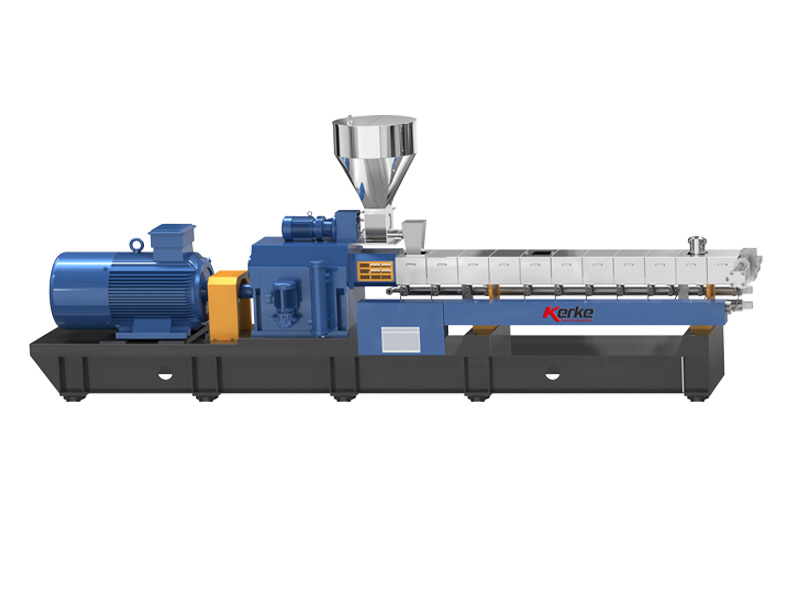
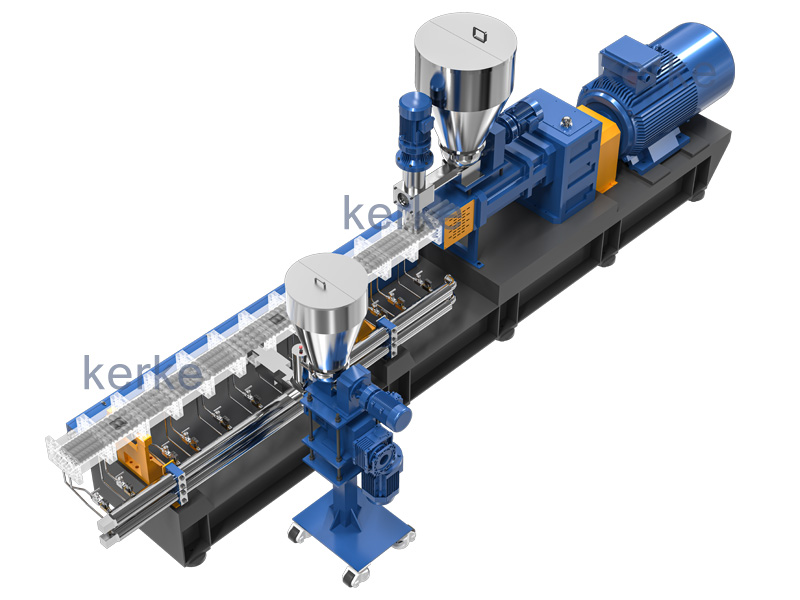
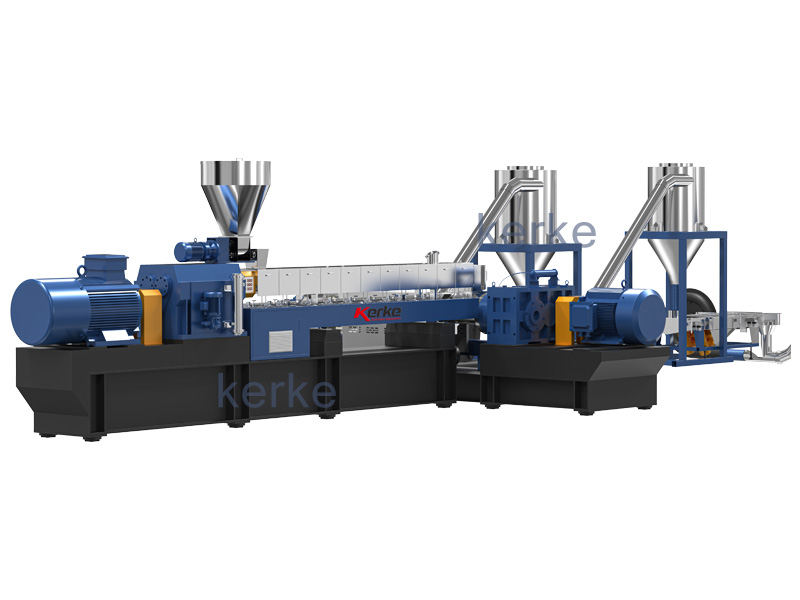
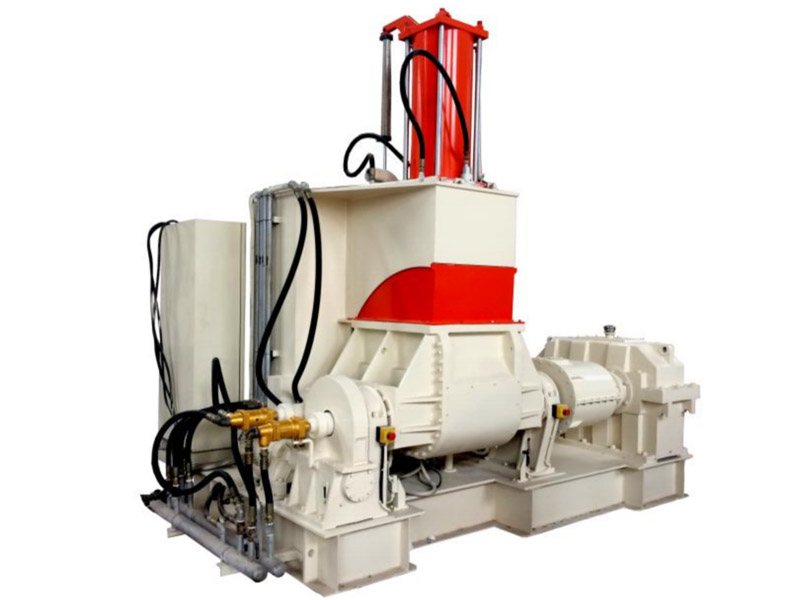
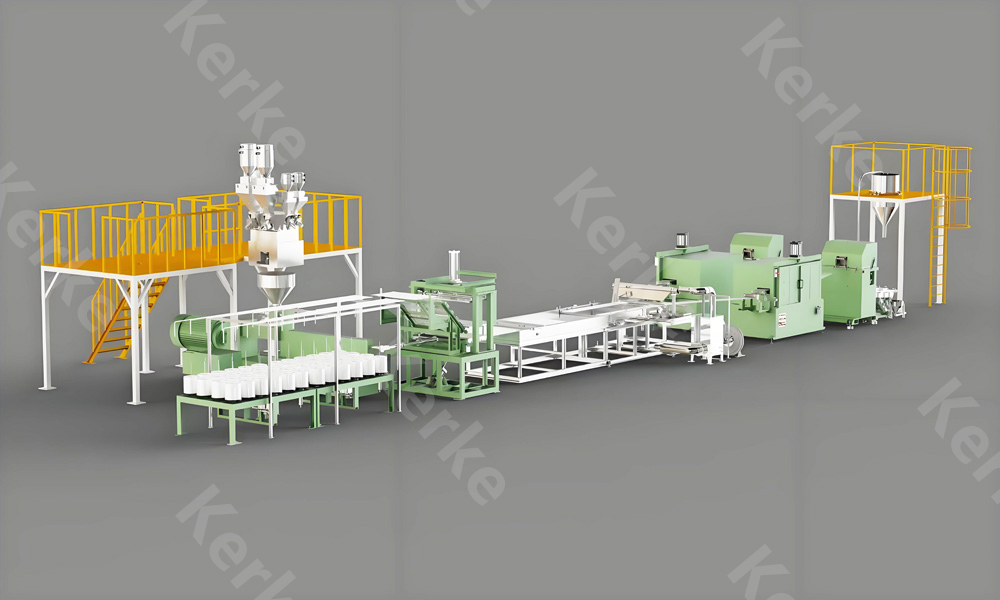
Processing high viscosity plastic materials presents significant challenges for Twin Screw Extruder operators and manufacturers. These materials, including engineering plastics, polymer blends, and highly filled compounds, demand specialized equipment design and precise process control to achieve consistent quality and maintain production efficiency. Kerke Extrusion Equipment Co., Ltd, with over 12 years of experience in manufacturing parallel co-rotating compounding extruders, has developed comprehensive solutions for handling high viscosity materials across diverse industries. This guide explores the technical aspects of high viscosity material processing and how Kerke’s advanced Compounding Extruder technology addresses these demanding applications.
Understanding High Viscosity Material Characteristics
High viscosity plastic materials present unique processing requirements that differ significantly from standard polymer processing. Understanding these characteristics is essential for selecting appropriate equipment and developing effective processing strategies. Kerke’s engineering team has extensive experience processing diverse high viscosity materials across the KTE series Twin Screw Extruder range.
Engineering Plastics Processing
Engineering plastics such as polycarbonate, polyamide, polyphenylene sulfide, and polyether ether ketone exhibit viscosity characteristics that demand specialized processing capabilities. These materials typically have melt viscosities ranging from 1,000 to 100,000 Pa·s, significantly higher than commodity polyethylene or polypropylene. The high viscosity creates substantial resistance to flow, requiring increased mechanical energy input and careful thermal management. Kerke’s Compounding Extruder systems are designed with high torque capabilities and advanced temperature control to handle these demanding materials. The KTE-65D and KTE-75D models, with torque ratings of 2×1530 Nm and 2×2100 Nm respectively, provide the mechanical power needed for effective engineering plastics compounding. Typical power requirements range from 90-110 kW for the KTE-65B to 132-160 kW for the KTE-75B when processing high viscosity engineering plastics.
Fiber-Reinforced Materials
Fiber-reinforced materials including glass fiber, carbon fiber, and natural fiber composites add another layer of complexity to high viscosity processing. The reinforcing fibers dramatically increase melt viscosity while also introducing challenges related to fiber breakage, orientation, and dispersion. Kerke’s Twin Screw Extruder designs incorporate specialized screw configurations that minimize fiber damage while achieving thorough dispersion. The modular screw element system allows precise control over shear intensity to balance dispersion quality against fiber length preservation. Processing glass fiber-reinforced materials typically requires 20-30% higher energy input compared to the base polymer matrix. Kerke’s experience shows that optimal screw L/D ratios for fiber reinforcement applications range from 36:1 to 48:1, providing adequate residence time for fiber wetting and dispersion without excessive fiber breakage.
Highly Filled Compounds
Compounds with high filler loadings, including calcium carbonate filler masterbatch, mineral-filled plastics, and flame retardant formulations, exhibit dramatically increased viscosity compared to neat polymers. Filler loadings of 30-60% by weight are common in many applications, with some specialty materials exceeding 80% filler content. Kerke’s Compounding Extruder systems are specifically designed to handle these demanding formulations. The KTE series extruders feature high torque gearboxes and robust barrel designs capable of withstanding the increased mechanical stresses. Processing costs for highly filled compounds typically run 25-40% higher than unfilled materials due to increased energy consumption and equipment wear. Kerke’s wear-resistant barrel and screw element options significantly extend service life in these abrasive applications, reducing total cost of ownership.
Screw Design for High Viscosity Processing
Screw configuration represents one of the most critical factors in successful high viscosity material processing. The right screw design enables effective material transport, mixing, and thermal management while managing the substantial mechanical demands of viscous materials. Kerke has developed extensive screw design expertise through years of Compounding Extruder applications across diverse high viscosity materials.
Conveying Zone Optimization
The conveying zones in a Twin Screw Extruder must generate sufficient pressure to move high viscosity materials through the barrel while managing the substantial mechanical load. Kerke’s screw designs for high viscosity applications feature conveying elements with appropriate flight depth and pitch to balance conveying efficiency against stress limitations. For extremely high viscosity applications, Kerke often recommends multiple conveying zones with progressively decreasing flight depth to gradually increase pressure. This approach prevents overloading of downstream sections while maintaining adequate conveying capacity. The conveying elements are manufactured from high-strength alloy steels to withstand the increased mechanical stresses. Kerke’s computer-aided screw design optimizes conveying zone geometry based on specific material viscosity profiles and processing requirements.
Mixing Zone Configuration
Effective mixing in high viscosity materials requires substantial shear energy input, which must be carefully balanced against material thermal stability and fiber damage concerns. Kerke’s mixing zone configurations utilize kneading blocks with optimized staggering angles and widths to generate appropriate shear intensity. For high viscosity engineering plastics, Kerke typically recommends wider kneading blocks with moderate staggering to achieve distributive mixing without excessive localized heating. For fiber-reinforced materials, mixing zones are designed to minimize fiber breakage while achieving adequate dispersion. Kerke’s experience shows that mixing zone design can account for 30-50% of overall mixing efficiency in high viscosity applications. The KTE series modular screw system enables precise optimization of mixing zone configuration for each specific application.
Residence Time Management
High viscosity materials require adequate residence time for proper melting and mixing, but excessive residence time leads to thermal degradation. Kerke’s Twin Screw Extruder designs enable precise residence time control through appropriate L/D ratio selection and screw configuration. For most high viscosity engineering plastics, L/D ratios of 36:1 to 48:1 provide optimal balance between residence time and throughput. Kerke’s barrel segmentation with independent temperature zones allows creation of precise thermal profiles that optimize residence time for each processing stage. The KTE-65D with L/D up to 60:1 and the KTE-75D with L/D up to 68:1 provide extended residence time options for particularly demanding applications. Proper residence time management is critical for maintaining product quality while maximizing production efficiency.
Thermal Management Systems
Effective thermal management is absolutely critical for successful high viscosity material processing. These materials require substantial thermal energy to achieve appropriate melt viscosity, but also generate significant mechanical heating during processing. Kerke’s Compounding Extruder systems incorporate advanced thermal management capabilities to maintain precise temperature control under demanding conditions.
Heating Zone Design
High viscosity materials typically require higher processing temperatures compared to commodity polymers. Kerke’s barrel heating systems feature multiple independent zones to create precise thermal profiles along the extruder length. For engineering plastics like polycarbonate and polyamide, processing temperatures typically range from 250-320°C, significantly higher than commodity polymers processed at 180-220°C. The KTE series Twin Screw Extruders feature heating capacities from 5-10 kW for smaller models to 50-80 kW for larger production models. Kerke offers various heater types including ceramic band heaters and cast aluminum heaters optimized for high-temperature operation. The heating zone design enables rapid temperature ramp-up during startup and precise temperature control during steady operation.
Cooling System Integration
Despite requiring substantial heating input, high viscosity materials often generate significant mechanical heat during processing, particularly in mixing zones. Kerke’s Compounding Extruder designs incorporate sophisticated cooling systems to remove this excess heat and maintain optimal processing temperatures. For applications with substantial mechanical heating, Kerke offers water cooling systems with flow rates from 10-50 liters per minute depending on model size. The cooling zones are strategically located downstream of high shear mixing zones where mechanical heat generation is most intense. Kerke’s thermal management control systems include proportional-integral-derivative (PID) controllers with cascaded control between adjacent zones to maintain stable temperature profiles despite varying heat loads.
Temperature Uniformity Control
Maintaining uniform temperature across the material cross-section is challenging with high viscosity materials due to poor thermal conductivity. Kerke’s Twin Screw Extruder designs include features that promote thermal uniformity. The barrel temperature control typically includes multiple zones around the circumference to address radial temperature variations. Screw design incorporates mixing elements that promote thermal mixing and uniformity. For particularly challenging applications, Kerke offers screw and barrel temperature sensors that provide direct measurement of material temperature rather than just barrel temperature. These advanced thermal management capabilities enable processing of temperature-sensitive high viscosity materials with consistent quality.
Drive System Requirements
The drive system provides the mechanical power necessary to process high viscosity materials and must be designed to handle the substantial torque and power requirements. Kerke’s engineering team has developed drive system solutions specifically optimized for high viscosity processing applications across the KTE series Twin Screw Extruder range.
High Torque Gearbox Design
Processing high viscosity materials generates substantial torque demands on the Twin Screw Extruder gearbox. Kerke’s high torque gearbox designs feature reinforced gear construction, improved bearing systems, and enhanced cooling to handle these demanding conditions. The KTE-D series models represent Kerke’s high torque offerings, with torque ratings 40-60% higher than standard models. For example, the KTE-65D delivers 2×1530 Nm compared to 2×860 Nm for the standard KTE-65B. The KTE-75D provides 2×2100 Nm versus 2×1530 Nm for the KTE-75B. These high torque capabilities enable processing of extremely high viscosity materials while maintaining appropriate screw speeds for mixing efficiency. The gearboxes also feature improved thermal management to handle the heat generated under high load conditions.
Power Rating Considerations
High viscosity material processing typically requires increased power input compared to standard polymers. Kerke’s Compounding Extruder power ratings account for these increased requirements. The KTE-65D with main motor power of 110-132 kW provides appropriate power capacity for demanding engineering plastics applications, compared to 90-110 kW for the standard KTE-65B. The KTE-75D with 200-315 kW motor power handles the most demanding high viscosity applications. Kerke’s power selection guidelines typically recommend 20-30% additional power capacity for high viscosity materials compared to standard polymers. This power reserve ensures consistent performance even when material viscosity varies within normal processing ranges.
Speed Control Capabilities
Screw speed significantly influences both mixing efficiency and residence time in high viscosity material processing. Kerke’s Twin Screw Extruder drive systems provide precise speed control across the operating range. The KTE-D series offers maximum screw speeds up to 800 rpm for models like the KTE-75D, providing flexibility to optimize speed for specific applications. Variable frequency drives enable smooth acceleration and deceleration while maintaining speed stability within ±0.5% of setpoint. Advanced control options include torque limiting features that automatically reduce speed if torque approaches safe limits, protecting equipment during startup or process upsets. These speed control capabilities enable optimization of processing parameters for high viscosity materials while ensuring safe and reliable operation.
Feeding Systems for High Viscosity Applications
Feeding systems must deliver high viscosity materials consistently to the Twin Screw Extruder, presenting unique challenges compared to standard materials. Kerke has developed specialized feeding solutions that address these challenges and enable reliable processing of demanding materials.
High Viscosity Melt Feeding
Many high viscosity applications involve feeding molten materials or high viscosity polymers directly to the extruder. Kerke offers specialized melt pumping systems including gear pumps and melt pumps for these applications. These pumps provide positive displacement feeding regardless of material viscosity variations. The pump systems include precise temperature control to maintain optimal melt viscosity and prevent premature solidification. Kerke’s melt feeding systems can handle viscosities up to 100,000 Pa·s and flow rates from 5-2000 kg/hour depending on application requirements. The pump design incorporates hardened components and specialized materials to resist wear from abrasive filled materials.
Viscous Material Handling
Handling viscous materials before feeding presents challenges related to material flow and consistency. Kerke’s feeding systems include heated hoppers and transfer lines to maintain material at appropriate temperature and viscosity. For extremely viscous materials, Kerke offers crammer feeder designs with forced feeding mechanisms that ensure consistent material delivery to the extruder. The feeding systems include appropriate insulation and thermal management to prevent material solidification in transfer lines. Kerke can provide complete material handling systems from storage through feeding, ensuring consistent material properties reaching the Twin Screw Extruder.
Gravimetric Control for Precision
High viscosity applications often require precise ratio control between different components, making gravimetric feeding essential. Kerke’s loss-in-weight feeding systems provide accurate material metering regardless of material viscosity variations. These systems automatically adjust feeding rates to maintain target throughput ratios. The feeding control system integrates with the overall Compounding Extruder control for coordinated operation. Advanced options include automatic ratio adjustments based on process parameters such as melt viscosity or temperature. These precise control capabilities enable production of sophisticated high viscosity compounds with exact specifications.
Pressure Management and Venting
High viscosity materials generate substantial processing pressures that must be managed appropriately to ensure safe and reliable operation. Kerke’s Compounding Extruder designs incorporate advanced pressure management and venting capabilities to handle these demanding conditions.
Pressure Profile Control
The pressure profile along the extruder length significantly impacts mixing efficiency and product quality in high viscosity processing. Kerke’s Twin Screw Extruder designs enable precise pressure profile control through appropriate screw configuration and back pressure management. The modular screw system allows creation of multiple pressure zones with different characteristics along the extruder length. Kerke offers melt pressure sensors that provide real-time monitoring of pressure at critical locations. Advanced control systems can automatically adjust screw speed or feeder rates to maintain target pressure profiles. This precise pressure management enables optimization of mixing and melting processes while preventing equipment overload.
Vacuum Venting Systems
Many high viscosity materials, particularly engineering plastics and reactive compounds, contain volatiles or reaction byproducts that must be removed during processing. Kerke’s Compounding Extruder systems incorporate vacuum venting ports at strategic locations along the barrel. These venting ports feature appropriate vacuum levels typically ranging from 500-950 mbar depending on application requirements. The venting systems include condensation and filtration to capture volatiles and prevent vacuum pump contamination. For applications with substantial volatile generation, Kerke offers multiple venting zones with separate vacuum pumps. These venting capabilities are essential for processing materials with moisture content or those that generate volatiles during processing.
Back Pressure Regulation
Appropriate back pressure management is critical for mixing efficiency and product quality in high viscosity applications. Kerke’s Twin Screw Extruder systems incorporate various back pressure regulation mechanisms including die restrictions, melt pumps, and adjustable valve systems. These mechanisms enable precise control over pressure in the mixing zones while managing overall pressure buildup through the system. Advanced control options include automatic back pressure adjustment based on material viscosity measurements or other process parameters. Proper back pressure regulation enables optimization of mixing and dispersion while preventing excessive pressure that could damage equipment or cause safety concerns.
Cost Analysis and Economic Considerations
Processing high viscosity materials involves additional costs compared to standard polymers, but these costs must be evaluated against the premium value of the final products. Kerke helps customers understand the complete cost structure and optimize operations for maximum profitability.
Energy Consumption Analysis
High viscosity material processing typically requires significantly higher energy input compared to commodity polymers. Kerke’s experience shows energy consumption increases of 30-60% when processing high viscosity engineering plastics compared to standard polyethylene or polypropylene. For example, a KTE-65B Twin Screw Extruder processing polycarbonate typically consumes 90-110 kW versus 55-75 kW for commodity polymers. This increased energy consumption represents substantial operating cost, with electricity costs potentially increasing by $20,000-$50,000 annually depending on production volume and local electricity rates. Kerke’s energy-efficient drive systems and optimized thermal management help minimize these costs while maintaining processing quality.
Equipment Wear and Maintenance
High viscosity materials, particularly those containing abrasive fillers, accelerate equipment wear and increase maintenance requirements. Kerke offers wear-resistant components including bimetallic barrels, ceramic-coated screw elements, and specialized surface treatments that extend service life. While these premium components increase initial equipment cost by 20-40%, they can double or triple service life in demanding applications. Maintenance costs for high viscosity processing typically represent 4-8% of initial equipment investment annually, compared to 2-4% for standard materials. Kerke’s predictive maintenance programs can reduce these costs by identifying potential issues before they cause equipment failure.
Production Efficiency Optimization
Despite higher operating costs, high viscosity materials often command premium prices in the market that justify the additional processing costs. Kerke helps customers optimize production efficiency to maximize profitability. Throughput optimization using appropriate screw configurations and processing parameters can increase production rates by 15-25% compared to suboptimal operation. Quality improvements from proper processing reduce scrap rates and customer returns. Kerke’s process optimization services typically identify efficiency gains worth $30,000-$100,000 annually depending on production volume and material value. These improvements can offset the higher processing costs and make high viscosity material processing highly profitable.
Kerke Solutions for High Viscosity Processing
Kerke Extrusion Equipment has developed comprehensive solutions specifically for high viscosity material processing based on extensive experience serving diverse industries worldwide. With 2000+ machines running in 70+ countries, Kerke understands the unique challenges different high viscosity applications present.
KTE Series High Viscosity Models
Kerke’s KTE-D series Twin Screw Extruders are specifically designed for high viscosity processing demands. The KTE-65D with 62.4 mm screw diameter, L/D up to 60:1, and torque of 2×1530 Nm handles demanding engineering plastics applications. The KTE-75D with 71 mm screw diameter, L/D up to 68:1, and torque of 2×2100 Nm provides even greater capacity for the most challenging materials. These models feature high torque gearboxes, reinforced construction, and enhanced thermal management optimized for high viscosity operation. Prices range from $45,000-$65,000 for the KTE-65D and $55,000-$75,000 for the KTE-75D, representing excellent value given the enhanced capabilities.
Application-Specific Configurations
Kerke works closely with customers to develop application-specific configurations optimized for their particular high viscosity materials. This includes custom screw designs, specialized feeding systems, and tailored thermal management solutions. Kerke has experience serving industries including automotive components, electrical insulation, medical devices, and industrial products that require high viscosity material processing. Each application receives dedicated engineering attention to ensure the Compounding Extruder configuration delivers optimal performance for the specific material and product requirements.
Process Development Support
Beyond equipment supply, Kerke provides comprehensive process development support for high viscosity applications. This includes material testing and characterization in Kerke’s laboratory, screw configuration optimization, and process parameter development. Kerke’s technical team can assist with scale-up from laboratory development to full production. This support significantly reduces development time and ensures successful commercialization of high viscosity material products. The investment in process development support typically pays for itself through faster time to market and optimized processing parameters.
Conclusion
Processing high viscosity plastic materials demands specialized equipment design, precise process control, and comprehensive understanding of material behavior. Kerke Extrusion Equipment’s 12+ years of experience and extensive product portfolio provide manufacturers with the solutions needed to successfully process these challenging materials. Whether working with engineering plastics, fiber-reinforced compounds, or highly filled formulations, Kerke offers Twin Screw Extruder technology specifically optimized for high viscosity applications. The combination of high torque gearboxes, advanced thermal management, specialized screw designs, and application-specific configurations enables manufacturers to produce premium high viscosity materials with excellent quality and efficiency. Contact Kerke today to discuss your specific high viscosity processing requirements and discover how advanced Compounding Extruder technology can enhance your capabilities and profitability.