Introduction
Calcium carbonate filler masterbatch has become one of the most widely used additive solutions in the plastics industry, offering cost-effective reinforcement and functional modification for polymer materials. As manufacturers seek ways to reduce production costs without compromising quality, calcium carbonate (CaCO₃) masterbatch has emerged as an essential ingredient in numerous plastic applications. This comprehensive guide explores the properties, applications, production processes, market trends, and cost analysis of calcium carbonate filler masterbatch, with a focus on its production using advanced twin screw extruders from Kerke Extrusion Equipment.
Calcium carbonate filler masterbatch consists of high-concentration calcium carbonate particles dispersed in a carrier resin matrix, typically polyethylene (PE), polypropylene (PP), or other compatible polymers. This formulation allows plastic processors to easily incorporate calcium carbonate into their products, achieving desired properties while maintaining processing efficiency. With its exceptional cost-performance ratio, calcium carbonate masterbatch continues to gain market share across various industries, from packaging to construction materials.
Properties of Calcium Carbonate Filler Masterbatch
Understanding the properties of calcium carbonate filler masterbatch is essential for selecting the right formulation for specific applications. The unique characteristics of calcium carbonate particles and their interaction with polymer matrices provide numerous benefits for plastic products.
Physical and Mechanical Properties
Calcium carbonate filler masterbatch offers a balance of physical and mechanical properties that make it suitable for a wide range of applications. The key properties include:
High hardness and rigidity enhancement: Calcium carbonate particles provide significant stiffness improvement to polymer matrices, particularly in polyolefin-based materials. This property is valuable for products requiring dimensional stability and load-bearing capacity.
Excellent impact resistance: Properly formulated calcium carbonate masterbatch can improve impact resistance in certain polymer systems, especially when combined with appropriate compatibilizers. This benefit is particularly important for applications subject to mechanical stress or drop impact.
Low moisture absorption: Calcium carbonate exhibits low moisture absorption characteristics, making it suitable for applications where moisture resistance is critical. This property helps maintain consistent product properties even in high-humidity environments.
Thermal Properties
The thermal characteristics of calcium carbonate filler masterbatch contribute to its processing behavior and performance in end-use applications:
High thermal stability: Calcium carbonate maintains its structural integrity at elevated temperatures, making it suitable for processing temperatures typical for most thermoplastics. This stability prevents decomposition or degradation during extrusion and molding processes.
Heat deflection temperature improvement: Incorporating calcium carbonate can enhance the heat deflection temperature of certain polymers, allowing products to maintain structural integrity at higher temperatures during use.
Insulating properties: Calcium carbonate acts as a thermal insulator, contributing to improved heat retention properties in insulated applications such as building materials and packaging.
Chemical Properties
Calcium carbonate’s chemical characteristics play a crucial role in its compatibility with various polymer systems and environmental performance:
Chemical inertness: Calcium carbonate is chemically inert in most environments, making it compatible with a wide range of polymer matrices and processing conditions. This inertness ensures long-term product stability and performance.
Acid sensitivity: While generally inert, calcium carbonate reacts with strong acids, producing carbon dioxide gas. This property must be considered for applications involving acidic environments or contact with acidic substances.
UV resistance: Calcium carbonate provides moderate UV resistance, helping protect polymer matrices from UV degradation. For applications requiring high UV resistance, additional UV stabilizers may be necessary.
Processing Properties
The processing behavior of calcium carbonate filler masterbatch significantly affects production efficiency and product quality:
Improved flow properties: Calcium carbonate particles can enhance melt flow characteristics in certain polymer systems, improving processing efficiency and reducing energy consumption during extrusion and molding.
Wear considerations: High-concentration calcium carbonate formulations can increase wear on processing equipment, particularly screw elements and barrel components. Proper equipment design and material selection are essential for long-term production with abrasive fillers.
Dispersion characteristics: Achieving uniform dispersion of calcium carbonate particles is critical for consistent product performance. Modern twin screw extruders with advanced mixing systems ensure excellent particle distribution throughout the polymer matrix.
Applications of Calcium Carbonate Filler Masterbatch
Calcium carbonate filler masterbatch finds applications across numerous industries due to its versatility, cost-effectiveness, and performance-enhancing properties. The following sections explore key application areas and specific uses within each industry.
Packaging Industry
The packaging industry represents one of the largest consumers of calcium carbonate filler masterbatch, with applications in both rigid and flexible packaging solutions:
Flexible packaging films: Calcium carbonate masterbatch improves stiffness and tear resistance in flexible films while reducing material costs. The enhanced opacity properties also provide good barrier characteristics for light-sensitive products.
Rigid containers and closures: In injection-molded containers and closures, calcium carbonate enhances dimensional stability and reduces warping during cooling. The improved surface properties also enhance printability and aesthetic appeal.
Woven sacks and bags: Calcium carbonate masterbatch increases the stiffness and load-bearing capacity of woven polypropylene sacks, making them suitable for heavy-duty packaging applications such as cement, fertilizers, and grains.
Construction Materials
Calcium carbonate filler masterbatch plays a significant role in construction materials, contributing to both performance and cost-effectiveness:
PVC pipes and profiles: Calcium carbonate improves rigidity and impact resistance in PVC pipes and profiles, while also enhancing thermal stability during processing. This combination makes it an ideal additive for plumbing systems and window frames.
Polypropylene construction components: In PP-based construction materials, calcium carbonate enhances dimensional stability and weather resistance, making it suitable for applications such as siding, decking, and fencing.
Thermoplastic olefin (TPO) roofing materials: Calcium carbonate filler masterbatch provides UV resistance and dimensional stability to TPO roofing membranes, extending their service life in outdoor applications.
Automotive Industry
The automotive industry utilizes calcium carbonate filler masterbatch in various interior and exterior components:
Interior trim components: Calcium carbonate enhances stiffness and scratch resistance in interior trim parts such as door panels, dashboard components, and console parts. The improved dimensional stability also reduces warping during temperature fluctuations.
Under-the-hood components: In certain under-the-hood applications, calcium carbonate masterbatch provides heat resistance and dimensional stability, particularly in polypropylene-based components such as battery housings and coolant reservoirs.
Bumper systems: Calcium carbonate can be used in bumper systems to improve stiffness and impact resistance, often in combination with other impact modifiers for optimal performance.
Consumer Goods
Calcium carbonate filler masterbatch finds numerous applications in consumer goods, enhancing performance while reducing production costs:
Household appliances: In appliance components such as washing machine drums, refrigerator liners, and air conditioning housings, calcium carbonate improves dimensional stability and impact resistance.
Toys and recreational products: Calcium carbonate masterbatch provides cost-effective stiffness enhancement in plastic toys and recreational equipment, meeting safety standards while maintaining durability.
Furniture components: In plastic furniture components, calcium carbonate enhances rigidity and scratch resistance, extending product lifespan and improving aesthetic appeal.
Production Process of Calcium Carbonate Filler Masterbatch
The production of high-quality calcium carbonate filler masterbatch requires precise control over formulation development, processing parameters, and quality assurance. This section outlines the complete production process, from raw material selection to finished product packaging.
Raw Material Selection
Quality production begins with careful selection of raw materials, including calcium carbonate powder, carrier resins, and additives:
Calcium carbonate powder selection: The choice of calcium carbonate grade significantly affects masterbatch properties. Factors to consider include particle size (typically 0.5-10 micrometers), particle shape (ground vs. precipitated), surface treatment, and purity. High-purity calcium carbonate with consistent particle size distribution is essential for uniform product performance.
Carrier resin selection: The carrier resin must be compatible with both the calcium carbonate particles and the target application polymer. Polyethylene (PE) and polypropylene (PP) are the most common carrier resins, with linear low-density polyethylene (LLDPE) offering excellent compatibility with a wide range of polyolefin applications.
Additive system design: Compatibilizers such as maleic anhydride grafted polyolefins are essential for improving interfacial adhesion between calcium carbonate particles and polymer matrices. Additional additives may include processing aids, thermal stabilizers, and colorants, depending on specific application requirements.
Formulation Development
Formulation development involves optimizing the ratio of components to achieve desired properties while maintaining processing efficiency and cost-effectiveness:
Filler loading optimization: Calcium carbonate concentration typically ranges from 40% to 80% in masterbatch formulations, depending on application requirements. Higher filler loadings provide greater cost savings but may compromise certain mechanical properties and processability.
Compatibilizer dosage optimization: The amount of compatibilizer depends on filler loading and particle size. Typical compatibilizer concentrations range from 2% to 8% of the total formulation, with higher dosages required for high filler loadings and finer particle sizes.
Additive balance: The formulation must balance various additives to achieve optimal performance without compromising processing stability. Thermal stabilizers and processing aids may be necessary to prevent degradation during extrusion and ensure smooth processing.
Twin Screw Extrusion Process
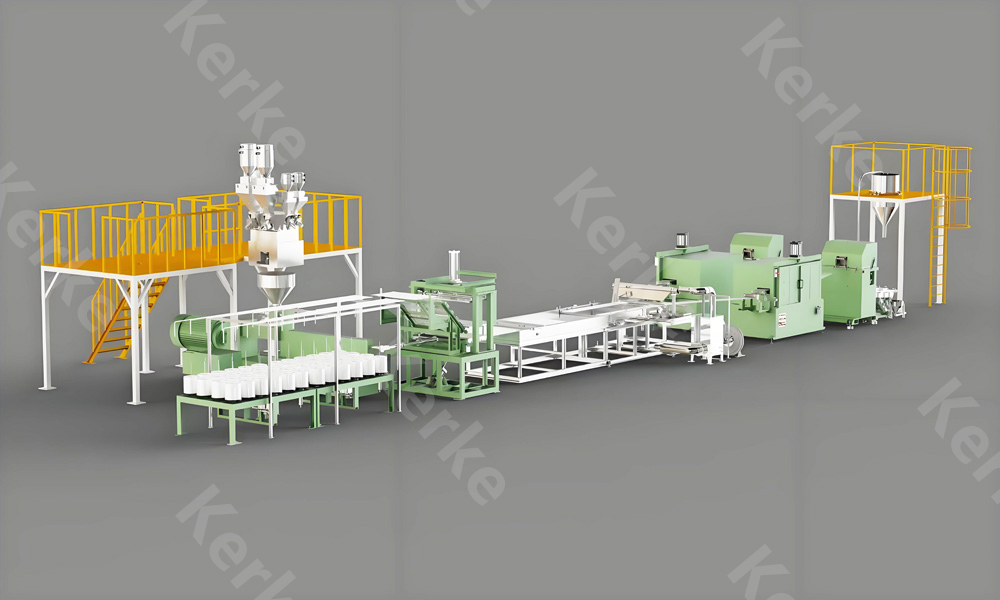
Twin screw extrusion represents the industry standard for calcium carbonate masterbatch production, offering excellent mixing capabilities and process control. The production process involves several key stages:
Material preparation: Raw materials are pre-dried to appropriate moisture levels, typically below 0.05%, to prevent hydrolysis and processing defects. Calcium carbonate powder may require drying at 100-120°C for 2-4 hours depending on initial moisture content.
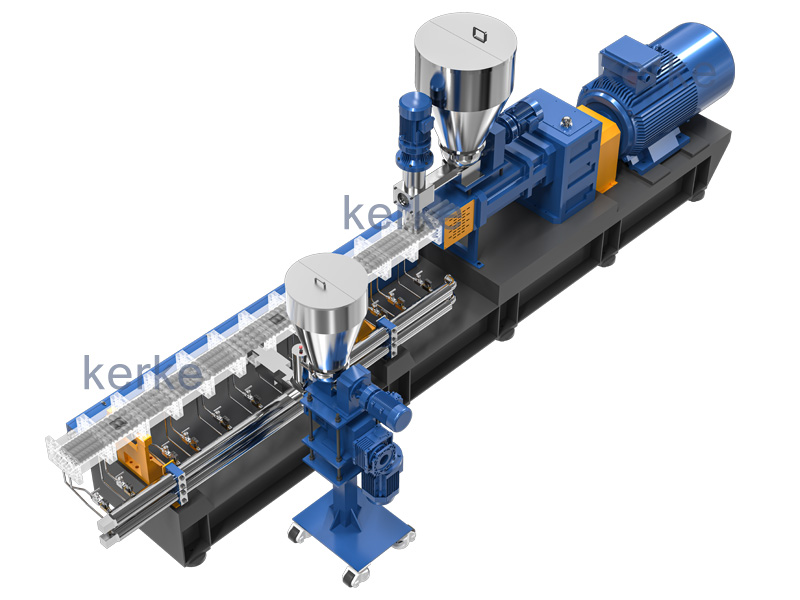
Precision feeding: Gravimetric feeding systems ensure accurate proportioning of all components, maintaining consistent formulation ratios throughout production runs. Main resin and calcium carbonate are typically fed through the main hopper, while additives may be introduced through side feeders.
Melt compounding: In the twin screw extruder, materials undergo melting, mixing, and dispersion stages. The intermeshing screw design provides high shear forces, ensuring uniform dispersion of calcium carbonate particles throughout the polymer matrix.
Vacuum degassing: A vacuum degassing stage removes volatile compounds and moisture from the melt, improving product quality and reducing processing defects. Vacuum levels typically range from 20-30 mbar for optimal degassing efficiency.
Pelletizing: The molten masterbatch is extruded through a die and cut into uniform pellets using a water ring pelletizer or strand pelletizer. Pellet size typically ranges from 2-4 mm in diameter with consistent length-to-diameter ratios.
Quality Control and Testing
Rigorous quality control is essential to ensure consistent performance of calcium carbonate filler masterbatch throughout production batches:
Particle size analysis: Laser diffraction analysis verifies calcium carbonate particle size distribution, ensuring consistency between batches and meeting specification requirements.
Density measurement: Density testing confirms filler loading concentration and ensures formulation consistency. This test is typically performed using a pycnometer or density gradient column.
Mechanical property testing: Tensile strength, elongation at break, and impact resistance tests verify that the masterbatch meets performance requirements for target applications.
Melt flow index (MFI) testing: MFI measurement ensures consistent processability, helping customers predict processing behavior in their specific manufacturing operations.
Kerke Extrusion Equipment for Calcium Carbonate Masterbatch Production
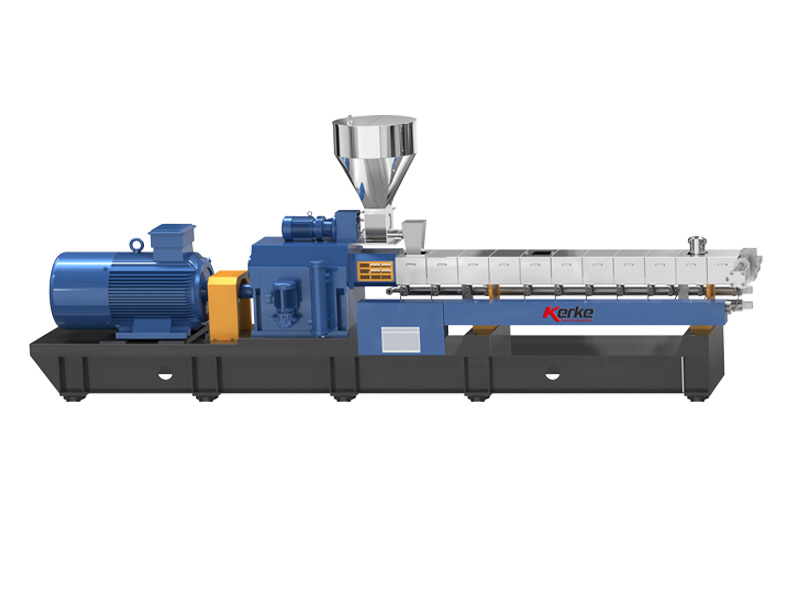
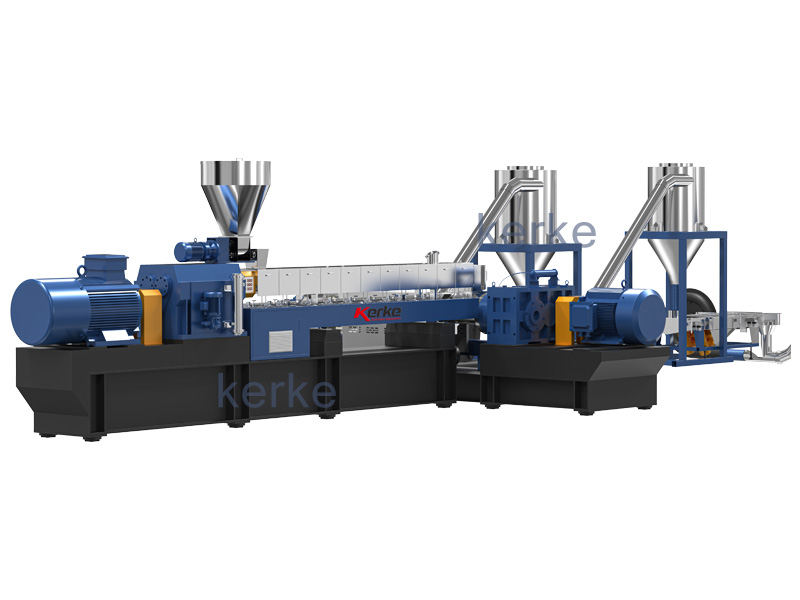
Kerke Extrusion Equipment offers advanced twin screw extruders specifically designed for efficient production of calcium carbonate filler masterbatch. The KTE Series extruders provide the precision, reliability, and processing capabilities required for high-quality masterbatch production.
KTE Series Twin Screw Extruders
The KTE Series parallel twin screw extruders represent the state-of-the-art in masterbatch production technology, offering exceptional compounding performance and process control:
High torque design: The extruders feature robust gearboxes with high torque capacity, enabling processing of high-filler-loading formulations with ease. This capability is particularly important for calcium carbonate masterbatch production where filler loadings can reach 80% or more.
Advanced screw design: The segmented screw configuration allows for process optimization, with specialized mixing elements ensuring uniform dispersion of calcium carbonate particles throughout the polymer matrix. This design minimizes agglomeration and ensures consistent product quality.
Precise temperature control: Multi-zone temperature control systems with accurate sensors and heating/cooling capabilities maintain optimal processing temperatures, preventing thermal degradation of components and ensuring consistent melt viscosity.
Key Equipment Features for Calcium Carbonate Masterbatch
Kerke extruders incorporate several features specifically designed to address the challenges of calcium carbonate masterbatch production:
Abrasion-resistant components: Screw elements and barrel liners are coated with wear-resistant materials to withstand the abrasive nature of calcium carbonate particles. This extends equipment lifespan and maintains processing efficiency over time.
Efficient feeding systems: Precision gravimetric feeding systems ensure accurate proportioning of all components, even at high filler loadings. This maintains consistent formulation ratios and product quality throughout production runs.
Integrated process monitoring: Advanced control systems provide real-time monitoring of key process parameters, including temperature, pressure, screw speed, and feed rates. This data helps operators optimize processing conditions and identify potential issues early.
Equipment Cost and Investment Analysis
Investment in Kerke extrusion equipment for calcium carbonate masterbatch production represents a significant capital expenditure, offering excellent long-term returns through improved efficiency and product quality:
Base equipment cost: Kerke KTE Series extruders range in price from $280,000 to $850,000, depending on model size and specific features. Models with larger screw diameters (e.g., KTE-75 and KTE-95) offer higher production capacities but require greater initial investment.
Auxiliary equipment investment: Complete production lines require additional equipment including feeding systems, drying equipment, pelletizers, and packaging systems. These typically add 40% to 60% to the base extruder cost, depending on level of automation and production capacity.
Operating cost analysis: The operating costs for calcium carbonate masterbatch production include raw materials, energy consumption, labor, and maintenance. Energy costs typically represent 15-25% of total production costs, while raw materials account for 60-75% of total expenses.
Cost Analysis and Market Pricing
Understanding the cost structure and market pricing of calcium carbonate filler masterbatch is essential for both producers and end-users. This section provides detailed insights into cost components and market price trends.
Production Cost Structure
The production cost of calcium carbonate filler masterbatch includes several components, each contributing to the final product price:
Raw material costs: Raw materials typically account for 60-75% of total production costs. Calcium carbonate powder represents 35-50% of total raw material costs, depending on filler loading and powder grade. Carrier resins and additives make up the remaining raw material expenses.
Energy costs: Energy consumption during extrusion and drying processes represents 15-25% of total production costs. The specific energy consumption varies depending on filler loading, equipment efficiency, and process conditions.
Labor and overhead costs: Labor costs typically account for 8-15% of total production costs, with variations depending on production volume, automation level, and local labor rates. Overhead costs including maintenance, utilities, and administrative expenses add 5-12% to total costs.
Market Pricing Trends
Market prices for calcium carbonate filler masterbatch vary based on formulation specifications, filler loading, and order quantity:
Standard formulation pricing: Standard calcium carbonate masterbatch with 60-70% filler loading typically ranges from $1.20 to $1.80 per kilogram in bulk quantities. Prices are lower for higher filler loading formulations, often as low as $0.90 per kilogram for 80% loading grades.
Specialized formulation pricing: Specialized formulations with surface-treated calcium carbonate, high-purity grades, or unique additive systems command higher prices, ranging from $1.80 to $3.20 per kilogram depending on specific characteristics.
Regional price variations: Market prices vary by region due to differences in raw material costs, transportation expenses, and local market conditions. North American and European markets typically have higher prices ($1.50-$2.50/kg) compared to Asian markets ($0.90-$1.60/kg).
Return on Investment Analysis
Investment in calcium carbonate masterbatch production offers attractive returns for manufacturers operating at sufficient scale:
Break-even analysis: The break-even point for calcium carbonate masterbatch production typically ranges from 12-24 months, depending on production volume, initial investment, and market conditions. Higher production volumes achieve break-even faster due to economies of scale.
Profit margin analysis: Gross profit margins for calcium carbonate masterbatch production typically range from 25-40%, with net profit margins of 8-18% after accounting for all expenses. Specialized formulations often yield higher profit margins due to reduced competition and higher price points.
Cost-saving potential for end-users: For plastic processors, switching to calcium carbonate masterbatch can reduce raw material costs by 20-40% compared to using virgin resins alone. This significant cost saving often justifies the initial investment in formulation development and processing optimization.
Market Trends and Future Outlook
The calcium carbonate filler masterbatch market continues to evolve, driven by technological advancements, regulatory changes, and shifting consumer preferences. Understanding current market trends is essential for strategic decision-making and long-term business planning.
Current Market Size and Growth
The global calcium carbonate filler masterbatch market has experienced steady growth in recent years, with current market size estimated at approximately 8.5 million metric tons (MT) in 2025. The market is projected to grow at a compound annual growth rate (CAGR) of 5.2% from 2025 to 2030, reaching approximately 11.2 million MT by the end of the forecast period.
Asia-Pacific represents the largest regional market, accounting for 55-60% of global consumption, driven by strong manufacturing growth in China, India, and Southeast Asian countries. North America and Europe follow, each representing approximately 15-20% of global market share, with steady growth driven by packaging and construction sectors.
Emerging Trends in Calcium Carbonate Masterbatch
Several key trends are shaping the future of the calcium carbonate masterbatch market:
High-filler-loading formulations: There is increasing demand for high-filler-loading formulations (70-85% calcium carbonate content) as manufacturers seek greater cost savings and sustainability benefits. These formulations require advanced processing technologies and specialized compatibilizer systems to maintain performance.
Nanoscale calcium carbonate applications: Nanoscale calcium carbonate particles offer enhanced mechanical properties and surface characteristics, opening new application possibilities in advanced materials. These nanoparticles improve barrier properties, flame retardancy, and optical performance in plastic products.
Surface modification technologies: Advanced surface treatment techniques using coupling agents and compatibilizers continue to improve the compatibility between calcium carbonate particles and polymer matrices. This enables higher filler loadings while maintaining or even improving mechanical properties.
Environmental and Regulatory Considerations
Environmental concerns and regulatory requirements are increasingly influencing the calcium carbonate masterbatch market:
Sustainability initiatives: Calcium carbonate’s natural origin and low environmental impact make it an attractive choice for sustainable plastic products. The industry is exploring ways to increase utilization of recycled calcium carbonate and improve production process efficiency.
Regulatory compliance: While generally considered safe, calcium carbonate masterbatch formulations must comply with regional regulations regarding heavy metal content, volatile organic compounds (VOCs), and food contact approvals. Compliance with standards such as FDA regulations and EU REACH is essential for market access.
Circular economy adoption: The industry is moving toward circular economy models, exploring ways to recycle calcium carbonate-containing plastic products and recover valuable materials for reuse in new masterbatch formulations.
Maintenance and Troubleshooting
Proper maintenance of processing equipment and proactive troubleshooting are essential for consistent calcium carbonate masterbatch production. This section addresses common equipment maintenance practices and troubleshooting guidelines.
Equipment Maintenance Best Practices
Regular maintenance ensures optimal equipment performance and extends machinery lifespan, particularly when processing abrasive calcium carbonate particles:
Wear component inspection: Screw elements, barrel liners, and die components should be regularly inspected for signs of wear. Abrasion-resistant coatings and specialized materials can significantly extend component lifespan in calcium carbonate processing.
Lubrication management: Proper lubrication of gearboxes, bearings, and drive systems is critical for maintaining equipment performance. Regular oil analysis and lubricant replacement according to manufacturer recommendations prevent premature wear and equipment failure.
Filter system maintenance: Regular cleaning and replacement of melt filters prevent contamination buildup and maintain consistent melt quality. This is particularly important when processing calcium carbonate, which can release fine particles that may clog filters over time.
Common Processing Issues and Solutions
Calcium carbonate masterbatch production may encounter various processing challenges that require prompt identification and resolution:
Uneven filler dispersion: Insufficient mixing or inadequate compatibilizer dosage can cause uneven filler distribution. Solutions include optimizing screw configuration with additional mixing elements, increasing compatibilizer concentration, or adjusting processing parameters such as screw speed and temperature profile.
Extruder wear and reduced throughput: Abrasive calcium carbonate particles accelerate equipment wear, reducing extrusion efficiency over time. Implementing wear-resistant components, optimizing processing conditions, and performing regular equipment inspections help mitigate this issue.
Melt temperature variations: Inconsistent melt temperature can cause processing instability and product quality variations. Solutions include verifying temperature sensor calibration, optimizing temperature profile settings, and ensuring proper cooling system operation.
FAQ
What is the typical filler loading range for calcium carbonate masterbatch?
Calcium carbonate filler masterbatch typically contains 40% to 80% calcium carbonate powder, with most formulations ranging between 60% and 75% filler loading. The specific filler loading depends on application requirements and desired cost-performance balance.
How does calcium carbonate masterbatch affect polymer processing?
Calcium carbonate masterbatch generally improves melt flow properties in polyolefin systems, reducing energy consumption during processing. However, high filler loadings may increase melt viscosity and require adjustments to processing parameters or equipment configuration.
What is the shelf life of calcium carbonate filler masterbatch?
Properly stored calcium carbonate masterbatch has a shelf life of 12-24 months when kept in a dry, cool environment. Exposure to moisture or high temperatures can reduce product performance over time.
Can calcium carbonate masterbatch be used in food contact applications?
Yes, calcium carbonate masterbatch can be formulated for food contact applications by using food-grade raw materials and complying with relevant regulations such as FDA 21 CFR or EU 10/2011. Specialized formulations with low heavy metal content and approved additives are available for these applications.
How does calcium carbonate compare to other filler materials?
Calcium carbonate offers an excellent cost-performance ratio compared to other filler materials such as talc, kaolin, or glass fibers. While other fillers may provide specific performance advantages, calcium carbonate remains the most cost-effective option for many applications.
Conclusion
Calcium carbonate filler masterbatch has established itself as a versatile, cost-effective additive solution across numerous industries. Its unique combination of physical properties, processing benefits, and cost advantages make it an essential component in modern plastic manufacturing.
As the industry continues to evolve, technological advancements in formulation development and processing equipment will further enhance the performance and sustainability of calcium carbonate masterbatch. Kerke Extrusion Equipment remains at the forefront of these developments, providing advanced twin screw extruders specifically designed for efficient production of high-quality calcium carbonate masterbatch.
With its significant market growth potential and ongoing innovation, calcium carbonate filler masterbatch will continue to play a critical role in meeting the demands of a wide range of applications, from packaging to construction materials. Understanding its properties, production processes, and market trends is essential for businesses seeking to leverage this versatile material in their products.