Introduction
Talc filler masterbatch represents one of the most important and widely used reinforced compounds in the plastics industry, offering exceptional performance enhancement capabilities across numerous applications. As manufacturers increasingly demand materials with superior mechanical properties, dimensional stability, and cost-effectiveness, talc has emerged as a critical additive for polymer modification. This comprehensive guide explores the features, applications, production processes, and economic analysis of talc filler masterbatch, with particular focus on production using advanced twin screw extruders from Kerke Extrusion Equipment.
The unique properties of talc, including its platelet structure, high aspect ratio, and excellent thermal stability, make it an ideal reinforcement filler for various polymer systems. Talc filler masterbatch consists of high-concentration talc particles uniformly dispersed in a carrier resin matrix, enabling easy incorporation of this reinforcing agent into plastic products. The resulting materials exhibit improved stiffness, dimensional stability, and heat resistance, making them suitable for demanding industrial applications.
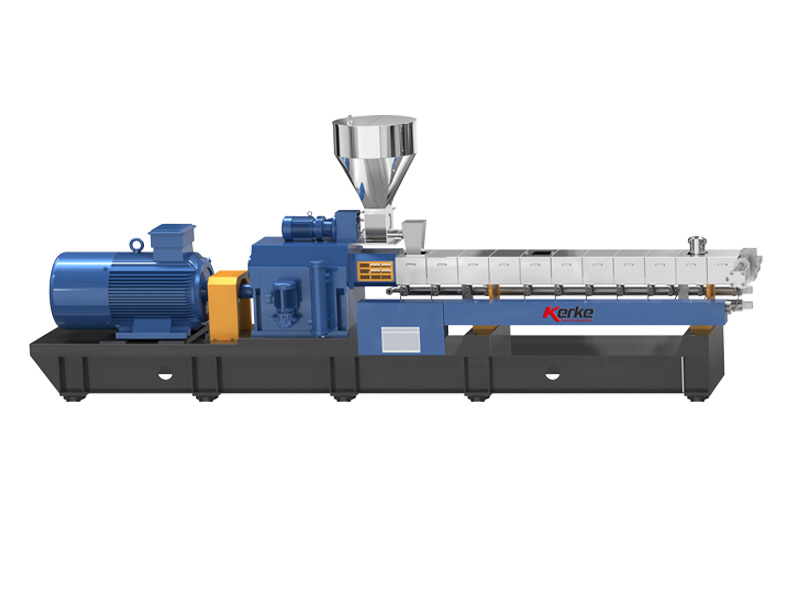
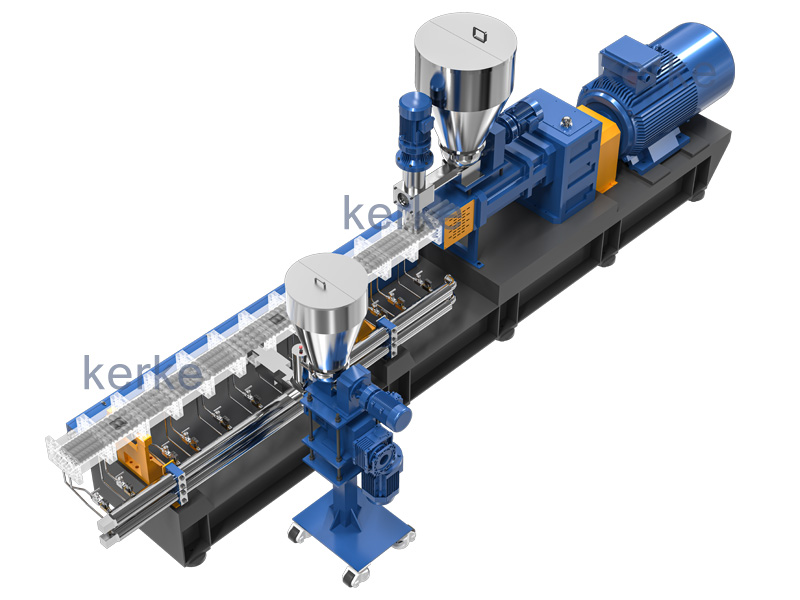
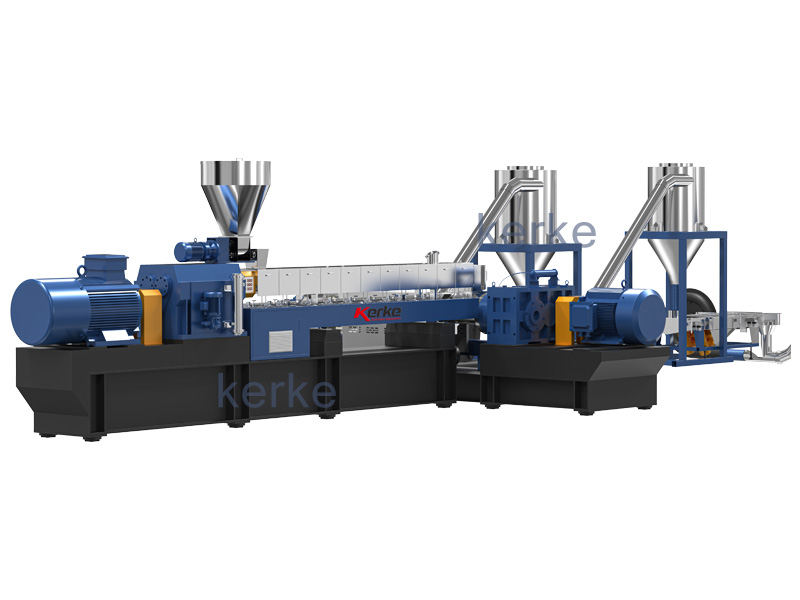
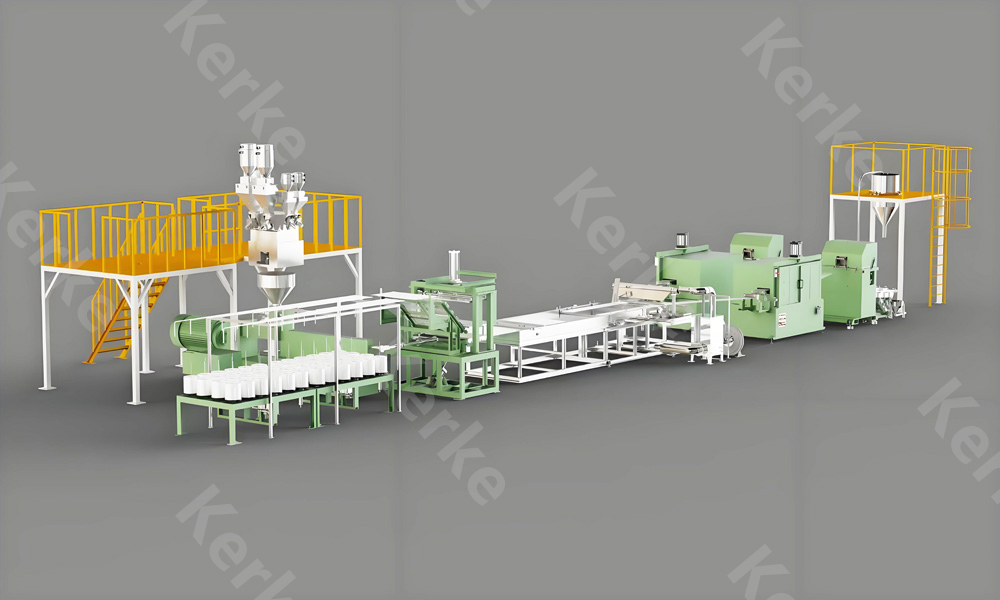
Modern twin screw extruders have revolutionized the production of talc filler masterbatch, enabling precise control over particle dispersion and distribution. Kerke Extrusion Equipment offers specialized compounding extruders designed to handle the unique challenges associated with talc processing, ensuring consistent product quality and optimal performance in end-use applications.
Properties and Characteristics of Talc Filler Masterbatch
Understanding the fundamental properties of talc filler masterbatch is essential for selecting appropriate formulations for specific applications. The unique characteristics of talc particles and their interaction with polymer matrices provide numerous performance benefits.
Physical Properties
Talc filler masterbatch exhibits distinctive physical properties that contribute to its performance as a reinforcing compound in polymer systems:
High aspect ratio structure: Talc particles possess a platelet-like structure with high aspect ratios, typically ranging from 5:1 to 20:1. This platelet structure provides excellent reinforcement properties, particularly in stiffness enhancement and dimensional stability improvement. The high aspect ratio also contributes to barrier properties in packaging applications.
Softness and lubricity: Despite its reinforcing capabilities, talc maintains inherent softness and lubricity, which can improve processing characteristics in certain applications. This property reduces wear on processing equipment compared to more abrasive fillers such as glass fibers or certain mineral fillers.
Platelet alignment: During processing, talc platelets tend to align in the flow direction, creating anisotropic properties in the final product. This alignment can be controlled to optimize directional properties for specific applications, particularly in injection-molded parts requiring directional reinforcement.
Mechanical Properties
The mechanical enhancement provided by talc filler masterbatch represents one of its most valuable characteristics, making it essential for demanding applications:
Stiffness improvement: Talc significantly increases the flexural modulus of polymer matrices, with improvements of 50% to 200% depending on loading level and polymer type. This stiffness enhancement is particularly valuable in applications requiring dimensional stability and load-bearing capacity, such as automotive interior components and appliance housings.
Dimensional stability: Talc reduces coefficient of thermal expansion (CTE) in polymer materials, improving dimensional stability during temperature fluctuations. This property is critical for components subjected to wide temperature ranges or requiring tight tolerances, such as automotive under-the-hood applications.
Creep resistance: Talc-reinforced polymers exhibit improved creep resistance, maintaining mechanical properties under sustained load over extended periods. This characteristic is valuable for applications requiring long-term structural integrity under constant stress.
Thermal Properties
Talc filler masterbatch provides several thermal benefits that enhance performance in heat-related applications:
Heat deflection temperature improvement: Talc increases the heat deflection temperature (HDT) of polymer matrices, typically by 10-30°C depending on loading and polymer type. This improvement allows components to maintain structural integrity at higher operating temperatures, expanding application possibilities.
Thermal conductivity enhancement: Talc moderately increases thermal conductivity in polymer systems, improving heat dissipation characteristics. This property can be beneficial in applications requiring thermal management, such as electronic housings or automotive components near heat sources.
Thermal stability: Talc exhibits excellent thermal stability, maintaining its properties at temperatures exceeding 500°C. This stability ensures that talc filler masterbatch can be processed at typical thermoplastic processing temperatures without degradation or decomposition.
Electrical and Barrier Properties
Additional properties of talc filler masterbatch contribute to its versatility in specialized applications:
Electrical insulation: Talc provides excellent electrical insulation properties, making talc-reinforced polymers suitable for electrical and electronic applications. The high dielectric strength and low dielectric loss characteristics make these materials ideal for insulating components and casings.
Gas barrier enhancement: The platelet structure of talc creates a tortuous path for gas molecules, improving barrier properties against oxygen and moisture vapor. This characteristic is particularly valuable in packaging applications requiring extended shelf life and product protection.
Flame retardancy: Talc provides some flame retardant properties and can enhance the effectiveness of flame retardant additives in polymer systems. This synergistic effect helps meet stringent fire safety requirements in various applications.
Applications and Industrial Uses
Talc filler masterbatch finds extensive applications across numerous industries due to its unique combination of performance enhancement and cost-effectiveness. The following sections explore key application areas and specific uses within each industry.
Automotive Industry Applications
The automotive industry represents one of the largest consumers of talc filler masterbatch, utilizing it in numerous interior and exterior components:
Interior trim and components: Talc-reinforced polypropylene is extensively used in automotive interior applications including door panels, instrument panels, center consoles, and trim components. The improved stiffness and dimensional stability provided by talc enable lightweight design while maintaining required performance characteristics.
Under-the-hood components: Talc masterbatch is used in various under-the-hood applications including battery housings, coolant reservoirs, air intake components, and sensor housings. The enhanced heat deflection temperature and thermal stability make talc-reinforced materials suitable for the demanding thermal environment under vehicle hoods.
Exterior components: Talc filler masterbatch is utilized in exterior automotive components such as bumpers, fender liners, and exterior trim. The weather resistance and UV stability of talc-reinforced polymers, when combined with appropriate stabilizers, provide excellent long-term performance in outdoor environments.
Appliance Industry
Talc filler masterbatch plays a crucial role in the appliance industry, contributing to both performance and cost optimization:
Refrigerator components: Talc-reinforced polymers are used in refrigerator liners, door panels, and shelves, where dimensional stability and stiffness are critical for maintaining fit and function. The thermal conductivity improvement provided by talc can enhance cooling efficiency in certain applications.
Washing machine components: In washing machines, talc masterbatch is used in tubs, agitators, and cabinet components where chemical resistance, stiffness, and dimensional stability are required. The improved creep resistance ensures long-term performance under constant load.
Small appliance housings: Talc-reinforced polymers are ideal for small appliance casings such as blenders, food processors, and coffee makers, where combination of stiffness, heat resistance, and surface finish quality is essential.
Construction and Building Materials
Talc filler masterbatch finds applications in various construction materials, contributing to durability and performance:
PVC profiles and pipes: Talc is used in PVC window profiles, pipes, and fittings to improve dimensional stability, heat deflection temperature, and weather resistance. The enhanced properties allow for thinner wall designs without compromising performance, reducing material costs.
Roofing materials: Talc-reinforced thermoplastic olefin (TPO) roofing membranes benefit from talc’s UV resistance, weather resistance, and dimensional stability. These properties extend service life and maintain performance under harsh environmental conditions.
Decking and siding: Talc masterbatch is used in polymer decking and siding materials to improve stiffness, dimensional stability, and resistance to environmental exposure. The improved properties enable longer service life and reduced maintenance requirements.
Packaging Industry
Talc filler masterbatch offers several benefits for packaging applications, enhancing performance while reducing costs:
Rigid packaging: Talc-reinforced polymers are used in rigid packaging applications such as food containers, bottle caps, and closures, where stiffness and dimensional stability are important for maintaining product integrity and proper fit.
Films and sheets: Talc provides improved stiffness and barrier properties in polymer films and sheets. The platelet structure enhances gas barrier characteristics, extending product shelf life in food packaging applications.
Thermoformed packaging: Talc masterbatch is used in thermoformed packaging applications where stiffness, dimensional stability during molding, and cost-effectiveness are critical requirements. The improved dimensional stability reduces warping and ensures consistent part quality.
Production Process and Equipment
The production of high-quality talc filler masterbatch requires precise control over formulation development, processing parameters, and equipment selection. This section details the production process and highlights the role of advanced twin screw extruders from Kerke Extrusion Equipment.
Raw Material Selection
Quality production begins with careful selection of raw materials, including talc powder, carrier resins, and compatibility additives:
Talc selection: The choice of talc grade significantly affects masterbatch properties and performance. Key factors include particle size (typically 1-20 micrometers), platelet aspect ratio, surface treatment, and purity. Micronized talc with high aspect ratios provides superior reinforcement but requires careful dispersion during processing.
Carrier resin selection: Polypropylene (PP) is the most common carrier resin for talc masterbatch due to excellent compatibility with talc particles and widespread use in reinforced applications. Polyethylene (PE) carriers are used for specific applications requiring compatibility with polyethylene-based materials.
Compatibilizer selection: Maleic anhydride grafted polypropylene (PP-g-MAH) is the most commonly used compatibilizer for talc-reinforced PP, improving interfacial adhesion between talc platelets and polymer matrix. The compatibilizer dosage typically ranges from 2% to 6% of total formulation, depending on talc loading and particle size.
Formulation Development
Formulation optimization for talc filler masterbatch involves balancing performance requirements with processing considerations:
Talc loading optimization: Talc concentration typically ranges from 20% to 60% in masterbatch formulations, depending on target application properties and processing requirements. Higher talc loadings provide greater stiffness improvement but may reduce impact strength and processability.
Compatibilizer dosage: The optimal compatibilizer concentration depends on talc loading and particle surface area. Finer talc with higher surface area requires higher compatibilizer dosage to achieve adequate interfacial adhesion. Typical compatibilizer levels range from 2% to 6% of total formulation.
Additive system design: Additional additives such as antioxidants, thermal stabilizers, UV stabilizers, and processing aids may be incorporated to enhance specific properties or processing characteristics. The additive system must be balanced to avoid adverse interactions and maintain overall formulation stability.
Kerke Twin Screw Extruder Processing
Kerke Extrusion Equipment offers specialized twin screw extruders designed specifically for talc filler masterbatch production:
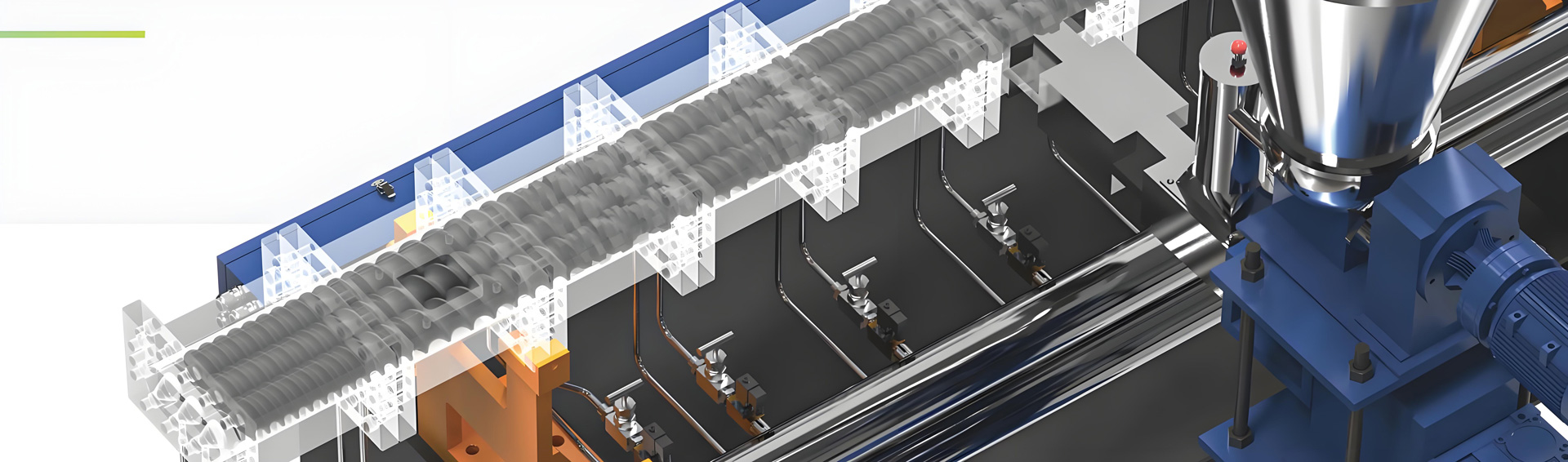
High torque capacity: Kerke KTE Series extruders feature robust gearboxes with high torque capacity, enabling processing of high-talc-loading formulations that require substantial mechanical energy for proper dispersion. The extruder design accommodates the increased melt viscosity associated with talc-reinforced polymers.
Advanced mixing systems: The intermeshing screw design with specialized mixing elements ensures uniform dispersion of talc platelets throughout the polymer matrix. The screw configuration can be optimized for specific talc grades and loading levels, achieving excellent exfoliation and distribution.
Temperature control systems: Multi-zone temperature control with accurate sensors maintains optimal processing temperatures, preventing thermal degradation while ensuring proper melt viscosity for efficient mixing. The system allows precise temperature profiling along the extruder barrel for optimal processing conditions.
Feeding system integration: Gravimetric feeding systems with precise control maintain consistent formulation ratios throughout production runs. Separate feeding zones for different components enable staged addition of additives for optimal incorporation.
Quality Control and Testing
Comprehensive quality control ensures consistent product performance and customer satisfaction:
Particle size analysis: Laser diffraction analysis verifies talc particle size distribution and ensures consistent dispersion quality. This test is critical for maintaining product performance consistency between production batches.
Mechanical property testing: Tensile strength, flexural modulus, and impact resistance tests verify that the masterbatch meets or exceeds performance requirements for target applications. These tests ensure that the product delivers expected reinforcement properties.
Melt flow index (MFI) testing: MFI measurement ensures consistent processability and helps customers predict processing behavior in their specific manufacturing operations. Consistent MFI across batches indicates uniform product quality.
Density measurement: Density testing confirms talc loading concentration and formulation consistency, ensuring that customers receive product meeting specified filler content requirements.
Equipment Selection and Cost Analysis
Investment in appropriate processing equipment represents a significant capital expenditure but offers long-term benefits through improved product quality and production efficiency. This section provides detailed cost analysis for talc filler masterbatch production.
Kerke Extrusion Equipment Investment
Kerke Extrusion Equipment offers a range of twin screw extruders suitable for talc filler masterbatch production:
Model KTE-65: This 65mm diameter screw extruder provides production capacity of 300-500 kg/h for talc masterbatch, with investment cost of $320,000-$450,000. The model includes standard features such as 40:1 L/D ratio, multi-zone temperature control, and advanced screw configuration for excellent talc dispersion.
Model KTE-75: The 75mm screw diameter extruder achieves 500-800 kg/h production capacity, with investment cost of $480,000-$650,000. This higher-capacity model includes enhanced features such as automatic lubrication system, advanced process control, and optimized screw design for high-talc-loading formulations.
Model KTE-95: The 95mm screw diameter extruder provides 800-1200 kg/h production capacity, with investment cost of $750,000-$950,000. This large-scale extruder includes all advanced features and is designed for high-volume production with minimal operator intervention.
Complete Production Line Investment
A complete talc filler masterbatch production line requires various auxiliary equipment in addition to the main extruder:
Material drying systems: Dehumidifying dryers for carrier resin drying cost $25,000-$80,000 depending on capacity and drying requirements. Proper drying prevents moisture-related defects and ensures consistent processing.
Feeding systems: Precision gravimetric feeding systems including main feeder and side feeders cost $40,000-$120,000 depending on number of feeders and sophistication level. Accurate feeding is critical for maintaining consistent talc loading throughout production.
Pelletizing systems: Water ring pelletizers or strand pelletizers cost $35,000-$85,000 depending on production capacity and automation level. The pelletizing system must be designed to handle the reinforced nature of talc-containing materials.
Cooling and conveying systems: Cooling water systems and material conveying equipment cost $20,000-$50,000. Proper cooling ensures pellet quality and prevents thermal degradation of finished product.
Complete line investment: A complete production line including extruder, drying, feeding, pelletizing, and auxiliary systems typically costs $550,000-$1,300,000 depending on production capacity and automation level.
Operating Cost Analysis
Understanding operating costs is essential for economic planning and profitability analysis:
Raw material costs: Raw materials account for 65-80% of total production costs. Talc represents 25-40% of raw material costs depending on talc loading and grade. Carrier resins and additives make up the remaining raw material expenses. Talc prices vary significantly by grade, with premium micronized talc costing $300-$600 per metric ton, while standard grades cost $120-$250 per metric ton.
Energy costs: Energy consumption during extrusion and drying represents 12-20% of total production costs. Talc-reinforced polymers typically require 20-30% more energy than unfilled polymers due to increased melt viscosity and the mechanical energy required for talc dispersion.
Labor costs: Labor costs typically account for 8-15% of total production costs, varying with production volume, automation level, and local labor rates. Higher automation reduces labor requirements but increases initial investment.
Maintenance costs: Annual maintenance typically represents 3-7% of initial equipment investment. Processing talc can increase wear on certain components, requiring more frequent maintenance and component replacement compared to unfilled polymers.
Market Pricing and Profitability
Market prices for talc filler masterbatch vary based on formulation specifications and market conditions:
Standard formulation pricing: Standard talc masterbatch with 30-40% talc loading typically ranges from $1.40 to $2.20 per kilogram in bulk quantities. Higher talc loadings (50-60%) command prices of $1.80-$2.80 per kilogram.
Premium formulation pricing: Premium formulations with micronized talc, high aspect ratios, or specialized additive systems command prices of $2.50-$4.00 per kilogram. These formulations offer superior performance for demanding applications.
Profit margin analysis: Gross profit margins for talc masterbatch production typically range from 20-35%, with net profit margins of 6-15% after accounting for all operating expenses. Specialized formulations with premium pricing often yield higher profit margins due to reduced competition.
Market Trends and Future Outlook
The talc filler masterbatch market continues evolving, driven by technological advances, environmental considerations, and shifting application requirements. Understanding these trends is essential for strategic planning.
Current Market Size and Growth
The global talc filler masterbatch market has experienced steady growth, with current market size estimated at approximately 6.2 million metric tons (MT) in 2025. The market is projected to grow at a compound annual growth rate (CAGR) of 4.8% from 2025 to 2030, reaching approximately 7.9 million MT by 2030.
Asia-Pacific represents the largest regional market, accounting for 50-55% of global consumption, driven by strong automotive and appliance manufacturing growth in China, India, and Southeast Asia. North America and Europe each represent approximately 20-25% of global market share, with steady growth driven by automotive sector applications.
Emerging Technologies and Trends
Several key trends are shaping the future of the talc filler masterbatch market:
Nano-talc applications: Nanoscale talc particles (less than 100 nanometers) offer unique properties including enhanced reinforcement, improved barrier characteristics, and superior surface finish. Nano-talc applications are emerging in high-performance materials for automotive and electronics industries.
Surface modification technologies: Advanced surface treatment techniques using silanes, titanates, and other coupling agents continue to improve the compatibility between talc particles and polymer matrices. These modifications enable higher talc loadings while maintaining or even improving mechanical properties.
Hybrid reinforcement systems: Combining talc with other reinforcement fillers such as glass fibers, calcium carbonate, or nanofillers creates synergistic effects, optimizing property combinations for specific applications. These hybrid systems offer tailored property profiles that exceed the capabilities of single-filler systems.
Sustainability and Environmental Considerations
Environmental concerns and sustainability initiatives are increasingly influencing the talc filler masterbatch market:
Natural material advantage: Talc’s natural origin and relatively low environmental impact make it an attractive choice for sustainable materials. The industry is exploring ways to increase utilization of natural talc and reduce the environmental footprint of production processes.
Recycling considerations: Talc-reinforced polymers present both challenges and opportunities for recycling. While talc contamination can affect recycling quality, the dimensional stability provided by talc can improve performance of recycled materials. Industry initiatives are developing guidelines for recycling talc-containing products.
Lightweighting initiatives: In automotive and other industries, lightweighting initiatives drive demand for materials that reduce component weight while maintaining performance. Talc reinforcement enables thinner wall designs and material reduction, contributing to lightweighting goals.
Maintenance and Troubleshooting
Proper maintenance of processing equipment and effective troubleshooting are essential for consistent talc filler masterbatch production. This section addresses common maintenance practices and problem resolution strategies.
Equipment Maintenance
Regular maintenance ensures optimal equipment performance and extends machinery lifespan:
Screw and barrel maintenance: Regular inspection of screw elements and barrel components for signs of wear is essential. Talc platelets can cause accelerated wear in certain areas, particularly in high-shear mixing zones. Worn components should be replaced promptly to maintain processing efficiency and product quality.
Temperature sensor calibration: Regular calibration of temperature sensors ensures accurate temperature control throughout the extruder. Inaccurate temperature readings can lead to processing instabilities and product quality variations.
Feeding system maintenance: Gravimetric feeders require regular calibration to maintain feeding accuracy. Check and clean feed screws, replace worn components, and verify scale calibration according to manufacturer recommendations.
Common Processing Issues
Understanding and resolving common processing issues improves production efficiency and product quality:
Uneven talc dispersion: Inadequate mixing or insufficient compatibilizer can cause talc agglomeration and uneven dispersion. Solutions include optimizing screw configuration with additional mixing elements, increasing compatibilizer concentration, or adjusting processing parameters such as screw speed and temperature profile.
Surface defects: Surface imperfections including poor finish or roughness can result from improper talc dispersion or incorrect processing conditions. Optimizing die temperature, increasing cooling efficiency, or adjusting formulation with additional processing aids can improve surface quality.
Property variations: Inconsistent mechanical properties between batches may result from talc loading variations, poor dispersion, or temperature fluctuations. Implementing strict quality control procedures, maintaining consistent feeding accuracy, and optimizing temperature control can minimize property variations.
Quality Assurance Procedures
Implementing comprehensive quality assurance procedures ensures consistent product quality:
Statistical process control (SPC): Implement SPC programs for critical parameters such as talc loading, melt temperature, and melt pressure to maintain process capability and detect variations before they affect product quality.
Customer specification verification: Regular testing against customer specifications ensures that product meets all performance requirements. Maintain detailed records of test results and process parameters for traceability.
Continuous improvement: Implement continuous improvement programs based on production data and customer feedback to optimize formulations and processing conditions, continuously improving product quality and production efficiency.
FAQ
What is the typical talc loading range in talc filler masterbatch?
Talc filler masterbatch typically contains 20% to 60% talc by weight, with most formulations ranging between 30% and 50% talc loading. The specific loading depends on target application properties and processing requirements. Higher loadings provide greater stiffness enhancement but may reduce impact strength and processability.
How does talc compare to other reinforcing fillers such as glass fibers?
Talc offers several advantages compared to glass fibers including lower cost, reduced abrasion on processing equipment, and improved surface finish. While glass fibers provide higher strength and stiffness, talc offers an excellent balance of properties at significantly lower cost, making it the preferred choice for many applications where extreme performance is not required.
Can talc filler masterbatch be used in food contact applications?
Yes, talc filler masterbatch can be formulated for food contact applications using food-grade talc and carrier resins that comply with relevant regulations. However, talc is not commonly used in direct food contact applications due to potential regulatory concerns. Applications include food packaging containers where the talc-containing material does not directly contact food.
What are the typical processing temperatures for talc-reinforced polymers?
Processing temperatures for talc-reinforced polymers depend on the carrier resin type. For polypropylene-based talc masterbatch, typical processing temperatures range from 200-230°C for extrusion and 200-250°C for injection molding. The presence of talc may require slightly higher processing temperatures due to increased melt viscosity.
How does talc affect the recyclability of polymers?
Talc contamination can affect the recycling of polymers, particularly when mixed with other polymer types. However, talc-reinforced polymers can be effectively recycled within closed-loop systems where the material composition remains consistent. The dimensional stability provided by talc can actually improve the performance of recycled materials in certain applications.
Conclusion
Talc filler masterbatch continues to play a vital role in the plastics industry, offering an exceptional combination of performance enhancement, cost-effectiveness, and processing efficiency. The unique properties of talc, including its platelet structure, high aspect ratio, and thermal stability, make it an ideal reinforcement for numerous applications across automotive, appliance, construction, and packaging industries.
Kerke Extrusion Equipment provides advanced twin screw extruders specifically designed for efficient talc filler masterbatch production, enabling manufacturers to achieve consistent product quality and optimal performance. The company’s commitment to innovation and quality ensures that customers receive equipment that meets the demanding requirements of talc processing.
As the industry continues evolving with emerging technologies and sustainability initiatives, talc filler masterbatch will remain a critical component in polymer modification strategies. Understanding its properties, production processes, and economic aspects is essential for businesses seeking to leverage this versatile reinforcing material in their products and operations.