Toughening masterbatch for polypropylene (PP) and polyethylene (PE) has become an indispensable additive system in the modern plastics industry, enabling these widely used polymers to meet increasingly demanding performance requirements for impact resistance and toughness. As applications for PP and PE continue to expand into automotive, construction, and consumer goods sectors requiring superior mechanical properties, the need for effective toughening solutions has never been greater. This comprehensive guide explores the science behind toughening mechanisms, available toughening technologies, application considerations, and the cost-benefit analysis for manufacturers seeking to enhance the impact resistance of PP/PE materials through toughening masterbatch.
Understanding Brittleness in PP/PE Materials
Polypropylene and polyethylene are semi-crystalline thermoplastic polymers that exhibit inherent limitations in impact resistance, particularly at low temperatures and in thin-walled applications. The crystalline structure that provides these materials with stiffness and chemical resistance also creates weaknesses that can lead to brittle failure under impact. Understanding the nature of this brittleness is essential for selecting the most appropriate toughening solutions.
The crystalline regions in PP and PE act as rigid, ordered domains that provide mechanical strength and thermal resistance. However, these crystalline regions are separated by amorphous regions that are more mobile and less ordered. When an impact force is applied to the material, stress concentrates at the boundaries between crystalline and amorphous regions, leading to crack initiation and propagation. In semi-crystalline polymers like PP and PE, the rate of cooling during processing significantly affects the crystallinity and, consequently, the impact resistance. Fast cooling results in smaller crystallites and higher impact resistance, while slow cooling produces larger crystallites and more brittle behavior.
Temperature dramatically affects the impact resistance of PP and PE materials. At room temperature (20-25°C), PP exhibits impact resistance suitable for many applications. However, as temperatures decrease below 0°C, PP becomes increasingly brittle, with impact strength decreasing by 70-90% at -20°C compared to room temperature values. This temperature sensitivity limits the use of PP in cold environments unless properly toughened. PE materials, particularly high-density polyethylene (HDPE), also exhibit reduced impact resistance at low temperatures, though typically less dramatically than PP.
The economic impact of brittle failure in PP/PE products is substantial across all industries. In the automotive sector, brittle failures of plastic components account for approximately $6-10 billion annually in warranty claims, recalls, and customer dissatisfaction. In the consumer goods industry, impact failures result in product returns estimated at $15-25 billion per year globally. For manufacturers, investing in appropriate toughening masterbatch typically adds 2-8% to material costs, but prevents failures that can cost millions in product recalls, warranty claims, and damage to brand reputation.
Mechanisms of Toughening in Semi-Crystalline Polymers
Toughening masterbatch works through multiple physical and chemical mechanisms to improve the impact resistance of PP and PE materials. Understanding these mechanisms helps manufacturers select the optimal toughening system for specific applications and processing conditions.
Cavitation and Shear Yielding
One of the primary toughening mechanisms in modified PP/PE is cavitation, where dispersed rubber particles or other toughening additives create cavities or voids when subjected to impact stress. These cavities serve to absorb energy and stop crack propagation. When an impact force is applied, the stress concentration at the crack tip causes cavitation of the dispersed toughening phase, which consumes energy and reduces the stress intensity at the crack tip. This mechanism is particularly effective in PP, where the presence of elastomeric particles promotes cavitation and shear yielding of the matrix.
Cavitation is most effective when the toughening phase has good adhesion to the polymer matrix and is properly dispersed. Poor adhesion between the toughening particles and the polymer matrix can actually reduce impact resistance by creating weak interfaces that serve as crack initiation sites. Modern toughening masterbatch formulations include compatibilizers that improve adhesion between the toughening phase and the PP/PE matrix, ensuring optimal cavitation and energy absorption.
Crack Bridging and Deflection
Crack bridging and deflection are additional toughening mechanisms that work by physically interfering with crack propagation. Rubber particles or fibrous toughening agents can bridge cracks, holding the material together across the crack faces and reducing the stress intensity at the crack tip. Additionally, toughening particles can deflect cracks, forcing them to take longer, more tortuous paths through the material. This increased crack path length consumes additional energy and reduces the effective stress intensity at the crack tip.
The effectiveness of crack bridging and deflection depends on the size, distribution, and mechanical properties of the toughening particles. Larger particles are more effective at crack bridging but may reduce stiffness, while smaller particles are less effective at bridging but can provide more uniform toughening. Optimal toughening formulations balance these competing factors to achieve the desired balance of impact resistance and stiffness retention.
Shear Band Formation
Shear band formation is a toughening mechanism particularly relevant for PP materials. When PP containing appropriate toughening agents is subjected to impact, shear bands form in the material around the impact site. These shear bands are regions of localized deformation that absorb energy through extensive plastic flow. The formation of shear bands significantly increases the energy required for crack initiation and propagation, resulting in improved impact resistance.
The ability to form shear bands depends on the crystalline structure of PP and the presence of appropriate toughening agents. Different PP grades (homopolymer, random copolymer, impact copolymer) have different inherent tendencies toward shear band formation, and toughening masterbatch formulations are often optimized for specific PP types to maximize shear band formation and impact resistance improvement.
Types of Toughening Agents for PP/PE
Multiple classes of toughening agents are available for modifying PP and PE materials, each offering unique performance characteristics and processing requirements. Understanding the different types of toughening agents enables manufacturers to select the optimal solution for specific applications.
EPT and EPDM Rubber Tougheners
Ethylene-propylene-diene monomer (EPDM) and ethylene-propylene-terpolymer (EPT) rubbers are among the most widely used toughening agents for PP/PE. These elastomers are compatible with PP and PE due to their similar chemical structure, allowing for good dispersion and adhesion when properly formulated. EPDM and EPT rubber tougheners provide excellent impact resistance improvement, particularly at low temperatures, while maintaining reasonable stiffness retention.
The cost of EPDM/EPT toughening masterbatch typically ranges from $4 to $12 per kilogram, depending on the rubber content, carrier resin, and required performance level. Loading levels in the final PP/PE compound typically range from 5-25% by weight, depending on the desired impact resistance improvement and acceptable stiffness reduction. For automotive applications requiring -40°C impact resistance, loading levels of 15-25% are common, while less demanding applications may use only 5-10% loading.
POE and POP Elastomers
Polyolefin elastomers (POE) and polyolefin plastomers (POP) represent newer classes of toughening agents that offer excellent performance in PP/PE modification. These materials are essentially very low-density polyolefins that provide elastomeric properties while maintaining good compatibility with PP and PE matrices. POE and POP tougheners often provide better clarity than EPDM/EPT rubbers and have lower processing temperatures, which can be beneficial for certain applications.
POE and POP toughening masterbatch typically costs $5 to $14 per kilogram, representing a premium over EPDM/EPT systems. However, these materials offer improved clarity, better low-temperature performance, and sometimes improved processability. For applications requiring clarity in addition to impact resistance (such as food packaging), POE and POP tougheners are often preferred despite their higher cost. Loading levels typically range from 5-20% depending on performance requirements.
Core-Shell Rubber Particles
Core-shell rubber particles are advanced toughening agents consisting of a rubbery core surrounded by a more rigid shell. The rubbery core provides impact toughening through cavitation, while the shell improves compatibility with the polymer matrix and provides mechanical interlocking. Core-shell particles can be engineered with specific compositions to optimize toughening performance for particular polymer systems.
The cost of core-shell rubber toughening masterbatch is typically higher, ranging from $8 to $20 per kilogram. However, these materials often provide superior impact resistance at lower loading levels compared to conventional rubbers. Loading levels for core-shell tougheners typically range from 3-15%, depending on the specific formulation and required performance. The reduced loading levels can offset the higher per-kilogram cost, making these materials cost-competitive for high-performance applications.
Fibrous Toughening Agents
Fibrous toughening agents, including short glass fibers, aramid fibers, and other high-strength fibers, provide impact resistance through crack bridging and deflection mechanisms. Unlike elastomeric tougheners, fibrous agents typically increase stiffness rather than reduce it. For applications requiring both improved impact resistance and increased stiffness, fibrous tougheners can be an optimal solution.
Fibrous toughening masterbatch typically costs $6 to $18 per kilogram, depending on the fiber type, content, and required performance. Loading levels for fibrous tougheners typically range from 5-30%, with higher loadings providing both impact resistance and significant stiffness improvement. The combination of improved impact resistance and increased stiffness makes fibrous tougheners valuable for structural applications where both properties are required.
Application-Specific Requirements
Different applications have unique requirements for toughened PP/PE materials based on the expected service conditions, performance criteria, and end-use environment. Understanding these application-specific requirements is essential for selecting the optimal toughening masterbatch system.
Automotive Applications
Automotive applications including interior trim, underbody shields, bumper beams, and various functional components require excellent impact resistance, particularly at low temperatures and in thin-walled sections. Automotive specifications typically require impact resistance at -30°C to -40°C, with impact energy requirements ranging from 2 to 30 kJ/m² depending on the component and test method. The automotive industry also places significant emphasis on weight reduction, making it essential to balance impact resistance with material density.
For automotive applications, toughening masterbatch typically represents 3-7% of total material cost. However, the cost of inadequate impact protection is substantial, with warranty claims for brittle failures in the automotive industry averaging $2,000-6,000 per vehicle for affected components. Investing in comprehensive toughening systems, typically costing $0.15-0.45 per kilogram of PP/PE, prevents costly recalls and maintains brand reputation in the highly competitive automotive market. Testing for automotive applications is rigorous, with requirements including impact testing at multiple temperatures, aging tests, and various durability evaluations.
Consumer Goods and Packaging
Consumer goods and packaging applications including storage containers, toys, and household items require good impact resistance for drop resistance and durability during use. The requirements vary widely depending on the specific product, with drop height tests ranging from 0.5 to 2 meters being common for packaging applications. Consumer expectations for product durability have increased significantly in recent years, driving demand for improved impact resistance even in relatively low-cost applications.
For consumer goods and packaging, toughening masterbatch typically costs 2-5% of material cost. The market is highly cost-competitive, requiring manufacturers to balance impact resistance improvement with cost considerations. Loading levels for consumer goods applications typically range from 5-15%, depending on the product requirements and price point. Consumer testing often includes drop tests from specified heights onto various surfaces (concrete, tile, carpet) to simulate real-world usage conditions.
Construction and Industrial Applications
Construction and industrial applications including pipes, fittings, storage tanks, and various industrial components require impact resistance, particularly at low temperatures where materials become more brittle. These applications often experience rough handling during installation and exposure to varying temperatures during service. Impact resistance requirements for construction applications are often specified in standards such as ASTM D6110 for impact resistance of plastic pipes.
For construction and industrial applications, toughening masterbatch typically costs 2.5-5.5% of material cost. The requirements vary widely based on the specific application and local building codes. For applications exposed to cold environments (polar regions, winter conditions), higher levels of toughening are often required to maintain impact resistance at low temperatures. Testing for construction applications often includes impact testing at sub-zero temperatures and sometimes includes notched impact testing to simulate surface defects.
Electrical and Electronic Applications
Electrical and electronic applications including wire and cable insulation, connectors, and electronic enclosures require impact resistance, particularly to withstand handling during installation and potential impact events during service. The electrical and electronics industry also places emphasis on maintaining dielectric properties, which can be affected by certain toughening agents. For these applications, selecting tougheners that maintain electrical properties is essential.
For electrical and electronic applications, toughening masterbatch typically costs 3-6% of material cost. The electrical requirements add complexity to formulations, as certain toughening agents may affect dielectric strength and volume resistivity. Testing requirements for electrical applications include impact testing in combination with electrical property evaluation to ensure that toughening does not compromise electrical performance.
Processing Considerations for Toughening Masterbatch
Successfully incorporating toughening masterbatch into PP/PE materials requires careful consideration of processing parameters and equipment requirements. Optimal processing ensures proper dispersion of toughening agents and achieves the desired impact resistance improvement.
Mixing and Dispersion
Achieving uniform dispersion of toughening agents throughout the PP/PE matrix is critical for consistent impact resistance performance. Poor dispersion can result in localized areas with insufficient toughening, leading to brittle failure in those areas. Modern compounding equipment with high mixing intensity and controlled residence time ensures uniform distribution of toughening agents even at high loading levels.
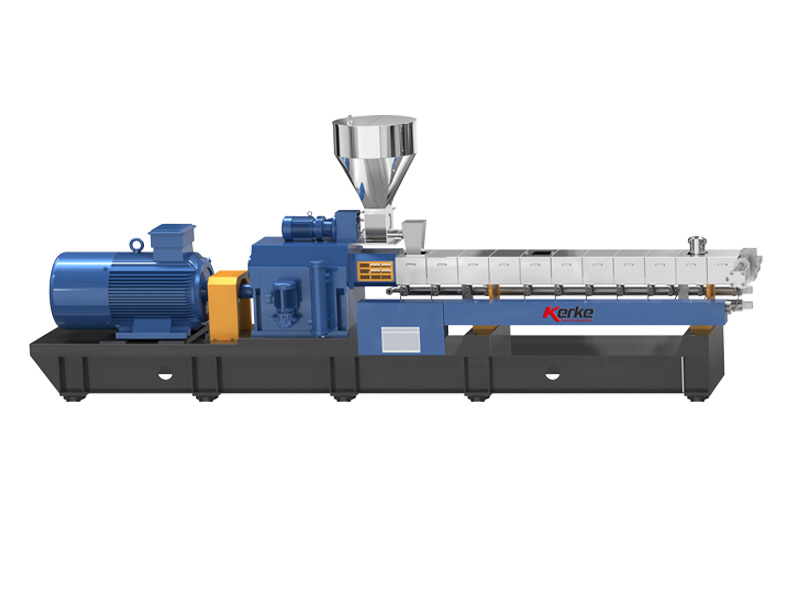
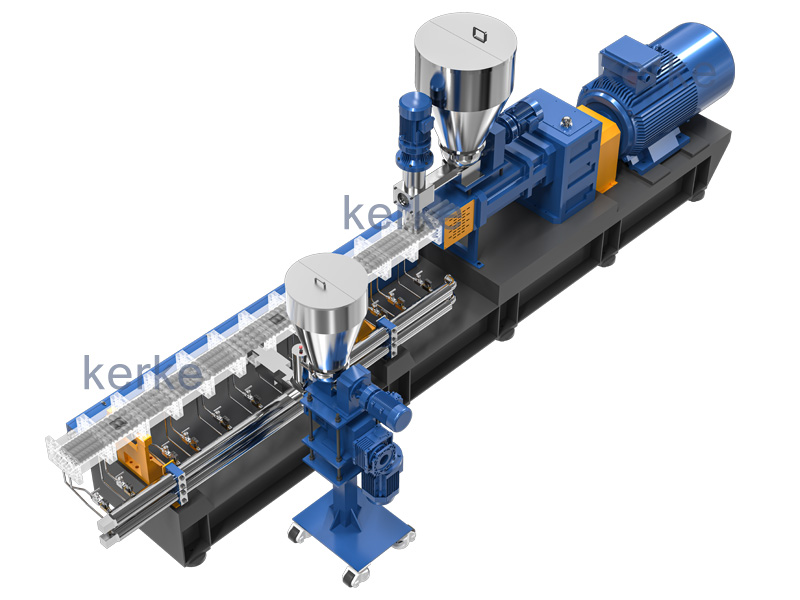
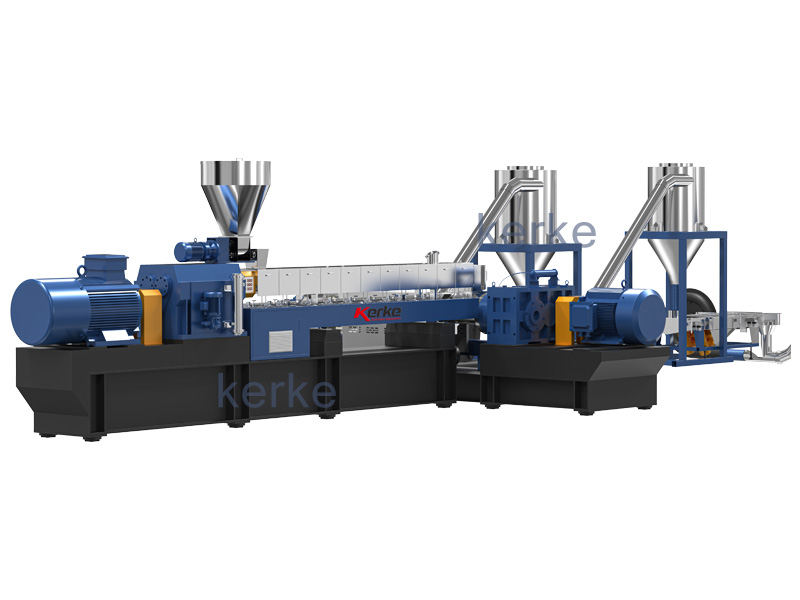
The cost of high-quality compounding equipment for processing toughening masterbatch typically ranges from $85,000 to $150,000 for a twin-screw extruder, depending on screw diameter, length-to-diameter ratio, and level of automation. While this represents a significant investment, the benefits in terms of product consistency, reduced scrap rates, and optimized loading levels provide a strong return on investment. For processors producing high volumes of toughened PP/PE, investment in advanced compounding equipment typically pays for itself within 12-24 months through improved efficiency and reduced material costs.
Temperature Management
Maintaining appropriate processing temperatures is essential for preserving the effectiveness of toughening agents. Excessively high temperatures can degrade elastomeric tougheners, reducing their impact resistance improvement. Processing temperatures for PP typically range from 190-260°C, while PE is processed at 160-240°C depending on the density and grade. When using toughening masterbatch, processing temperatures should generally be kept toward the lower end of the recommended range to preserve toughener effectiveness.
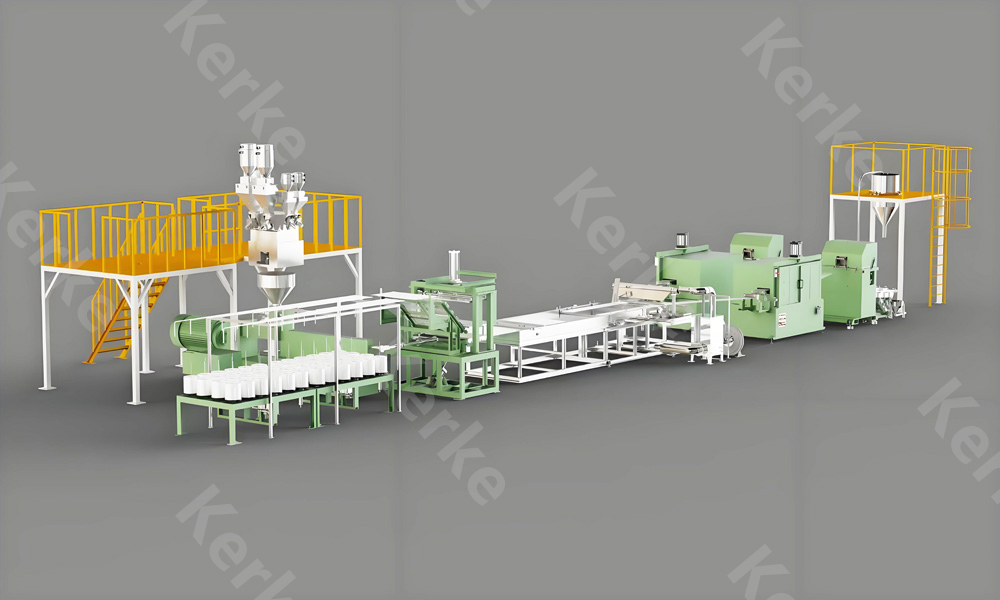
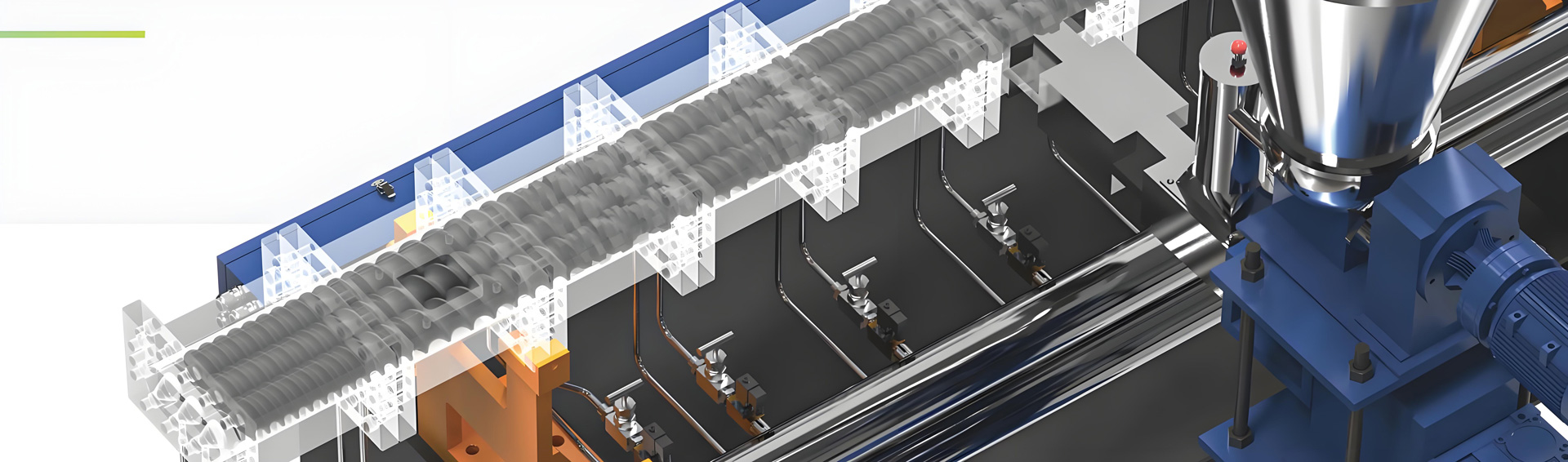
Modern twin-screw extruders from manufacturers like Kerke provide precise temperature control, with temperature uniformity typically maintained within ±2-3°C across the length of the barrel. This precise temperature control is essential for preserving toughener effectiveness and ensuring consistent product quality. Kerke’s KTE Series twin-screw extruders, specifically designed for masterbatch production, offer precise temperature control and mixing capabilities necessary for processing sensitive toughening formulations.
Residence Time
Controlling residence time during processing is important for preventing excessive thermal exposure that can degrade toughening agents. Longer residence times at elevated temperatures can cause crosslinking or degradation of elastomeric tougheners, reducing their effectiveness. Optimizing screw configuration and throughput to achieve the desired mixing with minimum residence time preserves toughener functionality.
The optimal residence time varies depending on the specific toughening system and processing equipment. For most toughening masterbatch formulations, residence times of 1-3 minutes are typical. Processing equipment with modular screw configurations allows optimization of residence time for specific formulations, ensuring both good dispersion and minimal thermal degradation of toughening agents.
Cost-Benefit Analysis of Toughening Masterbatch
Investing in appropriate toughening masterbatch represents a cost that must be justified through improved product performance, reduced warranty claims, and enhanced marketability. Understanding the cost-benefit relationship helps manufacturers optimize toughening strategies for specific applications and market requirements.
Material Cost Analysis
The cost of toughening additives typically represents 2-8% of total material costs for most applications. For high-performance applications requiring exceptional impact resistance, additive costs may reach 10-15% of material costs. However, the total cost of ownership, including material costs, manufacturing costs, and product lifetime costs, typically favors investment in comprehensive toughening systems.
For example, a PP component costing $1.80 per kilogram with 5% toughener cost ($0.09 per kilogram) that achieves -30°C impact resistance compares favorably to a component costing $1.65 per kilogram with 2% toughener cost ($0.033 per kilogram) that only achieves -10°C impact resistance. For automotive applications requiring -30°C impact resistance, the first formulation meets requirements while the second would be rejected, potentially causing lost sales or requiring formulation changes that increase total cost beyond that of the properly toughened material.
Warranty and Liability Reduction
Comprehensive toughening significantly reduces warranty claims, product returns, and liability exposure for PP/PE products. For manufacturers, the cost of warranty claims for impact failures typically ranges from 1-3% of product revenue annually. Proper toughening can reduce these claims by 70-90%, resulting in substantial savings and improved customer satisfaction.
For a company with $40 million in annual revenue for PP/PE products and 2% warranty claims ($800,000 annually) for impact failures, reducing claims by 80% through improved toughening saves $640,000 annually. This savings far exceeds the additive costs for toughening, which might total $300,000-800,000 annually for similar production volumes, representing an excellent return on investment.
Market Differentiation
In markets where impact resistance is a key differentiator, comprehensive toughening can provide competitive advantages. Products with demonstrated superior impact performance can command premium pricing and win market share from competitors offering inferior products. The ability to demonstrate impact resistance through standardized testing and real-world performance examples creates market differentiation that justifies premium pricing of 5-15% over competitors.
For example, in the storage container market, products with demonstrated 2-meter drop resistance may command a 8-12% price premium over products with only 1-meter drop resistance. For a product costing $2 per kilogram, this premium represents $0.16-0.24 per kilogram, far exceeding the $0.04-0.12 per kilogram cost difference between standard and premium toughening formulations.
Quality Control and Testing
Ensuring consistent impact resistance in toughened PP/PE materials requires rigorous quality control and testing protocols. Various testing methods allow manufacturers to verify impact performance and maintain consistent product quality.
Impact Testing Methods
Multiple impact testing methods are used to evaluate the impact resistance of PP/PE materials. Izod and Charpy impact tests are standard methods for measuring notched impact strength, providing data in kJ/m². Drop impact tests simulate real-world impact conditions and are particularly valuable for packaging and consumer goods applications. Instrumented impact testing measures the complete force-displacement curve during impact, providing detailed information about the failure mode and energy absorption.
The cost of impact testing equipment ranges from $5,000 for basic pendulum impact testers to $50,000 or more for advanced instrumented impact testing systems. However, this investment is essential for quality control and product development. For manufacturers producing impact-resistant materials, implementing appropriate impact testing represents a necessary investment in quality assurance.
Temperature Variation Testing
Testing impact resistance across a range of temperatures is essential for materials that will be used in varying environmental conditions. Temperature variation testing typically includes testing at room temperature (20-25°C), reduced temperature (-20°C to -40°C), and sometimes elevated temperature (50-80°C). This testing ensures that materials meet impact requirements throughout their expected service temperature range.
Temperature-controlled impact testing requires environmental chambers or temperature baths in addition to impact testing equipment. The cost of temperature control equipment ranges from $2,000-10,000 depending on the temperature range and precision required. However, this investment is justified for applications where performance at low temperatures is critical, such as automotive and outdoor construction applications.
Aging and Long-Term Performance Testing
Testing the long-term retention of impact resistance after aging is important for applications with extended service lives. Aging tests including thermal aging, UV aging, and environmental stress cracking resistance testing provide data on how impact resistance changes over time. For applications requiring 10-20 years of service, accelerated aging tests help predict long-term performance.
Aging testing equipment including thermal ovens and weathering chambers costs $5,000-25,000 depending on capabilities. However, the data generated by aging testing is invaluable for product development and warranty planning, helping manufacturers design materials that maintain impact resistance throughout their intended service life.
Environmental and Regulatory Considerations
As environmental and regulatory requirements evolve, the selection of toughening agents must consider recyclability, toxicity, and regulatory compliance. Staying informed about changing requirements and adopting future-proof formulations helps manufacturers avoid regulatory problems and environmental liabilities.
Recyclability
Toughening additives affect the recyclability of PP/PE materials by potentially interfering with recycling processes or degrading during multiple processing cycles. Developing formulations that maintain effectiveness through multiple recycling cycles is becoming increasingly important as circular economy initiatives gain momentum. Testing the recyclability of toughened PP/PE involves subjecting materials to multiple processing cycles and evaluating retained mechanical properties after each cycle.
For applications requiring recyclability, selecting toughening agents that demonstrate minimal degradation after 3-5 recycling cycles is recommended. The cost of recyclability testing typically ranges from $300-800 per formulation. While this represents an additional development cost, the ability to produce recyclable materials provides market advantages and aligns with increasing regulatory and consumer expectations for sustainable materials.
Regulatory Compliance
Regulatory requirements for additives vary by region and application. The European Union’s REACH regulation, TSCA in the United States, and various other regulations restrict the use of certain additives and require extensive documentation for others. For food contact applications, FDA compliance (in the United States) and EU regulations require specific testing and documentation for additive systems.
Working with toughening masterbatch suppliers who understand regulatory requirements and maintain current compliance documentation is essential for avoiding regulatory problems. The cost of regulatory compliance, including testing, documentation, and certification, typically ranges from $1,000 to $20,000 per additive system depending on the complexity and number of regions covered. Non-compliance can result in product recalls, fines, and market access restrictions costing millions of dollars.
Supplier Selection and Technical Support
Choosing the right toughening masterbatch supplier is critical for achieving optimal product performance and supporting technical requirements. Evaluating potential suppliers based on multiple criteria ensures reliable supply, consistent quality, and comprehensive technical support.
Technical Expertise and R&D Capabilities
Suppliers with strong technical expertise and in-house R&D capabilities can provide customized formulations for specific applications and help optimize performance-cost ratios. Look for suppliers with application laboratories capable of conducting impact testing and material characterization to support product development. The value of technical support services often exceeds the small premium charged by suppliers with stronger technical capabilities.
Technical support services typically represent an additional 5-15% cost premium but can reduce development time by 30-50% and improve final product performance. For manufacturers bringing new products to market, the time savings and performance improvements justify the investment in supplier technical support.
Quality Assurance and Consistency
Consistent product quality is essential for manufacturers relying on toughening masterbatch for critical applications. Look for suppliers with ISO 9001 certification, rigorous quality control processes, and documented batch-to-batch consistency. Requesting certification data, test reports, and samples for evaluation before committing to large orders helps ensure product quality meets requirements.
Quality-related issues can result in scrap rates of 10-30% and product failures that cost millions of dollars in warranty claims and recalls. The small premium for quality-certified suppliers, typically 3-8%, is a worthwhile investment compared to the potential costs of quality failures.
Supply Chain Reliability
Reliable supply chain management is critical for high-volume production. Look for suppliers with multiple production facilities, ample inventory, and contingency plans for supply disruptions. Establishing long-term supply contracts with volume commitments can secure favorable pricing and priority allocation during supply shortages.
Supply disruptions can cause production shutdowns costing $50,000-500,000 per day depending on the scale of operations. Investing in supplier relationships and supply chain security through multiple sources, inventory buffers, and long-term contracts helps ensure continuous production and mitigate disruption risks.
Future Trends in Toughening Technology
The field of toughening masterbatch continues to evolve with new technologies addressing performance, cost, and sustainability concerns. Staying informed about emerging trends helps manufacturers prepare for future market demands and technology adoption.
Nanocomposite Toughening
Nanomaterials including nano-clays, carbon nanotubes, and graphene oxide are being explored for toughening applications. These materials can provide enhanced impact resistance at very low loading levels (0.5-3% by weight) compared to conventional tougheners. While still in early commercialization stages, nanocomposite toughening systems offer potential for reduced additive costs and improved performance characteristics.
The cost of nanomaterial additives currently ranges from $20-200 per kilogram, significantly higher than traditional toughening agents. However, the very low loading levels required can make these systems cost-competitive for high-performance applications. As production scales and technology matures, costs are expected to decrease, making nanocomposite toughening increasingly accessible for mainstream applications.
Bio-Based Tougheners
Development of bio-based toughening agents derived from renewable sources is addressing sustainability concerns in the industry. These toughening agents, which may be based on natural rubbers or bio-synthesized elastomers, offer the potential for improved environmental profiles while maintaining effective toughening performance. As bio-based toughening technology matures, costs are expected to become competitive with petrochemical-based tougheners, providing manufacturers with sustainable options for impact modification.
Self-Healing Toughened Materials
Self-healing materials that can repair impact damage when exposed to specific triggers (such as heat or light) are under development. These systems could potentially extend service life beyond traditional toughened materials by actively repairing micro-cracks and damage before they propagate into failure. While still primarily in research stages, self-healing toughened materials represent an exciting frontier in the field of impact modification.
Conclusion
Toughening masterbatch for PP/PE is an essential component for enabling these versatile polymers to meet the demanding impact resistance requirements of modern applications. As product expectations for durability and safety continue to rise across all industries, the importance of effective toughening solutions has never been greater. For plastic manufacturers, investing in appropriate toughening masterbatch represents a strategic investment that pays dividends through improved product performance, reduced warranty claims, enhanced market competitiveness, and expanded application opportunities.
Understanding the various toughening mechanisms, available technologies, and application requirements enables manufacturers to select optimal toughening solutions for specific products and markets. Working with experienced suppliers and investing in advanced processing equipment like Kerke’s KTE Series twin-screw extruders ensures consistent product quality and optimal toughener performance.
As the industry continues to evolve, adoption of new technologies and sustainable practices will be key to meeting future challenges and maintaining leadership in the global market for impact-modified PP/PE materials. The investment in toughening masterbatch is not just a cost of doing business, but an investment in product performance, customer satisfaction, and long-term business success.