Introduction to Slip and Anti-blocking Masterbatch
Slip and anti-blocking masterbatch plays a crucial role in the plastic film industry by addressing surface characteristics that significantly impact processing efficiency and product performance. These specialized additive formulations are designed to modify the surface properties of plastic films, improving handling characteristics and reducing problems that can occur during production, packaging, and end-use applications. The importance of slip and anti-blocking additives cannot be overstated in modern film processing, where high-speed production lines and demanding performance requirements make surface optimization essential.
Slip agents primarily function by migrating to the film surface and creating a lubricating layer that reduces friction between film layers and between film and processing equipment. This reduction in friction enables smoother operation of packaging machinery, prevents blocking (where film layers stick together), and improves overall process efficiency. Anti-blocking agents work by creating microscopic surface roughness that prevents intimate contact between film layers, thereby reducing the tendency for films to stick together. The combination of slip and anti-blocking functionality in a single masterbatch formulation provides comprehensive surface property modification for a wide range of film applications.
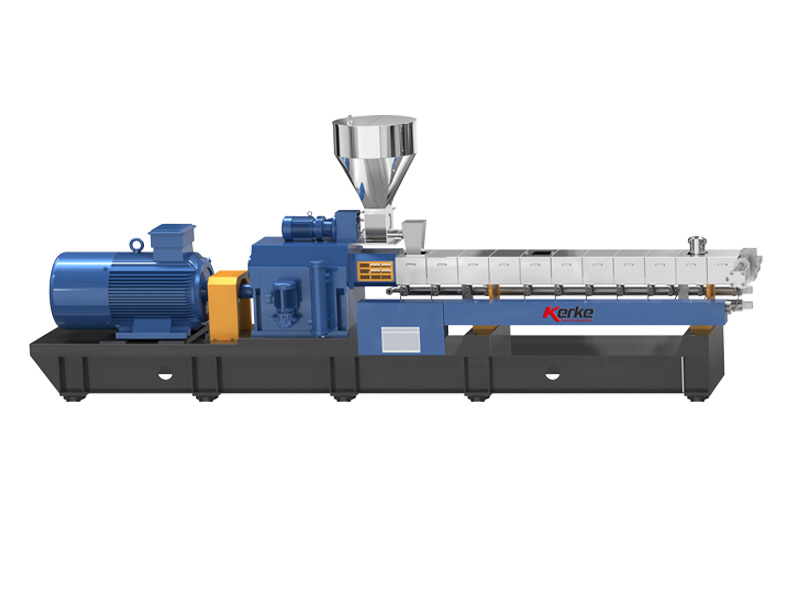
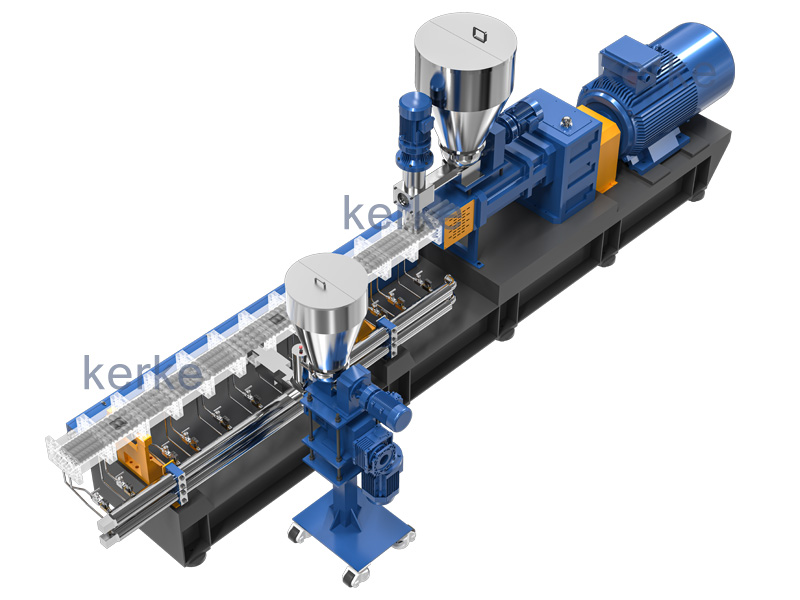
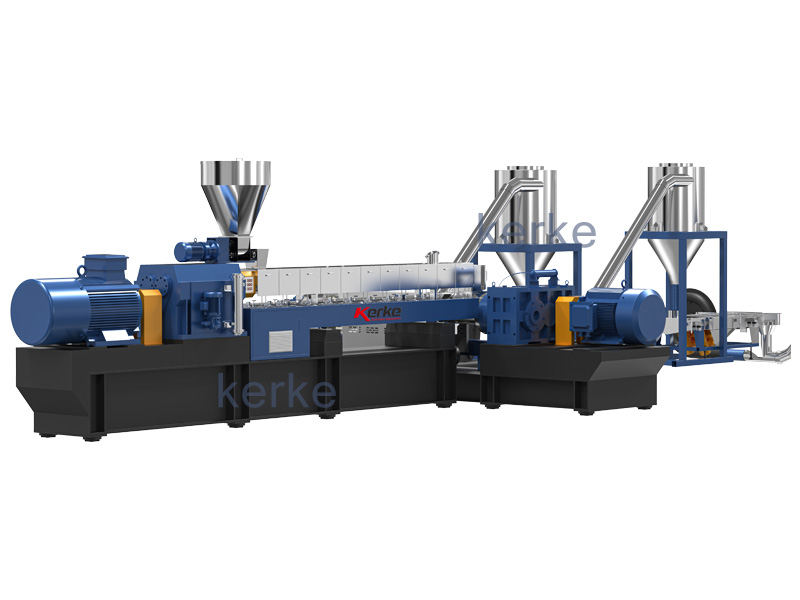
The global market for slip and anti-blocking masterbatch has grown substantially as film producers seek to optimize processing efficiency and product performance. Food packaging, agricultural films, industrial packaging, and consumer goods all benefit from the enhanced handling characteristics provided by these additives. As film production speeds increase and performance requirements become more demanding, the need for effective slip and anti-blocking solutions continues to grow. Kerke, a leading manufacturer of twin screw extruders, provides the advanced compounding equipment necessary for producing high-quality slip and anti-blocking masterbatch with consistent performance.
Understanding the mechanisms of slip and anti-blocking action is essential for optimizing masterbatch formulations for specific applications. Slip agents, typically fatty acid amides, work by migrating to the film surface where they form a lubricating layer. This migration process is time and temperature dependent, requiring careful formulation to achieve the right balance between initial surface properties and long-term performance. Anti-blocking agents, often inorganic particles like silica, create surface roughness at the microscopic level that prevents films from adhering to each other. The effective combination of these mechanisms enables film producers to achieve optimal handling characteristics across diverse processing conditions.
Understanding Slip Mechanisms and Additives
Slip agents function through a migration mechanism where the additive molecules move from the polymer matrix to the film surface over time. This migration creates a thin lubricating layer that reduces the coefficient of friction, enabling smooth film movement and preventing problems during high-speed processing. The rate of migration depends on several factors including the chemical structure of the slip agent, polymer compatibility, processing temperature, and film thickness. Understanding and controlling these factors is essential for achieving the desired slip characteristics in the final film product.
Erucamide is one of the most widely used slip agents in polyolefin films due to its excellent balance of properties and cost-effectiveness. This long-chain fatty acid amide provides effective slip characteristics while maintaining good compatibility with various polymer systems. Erucamide typically migrates to the surface over a period of hours to days, depending on processing conditions and film thickness. The relatively slow migration rate of erucamide helps maintain consistent slip performance throughout the product’s useful life while minimizing initial surface tackiness that could cause processing problems.
Oleamide represents another common slip agent, characterized by faster migration kinetics compared to erucamide. This faster migration can be advantageous in applications requiring rapid development of slip properties, such as films that will be used shortly after production. However, the faster migration can also lead to more rapid depletion of slip agent from the film, potentially reducing long-term effectiveness. Oleamide is often used in applications where initial slip properties are critical or in combination with other slip agents to achieve specific migration profiles.
Behenamide offers the slowest migration among common slip agents, providing long-lasting slip characteristics with minimal initial surface effects. This makes behenamide particularly suitable for applications requiring stable surface properties over extended periods, such as films stored for long durations before use. The slow migration rate also reduces the risk of slip agent depletion from the film surface over time. However, the slower migration may result in delayed development of optimal slip properties, requiring careful consideration of the application timeline when selecting slip agents.
Anti-blocking Mechanisms and Agents
Anti-blocking agents function by creating microscopic surface roughness that prevents intimate contact between film layers, thereby reducing the tendency for blocking. The mechanism involves particles protruding from the film surface at the microscopic level, creating spacer effects that maintain separation between adjacent film layers. The effectiveness of anti-blocking agents depends on particle size, shape, distribution, and concentration relative to the film thickness and application requirements. Proper selection and dispersion of anti-blocking agents are critical for achieving optimal anti-blocking performance without negatively affecting optical properties or other film characteristics.
Silica-based anti-blocking agents are among the most widely used due to their effectiveness, cost efficiency, and availability in various particle sizes. Synthetic silica can be engineered to specific particle size distributions, allowing precise control over anti-blocking performance. The surface chemistry of silica particles can be modified to improve compatibility with different polymer systems and optimize dispersion characteristics. Silica anti-blocking agents typically provide excellent clarity and minimal haze when properly dispersed and used at appropriate concentrations. The white color of silica can be advantageous or disadvantageous depending on the film application and color requirements.
Diatomaceous earth represents a naturally occurring anti-blocking agent with unique characteristics due to its fossilized diatom structure. The irregular shape and porous nature of diatomaceous earth particles can provide effective anti-blocking performance at relatively low concentrations. The natural origin and cost effectiveness of diatomaceous earth make it attractive for certain applications, particularly where some haze or opacity is acceptable. However, the variability of naturally occurring materials can lead to batch-to-batch consistency challenges that must be addressed through quality control and supplier qualification.
Ceramic anti-blocking agents including alumina and other mineral-based materials offer high thermal stability and chemical resistance. These materials are particularly suitable for high-temperature applications where organic anti-blocking agents might degrade. Ceramic anti-blocking agents can maintain effectiveness throughout processing and end-use conditions that would degrade organic alternatives. However, the higher hardness and abrasive nature of ceramic materials may increase wear on processing equipment, particularly extruder screws and die surfaces. The white color of most ceramic anti-blocking agents can affect film color and appearance.
Slip Agent Selection Criteria
Selecting the appropriate slip agent requires consideration of multiple factors including the polymer system, processing conditions, end-use requirements, and performance timeline. Different polymers have varying compatibility with different slip agents, affecting migration rates and effectiveness. Processing temperatures influence both the initial migration rate and the rate of slip agent depletion from the film surface. End-use requirements such as coefficient of friction specifications, optical clarity requirements, and regulatory considerations all influence slip agent selection. The performance timeline, including storage duration before use and expected product lifetime, must be considered to ensure that slip properties are maintained throughout the required period.
Polyolefin films including polyethylene and polypropylene represent the largest application area for slip agents, with erucamide being the most widely used slip agent for these polymers. The compatibility of erucamide with polyolefins provides excellent migration characteristics while maintaining film properties. For higher temperature applications or where faster initial slip is required, oleamide may be preferred despite its faster migration rate. Behenamide may be selected for applications requiring long-term stability or where initial surface tackiness must be minimized. The specific polyolefin grade, including density, crystallinity, and additives, can affect slip agent performance and must be considered in selection.
Polystyrene films require different slip agent considerations due to the polymer’s different polarity and compatibility characteristics. While fatty acid amides can be used in polystyrene, migration rates and effectiveness may differ significantly from polyolefin applications. Alternative slip agents with better compatibility with polystyrene may be required to achieve desired performance. The higher glass transition temperature of polystyrene compared to polyolefins affects slip agent migration at both processing and use temperatures. Slip agent selection for polystyrene requires careful evaluation of compatibility and performance under application-specific conditions.
PVC films present unique challenges for slip agent selection due to the polymer’s polar nature and the presence of plasticizers and other additives. Slip agents must be compatible with both the PVC resin and the various additives used in PVC formulations. Plasticizers can affect slip agent migration and effectiveness, potentially requiring formulation adjustments. The thermal stability of slip agents is particularly important for PVC due to the processing temperatures required. Chlorinated slip agents or alternative chemistries may be required for certain PVC applications to achieve desired performance while maintaining compatibility.
Anti-blocking Agent Selection Criteria
Anti-blocking agent selection requires evaluation of particle size, shape, surface chemistry, and compatibility with the polymer system and other additives. Particle size should be small enough to minimize effects on optical properties while large enough to provide effective anti-blocking performance. The typical particle size range for anti-blocking agents is between 2 and 10 micrometers, with specific sizing depending on film thickness and application requirements. Particle shape influences effectiveness and dispersion characteristics, with irregular shapes often providing better anti-blocking at lower concentrations but potentially increasing haze.
Surface chemistry of anti-blocking agents affects compatibility with the polymer matrix and dispersion characteristics. Hydrophobic surface treatments can improve dispersion in non-polar polymers like polyolefins, while hydrophilic treatments may be more suitable for polar polymers. Proper surface chemistry improves dispersion quality and reduces the risk of agglomeration during processing. Compatibility with other additives, particularly slip agents, is also important to ensure that additives do not interfere with each other’s performance. Some combinations of slip and anti-blocking agents may have synergistic effects, while others may antagonize each other’s performance.
Concentration levels for anti-blocking agents typically range from 0.1 to 2 percent by weight, depending on the specific agent and application requirements. Lower concentrations are generally used for thin films where even small amounts of anti-blocking agent can be effective, while thicker films may require higher concentrations to achieve adequate surface effects. The optimal concentration balances anti-blocking performance with effects on other film properties including optical clarity, mechanical properties, and surface smoothness. Excessive anti-blocking agent concentration can lead to processing problems and negatively affect film quality.
Interaction with slip agents must be considered when selecting anti-blocking agents. Some anti-blocking agents may affect the migration or effectiveness of slip agents, requiring formulation adjustments. The compatibility between slip and anti-blocking agents should be evaluated through testing under application-specific conditions. In some cases, specific combinations of agents provide synergistic effects that enhance overall surface property modification. Kerke’s twin screw extruders provide the mixing capabilities needed to evaluate different additive combinations and optimize formulations for specific applications.
Film Processing Applications
Polyethylene films represent the largest application area for slip and anti-blocking masterbatch, with uses ranging from food packaging to industrial applications. Low-density polyethylene films used for packaging require careful control of surface properties to ensure smooth operation of packaging machinery and prevent blocking during storage and transportation. The high speeds used in modern film production lines make effective slip characteristics essential for maintaining productivity and preventing processing problems. Anti-blocking agents help prevent film layers from sticking together in roll form, which would cause processing problems and product defects.
Linear low-density polyethylene films often require specific slip and anti-blocking formulations due to their different crystalline structure and processing characteristics compared to LDPE. The higher strength and different surface energy of LLDPE films can affect slip agent migration and effectiveness. Stretch film applications require particular attention to surface properties to ensure proper cling and unroll characteristics. Slip and anti-blocking masterbatch formulations for LLDPE must be optimized for the specific resin grade and processing conditions used.
Polypropylene films present different challenges due to the polymer’s higher melting point and different surface characteristics compared to polyethylene. Slip agents must be selected for compatibility with polypropylene and effectiveness at processing temperatures appropriate for this polymer. Biaxially oriented polypropylene films require careful control of slip and anti-blocking characteristics to maintain optimal processing during orientation and ensure proper handling in subsequent converting operations. The orientation process can affect the distribution and effectiveness of surface additives, requiring formulation adjustments.
Cast film applications benefit from slip and anti-blocking additives that help prevent blocking during cooling and winding. The rapid cooling of cast films can affect slip agent migration and surface development. Formulations for cast film must consider the specific cooling conditions and take-up speeds used. The relatively smooth surface of cast films can make them more susceptible to blocking, making effective anti-blocking particularly important. Slip agents must be selected to provide appropriate surface characteristics for the specific cast film application.
Surface Property Measurement
Coefficient of friction measurement provides quantitative data on slip performance and is essential for optimizing slip and anti-blocking formulations. Static coefficient of friction measures the force required to initiate movement between two surfaces, while dynamic coefficient of friction measures the force required to maintain movement. Both measurements are important for understanding film behavior during processing and use. Standard test methods including ASTM D1894 and ISO 8295 provide standardized procedures for measuring coefficient of friction on plastic films. These measurements should be performed under controlled temperature and humidity conditions to ensure reproducibility.
Blocking force measurement evaluates the tendency of film layers to stick together, providing quantitative data on anti-blocking performance. Testing typically involves stacking film samples under specified load and temperature conditions, then measuring the force required to separate the layers. The blocking force should be measured at various time points after film production to understand how surface properties develop over time. Standard test methods including ASTM D3354 provide procedures for blocking evaluation. Blocking performance should be evaluated under conditions simulating actual storage and handling environments.
Surface energy measurement provides information about the surface characteristics that influence slip and anti-blocking performance. Contact angle measurements with different liquids can be used to calculate surface energy components. Changes in surface energy over time can indicate slip agent migration and surface development. Surface energy measurements can help optimize formulations and predict film behavior in converting operations. The relationship between surface energy and performance characteristics varies by application and must be understood for each specific use case.
Optical property measurements including haze, clarity, and gloss evaluate the effects of anti-blocking agents on film appearance. Anti-blocking agents can increase haze and reduce clarity if not properly dispersed or if used at excessive concentrations. Gloss measurements can indicate surface smoothness and the effects of anti-blocking agents on surface characteristics. These optical measurements are particularly important for applications where appearance is critical, such as clear packaging films. The balance between anti-blocking performance and optical properties must be optimized for each application.
Processing Parameters and Optimization
Extrusion temperature profiles significantly affect slip agent migration and surface property development. Higher processing temperatures increase the rate of slip agent migration, potentially leading to faster initial surface development but also faster depletion of slip agent from the film. Temperature profiles should be optimized to achieve the desired surface properties while minimizing slip agent loss. The specific temperature requirements depend on the slip agent chemistry, polymer system, and processing equipment. Kerke twin screw extruders provide precise temperature control across multiple barrel zones, enabling optimization of temperature profiles for slip and anti-blocking masterbatch production.
Residence time in the extruder affects the distribution of slip and anti-blocking agents throughout the polymer matrix. Insufficient residence time can result in poor dispersion and agglomeration of anti-blocking agents, leading to inconsistent surface properties and visual defects. Excessive residence time can cause premature slip agent migration and depletion, reducing effectiveness in the final film. The optimal residence time depends on the specific formulation and equipment design. Kerke KTE Series twin screw extruders offer adjustable screw configurations and speeds to optimize residence time for different formulations.
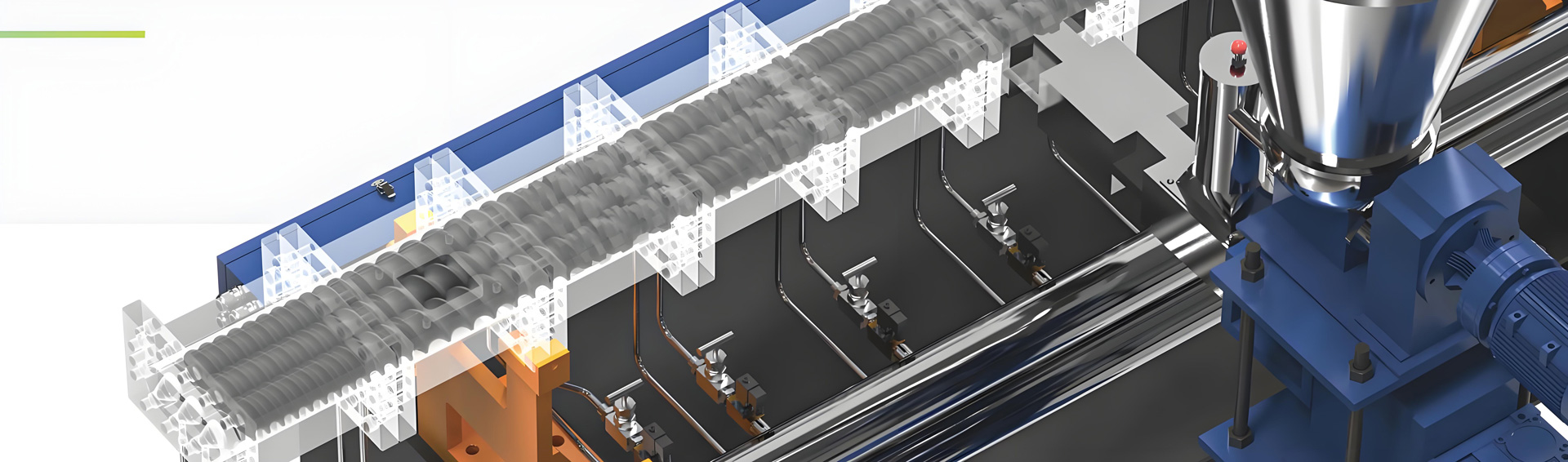
Mixing intensity must be sufficient to achieve uniform dispersion of anti-blocking agents without damaging the polymer matrix or causing excessive slip agent migration. Twin screw extruders are preferred for slip and anti-blocking masterbatch production due to their superior mixing capabilities compared to single screw extruders. The screw configuration should balance distributive and dispersive mixing to achieve optimal dispersion while minimizing shear that could affect additive distribution. Kerke’s advanced screw geometry provides excellent mixing performance for slip and anti-blocking formulations.
Die design and take-up conditions influence surface property development and must be considered in process optimization. The die geometry affects surface characteristics and the distribution of slip agents to the film surface. Take-up speed and cooling conditions can affect slip agent migration and surface development. Draw down ratio should be optimized to achieve desired film properties while maintaining proper surface characteristics. The interaction between extrusion conditions and surface property development requires systematic optimization for each application.
Cost Analysis and Pricing
The cost of slip and anti-blocking masterbatch varies depending on the specific additives used, concentration levels, and base polymers. Slip agent masterbatch typically costs between 4 and 12 dollars per kilogram, with erucamide-based formulations at the lower end of this range and specialized slip agents at the higher end. Anti-blocking masterbatch costs vary more widely, ranging from 3 to 15 dollars per kilogram depending on the anti-blocking agent type and concentration. Combined slip and anti-blocking masterbatch formulations typically cost between 5 and 18 dollars per kilogram, depending on the additive combination and concentration levels.
Slip agent raw material costs vary significantly depending on the specific chemistry and purity. Erucamide typically costs between 3 and 6 dollars per kilogram in bulk quantities, while oleamide and behenamide generally cost between 4 and 8 dollars per kilogram. Specialized slip agents or high-purity grades can cost significantly more. Anti-blocking agent costs vary widely, with synthetic silica typically ranging from 2 to 6 dollars per kilogram depending on particle size and surface treatment. Ceramic anti-blocking agents may cost between 4 and 10 dollars per kilogram. Natural diatomaceous earth typically costs between 1 and 3 dollars per kilogram.
Masterbatch concentration levels affect both performance and cost per unit of slip or anti-blocking effect. Higher concentration masterbatch requires less usage in the final product but has higher raw material costs per kilogram. The optimal concentration depends on the application requirements, processing conditions, and total cost considerations. Typical slip agent masterbatch concentrations range from 5 to 25 percent slip agent, while anti-blocking masterbatch concentrations range from 10 to 50 percent anti-blocking agent. The specific concentration should be optimized for each application.
Total cost of ownership for slip and anti-blocking masterbatch includes considerations beyond raw material costs. Processing costs, including energy consumption and equipment wear, should be factored into the economic analysis. Some slip and anti-blocking formulations may require special processing conditions or handling that add to production costs. The value provided through improved processing efficiency, reduced defects, and enhanced product performance should be considered in the economic evaluation. Kerke offers cost analysis support to help customers optimize their slip and anti-blocking masterbatch applications economically.
Kerke Equipment for Slip and Anti-blocking Masterbatch
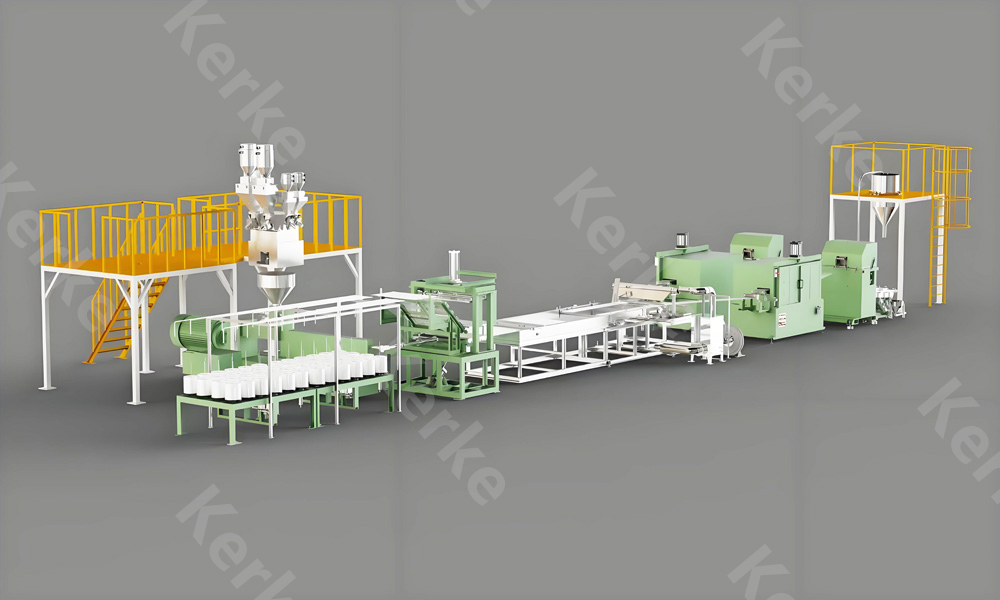
Kerke KTE Series twin screw extruders provide the ideal platform for producing high-quality slip and anti-blocking masterbatch. The KTE Series features advanced screw geometry optimized for dispersive and distributive mixing, ensuring uniform dispersion of anti-blocking agents throughout the polymer matrix. Precise temperature control across multiple barrel zones allows processors to maintain optimal processing conditions while preserving slip agent effectiveness. The modular design of KTE Series extruders enables customization for specific slip and anti-blocking masterbatch formulations.
KTE Series twin screw extruders offer L/D ratios from 40:1 to 72:1, providing sufficient residence time for thorough mixing while minimizing thermal effects on slip agent distribution. The available processing widths from 20mm to 150mm accommodate production volumes from laboratory scale to full-scale manufacturing. Kerke’s patented screw configuration technology enables optimization of mixing intensity and residence time for each slip and anti-blocking masterbatch formulation. This flexibility allows processors to achieve the optimal balance between mixing quality and additive distribution.
Pricing for Kerke KTE Series twin screw extruders ranges from 25,000 dollars for laboratory-scale models to over 500,000 dollars for large-scale production equipment, depending on size, configuration, and automation level. This investment provides the capability to produce high-quality slip and anti-blocking masterbatch with consistent performance. The return on investment can be achieved through improved product quality, reduced processing costs, and the ability to command premium prices for high-performance masterbatch formulations. Kerke offers flexible financing options to help customers acquire the equipment they need.
Kerke provides comprehensive support for slip and anti-blocking masterbatch production, including process development, formulation assistance, and ongoing technical support. The company’s experience with various slip agents, anti-blocking agents, and polymer systems enables them to provide valuable guidance for optimizing processing conditions. Kerke’s quality systems ensure that produced equipment meets the highest standards for consistency and reliability. The company’s commitment to innovation ensures that customers receive equipment capable of meeting evolving market requirements for slip and anti-blocking masterbatch.
Quality Control and Testing
Quality control for slip and anti-blocking masterbatch production involves comprehensive testing to ensure consistent performance and compliance with specifications. Testing protocols include measurement of additive concentration, dispersion quality assessment, and surface property evaluation. Consistent masterbatch quality is essential for ensuring reliable performance in end-use applications. Masterbatch manufacturers must maintain rigorous quality control systems to ensure batch-to-batch uniformity and compliance with specifications.
Additive concentration analysis verifies that slip agents and anti-blocking agents are present at the specified concentrations. Analytical techniques including gas chromatography, liquid chromatography, and thermal analysis can be used to quantify additive content. Accurate concentration control is essential for achieving consistent performance and meeting customer specifications. Concentration analysis should be performed on production batches to verify compliance with specifications. Kerke’s quality systems include additive concentration analysis as a critical control point in masterbatch production.
Dispersion quality assessment ensures that anti-blocking agents are uniformly distributed throughout the polymer matrix. Microscopic examination can identify agglomeration or uneven distribution of anti-blocking particles. Poor dispersion can lead to inconsistent surface properties and may affect optical properties. Scanning electron microscopy with energy-dispersive X-ray spectroscopy can provide detailed information about particle distribution. Dispersion quality assessment is particularly important for anti-blocking masterbatch where particle distribution directly affects surface performance.
Surface property testing evaluates the effectiveness of slip and anti-blocking masterbatch in final film applications. Testing should include coefficient of friction measurement, blocking force measurement, and optical property evaluation. These tests should be performed on films produced with masterbatch at recommended usage levels. Surface properties should be measured at various time points after film production to understand how properties develop over time. Kerke provides testing services to help customers evaluate masterbatch performance and optimize formulations.
Regulatory Considerations
Regulatory compliance is a critical consideration for slip and anti-blocking masterbatch used in food contact applications. Food contact regulations vary by region but generally require that additives used in food contact materials be approved for intended use. In the United States, FDA regulations establish requirements for food contact substances, including many slip and anti-blocking agents. European Union regulations for plastic materials in contact with food establish similar requirements. Masterbatch manufacturers must ensure that their formulations comply with applicable regulations for their target markets.
FDA compliance for food contact applications requires that slip and anti-blocking agents be listed in the Code of Federal Regulations or receive specific FDA approval. Erucamide, oleamide, and various silica-based anti-blocking agents have FDA approval for food contact applications at specified usage levels. Masterbatch manufacturers must maintain appropriate documentation to demonstrate compliance with FDA requirements. Compliance requires ongoing monitoring as regulations evolve and new applications emerge. Kerke’s quality systems help ensure that produced masterbatch meets regulatory requirements.
EU regulations for plastic food contact materials establish specific requirements for slip and anti-blocking substances used in food packaging. The European Food Safety Authority evaluates the safety of these substances and establishes permitted uses and migration limits. The EU approach typically requires more extensive testing compared to some other regions, including studies on migration potential and toxicological assessment. Masterbatch manufacturers selling into the EU market must ensure compliance with these comprehensive requirements. Kerke provides regulatory support to help customers navigate complex compliance requirements.
Other regions including Japan, China, and South America have their own food contact regulations that must be considered for masterbatch intended for these markets. These regulations may have different approved substance lists, migration limits, or testing requirements. Masterbatch manufacturers must understand the regulatory requirements for each target market and ensure compliance. Kerke maintains awareness of global regulatory requirements and can help customers ensure compliance across different markets.
Future Trends and Developments
The slip and anti-blocking masterbatch market continues to evolve as new applications emerge and performance requirements advance. The growing demand for high-performance films with specific surface characteristics drives innovation in additive technologies. Environmental considerations and regulatory changes are also influencing development directions. Future trends in slip and anti-blocking masterbatch include new additive chemistries, improved performance characteristics, and enhanced sustainability profiles.
New slip agent chemistries are being developed to address specific application requirements and overcome limitations of current agents. Bio-based slip agents derived from renewable sources are gaining interest for applications requiring sustainable positioning. These bio-based alternatives may provide different migration characteristics and performance profiles compared to traditional fatty acid amides. Development continues on slip agents with faster or slower migration rates to meet specific application requirements. Multi-functional slip agents that combine slip properties with other performance benefits represent another area of development.
Advanced anti-blocking agents with improved performance characteristics are expanding the capabilities of anti-blocking technology. Nano-structured anti-blocking agents provide effective anti-blocking at lower concentrations with reduced impact on optical properties. Surface-modified anti-blocking agents offer improved compatibility with different polymer systems and better dispersion characteristics. Hybrid anti-blocking systems that combine different particle types or shapes can provide optimized performance for specific applications. These advanced anti-blocking agents enable more precise control over film surface properties.
Environmental and regulatory considerations are driving development of more sustainable slip and anti-blocking solutions. Recyclability of films containing these additives is becoming an important consideration, driving development of additives compatible with recycling processes. Regulatory changes may affect the permitted use of certain additives, requiring reformulation of some masterbatch products. Environmental, social, and governance factors are increasingly influencing material selection decisions in the film industry. Masterbatch manufacturers are responding to these trends with more sustainable formulations.
Conclusion
Slip and anti-blocking masterbatch plays an essential role in modern film processing by enabling improved handling characteristics, preventing blocking, and enhancing overall process efficiency. The technology has evolved significantly from simple single-additive formulations to sophisticated multi-component systems that provide precise control over surface properties. Proper formulation and processing are essential for achieving consistent performance while maintaining film quality. Kerke KTE Series twin screw extruders provide the mixing capabilities and process control needed for producing high-quality slip and anti-blocking masterbatch.
The selection of appropriate slip agents and anti-blocking agents requires careful consideration of application requirements, processing conditions, and end-use performance. Erucamide remains the most widely used slip agent due to its excellent balance of properties, but alternative slip agents may be preferred for specific applications. Anti-blocking agent selection must consider particle characteristics, surface chemistry, and compatibility with other additives. Masterbatch manufacturers must work closely with customers to optimize formulations for each specific application.
As the demand for high-performance films continues to grow, innovation in slip and anti-blocking technologies will expand the capabilities and application possibilities. New additive chemistries, improved performance characteristics, and enhanced sustainability profiles will continue to advance the technology. Kerke remains committed to providing the advanced equipment and technical support needed to produce slip and anti-blocking masterbatch that meets evolving market requirements and customer needs.
Investment in proper compounding equipment, such as Kerke KTE Series twin screw extruders, is essential for producing slip and anti-blocking masterbatch with consistent quality and performance. The precise control and mixing capabilities of Kerke equipment enable manufacturers to optimize processing conditions for each formulation. This investment pays dividends through improved product quality, reduced processing costs, and the ability to meet the growing market demand for high-performance slip and anti-blocking masterbatch.