Introduction to Processing Aid Masterbatch
Processing aid masterbatch represents a fundamental technology in plastics processing, enabling manufacturers to overcome flow limitations, enhance extrusion stability, and achieve significant energy savings across diverse polymer applications. These specialized additive formulations modify rheological properties of polymer melts, reducing viscosity, improving melt flow characteristics, and enabling processing of materials that would otherwise be difficult or impossible to process using conventional equipment. The global plastics processing industry relies heavily on processing aid masterbatch to optimize production efficiency, reduce energy consumption, and expand processing windows for challenging materials.
The market for processing aid masterbatch has grown substantially as polymer processors seek to increase production rates, reduce energy costs, and improve product quality through enhanced flow characteristics. Processing aids enable higher throughput on existing equipment, reduce pressure requirements, and improve dimensional stability of extruded products. The technology has evolved from simple external lubricants to sophisticated multi-component systems that provide targeted rheological modification while maintaining or enhancing final product properties. Modern processing aid masterbatch formulations incorporate combinations of internal and external lubricants, processing stabilizers, and rheology modifiers that work synergistically to optimize processing performance.
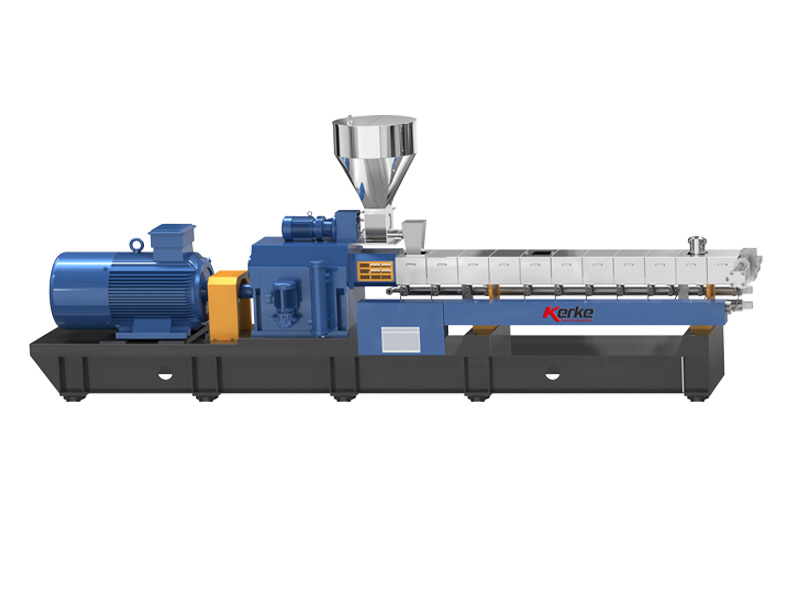
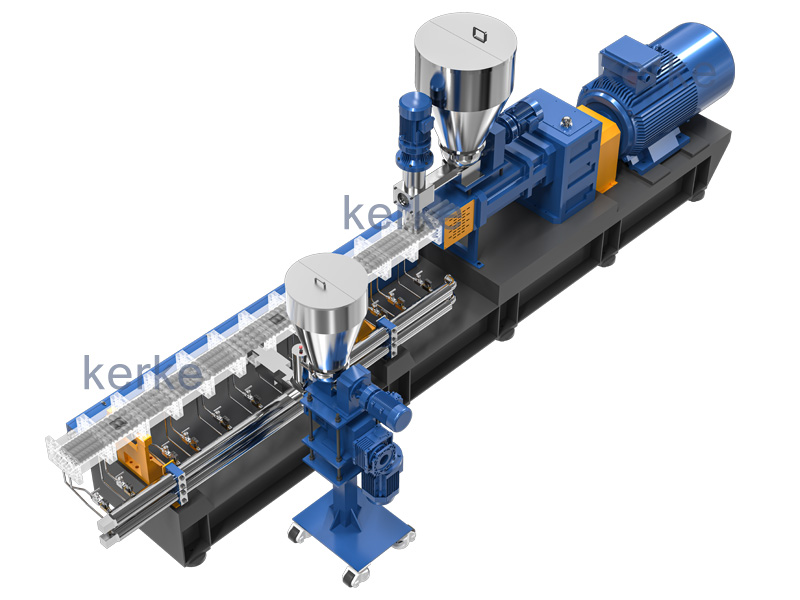
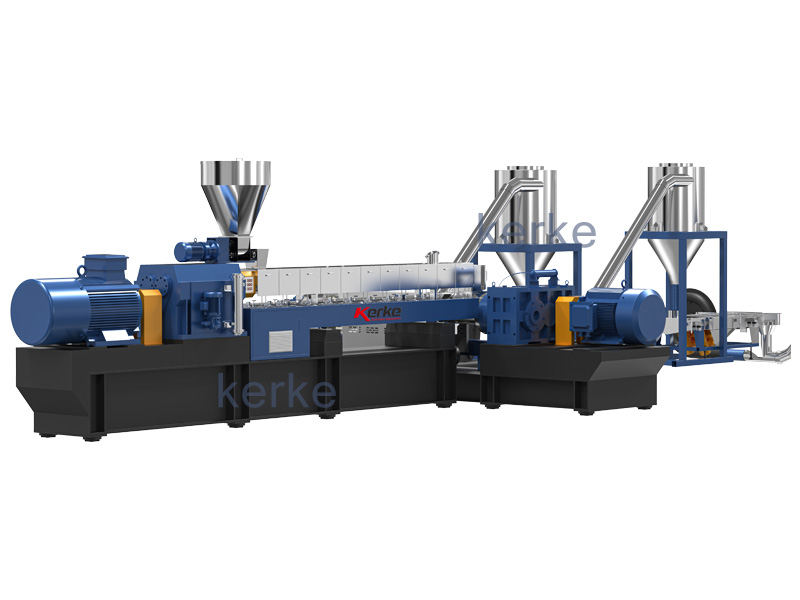
Kerke, as a leading manufacturer of twin screw extruders and masterbatch compounding equipment, understands the unique requirements of processing aid masterbatch production. The company’s KTE Series twin screw extruders provide the precise control and mixing capabilities necessary for achieving uniform dispersion of processing aids throughout the polymer matrix. Proper compounding is essential for ensuring consistent processing performance while maintaining the mechanical properties and appearance of the base polymer. Kerke’s equipment is designed to handle the specific challenges associated with processing processing aid masterbatch, including highly lubricious formulations and the need for thorough distributive mixing.
Understanding Processing Aid Mechanisms
Processing aids function through multiple mechanisms that modify polymer melt behavior during processing, reducing internal and external friction that limits flow and increases energy requirements. The primary mechanisms include internal lubrication, which reduces friction between polymer chains, and external lubrication, which reduces friction between polymer melt and metal surfaces. Additionally, some processing aids modify polymer entanglement and crystallization behavior, further influencing flow characteristics. Understanding these mechanisms is essential for designing effective processing aid masterbatch formulations that achieve desired processing improvements without compromising final product properties.
Internal lubricants, also known as plasticizers or flow enhancers, work by reducing intermolecular friction within the polymer melt. These additives intercalate between polymer chains, reducing chain entanglements and facilitating chain slippage under shear. The reduction in internal friction results in lower apparent viscosity and improved flow characteristics. Internal lubricants are particularly effective for high molecular weight polymers and highly filled systems where chain mobility is limited. The effectiveness of internal lubricants depends on their compatibility with the polymer matrix and their molecular structure.
External lubricants function by creating a lubricating layer between the polymer melt and metal surfaces of processing equipment. These additives migrate to metal surfaces where they form a low-friction boundary layer, reducing adhesion and friction. External lubrication reduces torque requirements, prevents sticking to metal surfaces, and improves release properties. The migration behavior of external lubricants is critical to their effectiveness, requiring careful formulation to achieve appropriate surface activity without excessive migration that could affect product appearance or performance.
Rheology modifiers represent another class of processing aids that influence flow characteristics through mechanisms beyond simple lubrication. These additives may include chain extenders, chain scission agents, or nucleating agents that affect polymer structure and behavior. Chain extenders can increase molecular weight under processing conditions, improving melt strength and dimensional stability. Chain scission agents can reduce molecular weight, improving flow for high molecular weight polymers. Nucleating agents can affect crystallization behavior, influencing solidification and dimensional characteristics.
Internal Lubricant Types and Applications
Fatty acid amides represent one of the most widely used classes of internal lubricants in processing aid masterbatch formulations. These compounds, including erucamide, oleamide, and stearamide, provide effective internal lubrication for polyolefins and other polymers. Fatty acid amides intercalate between polymer chains, reducing chain entanglements and improving flow characteristics. The effectiveness varies with chain length and structure, with longer chain compounds typically providing better lubrication but potentially slower migration to surfaces where external lubrication is desired.
Esters and ether-based internal lubricants offer alternative mechanisms and compatibility profiles compared to fatty acid amides. These compounds, including glycerol esters and various synthetic lubricants, provide effective lubrication while offering improved thermal stability and reduced potential for migration to surfaces where they could cause processing or performance issues. Ester-based lubricants are particularly valuable in applications where surface appearance is critical or where excessive external lubrication would cause problems. These compounds often require higher loading levels compared to fatty acid amides to achieve equivalent internal lubrication.
Metal stearates including calcium stearate, zinc stearate, and magnesium stearate provide both internal and external lubrication depending on the specific compound and polymer system. Metal stearates function through multiple mechanisms including lubrication, acid scavenging, and stabilization effects. The lubrication effectiveness depends on the metal ion and fatty acid composition. Calcium stearate is particularly effective in polyolefins, providing good lubrication and compatibility. Metal stearates often provide cost-effective lubrication at moderate loading levels.
Waxes including polyethylene wax, polypropylene wax, and Fischer-Tropsch wax provide effective internal lubrication with specific benefits for certain applications. Waxes offer thermal stability and limited migration compared to some lubricant types, making them suitable for applications where surface activity must be controlled. Polyethylene and polypropylene waxes provide excellent compatibility with polyolefins and can act as nucleating agents in addition to lubrication. Fischer-Tropsch wax offers excellent thermal stability and compatibility with various polymers.
External Lubricant Types and Applications
Amide-based external lubricants, including erucamide and oleamide, provide effective external lubrication through migration to metal surfaces. These compounds are among the most widely used external lubricants due to their effectiveness and cost efficiency. The migration rate and surface activity vary with chain structure, with longer chain compounds typically providing more persistent surface lubrication but potentially slower migration. External lubrication reduces torque requirements, prevents sticking to metal surfaces, and improves release characteristics.
Ester-based external lubricants offer different migration characteristics and surface activity compared to amide-based lubricants. These compounds may provide faster initial migration or more controlled surface activity depending on the specific ester structure and molecular weight. Ester-based lubricants can be particularly valuable in applications where immediate surface lubrication is required or where the persistence of surface lubrication must be controlled. The thermal stability of ester-based lubricants can be advantageous for high-temperature processing.
Phosphoric acid esters provide effective external lubrication with additional benefits including compatibility with various polymers and potential flame retardant effects. These compounds function through migration to metal surfaces where they form lubricating layers that reduce friction and adhesion. Phosphoric acid esters can be particularly valuable in applications requiring both lubrication and flame retardancy. The dual functionality can provide value through reduction in total additive loading required to achieve multiple performance goals.
Metal soap lubricants including metal stearates provide external lubrication through migration to metal surfaces where they form boundary lubricating layers. The specific metal ion affects lubrication effectiveness and compatibility with polymer systems. Calcium stearate provides effective external lubrication for polyolefins with good thermal stability. Zinc stearate offers effective lubrication with additional heat stabilization effects. Magnesium stearate provides lubrication with potential benefits for dimensional stability.
Processing Aid for Specific Polymers
Polyethylene processing aids focus on reducing melt viscosity, improving extrusion stability, and enabling higher production rates. The specific requirements vary with polyethylene type and density. Low-density polyethylene typically requires less processing aid due to its inherently better flow characteristics compared to higher density grades. Linear low-density polyethylene may benefit from processing aids that improve dimensional stability and reduce melt fracture. High-density polyethylene often requires substantial processing aid to achieve acceptable flow rates and processing stability.
Polypropylene processing aids must address the different crystalline structure and higher melting point of polypropylene compared to polyethylene. Polypropylene’s higher crystallinity can result in higher torque requirements and potential processing challenges. Processing aids for polypropylene often focus on reducing melt viscosity while maintaining adequate crystallization for final properties. Nucleating effects can also be beneficial for controlling crystallization behavior and dimensional stability. The specific polypropylene grade including homopolymer versus copolymer affects processing aid selection and loading levels.
PVC processing requires specialized processing aids due to the polymer’s thermal sensitivity and complex additive systems. PVC processing aids must be compatible with plasticizers, stabilizers, and other additives commonly used in PVC formulations. The processing aids should not interfere with PVC stabilization or accelerate thermal degradation. External lubrication is particularly important for PVC to prevent sticking to metal surfaces and improve release characteristics. Calcium stearate and other metal stearates are commonly used in PVC processing aid formulations.
Polystyrene processing aids focus on reducing melt viscosity and improving flow characteristics for this amorphous polymer. Polystyrene’s higher glass transition temperature compared to polyolefins affects processing aid requirements. Internal lubricants that reduce melt viscosity are particularly valuable for polystyrene. External lubrication may be less critical for polystyrene compared to polyolefins but can still provide benefits in preventing sticking and improving release. The specific polystyrene grade including general purpose versus high impact affects processing aid requirements.
Processing Aid for Filled Systems
Filled polymer systems present unique processing challenges that processing aids must address to enable efficient processing. Fillers including calcium carbonate, talc, glass fibers, and other materials significantly increase melt viscosity and torque requirements. Processing aids for filled systems must reduce filler-filler interactions, improve filler dispersion, and reduce polymer-filler friction. The specific requirements depend on filler type, loading level, and surface treatment. High filler loadings require substantial processing aid to achieve acceptable processing characteristics.
Calcium carbonate filled systems benefit from processing aids that reduce filler-filler and filler-polymer interactions. Calcium carbonate can cause substantial increases in viscosity and torque, particularly at loadings above 30 percent. Processing aids that improve dispersion and reduce interactions between calcium carbonate particles are essential for efficient processing. External lubrication helps prevent sticking to metal surfaces where filler-polymer composites may have increased adhesion. The specific calcium carbonate type including particle size and surface treatment affects processing aid requirements.
Talc filled systems present different challenges due to talc’s plate-like structure and surface characteristics. Talc can act as a nucleating agent and increase crystallinity in polyolefins, which can affect processing requirements. Processing aids for talc filled systems must address both viscosity effects and crystallization behavior. External lubrication may be particularly important for talc filled systems due to talc’s tendency to increase adhesion to metal surfaces. The specific talc type and loading level determine processing aid requirements.
Glass fiber reinforced systems require processing aids that reduce fiber-fiber interactions and improve dispersion. Glass fibers can cause substantial increases in torque and processing difficulties due to fiber entanglement and mechanical reinforcement effects. Processing aids that improve fiber dispersion and reduce fiber-fiber friction are essential for efficient processing. External lubrication helps prevent fiber damage and reduces wear on processing equipment. The glass fiber type, length, and loading level significantly affect processing aid requirements and selection.
Flow Improvement Mechanisms
Flow improvement through processing aids occurs through multiple mechanisms that reduce resistance to polymer melt flow. The primary mechanisms include reduction of apparent viscosity through internal lubrication, reduction of wall slip through external lubrication, and modification of polymer entanglement behavior. These mechanisms work synergistically to achieve overall flow improvement. The effectiveness depends on processing conditions, polymer characteristics, and processing aid formulation. Understanding these mechanisms enables optimization of formulations for specific applications.
Melt viscosity reduction through internal lubrication enables polymers to flow more readily through processing equipment. Internal lubricants reduce chain entanglements and facilitate chain slippage under shear, resulting in lower apparent viscosity. The reduction in viscosity translates directly to lower pressure requirements and increased production rates. The extent of viscosity reduction depends on lubricant type, loading level, and polymer characteristics. Highly effective internal lubricants can reduce apparent viscosity by 50 percent or more at appropriate loading levels.
Wall slip enhancement through external lubrication reduces friction between polymer melt and metal surfaces of processing equipment. External lubricants migrate to metal surfaces where they form lubricating layers that enable the polymer melt to slip more readily along surfaces. This reduces torque requirements and enables higher production rates without increasing energy consumption. The effectiveness of wall slip enhancement depends on lubricant migration characteristics and surface activity. Effective wall slip can reduce torque requirements by 30 to 60 percent depending on processing conditions.
Polymer chain entanglement modification represents another mechanism for flow improvement. Some processing aids, particularly chain scission agents, can temporarily reduce polymer molecular weight under processing conditions, reducing chain entanglements and improving flow. Other processing aids may affect chain extension or crosslinking behavior, modifying entanglement characteristics. These mechanisms provide flow improvement without the potential for migration or surface activity issues associated with lubricants. The specific effects depend on processing conditions and polymer type.
Extrusion Stability Enhancement
Extrusion stability represents a critical benefit of processing aid masterbatch, enabling consistent production rates and product quality. Processing aids contribute to extrusion stability through multiple mechanisms including reduction of pressure fluctuations, prevention of melt fracture, and improvement of dimensional consistency. These benefits are particularly valuable for high-speed extrusion operations and applications requiring tight dimensional tolerances. Achieving extrusion stability often requires balancing internal and external lubrication with other processing aid functions.
Pressure fluctuation reduction through processing aids enables more consistent extrusion operation. Internal lubricants reduce apparent viscosity and make the polymer melt more responsive to processing conditions, reducing pressure variations. External lubricants reduce friction and prevent sticking that can cause pressure fluctuations. The combination of internal and external lubrication provides stable pressure characteristics over extended production runs. Stable pressure reduces product defects and improves dimensional consistency. The degree of pressure stabilization achieved depends on processing conditions and formulation.
Melt fracture prevention through processing aids enables higher production rates without surface defects. Melt fracture occurs when the polymer melt experiences excessive shear stress at die surfaces, resulting in surface roughness and appearance defects. External lubricants reduce friction at die surfaces, reducing shear stress and preventing melt fracture. Internal lubricants reduce melt viscosity, also reducing shear stress for a given production rate. The combination enables higher production rates without melt fracture. The effectiveness depends on processing conditions and polymer characteristics.
Dimensional consistency improvement through processing aids enables tighter product tolerances and reduced scrap rates. Processing aids improve flow characteristics and reduce pressure variations, both of which contribute to more consistent product dimensions. Nucleating effects from some processing aids can control crystallization behavior in semi-crystalline polymers, further improving dimensional stability. The combination of flow improvement and crystallization control enables tight dimensional control. The degree of dimensional consistency achieved depends on polymer type, processing conditions, and formulation.
Energy Saving Potential
Energy saving represents one of the most significant economic benefits of processing aid masterbatch, directly reducing production costs and environmental impact. Processing aids reduce energy consumption through multiple mechanisms including reduced torque requirements, lower pressure needs, and potentially reduced melting requirements. The energy saving potential depends on processing conditions, polymer type, and processing aid formulation. Quantifying energy savings requires careful measurement of processing parameters with and without processing aids.
Torque reduction through processing aids directly reduces energy consumption by reducing the power required to turn the extruder screw. External lubricants that reduce friction between polymer melt and metal surfaces provide substantial torque reduction. Internal lubricants that reduce melt viscosity also contribute to torque reduction. The combined effect can reduce torque requirements by 30 to 60 percent depending on processing conditions and formulation. Torque reduction translates directly to energy savings, as the extruder motor requires less power to maintain the same production rate.
Pressure reduction through processing aids reduces the energy required to pump polymer melt through the die and other flow restrictions. Internal lubricants that reduce melt viscosity reduce pressure requirements for a given production rate. External lubricants that reduce wall friction also contribute to pressure reduction. Lower pressure requirements reduce the mechanical energy required to pump material through the system. The pressure reduction achieved depends on processing conditions, polymer characteristics, and formulation.
Potential reduction in melting energy requirements can occur when processing aids enable lower temperature processing. Some processing aids improve flow characteristics sufficiently to allow processing at lower temperatures while maintaining production rates. Lower processing temperatures reduce the energy required to heat the polymer to processing temperature. This effect is highly dependent on processing conditions and formulation. Not all processing aid formulations enable temperature reduction, but when possible, the energy savings can be substantial.
Processing Parameters and Optimization
Processing parameters must be optimized when using processing aid masterbatch to achieve maximum benefits. Temperature profiles, screw speed, and die design all interact with processing aid effects. Optimization requires understanding how processing aids affect polymer behavior and adjusting parameters accordingly. Proper optimization can maximize energy savings, production rate increases, and product quality improvements. Kerke twin screw extruders provide the precise control needed to optimize processing parameters for processing aid formulations.
Temperature profiles may need adjustment when using processing aid masterbatch. The improved flow characteristics often enable lower temperature processing while maintaining production rates. Lower temperatures can provide energy savings and reduce thermal degradation. However, some processing aids may require minimum temperatures for effectiveness or optimal migration characteristics. Temperature profiles should be optimized based on the specific processing aid formulation and processing conditions. Kerke KTE Series extruders provide precise temperature control for optimization.
Screw speed optimization can maximize the benefits of processing aid masterbatch. The improved flow characteristics often enable higher screw speeds and increased production rates. However, there is typically an optimal screw speed beyond which benefits plateau or decline. Higher speeds may reduce residence time, potentially affecting processing aid effectiveness. The optimal screw speed depends on processing aid formulation, polymer type, and equipment characteristics. Kerke extruders provide adjustable screw speed for optimization.
Die design and configuration interact with processing aid effects. The improved flow characteristics may enable different die designs or configurations that were not feasible without processing aids. External lubricants reduce die pressure, potentially enabling use of dies with lower land lengths or different geometries. The specific die design depends on the product requirements and processing aid effects. Processing aids may enable different die designs that provide product quality or cost benefits.
Cost Analysis and Pricing
The cost of processing aid masterbatch varies significantly depending on the specific additives, loading levels, and base polymers used. Processing aid masterbatch typically costs between 4 and 12 dollars per kilogram, with simpler formulations at the lower end of this range and complex multi-component formulations at the higher end. The actual cost depends on the specific formulation, additive purity, and volume purchased. Masterbatch manufacturers must optimize formulations to achieve required processing improvements at acceptable cost levels while considering energy savings and productivity gains.
Internal lubricant raw material costs vary depending on the specific chemistry and purity requirements. Fatty acid amides typically cost between 3 and 6 dollars per kilogram in bulk quantities. Ester-based lubricants generally cost between 4 and 8 dollars per kilogram. Waxes typically cost between 3 and 7 dollars per kilogram depending on the specific type and purity. Higher purity grades or specialized structures can cost significantly more. These costs must be balanced against effectiveness and loading requirements to determine overall formulation economics.
External lubricant raw material costs vary widely depending on the specific chemistry. Amide-based lubricants typically cost between 3 and 6 dollars per kilogram in bulk quantities. Ester-based lubricants generally cost between 4 and 9 dollars per kilogram. Phosphoric acid esters may cost between 6 and 12 dollars per kilogram but provide dual functionality that can reduce overall additive loading. Metal soaps typically cost between 2 and 5 dollars per kilogram. These costs must be balanced against effectiveness and compatibility with specific polymer systems.
Masterbatch loading levels significantly affect cost-effectiveness. Higher loading levels increase raw material costs per kilogram but enable higher dilution ratios in end-use applications. The optimal loading level balances processing performance with economic considerations. Typical processing aid masterbatch concentrations range from 5 to 30 percent active ingredients, with the exact level determined by required processing improvement and application requirements. Masterbatch manufacturers work with customers to determine appropriate loading levels for specific applications.
Kerke Equipment for Processing Aid Masterbatch
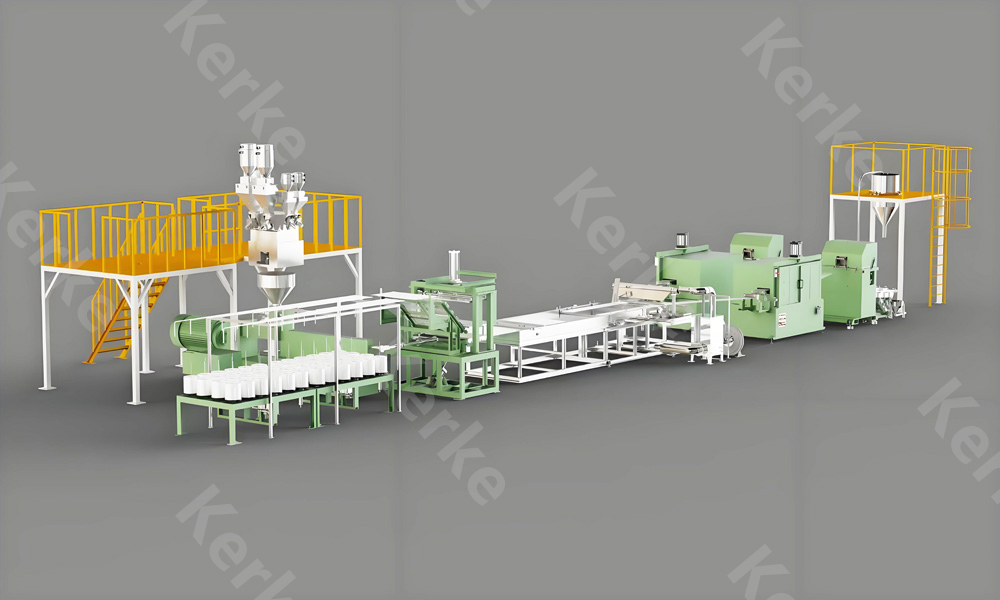
Kerke KTE Series twin screw extruders provide the ideal platform for producing high-quality processing aid masterbatch. The KTE Series features advanced screw geometry optimized for dispersive and distributive mixing, ensuring uniform dispersion of processing aids throughout the polymer matrix. Precise temperature control across multiple barrel zones allows processors to maintain optimal processing conditions while preserving processing aid effectiveness. The modular design of KTE Series extruders enables customization for specific processing aid masterbatch formulations.
KTE Series twin screw extruders offer L/D ratios from 40:1 to 72:1, providing sufficient residence time for thorough mixing while minimizing thermal effects on processing aids. The available processing widths from 20mm to 150mm accommodate production volumes from laboratory scale to full-scale manufacturing. Kerke’s patented screw configuration technology enables optimization of mixing intensity and residence time for each processing aid masterbatch formulation. This flexibility allows processors to achieve the optimal balance between mixing quality and processing aid distribution.
Pricing for Kerke KTE Series twin screw extruders ranges from 25,000 dollars for laboratory-scale models to over 500,000 dollars for large-scale production equipment, depending on size, configuration, and automation level. This investment provides the capability to produce high-quality processing aid masterbatch with consistent performance. The return on investment can be achieved through improved product quality, reduced processing costs for customers, and the ability to command premium prices for high-performance processing aid masterbatch. Kerke offers flexible financing options to help customers acquire the equipment they need.
Kerke provides comprehensive support for processing aid masterbatch production, including process development, formulation assistance, and ongoing technical support. The company’s experience with various processing aids and polymer systems enables them to provide valuable guidance for optimizing processing conditions. Kerke’s quality systems ensure that produced equipment meets the highest standards for consistency and reliability. The company’s commitment to innovation ensures that customers receive equipment capable of meeting evolving market requirements.
Quality Control and Testing
Quality control for processing aid masterbatch production involves comprehensive testing to ensure consistent performance and compliance with specifications. Testing protocols include measurement of additive concentration, dispersion quality assessment, and processing performance evaluation. Consistent masterbatch quality is essential for ensuring reliable processing improvement in end-use applications. Masterbatch manufacturers must maintain rigorous quality control systems to ensure batch-to-batch uniformity and compliance with specifications.
Additive concentration analysis verifies that processing aids are present at the specified concentrations. Analytical techniques including gas chromatography, liquid chromatography, and thermal analysis can be used to quantify additive content. Accurate concentration control is essential for achieving consistent processing improvement and meeting customer specifications. Concentration analysis should be performed on production batches to verify compliance with specifications. Kerke’s quality systems include additive concentration analysis as a critical control point in masterbatch production.
Dispersion quality assessment ensures that processing aids are uniformly distributed throughout the polymer matrix. Microscopic examination can identify agglomeration or uneven distribution of additives. Poor dispersion can lead to inconsistent processing performance and may affect product properties. Scanning electron microscopy with energy-dispersive X-ray spectroscopy can provide detailed information about additive distribution. Kerke’s quality systems include dispersion quality assessment as a critical control point in masterbatch production.
Processing performance testing evaluates the effectiveness of processing aid masterbatch in improving processing characteristics. Testing should include measurement of viscosity reduction, torque reduction, pressure reduction, and product quality improvements. These tests should be performed on polymers processed with masterbatch at recommended usage levels. Processing performance should be measured under conditions simulating actual processing environments. Kerke provides testing services to help customers evaluate masterbatch performance and optimize formulations.
Environmental and Regulatory Considerations
Environmental and regulatory considerations are increasingly important in processing aid masterbatch development and use. The environmental impact of processing aids, particularly migration potential and end-of-life considerations, must be evaluated. Regulatory requirements for food contact, medical, and other applications affect processing aid selection and use. Masterbatch manufacturers must consider these factors in formulation development and ensure compliance with applicable regulations.
Migration potential of processing aids must be evaluated, particularly for applications where migration could cause issues. External lubricants by definition migrate to surfaces, which can affect appearance or cause problems in subsequent processing or use. Internal lubricants typically have lower migration potential but may still migrate under certain conditions. The migration characteristics must be understood and controlled for each application. Formulations can be adjusted to control migration rate and surface activity.
Food contact regulations require that processing aids used in food packaging or food contact applications be approved for such use. FDA regulations in the United States establish requirements for food contact substances. EU regulations for plastic materials in contact with food establish similar requirements. Processing aids must be selected from approved substances lists and used within specified concentration limits. Masterbatch manufacturers must maintain appropriate documentation to demonstrate compliance with food contact regulations.
Medical device regulations impose additional requirements on processing aids used in medical applications. Biocompatibility must be evaluated for processing aids used in medical devices that contact patients or healthcare workers. ISO 10993 biocompatibility testing may be required depending on the nature and duration of patient contact. Processing aids must be selected and formulated to meet these stringent requirements. Masterbatch manufacturers working with medical device customers must understand these requirements and provide appropriate formulations.
Future Trends and Developments
The processing aid masterbatch market continues to evolve as new polymer systems emerge and processing requirements become more demanding. The demand for higher production rates, energy efficiency, and processing of challenging materials drives innovation in processing aid technology. Future trends in processing aid masterbatch include new additive chemistries, improved performance characteristics, and enhanced sustainability profiles.
New processing aid chemistries are being developed to address specific challenges and overcome limitations of current additives. Bio-based processing aids derived from renewable sources are gaining interest for applications requiring sustainable positioning. These bio-based alternatives may provide different lubrication mechanisms and performance profiles compared to traditional processing aids. Development continues on processing aids with targeted migration characteristics or multi-functionality that combines processing improvement with other performance benefits.
Advanced rheology modifiers provide more sophisticated control over polymer melt behavior compared to traditional lubricants. These additives may work through mechanisms including temporary chain scission, targeted chain extension, or modification of crystallization behavior. Advanced rheology modifiers enable more precise control over flow characteristics and can be tailored to specific polymer systems and processing conditions. These advanced materials often require specialized processing capabilities for production and application.
Energy-saving formulations represent a growing focus area as energy costs increase and environmental concerns intensify. Processing aids that maximize energy reduction while maintaining product performance are increasingly valued. Formulations that enable lower temperature processing while maintaining or improving product quality can provide substantial energy savings. The energy saving potential of processing aid masterbatch continues to be a key driver for adoption in cost-conscious markets.
Conclusion
Processing aid masterbatch for flow improvement, extrusion stability, and energy saving represents a fundamental technology that enables efficient plastics processing across diverse applications. The technology has evolved significantly from simple lubricant formulations to sophisticated multi-component systems that provide targeted rheological modification. Proper formulation and processing are essential for achieving consistent processing improvement while maintaining product quality. Kerke KTE Series twin screw extruders provide the mixing capabilities and process control needed for producing high-quality processing aid masterbatch.
The selection of appropriate processing aids requires careful consideration of polymer type, processing conditions, and application requirements. Internal lubricants reduce melt viscosity and improve flow characteristics. External lubricants reduce friction with metal surfaces and prevent sticking. The balance between internal and external lubrication must be optimized for each application. Masterbatch manufacturers must work closely with customers to optimize formulations for specific applications.
As processing requirements continue to advance and energy costs increase, innovation in processing aid technology will expand capabilities and application possibilities. New additive chemistries, improved performance characteristics, and enhanced energy-saving profiles will continue to advance the technology. Kerke remains committed to providing the advanced equipment and technical support needed to produce processing aid masterbatch that meets evolving market requirements and processing challenges.
Investment in proper compounding equipment, such as Kerke KTE Series twin screw extruders, is essential for producing processing aid masterbatch with consistent quality and performance. The precise control and mixing capabilities of Kerke equipment enable manufacturers to optimize processing conditions for each formulation. This investment pays dividends through improved product quality, reduced processing costs for customers, and the ability to meet the growing market demand for high-performance processing aid masterbatch.