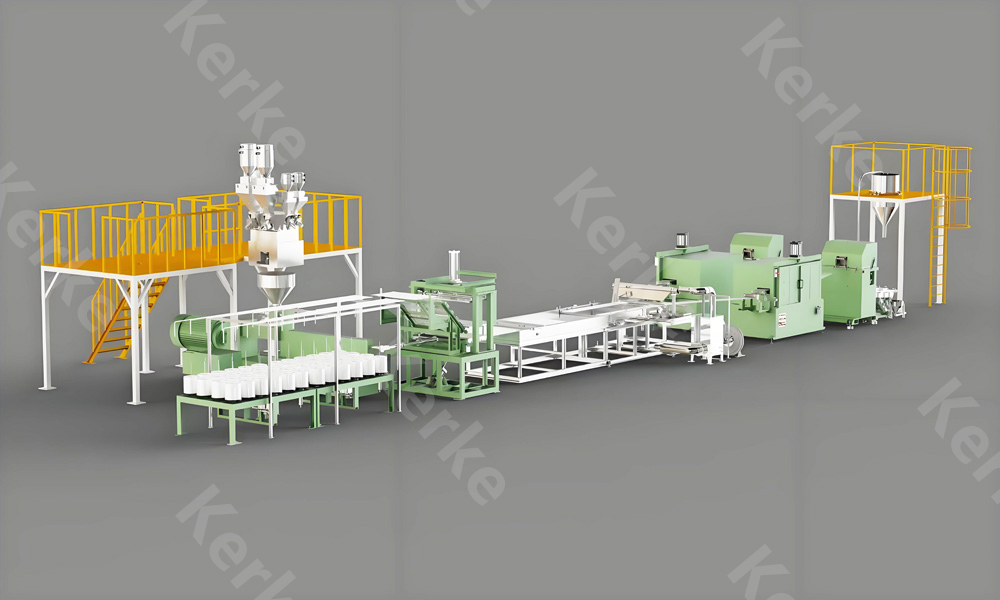
Establishing an effective masterbatch extruder setup for color master manufacturing requires comprehensive understanding of equipment selection, process optimization, and quality management principles. Color masterbatch production presents unique challenges including achieving uniform pigment dispersion, maintaining color consistency, and preserving heat-sensitive organic pigments throughout the extrusion process. This complete guide provides detailed coverage of setup requirements, operational parameters, and optimization strategies essential for successful color master manufacturing using twin screw extruder technology.
Understanding Color Masterbatch Production Requirements
Color masterbatch represents highly concentrated pigment dispersions in carrier resins, typically containing 20-60% pigment loading depending on pigment type and application requirements. The production process must achieve complete pigment wetting, thorough deagglomeration, and uniform dispersion throughout the carrier matrix. Inadequate dispersion results in color inconsistency, processing difficulties, and reduced performance properties in end applications. Proper masterbatch extruder setup addresses these challenges through appropriate equipment configuration, processing parameters, and quality control procedures.
The quality of color masterbatch directly impacts the value delivered to customers and the competitive position of the manufacturer. Premium color concentrates enable customers to achieve target color strength with lower let-down ratios, reducing material costs and processing challenges. Achieving premium quality requires investment in appropriate twin screw extruder technology and thorough process optimization. Understanding the relationship between equipment setup, processing conditions, and product quality enables manufacturers to produce competitive color masterbatch products.
Pigment Characteristics and Processing Implications
Different pigment types present varying processing challenges based on their chemical composition, particle size distribution, and thermal stability. Inorganic pigments including titanium dioxide, iron oxides, and ultramarine blues typically offer superior heat stability and processing tolerance compared to organic alternatives. However, their higher densities and hardness require robust twin screw extruder designs capable of handling abrasive materials without excessive wear. Understanding pigment characteristics guides equipment specification and process parameter selection.
Organic pigments including phthalocyanines, azo pigments, and high-performance pigments offer exceptional color strength but often exhibit sensitivity to processing temperatures and shear conditions. Excessive thermal exposure can cause color shift or degradation, while insufficient shear results in poor dispersion and reduced color strength. Advanced compounding extruder configurations with precise temperature control and optimized screw designs enable processing of sensitive organic pigments while achieving excellent dispersion quality.
Carrier Resin Selection for Color Masterbatch
Carrier resin selection significantly impacts color masterbatch performance and processing requirements. Universal carriers based on ethylene vinyl acetate or specialized polyolefin blends offer broad compatibility across multiple polymer types, simplifying inventory management and enabling versatile product portfolios. Dedicated carriers matched to specific polymer families typically provide superior compatibility and performance in target applications. Twin screw extruder setups must accommodate processing requirements of different carrier systems.
Processing temperature ranges vary significantly between carrier resin types, requiring flexible masterbatch extruder temperature control capabilities. Low-melting carriers process at temperatures below 150°C while high-performance carriers may require temperatures exceeding 250°C. Advanced extruder designs with multiple temperature zones and precise control enable processing across this entire range while maintaining optimal conditions for both carrier and pigment components.
Equipment Configuration for Color Masterbatch Production
Proper twin screw extruder configuration proves essential for achieving optimal color masterbatch quality and production efficiency. Configuration decisions encompass screw design, barrel layout, feeding systems, and downstream equipment. Each configuration element impacts specific aspects of product quality and operational performance. Comprehensive understanding of configuration options enables optimization for specific production requirements.
Screw diameter selection primarily determines throughput capacity and should match production volume requirements. Small diameter extruders in the 35-40mm range suit development work and small production volumes up to 100 kg/h. Medium diameter equipment around 60-65mm addresses production volumes of 200-500 kg/h typical of established color masterbatch operations. Large diameter compounding extruder systems exceeding 90mm provide production capacity above 1000 kg/h for high-volume manufacturing. Matching equipment size to production requirements optimizes capital efficiency and operational economics.
Screw Design Optimization for Pigment Dispersion
Screw configuration represents the primary determinant of pigment dispersion quality in twin screw extruder operations. Effective dispersion requires both dispersive mixing to break pigment agglomerates and distributive mixing to achieve uniform distribution throughout the melt. Kneading blocks provide intensive dispersive mixing through staggered disc arrangements that create high shear in the intermeshing region. Specialized mixing elements enhance distributive mixing, ensuring uniform component distribution following dispersive mixing stages.
The sequence and intensity of mixing elements must balance dispersion requirements against thermal exposure. Excessive mixing intensity can degrade heat-sensitive pigments while insufficient mixing results in inadequate dispersion. Modern masterbatch extruder designs offer exceptional flexibility in configuring mixing intensity through selection of kneading block stagger angle, disc width, and element quantity. Process development should systematically evaluate mixing configurations to identify optimal balance between dispersion quality and pigment protection.
Barrel Configuration and Temperature Management
Barrel configuration impacts processing flexibility and temperature control capability. Segmented barrel designs with individual temperature control zones enable precise thermal profiling essential for color masterbatch production. Standard configurations typically feature 8-10 barrel segments, providing sufficient zones for feeding, melting, mixing, and pumping operations. Extended configurations with additional segments offer enhanced flexibility for complex formulations or devolatilization requirements.
Temperature profile optimization requires balancing polymer melting requirements against pigment thermal sensitivity. The profile should provide adequate temperature for complete carrier resin melting while maintaining temperatures below pigment degradation thresholds. Modern twin screw extruder control systems enable precise temperature management with typical variation of ±2°C or better from setpoints. This precision proves essential for consistent color quality, particularly when processing sensitive organic pigments.
Feeding System Configuration
Feeding system design significantly impacts formulation accuracy and operational efficiency. Color masterbatch formulations typically require precise proportioning of multiple components including carrier resin, pigment, and various additives. Gravimetric feeding systems provide superior accuracy compared to volumetric alternatives, automatically compensating for material density variations and ensuring consistent formulation. Investment in quality feeding systems improves product consistency and reduces material waste.
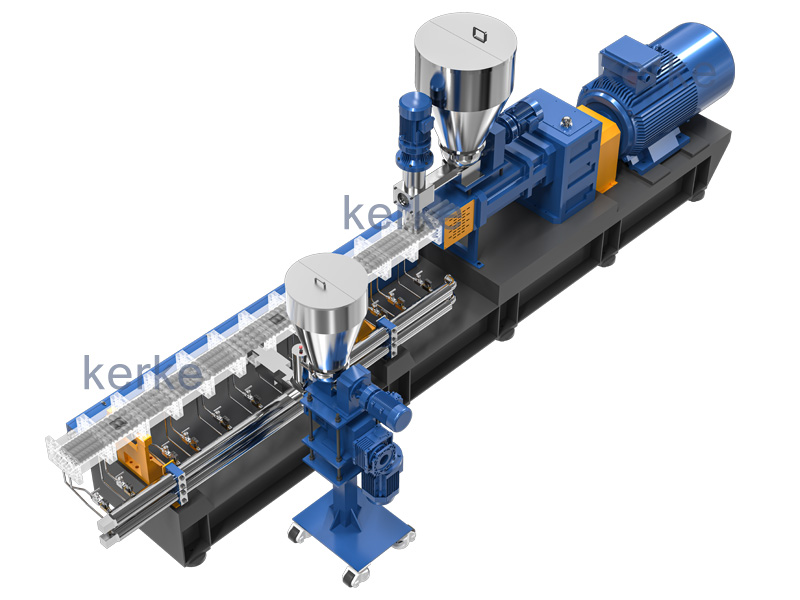
Multiple feeding ports enable sequential addition of components at optimal processing stages. Carrier resin typically enters through the main feed port at the extruder throat. Pigments may be added downstream to reduce residence time at elevated temperatures, protecting heat-sensitive components. Liquid additives such as dispersing agents or processing aids can be injected through liquid injection ports positioned for optimal mixing. Masterbatch extruder configurations with multiple feed zones enable flexible formulation strategies and process optimization.
Process Parameter Optimization for Color Quality
Achieving consistent color quality requires optimization of processing parameters including screw speed, temperature profile, feed rate, and vacuum conditions. These parameters interact in complex ways, and optimal settings depend on specific formulation characteristics. Systematic process development identifies parameter combinations delivering target quality while maximizing throughput and efficiency.
Screw speed influences mixing intensity, residence time, and throughput in twin screw extruder operations. Higher speeds provide increased mixing but also generate additional shear heating that may impact temperature-sensitive pigments. Optimal speed balances dispersion requirements against thermal exposure. Modern compounding extruder designs with high torque capacity maintain effective processing at varying speeds, enabling optimization for specific formulations without throughput constraints.
Temperature Profile Development
Temperature profile development should consider polymer melting behavior, pigment thermal stability, and mixing requirements. The profile typically increases from the feed zone to ensure gradual polymer heating without premature surface melting that could cause feed instability. Melting zones require temperatures above the carrier resin melting point to ensure complete polymer fusion. Mixing zones may be set at slightly lower temperatures to minimize thermal exposure while maintaining adequate melt viscosity for effective dispersion.
Die temperature settings impact product appearance and downstream processing. Higher die temperatures reduce melt viscosity and facilitate strand formation but may increase thermal exposure. Lower die temperatures increase melt strength for better pellet formation but may create processing difficulties. Optimization should balance these considerations while maintaining consistent product temperature for uniform cooling and solidification. Advanced masterbatch extruder controls enable precise profile management and recipe storage for consistent operation.
Feed Rate and Throughput Optimization
Feed rate directly impacts throughput, residence time, and mixing intensity. Higher feed rates increase throughput but reduce residence time available for dispersion. Lower feed rates provide extended residence time but reduce production efficiency. Optimal feed rate balances quality requirements against production economics. Starve feeding operation, where feed rate limits output below the extruder’s pumping capacity, provides residence time control and prevents overfeeding issues.
Throughput capability varies with formulation complexity, screw configuration, and equipment size. High pigment loadings typically reduce maximum throughput due to increased viscosity and dispersion requirements. Screw designs optimized for specific formulations can improve throughput while maintaining quality. Understanding the relationship between throughput and quality enables realistic production planning and capacity management. Twin screw extruder manufacturers provide guidance on throughput capabilities for different formulation types.
Vacuum and Devolatilization Considerations
Vacuum venting removes volatiles, moisture, and entrapped air from the melt, improving product quality and appearance. Color masterbatch formulations containing moisture-sensitive pigments or hygroscopic carriers benefit particularly from vacuum operation. Vacuum placement should follow mixing zones to ensure volatiles have been liberated from the polymer matrix. Modern compounding extruder designs offer vacuum capability with appropriate sealing and condensate management systems.
Vacuum level optimization requires balancing devolatilization effectiveness against operational complexity. Higher vacuum levels improve volatile removal but increase sealing challenges and maintenance requirements. Moderate vacuum levels often provide adequate performance for most color masterbatch applications. Understanding specific formulation requirements guides vacuum system specification and operation parameter selection.
Quality Control Systems and Procedures
Comprehensive quality control systems prove essential for consistent color masterbatch production. Quality management encompasses raw material evaluation, process monitoring, and final product testing. Integration of quality control with production operations enables rapid identification and correction of quality deviations. Investment in quality systems supports customer confidence and market competitiveness.
Raw material testing ensures consistent input quality essential for predictable processing and product quality. Pigments should be evaluated for color strength, particle size distribution, and moisture content. Carrier resins require verification of melt flow rate, density, and thermal properties. Establishing clear acceptance criteria and testing protocols prevents processing issues and quality problems. Raw material certification requirements should align with customer quality expectations and regulatory compliance needs.
In-Process Quality Monitoring
Real-time process monitoring provides immediate feedback on processing conditions and product quality. Key parameters including melt temperature, melt pressure, and motor torque indicate process stability and consistency. Statistical process control techniques enable detection of process variations before they impact product quality. Modern twin screw extruder control systems offer comprehensive data acquisition and analysis capabilities supporting effective process monitoring.
Inline color measurement enables real-time quality assessment without production interruption. Spectrophotometric systems installed on the extruder die provide continuous color coordinate measurement, enabling immediate detection of color deviations. Integration with process control systems enables automatic adjustment when deviations are detected. These advanced capabilities support demanding quality requirements while improving operational efficiency.
Final Product Testing Protocols
Final product testing validates color masterbatch quality and ensures conformance to customer specifications. Color accuracy testing should compare masterbatch color against standards using standardized let-down ratios and sample preparation procedures. Dispersion quality evaluation typically involves microscopic examination or pressure filtration testing. Concentration verification ensures pigment loading meets formulation specifications.
Application testing validates masterbatch performance in actual end-use conditions. Processing trials using representative customer equipment and materials identify potential issues before delivery. Color development testing at standard let-down ratios confirms color strength and hue. These comprehensive testing procedures ensure product performance meets customer expectations. Masterbatch extruder operations serving demanding applications should establish thorough testing protocols.
Operational Efficiency and Productivity Optimization
Operational efficiency directly impacts production economics and business competitiveness. Efficiency optimization encompasses startup procedures, transition management, cleaning operations, and maintenance practices. Systematic attention to operational details improves productivity while maintaining quality standards.
Startup procedures significantly impact time to quality production and material waste. Standardized startup protocols should address temperature stabilization, feed sequencing, and process adjustment procedures. Target temperatures should be established and verified before initiating feeding. Gradual feed rate increase prevents overfeeding during startup. Documented procedures ensure consistent startup performance across operators and shifts. Quality compounding extruder systems with advanced controls simplify startup operations.
Transition and Color Change Procedures
Color changes represent a significant source of production inefficiency and material waste in color masterbatch operations. Efficient transition procedures minimize downtime and waste while ensuring complete purging of previous colors. Purge materials designed for color change applications can accelerate the transition process. Understanding the relationship between color intensity, carrier resin type, and purge difficulty enables realistic transition time estimation.
Scheduling optimization can reduce transition frequency and duration. Sequencing production from lighter to darker colors reduces purge requirements. Grouping similar colors reduces transition severity. Production planning should consider transition costs when developing schedules. Advanced planning tools optimize production sequences considering both demand and efficiency factors.
Cleaning and Maintenance Practices
Regular cleaning and maintenance ensures consistent twin screw extruder performance and prevents quality issues. Cleaning frequency depends on formulation characteristics and operational intensity. Pigment accumulation in dead spaces can cause color contamination, requiring periodic disassembly and thorough cleaning. Establishing cleaning schedules based on operational experience prevents contamination issues before they impact product quality.
Preventive maintenance programs reduce unplanned downtime and extend equipment life. Regular inspection of wear surfaces including screw elements and barrel liners identifies wear before it impacts product quality or process stability. Lubrication, seal replacement, and utility system maintenance ensure reliable operation. Documentation of maintenance activities supports troubleshooting and planning. Masterbatch extruder manufacturers provide maintenance guidelines specific to their equipment designs.
Equipment Investment Analysis for Color Masterbatch Operations
Investment in quality equipment proves essential for competitive color masterbatch production. Equipment selection should consider not only initial cost but also capabilities, reliability, and total cost of ownership. Understanding the relationship between equipment investment and operational performance enables informed decisions that support business objectives.
Twin screw extruder systems for color masterbatch production span a wide range of capabilities and price points. Entry-level systems suitable for small production volumes or formulation development typically range from $25,000 to $50,000. These compact systems enable market entry or capability expansion with manageable initial investment. Production-grade equipment with capacities suitable for established operations ranges from $50,000 to $150,000. High-capacity systems for demanding production environments may exceed $200,000 with advanced features and capabilities.
Equipment Capability vs. Investment Analysis
Equipment capabilities directly impact product quality, production efficiency, and market competitiveness. Advanced compounding extruder features including sophisticated mixing designs, precise temperature control, and comprehensive automation improve product quality while reducing operational complexity. These capabilities typically require higher initial investment but deliver superior operational performance and product consistency. Understanding specific quality requirements and production volumes guides capability investment decisions.
Throughput capacity determines production capability and revenue potential. Larger equipment provides higher throughput but requires proportionally higher investment. Matching equipment capacity to realistic production volumes optimizes capital efficiency. Underutilized equipment represents inefficient capital deployment, while equipment constraints limit revenue potential. Careful analysis of market opportunities and growth projections guides capacity decisions.
Total Cost of Ownership Considerations
Total cost of ownership encompasses initial investment, operating costs, maintenance expenses, and eventual equipment replacement. Operating costs including energy consumption, labor requirements, and material waste vary significantly with equipment design and operational efficiency. Maintenance costs depend on equipment quality, operating intensity, and service support availability. Understanding these cost components enables comprehensive economic evaluation of equipment options.
Equipment reliability impacts both direct costs and production continuity. Quality twin screw extruder systems from established manufacturers typically offer superior reliability and lower maintenance requirements compared to economy alternatives. Downtime costs including lost production and customer delivery issues often exceed direct maintenance costs. Investment in reliable equipment with comprehensive service support minimizes operational risks and total cost of ownership.
Recommended Equipment: Kerke KTE Series for Color Masterbatch
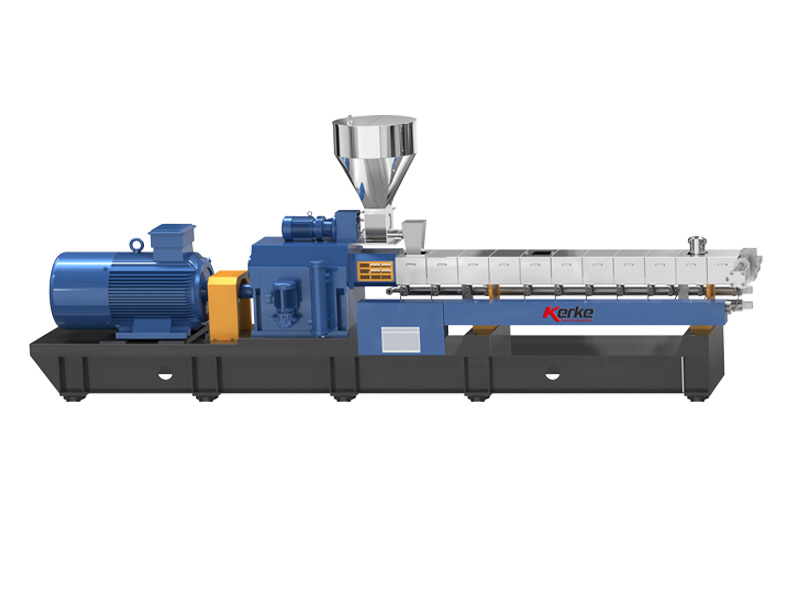
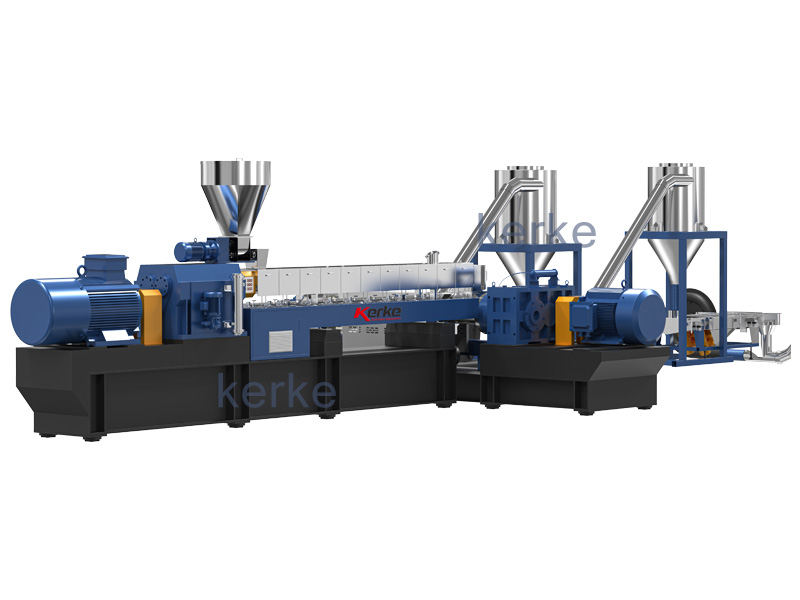
Kerke, a specialized brand under Wanplas Group with over 13 years of twin screw extruder manufacturing experience, offers the KTE series specifically optimized for color masterbatch applications. The co-rotating parallel twin screw extruder design incorporates features essential for achieving premium color quality including high-torque capability, precise temperature control, and flexible screw configuration options. Understanding the specific advantages of KTE series equipment guides equipment selection decisions.
The KTE series design emphasizes high torque and high speed operation, enabling excellent dispersion quality while maintaining throughput efficiency. The modular screw design allows customization for different pigment types and loading levels. Segmented barrel construction with individual temperature control zones provides the thermal management precision essential for heat-sensitive organic pigments. These design features address the core requirements of color masterbatch production.
KTE-36B: Ideal for Development and Small Production
The Kerke KTE-36B twin screw extruder provides an excellent platform for color masterbatch development and small-scale production. With screw diameter of 35.6mm and throughput capacity of 20-100 kg/h, this compact system enables formulation development and production of specialized color concentrates. Investment range of $25,000 to $35,000 makes this masterbatch extruder accessible for companies entering the color masterbatch market or establishing development capabilities.
Despite its compact size, the KTE-36B incorporates features critical for color masterbatch quality. The modular screw design enables optimization for different pigment types and dispersion requirements. Multiple feeding zones support formulation flexibility including downstream pigment addition for heat-sensitive materials. Precise temperature control ensures consistent processing conditions. These capabilities make the KTE-36B an effective tool for color masterbatch development and specialty production.
KTE-65B: Production Workhorse for Color Operations
The Kerke KTE-65B twin screw extruder represents an optimal solution for established color masterbatch production operations. Featuring screw diameter of 62.4mm and throughput capacity of 200-450 kg/h, this production-grade compounding extruder addresses the requirements of commercial color concentrate manufacturing. Investment range of $50,000 to $80,000 delivers exceptional value through robust construction and reliable performance.
This masterbatch extruder configuration offers the throughput capacity necessary for profitable production while maintaining the quality essential for competitive color products. The proven design has demonstrated reliable operation across numerous installations processing diverse color formulations. Enhanced process control capabilities support consistent quality management. The KTE-65B serves as the production foundation for many successful color masterbatch operations worldwide.
KTE-95D: High-Volume Color Production Excellence
The Kerke KTE-95D twin screw extruder addresses high-volume color masterbatch production requirements with screw diameter of 93mm and throughput capacity of 1000-2000 kg/h. This production-scale system serves demanding applications where high throughput capability and consistent quality prove essential. Investment range of $120,000 to $200,000 reflects the advanced capabilities and robust construction necessary for demanding production environments.
Advanced features including sophisticated process control, comprehensive automation options, and optimized energy efficiency make the KTE-95D ideal for continuous color production operations. The robust design ensures reliable performance in demanding manufacturing environments while maintaining flexibility for diverse color formulations. Kerke’s comprehensive service support including $500 annual free parts and warranty coverage minimizes operational risks and supports long-term success. This compounding extruder configuration represents the optimal choice for serious color masterbatch manufacturers serving demanding markets.
Installation and Startup Procedures
Proper installation and systematic startup procedures prove essential for achieving optimal twin screw extruder performance. Installation encompasses site preparation, utility connections, equipment placement, and integration with auxiliary systems. Startup procedures address commissioning, process development, and operator training. Following established procedures ensures successful equipment implementation.
Site preparation requirements vary with equipment size and configuration. Foundation requirements range from standard industrial flooring for smaller equipment to reinforced concrete foundations for large production systems. Adequate space must be provided for equipment access, maintenance activities, and auxiliary systems. Utility connections including electrical power, cooling water, and compressed air must be properly sized and located. Planning these requirements before equipment delivery prevents installation delays.
Installation Process and Acceptance Testing
Installation process should follow manufacturer guidelines and include appropriate quality verification steps. Equipment alignment and leveling ensure proper operation and prevent premature wear. Utility connections should be verified for proper capacity and operation. Control systems require configuration and calibration to ensure accurate process management. Documentation of installation activities supports future maintenance and troubleshooting.
Acceptance testing validates proper equipment installation and operation before production use. Testing should include verification of all safety systems and interlocks. Process systems should be operated under controlled conditions to verify proper function. Temperature control systems require calibration verification across the operating range. Successful completion of acceptance testing confirms equipment readiness for production operation.
Startup and Process Development
Startup activities establish baseline processing parameters for initial formulations. Process development should systematically evaluate key variables including temperature profile, screw speed, and feed rate to identify optimal conditions. Product quality evaluation during development ensures conditions meet target specifications. Documentation of optimal parameters provides the foundation for consistent production operation.
Operator training ensures personnel can safely and effectively operate the masterbatch extruder system. Training should cover equipment operation, process control, quality procedures, and safety protocols. Hands-on training during startup activities builds practical experience. Competency verification ensures operators are prepared for independent operation. Ongoing training programs maintain and develop operator skills as operations evolve.
Environmental and Safety Considerations
Color masterbatch production involves materials and processes requiring appropriate environmental and safety management. Pigment dust, processing fumes, and equipment hazards must be addressed through proper facility design, ventilation systems, and safety procedures. Compliance with environmental and safety regulations protects workers and ensures operational continuity.
Pigment handling presents particular challenges due to fine particle sizes and potential exposure hazards. Dust collection systems should capture pigment dust at generation points including feeding stations and transfer operations. Enclosed feeding systems minimize dust release during material handling. Personal protective equipment requirements should be established and enforced for all pigment handling operations. Proper management of pigment exposure protects worker health and maintains facility cleanliness.
Ventilation and Fume Control
Processing operations may generate fumes depending on material types and processing conditions. Adequate ventilation removes processing fumes from the work environment. Fume extraction systems positioned at appropriate locations capture emissions before they disperse into the general facility atmosphere. Makeup air systems maintain appropriate facility air balance. Proper ventilation design addresses both worker protection and regulatory compliance requirements.
Vacuum systems used for devolatilization require appropriate condensate management and exhaust treatment. Condensed volatiles must be collected and disposed properly. Vacuum exhaust may require treatment before release depending on regulatory requirements. Understanding emission characteristics of processed materials guides vacuum system specification and environmental compliance planning.
Safety Systems and Procedures
Modern twin screw extruder designs incorporate comprehensive safety systems including guards, interlocks, and emergency stops. These systems prevent access to hazardous areas during operation and enable rapid shutdown when required. Safety systems should be verified during installation and maintained through regular inspection and testing. Operator training should emphasize safety procedures and proper response to safety system activations.
Material safety data sheets provide essential information for safe handling of all materials used in color masterbatch production. Hazard communication programs ensure workers understand material hazards and proper handling procedures. Personal protective equipment requirements should be established based on material hazard assessments. Emergency procedures should address potential incidents including fires, spills, and exposures. Comprehensive safety programs protect workers while supporting regulatory compliance.
Process Troubleshooting and Optimization
Effective troubleshooting capabilities prove essential for maintaining consistent masterbatch extruder operation and product quality. Understanding common problems, their causes, and solutions enables rapid resolution of operational issues. Systematic troubleshooting approaches identify root causes and prevent recurrence of problems.
Poor pigment dispersion represents one of the most common quality issues in color masterbatch production. Symptoms include color specks, inconsistent color strength, and filter pressure buildup. Causes range from insufficient mixing intensity to pigment quality issues. Resolution may require screw configuration changes, process parameter adjustment, or raw material evaluation. Understanding dispersion mechanisms guides systematic troubleshooting of dispersion problems.
Common Processing Problems and Solutions
Melt temperature deviations indicate potential processing or product quality issues. Excessive temperature may indicate overfeeding, worn screws, or improper temperature profile settings. Insufficient temperature may suggest heating system problems or incorrect temperature settings. Systematic evaluation identifies root causes and guides corrective actions. Temperature monitoring and control systems on modern compounding extruder equipment support rapid problem identification.
Throughput instability can result from feeding inconsistencies, screw wear, or process control issues. Gravimetric feeding systems typically provide stable feeding, but material characteristics including flow properties can impact performance. Screw wear reduces pumping efficiency and may require element replacement. Process control issues including temperature fluctuations can create instability. Understanding these potential causes enables targeted troubleshooting.
Continuous Improvement Approaches
Continuous improvement programs drive ongoing optimization of process efficiency and product quality. Statistical process control data provides objective foundation for improvement efforts. Process capability studies identify opportunities for variation reduction. Experimentation with process parameters, screw configurations, and formulations enables systematic improvement. Documentation of improvement activities builds organizational knowledge.
Benchmarking against industry best practices identifies improvement opportunities. Industry conferences, technical publications, and equipment manufacturer resources provide access to current best practices. Networking with other masterbatch producers enables sharing of practical experience. Investment in ongoing learning and development maintains competitive capability. Twin screw extruder manufacturers like Kerke provide application support and technical guidance supporting customer success.
Business Development and Market Considerations
Successful color masterbatch operations require not only technical excellence but also effective business development and market positioning. Understanding market dynamics, customer requirements, and competitive positioning enables strategic planning that supports sustainable business success.
Market analysis should identify growth opportunities, competitive dynamics, and customer requirements. Color masterbatch markets span diverse application segments including packaging, automotive, consumer products, and construction. Each segment presents specific requirements for color quality, regulatory compliance, and technical support. Understanding segment requirements guides product development and market positioning strategies.
Customer Relationship Development
Technical support capabilities differentiate premium masterbatch suppliers from commodity competitors. Color matching services, application development support, and troubleshooting assistance add value beyond the basic product offering. Investment in technical capabilities supports premium positioning and customer loyalty. Masterbatch extruder operations should develop technical support capabilities aligned with target market requirements.
Quality certification requirements vary across market segments and applications. ISO quality management system certification provides foundation for serving demanding markets. Industry-specific certifications may be required for automotive, food packaging, or medical applications. Understanding certification requirements of target markets enables appropriate quality system development. Investment in quality capabilities supports market access and customer confidence.
Competitive Positioning Strategies
Competitive differentiation can be achieved through various strategies including product quality, technical service, delivery performance, or pricing. Premium quality positioning requires investment in equipment and capabilities to deliver superior products consistently. Service differentiation requires investment in technical staff and support capabilities. Understanding competitive dynamics and customer value drivers guides positioning strategy selection.
Operational efficiency enables competitive pricing while maintaining profitability. Efficient production processes, optimized inventory management, and effective logistics reduce costs. Investment in quality twin screw extruder equipment improves operational efficiency while maintaining product quality. Understanding cost structure and efficiency opportunities supports sustainable competitive positioning.
Future Development and Expansion Planning
Successful masterbatch extruder operations should plan for future development and capacity expansion. Understanding growth opportunities and equipment upgrade paths enables proactive planning that supports business development objectives.
Capacity expansion options should be considered when selecting initial equipment. Some twin screw extruder designs offer upgrade paths for throughput enhancement through screw speed increase or drive system upgrade. Others may require equipment replacement for significant capacity increases. Understanding expansion limitations and options guides initial equipment sizing decisions and future planning.
Capability Expansion Opportunities
Capability expansion beyond basic color masterbatch can open additional market opportunities. Additive masterbatch production requires similar equipment but different formulation capabilities. Filled and reinforced compounds present additional opportunities but may require equipment modifications for abrasive materials. Understanding capability expansion options guides strategic planning and equipment specification.
Technology developments continue advancing twin screw extruder capabilities. Energy efficiency improvements, enhanced process control, and advanced automation increase operational efficiency and product quality. Understanding technology trends enables planning for future equipment upgrades or replacement. Equipment selection should consider manufacturer commitment to technology development and support.
Strategic Planning for Long-Term Success
Strategic planning should address market development, capability expansion, and investment requirements over multi-year horizons. Market analysis identifies growth opportunities and competitive challenges. Capability assessment identifies gaps between current capabilities and future requirements. Investment planning ensures resources are available to execute strategic initiatives. Regular strategy review ensures plans remain relevant as markets and technology evolve.
Partnering with quality equipment suppliers like Kerke supports long-term success through reliable equipment, technical support, and service availability. The $500 annual free parts program and warranty coverage reduce operational risks. Ongoing technical support ensures capability to address operational challenges. Understanding equipment supplier capabilities and commitment guides partnership development that supports long-term operational success.
Conclusion
Establishing an effective masterbatch extruder setup for color master manufacturing requires comprehensive attention to equipment selection, process optimization, quality management, and operational excellence. Success depends on understanding the unique requirements of color masterbatch production including pigment dispersion challenges, heat sensitivity considerations, and quality consistency demands. Investment in appropriate twin screw extruder technology from established manufacturers provides the foundation for competitive color masterbatch production operations.
The Kerke KTE series compounding extruder line offers comprehensive solutions for color masterbatch applications spanning development and small production through high-volume manufacturing. The KTE-36B, KTE-65B, and KTE-95D models address specific production volume requirements while delivering the processing capabilities essential for premium color quality. Comprehensive service support including warranty coverage and technical assistance minimizes operational risks while supporting long-term success. As color masterbatch markets continue evolving with new applications, quality requirements, and competitive pressures, well-designed masterbatch extruder operations will capture growing opportunities while building sustainable business success.
Continuous improvement in processes, quality systems, and operational efficiency enables ongoing competitive advantage in color masterbatch markets. Following the principles and procedures outlined in this guide, manufacturers can establish and develop color masterbatch operations that deliver superior products, efficient operations, and sustainable business performance. The comprehensive capabilities of modern twin screw extruder technology, properly configured and operated, enable color masterbatch producers to address current challenges while preparing for future opportunities in this dynamic and growing industry segment.