Vacuum venting represents one of the most critical technologies for achieving high-quality masterbatch production in twin screw extrusion systems. This sophisticated process removes volatiles, moisture, and reaction byproducts from the polymer melt, enabling superior product quality that meets the demanding requirements of plastic processors worldwide. Understanding vacuum venting technology and its applications enables masterbatch manufacturers to optimize their production processes for excellence.
The presence of unwanted volatiles in masterbatch products creates numerous quality problems that affect both manufacturing efficiency and end-product performance. These volatiles originate from multiple sources including moisture in raw materials, residual monomers, oligomers, and degradation products from thermal processing. Without effective removal, these materials compromise masterbatch quality and limit the performance of finished plastic products.
This comprehensive guide explores the science and practice of vacuum venting in twin screw extrusion for masterbatch production. From fundamental principles to practical implementation, you will gain the knowledge necessary to leverage vacuum venting technology for improved product quality and production efficiency.
Understanding Vacuum Venting Technology in Twin Screw Extrusion
Vacuum venting creates a pressure gradient that actively draws volatiles from the polymer melt rather than relying on passive diffusion or steam generation. This active removal process proves far more effective for the demanding volatiles removal requirements of masterbatch production.
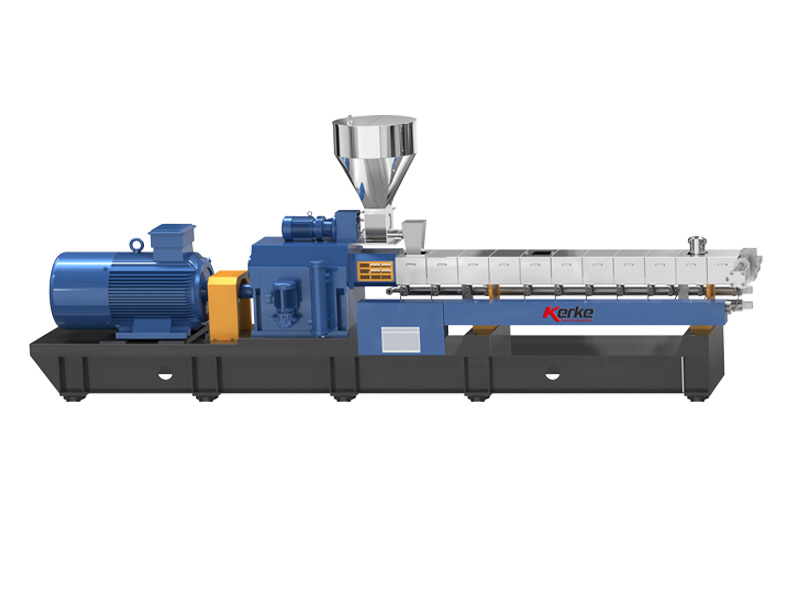
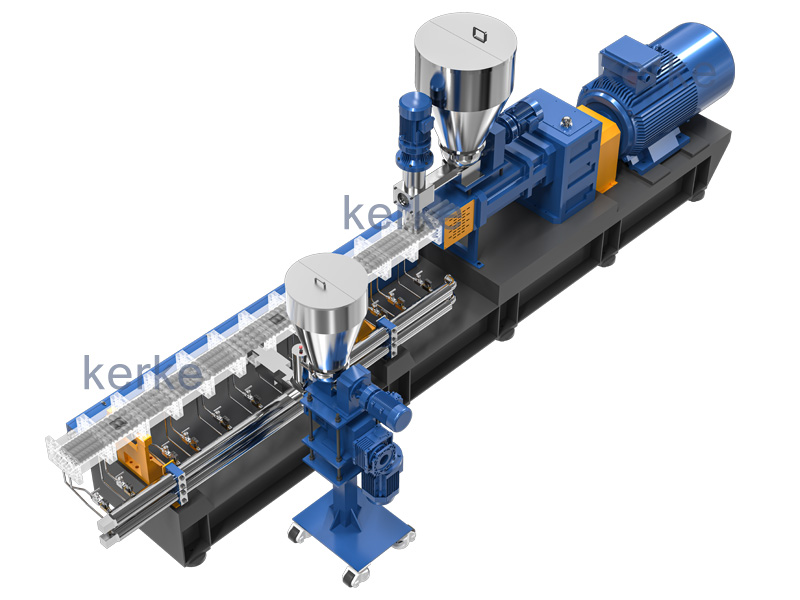
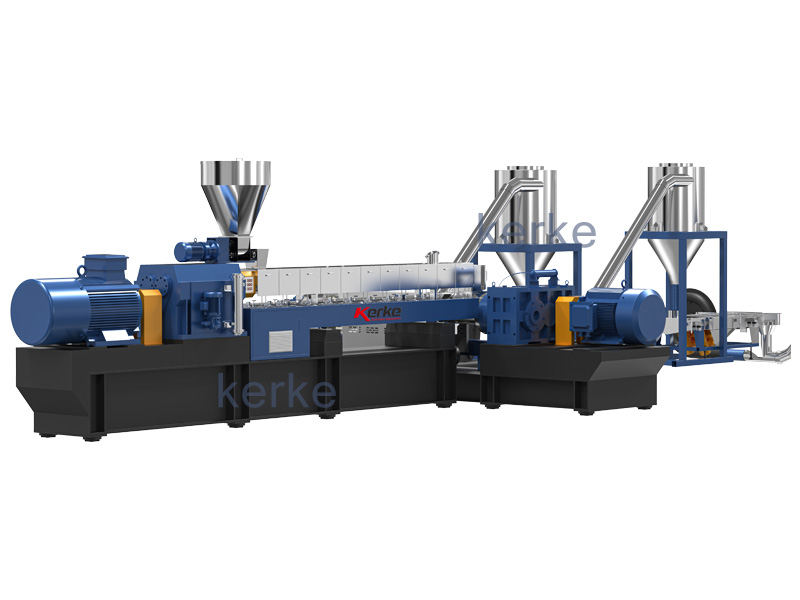
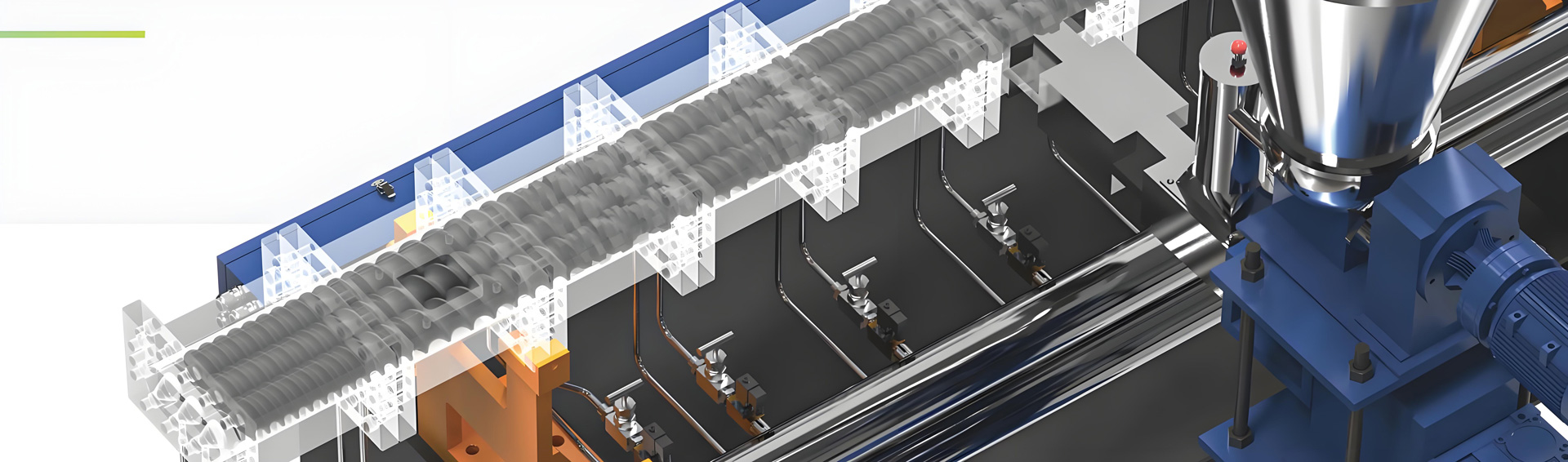
The vacuum system connects to specialized venting ports in the barrel of the twin screw extruder, typically positioned at locations where the polymer has reached sufficient melt state for volatile release but before the final mixing and extrusion zones. This strategic positioning optimizes volatile removal while minimizing loss of valuable formulation components.
Modern vacuum venting systems provide precise control over vacuum levels, enabling optimization for specific formulation requirements. The flexibility to adjust vacuum parameters based on material characteristics and product requirements makes vacuum venting adaptable across the diverse range of masterbatch formulations.
The Science of Volatile Removal in Extrusion
Volatile removal in extrusion compounding depends on the principles of mass transfer and pressure-driven diffusion. When a vacuum is applied at a venting port, the pressure gradient drives volatile molecules from within the melt toward the venting location where they can escape from the system.
The effectiveness of volatile removal depends on multiple factors including melt viscosity, temperature, surface area exposure, and vacuum level. Higher temperatures reduce melt viscosity and increase volatile diffusion rates, improving removal efficiency. However, temperature increases must be balanced against thermal degradation risks for sensitive formulation components.
Residence time in the venting zone also influences removal effectiveness. Longer exposure to vacuum conditions provides more opportunity for volatiles to diffuse from the melt. The screw configuration in venting zones can be optimized to maximize material exposure to vacuum conditions.
Types of Venting Systems and Their Characteristics
Single-stage vacuum systems provide adequate performance for many masterbatch applications where volatile loads are moderate. These systems use a single vacuum pump and are suitable for applications with standard production requirements.
Two-stage vacuum systems offer superior performance for demanding applications requiring aggressive volatile removal. The staged approach achieves lower ultimate pressures and provides redundancy that improves system reliability. These systems suit high-performance masterbatch production where quality requirements are stringent.
Water-ring vacuum pumps provide particular advantages for masterbatch applications involving polar volatiles or where oil contamination must be avoided. These pumps use water as the sealing fluid rather than oil, eliminating contamination concerns that affect other pump types.
Quality Benefits of Vacuum Venting in Masterbatch Production
Vacuum venting delivers multiple quality improvements that affect both the masterbatch product and the performance of articles manufactured from it. These benefits justify the investment in vacuum venting capability and support continued quality improvement initiatives.
Elimination of Voids and Bubbles in Finished Products
Volatiles remaining in masterbatch create voids, bubbles, and other defects when the material is processed by end users. These defects compromise the appearance, strength, and performance of finished plastic articles, creating customer complaints and quality returns.
Vacuum venting removes volatiles before they can cause problems in finished products. The resulting dense, void-free pellets provide the consistent quality that demanding applications require. This improvement in product integrity translates directly to improved customer satisfaction and reduced quality-related costs.
The effectiveness of volatile removal depends on vacuum system performance and proper integration with the extrusion process. Systems designed for effective venting deliver consistent results across production runs and formulation changes.
Improved Color Stability and Consistency
Moisture and volatiles in the extrusion process can cause hydrolysis and other degradation reactions that affect color stability. Masterbatch products processed with inadequate venting may show color drift during storage or processing, creating quality variation in finished products.
Vacuum venting removes moisture before it can cause hydrolysis problems. This moisture removal protects both the polymer carrier and any color-sensitive additives from degradation. The result is improved color stability that maintains quality throughout product shelf life and customer processing.
Consistent processing conditions enabled by effective vacuum venting also contribute to color consistency between batches. When volatile levels remain controlled, processing parameters remain stable, producing consistent product quality across production runs.
Enhanced Dispersion and Mixing Quality
The presence of volatiles can interfere with effective pigment and additive dispersion during compounding. Gas pockets and steam formation prevent intimate contact between formulation components, limiting dispersion effectiveness.
Vacuum venting creates conditions that enhance mixing efficiency by eliminating interference from volatiles. The melt flows more uniformly through the mixing sections when volatiles are removed, enabling better contact between components and improved overall dispersion quality.
Improved dispersion translates to enhanced color development, particularly for demanding pigments that require thorough incorporation to achieve their full color potential. The investment in vacuum venting capability pays returns through superior product quality that commands premium market positioning.
Applications of Vacuum Venting for Specific Masterbatch Types
Different masterbatch types present unique venting requirements based on their formulation characteristics and quality demands. Understanding these specific requirements enables optimization of vacuum venting for particular product applications.
White Masterbatch and Moisture Sensitivity
White masterbatch production involving hygroscopic polymers particularly benefits from vacuum venting technology. Polymers such as polyamides and certain polyesters absorb moisture from the environment that must be removed before processing to prevent hydrolysis and quality problems.
The titanium dioxide pigments used in white masterbatch can also interact with moisture in ways that affect dispersion quality and color development. Vacuum venting removes this moisture before it can cause problems, enabling consistent white masterbatch quality regardless of environmental conditions.
Kerke twin screw extruders equipped with vacuum venting systems provide the moisture removal capability necessary for consistent white masterbatch production. The integration of effective venting with superior mixing capabilities produces white masterbatch products that meet the most demanding quality specifications.
Black Masterbatch and Carbon Black Processing
Black masterbatch formulations containing carbon black present unique venting challenges due to the fine particle size and high surface area of carbon black materials. These characteristics can make volatile removal more difficult as volatiles tend to adsorb onto carbon black surfaces.
Enhanced vacuum venting with optimized venting zone configurations addresses these challenging requirements. Higher vacuum levels and extended venting zones provide the additional removal capability necessary for effective volatile control in carbon black-containing formulations.
Processing temperature optimization also supports volatile removal in black masterbatch production. Careful balancing of temperature conditions that promote removal without causing thermal degradation enables quality black masterbatch production.
Functional Masterbatch and Volatile Sensitivity
Functional masterbatch formulations containing moisture-sensitive additives require particularly effective volatile removal. Flame retardants, stabilizers, and other functional additives can degrade or lose effectiveness when moisture is present during processing.
Vacuum venting enables processing of these sensitive formulations by removing moisture before it can cause degradation reactions. The controlled vacuum environment protects functional additive integrity throughout the compounding process.
For the most demanding functional masterbatch applications, two-stage vacuum systems provide the ultimate in volatile removal capability. These systems achieve the lowest pressures and most complete removal necessary for premium functional masterbatch quality.
Vacuum Venting System Design and Configuration
Effective vacuum venting requires appropriate system design that matches application requirements. Understanding the factors that influence venting system performance enables proper configuration and optimization.
Venting Port Location and Configuration
The positioning of venting ports along the extruder barrel significantly influences volatile removal effectiveness. Ports must be located where material has reached adequate melt state for volatile release but before the final extrusion and die zones.
Typical configurations place venting ports in the middle sections of the extruder where material temperature and melt state are appropriate for effective venting. Multiple venting ports can be employed for formulations with high volatile loads or particularly challenging removal requirements.
The physical configuration of venting ports including port size, screen pack support, and seal design affects both removal effectiveness and system reliability. Properly designed ports prevent material leakage while providing adequate opening area for efficient volatile removal.
Vacuum Pump Selection and Sizing
Vacuum pump selection must match the volatile removal requirements of the masterbatch formulations being processed. Pumps must provide adequate capacity to maintain desired vacuum levels despite the gas loads generated during processing.
Pump sizing considers both the steady-state gas load during normal processing and peak loads during startup or formulation transitions. Undersized pumps cannot maintain adequate vacuum during peak loads, resulting in incomplete volatile removal.
Kerke provides vacuum system recommendations for each KTE series model, ensuring that customers receive appropriately sized equipment for their application requirements. These recommendations consider typical masterbatch formulations and production rate requirements.
Screw Configuration for Venting Zones
Screw design in venting zones must accommodate material flow and volatile release without allowing material loss through the venting port. Special screw elements designed for venting applications provide appropriate conveying while maintaining material within the screw channels.
Reverse-pitch elements and other specialized configurations create plugs that prevent material from exiting through the venting port while maintaining adequate flow for processing. The design of these elements balances the competing requirements of material containment and volatile release.
Kerke provides screw configuration guidance that optimizes venting zone design for specific masterbatch applications. This expertise ensures that customers achieve effective volatile removal without material loss or processing problems.
Operating Parameters for Optimal Vacuum Venting
Operating the vacuum venting system with appropriate parameters ensures effective volatile removal while maximizing efficiency and equipment life. Understanding parameter relationships enables optimization for specific formulations and production conditions.
Vacuum Level Optimization
The vacuum level applied at venting ports directly influences volatile removal effectiveness. Higher vacuum levels create greater pressure gradients that drive more rapid volatile removal. However, the optimal vacuum level depends on formulation characteristics and system constraints.
Extremely high vacuum levels may cause problems including increased volatile loss from desirable formulation components, increased moisture ingress through seals, or increased energy consumption. The optimal level balances removal effectiveness against these considerations.
Typical operating vacuum levels for masterbatch applications range from 100 to 500 millibar absolute pressure depending on system design and requirements. Monitoring actual vacuum levels during production enables optimization and troubleshooting of venting performance.
Temperature and Throughput Coordination
Temperature settings in venting zones must support effective volatile release while preventing degradation. Temperatures that are too low increase melt viscosity and reduce diffusion rates, limiting removal efficiency. Temperatures that are too high risk thermal degradation.
Throughput rate affects the residence time available for volatile removal and the volatile generation rate from the formulation. Higher throughputs reduce residence time and may require adjusted vacuum levels or additional venting zones to maintain removal effectiveness.
The interaction between temperature, throughput, and vacuum parameters requires systematic optimization for each formulation. Development activities that establish optimal parameter combinations ensure consistent production performance.
Monitoring and Control Strategies
Continuous monitoring of vacuum system performance enables optimization and early detection of developing problems. Vacuum level indicators, temperature monitoring, and production data correlation provide insight into system behavior.
Automated control systems can maintain optimal vacuum levels despite variations in volatile load or other process conditions. These systems adjust vacuum pump operation to maintain target levels, ensuring consistent removal effectiveness.
Kerke KTE series extruders incorporate advanced control capabilities that support effective vacuum system monitoring and optimization. These systems provide the data and control necessary for consistent production quality.
Equipment Investment Considerations for Vacuum Venting Capability
Incorporating vacuum venting capability requires appropriate equipment investment that should be evaluated against the quality and efficiency benefits achieved. Understanding the cost-benefit relationship enables appropriate investment decisions.
Entry-Level Options for Development and Small Production
For masterbatch development and small-scale production, equipment with vacuum venting capability provides the flexibility to handle moisture-sensitive formulations without excessive investment. The Kerke KTE-36B, priced at $25,000-$35,000 with throughput of 20-100kg/h, offers vacuum-capable configuration suitable for these applications.
Smaller equipment with vacuum capability enables market entry and product development activities that explore moisture-sensitive formulations. This capability provides competitive advantages in specialized market segments.
Medium-Scale Production Equipment
Medium-scale masterbatch production operations benefit from equipment that provides higher throughput while maintaining effective vacuum venting capability. The Kerke KTE-50B, at $40,000-$60,000 with 80-200kg/h capacity, provides production capability suitable for regional operations.
The KTE-65B, priced at $50,000-$80,000 with 200-450kg/h capacity, offers higher production rates with full vacuum capability. This equipment enables meaningful production volumes while maintaining the quality advantages of effective volatile removal.
Both models incorporate robust vacuum system integration designed for reliable performance in demanding production environments. The equipment investment supports consistent quality that builds customer relationships and market position.
High-Volume Production Systems
High-volume masterbatch production requires equipment capable of maintaining vacuum venting effectiveness at significant throughput rates. The Kerke KTE-75B, with 300-800kg/h capacity at $70,000-$100,000, provides high-volume capability with proven vacuum system integration.
For the most demanding high-volume applications, the KTE-95D offers throughput of 1000-2000kg/h at $120,000-$200,000. This equipment provides the capacity necessary for competitive positioning in high-volume market segments while maintaining the quality standards that customers require.
Large-scale operations particularly benefit from two-stage vacuum systems that provide superior volatile removal at high production rates. The additional investment in enhanced vacuum capability pays returns through improved quality and reduced waste.
Maintenance Requirements for Vacuum Systems
Proper maintenance of vacuum systems ensures continued performance and reliability throughout equipment life. Understanding maintenance requirements enables appropriate planning and execution of preventive maintenance activities.
Pump Maintenance and Service
Vacuum pumps require regular maintenance including oil changes, filter replacement, and seal inspection depending on pump type. Following manufacturer maintenance schedules ensures reliable performance and extends pump service life.
Operating conditions affect maintenance frequency, with more demanding applications requiring shorter service intervals. Tracking operating hours and performance indicators identifies when maintenance is needed before problems develop.
Kerke service support includes vacuum system maintenance guidance and access to replacement parts that ensure continued reliable performance. This support protects equipment investments and maintains production quality.
System Integrity Verification
Regular testing verifies that vacuum system integrity is maintained over time. Vacuum leak testing identifies seal degradation or connection problems that reduce system effectiveness.
Vacuum decay testing provides quantitative assessment of system condition that supports maintenance planning. Declining vacuum performance indicates maintenance needs before quality problems occur.
Documentation of maintenance activities and test results creates records that support quality assurance requirements and regulatory compliance where applicable.
Troubleshooting Vacuum Venting Problems
When vacuum venting problems occur, systematic troubleshooting approaches identify root causes and enable effective resolution. Understanding common problems and their causes supports efficient diagnosis.
Insufficient Volatile Removal
Incomplete volatile removal manifests as bubbles, voids, or quality problems in finished products. When these symptoms occur, investigation should focus on vacuum system performance and operating parameters.
Low vacuum levels indicate pump problems, leaks, or insufficient capacity for the volatile load. Testing vacuum levels at the vent port versus the pump location identifies whether problems originate at the vent or in the connecting piping.
Parameter adjustments including increased vacuum levels, higher venting zone temperatures, or reduced throughput often resolve removal problems. When adjustments do not achieve adequate results, equipment inspection identifies problems requiring maintenance or configuration changes.
Material Loss Through Venting Ports
Material exiting through venting ports indicates problems with venting zone screw configuration or excessive pressure differentials. This loss represents wasted material and potential quality problems.
Screw configuration review identifies whether appropriate elements are installed for venting applications. Reverse-pitch or other specialized elements may be required for specific formulations.
Vacuum level that is too high can create excessive pressure differentials that overcome screw containment capability. Reducing vacuum levels or using staged vacuum reduction addresses this problem.
Vacuum System Leaks and Failures
Vacuum leaks reduce system effectiveness and create operating problems. Systematic leak detection identifies leak locations for repair.
Seal degradation over time creates leaks that develop gradually. Regular inspection and planned replacement of seals prevents unexpected failures.
Connection integrity should be verified during maintenance activities and whenever vacuum system problems are suspected.
Quality Assurance and Vacuum Venting
Quality assurance programs should incorporate vacuum venting performance verification to ensure that this critical process operates correctly. Testing and documentation demonstrate that quality requirements are met.
Process Validation and Verification
Process validation activities verify that vacuum venting configurations and parameters achieve intended quality outcomes. This validation provides confidence that production processes meet requirements.
Testing protocols should include volatile content verification using appropriate analytical methods. These tests confirm that volatile removal is adequate for intended product applications.
Documentation of validation activities provides evidence of process capability that supports quality claims and regulatory compliance where applicable.
Statistical Process Control for Venting Parameters
Statistical process control applied to vacuum venting parameters enables detection of process shifts before they affect product quality. Control charts for vacuum levels and related parameters provide early warning of developing problems.
Collecting and analyzing process data supports continuous improvement efforts that optimize vacuum venting performance over time. Understanding process capability enables setting appropriate control limits and response procedures.
Kerke equipment data systems support SPC implementation by capturing process parameters that enable effective monitoring and analysis.
Future Developments in Vacuum Venting Technology
Vacuum venting technology continues to evolve with improvements in pump efficiency, control systems, and integration approaches. Staying informed about developments enables adoption of improvements that enhance production capability.
Energy Efficiency Improvements
Modern vacuum pumps incorporate energy-efficient designs that reduce operating costs while maintaining performance. Variable frequency drives and improved compression efficiency lower energy consumption.
System design improvements that reduce pressure losses and optimize pump sizing also contribute to efficiency gains. These improvements reduce the environmental impact and operating costs of vacuum venting systems.
Control System Advancements
Advanced control systems enable more precise optimization of vacuum venting parameters based on real-time process conditions. Integration with extrusion control systems enables coordinated adjustment of all process variables.
Data analytics capabilities support process optimization and predictive maintenance that improves system reliability and performance. These advances enable more effective use of vacuum venting technology.
Conclusion
Vacuum venting represents essential technology for achieving high-quality masterbatch production in twin screw extrusion systems. The quality benefits including elimination of voids, improved color stability, and enhanced dispersion justify the investment in vacuum capability across all production scales.
Understanding vacuum venting principles, equipment options, and operating strategies enables effective implementation that delivers quality improvements. Proper system design, configuration, and maintenance ensure reliable performance that supports consistent production quality.
Kerke KTE series compounding extruders incorporate effective vacuum venting integration designed for masterbatch production applications. From entry-level development equipment through high-volume production systems, these machines provide the capabilities necessary for quality excellence in masterbatch manufacturing.