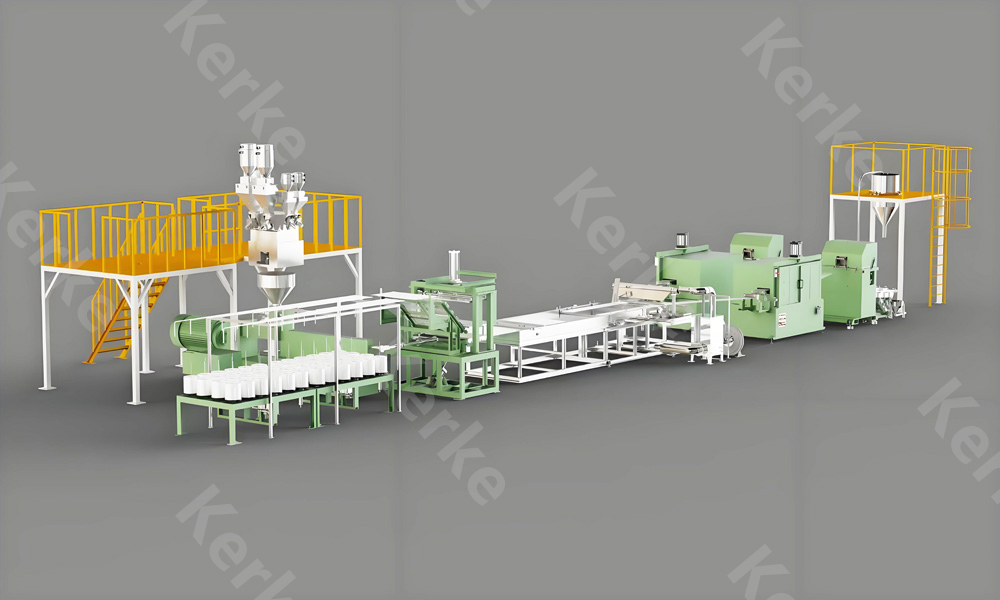
Pellet uniformity stands as a fundamental quality parameter in masterbatch production that directly impacts customer satisfaction and processing performance. Inconsistent pellet size, shape, and distribution create problems throughout the plastics supply chain, from feeding issues at compounders to quality variations in finished products. Masterbatch manufacturers who master pellet uniformity control gain significant competitive advantages in quality, efficiency, and customer loyalty.
The compounding extruder serves as the primary determinant of pellet quality in masterbatch production. The equipment configuration, operating parameters, and process control capabilities all contribute to the uniformity characteristics of finished pellets. Understanding how these factors interact enables processors to optimize their operations for superior pellet quality that meets and exceeds customer expectations.
This comprehensive guide examines the technical and operational factors that influence pellet uniformity in masterbatch production. From equipment selection to process optimization, you will gain insights that enable measurable improvements in your production outcomes. Whether you operate a small-scale masterbatch facility or a high-volume production operation, the principles discussed here apply to your quality improvement initiatives.
Understanding Pellet Uniformity and Its Importance in Masterbatch Applications
Pellet uniformity encompasses multiple quality attributes that collectively determine how masterbatch performs in customer applications. Size distribution, shape consistency, bulk density, and flow properties all contribute to the overall uniformity that processors and compounders experience when using your masterbatch products.
End users of masterbatch depend on consistent pellet characteristics to achieve reliable processing outcomes. Automatic feeding systems require uniform pellets for accurate dosing. Extrusion and injection molding processes perform optimally when pellets exhibit consistent melting behavior and flow characteristics. Any variation in these properties translates directly into quality problems that damage customer relationships and increase operational costs.
Beyond customer satisfaction, pellet uniformity affects your internal production efficiency and cost structure. Uniform pellets enable consistent downstream processing, reduce material waste, and minimize quality-related production interruptions. The investment in uniformity improvement delivers returns through multiple channels that strengthen your competitive position.
The Relationship Between Compounding Extruder Design and Pellet Quality
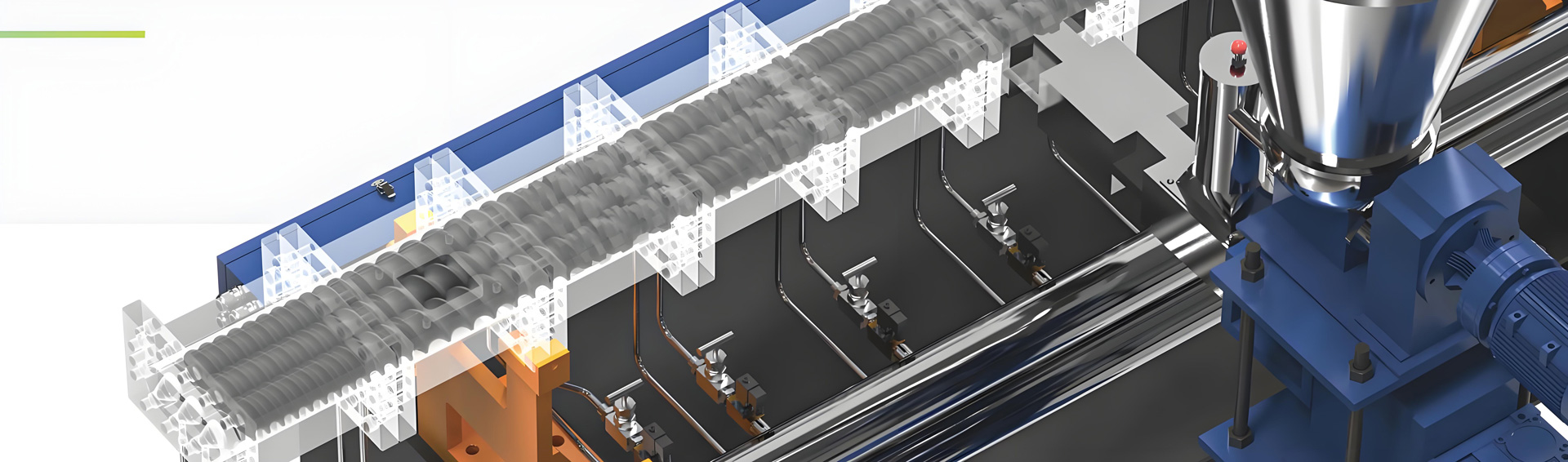
The twin screw extruder configuration fundamentally influences the mixing, melting, and homogeneity of the compound before it reaches the pelletizing system. Equipment with superior mixing capabilities produces more uniform melt composition, which translates directly into consistent pellet quality throughout the production run.
Screw design determines how effectively the compounding extruder blends pigment, polymer, and additive components into a homogeneous mixture. Screws with optimized mixing elements create uniform melt composition that enables consistent pellet formation. Insufficient mixing results in composition variation that manifests as color and performance differences between pellets.
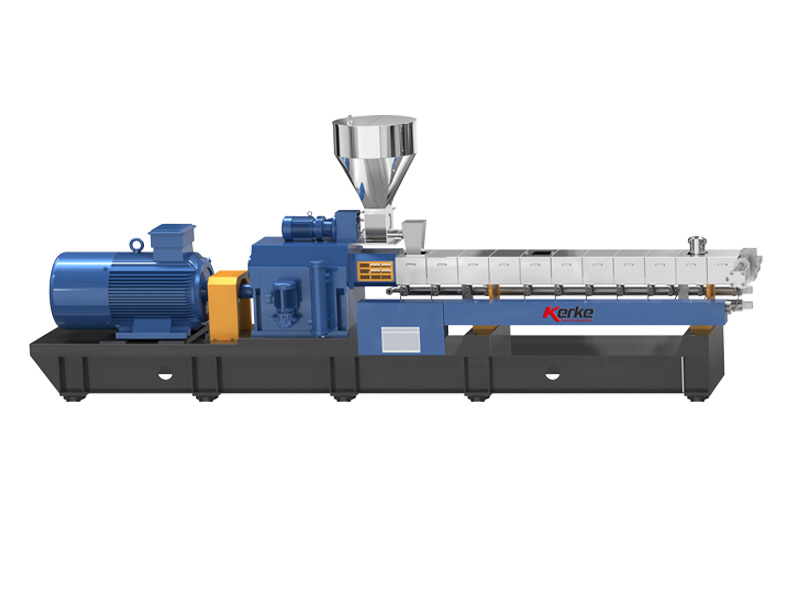
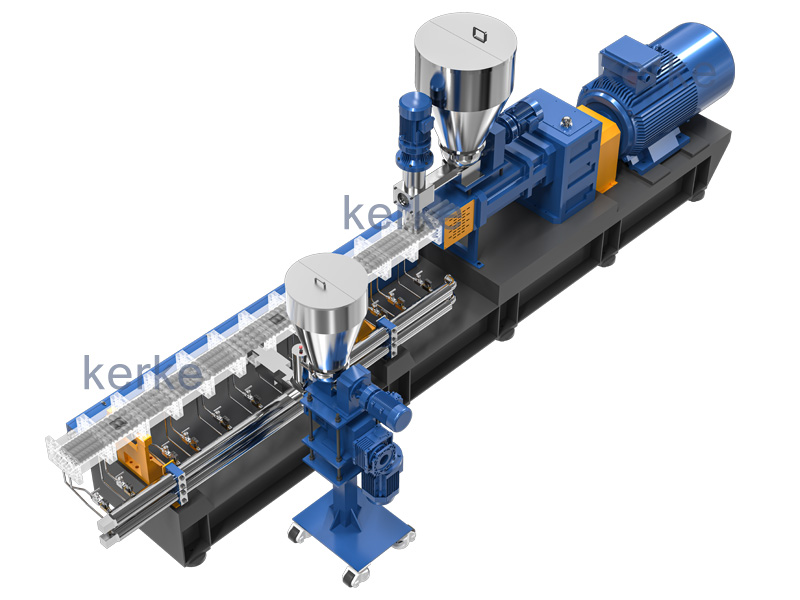
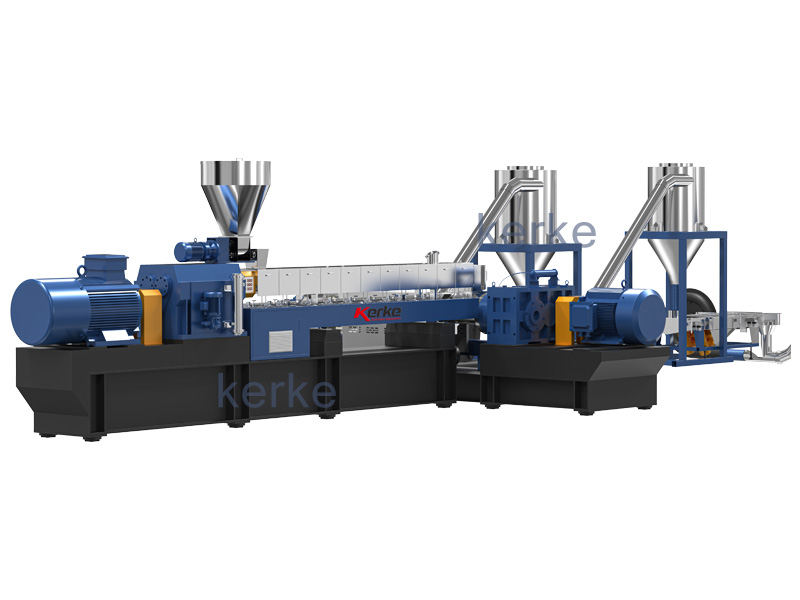
Kerke KTE series twin screw extruders incorporate advanced screw geometries and mixing element designs that promote superior melt homogeneity. These engineering advances translate into measurable improvements in pellet uniformity that benefit your customers and your production operations.
Size Distribution and Its Impact on Processing Performance
The particle size distribution of masterbatch pellets significantly influences downstream processing behavior. Tight size distributions enable predictable feeding rates and consistent melting characteristics. Broad distributions cause variable feeding behavior and inconsistent melt preparation that affects final product quality.
Customers typically specify size distribution requirements that their quality systems expect to receive consistently. Failure to meet these specifications creates quality holds, customer complaints, and potential specification renegotiations that affect your business economics. Meeting and exceeding size distribution requirements requires attention throughout the production process.
The pelletizing equipment configuration, combined with proper operating parameters, determines the size distribution achieved in your production process. Understanding the factors that influence size distribution enables targeted improvements that address specific quality issues.
Key Equipment Factors Affecting Pellet Uniformity
Multiple equipment factors contribute to pellet uniformity outcomes in masterbatch production. Evaluating these factors when selecting equipment and establishing operating parameters enables optimization of your production process for superior quality results.
Underwater Pelletizer Systems and Their Uniformity Capabilities
Underwater pelletizers represent the most common pelletizing technology for masterbatch production due to their ability to produce uniform pellets at high production rates. These systems cut molten polymer strands in a water-filled chamber, creating pellets that cool rapidly while maintaining consistent size and shape characteristics.
The cutting mechanism in underwater pelletizers must maintain precise synchronization with the extrusion rate to produce uniform pellets. Modern pelletizers incorporate advanced control systems that automatically adjust cutting parameters to maintain consistency despite variations in melt flow characteristics. This automatic adjustment capability proves essential for maintaining uniformity across formulation changes and production rate variations.
Blade quality and maintenance significantly influence pellet uniformity over time. Worn or damaged blades create irregular pellet shapes and sizes that degrade overall product quality. Establishing blade replacement schedules based on production volume ensures consistent cutting performance throughout the blade service life.
Water Temperature and Flow Control
The cooling water temperature and flow rate in underwater pelletizing systems directly affect pellet quality and uniformity. Water that is too cold causes surface solidification before internal melting completes, creating hollow or deformed pellets. Water that is too warm allows excessive cooling time that affects cutting precision and creates elongated or irregular shapes.
Modern pelletizing systems incorporate precise temperature control that maintains optimal cooling conditions throughout production runs. Temperature monitoring and automatic adjustment capabilities ensure consistent pellet quality despite variations in production rate or ambient conditions. Investing in systems with advanced temperature control capabilities pays dividends through improved uniformity and reduced quality complaints.
Water flow rate through the pelletizing chamber influences both cooling efficiency and particle separation. Adequate flow removes heat effectively while preventing pellet agglomeration that creates uniformity problems. System design must ensure sufficient flow capacity for the production rates being processed.
Screen Changers and Melt Filtration
Screen changers serve essential functions in masterbatch production by filtering out contaminants and undispersed particles that would affect pellet quality. However, screen changes create process interruptions that can affect uniformity if not managed properly. The transition between different mesh sizes or fresh screens must be executed in ways that minimize quality variation.
Dual-screen continuous change systems enable screen replacement without production interruption, maintaining consistent processing conditions throughout the changeover. These systems provide significant advantages for quality consistency compared to manual screen changes that require process adjustments.
The mesh selection for melt filtration must balance contamination removal with pressure requirements and screen life. Finer screens provide better filtration but increase pressure and require more frequent changes. Understanding the tradeoffs enables optimal selection for your specific quality requirements and production economics.
Process Optimization Strategies for Improved Uniformity
Optimizing process parameters represents one of the most effective approaches to improving pellet uniformity. Understanding the relationships between processing conditions and quality outcomes enables targeted adjustments that deliver measurable improvements.
Temperature Profile Optimization
The temperature profile along the twin screw extruder barrel significantly influences melt consistency and pellet quality. Temperatures that are too low result in incomplete melting and unmelted polymer particles that create defects in finished pellets. Temperatures that are too high cause thermal degradation that affects color stability and polymer properties.
Optimizing the temperature profile requires balancing melting requirements with thermal stability considerations. The profile should provide sufficient energy for complete melting while avoiding excessive temperatures that cause degradation. Different formulations require different profiles based on polymer characteristics and pigment loadings.
Modern extruder control systems enable precise temperature management across multiple zones, allowing optimization of the entire profile rather than individual zone settings. Systematic profiling experiments identify optimal configurations for specific formulations and production rates.
Screw Speed and Throughput Balance
Screw speed influences both throughput and the shear conditions within the compounding extruder. Higher speeds increase throughput but may reduce mixing quality if shear limits are exceeded. Lower speeds improve mixing but reduce production efficiency and may create processing problems at very low rates.
The relationship between screw speed and throughput depends on the specific equipment configuration and formulation characteristics. Finding the optimal operating point requires balancing quality requirements with production efficiency objectives. Operating too far from the optimal point in either direction creates quality or efficiency problems.
Kerke twin screw extruders provide wide speed ranges that enable optimization across diverse production requirements. The flexibility to adjust operating parameters within the equipment capability range supports quality optimization for different formulations and production volumes.
Vacuum Venting and Moisture Removal
Proper vacuum venting removes volatile materials and moisture from the polymer melt, preventing quality problems that affect pellet consistency. Inadequate venting creates voids, bubbles, and other defects in finished pellets that compromise quality and customer acceptance.
The vacuum system configuration must provide sufficient capacity for the moisture and volatile loads associated with specific formulations. Some formulations require more aggressive venting than others based on polymer type, additive characteristics, and pre-drying conditions.
Vacuum level control enables optimization of venting effectiveness while minimizing volatile loss that might affect formulation composition. Precise vacuum control systems maintain consistent venting conditions throughout production runs.
Raw Material Quality and Handling Considerations
Raw material characteristics significantly influence pellet uniformity outcomes regardless of processing equipment capabilities. Understanding material specifications and implementing appropriate handling procedures ensures that incoming materials support your quality objectives.
Polymer Raw Material Requirements
The polymer carrier resin must meet specifications for molecular weight, melt flow characteristics, and thermal stability to enable consistent pellet quality. Variations in polymer properties create processing variation that affects uniformity outcomes.
Establishing supplier quality agreements that specify and guarantee polymer characteristics helps ensure consistent raw material quality. Regular testing and supplier monitoring verify ongoing compliance with quality requirements.
Material storage conditions affect polymer properties over time. Exposure to moisture, elevated temperatures, or contaminants degrades material quality and creates processing problems. Appropriate storage facilities and inventory management practices maintain raw material quality until processing.
Pigment and Additive Quality Control
Pigment quality directly influences masterbatch color consistency and dispersion quality. Variations in pigment particle size, surface characteristics, or chemical composition create processing challenges that affect pellet uniformity.
Establishing pigment specifications and conducting incoming quality testing verifies that pigment materials meet requirements for your masterbatch formulations. Working with reliable pigment suppliers who maintain consistent quality provides a foundation for your own product consistency.
Additive materials including carriers, dispersants, and processing aids must also meet quality specifications to enable consistent masterbatch production. Each component contributes to overall product quality and must be controlled accordingly.
Material Drying and Pre-Treatment
Proper drying of hygroscopic polymers prevents moisture-related quality problems including hydrolysis, steam formation, and pellet defects. The drying conditions must match the polymer requirements and material thickness to achieve the moisture levels necessary for quality processing.
Drying equipment capacity must match production throughput requirements to ensure consistent material conditions throughout production runs. Inadequate drying capacity creates quality variation as material moisture levels fluctuate with production interruptions and restart periods.
Kerke provides comprehensive material handling system recommendations that ensure proper pre-treatment of raw materials before compounding. These systems support quality consistency by maintaining appropriate material conditions for processing.
Quality Control Systems and Monitoring Approaches
Implementing effective quality control systems enables consistent monitoring of pellet uniformity and provides data for continuous improvement efforts. The investment in quality systems pays returns through reduced customer complaints and improved production efficiency.
In-Process Quality Monitoring
In-process monitoring provides real-time visibility into production quality, enabling immediate response to developing problems. Temperature, pressure, and throughput monitoring detect variations that might affect pellet quality before they create significant quality deviations.
Visual inspection systems at the pelletizer discharge identify obvious quality problems that require immediate attention. Automated image analysis can quantify pellet size and shape characteristics, providing data for statistical process control applications.
Regular sampling and testing during production runs verifies that quality characteristics remain within specifications. Sampling frequency should match the process stability and quality criticality of the products being produced.
Laboratory Testing and Analysis
Comprehensive laboratory testing verifies pellet quality characteristics that cannot be monitored in-process. These tests provide the data necessary for quality specifications and customer documentation requirements.
Particle size distribution analysis using sieving or laser diffraction techniques quantifies size uniformity characteristics. This data enables comparison with specifications and identification of trends that indicate developing problems.
Color testing using spectrophotometric methods verifies that pellet color matches specifications consistently. Color variation analysis identifies problems with dispersion quality or formulation consistency that affect customer applications.
Statistical Process Control Implementation
Statistical process control techniques enable data-driven quality management that identifies variation sources and supports targeted improvement efforts. Control charts for critical quality parameters provide early warning of process shifts that require attention.
Collecting and analyzing process data over time reveals patterns and relationships that inform optimization efforts. Understanding the sources of variation enables addressing root causes rather than just symptoms of quality problems.
Kerke equipment incorporates data logging capabilities that support statistical analysis of production performance. These systems enable comprehensive process understanding that drives continuous quality improvement.
Troubleshooting Pellet Uniformity Problems
Despite best efforts, pellet uniformity problems occasionally occur that require diagnosis and correction. Systematic troubleshooting approaches identify root causes and enable effective resolution of quality issues.
Common Uniformity Problems and Their Causes
Elongated or stringy pellets typically indicate cooling problems in the pelletizing system. Water temperature that is too high or insufficient water flow creates incomplete solidification during cutting. Adjusting cooling parameters typically resolves these problems.
Hollow or deformed pellets suggest issues with melt temperature or pressure during pelletizing. Temperature profiles that are too low create incomplete melting, while excessive temperature causes degradation that weakens pellet structure. Optimizing temperature conditions addresses these issues.
Size variation problems often originate from inconsistent melt flow or cutting mechanism issues. Variations in throughput, pressure fluctuations, or worn cutting blades create size distribution problems. Systematic diagnosis identifies the specific cause for targeted correction.
Systematic Diagnostic Approaches
Effective troubleshooting requires systematic approaches that methodically eliminate potential causes. Starting with the most common causes based on problem symptoms often leads to efficient resolution.
Process data review often reveals the timing and circumstances of quality problems. Correlating quality events with process parameter changes identifies potential causes and their effects.
Kerke technical support provides expert assistance for troubleshooting challenging quality problems. The combination of process expertise and equipment knowledge enables efficient problem resolution that minimizes production disruption.
Equipment Investment and Production Scale Considerations
Equipment selection for pellet uniformity optimization must consider production scale requirements and their implications for investment and operating costs. Balancing quality requirements with economic considerations ensures appropriate equipment investments.
Entry-Level Production Options
For smaller-scale masterbatch production operations, the Kerke KTE-36B provides an appropriate platform for quality pellet production. With throughput capability of 20-100kg/h and pricing of $25,000-$35,000, this machine enables entry-level operations to achieve quality standards that meet market requirements.
The compact design of smaller equipment often enables quality advantages due to better control over processing conditions. However, throughput limitations restrict the production volumes achievable with these machines.
Medium-Scale Production Capabilities
Medium-scale operations benefit from equipment like the KTE-50B and KTE-65B that provide higher throughput while maintaining quality standards. The KTE-50B, priced at $40,000-$60,000 with 80-200kg/h capacity, offers excellent value for growing operations. The KTE-65B at $50,000-$80,000 enables production rates of 200-450kg/h that support meaningful volume requirements.
These mid-range machines provide the capability to implement quality control systems and process optimization approaches that would not be practical at smaller scales. The investment in appropriate quality systems delivers returns through improved consistency and reduced waste.
High-Volume Production Excellence
High-volume masterbatch production operations require equipment capable of maintaining quality standards at significant throughput rates. The KTE-75B, with 300-800kg/h capacity at $70,000-$100,000, provides high-volume capability while maintaining the quality standards that demanding customers require.
For the highest volume requirements, the KTE-95D offers production rates of 1000-2000kg/h at $120,000-$200,000. This machine enables economies of scale that support competitive positioning in high-volume market segments while delivering the pellet uniformity that quality-conscious customers demand.
Preventive Maintenance for Consistent Pellet Quality
Preventive maintenance practices ensure that equipment continues to deliver quality performance throughout its operational life. Establishing appropriate maintenance schedules and procedures prevents quality degradation that damages customer relationships.
Regular Equipment Inspection Protocols
Scheduled equipment inspections identify wear and conditions that affect pellet quality before they create significant problems. These inspections should cover all equipment components that influence processing and pelletizing performance.
Screw and barrel inspection reveals wear patterns that affect mixing and melting performance. Monitoring wear progression enables planning for component replacement before quality problems occur.
Pelletizing system inspection ensures that cutting mechanisms, seals, and water systems operate correctly. Regular blade inspection and replacement maintains cutting quality throughout the service life.
Maintenance Scheduling Based on Production Volume
Maintenance intervals should be established based on production volume rather than calendar time for most equipment components. Higher volume operations require more frequent maintenance to compensate for increased wear rates.
Tracking maintenance requirements and their relationship to production volume enables optimization of maintenance schedules. Data-driven scheduling reduces unnecessary maintenance while ensuring that critical maintenance is performed before quality problems occur.
Continuous Improvement Strategies
Achieving and maintaining pellet uniformity excellence requires ongoing attention to process optimization and quality improvement. Establishing continuous improvement culture and practices ensures that your operations remain competitive over time.
Process Documentation and Standardization
Documenting optimized process parameters creates standard operating procedures that ensure consistency across operators and production runs. Standardized procedures reduce variation that originates from inconsistent operating practices.
Training programs that ensure all operators understand and follow standard procedures maintain quality consistency regardless of personnel changes. Regular refresher training reinforces procedures and introduces improvements as they are developed.
Quality Improvement Projects and Implementation
Identifying improvement opportunities through data analysis and benchmarking enables targeted quality enhancement efforts. Projects that address specific quality gaps deliver measurable benefits to operations and customers.
Implementing improvements requires change management approaches that ensure new procedures are adopted effectively. Pilot testing, operator training, and follow-up verification ensure that improvements deliver their intended benefits.
Conclusion
Improving pellet uniformity in masterbatch production requires attention to equipment capabilities, process optimization, raw material management, and quality control systems. The compounding extruder provides the foundation for quality through its mixing and melting performance, while pelletizing systems translate this into finished pellet characteristics.
Kerke KTE series twin screw extruders incorporate the design features and process control capabilities that support pellet uniformity excellence. From entry-level to high-volume production, these machines provide the platform for quality masterbatch production that meets customer requirements.
Implementing the strategies and practices outlined in this guide enables measurable improvements in pellet uniformity that strengthen your competitive position. The investment in quality improvement pays returns through enhanced customer satisfaction, reduced waste, and improved production efficiency.