Introduction
Industrial plastic parts operate in demanding environments that challenge material capabilities through mechanical stress, thermal cycling, chemical exposure, and environmental factors. From hydraulic system components to conveyor equipment wear surfaces, industrial plastic parts must maintain dimensional stability and functional properties despite years of challenging service conditions. Masterbatch for industrial plastic parts has become an essential technology for enhancing polymer performance beyond baseline capabilities, enabling plastics to replace traditional materials like metal in increasingly demanding applications. A compounding extruder system provides the manufacturing foundation for producing these specialized masterbatch formulations with consistent quality.
The industrial plastics market demands consistent quality, reproducible performance, and cost-effective solutions that masterbatch technology delivers. Unlike consumer products where appearance may be the primary concern, industrial applications prioritize functional properties including strength, wear resistance, thermal stability, and chemical resistance. A twin screw extruder enables the production quality that industrial masterbatch applications require. Masterbatch formulations for industrial applications must be precisely engineered to achieve target property improvements while maintaining processing compatibility and cost competitiveness with alternative materials.
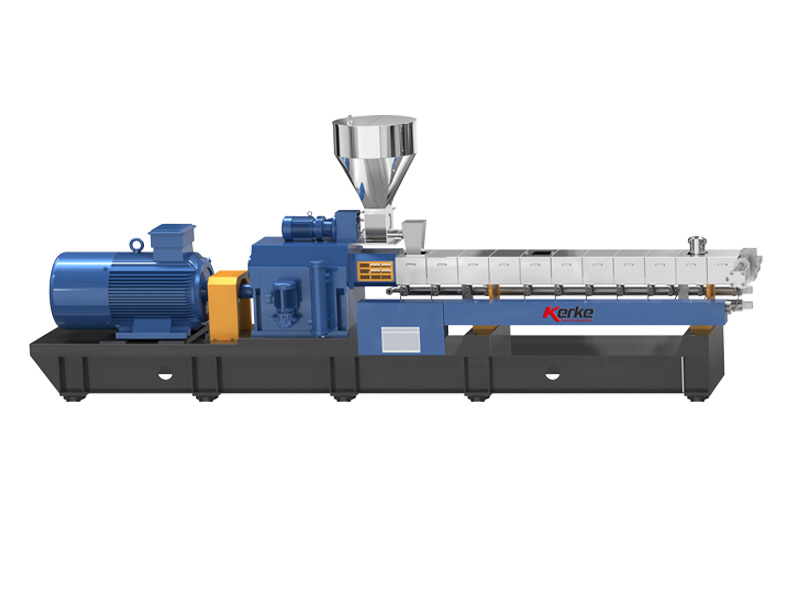
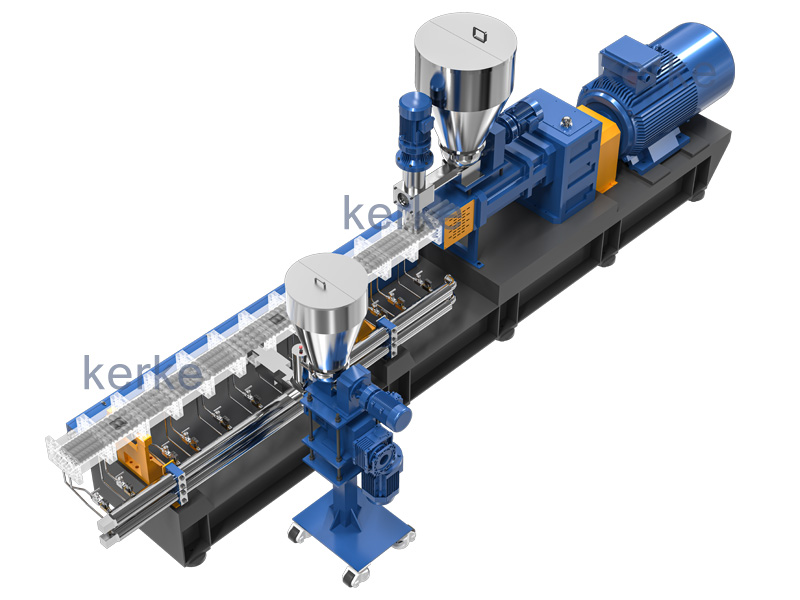
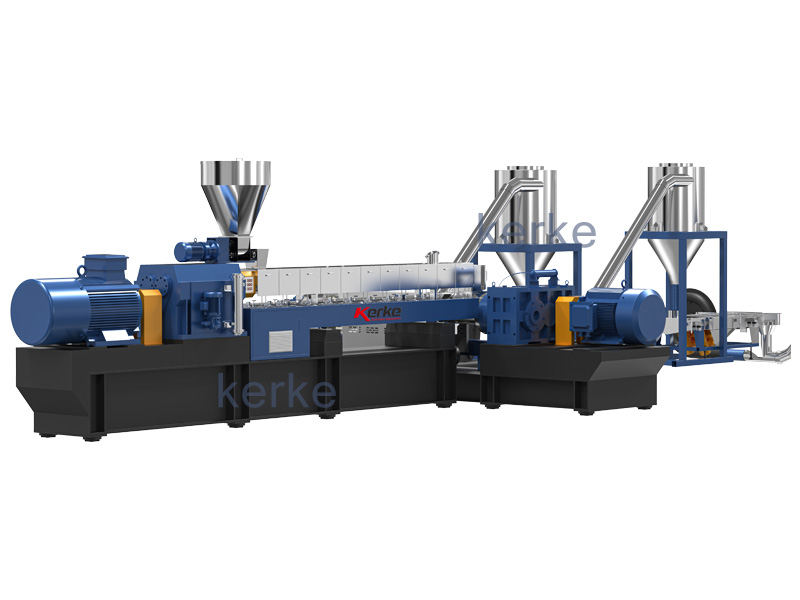
This comprehensive guide examines the technical requirements, formulation approaches, and production considerations that define successful industrial plastic parts masterbatch development. The guide covers reinforcement strategies, performance modification approaches, and quality assurance requirements specific to industrial applications. Practical guidance on equipment selection and process optimization supports manufacturers seeking to develop or improve industrial masterbatch production capabilities. A masterbatch extruder from Kerke provides the capabilities necessary for consistent industrial masterbatch quality.
What is Masterbatch for Industrial Plastic Parts
Masterbatch for industrial plastic parts encompasses a diverse range of additive formulations designed to enhance mechanical, thermal, and chemical properties for demanding applications. These masterbatches typically contain reinforcing fillers, impact modifiers, flame retardants, thermal stabilizers, and other performance additives dispersed within compatible polymer carrier systems. The concentrated masterbatch form enables precise property modification while maintaining processing consistency and quality control advantages over direct addition methods when processed through a compounding extruder system.
Reinforcement additives including glass fibers, carbon fibers, and mineral fillers enhance strength and stiffness for structural applications requiring load-bearing capability. Impact modifiers such as elastomers and graft copolymers improve toughness and damage tolerance for applications involving shock loading or impact exposure. Flame retardant masterbatches address safety requirements for electrical, construction, and transportation applications where fire performance specifications must be satisfied. A twin screw extruder provides the mixing capabilities necessary for proper incorporation of these additives.
Thermal stabilization systems protect polymer properties during processing and throughout service life in applications involving elevated temperature exposure. Chemical resistance additives enable plastic parts to withstand exposure to fuels, lubricants, solvents, and other aggressive substances encountered in industrial environments. The compounding extruder provides the processing capabilities necessary to incorporate these diverse additive systems with the dispersion quality and consistency that industrial applications demand. The masterbatch extruder ensures uniform additive distribution throughout the polymer matrix.
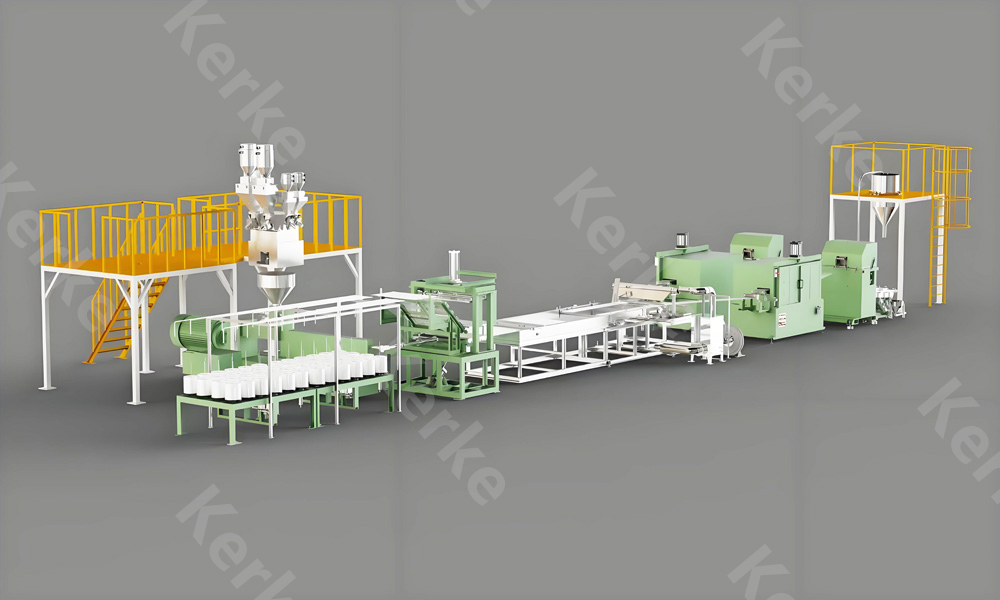
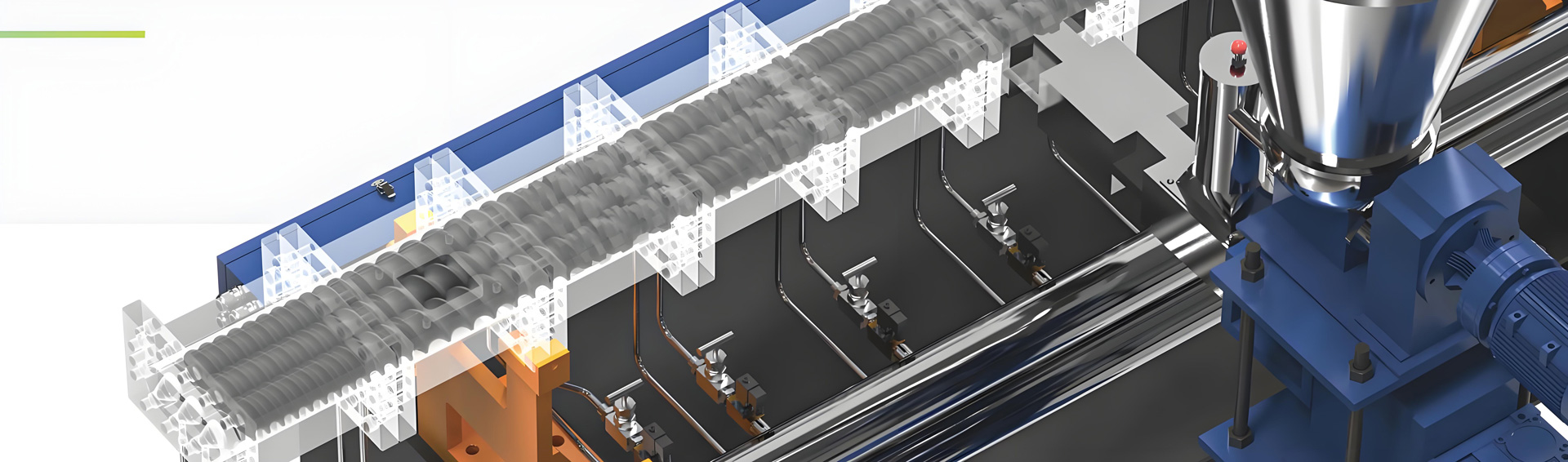
Twin screw extruder technology has become the standard production method for industrial masterbatch formulations due to its superior mixing capabilities and processing flexibility. The intensive distributive and dispersive mixing that twin screw extruders provide ensures uniform additive distribution throughout the polymer matrix. Processing versatility enables handling of diverse formulation types ranging from glass fiber-reinforced concentrates to highly loaded mineral filler masterbatches. Any compounding extruder system designed for masterbatch production can handle these industrial formulations with appropriate configuration.
Why Use Masterbatch for Industrial Plastic Parts
Property enhancement through masterbatch technology enables plastics to meet performance requirements that unfilled polymers cannot satisfy. Tensile strength increases of 50 to 200 percent, modulus improvements of 100 to 400 percent, and impact resistance modifications spanning the full range from brittle to highly ductile behavior all become achievable through masterbatch formulation. A twin screw extruder enables the production quality that maximizes these property enhancements. This property range enables plastics to replace metals, ceramics, and engineering plastics in applications where cost, weight, or processing advantages make plastic substitution attractive.
Cost optimization represents a compelling driver for masterbatch adoption in industrial applications. Reinforcing fillers such as calcium carbonate, talc, and glass fibers cost substantially less per unit volume than the engineering polymers they reinforce. A compounding extruder system provides the cost-effective production that industrial applications demand. At filler loadings of 20 to 40 percent by weight, material cost reductions of 15 to 30 percent become achievable while simultaneously improving mechanical properties. This cost-property combination enables competitive pricing while maintaining healthy margins for manufacturers.
Processing advantages accompany the material cost and property benefits that masterbatch incorporation provides. Pre-compounded masterbatch eliminates the need for complex multi-step addition systems at the part molder, simplifying production operations and reducing material handling costs. Consistent masterbatch quality ensures reproducible part properties regardless of mixing equipment or operator procedures at the point of use. These advantages reduce quality variability and associated costs throughout the supply chain.
Material specification simplification results from masterbatch adoption, as single-additive masterbatches can replace complex formulations requiring multiple individual ingredient additions. Single-source responsibility for masterbatch quality streamlines supplier management and quality assurance activities. Formulation optimization conducted by masterbatch specialists often achieves better property-cost combinations than individual compounders can develop independently.
Types and Classifications
Reinforcing masterbatches constitute the largest category by volume for industrial plastic parts applications. Glass fiber masterbatches provide the highest strength and stiffness improvements, with fiber loadings typically ranging from 30 to 60 percent by weight. Short glass fiber masterbatches enable injection molding and extrusion processing while providing property improvements approaching those of long fiber materials. Carbon fiber masterbatches offer similar reinforcement with the additional benefits of reduced weight and electrical conductivity for specialized applications.
Mineral filler masterbatches include calcium carbonate, talc, mica, and kaolin variants that provide cost-effective property modification. Calcium carbonate masterbatches improve stiffness and dimensional stability at moderate cost, making them popular for automotive and construction applications. Talc masterbatches provide superior stiffness and reduced thermal expansion compared to calcium carbonate. Mica masterbatches offer excellent electrical insulation properties combined with reinforcement benefits.
Impact modifier masterbatches address applications requiring enhanced toughness or ductility. Elastomer-based impact modifiers such as EPDM and SEBS graft copolymers improve impact resistance at low temperatures for outdoor and refrigeration applications. Core-shell impact modifiers provide transparent impact modification for applications where clarity must be maintained. Reactive impact modifiers that form chemical bonds with the polymer matrix offer superior property retention during long-term aging.
Flame retardant masterbatches address safety requirements across electrical, construction, transportation, and consumer product applications. Halogenated flame retardant systems offer cost-effective performance but face increasing regulatory restrictions. Halogen-free flame retardant systems using phosphorus, nitrogen, or mineral-based additives provide regulatory compliance while maintaining processing characteristics. Intumescent flame retardant systems create protective char layers that insulate underlying material from flame exposure.
Key Properties and Specifications
Mechanical property specifications define the performance requirements that industrial masterbatch formulations must achieve. Tensile strength specifications for glass fiber-reinforced masterbatches typically range from 80 to 180 megapascals depending on fiber loading and polymer compatibility. Flexural modulus values of 5,000 to 20,000 megapascals enable structural applications where metals can be replaced with reinforced plastics. Impact strength specifications vary according to application requirements, ranging from modest improvements to highly ductile formulations exceeding 500 joules per meter in notched Izod testing.
Thermal property specifications address performance requirements in applications involving elevated temperature exposure or thermal cycling. Heat deflection temperatures specify the temperature at which materials deform under specified loads, with glass fiber reinforcement enabling increases from 100 degrees Celsius to over 250 degrees Celsius for some polymer systems. Coefficient of thermal expansion specifications are critical for applications involving dimensional accuracy across temperature ranges, as fiber reinforcement can reduce expansion by 50 to 80 percent compared to unfilled polymers.
Chemical resistance specifications define acceptable performance when industrial parts encounter aggressive substances during service. Resistance to fuels, oils, solvents, and industrial chemicals varies according to polymer type and reinforcement strategy. Fluoropolymers and specific polyamide formulations offer superior chemical resistance for demanding applications. Reinforcement with glass or mineral fillers may affect chemical resistance by creating pathways for fluid penetration along filler-matrix interfaces.
Processing property specifications ensure that masterbatch formulations can be successfully processed using standard industrial equipment. Melt flow characteristics must be compatible with injection molding, extrusion, or other target processing methods. Mold release characteristics affect production efficiency and part quality. Fiber length retention during processing determines the reinforcement effectiveness achieved in finished parts, with screw design and processing conditions influencing this critical parameter.
Applications and Use Cases
Automotive applications represent the largest market for industrial plastic parts masterbatches, with under-hood components, structural members, and exterior trim all incorporating reinforced formulations. Air intake manifolds, engine covers, and bracket assemblies utilize glass fiber-reinforced masterbatches to achieve the temperature resistance and mechanical performance that under-hood environments demand. Door modules, seat structures, and instrument panel carriers incorporate mineral filler and impact-modified masterbatches for structural reinforcement with cost-effective properties. The continued light-weighting of vehicles drives adoption of reinforced plastic components that replace heavier metal alternatives while meeting demanding performance specifications.
Electrical and electronic applications require flame retardant masterbatch formulations that meet stringent safety standards while providing necessary mechanical and thermal properties. Switch gear housings, circuit breaker components, and connector bodies all require flame retardant performance combined with dimensional stability and electrical insulation. Halogen-free flame retardant masterbatches increasingly dominate these applications due to regulatory requirements and environmental considerations. The growth of electric vehicle charging infrastructure and battery systems creates new opportunities for flame retardant industrial masterbatches in high-voltage applications.
Industrial equipment components benefit from wear-resistant, reinforced, and chemically resistant masterbatch formulations. Conveyor system components including guides, rollers, and wear strips require low friction and abrasion resistance that specialized masterbatches provide. Pump housings, valve bodies, and hydraulic components utilize chemically resistant formulations that withstand aggressive fluid exposure. Gear and bearing components incorporate internal lubricants and reinforcement that enable plastic substitution for metal in appropriate applications. Mining and mineral processing equipment utilize highly wear-resistant formulations that extend component service life in abrasive environments.
Construction applications including pipe and fitting systems, window profiles, and structural components require durable formulations that withstand decades of service. PVC pipe formulations incorporate impact modifiers, stabilizers, and processing aids that ensure reliable performance through handling, installation, and decades of buried service. Window profile formulations require weatherability, impact resistance, and dimensional stability that masterbatch technology provides. Structural insulated panels utilize reinforced core materials that enable load-bearing applications. Infrastructure projects including water management, energy distribution, and transportation systems rely on industrial plastic components that require masterbatch enhancement for reliable long-term performance.
Agricultural equipment applications utilize industrial plastic parts masterbatch for components exposed to fertilizers, pesticides, and outdoor weathering conditions. Irrigation system components, greenhouse structural members, and livestock housing equipment benefit from UV-stabilized and chemical-resistant formulations. The demanding conditions of agricultural service require careful formulation development that addresses both environmental exposure and chemical contact requirements. These specialized applications create market opportunities for masterbatch producers with technical capability and formulation expertise that can address the unique requirements of agricultural environments.
Cost and Price Analysis
Industrial masterbatch pricing varies significantly according to formulation complexity, additive type, and performance requirements. Glass fiber masterbatches typically range from $3 to $12 per kilogram depending on fiber loading and polymer carrier. A twin screw extruder enables cost-effective production of these formulations. Mineral filler masterbatches range from $2 to $5 per kilogram, offering cost-effective property modification for less demanding applications. Impact modifier and flame retardant masterbatches range from $4 to $20 per kilogram depending on performance level and regulatory compliance requirements. A masterbatch extruder system provides the capabilities necessary for efficient industrial masterbatch manufacturing.
Value analysis for industrial masterbatch adoption considers total system cost rather than only masterbatch pricing. Glass fiber masterbatch incorporation at 30 percent loading in polypropylene can reduce material cost by 20 percent while improving tensile modulus by 150 percent and heat deflection temperature by 40 degrees Celsius. A compounding extruder provides the production capabilities necessary for cost-effective industrial masterbatch manufacturing. This combination of cost reduction and performance improvement creates compelling value propositions for applications where the enhanced properties enable plastic substitution for more expensive materials.
Equipment investment for industrial masterbatch production follows patterns similar to other masterbatch types but often requires additional capabilities for handling challenging formulations. Glass fiber masterbatch production requires specialized equipment for fiber incorporation and protection against fiber breakage. High-loading mineral filler masterbatches require equipment with robust drive systems and wear-resistant components. Kerke KTE Series equipment offers configurations specifically designed for these demanding industrial masterbatch applications.
Typical equipment investments for industrial masterbatch production range from $40,000 for laboratory-scale production with KTE-16B or KTE-27 systems to $150,000 for small-scale commercial production with KTE-35 or KTE-50 equipment. Large-scale production facilities incorporating KTE-95 or larger extruders typically represent total investments of $400,000 to $800,000 including material handling, cooling systems, and quality control equipment.
Production Process with Twin Screw Extruder
Industrial masterbatch production using twin screw extruders requires configurations optimized for each formulation type and performance requirement. Glass fiber masterbatch production demands screw designs that incorporate fibers without excessive breakage while achieving adequate polymer impregnation. Screw configurations featuring elongated feed sections with low compression ratios minimize fiber damage, followed by mixing sections that ensure complete fiber wet-out without re-breaking the reinforcement.
Downstream fiber handling equipment must be configured to protect fiber length in the finished masterbatch pellets. Strand cooling systems must provide uniform solidification without creating thermal stresses that weaken fiber-polymer interfaces. Pelletizing equipment must be selected to minimize additional fiber breakage during the cutting operation. Glass fiber length in finished pellets directly correlates with reinforcement effectiveness in subsequent processing, making downstream handling critical to product performance.
High-loading mineral filler masterbatch production requires equipment with robust drive systems capable of handling the high viscosity and abrasive characteristics of concentrated mineral formulations. Screw and barrel materials must resist wear from mineral filler contact, with hardened barrel liners and tool steel screw elements providing extended service life. Feeding systems must deliver consistent mineral addition rates despite the challenging flow characteristics of powdered fillers.
Flame retardant masterbatch production often requires specialized handling procedures due to the hazardous nature of flame retardant additives. Brominated and chlorinated flame retardants require dust control systems that protect operator health and prevent environmental release. Phosphorus-based flame retardants may require moisture control to prevent hydrolysis during processing. Halogen-free flame retardant systems may require modified screw configurations to achieve adequate dispersion of difficult-to-mix additives.
Quality Control and Testing
Quality assurance for industrial masterbatch production incorporates mechanical testing that verifies reinforcement effectiveness and property achievement. Tensile testing according to ASTM D638 provides strength and elongation data that confirms formulation targets are met. Flexural testing per ASTM D790 quantifies stiffness improvements that are often the primary purpose of reinforcement masterbatches. Impact testing using notched Izod or Gardner methods verifies toughness characteristics for impact-modified formulations.
Thermal analysis methods including differential scanning calorimetry and thermomechanical analysis characterize thermal behavior relevant to industrial applications. Heat deflection temperature measurements according to ASTM D648 verify that elevated temperature performance meets specifications. Melt flow index testing confirms processing characteristics match customer equipment capabilities. Thermogravimetric analysis quantifies filler content and assesses thermal stability.
Dispersion quality assessment proves particularly important for reinforced masterbatches where fiber distribution directly influences mechanical properties. Optical microscopy and image analysis enable quantification of fiber dispersion and identification of agglomerates that reduce property effectiveness. Scanning electron microscopy provides detailed visualization of fiber-matrix interfaces and dispersion quality. These characterization techniques support formulation optimization and quality verification.
Application testing using representative processing methods provides the most relevant quality verification for industrial masterbatch products. Injection molding test plaques incorporating the masterbatch enable verification of processing behavior and property achievement under production conditions. Comparison testing against specification materials ensures competitive positioning. Long-term aging studies including thermal aging, environmental exposure, and chemical contact verify that properties remain acceptable throughout intended service life.
Maintenance and Operation Guidelines
Equipment maintenance for industrial masterbatch production must address the abrasive and corrosive characteristics of many industrial additive systems. Glass fiber-reinforced formulations cause wear on screw elements, barrel surfaces, and downstream components including pelletizing knives and screens. Scheduled inspection intervals should account for production volume and formulation abrasiveness, with worn component replacement preventing quality degradation from equipment deterioration.
Kerke KTE Series extruders offer wear-resistant options including hardened barrel liners, surface-treated screw elements, and specialized material options that extend maintenance intervals for demanding industrial masterbatch applications. These options increase initial equipment investment but reduce long-term maintenance costs and quality risk from equipment wear. Lifetime cost analysis should guide wear-resistant equipment selection decisions.
Operating procedures for industrial masterbatch production require attention to formulation-specific requirements that differ from standard masterbatch production. Glass fiber masterbatch production may require nitrogen inerting to reduce fiber oxidation during high-temperature processing. Flame retardant formulations may require exhaust system monitoring and personal protective equipment for operator safety. High-loading mineral filler masterbatches may require modified startup procedures to prevent feeding difficulties.
Production planning for industrial masterbatch facilities should account for changeover requirements between different formulation types. Glass fiber masterbatches require thorough purging to remove residual fibers that could contaminate subsequent non-reinforced formulations. Color masterbatches require cleaning procedures that prevent color carryover between formulations. Scheduling similar formulations consecutively reduces changeover time and purge material waste.
Kerke’s Solutions
Kerke, operating as Nanjing Kerke Extrusion Equipment Co., Ltd. under the WANPLAS Group, delivers comprehensive solutions for industrial masterbatch production across all formulation types and production scales. With 12 years of experience supporting customers in 70 countries, Kerke has developed deep expertise in the specialized requirements of industrial applications including glass fiber reinforcement, mineral filler incorporation, and flame retardant masterbatch production. The company facility spanning nearly 20,000 square meters supports the extensive KTE Series manufacturing program.
The Kerke KTE Series encompasses models from compact laboratory units to large-scale production systems, with configurations optimized for specific industrial masterbatch applications. The KTE-65 and KTE-75 models provide excellent capabilities for glass fiber masterbatch production, with drive systems rated for the high torque requirements of highly filled formulations. KTE-95 and KTE-110 models serve high-volume production requirements with throughput capabilities exceeding 1,500 kilograms per hour.
Kerke equipment features robust construction designed for the demanding requirements of industrial masterbatch production. Heavy-duty bearing housings, precision-ground screw elements, and wear-resistant barrel options ensure reliable performance in challenging applications. Advanced control systems with touchscreen interfaces and recipe management capabilities simplify operation and ensure reproducible production conditions. Variable frequency drives provide precise speed control that enables optimization of processing parameters for diverse formulations.
Technical support services extend Kerke’s equipment offerings to encompass comprehensive assistance for industrial masterbatch production. Application engineers with extensive compounding experience support formulation development, process optimization, and troubleshooting activities. Training programs enable customer personnel to develop expertise in industrial masterbatch production techniques. This support infrastructure ensures that Kerke customers can successfully produce industrial masterbatches that meet demanding application requirements.
Frequently Asked Questions
What fiber loading is appropriate for glass fiber masterbatch formulations?
Fiber loading typically ranges from 20 to 50 percent by weight depending on polymer type, target properties, and processing requirements. Higher loadings provide greater reinforcement but increase viscosity and processing difficulty. Most applications use 30 to 40 percent loading that balances property improvement against processing considerations.
How do I prevent fiber breakage during masterbatch production?
Fiber breakage prevention requires screw configurations with low compression ratios, gentle feeding section designs, and limited high-shear mixing elements. Processing temperatures should be optimized to reduce melt viscosity without causing thermal degradation. Downstream equipment should minimize additional fiber stress during pelletizing and handling.
What is the shelf life of industrial masterbatch products?
Most industrial masterbatches maintain acceptable properties for 12 to 24 months when properly stored. Glass fiber masterbatches may experience some property changes from fiber moisture absorption. Flame retardant masterbatches may require specific storage conditions to prevent additive migration or reaction.
Can recycled polymers be used as carriers for industrial masterbatches?
Recycled polymer carriers can be used when they meet application property requirements and regulatory compliance standards. However, recycled polymers introduce variability that may affect formulation consistency. Virgin carriers provide more reproducible quality for demanding industrial applications.
How do I select between mineral filler types for reinforcement applications?
Talc provides the highest stiffness improvement and is preferred for dimensionally stable applications. Calcium carbonate offers cost-effective reinforcement with good processing characteristics. Mica provides anisotropic reinforcement with excellent electrical properties. Selection depends on property requirements, cost constraints, and processing considerations.
What flame retardant options are available for halogen-free formulations?
Halogen-free flame retardant options include phosphorus-based additives, nitrogen-based compounds, and mineral-based systems using aluminum hydroxide or magnesium hydroxide. Selection depends on polymer type, performance requirements, and processing conditions. Phosphorus-based systems often provide the best cost-performance balance for polyolefin applications.
How does moisture affect industrial masterbatch properties?
Moisture absorption during storage can cause processing problems including steam formation, surface defects, and property degradation. Moisture-sensitive polymers and some flame retardant additives require dry storage and processing. Desiccant drying systems should be used when moisture content exceeds 0.1 percent.
What extruder size is appropriate for industrial masterbatch production?
Production scale determines appropriate equipment size. KTE-50 units produce approximately 150 to 400 kilograms per hour, suitable for small-scale commercial production. KTE-95 systems produce 600 to 1500 kilograms per hour for mid-scale production. KTE-135D units achieve throughput exceeding 2000 kilograms per hour for high-volume industrial applications.
Conclusion
Masterbatch technology provides essential capabilities for enhancing industrial plastic parts performance beyond baseline polymer capabilities. Reinforcement, impact modification, flame retardancy, and thermal stabilization become achievable through masterbatch incorporation, enabling plastics to replace traditional materials in increasingly demanding applications. The property enhancements translate directly to product value through extended service life, reduced weight, and cost-effective manufacturing.
Successful industrial masterbatch production requires attention to formulation requirements, processing optimization, and quality assurance that distinguish industrial applications from standard masterbatch production. Equipment selection must address the demanding characteristics of industrial formulations including abrasive fillers, reactive additives, and high-viscosity melts. Kerke KTE Series extruders provide the capabilities necessary to produce consistent, high-quality industrial masterbatches across the full range of formulation types. A twin screw extruder from Kerke enables manufacturers to produce industrial masterbatches that meet demanding specifications.
The continued expansion of plastic applications in industrial markets creates substantial opportunities for masterbatch producers equipped to deliver consistent, high-performance formulations. Investment in modern compounding equipment, quality systems, and technical expertise positions manufacturers to capture this growth while building sustainable competitive advantages in demanding markets where performance consistency is essential.