Introduction
Color represents one of the most influential factors in plastic product success, affecting consumer perception, brand identity, and functional performance requirements. Iron oxide pigments have established themselves as the preferred colorants for demanding plastic applications due to their exceptional stability, weatherability, and color consistency. Masterbatch for iron oxide color applications provides the concentrated, properly dispersed pigment formulations that enable plastic manufacturers to achieve consistent, vibrant colors across diverse production volumes. A twin screw extruder serves as the essential production equipment for creating these specialized color masterbatch products with consistent quality.
The iron oxide color masterbatch market serves applications ranging from construction materials requiring decades of outdoor color stability to packaging products demanding food contact compliance and regulatory approval. Each application category presents specific requirements that masterbatch producers must understand and address through formulation design and production optimization. A compounding extruder system enables the production quality that iron oxide color masterbatch applications require. Technical expertise in pigment dispersion, polymer compatibility, and processing characteristics distinguishes successful color masterbatch producers from commodity suppliers.
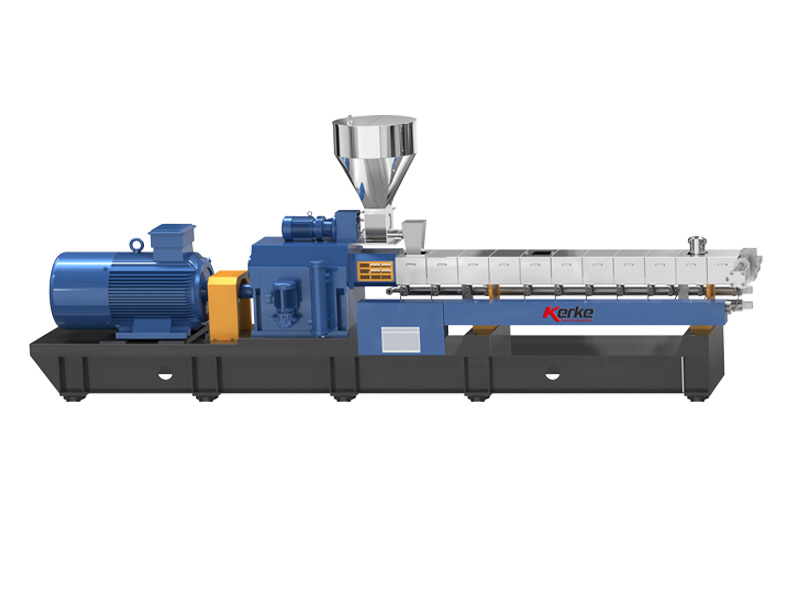
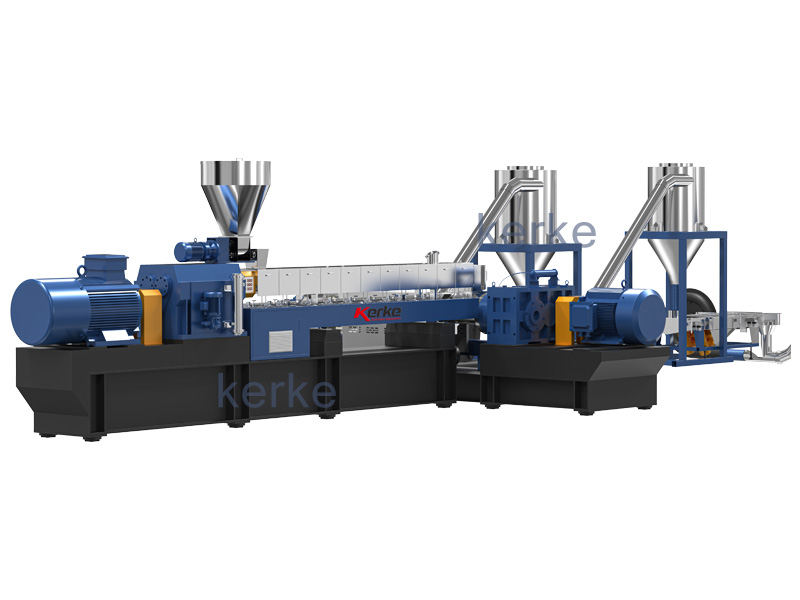
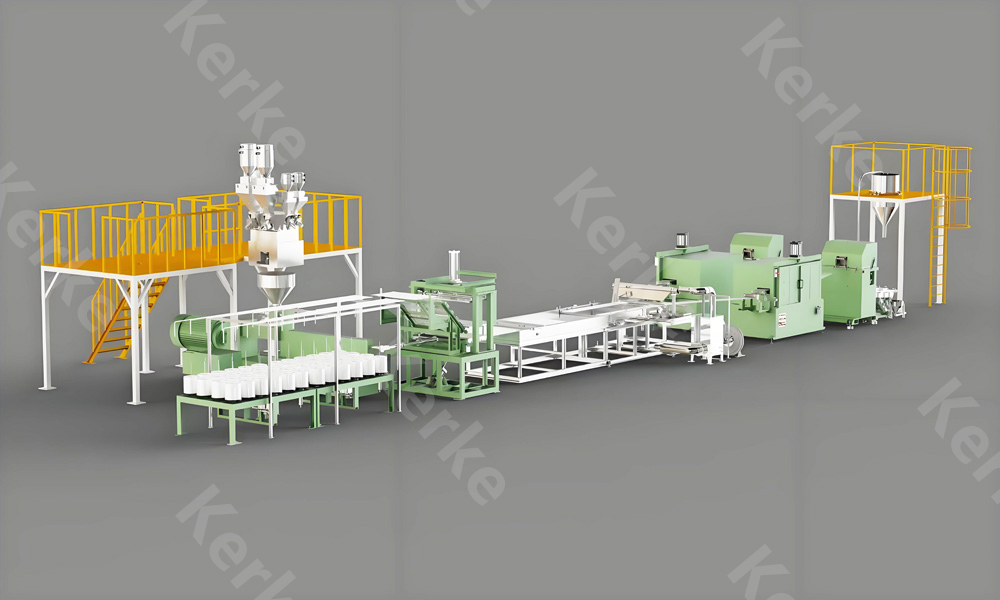
This comprehensive guide examines the technical foundations, formulation approaches, and production methodologies that define successful iron oxide color masterbatch development. The guide provides detailed information about pigment types, dispersion requirements, and quality verification methods that enable consistent product development and manufacturing. Practical guidance on equipment selection and process optimization supports manufacturers seeking to establish or enhance iron oxide color masterbatch production capabilities. A masterbatch extruder from Kerke provides the capabilities necessary for consistent color masterbatch quality.
What is Iron Oxide Color Masterbatch
Iron oxide color masterbatch consists of concentrated iron oxide pigment formulations dispersed within a polymer carrier system, designed for addition to plastic formulations at specified loading levels to achieve target color specifications. Iron oxide pigments encompass a family of inorganic colorants including red, yellow, orange, brown, and black variants derived from iron oxide compounds. These pigments provide exceptional color strength, opacity, and resistance to degradation that makes them ideal for demanding plastic coloring applications when processed through a twin screw extruder system.
The chemistry of iron oxide pigments involves various oxidation states and crystal structures that determine the specific color produced. Red iron oxide, consisting primarily of alpha-Fe2O3 hematite structure, provides the most stable and widely used red pigment option. Yellow iron oxide pigments utilize goethite or maghemite structures with incorporated hydroxide groups. Black iron oxide consists of magnetite with mixed Fe2O3 and FeO composition. Each pigment type offers distinct color characteristics and stability profiles that inform application selection. A masterbatch extruder ensures proper dispersion of these colorants throughout the polymer matrix.
Pigment dispersion quality fundamentally determines the effectiveness of iron oxide color masterbatch, as pigment particle agglomerates cause color variation, processing issues, and property deficiencies in finished products. Primary iron oxide pigment particles typically range from 0.1 to 1 micrometer in size, but agglomerates formed during pigment manufacturing and handling can reach 100 micrometers or larger. Twin screw extruder processing provides the intensive mixing energy necessary to break down agglomerates and achieve the uniform dispersion that consistent color requires. Compounding extruder technology has become essential for producing high-quality color masterbatch products.
Masterbatch extruder technology enables production of concentrated color formulations that would be difficult or impossible to incorporate through direct pigment addition. The pre-dispersed pigment in the masterbatch carrier eliminates dust generation, improves handling characteristics, and provides consistent addition rates regardless of pigment loading. These advantages simplify production operations while improving quality consistency compared to direct pigment addition methods. Any twin screw extruder configured for masterbatch production can achieve the dispersion quality that iron oxide color masterbatch requires.
Why Use Iron Oxide Color Masterbatch
Color stability represents the primary advantage that iron oxide pigments provide over organic alternatives. Iron oxides demonstrate exceptional resistance to UV degradation, thermal exposure, and chemical attack that would quickly fade or degrade organic pigments. A twin screw extruder enables the production quality that maximizes these color stability benefits. Yellow and red organic pigments may fade to unacceptable levels within months of outdoor exposure, while iron oxide-pigmented products maintain acceptable color for decades. This stability makes iron oxides essential for applications requiring long-term color retention.
Cost-effectiveness combines with performance benefits to create compelling value propositions for iron oxide color masterbatch adoption. Iron oxide pigments cost substantially less than most organic pigments, particularly for heavy loading applications where opacity requirements demand high pigment concentrations. A compounding extruder system provides the cost-effective production that iron oxide color masterbatch applications demand. Excellent coloring strength means lower addition rates achieve target color intensity compared to weaker pigment alternatives. These cost advantages enable competitive pricing while maintaining healthy margins for masterbatch producers.
Processing advantages accompany the material cost benefits that iron oxide masterbatch provides. Pre-dispersed pigment in the masterbatch eliminates the mixing and dispersion challenges that direct pigment addition presents. Consistent masterbatch quality ensures reproducible color matching regardless of production conditions or equipment variations. Single-source responsibility for color consistency streamlines quality assurance and customer support activities compared to managing direct pigment suppliers and internal dispersion processes.
Regulatory compliance for food contact, pharmaceutical, and children’s product applications favors iron oxide pigments due to their established safety profiles. Iron oxides are approved food colorants in most regulatory jurisdictions, enabling use in food packaging and processing equipment applications. The inorganic nature of iron oxides eliminates concerns about migration, extraction, or chemical reactivity that affect organic pigment applications in sensitive uses.
Types and Classifications
Red iron oxide masterbatches encompass a range of shades from bright orange-red through deep maroon, each produced from specific pigment grades with distinct particle size distributions and crystal structures.Synthetic red iron oxides provide the most consistent color and cleanest shades, while natural red oxides offer cost-effective options with slightly browner tones. Micaceous iron oxides provide metallic appearance effects combined with excellent weatherability for architectural coatings and automotive applications.
Yellow iron oxide masterbatches span shades from bright lemon through deep golden yellow, depending on pigment particle size and crystal structure. Fine particle yellows provide bright, clean yellow colors with excellent dispersion characteristics. Coarser yellows offer deeper, more golden shades with superior opacity and weathering performance. Nickel titanium yellow pigments provide bright greenish-yellow alternatives with excellent heat stability for engineering plastic applications.
Black iron oxide masterbatches provide neutral black coloration with excellent opacity and stability characteristics. Synthetic black iron oxides offer cleaner, more neutral blacks than carbon black alternatives while providing good UV protection through their semiconductor properties. Magnetic black iron oxides enable specialized applications including anti-counterfeiting and electromagnetic interference shielding where magnetic properties supplement color functions.
Brown and earth tone masterbatches combine multiple iron oxide types to achieve specific shade targets. Raw and burnt sienna, raw and burnt umber, and specialized brown formulations address architectural, automotive, and consumer product color requirements. These combination masterbatches require careful formulation development to achieve consistent shade matching while maintaining dispersion quality and processing characteristics.
Key Properties and Specifications
Color strength specifications, typically expressed as tinctorial strength relative to a standard, quantify the coloring efficiency of iron oxide masterbatch formulations. Higher color strength reduces the masterbatch addition rate required to achieve target color, improving cost-effectiveness but potentially complicating dispersion requirements. Color strength specifications enable comparison between masterbatch products and calculation of appropriate addition rates for specific color targets.
Pigment loading in iron oxide masterbatch typically ranges from 30 to 70 percent by weight depending on pigment type, carrier polymer, and target application. Higher loadings provide concentrated masterbatches that reduce addition rates and carrier introduction during color compounding. However, excessive loading increases viscosity and may cause processing difficulties during masterbatch production and subsequent color compounding. Optimization balances concentration benefits against handling and processing considerations.
Particle size distribution specifications describe the degree of pigment agglomeration and influence both color performance and processing characteristics. Laser diffraction analysis provides quantitative measurement of particle size distributions, with median particle sizes typically ranging from 0.3 to 0.8 micrometers for synthetic iron oxides. Narrow particle size distributions with minimal coarse agglomerates indicate good dispersion quality and predict consistent color performance.
Heat stability specifications address the processing requirements of iron oxide masterbatch and its subsequent incorporation into plastic formulations. Iron oxides demonstrate excellent thermal stability up to temperatures exceeding 300 degrees Celsius for most types, enabling processing across the full range of common thermoplastic polymers. Special high-heat grades provide stability to 400 degrees Celsius for engineering plastic and high-temperature processing applications.
Applications and Use Cases
Construction materials represent the largest application sector for iron oxide color masterbatch, with concrete products, roofing materials, and architectural profiles requiring decades of outdoor color stability. Paver bricks, roof tiles, and masonry units rely on iron oxide colorants that maintain appearance throughout the product service life without fading or discoloration. Siding, fencing, and window profile manufacturers incorporate iron oxide masterbatches to achieve consistent, durable coloration that enhances product value and brand identity.
Automotive applications utilize iron oxide pigments for both interior and exterior components requiring color stability and regulatory compliance. Bumper fascias, mirror housings, and body panels incorporate iron oxide color masterbatches that maintain color despite years of outdoor exposure and washing machine cleaning. Interior components benefit from iron oxide stability against UV exposure and chemical contact from cleaning products and consumer goods.
Packaging applications for iron oxide color masterbatch address both aesthetic and functional requirements. Food packaging utilizes approved iron oxide grades that provide color while meeting food contact regulatory requirements. Cosmetic packaging employs iron oxide combinations that achieve sophisticated color palettes while maintaining safety compliance. Industrial packaging utilizes the opacity and chemical resistance that iron oxides provide for containers and closures in demanding environments.
Consumer products spanning housewares, toys, sporting goods, and personal care items incorporate iron oxide color masterbatch for vibrant, stable coloration. Toy safety regulations favor iron oxide pigments for their non-toxic nature and lack of migration concerns. Housewares manufacturers value the dishwasher and microwave stability that iron oxides provide. Sporting goods applications utilize the durability and UV resistance that maintains appearance despite intensive use and outdoor exposure.
Cost and Price Analysis
Iron oxide color masterbatch pricing reflects the cost of specialized pigments and the processing requirements for achieving adequate dispersion. Pigment costs vary by color and quality level, with red and yellow iron oxides typically ranging from $3 to $15 per kilogram depending on grade and supplier. A twin screw extruder enables cost-effective production of these formulations. Black iron oxides offer cost-effective options at $2 to $8 per kilogram. Premium specialty grades command higher prices but may offer processing or performance advantages that justify premium positioning. A compounding extruder system provides the capabilities necessary for efficient iron oxide color masterbatch manufacturing.
Masterbatch pricing typically ranges from $5 to $25 per kilogram depending on pigment loading, carrier system, and performance specifications. A masterbatch extruder provides the production capabilities necessary for consistent color masterbatch quality. Higher loading concentrates command premium pricing per kilogram but provide lower effective cost through reduced addition rates. Carrier polymer selection influences both processing characteristics and pricing, with universal carrier systems commanding higher prices than polymer-specific alternatives.
Equipment investment for iron oxide color masterbatch production follows standard masterbatch production patterns with twin screw extruders providing the necessary mixing capabilities. Laboratory-scale production using equipment like the Kerke KTE-16B or KTE-27 represents investments of $30,000 to $80,000. Small-scale commercial production with KTE-35 or KTE-50 extruders requires $80,000 to $150,000 investments. Large-scale production facilities utilizing KTE-95 or larger equipment typically represent total investments of $300,000 to $600,000.
Value analysis for iron oxide masterbatch adoption considers total system cost including processing efficiency, quality consistency, and waste reduction benefits. Masterbatch incorporation eliminates dust generation and cleanup costs associated with direct pigment handling. Consistent color matching reduces rework and waste from color variation. Single-source responsibility for color quality simplifies quality assurance and customer support activities.
Production Process with Twin Screw Extruder
Iron oxide color masterbatch production using twin screw extruders requires processing configurations optimized for pigment dispersion and color development. The intensive mixing capabilities of co-rotating twin screw extruders provide the dispersive mixing energy necessary to break down pigment agglomerates and achieve uniform color distribution. Screw configurations must balance dispersion requirements against throughput efficiency and energy consumption.
Screw configuration development for iron oxide masterbatch typically includes multiple mixing sections with kneading blocks or齿轮 mixing elements that provide high local shear stresses for agglomerate breakdown. The sequence and arrangement of mixing elements influences dispersion quality and processing stability. Longer screw configurations with length-to-diameter ratios of 40:1 to 48:1 provide extended mixing capability for difficult-to-disperse pigments or high-loading formulations.
Temperature profile management for iron oxide masterbatch production balances melting and viscosity requirements against thermal pigment stability and carrier polymer considerations. Processing temperatures typically range from 160 to 240 degrees Celsius depending on carrier polymer selection. Higher temperatures reduce melt viscosity and improve pigment dispersion but increase energy consumption and potential thermal degradation. Optimization identifies the minimum temperature that achieves target dispersion quality.
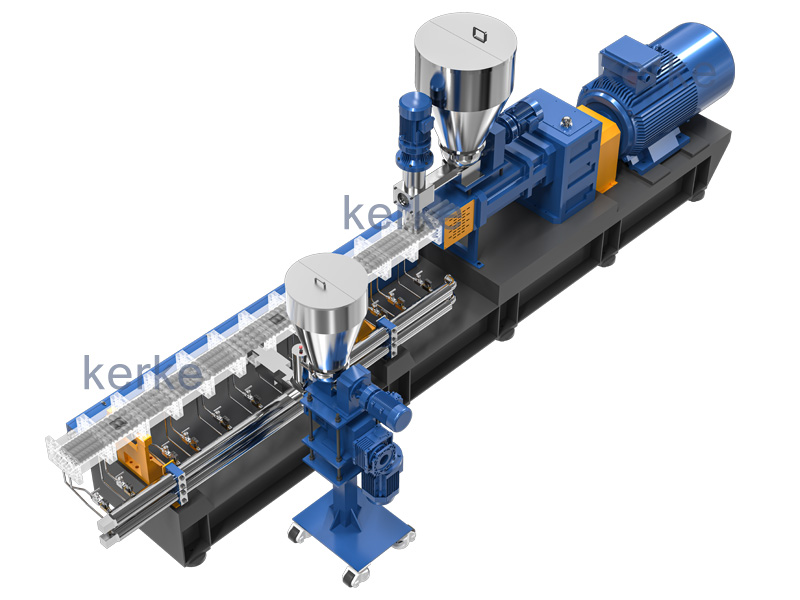
Pigment addition methods significantly influence dispersion quality and production efficiency. Side feeder introduction of pigment after polymer melting often provides better dispersion than feed throat addition, particularly for high-loading formulations. Twin feeder systems enable controlled addition of multiple pigment types for complex color matching. Gravimetric feeding provides the most accurate addition rate control and supports statistical process control applications.
Quality Control and Testing
Color quality control for iron oxide masterbatch begins with instrumental color measurement using spectrophotometry to quantify color coordinates and difference values. CIE Lab color space measurements provide objective color specifications that enable precise color matching and consistency verification. Delta E values quantify color difference from standard, with values below 1.0 representing excellent color matching for most applications and values below 0.5 achievable with careful process control.
Color strength testing verifies that masterbatch formulations achieve the tintorial strength specifications that enable correct addition rate calculation. Spectrophotometric measurement of test specimens compared against reference standards quantifies strength values. Strength testing should be conducted on specimens processed under standardized conditions to eliminate processing variability from strength measurements.
Dispersion quality assessment using microscopic examination provides visual verification of pigment agglomeration and distribution. Optical microscopy at 100x to 400x magnification reveals agglomerates and streaks that indicate dispersion deficiencies. Image analysis software enables quantification of dispersion quality metrics including maximum agglomerate size, agglomerate count per unit area, and uniformity of distribution. These metrics support formulation optimization and quality verification.
Processing simulation testing using customer-representative equipment and conditions verifies that masterbatch performs acceptably under production conditions. Injection molding or extrusion trials under standard production parameters demonstrate color consistency, dispersion quality, and processing stability. Comparison against specification standards ensures competitive positioning and customer satisfaction. These trials also enable development of processing recommendations that support successful customer implementation.
Maintenance and Operation Guidelines
Equipment maintenance for iron oxide color masterbatch production emphasizes thorough cleaning between production runs to prevent color carryover and contamination. Pigment residues in screw channels, barrel zones, and die areas can cause color contamination of subsequent formulations, potentially creating customer complaints and quality rejection. Complete purging between color changes using compatible purge compounds followed by thorough inspection ensures clean transitions.
Screw and barrel inspection should assess wear patterns and accumulated deposits that might affect color quality or processing stability. Iron oxide pigments are relatively non-abrasive compared to glass fiber or mineral fillers, but extended production at high loading levels can cause wear over time. Visual inspection during maintenance shutdowns identifies accumulated deposits that require cleaning and wear patterns that might indicate maintenance requirements.
Operating procedures should address the specific requirements of pigment dispersion and color masterbatch production. Startup procedures should gradually increase temperatures and speeds to ensure complete melting before introducing pigment at high shear zones. Pigment feeding rates should be verified through weight loss measurements that confirm accurate addition. Throughput rate changes should proceed gradually to maintain stable dispersion conditions.
Production scheduling for color masterbatch facilities should consider changeover requirements that influence efficiency and waste generation. Scheduling similar colors consecutively reduces purge material waste and changeover time. Dark-to-light color transitions typically require more intensive purging than light-to-dark changes. Documentation of purge procedures and color verification supports quality assurance requirements and continuous improvement initiatives.
Kerke’s Solutions
Kerke, operating as Nanjing Kerke Extrusion Equipment Co., Ltd. and part of the WANPLAS Group, delivers comprehensive solutions for iron oxide color masterbatch production across all production scales and color complexity levels. With over 12 years of experience supporting masterbatch producers in 70 countries, Kerke has developed deep expertise in the specialized requirements of color masterbatch production including dispersion optimization, color consistency control, and changeover efficiency. The company facility spanning nearly 20,000 square meters supports production of the complete KTE Series lineup.
The Kerke KTE Series encompasses models from compact laboratory units to large-scale production systems, all designed with features that address color masterbatch production requirements. KTE-35 and KTE-50 models provide excellent capabilities for mid-scale color masterbatch production, with mixing configurations optimized for iron oxide dispersion. KTE-95, KTE-110, and KTE-135D extruders provide the throughput capacity and consistency that high-volume color masterbatch production demands.
Kerke equipment features advanced control systems with recipe management capabilities that store optimized processing parameters for different color formulations. Touchscreen interfaces simplify operation and ensure reproducible conditions across production campaigns. Variable frequency drives provide precise speed control that enables optimization of mixing intensity for different pigment types and loading levels. Data logging capabilities support quality documentation and statistical process control applications.
Technical support services complement Kerke equipment offerings with color matching consultation, process optimization, and troubleshooting assistance. Application engineers with extensive color masterbatch experience support customers in developing optimized formulations and processing conditions. Training programs enable customer personnel to develop expertise in color masterbatch production techniques. This comprehensive support approach ensures that Kerke customers can successfully produce iron oxide color masterbatch that meets demanding application requirements.
Frequently Asked Questions
What iron oxide loading level is appropriate for color masterbatch formulations?
Typical iron oxide loading ranges from 30 to 60 percent by weight depending on pigment type, carrier polymer, and target application. Higher loadings provide concentrated products that reduce addition rates but may increase processing difficulty. Universal masterbatches typically use 40 to 50 percent loading for balanced performance.
How do I achieve consistent color matching between batches?
Consistent color matching requires precise control of pigment concentration, adequate dispersion, and uniform mixing during subsequent color compounding. Gravimetric pigment feeding, standardized processing conditions, and statistical process control methods all contribute to batch-to-batch consistency. Regular color measurement and adjustment based on instrumental readings maintains color consistency.
What carrier polymer should I use for iron oxide masterbatch?
Carrier polymer selection depends on target application and processing requirements. Polyethylene carriers offer broad compatibility and easy processing. Polypropylene carriers provide higher temperature capability. Polymer-specific carriers optimize compatibility for specific end-use polymers. Universal carriers use intermediate polymer types that provide acceptable compatibility across multiple polymer systems.
How does iron oxide pigment affect the mechanical properties of plastic formulations?
Iron oxide pigments generally have minimal effect on mechanical properties at typical loading levels of 1 to 5 percent in final compounds. High loading applications may experience slight reductions in impact strength and elongation. The inert nature of iron oxides means they do not significantly affect polymer degradation or long-term property retention.
Can iron oxide masterbatch be used in transparent applications?
Iron oxides provide excellent opacity but are not suitable for transparent applications due to their inherently high hiding power. Transparent applications requiring bright colors should use organic pigments or specialty inorganic pigments designed for transparent systems. Iron oxides are ideal for opaque and semi-opaque applications where their excellent weathering and stability characteristics provide maximum benefit.
What is the color stability of iron oxide pigments in outdoor applications?
Iron oxide pigments demonstrate excellent outdoor stability with color retention exceeding 20 years in most applications. This exceptional stability makes iron oxides the preferred choice for applications where long-term color maintenance is essential. The inorganic nature and chemical stability of iron oxides prevent the fading and degradation that affects organic pigments under UV exposure.
How do I prevent color streaking in injection molding applications?
Color streaking prevention requires adequate dispersion of pigment agglomerates that can act as flow disturbances. Optimized screw designs with appropriate mixing elements improve dispersion during injection molding. Processing conditions that maintain consistent melt temperature and injection speed reduce streaking from flow variations. Masterbatch with verified dispersion quality minimizes the risk of streaking from pigment agglomerates.
What extruder size is appropriate for iron oxide color masterbatch production?
Equipment selection depends on production volume requirements and color complexity. KTE-35 units produce approximately 50 to 120 kilograms per hour, suitable for small-scale production and color development. KTE-65 systems achieve 150 to 400 kilograms per hour for mid-scale commercial production. KTE-110 and KTE-135D units produce 500 to 1500 kilograms per hour for high-volume color masterbatch production.
Conclusion
Iron oxide color masterbatch provides the concentrated, properly dispersed pigment formulations that enable plastic manufacturers to achieve consistent, stable coloration across diverse applications. The exceptional stability, cost-effectiveness, and regulatory acceptance of iron oxide pigments make them the preferred choice for demanding applications requiring long-term color retention. Understanding pigment types, dispersion requirements, and processing optimization enables production of masterbatch products that meet exacting application requirements.
Successful iron oxide color masterbatch production requires investment in equipment capable of achieving the dispersion quality that consistent color demands. Twin screw extruders like the Kerke KTE Series provide the mixing capabilities, temperature control, and processing flexibility necessary for high-quality color masterbatch production. Compounding extruder technology from Kerke enables manufacturers to produce iron oxide color masterbatch that meets demanding color specifications. Equipment selection should consider current requirements and anticipated growth while ensuring adequate capability for the most demanding formulations.
The continued growth of applications requiring durable, stable coloration ensures sustained demand for iron oxide color masterbatch across construction, automotive, packaging, and consumer products markets. Manufacturers equipped with modern compounding equipment, quality systems, and technical expertise position themselves to capture this growth while building sustainable competitive advantages in markets where color consistency is essential for customer satisfaction and brand value.