Introduction
The plastic manufacturing industry has witnessed remarkable technological advancements over the past decade, with silica filler masterbatch emerging as one of the most significant innovations for enhancing material properties. As manufacturers increasingly demand plastics that can withstand extreme conditions while maintaining cost efficiency, the role of advanced compounding equipment like twin screw extruders has become paramount. Silica filler masterbatch represents a sophisticated solution that addresses the growing need for enhanced hardness, improved wear resistance, and superior mechanical performance in plastic products.
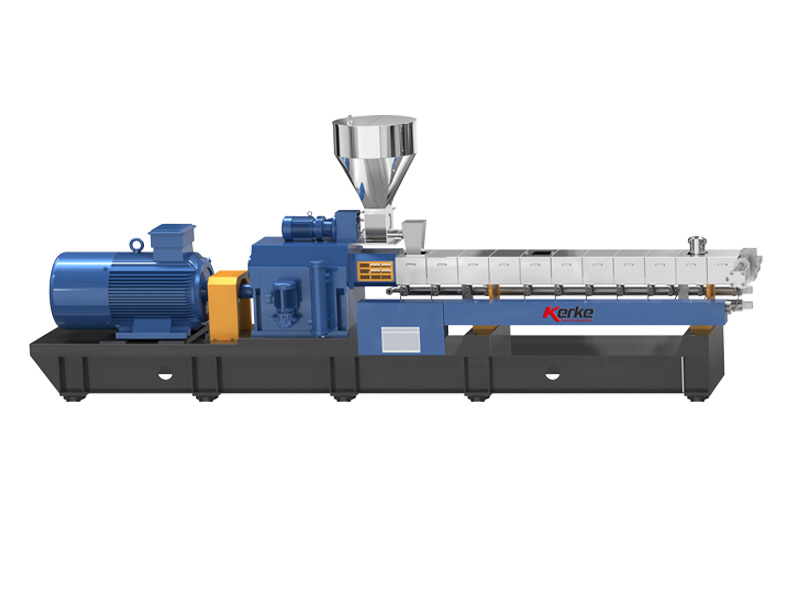
Masterbatch extruder technology has evolved significantly, enabling producers to achieve consistent quality and optimal dispersion of silica fillers within polymer matrices. The global demand for high-performance plastic compounds continues to rise across industries ranging from automotive to construction, creating unprecedented opportunities for manufacturers equipped with advanced compounding systems. A twin screw extruder from Kerke or similar equipment enables the production quality that demanding applications require.
Throughout this article, we will examine the fundamental properties of silica fillers, their impact on plastic performance, and the critical role that twin screw extruders play in achieving optimal compounding results. Whether you are a plastics engineer, manufacturing manager, or industry researcher, this guide offers the technical knowledge and practical insights necessary to leverage silica filler masterbatch effectively in your production operations. A masterbatch extruder system provides the foundation for successful silica filler masterbatch production.
What is Silica Filler Masterbatch
Silica filler masterbatch is a concentrated blend of amorphous silica particles dispersed within a polymer carrier system, designed to be incorporated into plastic formulations at specified loading levels. The primary purpose of silica filler masterbatch is to enhance the mechanical properties of plastic materials, particularly hardness, wear resistance, and dimensional stability. Silica, primarily in the form of synthetic amorphous silica derived from quartz or sand, offers exceptional reinforcing characteristics that significantly improve the performance profile of the base polymer. A high-quality twin screw extruder is essential for achieving the dispersion quality that silica filler masterbatch requires.
The chemistry behind silica filler masterbatch involves the surface modification of silica particles to ensure compatibility with various polymer systems. Silica particles possess hydroxyl groups on their surfaces that can form hydrogen bonds with polymer chains, creating an interconnected network that reinforces the material structure. This reinforcement mechanism translates into measurable improvements in scratch resistance, surface hardness, and abrasion tolerance. The effectiveness of silica fillers depends critically on particle size distribution, surface area, and the quality of dispersion achieved during the compounding process using a masterbatch extruder.
Compounding extruder systems, particularly twin screw extruders, play an indispensable role in producing high-quality silica filler masterbatch. The intensive mixing capabilities of twin screw extruders enable efficient incorporation of silica particles into the polymer matrix while maintaining consistent dispersion throughout the compound. The co-rotating twin screw design provides superior distributive and dispersive mixing, which is essential for breaking down silica agglomerates and achieving uniform filler distribution. Without proper compounding equipment, the benefits of silica fillers cannot be fully realized, making equipment selection a critical factor in masterbatch production success when using any compounding extruder system.
Why Use Silica Filler Masterbatch
The adoption of silica filler masterbatch delivers substantial benefits that justify its integration into plastic formulation strategies. Enhanced hardness represents the most immediate and observable improvement, with properly compounded silica-filled polymers demonstrating Rockwell hardness increases of 15 to 30 percent compared to unfilled materials. This improvement proves particularly valuable in applications where surface integrity and resistance to mechanical damage are paramount concerns. Products manufactured with silica-filled compounds maintain their appearance and functionality over extended service periods, reducing replacement costs and improving customer satisfaction.
Wear resistance enhancement constitutes another compelling reason for utilizing silica filler masterbatch. In applications involving frictional contact or repeated mechanical stress, silica particles act as reinforcing elements that distribute loads more effectively throughout the material structure. Testing demonstrates that silica-filled polypropylene compounds exhibit taber abrasion resistance improvements of 40 to 60 percent, depending on filler loading and particle characteristics. A twin screw extruder enables the production quality that maximizes these wear resistance benefits. These improvements directly translate into longer product service life and reduced maintenance requirements for end-use applications.
Beyond mechanical improvements, silica filler masterbatch offers significant economic advantages through cost reduction and property optimization. Silica fillers typically cost substantially less per kilogram than virgin polymer resins, allowing manufacturers to reduce material costs while maintaining or improving product performance. The ability to fine-tune filler loading levels enables precise property optimization for specific application requirements, eliminating over-engineering and associated unnecessary costs. Additionally, silica fillers can improve processing characteristics by increasing melt strength and reducing die swell, contributing to more efficient manufacturing operations.
Types and Classifications of Silica Filler Masterbatch
Silica filler masterbatch products can be classified according to several parameters, including silica type, particle size, surface treatment, and carrier resin compatibility. Understanding these classifications enables manufacturers to select the optimal masterbatch for their specific application requirements. The two primary categories of silica used in masterbatch production are precipitated silica and fumed silica, each offering distinct performance characteristics suited to different applications.
Precipitated silica is produced through chemical precipitation processes that generate particles with controlled size distribution and high purity. This type of silica offers excellent reinforcing properties and is commonly used in applications requiring moderate hardness improvements and good processing characteristics. Precipitated silica masterbatches typically contain silica loadings of 40 to 70 percent by weight, depending on the carrier system and target application. The spherical particle morphology of precipitated silica contributes to improved flow properties and easier incorporation into polymer matrices.
Fumed silica, produced through flame hydrolysis of silicon compounds, features extremely fine primary particle sizes and high surface area. This type of silica provides exceptional reinforcement effects but presents greater processing challenges due to its tendency to form strong agglomerates. Fumed silica masterbatches often incorporate surface treatments to improve dispersion and reduce the formation of gel-like structures during processing. Applications requiring maximum hardness and scratch resistance typically benefit from fumed silica formulations, despite their higher cost and processing complexity.
Surface-treated silica variants represent an important category designed specifically for enhanced polymer compatibility. Silane coupling agents, such as aminopropyltriethoxysilane or mercaptopropyltrimethoxysilane, chemically bond to silica surfaces and create compatible organic functionalities. These treatments improve filler-matrix adhesion, resulting in superior mechanical properties and reduced water absorption. Selection of the appropriate surface treatment depends on the polymer system, processing conditions, and final application requirements.
Key Properties and Specifications
The performance characteristics of silica filler masterbatch depend on multiple parameters that must be carefully evaluated during product selection and formulation development. Particle size distribution represents perhaps the most critical specification, as it directly influences reinforcement efficiency, optical properties, and processing characteristics. Most commercial silica fillers exhibit median particle sizes ranging from 5 to 50 micrometers, with narrower distributions generally providing superior performance. Smaller particle sizes increase the number of particle-polymer interactions, enhancing reinforcement effects but potentially complicating dispersion requirements.
Surface area measurements, typically expressed in square meters per gram, provide valuable information about filler reactivity and reinforcement potential. Higher surface area silica particles offer greater interaction with polymer chains but may require more intensive mixing to achieve proper dispersion. BET surface areas for precipitated silica range from 100 to 300 square meters per gram, while fumed silica can exceed 400 square meters per gram. The relationship between surface area and performance must be balanced against processing considerations and final application requirements.
Moisture content represents a critical specification that directly impacts processing stability and final product quality. Silica particles naturally absorb moisture from the atmosphere, and excessive moisture can cause processing problems including hydrolysis, surface defects, and property degradation. Quality specifications typically require moisture levels below 0.5 percent for most applications, with special drying procedures employed when lower moisture levels are necessary. The moisture resistance of the final compound depends on silica loading, surface treatment, and the inherent moisture sensitivity of the polymer matrix.
Mechanical testing standards provide essential specifications for evaluating silica filler masterbatch performance. Tensile strength, flexural modulus, impact resistance, and hardness measurements form the core of property characterization. Expected performance ranges for polypropylene compounds with 30 percent silica loading include tensile strength of 25 to 35 megapascals, flexural modulus of 1800 to 2500 megapascals, and Rockwell hardness increases of 15 to 25 points. These values serve as reference points for formulation development and quality control purposes.
Applications and Use Cases
Silica filler masterbatch finds extensive application across numerous industrial sectors, with each application benefiting from specific property improvements tailored to end-use requirements. Automotive interior components represent a major application area where scratch resistance and surface durability are essential. Dashboard panels, door trim pieces, and center console components manufactured with silica-filled compounds demonstrate significantly improved resistance to scratches, scuffs, and everyday wear. Automobile manufacturers increasingly specify silica-reinforced materials to maintain interior appearance quality throughout vehicle service life.
Construction materials constitute another significant market for silica filler masterbatch. Window profiles, decking boards, and outdoor furniture require excellent weatherability and surface durability, characteristics that silica fillers provide effectively. The enhanced hardness and UV stability of silica-filled compounds extend product service life in demanding outdoor environments. Additionally, silica fillers improve dimensional stability, reducing warping and deformation that can compromise installation and appearance in construction applications.
Consumer goods manufacturing benefits substantially from silica filler incorporation. Items such as storage containers, kitchen appliances, and personal care packaging require surfaces that resist scratches and maintain appearance despite daily use. The pharmaceutical packaging sector particularly values silica-filled compounds for their enhanced barrier properties and improved chemical resistance. Food contact applications benefit from silica filler additions that reduce flavor absorption and improve cleaning efficiency.
Industrial equipment components represent an application area where wear resistance is the primary concern. Conveyor system components, pump housings, and material handling equipment parts benefit from the enhanced abrasion resistance that silica fillers provide. These applications often involve continuous mechanical stress and sliding contact, conditions where silica reinforcement significantly extends component service life. The ability to achieve property improvements through additive incorporation rather than polymer substitution simplifies material qualification and reduces development time.
Cost and Price Analysis
Understanding the cost structure of silica filler masterbatch production enables manufacturers to make informed decisions about material selection and process optimization. The primary cost components include raw material expenses, compounding equipment investment, processing costs, and quality control expenditures. Raw material costs for silica filler masterbatch typically range from $2 to $8 per kilogram for the concentrate, depending on silica quality, loading level, and carrier system. This compares favorably with the cost of high-performance polymer resins that might otherwise be required to achieve similar property levels. A twin screw extruder system provides the production capabilities necessary for cost-effective masterbatch manufacturing.
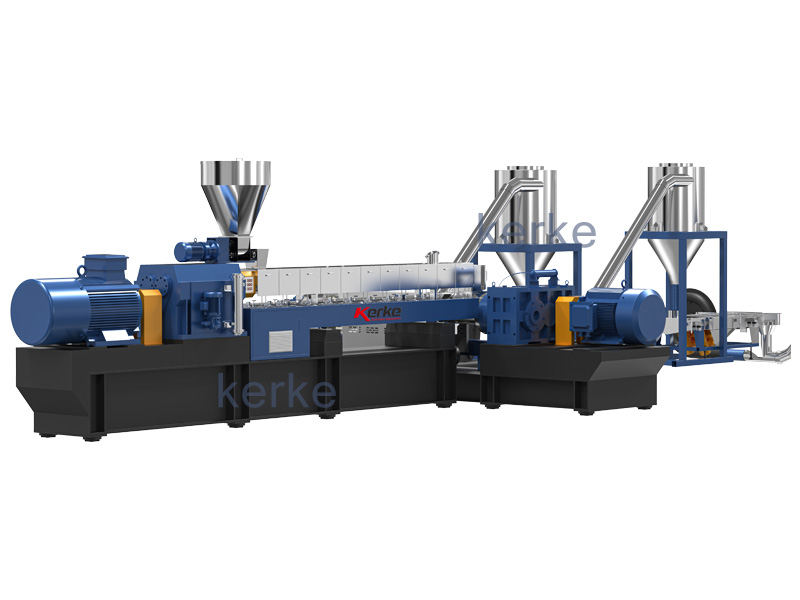
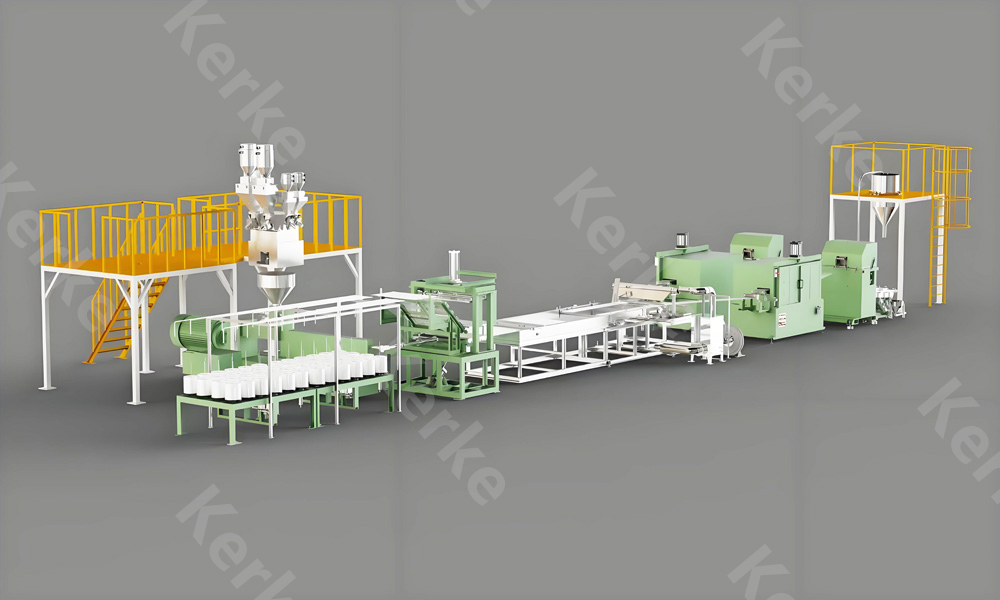
Equipment investment for silica filler masterbatch production centers on compounding extruder selection, with twin screw extruders representing the industry standard for this application. A comprehensive production line typically includes the twin screw extruder, feeder systems, pelletizing equipment, and auxiliary systems for material handling and quality control. The capital investment required depends on production capacity requirements and automation levels. Manufacturing facilities must balance initial equipment costs against production volume requirements and quality specifications.
Modern twin screw extruders for masterbatch production span a wide capacity range to accommodate various production scales. The Kerke KTE Series exemplifies this range, with models including KTE-16B for laboratory and small batch production, KTE-35 and KTE-50 for pilot scale operations, and KTE-95 through KTE-135D for industrial-scale production. Price points for twin screw extruder equipment vary according to capacity and configuration. Laboratory-scale systems typically range from $30,000 to $80,000, while mid-range production equipment falls in the $80,000 to $200,000 category. Large-scale industrial systems with capacities exceeding 1000 kilograms per hour range from $200,000 to $500,000 depending on specifications and manufacturer.
Complete masterbatch production lines including auxiliary equipment typically represent total investments ranging from $150,000 for entry-level systems to $800,000 or more for fully integrated production facilities with automated feeding, pellet handling, and quality control systems. Operating costs include energy consumption, labor, maintenance, and raw material expenses. A typical twin screw extruder operating at full capacity might consume 50 to 200 kilowatts depending on size and throughput, representing a significant ongoing expense that should be factored into production cost calculations.
Production Process with Twin Screw Extruder
The production of silica filler masterbatch using twin screw extruder technology follows a carefully controlled process designed to achieve optimal filler dispersion and compound quality. The process begins with raw material preparation, where silica filler and polymer resin are dried to remove moisture that could cause processing problems or product defects. Drying conditions typically require temperatures of 120 to 150 degrees Celsius for 4 to 6 hours to achieve moisture levels below 0.2 percent for moisture-sensitive polymers. Proper drying represents a critical quality control step that directly impacts final product performance when processed through any twin screw extruder system.
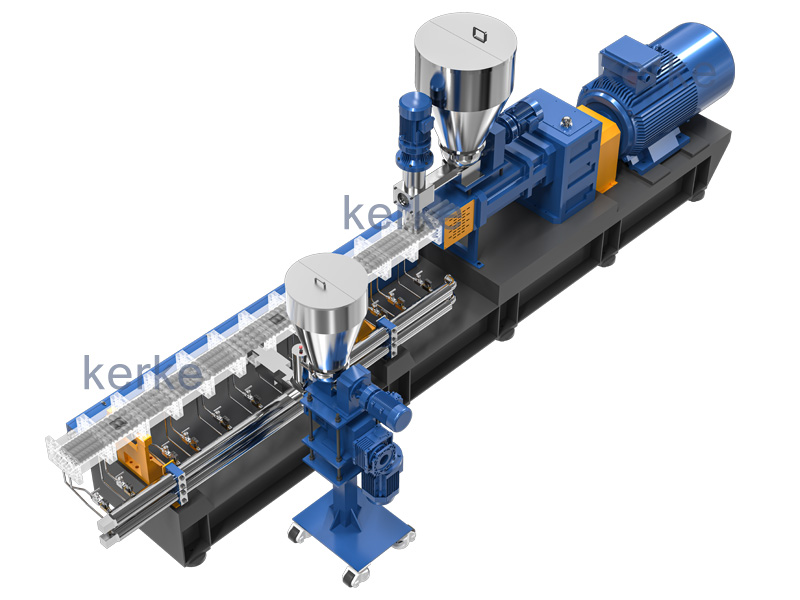
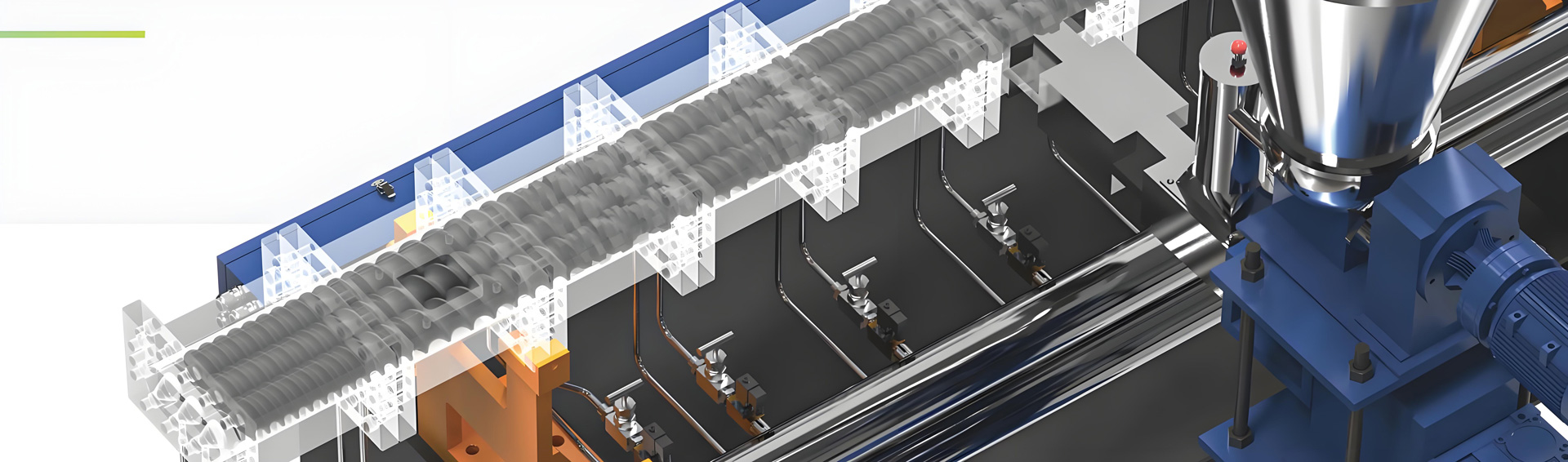
Twin screw extruder configuration significantly influences masterbatch quality and production efficiency. The screw design must balance mixing requirements against throughput and energy consumption considerations. A typical silica masterbatch screw configuration includes feed section elements for material introduction, transition elements for compression and melting, and mixing sections featuring kneading blocks or齿轮 mixing elements. The length-to-diameter ratio of 32:1 to 48:1 provides sufficient residence time and mixing intensity for proper silica dispersion. Kerke KTE Series extruders, operated as a twin screw extruder system, offer configurable screw elements that enable optimization for specific masterbatch formulations. This versatility makes the twin screw extruder the preferred choice for silica filler masterbatch production across all capacity scales.
Temperature profile management throughout the extruder barrel determines processing stability and product quality. The feed zone typically operates at lower temperatures to facilitate solid conveying, while the compression and melting zones require progressively higher temperatures to achieve complete polymer melting and viscosity reduction for efficient mixing. Mixing sections operate at temperatures that balance filler dispersion requirements against thermal degradation risk. Die head temperatures must maintain compound viscosity for proper pellet formation while preventing sulfur migration and plateout issues.
The extrusion process concludes with pelletizing, where the molten compound is converted to uniform pellet form suitable for subsequent processing. Hot die face pelletizers provide consistent pellet geometry and size distribution, essential for reliable feeding during final compound conversion. Cooling systems must remove heat from pellets efficiently while preventing moisture condensation that could reintroduce moisture contamination. Downstream equipment selection should match production capacity and provide adequate flexibility for different compound formulations.
Quality Control and Testing
Comprehensive quality control programs ensure consistent silica filler masterbatch performance and enable early detection of production issues before they impact product quality. Entry inspection of raw materials verifies that silica fillers and polymer carriers meet specifications for particle size, moisture content, and purity. Certificate of analysis documentation from suppliers provides starting point verification, but in-house testing ensures that materials meet internal requirements specific to production conditions and final application needs.
In-process quality monitoring during extrusion production provides real-time feedback about compounding conditions and enables immediate adjustments to maintain quality consistency. Melt temperature, pressure, and motor load measurements indicate processing stability and detect variations that might signal ingredient changes or equipment issues. Visual inspection of extruded strands or pellets identifies obvious defects such as discoloration, contamination, or inconsistent geometry that could indicate processing problems.
Final compound testing encompasses mechanical, thermal, and appearance-related properties determined by the specific application requirements. Tensile testing according to ASTM D638 provides strength and elongation data, while flexural testing per ASTM D790 evaluates stiffness characteristics. Impact testing using Izod or Charpy methods according to relevant standards quantifies toughness and damage tolerance. Hardness measurements using Rockwell or Shore methods verify that the silica filler addition has achieved the intended hardness improvement. These test results enable comparison against formulation targets and specification limits.
Dispersion quality assessment represents a specialized testing requirement for silica filler masterbatch that influences final product performance. Microscopic examination using optical microscopy or scanning electron microscopy reveals filler agglomerate size and distribution throughout the polymer matrix. Image analysis software enables quantification of dispersion quality metrics such as agglomerate count, size distribution, and area percentage. Poor dispersion manifests as property variations and surface defects that compromise product appearance and performance.
Maintenance and Operation Guidelines
Proper maintenance of twin screw extruder equipment ensures consistent production quality and extends equipment service life. Regular inspection and replacement of wear components represents the foundation of effective maintenance programs. Screw elements, barrel liners, and breaker plates experience wear during normal operation, with wear rates depending on silica loading, processing conditions, and production volume. Scheduled inspection intervals should account for these factors and adjust maintenance frequency accordingly.
Screw element wear manifests as reduced mixing efficiency, increased clearance between elements and barrels, and declining product quality. Visual inspection during scheduled maintenance shutdowns identifies wear patterns and determines whether element replacement is necessary. Kerke KTE Series extruders feature modular screw designs that enable selective replacement of worn elements rather than complete screw replacement, reducing maintenance costs while maintaining performance. Barrel wear similarly affects mixing efficiency and should be evaluated using bore gauge measurements during maintenance procedures.
Operating procedures significantly influence equipment longevity and product quality consistency. Startup procedures should gradually increase temperatures and speeds to avoid thermal shock to equipment and ensure complete melting before introducing silica filler. Feed rate increases should proceed gradually to avoid overloading the extruder and ensure stable melt pressure throughout the system. Shutdown procedures should clear the extruder of compound before reducing temperatures, preventing material accumulation and carbonization within the barrel.
Documentation of operating parameters, maintenance activities, and quality test results creates a knowledge base that enables continuous process improvement. Trend analysis of operating data reveals gradual changes that might indicate developing issues before they cause production problems. Quality records enable root cause analysis when issues occur and provide evidence of process capability for customer quality assurance requirements. Modern control systems with data logging capabilities simplify documentation and enable advanced analytics for process optimization.
Kerke’s Solutions
Kerke, operating as Nanjing Kerke Extrusion Equipment Co., Ltd. under the WANPLAS Group umbrella, delivers comprehensive solutions for silica filler masterbatch production. With over 12 years of industry experience and more than 2,000 machines operating globally across 70 countries, Kerke has established itself as a trusted partner for manufacturers seeking high-performance compounding equipment. The company headquarters in Nanjing, China, with a facility spanning nearly 20,000 square meters, houses advanced manufacturing capabilities supported by a team of over 100 dedicated professionals.
The Kerke KTE Series twin screw extruders provide the versatility and performance required for silica filler masterbatch production across all capacity scales. Models range from the compact KTE-16B laboratory extruder to the production-scale KTE-135D, enabling seamless technology transfer from development to commercial production. The modular screw element design allows precise configuration optimization for silica masterbatch formulations, achieving superior dispersion while maximizing throughput efficiency.
Kerke equipment distinguishes itself through robust construction, precise engineering, and thoughtful design features that enhance productivity and reduce operating costs. Standard features include advanced temperature control systems, variable frequency drives for precise speed control, and user-friendly control interfaces that simplify operation and monitoring. The extensive L/D ratio options of 32:1 to 48:1 provide flexibility to match processing requirements with equipment capabilities, ensuring optimal residence time and mixing intensity for silica masterbatch production.
Beyond equipment supply, Kerke offers technical support services that assist customers throughout their masterbatch production journey. Process development assistance, operator training, and ongoing technical consultation help customers optimize their operations and achieve consistent quality targets. This comprehensive approach to customer support reflects Kerke’s commitment to building long-term partnerships rather than simply selling equipment, making them an ideal partner for manufacturers entering or expanding their silica filler masterbatch production capabilities.
Frequently Asked Questions
What silica loading level should I use in my masterbatch formulation?
Silica loading levels typically range from 40 to 80 percent by weight in masterbatch concentrates, depending on the carrier resin and target application. Higher concentrations reduce masterbatch usage rates in final compounds but may increase processing difficulty. For most applications, 50 to 70 percent loading provides a good balance between concentration benefits and processing ease.
How do I improve silica dispersion in my twin screw extruder?
Screw configuration optimization represents the primary approach to improving silica dispersion. Increasing the number and intensity of mixing elements in the compounding zone enhances dispersive mixing. Reducing feed rate to increase specific energy input also improves dispersion. Consider using回头 elements or齿轮 mixers for challenging formulations. Surface treatment of silica can also improve compatibility and dispersion.
What is the typical cost reduction from using silica filler masterbatch?
Material cost reductions depend on polymer prices and silica costs in your specific region. Generally, replacing 20 to 30 percent of polymer volume with silica at half the polymer cost per kilogram yields 10 to 15 percent material cost savings. Additional savings accrue from improved product durability and reduced warranty claims.
Can silica filler masterbatch be used with recycled polymers?
Yes, silica filler masterbatch can be incorporated into recycled polymer formulations to improve properties degraded by the recycling process. The reinforcing effect of silica helps offset property losses from polymer chain scission during reprocessing. However, compatibility between the masterbatch carrier and the recycled polymer must be verified.
What processing temperature is required for silica filler masterbatch?
Processing temperatures depend on the polymer carrier system. Polypropylene carriers typically process at 180 to 220 degrees Celsius, while polyethylene carriers operate at 150 to 200 degrees Celsius. Avoid excessive temperatures that could cause silica surface modification or polymer degradation.
How does silica filler affect the colorability of the final compound?
Silica fillers provide a neutral base that accepts colorants effectively. The light coloration of most precipitated silica does not interfere with color development. In some cases, silica addition can improve color dispersion and reduce color concentrate requirements.
What is the shelf life of silica filler masterbatch?
Properly packaged silica filler masterbatch typically maintains quality for 12 to 24 months when stored in cool, dry conditions. Moisture protection is essential, as silica can absorb moisture that causes processing problems. Sealed packaging and humidity-controlled storage extend shelf life.
How do I select the right twin screw extruder size for my production volume?
Production capacity scales with extruder size. KTE-50 units produce approximately 100 to 300 kilograms per hour, KTE-65 units achieve 200 to 500 kilograms per hour, and KTE-95 systems produce 500 to 1500 kilograms per hour. Select equipment that matches your production targets with appropriate margin for growth and formulation flexibility.
Conclusion
Silica filler masterbatch represents a mature, proven technology that delivers measurable improvements in hardness, wear resistance, and cost efficiency for plastic manufacturers. The effectiveness of silica fillers depends critically on proper compounding technique, with twin screw extruders providing the mixing intensity and control necessary to achieve optimal dispersion and performance. Understanding silica types, surface treatments, and processing parameters enables formulation optimization for specific application requirements.
Investment in quality compounding equipment such as the Kerke KTE Series twin screw extruders provides the foundation for successful silica filler masterbatch production. These systems deliver the reliability, flexibility, and performance required to compete in demanding markets while maintaining consistent product quality. A masterbatch extruder from Kerke enables manufacturers to produce silica filler masterbatch that meets exacting specifications. Combined with comprehensive quality control programs and proper maintenance procedures, twin screw extrusion technology enables manufacturers to produce silica filler masterbatch that meets exacting specifications.
The continued growth of applications requiring enhanced hardness and wear resistance ensures sustained demand for silica filler masterbatch across multiple industries. Manufacturers who invest in proper equipment and technical expertise position themselves to capture opportunities in automotive, construction, consumer goods, and industrial equipment markets. With proven technology, experienced equipment suppliers like Kerke, and commitment to quality, success in silica filler masterbatch production is readily achievable.