Color consistency is the single most critical quality parameter in the global masterbatch industry. Even minor color differences between batches can result in rejected orders, customer complaints, and significant financial losses for masterbatch producers. According to industry research, color variation accounts for approximately 65% of all quality issues in masterbatch production, costing manufacturers an average of 8-12% of their annual revenue in scrap, rework, and customer penalties. For high-value applications such as automotive parts, food packaging, and consumer electronics, the acceptable color difference (ΔE) is often less than 1.0, making precise color control absolutely essential for business success.
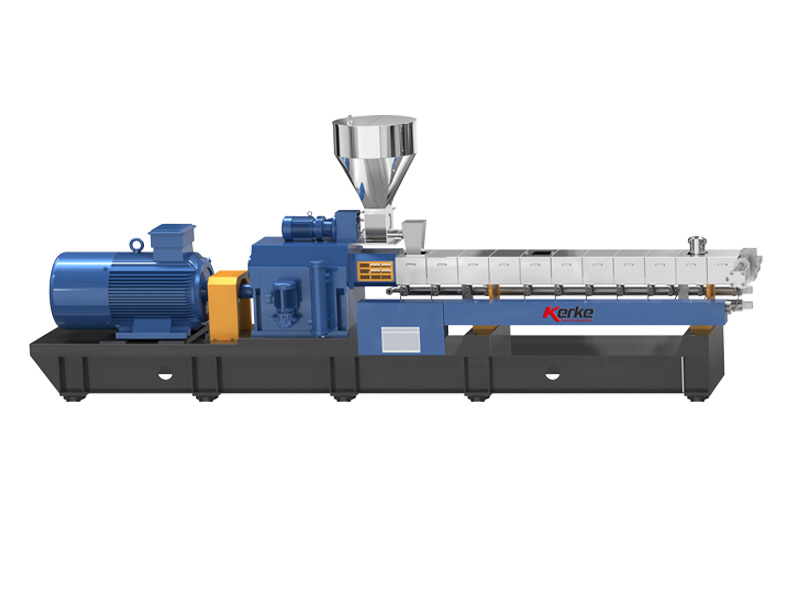
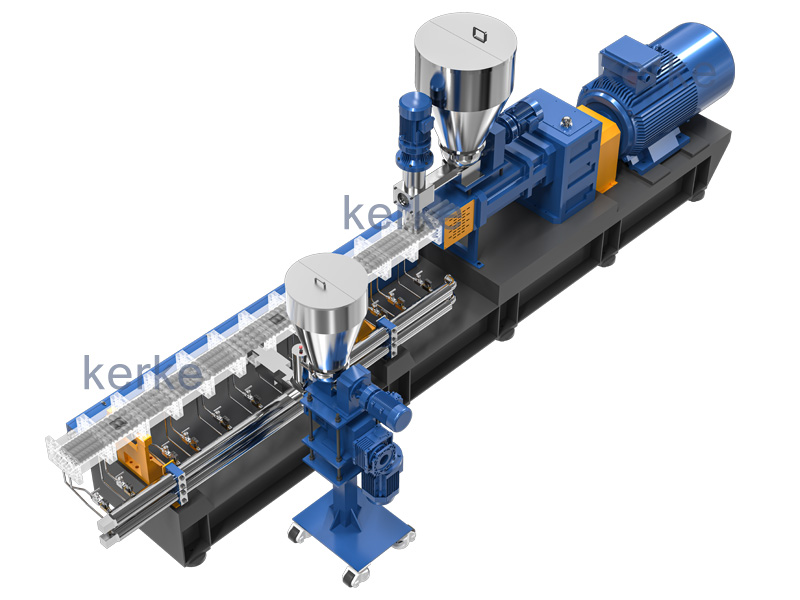
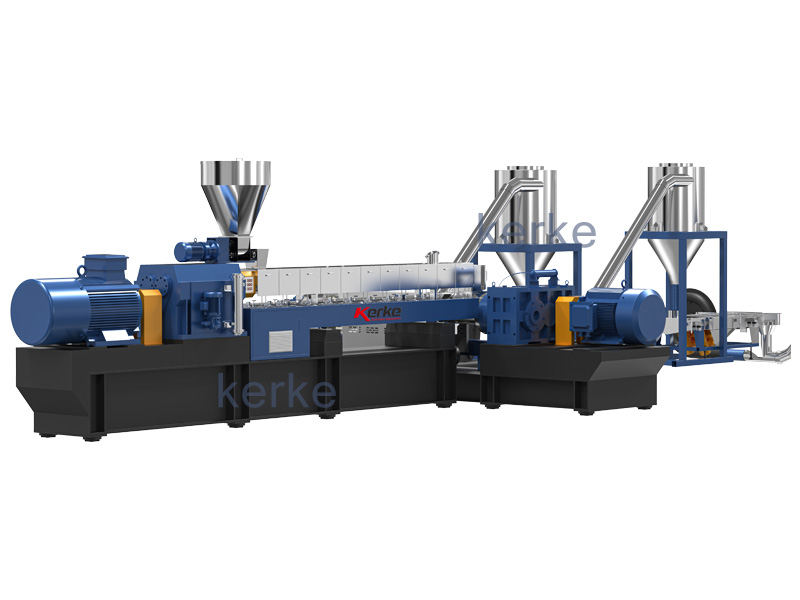
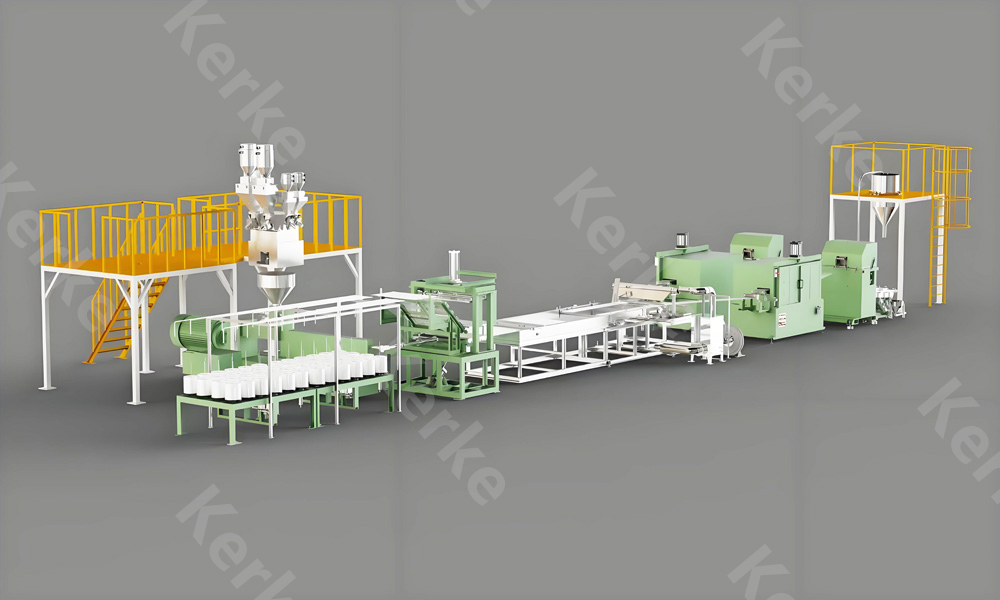
As a leading global manufacturer of masterbatch extruders, twin screw extruders, and compounding extruders, Kerke has developed specialized extrusion technology specifically designed to eliminate batch-to-batch color variation. Kerke masterbatch extruders integrate advanced feeding systems, precision mixing technology, intelligent process control, and comprehensive quality monitoring to deliver exceptional color consistency batch after batch. With over 10 years of experience in masterbatch production technology, Kerke has installed hundreds of color masterbatch lines worldwide, helping manufacturers achieve the highest levels of color quality and customer satisfaction.
This comprehensive article explores the root causes of batch-to-batch color difference in masterbatch production, the critical role of masterbatch extruders in controlling color consistency, and the advanced technologies integrated into Kerke extrusion systems. The article also provides detailed cost and return on investment analysis, best practices for minimizing color variation, and solutions to common color-related issues. Whether you are producing color masterbatch, filler masterbatch, or functional additive masterbatch, this article will help you understand how the right masterbatch extruder can transform your production quality and profitability.
1. The Economic Impact of Batch-to-Batch Color Difference
Batch-to-batch color difference is not just a quality issue—it is a significant financial burden that can severely impact the profitability and competitiveness of masterbatch producers. The costs associated with color variation extend far beyond simple scrap and rework, affecting every aspect of the business from customer relationships to brand reputation.
1.1 Direct Costs of Color Variation
The direct costs of batch-to-batch color difference are substantial and can quickly erode profit margins. These costs include:
- Scrap material costs: Off-color batches that cannot be sold or reworked result in complete loss of raw material value. For a medium-sized masterbatch producer generating 1000 tons per year, a 3% scrap rate due to color issues can cost over $150,000 annually in raw material losses alone.
- Rework costs: Batches that are slightly off-color can sometimes be reworked by blending with other batches or adjusting the formulation. However, rework requires additional labor, energy, and processing time, increasing production costs by 20-50% per batch.
- Customer penalties: Many customers impose strict penalties for late deliveries or quality issues. These penalties can range from 5-20% of the order value and may include additional charges for expedited shipping to meet customer deadlines.
- Labor costs: Addressing color issues requires additional labor for quality testing, batch adjustment, and rework. This increases labor costs and diverts resources from other productive activities.
1.2 Indirect Costs of Color Variation
The indirect costs of batch-to-batch color difference are often even more significant than the direct costs and can have long-term consequences for the business:
- Lost customer business: Consistent color issues will eventually lead customers to switch to more reliable suppliers. In today’s competitive market, customers have many options and will not tolerate poor quality. Losing a single major customer can result in hundreds of thousands of dollars in lost annual revenue.
- Damage to brand reputation: Poor color consistency damages a company’s reputation and makes it difficult to attract new customers, especially in high-value markets where quality is paramount.
- Increased inventory costs: To mitigate the risk of color variation, many producers maintain larger inventories of raw materials and finished goods. This ties up working capital and increases storage costs.
- Production delays: Addressing color issues causes production delays, which can disrupt the entire production schedule and lead to further delays and customer dissatisfaction.
1.3 The Value of Consistent Color Quality
Achieving consistent color quality provides significant competitive advantages and financial benefits for masterbatch producers:
- Premium pricing: Masterbatches with consistent color quality can command premium prices in the market, increasing profit margins by 10-20%.
- Customer loyalty: Customers value reliable suppliers who consistently deliver high-quality products. Consistent color quality builds customer loyalty and leads to long-term business relationships.
- Access to high-value markets: High-value markets such as automotive, electronics, and food packaging have strict color requirements. Only producers with consistent color quality can access these markets and benefit from their higher profit margins.
- Reduced operational costs: Consistent color quality reduces scrap, rework, and customer complaints, lowering operational costs and improving overall efficiency.
2. Root Causes of Batch-to-Batch Color Difference in Masterbatch Production
Batch-to-batch color difference is a complex issue that can be caused by multiple factors throughout the production process. Understanding these root causes is essential for implementing effective solutions and achieving consistent color quality.
2.1 Raw Material Variability
Raw material variability is the single largest cause of batch-to-batch color difference in masterbatch production. Even minor variations in the properties of raw materials can have a significant impact on the final color of the masterbatch.
Pigment variability: Different batches of pigments can have variations in color strength, particle size distribution, and surface treatment. These variations affect the dispersion and coloring power of the pigment, leading to color differences in the final masterbatch. Organic pigments are particularly susceptible to batch-to-batch variation compared to inorganic pigments.
Carrier resin variability: Different batches of carrier resin can have variations in melt flow rate, molecular weight distribution, and inherent color. These variations affect the processing characteristics of the material and the final appearance of the masterbatch. For light-colored masterbatches, even minor variations in the yellowness index of the carrier resin can result in noticeable color differences.
Additive variability: Variations in the quality and properties of additives such as dispersants, lubricants, and stabilizers can also affect color consistency. Poor quality additives can cause issues such as poor dispersion, thermal degradation, and plate-out, all of which contribute to color variation.
2.2 Inaccurate Feeding and Metering
Accurate feeding and metering of raw materials is essential for maintaining consistent formulation ratios, which directly impact color consistency. Even small errors in feeding can result in significant color differences in the final product.
Volumetric feeding limitations: Volumetric feeders measure material by volume rather than by weight. They are affected by changes in material bulk density, which can vary between batches and even within the same batch. This leads to variations in the actual amount of material being fed into the extruder, resulting in formulation errors and color differences.
Feeder calibration issues: Feeders that are not properly calibrated will deliver inaccurate amounts of material. Calibration should be performed regularly, especially when changing material types or batches.
Material bridging and segregation: Material bridging in the hopper or feeder can cause inconsistent feeding. Segregation of different components in the feed mixture can also lead to variations in formulation ratios.
2.3 Inconsistent Processing Conditions
Inconsistent processing conditions during extrusion can have a significant impact on color consistency. Variations in temperature, screw speed, feed rate, and residence time can all affect the dispersion of pigments and the final color of the masterbatch.
Temperature variations: Variations in barrel temperature profile can affect the melting behavior of the polymer and the dispersion of pigments. Too high temperatures can cause thermal degradation of pigments or polymers, leading to color shifts. Too low temperatures can result in incomplete melting and poor dispersion, also causing color differences.
Screw speed and feed rate variations: Variations in screw speed and feed rate affect the shear rate and residence time in the extruder. This affects the dispersion of pigments and the degree of mixing, leading to color variations.
Melt pressure and torque variations: Variations in melt pressure and torque indicate changes in the material properties or processing conditions. These changes can affect the quality of mixing and dispersion, resulting in color differences.
2.4 Poor Pigment Dispersion
Poor pigment dispersion is a major cause of color variation in masterbatch production. Pigments must be completely dispersed down to their primary particle size to achieve uniform color. Any undispersed agglomerates will result in color defects such as specks, streaks, and uneven color distribution.
Insufficient shear energy: The extruder must generate sufficient shear energy to break down pigment agglomerates. Insufficient shear results in poor dispersion and inconsistent color.
Improper screw configuration: The screw configuration must be designed to provide the appropriate level of shear and mixing for the specific formulation. An improper screw configuration will result in poor dispersion and color variation.
Inadequate dispersion aids: The use of appropriate dispersion aids is essential for achieving good pigment dispersion. Inadequate or incompatible dispersion aids will result in poor dispersion and color issues.
2.5 Equipment Wear and Contamination
Equipment wear and contamination can also contribute to batch-to-batch color difference.
Screw and barrel wear: Wear of screw elements and barrel segments increases the clearance between the screw flight and barrel wall, reducing the extruder’s conveying and mixing efficiency. This leads to inconsistent processing conditions and poor dispersion, resulting in color variation.
Cross-contamination: Residual material from previous production runs can contaminate subsequent batches, causing color shifts. This is particularly problematic when changing from dark to light colors.
3. How Masterbatch Extruders Control Color Consistency
Modern masterbatch extruders, particularly twin screw extruders, are specifically designed to address the root causes of batch-to-batch color difference. They integrate advanced technologies that ensure accurate feeding, consistent processing, and excellent dispersion, resulting in exceptional color consistency.
3.1 Precision Feeding and Metering Systems
High-quality masterbatch extruders are equipped with precision feeding and metering systems that ensure accurate and consistent delivery of raw materials to the extruder.
Gravimetric feeding: Gravimetric feeders measure material by weight rather than by volume, providing much higher accuracy than volumetric feeders. They continuously weigh the material being fed and automatically adjust the feed rate to maintain the desired set point. This eliminates the effects of variations in material bulk density and ensures consistent formulation ratios.
Loss-in-weight feeding: Loss-in-weight feeders are a type of gravimetric feeder that measure the weight loss of the material in the hopper over time. They provide extremely high feeding accuracy, typically within ±0.1%, making them ideal for masterbatch production where precise formulation ratios are critical.
Multiple feeder integration: Modern masterbatch extruders can integrate multiple feeders to handle different components of the formulation separately. This allows for precise control over the ratio of each component and eliminates issues associated with pre-blending and segregation.
3.2 Intensive and Uniform Mixing Technology
Twin screw extruders provide intensive and uniform mixing that is essential for achieving excellent pigment dispersion and consistent color.
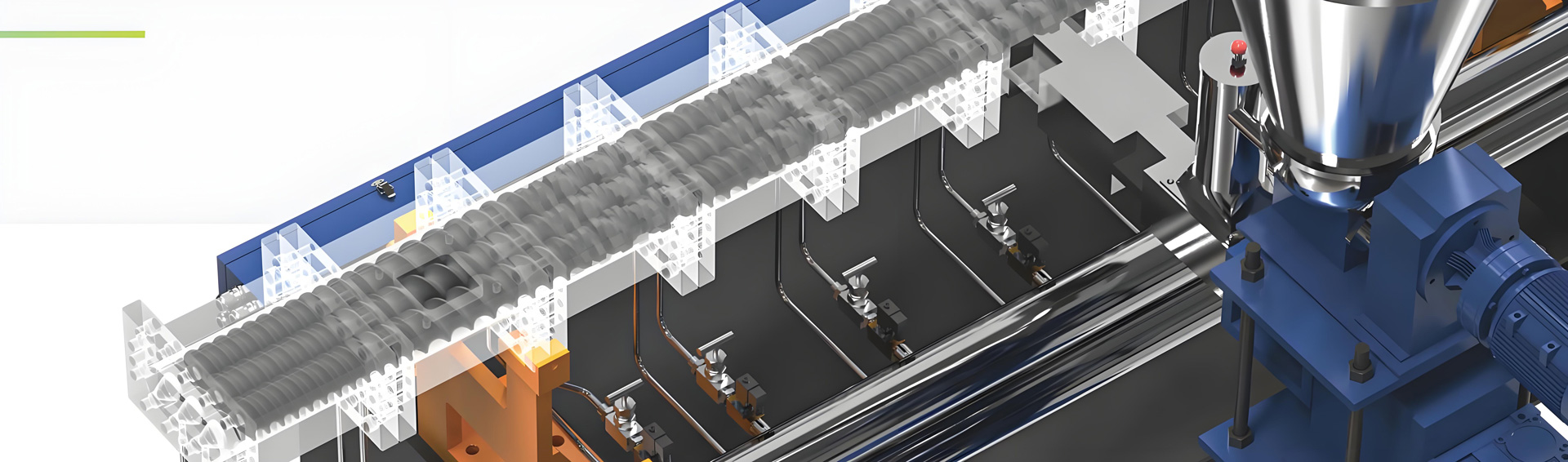
Intermeshing screw design: Co-rotating intermeshing twin screws create a complex flow pattern that subjects the material to repeated cycles of high shear and stretching. This effectively breaks down pigment agglomerates and ensures uniform dispersion throughout the polymer matrix.
Modular screw configuration: The modular design of twin screw extruders allows for customization of the screw configuration to meet the specific mixing requirements of different formulations. Different types of mixing elements can be combined to provide the optimal balance of dispersive and distributive mixing.
Positive conveying: Twin screw extruders provide positive conveying of the material, ensuring that the material moves through the extruder at a consistent rate. This results in uniform residence time and consistent processing conditions, which are essential for color consistency.
3.3 Precise Process Control Systems
Advanced process control systems ensure that all processing parameters are maintained within tight tolerances, eliminating variations that can cause color differences.
Closed-loop control: Modern masterbatch extruders use closed-loop control systems to continuously monitor and adjust process parameters such as temperature, screw speed, feed rate, and melt pressure. This ensures that the process remains stable and consistent throughout the production run.
Recipe management: Advanced control systems include comprehensive recipe management features that allow all process parameters for each product to be stored and recalled with a single touch. This ensures that the same process conditions are used for every batch of the same product, eliminating variations caused by manual parameter adjustment.
Real-time monitoring: The control system provides real-time monitoring of all critical process parameters, allowing operators to quickly identify and address any deviations from the set points before they affect product quality.
3.4 Excellent Self-Cleaning Capability
Twin screw extruders have excellent self-cleaning capability that minimizes cross-contamination between batches.
Intermeshing screw action: The intermeshing action of the twin screws wipes the surfaces of the screws and barrel wall, removing any residual material. This prevents material from building up and degrading on the hot surfaces, which can cause contamination and color shifts in subsequent batches.
Fast changeover: The self-cleaning capability of twin screw extruders significantly reduces changeover time between different colors and formulations. This increases production efficiency and reduces the amount of purging material required.
4. Kerke Advanced Technologies for Color Consistency
Kerke has developed a range of advanced technologies specifically designed to minimize batch-to-batch color difference in masterbatch production. These technologies are integrated into all Kerke masterbatch extruders, twin screw extruders, and compounding extruders, delivering exceptional color consistency and reliability.
4.1 High-Precision Gravimetric Feeding System
All Kerke masterbatch extruders are equipped with high-precision loss-in-weight gravimetric feeding systems that deliver an accuracy of ±0.1%. These feeders are specifically designed for handling the fine powders and pigments used in masterbatch production.
The feeding system features advanced load cell technology and sophisticated control algorithms that ensure accurate and consistent feeding even for materials with poor flow properties. The system automatically compensates for variations in material bulk density and flow characteristics, maintaining precise formulation ratios throughout the production run.
Kerke offers a range of feeder sizes to accommodate different material types and feed rates, from micro-feeders for additives with addition rates as low as 0.01% to large feeders for carrier resins. All feeders are fully integrated with the extruder’s main control system, allowing for centralized monitoring and control.
4.2 Optimized Screw Design for Color Masterbatch
Kerke has developed specialized screw designs specifically optimized for color masterbatch production. These screw designs provide the optimal balance of dispersive and distributive mixing to achieve excellent pigment dispersion while minimizing thermal degradation.
The screw configurations feature a combination of high-shear kneading blocks for breaking down pigment agglomerates and distributive mixing elements for uniform distribution of the pigment throughout the polymer matrix. The design also includes optimized conveying elements and pressure zones to ensure consistent material flow and residence time.
Kerke’s engineering team uses advanced computer simulation software to optimize the screw configuration for each customer’s specific formulation requirements. This ensures that the extruder provides the exact level of mixing energy needed to achieve perfect dispersion and consistent color.
4.3 Intelligent Process Control Platform
Kerke masterbatch extruders are equipped with the Kerke Intelligent Control Platform, a state-of-the-art control system specifically designed for masterbatch production. The system features a high-performance Siemens S7 PLC and a large, high-resolution touch screen HMI that provides intuitive operation and comprehensive process monitoring.
The control system provides closed-loop control of all critical process parameters, including barrel temperatures, melt temperature, melt pressure, screw speed, and feed rates. It uses advanced PID control algorithms with auto-tuning capabilities to maintain precise, stable process conditions even when processing challenging formulations.
The system includes a comprehensive recipe management system that can store up to 1000 production recipes. Each recipe includes all process parameters, feeder settings, and alarm limits, ensuring that the same process conditions are used for every batch of the same product. The system also provides real-time data logging and reporting, allowing manufacturers to track production performance and maintain complete batch traceability.
4.4 Advanced Temperature Control System
Kerke extruders feature an advanced multi-zone temperature control system that ensures precise and uniform temperature distribution along the barrel. Each barrel zone is independently controlled with a dedicated temperature sensor and heating/cooling system.
The temperature control system uses advanced PID algorithms with adaptive tuning to maintain temperature accuracy within ±1°C. This ensures that the polymer melts uniformly and that pigments are not subjected to excessive temperatures that could cause thermal degradation and color shifts.
For heat-sensitive pigments and polymers, Kerke offers optional liquid cooling systems that provide faster and more precise temperature control. This helps prevent thermal degradation and ensures consistent color quality.
4.5 Integrated Quality Monitoring System
Kerke offers an optional integrated quality monitoring system that provides real-time monitoring of color quality during production. The system uses advanced spectrophotometric technology to continuously measure the color of the masterbatch pellets as they are produced.
The system compares the measured color values to the target values and alerts operators if any deviations exceed the acceptable limits. This allows for immediate corrective action to be taken, preventing the production of large quantities of off-color material.
The quality monitoring system also stores all color measurement data, providing a complete record of color quality for each batch. This data can be used to identify trends and optimize the production process for even better color consistency.
5. Cost and Return on Investment Analysis
Investing in a high-quality masterbatch extruder with advanced color control technology requires a significant capital expenditure, but it provides substantial long-term benefits through improved product quality, reduced waste, and increased customer satisfaction. The following is a detailed cost and return on investment analysis for Kerke masterbatch extruders.
5.1 Initial Equipment Investment
The initial cost of a Kerke masterbatch extruder depends on several factors, including the extruder model, production capacity, level of automation, and optional features. The following are approximate price ranges for different Kerke masterbatch extruder models configured for color masterbatch production.
Laboratory and pilot scale extruders (5-50 kg/h capacity):
- Standard configuration with volumetric feeding: $25,000 to $60,000
- Premium configuration with gravimetric feeding and advanced control: $40,000 to $90,000
Medium-scale production extruders (50-300 kg/h capacity):
- Standard configuration: $80,000 to $250,000
- Premium configuration with multiple gravimetric feeders and advanced quality monitoring: $120,000 to $400,000
Large-scale industrial extruders (300-1500 kg/h capacity):
- Standard configuration: $300,000 to $800,000
- Premium configuration with full automation and integrated quality control: $450,000 to $1,200,000
While the premium configurations have a higher initial investment, they provide significantly better color consistency and lower operational costs, resulting in a higher return on investment over the life of the equipment.
5.2 Cost Savings from Improved Color Consistency
Investing in a Kerke masterbatch extruder with advanced color control technology provides significant cost savings through reduced scrap, rework, and customer complaints.
Reduced scrap rates: Traditional extruders with basic controls typically have scrap rates of 3-5% or higher due to color issues. Kerke extruders with advanced color control technology can achieve scrap rates of less than 1%. For a medium-sized producer generating 1000 tons per year, this reduction in scrap rate saves approximately $100,000 annually in raw material costs alone.
Reduced rework costs: Kerke extruders produce consistent color quality batch after batch, eliminating the need for rework. This saves approximately $50,000 to $100,000 annually in labor, energy, and processing costs.
Eliminated customer penalties: Consistent color quality eliminates customer penalties for quality issues, saving an additional $20,000 to $50,000 annually.
Total annual cost savings: $170,000 to $250,000 for a medium-sized production operation.
5.3 Return on Investment Calculation
The return on investment for a Kerke masterbatch extruder with advanced color control technology is typically very attractive, with payback periods ranging from 1 to 2 years depending on the production capacity and market conditions.
The following is an example ROI calculation for a medium-scale Kerke KTE-65 masterbatch extruder producing color masterbatch at a rate of 150 kg/h, operating 24 hours per day, 300 days per year.
- Additional investment for premium color control configuration: $80,000
- Annual cost savings from reduced scrap and rework: $180,000
- Additional revenue from premium pricing: $120,000
- Total annual financial benefit: $300,000
- Payback period: $80,000 / $300,000 = 0.27 years (approximately 3.2 months)
This is a conservative estimate, and actual ROI can be even higher for producers who were previously experiencing significant quality issues or who are able to access higher-value markets with their improved color quality.
5.4 Cost Comparison: Basic vs. Advanced Extruders
While basic masterbatch extruders have a lower initial cost, they result in significantly higher operational costs and lower profitability due to poor color consistency. The following comparison highlights the key differences between basic and advanced extruders over a 5-year period.
Basic masterbatch extruder:
- Initial investment: $150,000
- Annual operational costs: $850,000
- Total 5-year cost: $150,000 + ($850,000 × 5) = $4,400,000
Kerke advanced masterbatch extruder:
- Initial investment: $230,000
- Annual operational costs: $600,000
- Total 5-year cost: $230,000 + ($600,000 × 5) = $3,230,000
Total savings over 5 years: $4,400,000 – $3,230,000 = $1,170,000
This comparison clearly demonstrates that while the advanced extruder has a higher initial investment, it provides substantial long-term cost savings. The additional $80,000 investment results in a total savings of $1,170,000 over 5 years, representing a 1462% return on investment.
6. Best Practices for Minimizing Batch-to-Batch Color Difference
While Kerke masterbatch extruders are designed to deliver exceptional color consistency, following these best practices will help you achieve the best possible results and maximize the return on your investment.
6.1 Implement Strict Raw Material Quality Control
Raw material variability is the largest cause of batch-to-batch color difference. Implementing strict raw material quality control procedures is essential for achieving consistent color quality.
Establish clear specifications for all raw materials, including pigments, carrier resins, and additives. Test all incoming raw materials to ensure they meet your specifications before using them in production. For pigments, test for color strength, particle size distribution, and heat stability. For carrier resins, test for melt flow rate, inherent color, and thermal stability.
Whenever possible, use raw materials from the same supplier and the same batch for large production runs. If you must change suppliers or batches, conduct thorough testing to ensure the new material is compatible and will not affect color quality.
6.2 Optimize Your Formulation for Consistency
The formulation of your masterbatch plays a critical role in color consistency. Optimizing your formulation can help minimize the effects of raw material variability and processing conditions on color quality.
Use appropriate dispersion aids and lubricants to improve pigment dispersion and reduce the required shear energy. This helps ensure consistent dispersion even if there are minor variations in processing conditions.
Avoid using heat-sensitive pigments or additives that are prone to thermal degradation. If heat-sensitive materials must be used, optimize the processing conditions to minimize exposure to high temperatures.
For critical applications, consider using pre-dispersed pigment preparations rather than raw pigments. Pre-dispersed pigments provide more consistent color strength and are easier to disperse, resulting in better color consistency.
6.3 Maintain Consistent Processing Conditions
Maintaining consistent processing conditions is essential for achieving consistent color quality. All process parameters should be carefully controlled and monitored throughout the production run.
Develop standardized operating procedures for each product and ensure that all operators follow them consistently. Use the recipe management system in your Kerke extruder to store and recall all process parameters for each product.
Regularly calibrate all sensors and instrumentation to ensure accurate measurement and control of process parameters. This includes temperature sensors, pressure transducers, and feeding systems.
Monitor process parameters continuously and investigate any deviations from the set points immediately. Even minor deviations can affect color quality if not addressed promptly.
6.4 Implement a Comprehensive Quality Control Program
Implement a comprehensive quality control program to monitor color quality throughout the production process. This helps identify and address issues before they result in off-color batches.
Test each batch of masterbatch for color consistency using a spectrophotometer. Measure the L*, a*, and b* values and calculate the color difference (ΔE) compared to the standard. Establish acceptable limits for ΔE and reject any batches that exceed these limits.
In addition to final product testing, conduct in-process testing to monitor color quality during production. This allows for early detection of issues and immediate corrective action.
Keep detailed records of all quality tests and production parameters. This data can be analyzed to identify trends and optimize the production process for even better color consistency.
6.5 Perform Regular Equipment Maintenance
Regular equipment maintenance is essential for keeping your Kerke extruder operating at peak performance and maintaining consistent color quality.
Follow Kerke’s recommended maintenance schedule, which includes daily, weekly, monthly, and annual maintenance tasks. Regularly inspect and clean all components of the extruder, including the feeders, barrel, screws, and die.
Monitor the wear of screw elements and barrel segments regularly. Replace worn components promptly to prevent reduced mixing efficiency and color variation.
Thoroughly clean the extruder between production runs, especially when changing from dark to light colors. Use appropriate purging compounds to remove all residual material and prevent cross-contamination.
7. Common Color Issues and Solutions
Even with the best equipment and practices, manufacturers may occasionally encounter color issues when producing masterbatch. The following are the most common color issues and the solutions recommended by Kerke’s technical experts.
7.1 Batch-to-Batch Color Shift
Batch-to-batch color shift is the most common color issue in masterbatch production. It occurs when the color of one batch is noticeably different from previous batches of the same product.
Causes:
- Raw material batch variation
- Inaccurate feeding or metering
- Process parameter drift
- Equipment wear
- Cross-contamination from previous batches
Solutions:
- Implement strict raw material quality control procedures
- Use high-precision gravimetric feeding systems
- Calibrate feeders and sensors regularly
- Maintain consistent process parameters using closed-loop control
- Monitor equipment wear and replace worn components promptly
- Thoroughly clean the extruder between batches
7.2 Color Streaks and Specks
Color streaks and specks are caused by undispersed pigment agglomerates or foreign contaminants in the masterbatch. These defects are particularly noticeable in light-colored products.
Causes:
- Insufficient shear energy for pigment dispersion
- Improper screw configuration
- Poor quality pigments with large agglomerates
- Inadequate dispersion aids in the formulation
- Foreign contamination from raw materials or the environment
Solutions:
- Optimize the screw configuration to provide more dispersive mixing
- Increase screw speed or reduce feed rate to increase shear energy
- Improve raw material quality and use properly surface-treated pigments
- Add appropriate dispersion aids to the formulation
- Implement better raw material screening and handling procedures
7.3 Color Fading or Yellowing
Color fading or yellowing occurs when the pigment or polymer undergoes thermal degradation during processing. This results in a change in the color of the masterbatch.
Causes:
- Excessive processing temperature
- Too long residence time in the extruder
- Excessive shear leading to thermal degradation
- Insufficient thermal stabilizers in the formulation
- Use of heat-sensitive pigments or polymers
Solutions:
- Reduce the barrel temperature profile
- Optimize the screw configuration to reduce residence time
- Increase feed rate or reduce screw speed to minimize shear heating
- Add appropriate thermal stabilizers to the formulation
- Use more heat-stable pigments or polymers
7.4 Inconsistent Color Within a Batch
Inconsistent color within a batch occurs when the color varies from the beginning to the end of the production run. This indicates unstable processing conditions during the run.
Causes:
- Feeder instability or bridging
- Process parameter drift during the run
- Material segregation in the feed hopper
- Uneven temperature distribution in the barrel
- Equipment wear causing inconsistent mixing
Solutions:
- Ensure proper feeder operation and address any bridging issues
- Use closed-loop control to maintain stable process parameters
- Improve material handling to prevent segregation
- Calibrate temperature sensors and ensure uniform heating
- Inspect and replace worn screw elements or barrel segments
8. Conclusion
Batch-to-batch color difference is a significant challenge in masterbatch production, with substantial financial and reputational consequences for manufacturers. However, with the right equipment and practices, it is possible to achieve exceptional color consistency and eliminate the costs associated with color variation.
Masterbatch extruders, particularly advanced twin screw extruders, play a critical role in controlling color consistency. They integrate precision feeding systems, intensive mixing technology, intelligent process control, and excellent self-cleaning capability to address the root causes of color difference.
Kerke masterbatch extruders, twin screw extruders, and compounding extruders are specifically designed and optimized for color masterbatch production. They incorporate advanced technologies such as high-precision gravimetric feeding, optimized screw designs, intelligent process control, and integrated quality monitoring to deliver unmatched color consistency batch after batch.
Investing in a Kerke masterbatch extruder with advanced color control technology provides a very attractive return on investment, with payback periods typically less than 1 year for medium to large-scale production operations. The savings from reduced scrap, rework, and customer penalties, combined with the ability to command premium prices for high-quality products, quickly offset the additional initial investment.
By following best practices such as strict raw material quality control, formulation optimization, consistent process management, comprehensive quality control, and regular equipment maintenance, manufacturers can further enhance color consistency and maximize the performance of their Kerke extruders.
In conclusion, Kerke masterbatch extruders provide the ideal solution for manufacturers looking to eliminate batch-to-batch color difference and achieve the highest levels of product quality and customer satisfaction. With their advanced technology, reliable performance, and comprehensive technical support, Kerke extruders enable masterbatch producers to compete effectively in the global market and build a successful, sustainable business.