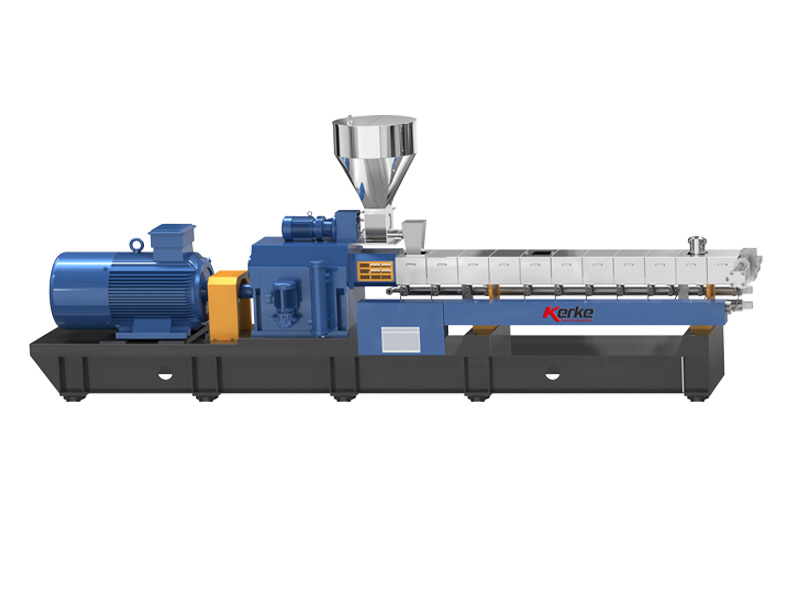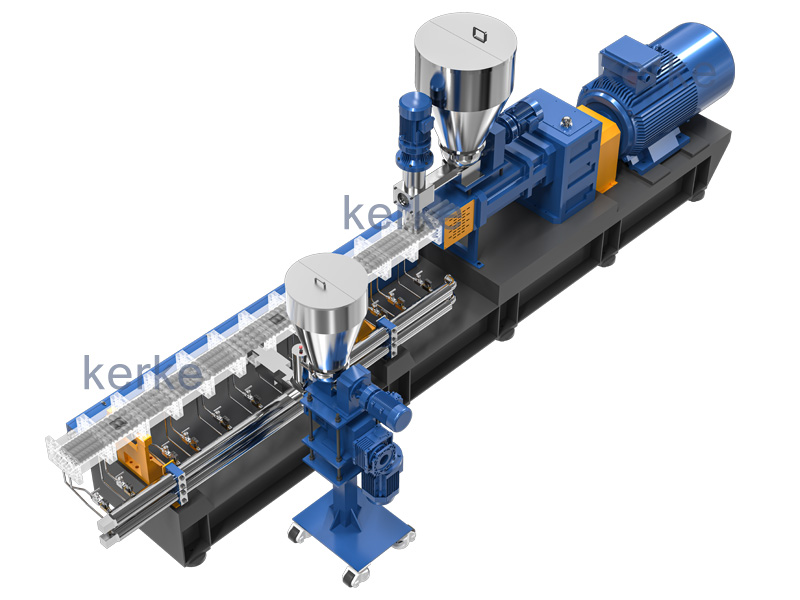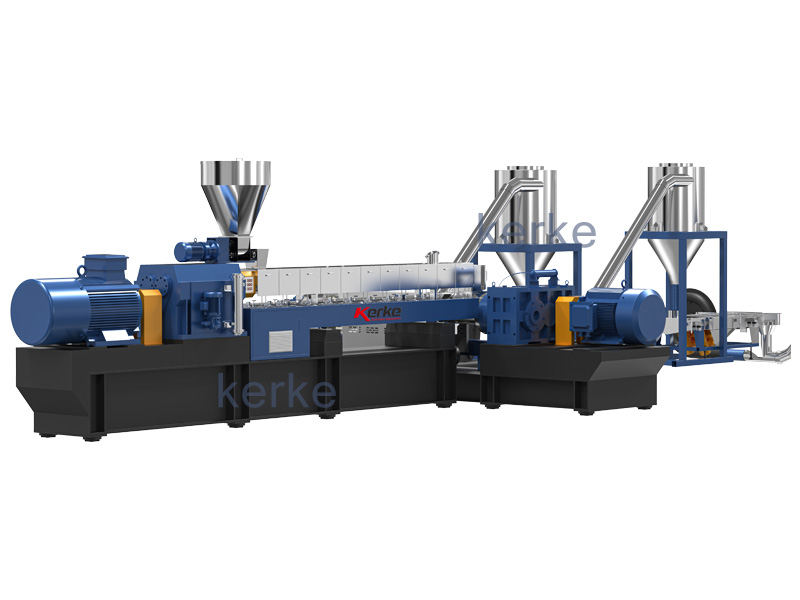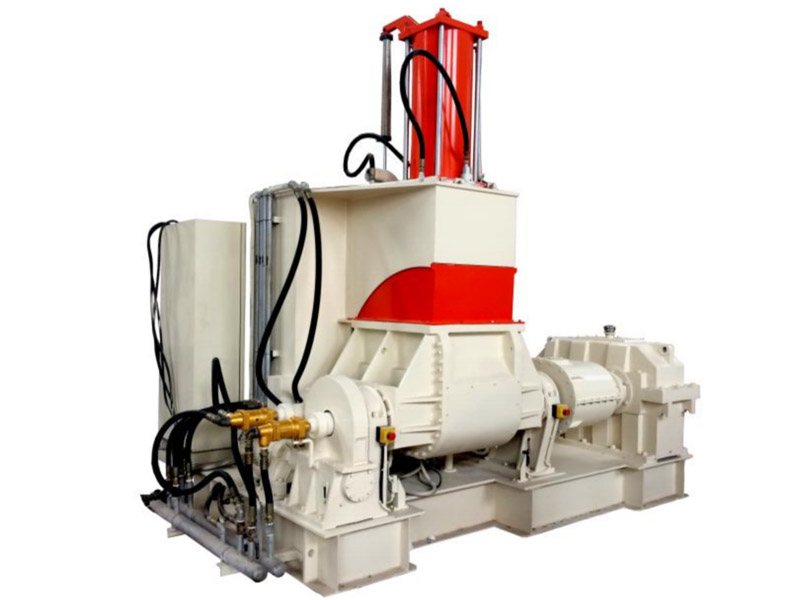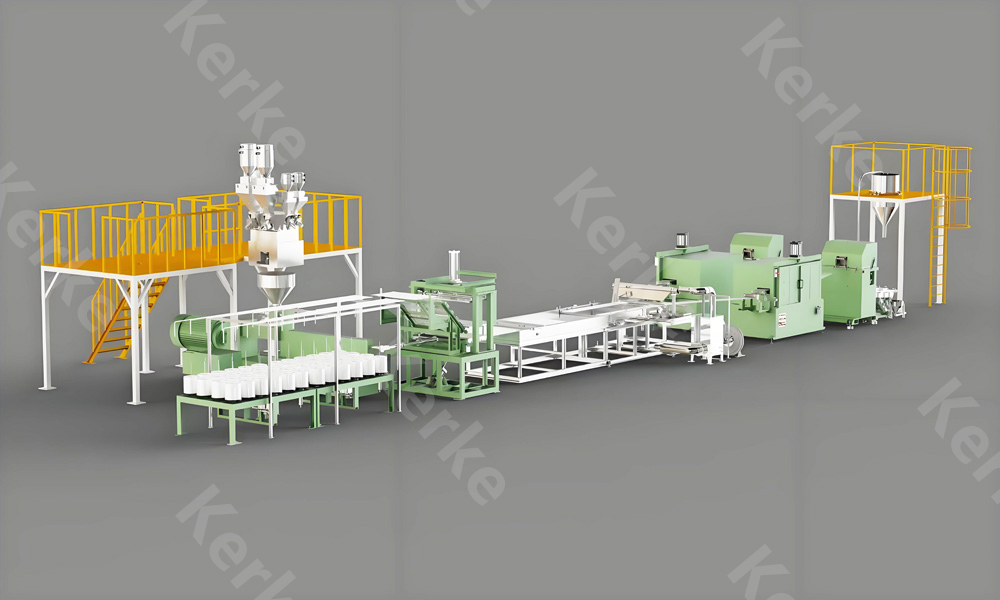
High concentrated masterbatch has become the fastest-growing segment of the global masterbatch industry, driven by the demand for cost-effective, high-performance coloration and functional modification solutions. Unlike standard masterbatches with pigment or filler loadings of 20-30%, high concentrated masterbatches contain 50-80% or even higher concentrations of pigments, fillers, or additives. This high concentration reduces the amount of masterbatch required in downstream processing, lowering transportation costs, storage requirements, and overall production costs for plastic manufacturers. However, producing high concentrated masterbatch presents significant technical challenges that cannot be effectively addressed by traditional single screw extruders or low-performance compounding equipment.
As a leading global manufacturer of twin screw extruders, masterbatch extruders, and compounding extruders, Kerke has developed specialized extrusion technology specifically optimized for high concentrated masterbatch production. Kerke twin screw extruders integrate advanced high-torque transmission systems, precision modular screw designs, intensive mixing elements, and intelligent process control systems to deliver exceptional dispersion performance, consistent product quality, and reliable long-term operation even when processing the most challenging high-concentration formulations. With over 10 years of experience in masterbatch production technology, Kerke has installed hundreds of high-concentration masterbatch lines worldwide, helping manufacturers achieve higher profit margins and meet the evolving demands of the global plastics industry.
This comprehensive article explores the unique challenges of high concentrated masterbatch production, the core advantages of twin screw extruders in addressing these challenges, and the advanced technologies integrated into Kerke masterbatch extruders. The article also provides detailed cost and price analysis, return on investment calculations, best practices for optimizing production, and solutions to common processing issues. Whether you are an existing masterbatch producer looking to expand into high-concentration products or a new investor entering the market, this article serves as a definitive guide to selecting and operating the right twin screw extruder for high concentrated masterbatch production.
1. The Growing Market for High Concentrated Masterbatch
The global high concentrated masterbatch market is experiencing rapid growth, driven by several key factors that are reshaping the masterbatch industry. Understanding these market trends is essential for recognizing the opportunities and challenges associated with high concentrated masterbatch production.
1.1 Market Size and Growth Projections
The global masterbatch market was valued at approximately $12.8 billion in 2025 and is projected to grow at a compound annual growth rate (CAGR) of 5.2% through 2032. The high concentrated masterbatch segment is growing significantly faster, with a CAGR of 7.8%, as more plastic manufacturers recognize the economic and performance benefits of using higher concentration products. This growth is particularly strong in the Asia-Pacific region, which accounts for approximately 45% of global high concentrated masterbatch consumption, followed by Europe and North America.
The demand for high concentrated masterbatch is being driven by its ability to reduce overall production costs for plastic manufacturers. By using a masterbatch with twice the concentration of pigments or additives, manufacturers can reduce their masterbatch usage by 50%, resulting in significant savings in material, transportation, and storage costs. This economic advantage has made high concentrated masterbatch the preferred choice for many large-scale plastic processing operations.
1.2 Key Drivers of High Concentrated Masterbatch Demand
Several factors are contributing to the growing demand for high concentrated masterbatch:
- Cost reduction pressures: Plastic manufacturers are under constant pressure to reduce production costs. High concentrated masterbatch allows them to achieve the same color or functional effect with less masterbatch, lowering their overall material costs.
- Supply chain optimization: High concentrated masterbatch reduces the volume of material that needs to be transported and stored, simplifying supply chain management and reducing logistics costs. This is particularly important for manufacturers with multiple production facilities or global operations.
- Improved product performance: Advanced twin screw extrusion technology has made it possible to produce high concentrated masterbatches with excellent dispersion quality, resulting in better color uniformity and functional performance in the final plastic product.
- Environmental sustainability: High concentrated masterbatch reduces the amount of polymer carrier resin used, lowering the carbon footprint of the masterbatch and supporting the circular economy goals of plastic manufacturers.
- Customization requirements: The growing demand for customized plastic products with specific colors and functional properties has increased the need for high concentrated masterbatches that can be easily adjusted to meet individual customer requirements.
1.3 Quality Requirements for High Concentrated Masterbatch
High concentrated masterbatch must meet strict quality requirements to ensure that it performs effectively in downstream processing. The most important quality parameters include:
- Dispersion quality: Pigments and additives must be completely dispersed down to the primary particle size with no agglomerates. Poor dispersion results in color defects such as specks, streaks, and uneven color distribution in the final product.
- Color consistency: The color of the masterbatch must be consistent from batch to batch within very tight tolerances. Even minor color variations can result in rejected products for downstream manufacturers.
- Uniform particle size: The masterbatch pellets must have a uniform size and shape to ensure consistent feeding and dispersion in downstream processing equipment.
- Thermal stability: The masterbatch must be thermally stable to withstand the processing temperatures encountered in extrusion, injection molding, and other plastic manufacturing processes.
- Low dust and fines: High concentrated masterbatch should have minimal dust and fines to improve handling safety and prevent feeding issues in downstream equipment.
2. Unique Challenges of High Concentrated Masterbatch Production
Producing high concentrated masterbatch presents significant technical challenges that are not encountered in standard masterbatch production. These challenges stem from the high loading of pigments, fillers, or additives, which dramatically change the processing characteristics of the material.
2.1 Extreme Dispersion Requirements
The most significant challenge in high concentrated masterbatch production is achieving complete dispersion of pigments and additives. At high concentrations, pigments and additives have a strong tendency to form agglomerates that are difficult to break down. These agglomerates can survive the compounding process and result in defects in the final plastic product.
Dispersing high concentrations of pigments requires intense and uniform shear forces throughout the entire volume of the melt. Traditional single screw extruders rely primarily on drag flow for mixing, which does not provide sufficient shear energy to break down tough agglomerates in high-concentration formulations. This results in poor dispersion quality and inconsistent product performance.
2.2 High Melt Viscosity and Torque Requirements
High concentrations of pigments and fillers significantly increase the viscosity of the polymer melt. This high viscosity requires the extruder to generate very high torque to process the material. Single screw extruders and low-torque twin screw extruders lack the power to process these high-viscosity melts effectively, resulting in low throughput, poor mixing, and excessive wear on equipment components.
The high melt viscosity also leads to increased heat generation through viscous dissipation. If not properly controlled, this can cause thermal degradation of the polymer carrier or the pigments, resulting in discoloration and reduced product quality.
2.3 Severe Equipment Wear and Abrasion
Most pigments and fillers used in masterbatch production are highly abrasive. At high concentrations, these abrasive materials cause severe wear on the screw and barrel components of the extruder. This wear leads to increased clearances between the screw flight and barrel wall, reducing the extruder’s conveying and mixing efficiency over time.
Traditional extruders with standard nitrided steel components typically have a service life of only 3-6 months when processing high concentrated masterbatches with high filler loadings. This frequent component replacement results in high maintenance costs and significant production downtime.
2.4 Process Stability and Consistency Challenges
Maintaining consistent process conditions is particularly challenging in high concentrated masterbatch production. Even minor variations in raw material properties, feed rate, or process parameters can have a significant impact on the quality of the final product. This is because the high concentration of pigments and additives amplifies the effect of any process variations.
For example, a 1% variation in pigment feed rate in a 30% concentration masterbatch results in a 0.3% variation in pigment content. In an 80% concentration masterbatch, the same 1% feed rate variation results in a 0.8% variation in pigment content, which is more than twice as significant. This makes precise process control absolutely essential for high concentrated masterbatch production.
2.5 Thermal Degradation Risks
High concentrated masterbatch production involves processing materials at high temperatures and shear rates for extended periods. This increases the risk of thermal degradation of the polymer carrier and the pigments or additives. Thermal degradation can result in discoloration, reduced mechanical properties, and the formation of volatile byproducts that can cause defects in the final product.
The risk of thermal degradation is particularly high for heat-sensitive pigments and additives, as well as for biodegradable polymers that are increasingly being used as carrier resins in masterbatch production.
3. Core Advantages of Twin Screw Extruders for High Concentrated Masterbatch
Co-rotating twin screw extruders have emerged as the only industrial-scale equipment capable of effectively addressing the unique challenges of high concentrated masterbatch production. They offer several core advantages over single screw extruders and other compounding technologies.
3.1 Intensive and Uniform Shear Mixing
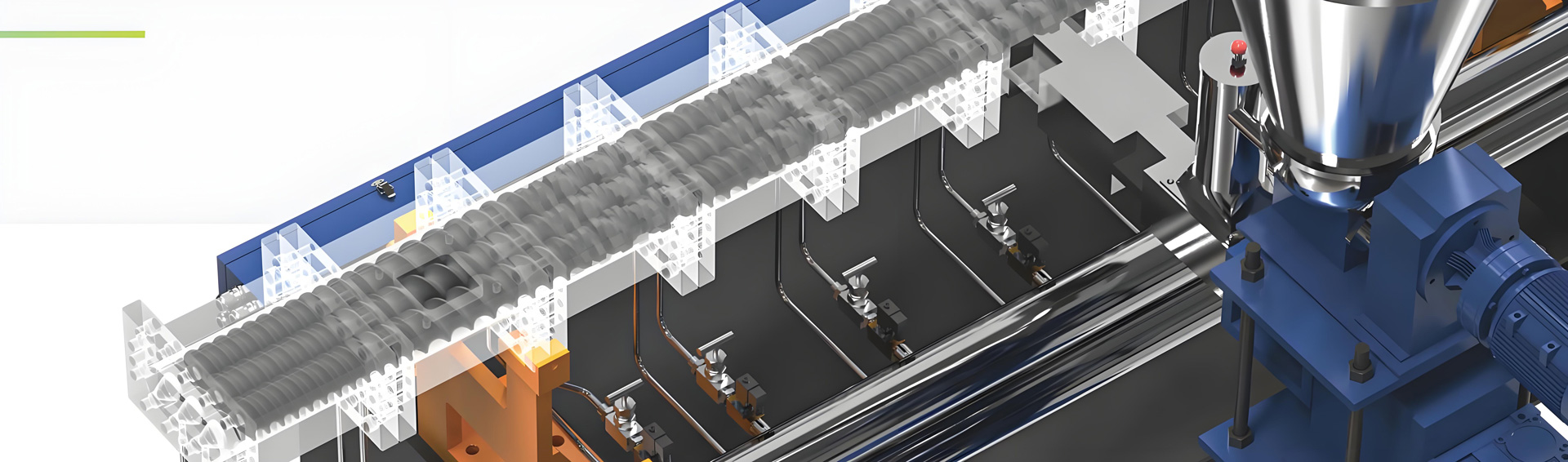
The most important advantage of twin screw extruders is their ability to generate intensive and uniform shear mixing throughout the entire melt volume. The intermeshing screws create a complex flow pattern that subjects the material to repeated cycles of high shear, effectively breaking down even the toughest pigment agglomerates.
Unlike single screw extruders, which have a relatively narrow shear distribution, twin screw extruders provide a uniform shear environment that ensures all parts of the melt receive the same level of mixing energy. This results in excellent dispersion quality and consistent product properties throughout the entire production run.
3.2 Positive Conveying and High Throughput
Twin screw extruders provide positive conveying of the material, meaning that the output rate is primarily determined by the screw speed and feed rate rather than the die head pressure or melt viscosity. This positive conveying action allows twin screw extruders to process high-viscosity melts with high filler loadings at much higher throughput rates than single screw extruders.
The positive conveying also ensures that the material moves through the extruder at a consistent rate, providing a uniform residence time and preventing material from stagnating and degrading in the extruder.
3.3 Excellent Self-Cleaning Capability
The intermeshing action of the twin screws provides excellent self-cleaning of the screw and barrel surfaces. As the screws rotate, the flights of one screw wipe the surfaces of the other screw and the barrel wall, removing any residual material. This self-cleaning action prevents material from building up and degrading on the hot surfaces, reducing the risk of contamination and color carryover between production runs.
This excellent self-cleaning capability is particularly valuable for masterbatch producers who manufacture multiple colors and formulations, as it significantly reduces changeover time and material waste.
3.4 Precise Temperature and Residence Time Control
Twin screw extruders provide precise control over both the temperature profile and the residence time of the material in the extruder. The barrel is divided into multiple independent heating and cooling zones, allowing for precise regulation of the melt temperature at each stage of the process. This prevents overheating and thermal degradation of heat-sensitive materials.
The residence time can be easily adjusted by changing the screw speed, feed rate, or screw configuration. This flexibility allows manufacturers to optimize the process for each specific formulation, balancing the need for sufficient mixing energy with the need to minimize thermal degradation.
3.5 Modular Design and Flexibility
Modern twin screw extruders feature a fully modular design, with individual screw elements and barrel segments that can be easily rearranged to create different process configurations. This modularity allows manufacturers to optimize the extruder for different types of masterbatch formulations, from high-concentration color masterbatch to filled masterbatch and additive masterbatch.
The modular design also makes maintenance and component replacement much easier and more cost-effective. Instead of replacing the entire screw or barrel, only the worn segments need to be replaced, reducing maintenance costs and downtime.
4. Kerke Advanced Technologies for High Concentrated Masterbatch Production
Kerke has developed a range of advanced technologies specifically designed to address the unique challenges of high concentrated masterbatch production. These technologies are integrated into all Kerke twin screw extruders, masterbatch extruders, and compounding extruders, delivering exceptional performance and reliability.
4.1 High-Torque Gearbox Transmission System
The foundation of Kerke’s high concentrated masterbatch technology is its advanced high-torque gearbox transmission system. Kerke gearboxes are designed to deliver a specific torque of up to 13 Nm/cm³, which is among the highest in the industry. This high torque capability allows Kerke extruders to process the most viscous high-concentration formulations with ease, even at high throughput rates.
The gearboxes are constructed with precision-machined gears made from high-quality 17CrNiMo6 alloy steel, which is case-hardened and ground to achieve exceptional strength and durability. They feature heavy-duty spherical roller thrust bearings that can handle the high axial loads generated during high-concentration masterbatch production. An advanced forced lubrication and cooling system ensures that the gearbox operates at optimal temperature, extending its service life and ensuring reliable performance.
Kerke gearboxes are designed for a service life of 10 years or more with proper maintenance, significantly reducing the total cost of ownership compared to lower-quality gearboxes that may need replacement after only 3-5 years.
4.2 Precision Modular Screw System with Specialized Mixing Elements
Kerke has developed a comprehensive range of precision modular screw elements specifically optimized for high concentrated masterbatch production. These elements are made from high-quality materials and are precision-machined to tight tolerances to ensure perfect intermeshing and consistent performance.
Kerke offers a variety of specialized mixing elements designed to provide the optimal balance of shear and mixing for different types of high-concentration formulations. These include:
- Standard kneading blocks with different angles (30°, 45°, 60°, 90°) for different levels of shear intensity
- Specialized high-shear mixing elements for breaking down tough pigment agglomerates
- Distributive mixing elements for uniform distribution of pigments and additives throughout the polymer matrix
- Reverse elements and blister rings for creating pressure zones and increasing residence time
Kerke’s engineering team uses advanced computer simulation software to optimize the screw configuration for each customer’s specific formulation. This ensures that the extruder provides the exact level of mixing energy required to achieve excellent dispersion quality while minimizing thermal degradation and equipment wear.
4.3 Advanced Wear-Resistant Materials and Coatings
To address the severe wear challenges of high concentrated masterbatch production, Kerke offers a range of advanced wear-resistant materials and coatings for screw elements and barrel segments. These materials significantly extend the service life of the components, reducing maintenance costs and downtime.
The available material options include:
- Standard nitrided steel (38CrMoAlA) for general-purpose applications
- Bimetallic construction with a wear-resistant alloy layer for moderate abrasive applications
- Tungsten carbide coatings applied using high-velocity oxy-fuel (HVOF) spraying technology for highly abrasive applications
- Powder metallurgy high-speed steel for high-temperature, high-shear applications
For high concentrated masterbatch production with high filler loadings, Kerke recommends tungsten carbide coated screw elements and bimetallic barrel segments. These materials can extend component service life by 3-5 times compared to standard nitrided steel, resulting in significant long-term cost savings.
4.4 High-Precision Gravimetric Feeding System
Accurate and consistent feeding of raw materials is essential for producing high concentrated masterbatch with consistent quality. Kerke extruders are equipped with high-precision gravimetric feeding systems that deliver an accuracy of ±0.1% for all raw materials.
Unlike volumetric feeders, which are affected by changes in material bulk density, gravimetric feeders continuously weigh the material being fed into the extruder and automatically adjust the feed rate to maintain the desired formulation ratio. This ensures that the concentration of pigments and additives remains consistent throughout the entire production run, resulting in uniform color and performance properties.
Kerke offers a range of gravimetric feeders to meet different production requirements, including loss-in-weight feeders for main raw materials and micro-feeders for additives with addition rates as low as 0.01%. All feeders are integrated with the extruder’s main control system, allowing for centralized monitoring and control of the entire feeding process.
4.5 Intelligent Process Control System
Kerke twin screw extruders are equipped with an advanced intelligent process control system specifically optimized for high concentrated masterbatch production. The system features a high-performance Siemens S7 PLC and a large, high-resolution touch screen HMI that provides intuitive operation and comprehensive process monitoring.
The control system provides closed-loop control of all critical process parameters, including barrel temperatures, melt temperature, melt pressure, screw speed, and feed rates. It uses advanced PID control algorithms with auto-tuning capabilities to maintain precise, stable process conditions even when processing challenging high-concentration formulations.
The system also includes a comprehensive recipe management system that can store up to 1000 production recipes. Each recipe includes all the necessary process parameters, ensuring consistent production quality every time. The system provides real-time data logging and reporting, allowing manufacturers to track production performance and maintain complete batch traceability.
4.6 Integrated Devolatilization System
High concentrated masterbatch production often involves processing materials that contain moisture, residual monomers, or other volatile substances. These volatiles can cause defects in the final product and affect its performance. Kerke extruders feature an integrated multi-stage devolatilization system that efficiently removes these volatiles from the polymer melt.
The devolatilization system includes multiple vent ports along the barrel, each connected to a vacuum system that draws out the volatiles. The screw configuration is optimized to create a thin, constantly renewing melt film at each vent port, maximizing the surface area available for devolatilization and ensuring efficient removal of volatiles.
This integrated devolatilization system produces high-quality masterbatch with excellent physical properties and no defects caused by trapped volatiles.
5. Cost and Price Analysis of Kerke High Concentrated Masterbatch Extrusion Lines
Investing in a high concentrated masterbatch extrusion line is a significant capital expenditure, but it offers substantial long-term benefits through higher production efficiency, better product quality, and access to premium markets. The following is a detailed cost and price analysis of Kerke extrusion lines for high concentrated masterbatch production.
5.1 Initial Equipment Investment by Capacity and Configuration
The initial cost of a Kerke high concentrated masterbatch extrusion line depends on several factors, including the extruder model, production capacity, level of automation, and optional features. The following are approximate price ranges for different Kerke extruder models configured for high concentrated masterbatch production.
Laboratory and pilot scale extruders (5-50 kg/h capacity):
- Standard configuration for R&D and small-batch production: $35,000 to $80,000
- Premium configuration with advanced control and wear-resistant components: $50,000 to $120,000
Medium-scale production extruders (50-300 kg/h capacity):
- Standard configuration for general high concentrated masterbatch: $100,000 to $350,000
- Premium configuration with high-torque gearbox, tungsten carbide components, and advanced control: $150,000 to $500,000
Large-scale industrial extruders (300-1500 kg/h capacity):
- Standard configuration for high-volume production: $400,000 to $1,000,000
- Premium configuration with full automation, multiple feeders, and advanced devolatilization: $550,000 to $1,500,000
It is important to note that while the premium configurations have a higher initial investment, they provide significantly better performance, longer service life, and lower operational costs, resulting in a higher return on investment over the life of the equipment.
5.2 Operational Cost Breakdown
In addition to the initial equipment investment, manufacturers must also consider the ongoing operational costs of running a high concentrated masterbatch production line. The main operational costs include:
- Raw materials: Raw materials account for 60-80% of the total production cost for high concentrated masterbatch. The cost varies depending on the type of polymer carrier, pigments, fillers, and additives used.
- Energy consumption: Kerke twin screw extruders are designed to be energy-efficient, with specific energy consumption ranging from 0.35 to 0.7 kWh/kg for high concentrated masterbatch production. For a medium-scale line with a capacity of 150 kg/h operating 24 hours a day, 300 days a year, the annual energy cost would be approximately $45,000 to $90,000 at an electricity price of $0.12 per kWh.
- Labor costs: A semi-automated medium-scale production line typically requires 2-3 operators per shift. At an average labor cost of $18 per hour, the annual labor cost would be approximately $120,000 to $180,000 for 24/7 operation.
- Maintenance and spare parts: The annual maintenance and spare parts cost for a Kerke extruder configured for high concentrated masterbatch production typically ranges from 3% to 6% of the initial equipment investment. This is significantly lower than for lower-quality extruders, which may have annual maintenance costs of 10-15% of the initial investment.
- Other costs: Other operational costs include rent, utilities, insurance, transportation, and quality control expenses.
5.3 Return on Investment (ROI) Calculation
The return on investment for a Kerke high concentrated masterbatch extrusion line is typically very attractive, with payback periods ranging from 1 to 2.5 years depending on the production capacity and market conditions. The following is an example ROI calculation for a medium-scale Kerke extruder producing 60% concentration calcium carbonate filler masterbatch at a rate of 150 kg/h.
- Initial equipment investment: $300,000
- Annual production capacity: 1,080 tons (operating 24 hours a day, 300 days a year)
- Raw material cost: $250 per ton
- Total annual raw material cost: $270,000
- Total annual operational cost (energy, labor, maintenance, etc.): $220,000
- Total annual production cost: $490,000
- Selling price of high concentrated filler masterbatch: $650 per ton
- Total annual revenue: $702,000
- Annual net profit: $702,000 – $490,000 = $212,000
- Payback period: $300,000 / $212,000 = 1.42 years (approximately 17 months)
This is a conservative estimate, and actual ROI can be significantly higher for producers of high-value color masterbatch or functional masterbatch, which command much higher prices in the market. High concentrated color masterbatch can sell for $1,500 to $5,000 per ton or more, depending on the type of pigment and quality requirements.
5.4 Cost Comparison with Traditional Equipment
While Kerke twin screw extruders have a higher initial investment than traditional single screw extruders or low-quality twin screw extruders, they provide significant long-term cost savings and higher profitability. The following comparison highlights the key differences between Kerke extruders and traditional equipment for high concentrated masterbatch production.
- Initial investment: Kerke extruders typically cost 20-30% more than low-quality twin screw extruders of the same capacity.
- Production capacity: Kerke extruders can produce 30-50% more high concentrated masterbatch per hour than low-quality extruders due to their higher torque capability and more efficient design.
- Product quality: Kerke extruders produce higher quality masterbatch with better dispersion and consistency, which can be sold at a 15-30% premium in the market.
- Maintenance costs: Kerke extruders have 40-60% lower annual maintenance costs than low-quality extruders due to their superior construction and advanced wear-resistant materials.
- Service life: Kerke extruders have a service life of 10-15 years, compared to 3-6 years for low-quality extruders.
When considering the total cost of ownership over the life of the equipment, Kerke extruders are significantly more cost-effective than traditional equipment. The higher initial investment is quickly offset by higher production capacity, better product quality, lower maintenance costs, and longer service life.
6. Best Practices for High Concentrated Masterbatch Production
While Kerke twin screw extruders are designed to deliver exceptional performance in high concentrated masterbatch production, following these best practices will help you achieve the best possible results and maximize the return on your investment.
6.1 Proper Raw Material Selection and Pretreatment
The quality of the raw materials has a significant impact on the quality of the final masterbatch and the performance of the extruder. It is important to select high-quality pigments, fillers, and polymer carriers that are suitable for high concentrated masterbatch production.
All raw materials should be properly dried to remove moisture before processing, as moisture can cause hydrolysis and degradation of the polymer. Pigments and fillers should be properly surface-treated to improve their compatibility with the polymer carrier and enhance dispersion. Raw materials should also be screened to remove any foreign particles or large agglomerates that could damage the extruder or affect product quality.
6.2 Optimal Screw Configuration Design
The screw configuration is the most important factor in achieving excellent dispersion quality in high concentrated masterbatch production. The optimal screw configuration will depend on the specific formulation being processed, including the type and concentration of pigments or additives, the viscosity of the polymer carrier, and the desired dispersion quality.
Work with Kerke’s experienced engineering team to develop a customized screw configuration for your specific products. The configuration should provide sufficient shear energy to break down agglomerates while avoiding excessive shear that could cause thermal degradation or equipment wear. It should also provide adequate residence time for complete dispersion and mixing.
6.3 Precise Process Parameter Optimization
Optimizing the process parameters is essential for achieving consistent product quality and maximizing production efficiency. The key process parameters to optimize include barrel temperature profile, screw speed, feed rate, and melt pressure.
The temperature profile should be carefully adjusted to ensure that the polymer melts completely and uniformly while avoiding overheating and thermal degradation. The screw speed and feed rate should be balanced to provide the optimal shear rate and residence time for good dispersion. The melt pressure should be monitored and maintained at a stable level to ensure consistent product quality.
Once the optimal process parameters have been determined, store them in the control system’s recipe library to ensure consistent production quality for every batch.
6.4 Comprehensive Quality Control Program
Implement a comprehensive quality control program to monitor the quality of your high concentrated masterbatch throughout the production process. Test each batch of masterbatch for key quality parameters such as dispersion quality, color consistency, melt flow rate, and particle size distribution.
Use advanced testing equipment such as optical microscopes, colorimeters, and melt flow indexers to accurately measure these parameters. Keep detailed records of all quality tests to track product quality over time and identify any trends or issues that need to be addressed.
6.5 Regular Equipment Maintenance and Inspection
Regular maintenance and inspection are essential for keeping your Kerke extruder operating at peak performance and extending its service life. Follow Kerke’s recommended maintenance schedule, which includes daily, weekly, monthly, and annual maintenance tasks.
Regularly inspect the screw elements and barrel segments for wear, especially when processing highly abrasive materials. Replace worn components promptly to prevent reduced production efficiency and product quality issues. Calibrate sensors, temperature controllers, and feeding systems regularly to ensure accurate process control.
7. Common Issues in High Concentrated Masterbatch Production and Solutions
Even with the best equipment and practices, manufacturers may occasionally encounter issues when producing high concentrated masterbatch. The following are the most common issues and the solutions recommended by Kerke’s technical experts.
7.1 Poor Dispersion and Pigment Agglomerates
Poor dispersion and the presence of pigment agglomerates are the most common quality issues in high concentrated masterbatch production. These issues result in color defects such as specks and streaks in the final plastic product.
Causes:
- Insufficient shear energy in the extruder
- Improper screw configuration
- Too high feed rate or too low screw speed
- Poor quality raw materials with large agglomerates
- Inadequate dispersion aids in the formulation
Solutions:
- Increase the shear intensity by adding more kneading blocks or using higher-angle kneading elements
- Optimize the screw configuration to provide better dispersive mixing
- Reduce the feed rate or increase the screw speed to increase shear energy
- Improve raw material quality and use properly surface-treated pigments
- Add appropriate dispersion aids to the formulation to improve pigment wetting and dispersion
7.2 Color Inconsistency Between Batches
Color inconsistency between batches is a critical issue that can result in rejected orders and lost customers. Even minor color variations can be unacceptable for many applications.
Causes:
- Inconsistent feeding of raw materials
- Variations in raw material properties
- Unstable process parameters
- Material residue from previous production runs
- Poor dispersion quality
Solutions:
- Use high-precision gravimetric feeders to ensure consistent feeding of all raw materials
- Implement strict raw material quality control procedures
- Optimize and stabilize process parameters using closed-loop control
- Thoroughly clean the extruder between production runs using appropriate purging compounds
- Improve dispersion quality to ensure uniform color distribution
7.3 Excessive Equipment Wear
Excessive wear of screw and barrel components is a common issue when processing high concentrated masterbatch with abrasive fillers or pigments. This wear leads to reduced production efficiency and increased maintenance costs.
Causes:
- Processing highly abrasive materials with high filler loadings
- Using standard nitrided steel components for abrasive applications
- Excessive screw speed or feed rate
- Poor raw material quality with hard contaminants
- Improper screw configuration leading to high localized shear
Solutions:
- Upgrade to bimetallic or tungsten carbide coated screw elements and barrel segments
- Optimize process parameters to reduce excessive shear and wear
- Improve raw material pretreatment to remove hard contaminants
- Optimize the screw configuration to distribute shear more evenly
- Implement a regular inspection and maintenance program to monitor component wear
7.4 Thermal Degradation and Discoloration
Thermal degradation of the polymer or pigments can result in discoloration and reduced product quality. This is particularly problematic for heat-sensitive materials and high-temperature processing.
Causes:
- Excessive processing temperature
- Too long residence time in the extruder
- Excessive shear leading to localized overheating
- Insufficient thermal stabilizers in the formulation
- Material stagnation in the extruder
Solutions:
- Reduce the barrel temperature profile to the minimum required for good melting and mixing
- Optimize the screw configuration to reduce residence time
- Adjust the screw speed and feed rate to reduce excessive shear
- Increase the amount of thermal stabilizer in the formulation
- Ensure proper screw alignment and eliminate dead spots in the extruder where material can stagnate
7.5 High Melt Pressure and Torque
High melt pressure and torque are common when processing high concentrated masterbatch due to the high viscosity of the melt. Excessive pressure and torque can lead to equipment damage and production downtime.
Causes:
- Too high concentration of pigments or fillers
- Too low processing temperature
- Improper screw configuration with excessive restrictive elements
- Too small die holes or clogged die
- Worn screw or barrel components
Solutions:
- Increase the processing temperature to reduce melt viscosity
- Optimize the screw configuration to reduce pressure buildup
- Clean or replace the die to ensure proper flow
- Replace worn screw or barrel components
- Adjust the formulation to reduce the concentration of fillers or pigments if necessary
8. Conclusion
High concentrated masterbatch represents the future of the global masterbatch industry, offering significant economic and environmental benefits for both masterbatch producers and plastic manufacturers. However, producing high concentrated masterbatch presents unique technical challenges that require advanced extrusion technology to overcome.
Twin screw extruders have emerged as the only industrial-scale equipment capable of effectively addressing these challenges, offering intensive shear mixing, positive conveying, excellent self-cleaning, precise process control, and modular flexibility. These advantages enable manufacturers to produce high concentrated masterbatch with excellent dispersion quality, consistent product performance, and high production efficiency.
Kerke twin screw extruders, masterbatch extruders, and compounding extruders are specifically designed and optimized for high concentrated masterbatch production. They integrate advanced technologies such as high-torque gearboxes, precision modular screw systems, advanced wear-resistant materials, high-precision gravimetric feeding, and intelligent process control to deliver exceptional performance and reliability. With Kerke equipment, manufacturers can produce high-quality high concentrated masterbatch that meets the strictest quality requirements and commands premium prices in the market.
Investing in a Kerke high concentrated masterbatch extrusion line offers a very attractive return on investment, with payback periods typically ranging from 1 to 2.5 years. The higher initial investment is quickly offset by higher production capacity, better product quality, lower maintenance costs, and longer service life compared to traditional equipment.
By following best practices such as proper raw material selection, optimal screw configuration design, precise process parameter optimization, comprehensive quality control, and regular equipment maintenance, manufacturers can maximize the performance of their Kerke extruders and achieve long-term success in the high concentrated masterbatch market.
In conclusion, Kerke twin screw extruders provide the ideal solution for manufacturers looking to enter or expand in the high concentrated masterbatch market. With their advanced technology, reliable performance, and comprehensive technical support, Kerke extruders enable manufacturers to meet the growing demand for high-quality high concentrated masterbatch and achieve sustainable growth and profitability in the competitive global plastics industry.