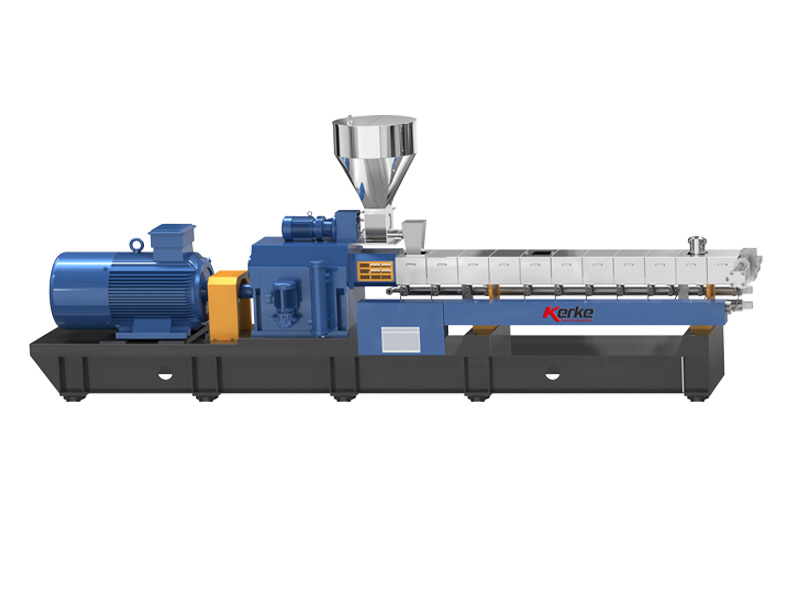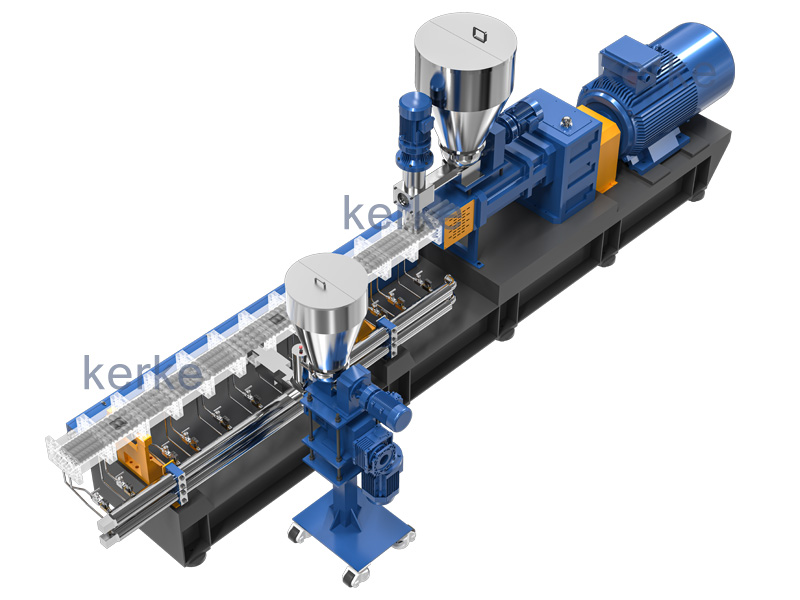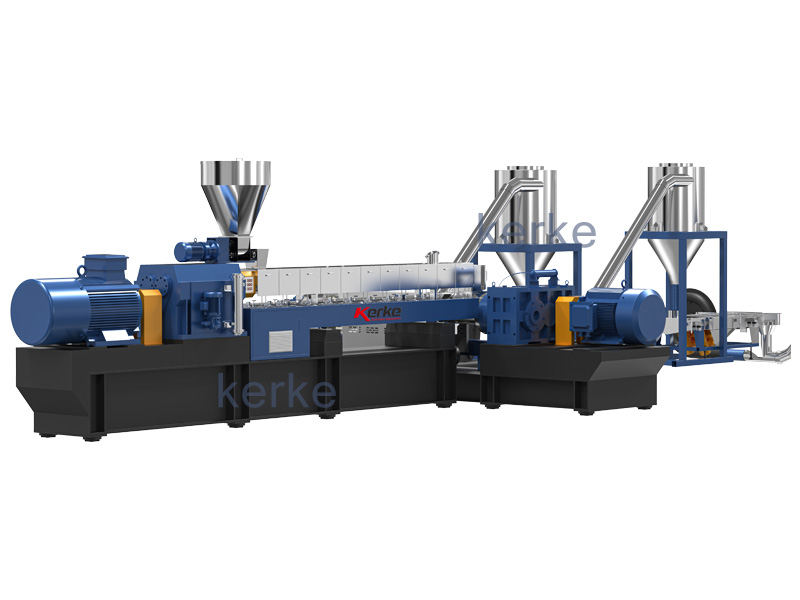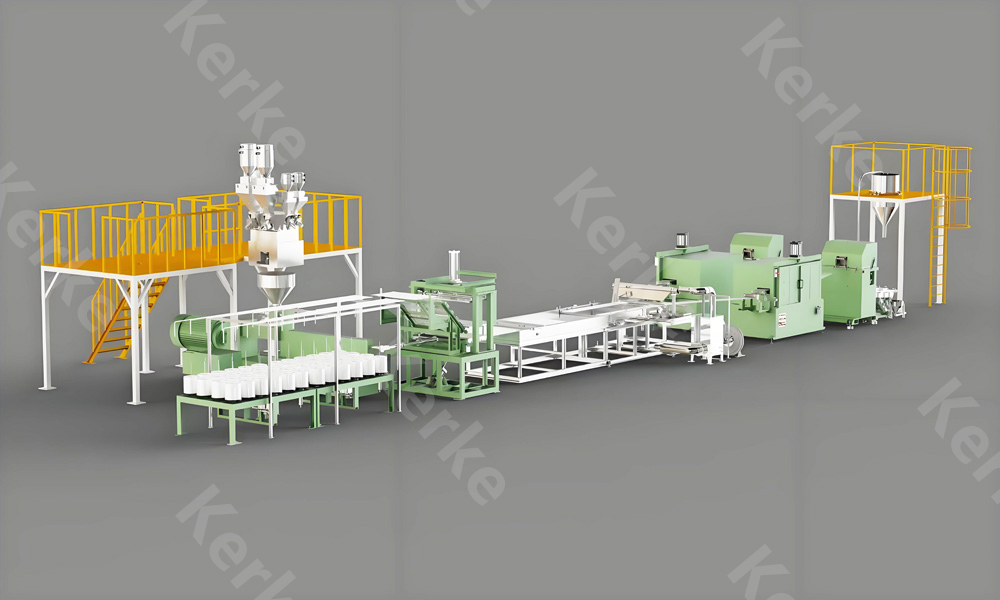
The global masterbatch market is experiencing sustained and robust growth, valued at USD 14.2 billion in 2026 and projected to reach USD 20.7 billion by 2031, growing at a compound annual growth rate (CAGR) of 7.8%. This expansion is driven by the booming global plastics industry, increasing demand for high-performance materials across automotive, packaging, electronics, and construction sectors, and stringent environmental regulations promoting sustainable and recyclable plastic products. Masterbatch, as a concentrated mixture of pigments, additives, and carrier resins, plays a critical role in imparting color, functionality, and performance characteristics to plastic products. At the heart of masterbatch production lies the masterbatch extruder, a specialized compounding extruder that determines the quality, consistency, and profitability of the final masterbatch products. As a leading global manufacturer of twin screw extruders and compounding equipment, Kerke has established itself as the trusted partner for masterbatch makers worldwide, delivering reliable, high-performance masterbatch extruder solutions that address the unique challenges of modern masterbatch production.
Masterbatch production presents unique technical challenges that demand specialized extrusion technology. Unlike general plastic compounding, masterbatch production requires extremely uniform dispersion of pigments and additives at high concentrations, consistent color matching across batches, precise control of particle size distribution, and minimal thermal degradation of heat-sensitive materials. Traditional single screw extruders and outdated twin screw extruders often fail to meet these demanding requirements, resulting in poor dispersion, color inconsistency, high scrap rates, excessive energy consumption, and frequent production downtime. For masterbatch makers, these issues translate directly into increased production costs, lost customer trust, and reduced market competitiveness. Investing in a high-quality, reliable masterbatch extruder is therefore the single most critical decision that determines the long-term success of any masterbatch manufacturing operation.
With over 20 years of specialized experience in twin screw extruder technology, Kerke has developed a comprehensive range of masterbatch extruders specifically engineered to meet the exacting requirements of masterbatch production. Our masterbatch extruders incorporate advanced twin screw design, precision process control, and intelligent automation technologies that deliver exceptional dispersion performance, consistent product quality, and maximum operational efficiency. Kerke masterbatch extruders are capable of processing all types of masterbatches, including color masterbatches, additive masterbatches, filler masterbatches, and functional masterbatches, with production capacities ranging from 5 kg/h for laboratory-scale development to 2500 kg/h for large-scale industrial production. With over 1200 successful installations across 65 countries, Kerke has earned a reputation for delivering reliable, cost-effective solutions that help masterbatch makers improve their product quality, reduce operating costs, and increase profitability.
This comprehensive guide explores how modern masterbatch extruders provide reliable solutions for masterbatch makers. It examines the global masterbatch market landscape and the key technical challenges facing masterbatch producers, explains the core technologies that make Kerke masterbatch extruders the industry standard, provides a detailed overview of Kerke’s complete masterbatch extruder product range with specifications and transparent pricing, includes a comprehensive cost analysis and return on investment calculation for different production scales, features real-world success stories from Kerke customers worldwide, offers practical guidance for selecting the right masterbatch extruder for your specific needs, and explores future trends in masterbatch extrusion technology. Whether you are starting a new masterbatch business, expanding your production capacity, or upgrading your existing equipment, this guide will help you make an informed decision about your masterbatch extruder investment.
1. Global Masterbatch Market and Production Challenges
1.1 Market Size and Growth Drivers
The global masterbatch market continues to expand rapidly as plastic manufacturers increasingly rely on masterbatches to enhance the performance, appearance, and sustainability of their products. The packaging industry remains the largest consumer of masterbatches, accounting for approximately 42% of total demand, driven by growing demand for flexible packaging, food packaging, and sustainable packaging solutions. The automotive industry is the fastest-growing segment, with increasing use of plastic components in electric vehicles driving demand for high-performance functional masterbatches such as flame retardant, UV stabilizer, and conductive masterbatches. Other key end-use industries include electronics, construction, agriculture, and consumer goods, all of which are driving demand for specialized masterbatch solutions.
Several key factors are fueling the growth of the masterbatch market. First, the global shift towards lightweight materials in automotive and aerospace industries is increasing the use of engineering plastics, which require advanced masterbatch formulations to meet strict performance requirements. Second, growing consumer awareness of product aesthetics and functionality is driving demand for custom colors and special effects masterbatches. Third, stringent environmental regulations are promoting the use of recyclable and biodegradable plastics, creating demand for sustainable masterbatch solutions. Finally, the trend towards outsourcing of masterbatch production by large plastic manufacturers is creating opportunities for specialized masterbatch producers worldwide.
1.2 Critical Quality Requirements for Masterbatch Production
Masterbatch production demands the highest levels of quality and consistency, as even minor variations in masterbatch quality can have significant negative impacts on downstream plastic processing operations. The most critical quality requirements for masterbatch products include uniform pigment dispersion, consistent color matching across batches, precise additive concentration, minimal particle size, low gel content, and stable melt flow properties. Poor pigment dispersion can result in color streaks, specks, and uneven appearance in finished plastic products, while inconsistent color matching can lead to rejected batches and costly production downtime for customers.
In addition to quality requirements, masterbatch makers must also meet strict production efficiency and cost targets. High production throughput, low energy consumption, minimal material waste, and fast changeover times between different products are all essential for maintaining profitability in the highly competitive masterbatch market. Masterbatch producers must also be able to quickly adapt to changing customer requirements and develop custom formulations to meet specific application needs, which requires flexible and versatile extrusion equipment.
1.3 Limitations of Traditional Extrusion Technology
Traditional extrusion technology, including single screw extruders and older generation twin screw extruders, often fails to meet the demanding requirements of modern masterbatch production. Single screw extruders have limited mixing and dispersion capabilities, making them unsuitable for producing high-quality masterbatches with high pigment or filler loadings. They also suffer from poor temperature control, which can lead to thermal degradation of heat-sensitive pigments and additives, resulting in discoloration and reduced performance of the final masterbatch.
Older generation twin screw extruders, while better than single screw extruders, still have significant limitations. Many feature outdated screw designs that provide inadequate shear and mixing, resulting in poor dispersion and inconsistent product quality. They often have limited temperature control zones and inefficient degassing systems, which can lead to thermal degradation and residual volatiles in the final product. Traditional extruders also typically have long changeover times between different colors and formulations, resulting in significant production downtime and material waste. Additionally, many older extruders are energy inefficient, with high power consumption that increases operating costs and reduces profitability.
2. Core Technologies of Kerke Masterbatch Extruders
Kerke masterbatch extruders incorporate a range of advanced technologies that address the limitations of traditional extrusion equipment and deliver reliable, high-performance solutions for masterbatch production. These technologies have been developed and refined over 20 years of specialized experience in twin screw extrusion, and they are designed to provide exceptional dispersion performance, consistent product quality, maximum operational efficiency, and long-term reliability.
2.1 Co-Rotating Parallel Twin Screw Design
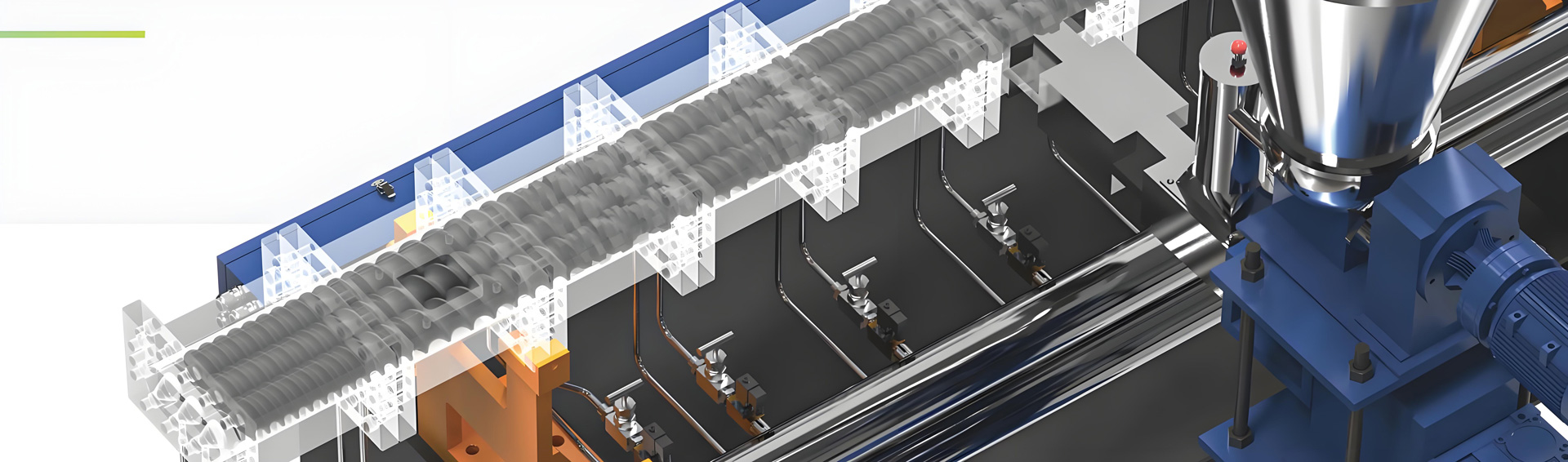
The foundation of Kerke masterbatch extruders is our advanced co-rotating parallel twin screw design, which is specifically optimized for masterbatch compounding applications. Co-rotating twin screws provide superior mixing and dispersion capabilities compared to single screw extruders or counter-rotating twin screw extruders, as the intermeshing screws create intense shear and kneading action that effectively breaks down pigment agglomerates and uniformly distributes additives throughout the carrier resin.
Kerke twin screws are manufactured from high-quality alloy steel with precision machining and hard surface treatment, ensuring exceptional durability and long service life even when processing highly abrasive filler masterbatches. The screws feature a modular design that allows for easy customization of the screw configuration to meet the specific requirements of different masterbatch formulations. This modular design also simplifies maintenance and reduces downtime, as individual screw elements can be replaced without replacing the entire screw assembly.
2.2 Modular Barrel System with Precision Temperature Control
Kerke masterbatch extruders feature a modular barrel system that works in conjunction with the modular screw design to provide maximum flexibility and process control. Each barrel segment is independently heated and cooled, allowing for precise temperature control along the entire length of the extruder. The temperature control system uses advanced PID controllers that maintain temperature within ±1°C of the setpoint, ensuring consistent processing conditions and preventing thermal degradation of heat-sensitive materials.
The barrel segments are manufactured from high-quality alloy steel with bimetallic liners that provide excellent wear and corrosion resistance. This is particularly important for masterbatch production, as many pigments and fillers are highly abrasive and can cause significant wear to standard barrel materials. Kerke’s bimetallic barrels have a service life that is 3-5 times longer than standard barrels, reducing maintenance costs and extending the overall lifespan of the extruder.
2.3 High-Efficiency Vacuum Degassing System
Effective degassing is essential for producing high-quality masterbatches, as it removes moisture, residual monomers, solvents, and other volatile contaminants from the plastic melt. Kerke masterbatch extruders feature a multi-stage vacuum degassing system that provides efficient removal of volatiles, resulting in masterbatches with low gel content, excellent surface quality, and consistent performance.
The degassing system uses high-performance vacuum pumps that create a deep vacuum in the degassing zones, drawing out volatile components from the melt. The system is designed to prevent vent flow and material loss, which is a common problem with traditional degassing systems. Kerke also offers optional multi-stage degassing configurations for applications that require the highest levels of purity, such as food contact and medical grade masterbatches.
2.4 Intelligent Automation and Control System
All Kerke masterbatch extruders are equipped with an advanced intelligent automation and control system that ensures consistent production quality and maximum operational efficiency. The system features a state-of-the-art Siemens S7-1500 PLC with a large touch screen HMI that provides comprehensive monitoring and control of all process parameters, including temperature, pressure, screw speed, torque, and feed rate.
The control system includes powerful recipe management capabilities that allow operators to store and recall process parameters for hundreds of different masterbatch formulations. When changing between products, the operator simply selects the appropriate recipe from the menu, and the system automatically adjusts all process parameters, ensuring consistent quality every time. The system also features real-time data logging and reporting capabilities, allowing managers to track production performance, identify process inefficiencies, and optimize production operations.
For large-scale production facilities, Kerke masterbatch extruders can be integrated with plant-wide MES and ERP systems for centralized production management and control. The system also supports remote monitoring and diagnostics, allowing Kerke’s technical support team to quickly identify and resolve any issues that may arise, minimizing production downtime.
2.5 Fast Changeover and Clean Design
Fast changeover between different colors and formulations is critical for masterbatch makers who produce a wide range of products in small to medium batches. Kerke masterbatch extruders are designed with fast changeover and easy cleaning in mind, significantly reducing downtime and material waste between production runs.
The screw and barrel surfaces are polished to a high finish, minimizing material adhesion and making cleaning faster and easier. The extruder features quick-release clamps and access doors that allow for rapid disassembly and cleaning of the screw and barrel. Kerke also offers optional quick-change screen changers and die heads that allow for tool-free changeovers in minutes rather than hours. These design features reduce changeover time by up to 70% compared to traditional extruders, significantly increasing production efficiency and reducing material waste.
3. Kerke Masterbatch Extruder Product Range and Pricing
Kerke offers a comprehensive range of masterbatch extruders designed to meet the diverse needs of masterbatch makers worldwide. Our product range includes laboratory-scale extruders for research and development, small-scale production extruders for startup businesses, and large-scale industrial extruders for high-volume production. All Kerke masterbatch extruders are built to international quality standards and incorporate the advanced technologies described above.
3.1 Kerke KTE-20 Laboratory Masterbatch Extruder
The Kerke KTE-20 is our compact laboratory-scale masterbatch extruder designed for research and development, formulation testing, and small-batch production. This versatile extruder is perfect for masterbatch makers who need to develop new formulations, test raw materials, or produce small quantities of custom masterbatches for customer evaluation. Despite its small size, the KTE-20 incorporates all the advanced technologies of our larger production extruders, ensuring that results obtained in the laboratory can be accurately scaled up to industrial production.
Key specifications of the KTE-20 include a screw diameter of 20mm, a length-to-diameter ratio of 40:1, and a production capacity ranging from 5 to 20 kg/h. The extruder is equipped with a precision feeder, a modular screw and barrel system, a single-stage vacuum degassing system, and a choice of pelletizing systems including strand pelletizing and water ring pelletizing.
Price and Cost Analysis
The price of the Kerke KTE-20 laboratory masterbatch extruder ranges from $15,000 to $25,000 FOB Shanghai, depending on the specific configuration and optional features. The standard configuration includes the main extruder, volumetric feeder, strand pelletizer, cooling trough, and basic control system. Optional features include loss-in-weight feeder, liquid feeder, water ring pelletizing system, and advanced data logging capabilities. This model is ideal for research institutions, universities, and small masterbatch makers who need a reliable, cost-effective solution for laboratory and small-batch production. The typical payback period for the KTE-20 is 12-18 months for small-scale custom masterbatch production.
3.2 Kerke KTE-35 Small-Scale Production Masterbatch Extruder
The Kerke KTE-35 is our entry-level production masterbatch extruder designed for small masterbatch businesses and startup operations. This compact, cost-effective extruder delivers professional-grade performance and reliability at an affordable price, making it the perfect choice for entrepreneurs looking to enter the masterbatch market. The KTE-35 is capable of producing all types of masterbatches, including color masterbatches, additive masterbatches, and filler masterbatches, with production capacities up to 150 kg/h.
Key specifications of the KTE-35 include a screw diameter of 35mm, a length-to-diameter ratio of 44:1, and a production capacity ranging from 50 to 150 kg/h. The extruder features a high-torque gearbox, a modular screw and barrel system with 8 temperature control zones, a single-stage vacuum degassing system, and a continuous screen changer.
Price and Cost Analysis
The price of the Kerke KTE-35 small-scale production masterbatch extruder ranges from $35,000 to $55,000 FOB Shanghai, depending on the specific configuration and optional features. The standard configuration includes the main extruder, loss-in-weight feeder, strand pelletizer, cooling trough, air dryer, and advanced control system with recipe management. Optional features include multi-stage degassing, water ring pelletizing system, underwater pelletizing system, and automatic material handling systems. This model is ideal for small masterbatch makers producing up to 1000 tons of masterbatch per year. The typical payback period for the KTE-35 is 8-12 months for small-scale masterbatch production.
3.3 Kerke KTE-50 Medium-Scale Production Masterbatch Extruder
The Kerke KTE-50 is our most popular medium-scale production masterbatch extruder, designed for growing masterbatch businesses and regional producers. This versatile extruder offers an excellent balance of production capacity, performance, and flexibility, making it suitable for producing a wide range of masterbatch products. The KTE-50 is capable of handling high pigment loadings and challenging formulations, delivering consistent, high-quality masterbatch at production capacities up to 400 kg/h.
Key specifications of the KTE-50 include a screw diameter of 50mm, a length-to-diameter ratio of 48:1, and a production capacity ranging from 150 to 400 kg/h. The extruder features a high-torque, energy-efficient gearbox, a modular screw and barrel system with 10 temperature control zones, a two-stage vacuum degassing system, and a continuous double-plunger screen changer.
Price and Cost Analysis
The price of the Kerke KTE-50 medium-scale production masterbatch extruder ranges from $75,000 to $110,000 FOB Shanghai, depending on the specific configuration and optional features. The standard configuration includes the main extruder, multiple loss-in-weight feeders, strand pelletizer, cooling trough, air dryer, and advanced control system with data logging and remote monitoring capabilities. Optional features include underwater pelletizing system, automatic material handling systems, and custom screw configurations for specialized applications. This model is ideal for medium-sized masterbatch producers manufacturing 1000-3000 tons of masterbatch per year. The typical payback period for the KTE-50 is 6-9 months for medium-scale masterbatch production.
3.4 Kerke KTE-65 Mid-Large Production Masterbatch Extruder
The Kerke KTE-65 is our mid-large production masterbatch extruder designed for established masterbatch manufacturers and large regional producers. This high-performance extruder delivers exceptional production capacity and reliability, making it perfect for high-volume production of all types of masterbatches. The KTE-65 features an advanced screw design that provides superior dispersion performance even for highly filled formulations, ensuring consistent product quality at maximum production rates.
Key specifications of the KTE-65 include a screw diameter of 65mm, a length-to-diameter ratio of 52:1, and a production capacity ranging from 300 to 800 kg/h. The extruder features a heavy-duty, high-torque gearbox, a modular screw and barrel system with 12 temperature control zones, a two-stage vacuum degassing system, and a continuous hydraulic screen changer.
Price and Cost Analysis
The price of the Kerke KTE-65 mid-large production masterbatch extruder ranges from $120,000 to $180,000 FOB Shanghai, depending on the specific configuration and optional features. The standard configuration includes the main extruder, multiple loss-in-weight feeders, underwater pelletizing system, automatic material handling systems, and comprehensive control system with plant integration capabilities. Optional features include three-stage degassing, side feeders for filler addition, and custom automation solutions. This model is ideal for large masterbatch producers manufacturing 3000-6000 tons of masterbatch per year. The typical payback period for the KTE-65 is 5-7 months for high-volume masterbatch production.
3.5 Kerke KTE-75 Large-Scale Production Masterbatch Extruder
The Kerke KTE-75 is our large-scale production masterbatch extruder designed for major masterbatch manufacturers and multinational corporations. This heavy-duty extruder is built for 24/7 continuous operation, delivering maximum production capacity and reliability for the most demanding production environments. The KTE-75 is capable of processing the most challenging masterbatch formulations, including high-load filler masterbatches and advanced functional masterbatches, at production capacities up to 1500 kg/h.
Key specifications of the KTE-75 include a screw diameter of 75mm, a length-to-diameter ratio of 56:1, and a production capacity ranging from 600 to 1500 kg/h. The extruder features an ultra-high-torque gearbox, a heavy-duty modular screw and barrel system with 14 temperature control zones, a three-stage vacuum degassing system, and a continuous hydraulic screen changer with multiple screens.
Price and Cost Analysis
The price of the Kerke KTE-75 large-scale production masterbatch extruder ranges from $200,000 to $280,000 FOB Shanghai, depending on the specific configuration and optional features. The standard configuration includes the main extruder, multiple loss-in-weight feeders, side feeders, underwater pelletizing system, fully automatic material handling systems, and advanced control system with predictive maintenance capabilities. Optional features include custom screw designs, advanced degassing systems, and complete turnkey production line solutions. This model is ideal for major masterbatch manufacturers producing 6000-12000 tons of masterbatch per year. The typical payback period for the KTE-75 is 4-6 months for large-scale masterbatch production.
3.6 Kerke KTE-95 Ultra-High-Capacity Masterbatch Extruder
The Kerke KTE-95 is our ultra-high-capacity masterbatch extruder designed for the world’s largest masterbatch manufacturers. This industry-leading extruder delivers the highest production capacity available in the market, making it perfect for mega-scale production of commodity masterbatches such as black masterbatch and filler masterbatch. The KTE-95 incorporates all of Kerke’s advanced technologies and is built to the highest quality standards, ensuring reliable, efficient operation for many years.
Key specifications of the KTE-95 include a screw diameter of 95mm, a length-to-diameter ratio of 60:1, and a production capacity ranging from 1200 to 2500 kg/h. The extruder features a state-of-the-art high-torque gearbox, a heavy-duty modular screw and barrel system with 16 temperature control zones, a three-stage vacuum degassing system, and a continuous hydraulic screen changer with automatic screen changing.
Price and Cost Analysis
The price of the Kerke KTE-95 ultra-high-capacity masterbatch extruder ranges from $320,000 to $450,000 FOB Shanghai, depending on the specific configuration and optional features. Each KTE-95 extruder is custom-built to meet the exact requirements of the customer, with options for multiple side feeders, advanced automation systems, and complete turnkey production line solutions. This model is ideal for the world’s largest masterbatch manufacturers producing over 12000 tons of masterbatch per year. The typical payback period for the KTE-95 is 3-5 months for ultra-high-volume masterbatch production.
4. Comprehensive Cost Analysis and Return on Investment
Investing in a Kerke masterbatch extruder offers significant financial benefits through improved product quality, higher production efficiency, lower operating costs, and reduced material waste. In this section, we will provide a detailed cost analysis and return on investment calculation for the Kerke KTE-65 mid-large production masterbatch extruder, which is our most popular model for established masterbatch manufacturers.
4.1 Initial Investment Breakdown
The total initial investment for a Kerke KTE-65 masterbatch extruder includes the cost of the extruder itself, auxiliary equipment, installation and training, shipping and customs, and a contingency fund for unexpected expenses. For a typical production configuration producing color masterbatches, the initial investment breakdown is as follows:
Kerke KTE-65 masterbatch extruder: $150,000
Auxiliary equipment (feeders, pelletizer, cooling system): $30,000
Installation and training: $10,000
Shipping and customs to Europe: $15,000
Initial spare parts package: $8,000
Contingency fund (10%): $21,300
Total Initial Investment: $234,300
While the initial investment in a Kerke masterbatch extruder may be higher than some lower-quality alternatives, the significant savings in operating costs and increased production efficiency result in a much faster return on investment and lower total cost of ownership over the life of the equipment.
4.2 Annual Operating Cost Comparison
We will now compare the annual operating costs of a Kerke KTE-65 masterbatch extruder with a traditional twin screw extruder of similar capacity. The calculations are based on 24 hours of production per day, 300 days per year, producing black masterbatch with an average production rate of 500 kg/h.
Kerke KTE-65 Masterbatch Extruder:
Annual production: 3,600 tons
Raw material costs: $6,480,000 per year ($1,800 per ton)
Energy costs: $129,600 per year ($0.12 per kWh)
Labor costs (4 workers): $120,000 per year
Maintenance and repair costs: $15,000 per year
Screen and consumable costs: $10,800 per year
Material waste (1%): $64,800 per year
Overhead costs: $90,000 per year
Total Annual Operating Costs: $6,910,200 per year
Cost per Ton: $1,919.50
Traditional Twin Screw Extruder:
Annual production: 3,600 tons
Raw material costs: $6,480,000 per year ($1,800 per ton)
Energy costs: $216,000 per year ($0.12 per kWh)
Labor costs (6 workers): $180,000 per year
Maintenance and repair costs: $45,000 per year
Screen and consumable costs: $21,600 per year
Material waste (5%): $324,000 per year
Overhead costs: $90,000 per year
Total Annual Operating Costs: $7,356,600 per year
Cost per Ton: $2,043.50
The Kerke KTE-65 reduces the cost per ton of masterbatch production by $124 compared to the traditional extruder, resulting in annual operating cost savings of $446,400. These savings come primarily from lower energy consumption, reduced labor requirements, lower maintenance costs, and significantly reduced material waste.
4.3 Revenue and Profitability Comparison
We will now compare the revenue and profitability of producing black masterbatch with the Kerke KTE-65 and the traditional extruder, using an average selling price of $2,800 per ton for high-quality black masterbatch.
Kerke KTE-65 Masterbatch Extruder:
Annual revenue: 3,600 tons x $2,800 = $10,080,000 per year
Annual operating costs: $6,910,200 per year
Annual gross profit: $10,080,000 – $6,910,200 = $3,169,800 per year
Traditional Twin Screw Extruder:
Annual revenue: 3,600 tons x $2,600 = $9,360,000 per year (lower price due to lower quality)
Annual operating costs: $7,356,600 per year
Annual gross profit: $9,360,000 – $7,356,600 = $2,003,400 per year
The Kerke KTE-65 generates an additional $1,166,400 in annual gross profit compared to the traditional extruder. This additional profit comes from both lower operating costs and the ability to command a higher price for the higher-quality masterbatch produced by the Kerke extruder.
4.4 Return on Investment Calculation
We will now calculate the return on investment (ROI) and payback period for the Kerke KTE-65 masterbatch extruder compared to the traditional extruder.
Additional Initial Investment for Kerke KTE-65: $234,300 – $180,000 = $54,300
Additional Annual Profit with Kerke KTE-65: $3,169,800 – $2,003,400 = $1,166,400 per year
Payback Period: $54,300 ÷ $1,166,400 = 0.047 years = 0.56 months = 17 days
This exceptionally short payback period demonstrates that the additional investment in a Kerke masterbatch extruder is recovered in just 17 days through increased profitability. Over the 15-year service life of the extruder, the total additional profit generated by the Kerke KTE-65 compared to the traditional extruder is over $17 million.
4.5 Sensitivity Analysis
To provide a more realistic assessment of the investment, we have conducted a sensitivity analysis to show how changes in key parameters affect the payback period:
If the selling price of masterbatch decreases by 10% to $2,520 per ton, the payback period increases to 0.7 months
If the production volume decreases by 20%, the payback period increases to 0.8 months
If the raw material cost increases by 10% to $1,980 per ton, the payback period increases to 0.9 months
If all three factors occur simultaneously (10% lower price, 20% lower volume, 10% higher cost), the payback period increases to 1.8 months
Even in the worst-case scenario, the payback period remains extremely short, making investment in a Kerke masterbatch extruder a robust and low-risk business opportunity for masterbatch makers.
5. Real-World Success Stories with Kerke Masterbatch Extruders
Kerke masterbatch extruders have helped hundreds of masterbatch makers around the world improve their product quality, increase production efficiency, and grow their businesses. The following case studies demonstrate the real-world benefits of our reliable extrusion solutions for masterbatch production.
5.1 Case Study 1: Color Masterbatch Manufacturer in Italy
Italcolor Masterbatch Srl, a leading color masterbatch manufacturer based in Milan, Italy, was struggling with inconsistent product quality and long changeover times with their existing twin screw extruders. The company produces over 2000 different color masterbatch formulations for the packaging and textile industries, and their old extruders required 8-12 hours of cleaning and changeover between different colors, resulting in significant production downtime and material waste. They also experienced frequent quality issues with color streaks and poor dispersion, leading to customer complaints and rejected batches.
After researching several equipment suppliers, Italcolor Masterbatch selected Kerke as their partner based on our advanced technology, reputation for quality, and excellent customer support. They purchased a Kerke KTE-65 masterbatch extruder with fast changeover design and advanced color dispersion technology.
Results after implementation:
Color changeover time reduced from 10 hours to 2.5 hours, increasing production capacity by 35%
Material waste during changeovers reduced by 75%, saving over €180,000 per year in raw material costs
Dispersion quality improved significantly, eliminating color streaks and reducing customer complaints by 95%
Energy consumption reduced by 32% compared to their old extruders, saving €65,000 per year in energy costs
Product consistency improved, allowing the company to expand into the high-end automotive color masterbatch market
Payback period of 5.2 months
The company was extremely satisfied with the performance of their Kerke masterbatch extruder and has since purchased three additional KTE-65 extruders to replace their entire production fleet.
5.2 Case Study 2: Functional Masterbatch Producer in the United States
Advanced Functional Materials Inc., a specialized functional masterbatch producer based in Ohio, USA, was experiencing quality issues with their flame retardant masterbatch production. Their existing extruders had inadequate degassing capabilities, resulting in high levels of residual volatiles in the final product. This caused problems for their customers during downstream processing, including bubble formation and surface defects in injection molded parts. The company was at risk of losing a major contract with a leading automotive manufacturer if they could not resolve these quality issues.
The company selected Kerke as their new equipment supplier after a thorough evaluation process. They were particularly impressed with Kerke’s advanced multi-stage vacuum degassing system and precision temperature control capabilities. They purchased a custom-configured Kerke KTE-75 masterbatch extruder with three-stage degassing and specialized screw design for flame retardant masterbatch production.
Results after implementation:
Residual volatile content reduced from 1200 ppm to less than 150 ppm, meeting the strict automotive industry requirements
Product quality consistency improved, with batch-to-batch variation reduced from ±12% to ±1.5%
Production capacity increased by 40% from 800 kg/h to 1120 kg/h
Scrap rate reduced from 8% to 0.5%, saving over $320,000 per year in raw material costs
The company successfully retained their automotive contract and secured several new major customers
Payback period of 4.7 months
The company has since become a leading supplier of high-performance functional masterbatches in North America and is currently planning to add a second Kerke KTE-75 extruder to meet growing demand.
5.3 Case Study 3: Filler Masterbatch Manufacturer in China
Green Filler Masterbatch Co., Ltd., a large filler masterbatch manufacturer based in Guangdong, China, was looking to expand their production capacity and reduce operating costs. The company produces calcium carbonate filler masterbatch for the plastic packaging industry, and their existing extruders were energy inefficient and had high wear rates, resulting in high maintenance costs and frequent production downtime. They needed a reliable, high-capacity extruder that could handle high-load filler formulations while maintaining consistent product quality.
The company selected Kerke as their equipment supplier based on our reputation for building durable, energy-efficient extruders for filler masterbatch production. They purchased two Kerke KTE-95 ultra-high-capacity masterbatch extruders with wear-resistant bimetallic barrels and screws.
Results after implementation:
Production capacity increased by 60% from 1500 kg/h to 2400 kg/h per extruder
Energy consumption reduced by 38% compared to their old extruders, saving over $850,000 per year in energy costs
Barrel and screw service life increased from 18 months to 5 years, reducing maintenance costs by 70%
Product consistency improved, allowing the company to increase their selling price by 8%
Overall equipment effectiveness (OEE) increased from 62% to 93%
Payback period of 3.8 months
The company has since become the largest filler masterbatch manufacturer in Southern China, with exports to over 30 countries worldwide. They are currently planning to add three more Kerke KTE-95 extruders to their production facility.
6. How to Select the Right Masterbatch Extruder for Your Business
Selecting the right masterbatch extruder is a critical decision that will have a significant impact on the success of your masterbatch business. There are several factors to consider when choosing an extruder to ensure that it meets your specific production requirements and provides the best return on investment.
6.1 Masterbatch Type and Formulation Requirements
The first and most important factor to consider is the type of masterbatch you will be producing and the specific requirements of your formulations. Different types of masterbatches have different processing requirements, and the extruder must be designed to handle your specific products.
Color masterbatches require high shear mixing to achieve uniform dispersion of pigments, so you should select an extruder with a length-to-diameter ratio of at least 44:1 and a screw design that provides intense shear and kneading. Functional masterbatches often contain heat-sensitive additives, so you will need an extruder with precise temperature control and efficient degassing capabilities. Filler masterbatches require high torque and robust construction to handle the abrasive nature of fillers, so you should select an extruder with a heavy-duty gearbox and wear-resistant barrel and screw materials.
6.2 Production Capacity Requirements
Your production capacity requirements will determine the size of the extruder you need. You should select an extruder that can meet your current production needs while also providing room for future growth. It is generally recommended to choose an extruder with 20-30% more capacity than your current requirements to accommodate future expansion without having to invest in additional equipment immediately.
When calculating your capacity requirements, you should consider the actual operating hours of your facility, the efficiency of the extruder, and the downtime for maintenance and changeovers. Kerke masterbatch extruders typically operate at 90-95% efficiency, which is significantly higher than the industry average of 70-80% for traditional extruders.
6.3 Quality and Performance Requirements
The quality and performance requirements of your masterbatch products will determine the level of technology and features you need in your extruder. If you are producing high-end masterbatches for demanding applications such as automotive, electronics, or food contact, you will need an extruder with advanced features such as multi-stage degassing, precision temperature control, and intelligent automation. If you are producing commodity masterbatches for general applications, a more basic configuration may be sufficient.
You should also consider the consistency and reliability of the extruder. A reliable extruder will minimize production downtime and ensure consistent product quality, which is essential for maintaining customer satisfaction and loyalty. Kerke masterbatch extruders are built to the highest quality standards and have a proven track record of reliable operation in the most demanding production environments.
6.4 Total Cost of Ownership
When evaluating different extruder options, it is important to consider not just the initial purchase price, but also the total cost of ownership over the life of the equipment. The total cost of ownership includes operating costs such as energy, labor, maintenance, and spare parts, as well as downtime costs and the resale value of the machine.
Kerke masterbatch extruders are designed for low total cost of ownership, with high energy efficiency, minimal maintenance requirements, and long service life. While the initial purchase price may be slightly higher than some lower-quality alternatives, the significant savings in operating costs and increased productivity result in a much lower total cost of ownership over the life of the equipment.
6.5 After-Sales Support and Service
The level of after-sales support and service provided by the equipment supplier is another critical factor to consider. A masterbatch extruder is a complex piece of industrial equipment that requires regular maintenance and occasional repairs. You should select a supplier who can provide comprehensive after-sales support, including installation, training, spare parts supply, and technical service.
Kerke provides 24/7 global after-sales support, with a team of experienced service technicians available to assist you with any issues that may arise. We maintain a comprehensive inventory of spare parts at our regional warehouses around the world, ensuring fast delivery of critical parts to minimize downtime. We also offer preventive maintenance services and machine upgrades to help you maximize the performance and lifespan of your extruder.
7. Future Trends in Masterbatch Extrusion Technology
The masterbatch extrusion industry is evolving rapidly, driven by technological advancements, changing market demands, and increasing environmental regulations. Several key trends are shaping the future of masterbatch production and will have a significant impact on the design and capabilities of masterbatch extruders.
7.1 Digitalization and Industry 4.0
Digitalization and Industry 4.0 technologies are transforming the masterbatch manufacturing industry, enabling greater automation, efficiency, and data-driven decision making. Future masterbatch extruders will incorporate advanced sensors, artificial intelligence, and machine learning algorithms to optimize process parameters in real time, predict maintenance needs, and ensure consistent product quality. Kerke is already integrating these technologies into our masterbatch extruders, providing our customers with smart, connected extrusion solutions that improve production efficiency and reduce operating costs.
7.2 Sustainability and Circular Economy
Sustainability is becoming an increasingly important consideration in the masterbatch industry, with growing demand for sustainable masterbatch solutions made from recycled and bio-based materials. Future masterbatch extruders will need to be capable of processing these new materials while maintaining high product quality and performance. Kerke is actively developing new extrusion technologies that enable the production of high-quality masterbatches from recycled plastics and bio-based resins, helping our customers meet their sustainability goals and comply with environmental regulations.
7.3 High-Performance and Specialized Masterbatches
The demand for high-performance and specialized masterbatches is growing rapidly as industries such as automotive, electronics, and medical devices require increasingly advanced plastic materials. These masterbatches require precise control of formulation and processing conditions, which will drive the development of more advanced extrusion technologies. Kerke is continuously investing in research and development to create new screw designs, process control systems, and degassing technologies that enable the production of the most advanced masterbatch formulations.
7.4 Energy Efficiency and Carbon Reduction
Energy efficiency and carbon reduction are becoming critical priorities for manufacturing companies worldwide, driven by increasing energy costs and carbon pricing regulations. Future masterbatch extruders will need to be even more energy efficient to help manufacturers reduce their carbon footprint and operating costs. Kerke is committed to developing energy-efficient extrusion technologies, and our current masterbatch extruders already consume up to 40% less energy than traditional extruders, helping our customers reduce their energy costs and environmental impact.
8. Conclusion
The global masterbatch market presents significant growth opportunities for masterbatch makers who can deliver high-quality, consistent products at competitive prices. However, achieving this requires investing in reliable, high-performance masterbatch extrusion technology that can meet the demanding requirements of modern masterbatch production. Traditional extrusion equipment often fails to deliver the necessary dispersion performance, product consistency, and operational efficiency, resulting in increased costs and reduced competitiveness.
Kerke masterbatch extruders provide reliable, cost-effective solutions for masterbatch makers worldwide. Our advanced twin screw extruders incorporate cutting-edge technologies that deliver exceptional dispersion performance, consistent product quality, maximum operational efficiency, and long-term reliability. With a comprehensive product range covering laboratory-scale to ultra-high-capacity production extruders, Kerke has the perfect solution for masterbatch makers of all sizes and types.
The financial benefits of investing in a Kerke masterbatch extruder are clear, with exceptionally fast return on investment periods and significant long-term cost savings. Our customers have experienced dramatic improvements in product quality, production efficiency, and profitability, allowing them to grow their businesses and gain a competitive edge in the market. With over 20 years of specialized experience and a global network of service and support, Kerke is the trusted partner for masterbatch makers seeking reliable extrusion solutions.
Whether you are starting a new masterbatch business, expanding your production capacity, or upgrading your existing equipment, Kerke has the expertise and technology to help you succeed. Contact Kerke today to learn more about our masterbatch extruder solutions and how we can help you achieve your production goals.