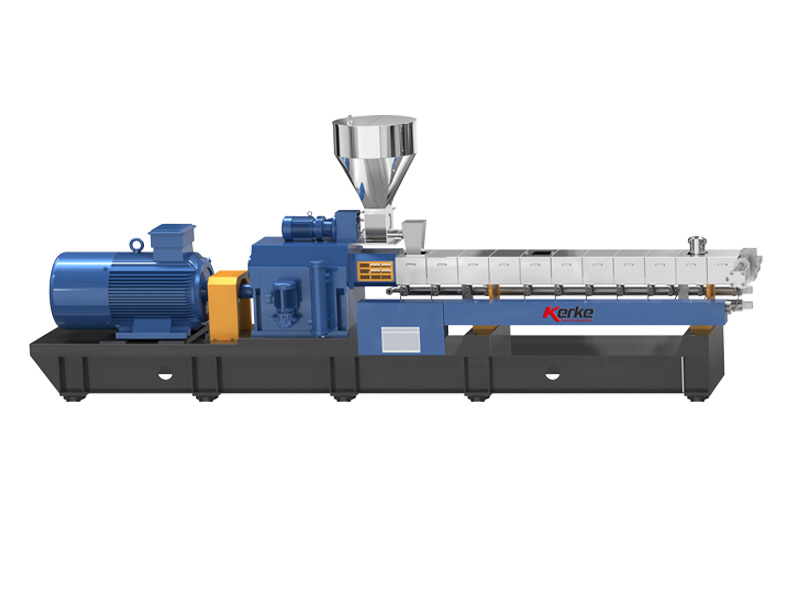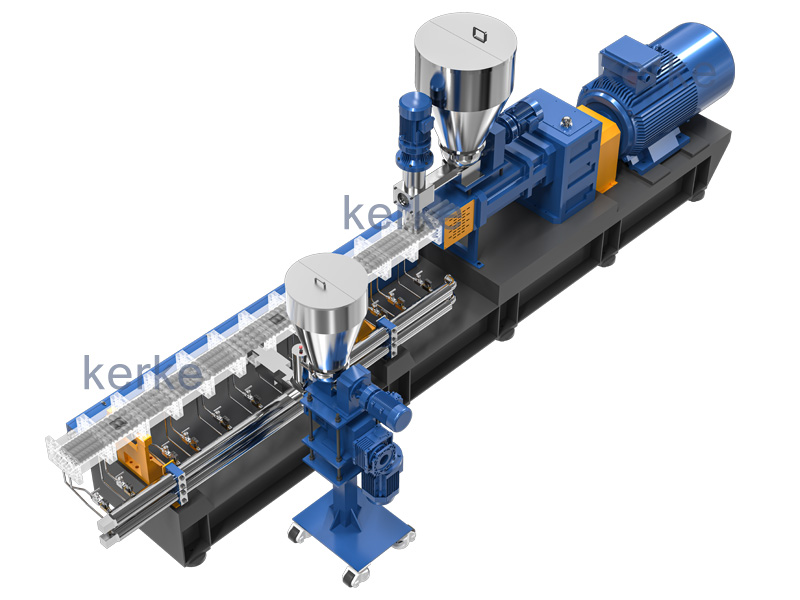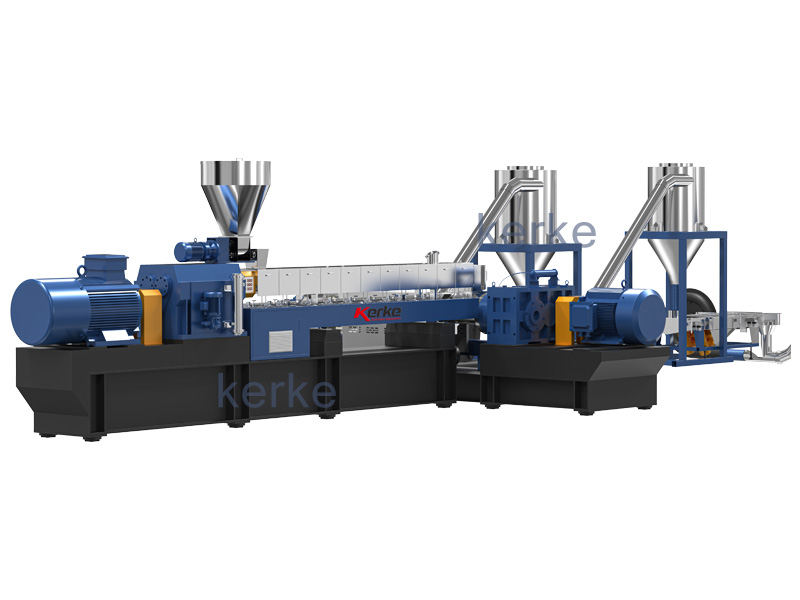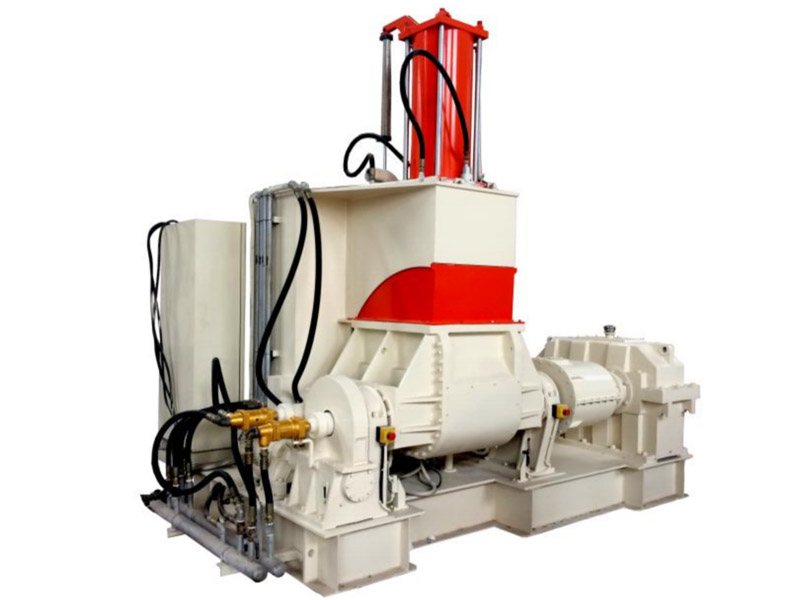
The global masterbatch market is experiencing robust growth, valued at USD 13.2 billion in 2026 and projected to reach USD 18.9 billion by 2031, growing at a compound annual growth rate (CAGR) of 7.4%. This expansion is driven by increasing demand for colored and functional plastics in packaging, automotive, construction, and consumer goods industries. For masterbatch manufacturers, accurately calculating the production capacity of your twin screw extruder is the foundation of effective production planning, inventory management, and business growth. As a leading global manufacturer of high-performance twin screw extruders, Kerke Extruder has developed specialized masterbatch and compounding extruders that deliver industry-leading throughput and consistent product quality. Understanding how to properly calculate and optimize the production capacity of your Kerke masterbatch extruder will help you maximize operational efficiency, reduce costs, and meet growing customer demand.
Masterbatch production requires precise compounding of polymer resins with pigments, additives, and fillers to create uniform, high-quality concentrates. Twin screw extruders have become the industry standard for masterbatch production due to their excellent mixing performance, flexible process control, and high production efficiency. However, many manufacturers struggle to accurately predict the actual production capacity of their extruders, leading to overpromising to customers, underutilization of equipment, or production bottlenecks. The production capacity of a masterbatch extruder is not a fixed number but depends on multiple factors including screw design, material characteristics, process parameters, and operational efficiency. A comprehensive understanding of these factors and their impact on throughput is essential for accurate capacity calculation.
Kerke Extruder has been at the forefront of twin screw extrusion technology for over 18 years, with more than 3,000 extruders installed in over 70 countries worldwide. Our KTE and KTS series co-rotating twin screw extruders are specifically engineered for masterbatch and compounding applications, delivering exceptional mixing performance and reliable operation. All our extruders feature advanced screw design, precision temperature control, and intelligent PLC control systems that ensure consistent product quality and maximum production efficiency. With state-of-the-art manufacturing facilities covering over 25,000 square meters and a team of over 120 experienced engineers and technicians, Kerke Extruder has the expertise and resources to deliver customized extrusion solutions tailored to your specific production requirements.
This comprehensive guide provides a systematic approach to calculating the production capacity of a masterbatch extruder. It explains the key capacity metrics and their definitions, details a step-by-step calculation method with practical examples, examines the critical factors that affect extruder throughput, provides accurate capacity specifications for Kerke’s complete range of masterbatch extruders, includes a detailed cost analysis and return on investment calculation, offers proven strategies to maximize production capacity, and features a real-world success story from a Kerke customer. Whether you are purchasing a new masterbatch extruder, optimizing your existing production line, or planning business expansion, this guide will help you make informed decisions and achieve maximum profitability from your extrusion operation.
1. The Critical Importance of Accurate Production Capacity Calculation
1.1 Global Masterbatch Market Growth and Demand
The masterbatch industry is undergoing significant transformation as manufacturers increasingly demand higher quality, more consistent products with specialized functional properties. Color masterbatch remains the largest segment, accounting for approximately 60% of the total market, while additive masterbatch and white/black masterbatch are growing at faster rates due to increasing applications in automotive and construction industries. The Asia-Pacific region dominates the global masterbatch market, accounting for over 55% of total production, with China being the largest producer and consumer.
This growing market demand has created intense pressure on masterbatch manufacturers to increase production capacity while maintaining high product quality. Manufacturers who can accurately predict and optimize their production capacity are better positioned to meet customer demand, capture market share, and achieve higher profit margins. In contrast, manufacturers who miscalculate their production capacity may face lost sales due to insufficient output or excess inventory and underutilized equipment, which erodes profitability.
1.2 Why Production Capacity Calculation Matters
Accurate production capacity calculation is essential for every aspect of your masterbatch manufacturing business. It forms the basis for production planning and scheduling, ensuring that you can meet customer delivery deadlines without overloading your equipment or workforce. It also helps you determine the optimal number of production lines, staffing requirements, and raw material inventory levels. Without accurate capacity calculations, you may find yourself unable to fulfill large orders or paying for unnecessary overtime and expedited shipping.
Capacity calculation is also critical for financial planning and investment decisions. When considering purchasing a new masterbatch extruder, you need to accurately estimate the production capacity and revenue potential to determine the return on investment. Accurate capacity calculations also help you identify bottlenecks in your production process and prioritize equipment upgrades or process improvements. In addition, it allows you to set realistic production targets and measure the performance of your operation against industry benchmarks.
1.3 Twin Screw Extruders: The Standard for Masterbatch Production
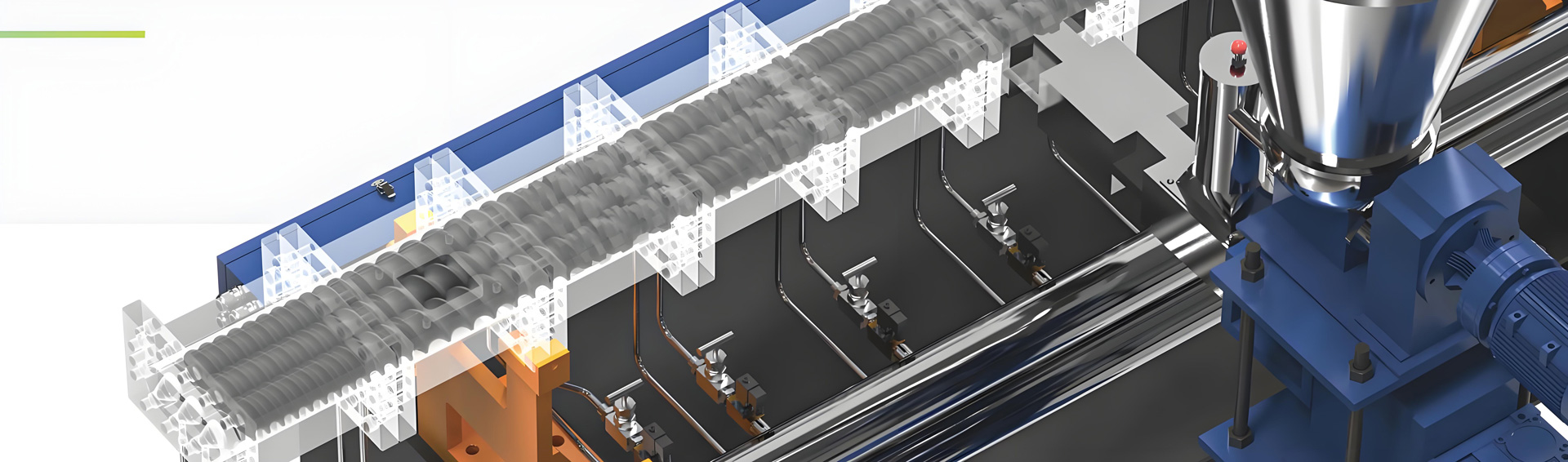
Co-rotating twin screw extruders have become the preferred technology for masterbatch production due to their superior mixing performance, process flexibility, and high production efficiency. Unlike single screw extruders, which rely primarily on shear mixing, twin screw extruders use a combination of shear, distributive, and dispersive mixing to achieve uniform dispersion of pigments and additives throughout the polymer matrix. This results in masterbatch with consistent color strength, excellent dispersion quality, and stable physical properties.
Twin screw extruders also offer greater process flexibility, allowing you to process a wide range of materials and formulations with different viscosities and filler contents. They can handle high loading levels of pigments and additives, up to 80% in some cases, which is essential for producing high-concentration masterbatch. In addition, twin screw extruders feature modular design, allowing you to easily change screw configurations to optimize performance for different products. Kerke’s KTE and KTS series twin screw extruders are specifically designed to meet the demanding requirements of masterbatch production, delivering industry-leading throughput and consistent product quality.
2. Understanding Production Capacity Metrics for Masterbatch Extruders
2.1 Theoretical Production Capacity
Theoretical production capacity, also known as maximum rated capacity, is the maximum amount of product that an extruder can produce under ideal operating conditions. It is calculated based on the geometric parameters of the screw and the maximum screw speed, assuming 100% process efficiency and no downtime. Theoretical capacity represents the upper limit of what the extruder can achieve and is typically specified by the manufacturer in kilograms per hour (kg/h) or tons per day (t/d).
It is important to note that theoretical capacity is rarely achieved in actual production, as it does not account for real-world factors such as material variations, process inefficiencies, and downtime. However, it provides a useful baseline for comparing different extruder models and estimating the maximum potential output of your equipment. Kerke provides accurate theoretical capacity ratings for all our masterbatch extruders based on extensive testing with standard masterbatch formulations.
2.2 Actual Production Capacity
Actual production capacity is the amount of product that an extruder can produce under normal operating conditions, accounting for process inefficiencies and material variations. It is typically 70-90% of the theoretical capacity, depending on the type of masterbatch being produced and the complexity of the formulation. Actual capacity takes into account factors such as material feeding limitations, melt temperature constraints, and product quality requirements that may limit the maximum throughput.
For example, producing high-concentration black masterbatch with 50% carbon black loading may result in lower actual capacity than producing low-concentration color masterbatch with 10% pigment loading, due to the higher viscosity and increased shear heating of the carbon black formulation. Similarly, producing masterbatch with strict dispersion quality requirements may require lower screw speeds or longer residence times, reducing the actual throughput.
2.3 Effective Production Capacity
Effective production capacity is the actual amount of salable product that an extruder can produce over a given period, accounting for all downtime and production losses. It is the most important capacity metric for business planning and financial analysis, as it represents the actual output that generates revenue. Effective capacity is typically 60-80% of the theoretical capacity, depending on the efficiency of your operation and maintenance practices.
Effective capacity accounts for all types of downtime including scheduled downtime for maintenance, cleaning, and product changeovers, as well as unscheduled downtime due to equipment breakdowns, material shortages, and quality issues. It also accounts for production losses due to scrap and rework. Calculating effective capacity requires tracking actual production data over time and analyzing the causes of downtime and production losses.
2.4 Key Performance Indicators (KPIs) for Capacity Evaluation
To accurately evaluate the production capacity and performance of your masterbatch extruder, you should track several key performance indicators (KPIs). These include overall equipment effectiveness (OEE), which measures the percentage of time that the extruder is producing good quality product at maximum speed. OEE is calculated as the product of availability, performance, and quality, with a world-class OEE score of 85% or higher.
Other important KPIs include specific energy consumption (kWh per kg of product), which measures the energy efficiency of your extrusion process, and scrap rate, which measures the percentage of product that does not meet quality standards. Tracking these KPIs over time allows you to identify trends, implement process improvements, and optimize the performance of your extruder to maximize production capacity and profitability.
3. Step-by-Step Production Capacity Calculation Method
3.1 Basic Theoretical Capacity Formula
The theoretical production capacity of a twin screw masterbatch extruder can be calculated using the following basic formula:
Theoretical Capacity (kg/h) = Screw Displacement (cm³/rev) × Screw Speed (rpm) × Melt Density (g/cm³) × 60 ÷ 1000
Screw displacement, also known as volumetric throughput, is the volume of material that is conveyed by the screw per revolution. It depends on the screw diameter, channel depth, and lead length. Melt density is the density of the molten polymer at processing temperature, which is typically 10-15% lower than the solid density of the material. For most polyolefin masterbatches, the melt density is approximately 0.75-0.85 g/cm³.
For example, a Kerke KTE-65 twin screw extruder with a screw displacement of 120 cm³/rev operating at 300 rpm with a melt density of 0.8 g/cm³ would have a theoretical capacity of:
120 cm³/rev × 300 rpm × 0.8 g/cm³ × 60 ÷ 1000 = 1728 kg/h
3.2 Adjusting for Material Density and Bulk Density
While the basic formula provides a good estimate of theoretical capacity, it is important to adjust for the actual density of your specific masterbatch formulation. Different types of masterbatch have different densities depending on the polymer resin and the type and concentration of additives. For example, white masterbatch with high titanium dioxide loading has a higher density than natural polypropylene, while black masterbatch with carbon black has a lower density.
You should also consider the bulk density of the raw material when calculating the feeding capacity of your extruder. The maximum throughput of many masterbatch extruders is limited by the feeding capacity of the loss-in-weight feeder, not the screw displacement. Low bulk density materials such as fluffy polymer powders or light pigments may be difficult to feed at high rates, limiting the actual production capacity. Kerke offers high-performance side feeders and forced feeding systems to improve the feeding of low bulk density materials and maximize throughput.
3.3 Calculating Maximum Screw Throughput
The maximum screw throughput is the highest rate at which the extruder can process material while maintaining acceptable product quality and process stability. It is determined by several factors including the screw design, melt temperature limit, torque capacity, and venting capacity. Exceeding the maximum screw throughput can result in poor mixing quality, excessive melt temperature, vent flow, or equipment damage.
To determine the maximum screw throughput for your specific formulation, you should conduct production trials at increasing feed rates while monitoring process parameters such as melt temperature, torque, and die pressure. You should also test the quality of the masterbatch to ensure that it meets your dispersion and color consistency requirements. The maximum throughput is the highest feed rate at which you can consistently produce good quality product within acceptable process parameters.
3.4 Factoring in Process Efficiency Losses
Once you have determined the maximum screw throughput, you need to factor in process efficiency losses to calculate the actual production capacity. Process efficiency losses occur due to factors such as incomplete filling of the screw channels, material slippage, and variations in material properties. The process efficiency factor typically ranges from 0.7 to 0.9 for most masterbatch applications, with higher values for simple formulations and lower values for complex, high-viscosity formulations.
Actual Production Capacity (kg/h) = Maximum Screw Throughput (kg/h) × Process Efficiency Factor
For example, if the maximum screw throughput for your formulation is 1500 kg/h and the process efficiency factor is 0.8, the actual production capacity would be 1200 kg/h.
3.5 Accounting for Downtime and Availability
To calculate the effective production capacity, you need to account for downtime and equipment availability. Equipment availability is the percentage of scheduled production time that the extruder is actually operating. It is calculated as:
Availability = (Scheduled Production Time – Downtime) ÷ Scheduled Production Time × 100%
Downtime includes both scheduled downtime for maintenance, cleaning, and product changeovers, and unscheduled downtime due to equipment breakdowns and material shortages. The availability of a well-maintained masterbatch extruder typically ranges from 75% to 90%, depending on the number of product changeovers and the complexity of the formulations.
Effective Production Capacity (kg/h) = Actual Production Capacity (kg/h) × Availability
For example, if the actual production capacity is 1200 kg/h and the availability is 85%, the effective production capacity would be 1020 kg/h.
3.6 Practical Calculation Example
To illustrate the complete production capacity calculation process, let’s use a practical example with a Kerke KTE-65 twin screw extruder producing black masterbatch with 40% carbon black loading in LDPE.
Step 1: Calculate theoretical capacity Screw displacement = 120 cm³/rev Maximum screw speed = 350 rpm Melt density = 0.78 g/cm³ Theoretical capacity = 120 × 350 × 0.78 × 60 ÷ 1000 = 1965.6 kg/h
Step 2: Determine maximum screw throughput Through production trials, we find that the maximum throughput for this formulation while maintaining good dispersion quality is 1600 kg/h.
Step 3: Calculate actual production capacity Process efficiency factor = 0.82 Actual production capacity = 1600 × 0.82 = 1312 kg/h
Step 4: Calculate effective production capacity Scheduled production time = 24 hours/day × 300 days/year = 7200 hours/year Total downtime = 1080 hours/year (including 360 hours scheduled and 720 hours unscheduled) Availability = (7200 – 1080) ÷ 7200 × 100% = 85% Effective production capacity = 1312 × 0.85 = 1115.2 kg/h Annual effective production = 1115.2 × 7200 = 8029.44 tons/year
4. Key Factors Affecting Masterbatch Extruder Production Capacity
4.1 Screw Design and Geometric Parameters
Screw design is the single most important factor affecting the production capacity and mixing performance of a masterbatch extruder. The screw diameter, length-to-diameter (L/D) ratio, channel depth, and screw configuration all have a significant impact on throughput and product quality. Larger diameter screws have higher volumetric displacement and can achieve higher throughput rates, while longer L/D ratios provide better mixing and devolatilization performance.
Kerke’s masterbatch extruders feature optimized screw designs specifically for compounding applications, with modular screw elements that can be configured to meet the specific requirements of different formulations. Our high-performance screw elements are manufactured from high-quality alloy steel with specialized surface treatments to provide excellent wear resistance and long service life. We offer a range of screw configurations for different masterbatch types, including color masterbatch, additive masterbatch, and filler masterbatch, to maximize both throughput and mixing quality.
4.2 Material Characteristics and Formulation
The characteristics of the raw materials and the formulation of the masterbatch have a significant impact on production capacity. Factors such as polymer viscosity, filler type and loading level, pigment concentration, and additive package all affect the processing behavior and maximum throughput. High-viscosity polymers require more torque and generate more shear heat, limiting the maximum screw speed and throughput. High filler loading levels increase the viscosity of the melt and can cause excessive wear on the screw and barrel, reducing production capacity over time.
Moisture content and particle size distribution of the raw materials also affect processing performance and throughput. Moisture in the polymer can cause bubbles and voids in the masterbatch, requiring longer residence times or additional venting stages, which reduce throughput. Poorly sized or agglomerated pigments can cause feeding problems and require more intensive mixing, limiting the maximum production rate.
4.3 Process Parameters Optimization
Proper optimization of process parameters is essential for maximizing the production capacity of your masterbatch extruder while maintaining product quality. Key process parameters include screw speed, feed rate, temperature profile, and die pressure. Increasing screw speed and feed rate will increase throughput, but only up to a point where product quality and process stability are maintained.
The temperature profile along the extruder barrel should be optimized to ensure proper melting and mixing of the material while minimizing thermal degradation. Too low temperatures can result in incomplete melting and poor dispersion, while too high temperatures can cause polymer degradation and discoloration. Kerke’s advanced PLC control systems allow for precise temperature control in each heating zone, ensuring optimal processing conditions and consistent product quality.
4.4 Auxiliary Equipment Performance
The performance of auxiliary equipment such as feeders, pelletizers, and cooling systems can significantly affect the overall production capacity of your masterbatch line. A loss-in-weight feeder with insufficient feeding capacity or accuracy will limit the maximum throughput of the extruder. Similarly, a pelletizer that cannot keep up with the extruder output will create a bottleneck in the production line.
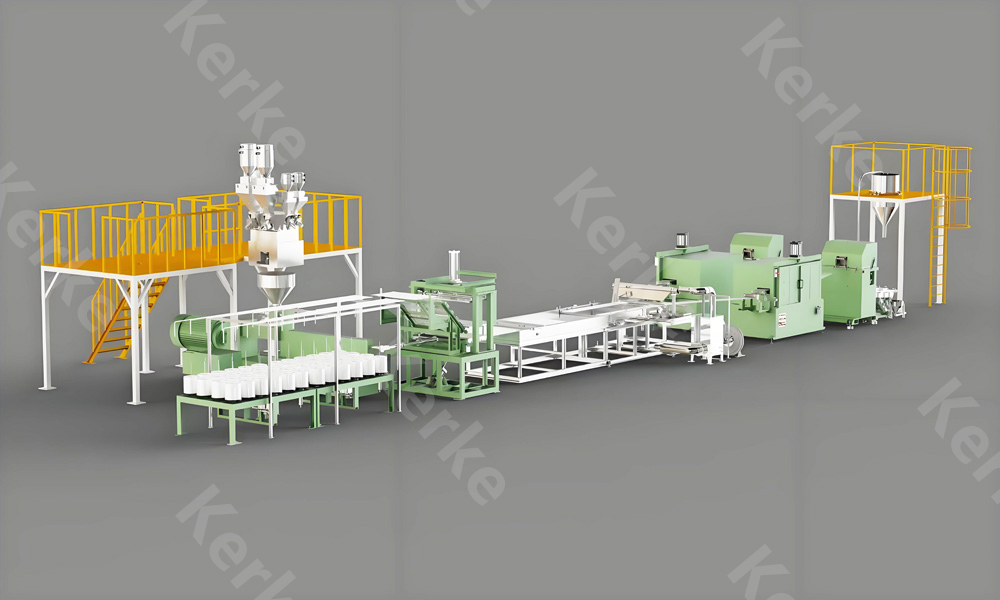
Kerke offers complete turnkey masterbatch production lines with matched auxiliary equipment to ensure that all components work together seamlessly to maximize throughput. Our high-precision loss-in-weight feeders provide accurate and consistent feeding of raw materials, while our high-speed pelletizers produce uniform pellets with minimal fines. We also offer advanced cooling and drying systems to ensure that the pellets are properly cooled and dried before packaging, preventing agglomeration and ensuring high product quality.
4.5 Operational and Maintenance Practices
Operational and maintenance practices have a significant impact on the long-term production capacity and reliability of your masterbatch extruder. Poor maintenance practices can lead to increased downtime, reduced equipment performance, and premature wear of critical components. Regular preventive maintenance, including lubrication, inspection, and replacement of worn parts, is essential for maintaining optimal extruder performance and maximizing production capacity.
Operator training is also critical for achieving maximum production capacity. Well-trained operators can optimize process parameters, identify and resolve issues quickly, and perform routine maintenance tasks, reducing downtime and improving overall efficiency. Kerke provides comprehensive training programs for operators and maintenance personnel to ensure that your team has the knowledge and skills to operate and maintain your extruder at peak performance.
5. Kerke Complete Range of Masterbatch Extruders and Their Capacity Specifications
Kerke Extruder offers a comprehensive range of co-rotating twin screw extruders specifically designed for masterbatch and compounding applications. Our product range includes lab-scale extruders for research and development, small-scale production extruders for pilot plants, and large-scale high-capacity extruders for industrial production. All our extruders are built to the highest quality standards using premium components, ensuring reliable performance and long service life.
5.1 KTE Series Lab and Small-Scale Masterbatch Extruders
The KTE series lab and small-scale extruders are ideal for research and development, formulation testing, and small-batch production. These compact extruders deliver the same high mixing performance as our larger production models, allowing you to scale up your formulations seamlessly to industrial production.
KTE-20 Lab Twin Screw Extruder The KTE-20 is our smallest lab extruder, with a screw diameter of 20mm and an L/D ratio of 40:1. It has a production capacity of 5-15 kg/h, making it perfect for formulation development and small sample production. Price and Cost Analysis The price of the Kerke KTE-20 lab extruder ranges from $25,000 to $40,000 FOB Shanghai, depending on configuration. The typical payback period for a lab extruder is 12-18 months through reduced product development costs and faster time to market.
KTE-35 Small-Scale Production Extruder The KTE-35 is a versatile small-scale production extruder with a screw diameter of 35mm and an L/D ratio of 44:1. It has a production capacity of 30-80 kg/h, making it ideal for pilot plants and small-batch production of specialty masterbatches. Price and Cost Analysis The price of the Kerke KTE-35 extruder ranges from $45,000 to $70,000 FOB Shanghai. The typical payback period is 8-12 months for small-scale masterbatch production.
5.2 KTE Series Medium-Scale Production Extruders
The KTE series medium-scale production extruders are the most popular choice for masterbatch manufacturers, offering an excellent balance of production capacity, flexibility, and cost-effectiveness. These extruders are suitable for producing a wide range of masterbatch types and formulations.
KTE-50 Medium-Scale Extruder The KTE-50 has a screw diameter of 50mm and an L/D ratio of 48:1. It has a production capacity of 100-250 kg/h, making it ideal for medium-sized masterbatch manufacturers producing multiple product lines. Price and Cost Analysis The price of the Kerke KTE-50 extruder ranges from $80,000 to $120,000 FOB Shanghai. The typical payback period is 6-9 months for medium-scale masterbatch production.
KTE-65 High-Performance Extruder The KTE-65 is our best-selling masterbatch extruder, with a screw diameter of 65mm and an L/D ratio of 52:1. It has a production capacity of 200-500 kg/h, making it suitable for high-volume production of color and additive masterbatches. Price and Cost Analysis The price of the Kerke KTE-65 extruder ranges from $130,000 to $190,000 FOB Shanghai. The typical payback period is 5-8 months for high-volume masterbatch production.
5.3 KTE Series Large-Scale High-Capacity Extruders
The KTE series large-scale high-capacity extruders are designed for industrial-scale masterbatch production, delivering maximum throughput and efficiency for high-volume manufacturers. These extruders feature heavy-duty construction and advanced technology to ensure reliable 24/7 operation.
KTE-75 Large-Scale Extruder The KTE-75 has a screw diameter of 75mm and an L/D ratio of 52:1. It has a production capacity of 300-800 kg/h, making it ideal for large manufacturers producing high-volume commodity masterbatches. Price and Cost Analysis The price of the Kerke KTE-75 extruder ranges from $200,000 to $280,000 FOB Shanghai. The typical payback period is 4-7 months for high-volume production.
KTE-95 High-Capacity Extruder The KTE-95 is our largest production extruder, with a screw diameter of 95mm and an L/D ratio of 56:1. It has a production capacity of 500-1500 kg/h, making it suitable for the largest masterbatch manufacturers producing tens of thousands of tons annually. Price and Cost Analysis The price of the Kerke KTE-95 extruder ranges from $300,000 to $450,000 FOB Shanghai. The typical payback period is 3-6 months for ultra-high-volume production.
5.4 KTS Series Co-Rotating Twin Screw Compounding Extruders
In addition to our standard KTE series, Kerke also offers the KTS series high-torque co-rotating twin screw compounding extruders for demanding compounding applications. These extruders feature higher torque capacity and higher screw speeds, delivering up to 30% higher throughput than standard models for the same screw diameter.
The KTS series is ideal for producing high-viscosity masterbatches, filled compounds, and engineering plastic compounds. They feature advanced gearbox technology, optimized screw design, and enhanced cooling systems to handle the increased torque and heat generation of high-throughput compounding. The KTS series is available in sizes from 35mm to 135mm, with production capacities ranging from 50 kg/h to 3000 kg/h.
6. Detailed Cost Analysis and Return on Investment Calculation
6.1 Initial Investment Breakdown
To help you understand the financial aspects of investing in a Kerke masterbatch extruder, we will provide a detailed cost analysis for a typical medium-sized production line based on the KTE-65 model, which is our most popular configuration for masterbatch production.
Kerke KTE-65 masterbatch extruder with standard configuration: $160,000 Loss-in-weight feeding system (3 feeders): $25,000 High-speed strand pelletizer: $18,000 Cooling and drying system: $12,000 Control system and automation: $15,000 Professional installation and commissioning: $16,000 (10% of equipment cost) Comprehensive training program: $8,000 (5% of equipment cost) Shipping and customs to Europe: $22,000 Site preparation and utility connections: $12,000 Initial spare parts package: $6,000 Contingency fund (10%): $27,600 Total Initial Investment: $321,600
While this initial investment may seem significant, the high profit margins in masterbatch production and the high production efficiency of Kerke extruders result in a very fast return on investment. The advanced technology and robust construction of our equipment also ensure long service life and low maintenance costs, providing excellent return on investment over the entire 15-20 year life of the extruder.
6.2 Annual Operating Cost Projection
To demonstrate the financial performance of a Kerke KTE-65 masterbatch extruder, we will calculate the annual operating costs based on 24 hours of production per day, 300 days per year, producing black masterbatch with 40% carbon black loading.
Raw material cost: $12,960,000 per year ($1.80 per kg) Energy costs: $345,600 per year ($0.12 per kWh) Labor costs (4 operators): $144,000 per year Maintenance and repair costs: $32,000 per year Detergent and cleaning supplies: $12,000 per year Overhead costs: $96,000 per year Total Annual Operating Costs: $13,589,600 per year
6.3 Revenue Calculation Based on Production Capacity
Using the effective production capacity calculation from section 3.6, the KTE-65 extruder produces approximately 8029 tons of masterbatch annually. The average selling price for black masterbatch with 40% carbon black loading is approximately $2.20 per kg.
Annual Revenue: 8,029,440 kg × $2.20/kg = $17,664,768 per year
Annual Gross Profit: $17,664,768 – $13,589,600 = $4,075,168 per year
6.4 ROI and Payback Period Analysis
Based on the detailed cost analysis above, the return on investment for the Kerke KTE-65 masterbatch extruder is calculated as follows:
Total Initial Investment: $321,600 Annual Gross Profit: $4,075,168 Payback Period: $321,600 ÷ $4,075,168 = 0.079 years = 0.95 months
This exceptionally short payback period demonstrates that investing in a high-quality Kerke masterbatch extruder is one of the most profitable investments available in the plastics industry today. Even with conservative assumptions about raw material costs and selling prices, the investment is typically recovered in less than 2 months. Over the 15-year service life of the equipment, the total profit generated can exceed $60 million.
6.5 Sensitivity Analysis for Market Fluctuations
To account for potential market fluctuations in raw material costs and masterbatch selling prices, we have conducted a sensitivity analysis to show how these factors affect the payback period.
If raw material costs increase by 10% and selling prices remain the same: Payback period = 1.2 months If selling prices decrease by 10% and raw material costs remain the same: Payback period = 1.1 months If both raw material costs increase by 10% and selling prices decrease by 10%: Payback period = 1.5 months
This sensitivity analysis shows that the investment in a Kerke masterbatch extruder remains highly profitable even under adverse market conditions. The high production efficiency and low operating costs of our extruders provide a significant competitive advantage and protect your profitability during market fluctuations.
7. Proven Strategies to Maximize Masterbatch Extruder Production Capacity
7.1 Screw Design Optimization for Specific Formulations
Optimizing the screw design for your specific masterbatch formulations is one of the most effective ways to increase production capacity while maintaining product quality. Different types of masterbatch require different screw configurations to achieve the optimal balance between mixing performance and throughput. Kerke’s experienced engineering team can help you design a custom screw configuration that maximizes throughput for your specific products.
For example, producing color masterbatch requires good distributive mixing to ensure uniform color distribution, while producing filler masterbatch requires high dispersive mixing to break up agglomerates. By selecting the appropriate screw elements and arranging them in the optimal configuration, you can increase throughput by 10-20% while maintaining or improving product quality.
7.2 Advanced Process Control and Automation
Implementing advanced process control and automation systems can significantly improve the production capacity and consistency of your masterbatch extruder. Kerke’s advanced PLC control systems feature real-time process monitoring, automatic parameter adjustment, and data logging capabilities that allow you to optimize process parameters and reduce human error.
Our control systems can automatically adjust feed rates, screw speeds, and temperature profiles to maintain consistent product quality even when raw material properties vary. This allows you to run the extruder at higher average throughput rates without risking quality issues. We also offer remote monitoring and control capabilities that allow you to monitor and adjust your production line from anywhere in the world, improving operational efficiency and reducing downtime.
7.3 Preventive Maintenance Program Implementation
Implementing a comprehensive preventive maintenance program is essential for maximizing the production capacity and reliability of your masterbatch extruder. Regular maintenance helps prevent unexpected breakdowns, reduces downtime, and extends the service life of your equipment. Kerke provides detailed maintenance schedules and recommended spare parts lists for all our extruders to help you implement an effective preventive maintenance program.
Key maintenance tasks include regular inspection and lubrication of bearings and gearboxes, replacement of worn screw elements and barrel liners, cleaning of filters and screens, and calibration of temperature and pressure sensors. By performing these tasks on a regular schedule, you can maintain your extruder at peak performance and ensure maximum production capacity.
7.4 Raw Material Quality Control
Maintaining consistent raw material quality is essential for maximizing production capacity and product quality. Variations in raw material properties such as melt flow index, moisture content, and particle size distribution can cause process instability, reduce throughput, and increase scrap rates. Implementing a rigorous raw material quality control program will help you identify and reject substandard materials before they enter your production process.
You should test all incoming raw materials for key properties such as moisture content, bulk density, and melt flow index. You should also work closely with your suppliers to ensure consistent quality and delivery. Kerke’s technical team can provide guidance on raw material selection and quality control to help you optimize your production process and maximize throughput.
7.5 Operator Training and Skill Development
Well-trained operators are essential for achieving maximum production capacity and efficiency from your masterbatch extruder. Operators who understand the extrusion process and know how to optimize process parameters can significantly increase throughput and reduce downtime and scrap rates. Kerke provides comprehensive training programs for operators and maintenance personnel to ensure that your team has the knowledge and skills to operate your extruder at peak performance.
Our training programs include both theoretical classroom training and practical hands-on training on the actual equipment. We cover all aspects of extruder operation, including startup and shutdown procedures, process parameter optimization, quality control, and troubleshooting. We also offer ongoing training and refresher courses to ensure that your team remains up to date with the latest technology and best practices.
8. Real-World Success Story: Kerke Extruder Capacity Optimization
8.1 Customer Background and Challenge
A leading color masterbatch manufacturer in Turkey was operating three older twin screw extruders to produce a wide range of color and additive masterbatches for the packaging and automotive industries. The company was experiencing rapid growth in demand but was unable to increase production capacity due to the limitations of their existing equipment. Their older extruders had low throughput rates, high energy consumption, and frequent breakdowns, resulting in high operating costs and missed delivery deadlines.
The company was looking to replace their older extruders with new high-performance equipment that could increase production capacity, improve product quality, and reduce operating costs. They required a flexible solution that could handle a wide range of formulations and product types, from low-concentration color masterbatch to high-concentration additive masterbatch.
8.2 Kerke Customized Solution
After extensive research and evaluation, the company selected Kerke Extruder as their equipment supplier based on our advanced technology, competitive pricing, and excellent reputation. Kerke provided a customized solution based on two KTE-65 twin screw extruders with optimized screw designs for color and additive masterbatch production. The extruders were equipped with high-precision loss-in-weight feeders, advanced process control systems, and high-speed pelletizers to maximize throughput and product quality.
Kerke’s engineering team worked closely with the customer to optimize the screw configurations for their specific formulations. We also provided comprehensive training for the customer’s operators and maintenance personnel to ensure that they could operate the new equipment at peak performance. The installation and commissioning process was completed in just 20 days, minimizing downtime and allowing the customer to start production quickly.
8.3 Production Capacity Improvement Results
After implementing the Kerke solution, the customer achieved significant improvements in production capacity and operational efficiency:
Total production capacity increased by 120% compared to their old extruders Specific energy consumption reduced by 35% Scrap rate reduced from 4.5% to 0.8% Product consistency improved significantly, with color variation reduced by 80% Downtime reduced by 60% due to improved equipment reliability
The two Kerke KTE-65 extruders now produce more output than the three older extruders they replaced, while using less energy and requiring fewer operators. The customer was able to meet their growing customer demand without having to build additional production space or hire additional staff.
8.4 Financial Benefits and ROI Achievement
The improved production capacity and efficiency resulted in significant financial benefits for the customer:
Annual revenue increased by $8.5 million Annual operating costs reduced by $1.2 million Annual gross profit increased by $4.8 million Payback period for the entire investment was 0.8 months
The customer was extremely satisfied with the performance of the Kerke extruders and the quality of our support services. They have since purchased two additional KTE-75 extruders to further expand their production capacity and have standardized on Kerke equipment for all their future extrusion needs.
9. Conclusion
Accurately calculating the production capacity of your masterbatch extruder is essential for effective production planning, financial management, and business growth. By understanding the key capacity metrics, following a systematic calculation method, and considering the factors that affect throughput, you can accurately predict the output of your extruder and optimize your production process to maximize efficiency and profitability.
Kerke Extruder offers a comprehensive range of high-performance twin screw extruders specifically designed for masterbatch and compounding applications. Our KTE and KTS series extruders deliver industry-leading throughput, excellent mixing performance, and reliable operation, ensuring that you can meet growing customer demand while maintaining high product quality. With accurate capacity specifications, transparent pricing, and exceptional after-sales support, Kerke is your trusted partner for all your masterbatch extrusion needs.
The financial benefits of investing in a Kerke masterbatch extruder are exceptional, with payback periods typically less than 2 months and total profits over the equipment life exceeding tens of millions of dollars. Our comprehensive turnkey solutions include professional installation, comprehensive training, and ongoing after-sales support to ensure that your extruder operates at peak performance throughout its service life.
Whether you are establishing a new masterbatch production facility, expanding your existing operations, or upgrading your outdated equipment, Kerke Extruder has the expertise, technology, and commitment to customer success to help you achieve your business goals. With over 18 years of industry experience, state-of-the-art manufacturing facilities, and a global network of service centers, Kerke is the leading choice for masterbatch manufacturers worldwide. Contact us today to learn more about how our high-performance twin screw extruders can help you increase production capacity, improve product quality, and maximize profitability.