1. Introduction to Calcium Carbonate Filler Masterbatch
1.1 Basic Definition and Core Industrial Value
Calcium carbonate filler masterbatch is a high-volume, cost-effective functional modified plastic material widely adopted in the global polymer processing industry. It is composed of high-purity calcium carbonate inorganic powder, polyolefin carrier resin, coupling agents, dispersants, and lubricants, processed through precise melt compounding and extrusion granulation via professional twin screw extruder, compounding extruder, and masterbatch extruder equipment. As one of the most mature and highest-yield filler masterbatch products, it serves as an essential inorganic filling material for plastic modification, effectively reducing raw material costs while optimizing the physical processing properties of finished plastic products.
Unlike traditional pure resin plastic products, calcium carbonate filler masterbatch incorporates high-content environmentally friendly inorganic fillers, which can replace 10% to 50% of pure plastic resin in downstream production. This substitution significantly reduces reliance on petroleum-based plastic raw materials, lowers overall production costs for plastic manufacturers, and improves product dimensional stability, heat resistance, and surface hardness. With non-toxic, odorless, environmentally friendly, and weather-resistant characteristics, it complies with global plastic environmental protection standards and is widely used in packaging plastics, daily plastic products, engineering plastics, and textile plastic fields.
1.2 Industry Development Background and Market Demand Status
The global plastic processing industry is facing dual pressures of rising raw material prices and stricter environmental protection regulations. Pure resin plastic products have high production costs and poor structural stability, which can no longer meet the large-scale and low-cost production needs of civilian industrial plastics. Calcium carbonate filler masterbatch has become the most mainstream modified filling material in the industry due to its low raw material cost, stable performance, and wide compatibility with various plastic resins.
In the masterbatch manufacturing sector, the production quality and batch stability of calcium carbonate filler masterbatch are entirely dependent on advanced compounding extrusion technology and high-precision masterbatch extruder equipment. Traditional single-screw extrusion equipment has insufficient shearing and dispersion capacity, leading to uneven powder dispersion, poor product fluidity, and low filling ratio, which restricts product application effects. Modern high-efficiency twin screw extruder and compounding extruder equipment solve the core pain points of traditional production, realizing high-filling, high-uniformity, and high-stability mass production of calcium carbonate filler masterbatch, and promoting the standardized and large-scale development of the industry.
1.3 Core Application Advantages in Plastic Processing
Calcium carbonate filler masterbatch brings multi-dimensional production and performance advantages to downstream plastic processing enterprises. First, it achieves significant cost reduction. The unit price of calcium carbonate powder is far lower than that of polypropylene, polyethylene, and other plastic resins. After high-proportion filling, the comprehensive raw material cost of plastic products can be reduced by 15% to 40%, creating substantial profit margins for manufacturers.
Second, it optimizes product physical properties. Reasonable calcium carbonate filling can effectively improve the rigidity, hardness, and wear resistance of plastic products, reduce product shrinkage and deformation, and enhance dimensional stability during high-temperature processing and long-term use. Third, it improves processing adaptability. Modified calcium carbonate filler masterbatch has excellent melt fluidity, which can adapt to high-speed injection molding, blow molding, film blowing, and extrusion production lines, improving overall production efficiency.
Fourth, it realizes green environmental production. Calcium carbonate is a natural inorganic mineral with no toxic and harmful components. The masterbatch does not produce volatile pollutants during processing and use, and can accelerate the degradation speed of disposable plastic products to a certain extent, meeting the global low-carbon and environmentally friendly industrial development trend. All these advantages are based on high-precision compounding processing realized by professional compounding extruder equipment.
2. Classification and Core Physical & Chemical Properties
2.1 Product Classification by Raw Material and Filling Ratio
According to different calcium carbonate raw material types, carrier resin types, and filling ratios, calcium carbonate filler masterbatch can be divided into multiple mainstream categories, each with matched production processes and twin screw extruder parameter settings, covering all mainstream market application scenarios.
Heavy calcium carbonate filler masterbatch takes high-purity ground calcium carbonate as the core filler, with low raw material cost and wide application range. The conventional filling ratio is 70% to 85%, suitable for low and medium-end plastic products such as plastic woven bags, packaging films, and ordinary injection molding parts. This product has low processing difficulty and can be stably produced by standard twin screw compounding extruder equipment, with a 2026 market unit price of $1.9-$2.4 per kilogram.
Light calcium carbonate filler masterbatch uses precipitated light calcium carbonate powder with finer particle size and higher activity. It has better dispersion and reinforcement effects than heavy calcium masterbatch, with a filling ratio of 65% to 80%. It is mainly used for high-demand plastic films, thin-walled injection molded parts, and transparent modified plastic products. The production process requires high-precision masterbatch extruder to ensure ultra-fine powder dispersion, with a market unit price of $2.3-$2.8 per kilogram.
Nano-calcium carbonate reinforced filler masterbatch adopts nano-scale modified calcium carbonate powder. After special surface activation treatment, it has excellent compatibility with plastic resins, which can not only fill and reduce costs but also significantly improve the toughness and tensile strength of plastic products. It is used for high-end engineering plastics and high-strength packaging materials, with a market unit price of $3.2-$3.8 per kilogram and a profit margin more than 35% higher than ordinary products.
2.2 Key Physical and Chemical Performance Indicators
Qualified industrial-grade calcium carbonate filler masterbatch has standardized and controllable core indicators, which are the key criteria for judging product quality and application adaptability. In terms of filling performance, the effective calcium carbonate content of conventional products is stably controlled above 70%, with low impurity content and high filling purity, avoiding quality defects such as black spots and impurities in downstream plastic products.
In terms of processing performance, high-quality masterbatch processed by professional compounding extruder has excellent melt fluidity, with a melt flow rate of 8-25g/10min, adapting to various high-speed plastic molding processes. The moisture content is strictly controlled below 0.03%, eliminating bubble defects in finished plastic products caused by excessive moisture during high-temperature melting.
In terms of physical modification performance, the masterbatch has good compatibility with PE, PP, PVC, and other common resins. After filling, the tensile strength, bending rigidity, and heat distortion temperature of plastic products are significantly improved, while the shrinkage rate is reduced by 20% to 30%. In terms of weather resistance, the product has excellent anti-aging and anti-yellowing performance, which can maintain stable physical properties in long-term outdoor and high-temperature use environments.
2.3 Performance Differences Between Qualified and Inferior Products
Inferior calcium carbonate filler masterbatch is mostly produced by ordinary low-precision extrusion equipment, with prominent quality defects. Its powder dispersion is uneven, resulting in poor melt fluidity, easy clogging of downstream production equipment, and low production efficiency. The unstable filling ratio leads to inconsistent hardness and shrinkage of finished plastic products, with high defective rates.
In addition, inferior products have high moisture and impurity content, which are prone to bubble generation, surface yellowing, and brittle cracking during plastic processing, seriously affecting product service life. In contrast, masterbatch produced by high-performance twin screw extruder has uniform powder dispersion, stable filling ratio, low moisture and impurity content, and consistent batch performance, which can effectively reduce downstream production risks and comprehensive defect costs.
3. Scientific Formula Composition and Functional Mechanism
3.1 Core Filler: Calcium Carbonate Powder Selection Standard
Calcium carbonate powder is the core functional component of filler masterbatch, accounting for 65% to 85% of the total formula, and its particle size, purity, and surface activity directly determine the final performance of the masterbatch. Industrial production prioritizes high-purity limestone ground heavy calcium carbonate and precipitated light calcium carbonate. Heavy calcium carbonate has high density, low cost, and good filling stability, suitable for large-scale cost reduction filling. Light calcium carbonate has fine particle size and uniform distribution, with better modification and dispersion effects.
The particle size of calcium carbonate powder is strictly selected according to product positioning. Conventional civilian products adopt 800-1250 mesh powder, balancing cost and dispersion performance. High-end fine products adopt 2000-5000 mesh ultra-fine powder to ensure the smooth surface and high transparency of finished plastic products. Nano-grade products require strictly controlled nano-scale particle size and surface activation treatment to avoid powder agglomeration. All powder materials need to be screened and purified before production to remove large particles and mechanical impurities, laying a foundation for high-precision compounding of twin screw extruder equipment.
3.2 Carrier Resin Matching Principle
Carrier resin is the matrix of calcium carbonate filler masterbatch, responsible for wrapping inorganic powder and connecting downstream plastic base materials. The selection principle is high compatibility with downstream plastic products and good powder wrapping performance. For PE and PP plastic products, low-density polyethylene and polypropylene resin with good fluidity are selected as carriers; for PVC products, special PVC carrier resin is matched.
The carrier resin accounts for 10% to 25% of the formula proportion. Excessively high carrier resin content will reduce the filling ratio and increase production costs; excessively low content will lead to incomplete powder wrapping, poor masterbatch fluidity, and easy powder precipitation during downstream processing. Professional manufacturers adjust carrier resin types and proportions according to different application scenarios, and cooperate with compounding extruder process parameters to realize the best matching of filling performance and processing performance.
3.3 Functional Additives and Their Action Mechanism
Functional additives are key auxiliary components to solve the incompatibility between inorganic calcium carbonate powder and organic resin, accounting for 3% to 8% of the total formula, and their dispersion uniformity depends entirely on the high-shear performance of masterbatch extruder equipment. Coupling agents are the most critical additives, which can convert the hydrophilic surface of calcium carbonate powder into lipophilic surface, improve the interface bonding force between powder and resin, avoid powder agglomeration and precipitation, and significantly improve the mechanical properties of filled plastic products.
Dispersants and lubricants can reduce the friction between powder particles and between powder and screw barrel, improve melt fluidity, avoid material sticking and carbonization during extrusion processing, and ensure smooth granulation molding. Antioxidants and heat stabilizers inhibit thermal oxidation decomposition of resin and additives during high-temperature extrusion and downstream processing, preventing masterbatch yellowing and performance attenuation and extending the service life of finished plastic products.
3.4 Formula Proportion Optimization and Cost Balance Design
Scientific formula design needs to balance three core dimensions: filling ratio, processing performance, and comprehensive production cost. Under the premise of ensuring product fluidity and dispersion stability, maximize the proportion of low-cost calcium carbonate powder to reduce raw material costs. For general-purpose low-end products, appropriately increase the powder filling ratio and reduce the proportion of high-cost additives to maximize cost advantages.
For high-end modified products, appropriately reduce the powder filling ratio, increase the proportion of high-efficiency coupling agents and dispersants, prioritize product dispersion and modification effects, and improve product added value. The precise matching of formula proportion and the high-precision compounding technology of twin screw extruder is the core to produce high-cost-performance calcium carbonate filler masterbatch.
4. Standard Full Production Process of Calcium Carbonate Filler Masterbatch
4.1 Raw Material Pretreatment and Purification Process
Raw material pretreatment is the primary link to ensure zero defects in finished masterbatch products. Calcium carbonate powder is prone to moisture absorption and agglomeration during storage and transportation. Before production, the powder must be dried at a constant temperature of 70℃ to 90℃ to control the moisture content below 0.03%, and then screened by a high-precision vibrating screen to remove agglomerated particles and mechanical impurities.
Carrier resin particles need to be sorted to remove deteriorated and impure particles, and functional additives are quantitatively screened and classified to ensure accurate formula proportion. For nano-calcium carbonate raw materials, special ultrasonic dispersion pretreatment is required to break powder agglomerations, which is conducive to subsequent uniform compounding and dispersion by twin screw extruder equipment.
4.2 Automatic Batching and High-Speed Mixing Pre-Dispersion
Pretreated calcium carbonate powder, carrier resin, and functional additives are accurately batched through an intelligent automatic batching system to ensure strict compliance with formula proportion standards. The batched raw materials are sent to a high-speed mixer for integrated stirring and pre-dispersion. Through high-speed friction heating, the material temperature is raised to 80℃ to 100℃, so that liquid coupling agents and powdery dispersants are fully adsorbed on the powder and resin surface, realizing preliminary uniform mixing of raw materials.
The high-speed mixing time is controlled at 10 to 18 minutes to eliminate large-area material agglomeration. This pre-dispersion process greatly reduces the shearing pressure of subsequent extrusion equipment, improves the uniformity of finished product dispersion, and stabilizes batch product consistency, which is an indispensable process for high-quality masterbatch production.
4.3 Twin Screw Extrusion Compounding (Core Production Process)
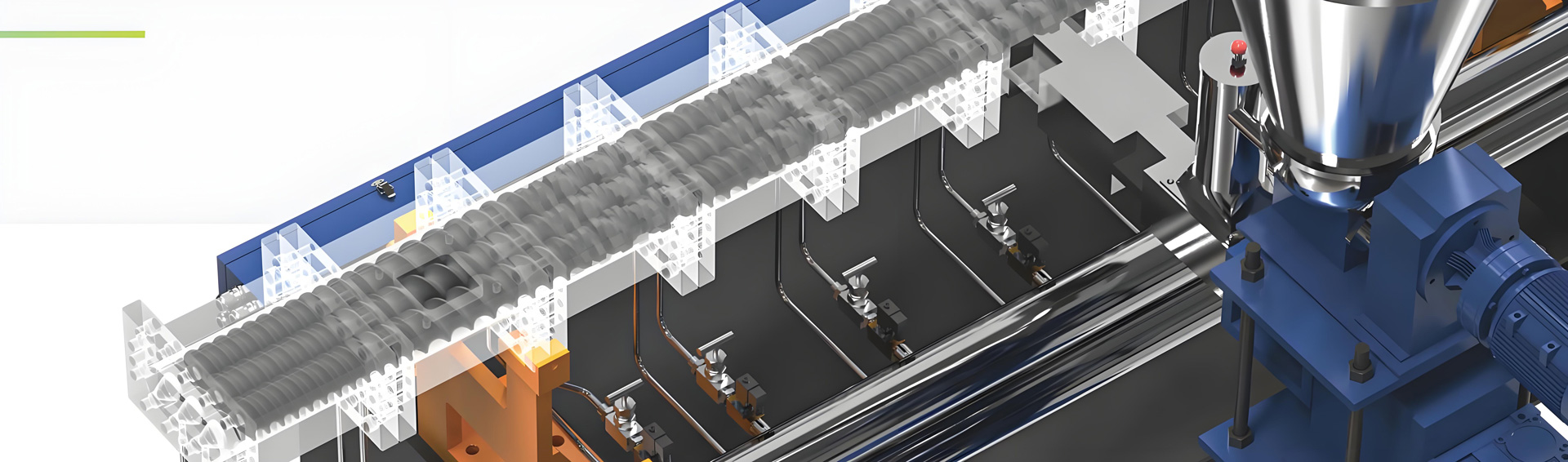
Twin screw extrusion compounding is the most critical link determining the quality of calcium carbonate filler masterbatch, and professional twin screw extruder and compounding extruder equipment are the core guarantees of this process. The pre-mixed raw materials are quantitatively and stably fed into the extruder barrel through a precise gravimetric feeding system, completing four core processes of segmented plasticization, high-shear dispersion, melt homogenization, and vacuum devolatilization.
Professional compounding extruder adopts independent segmented precise temperature control, setting targeted temperature gradients for feeding section, plasticization section, shearing section, and homogenization section. The feeding section maintains low temperature to avoid material blockage; the plasticization section gradually heats up to realize full melting and wrapping of resin on calcium carbonate powder; the shearing section adopts optimized screw elements to generate uniform high shear force to break micro powder agglomerations and realize molecular-level uniform dispersion of inorganic powder in organic resin;
The homogenization section stabilizes melt temperature and viscosity to ensure consistent melt state. Equipped with a high-efficiency vacuum devolatilization system, the equipment can completely discharge trace moisture and volatile impurities in the melt, eliminating bubble defects in finished products. The modular screw structure can be adjusted according to different formula filling ratios and powder fineness, adapting to the production of general-purpose, high-filling, and nano-reinforced calcium carbonate filler masterbatch.
4.4 Melt Filtration and Intelligent Granulation Molding
The uniformly compounded melt extruded by the twin screw extruder passes through multi-stage high-precision filter screens to filter out undispersed powder agglomerations and tiny mechanical impurities, ensuring melt purity and smoothness. The filtered high-quality melt is extruded through the die plate into uniform material strips, which enter the circulating water cooling system for rapid cooling and shaping to maintain flat and uniform material strip morphology.
According to different production scales and product grades, two mature granulation processes are adopted. Large-scale mass production of general-purpose products adopts water-cooled strand granulation, with low equipment operating cost and stable efficiency. High-end high-filling and nano-modified products adopt underwater granulation, with smooth particle surface, uniform particle size, no burrs and hollow particles, and better product fluidity. The intelligent granulator strictly controls particle size uniformity to ensure consistent appearance and performance of finished masterbatch particles.
4.5 Post-Processing and Finished Product Precision Inspection
Initially granulated masterbatch particles contain surface moisture and fine powder generated during granulation, requiring standardized post-processing. Constant temperature drying equipment is used to remove surface residual moisture, and an intelligent screening machine screens fine powder, oversized particles, and unqualified particles to ensure uniform particle size and dry surface of finished products.
After post-processing, finished products need comprehensive sampling and performance inspection, including filling ratio detection, melt fluidity test, moisture content test, dispersion uniformity test, and impurity detection. Products that meet all industrial standards are packaged and stored in a constant temperature and dry warehouse to avoid moisture absorption and agglomeration, ensuring stable quality during storage and transportation.
5. Common Production Defects, Causes and Optimization Solutions
5.1 Uneven Powder Dispersion and Product Precipitation
Uneven calcium carbonate powder dispersion is the most common quality defect in masterbatch production, manifested as local powder agglomeration in finished products, uneven melt fluidity, and powder precipitation and layering during downstream plastic processing, resulting in rough surface and inconsistent hardness of finished plastic products. The core causes are insufficient shearing capacity of ordinary extrusion equipment, unreasonable screw element layout, and incomplete pre-dispersion of raw materials.
The fundamental optimization solution is to adopt high-performance professional twin screw compounding extruder. The equipment adopts graded shearing and layered homogenization screw structure, which can generate continuous and uniform high shear force, completely break micro powder agglomerations, and realize full uniform dispersion of high-content calcium carbonate powder in resin. Equipped with a precise quantitative feeding system and high-speed pre-mixing system, it stabilizes raw material mixing uniformity and feeding speed, thoroughly solving product dispersion and precipitation problems.
5.2 Excessive Product Moisture and Internal Bubble Defects
Excessive moisture in calcium carbonate filler masterbatch will lead to a large number of bubble defects in downstream injection molding and extrusion products, seriously reducing product compactness and mechanical strength. The main causes include incomplete raw material drying, insufficient vacuum devolatilization capacity of ordinary masterbatch extruder equipment, and unreasonable extrusion temperature setting leading to material moisture gasification.
Targeted optimization measures include strengthening raw material pretreatment drying to strictly control raw material moisture below 0.03%. Optimize the vacuum system parameters of professional compounding extruder to improve negative pressure suction efficiency, completely discharge internal moisture and volatile gas. Fine-tune the segmented extrusion temperature gradient to avoid local material overheating and moisture gasification, ensuring compact and bubble-free internal structure of masterbatch particles.
5.3 Low Filling Ratio and Unstable Production Efficiency
Ordinary extrusion equipment has limited shearing and wrapping capacity, which cannot realize high-proportion filling of calcium carbonate powder. Excessively high powder proportion will lead to poor melt fluidity, difficult granulation, and frequent equipment blockage, resulting in low filling ratio and unstable production efficiency. This problem greatly restricts the cost reduction advantage of calcium carbonate filler masterbatch.
High-performance twin screw extruder solves this pain point through optimized screw design and process matching. The high-torque screw structure provides sufficient shearing and mixing power, which can stably realize 75%-85% high filling ratio production while ensuring excellent melt fluidity and product dispersion uniformity. The continuous and stable extrusion operation effectively improves production efficiency and reduces unit production costs.
5.4 Poor Product Weather Resistance and Easy Yellowing Aging
Some calcium carbonate filler masterbatch products are prone to surface yellowing and performance attenuation after long-term storage and high-temperature processing. The main reasons are uneven dispersion of antioxidants and lubricants, and excessive local extrusion temperature leading to thermal decomposition of resin and additives. Ordinary equipment has low temperature control accuracy, which easily causes local material aging and leaves quality hidden dangers.
Professional compounding extruder adopts intelligent segmented precise temperature control system with temperature control accuracy up to ±1℃, which stabilizes extrusion temperature within the optimal process range and avoids thermal damage to materials. At the same time, the high-efficiency shearing structure ensures uniform dispersion of antioxidants and heat stabilizers, giving full play to anti-aging and anti-yellowing effects and improving the weather resistance of finished masterbatch products.
6. KERKE Professional Extrusion Equipment for Calcium Carbonate Filler Masterbatch Production
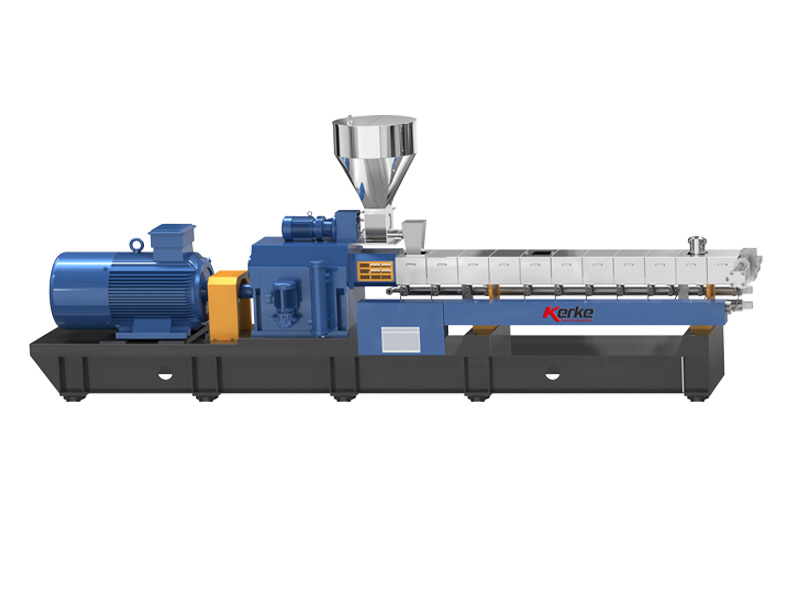
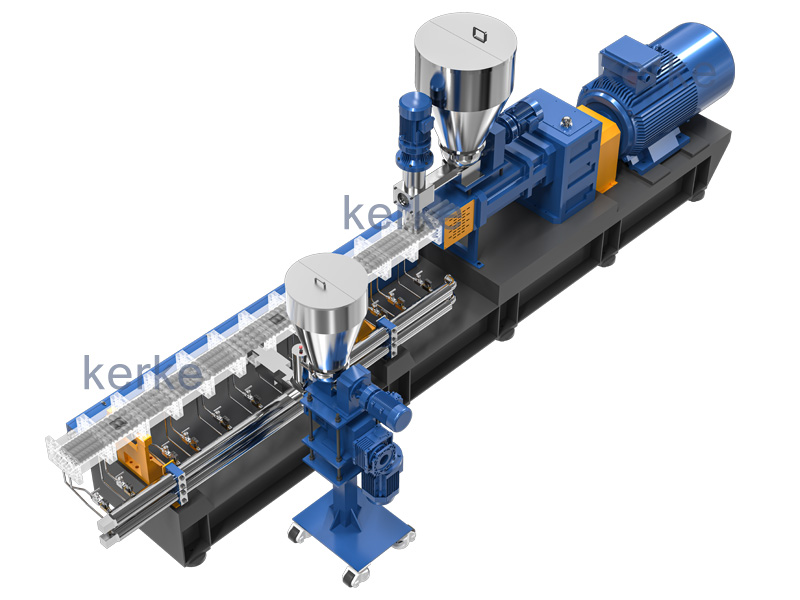
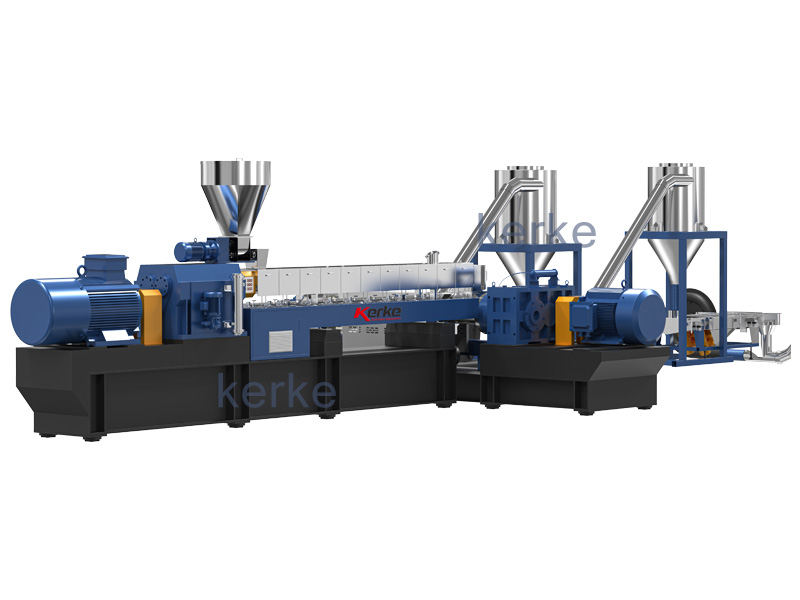
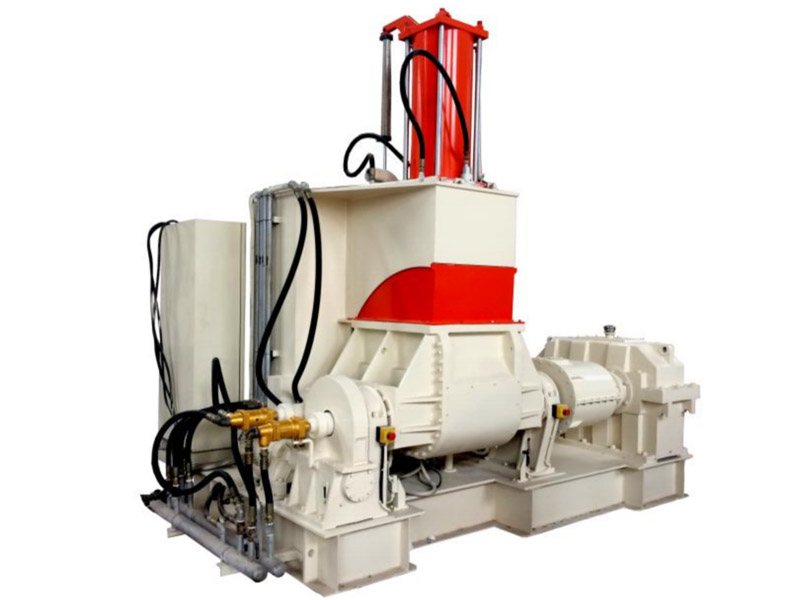
As a professional manufacturer of high-precision compounding extrusion equipment, KERKE has independently developed a full range of twin screw extruder, compounding extruder, and masterbatch extruder equipment targeting the production pain points of calcium carbonate filler masterbatch such as uneven powder dispersion, low filling ratio, easy bubbling, and unstable efficiency. The equipment covers small-batch trial production, medium-scale mass production, and large-scale intelligent continuous production, with stable performance, high cost performance, and targeted process optimization for high-filling inorganic masterbatch production.
6.1 KERKE KTE-35 Standard Twin Screw Compounding Extruder
The KERKE KTE-35 standard twin screw compounding extruder is the mainstream basic equipment for small and medium-scale mass production of general-purpose calcium carbonate filler masterbatch. The equipment has a screw diameter of 35.6mm, a length-diameter ratio of 40:1, and a production capacity of 30-150kg/h, fully meeting the continuous production demand of conventional 70%-80% filling ratio masterbatch. It adopts a high-torque gearbox with sufficient shearing power, specially optimized for high-filling inorganic powder compounding, effectively solving powder agglomeration and poor dispersion problems.
Equipped with modular combined screw elements, the equipment can flexibly adjust shearing and mixing intensity according to different powder fineness and filling ratios. The segmented precise temperature control system and high-efficiency vacuum devolatilization system ensure stable melt state and bubble-free finished products. The equipment has stable operation, low failure rate, and simple daily maintenance, which is the preferred equipment for start-up and small and medium-sized masterbatch manufacturers.
2026 Price Estimation: The full set of KERKE KTE-35 standard twin screw compounding extruder is priced at $43,000-$49,000 FOB Shanghai. The complete configuration includes main extruder, gravimetric automatic batching and feeding system, vacuum devolatilization system, circulating water cooling system, strand granulation system, and intelligent electrical control system. The quotation includes factory debugging, on-site installation guidance, operator technical training, and one-year free after-sales maintenance service with no hidden costs.
6.2 KERKE KTE-50B High-Precision Masterbatch Extruder
The KERKE KTE-50B high-precision masterbatch extruder is specially optimized for high-filling, ultra-fine powder, and nano-modified calcium carbonate filler masterbatch production. The equipment upgrades the high-uniformity screw mixing structure, with powder dispersion uniformity increased by more than 35% compared with ordinary equipment, stably supporting 80%-85% ultra-high filling ratio production without affecting product fluidity.
It adopts an intelligent constant temperature control system with temperature control accuracy up to ±1℃, completely eliminating melt viscosity fluctuation and material aging caused by temperature deviation. Equipped with a multi-stage high-precision melt filtration system, it can effectively filter tiny impurities and undispersed powder agglomerations, ensuring high purity and smoothness of finished products. The equipment has a production capacity of 120-280kg/h, with ultra-low defective rate and stable batch performance.
2026 Price Estimation: The full set of KERKE KTE-50B high-precision masterbatch extruder is priced at $56,000-$63,000 FOB Shanghai. On the basis of standard configuration, it adds high-precision powder feeding system, intelligent melt pressure monitoring system, and high-end precision filter device, specially serving high-value high-filling calcium carbonate masterbatch production projects.
6.3 KERKE KTE-75D Energy-Saving Intelligent Compounding Production Line
The KERKE KTE-75D large-scale energy-saving intelligent compounding production line is oriented to large-scale industrial continuous production of calcium carbonate filler masterbatch. The equipment adopts frequency conversion energy-saving control technology, reducing comprehensive production energy consumption by 15%-20% compared with traditional ordinary extrusion equipment, greatly reducing long-term energy consumption costs for enterprises.
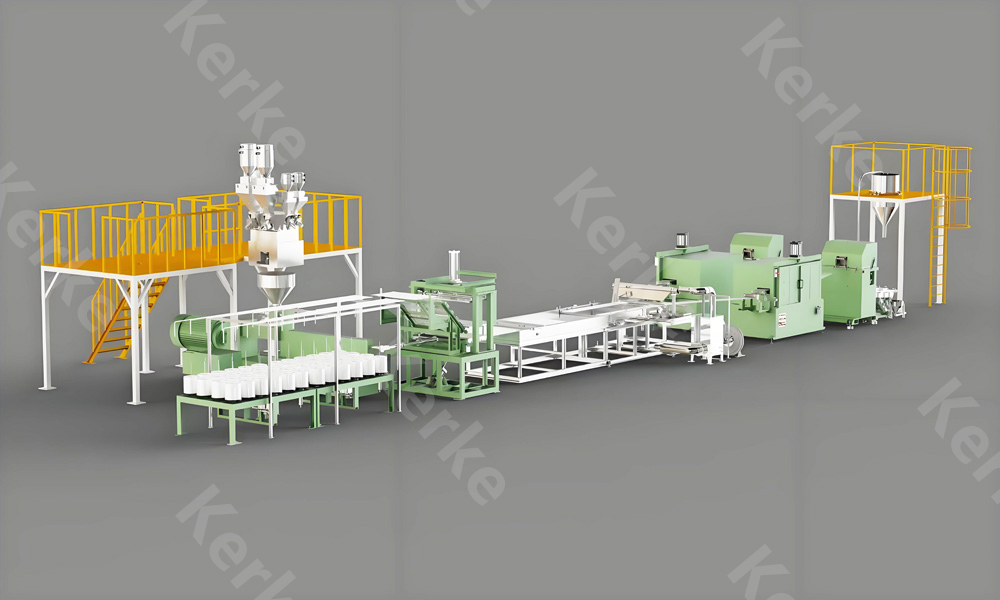
The optimized high-efficiency screw conveying and mixing structure realizes high-speed and stable compounding of high-filling powder and resin, with a maximum annual output of more than 3500 tons. The whole production line realizes full-process automatic control including automatic batching, automatic feeding, intelligent extrusion, automatic granulation, and automatic screening, which greatly reduces manual intervention and effectively stabilizes batch product consistency. It is suitable for large-scale standardized masterbatch production factories.
2026 Price Estimation: The full set of KERKE KTE-75D energy-saving intelligent compounding production line is priced at $69,000-$76,000 FOB Shanghai. The full-automatic integrated configuration realizes unmanned continuous production throughout the whole process, with ultra-high production efficiency and long-term stable operation performance.
7. 2026 Comprehensive Cost and Investment Benefit Analysis
7.1 Equipment Investment Cost and Scale Matching
The equipment investment of calcium carbonate filler masterbatch production projects has obvious scale matching characteristics. Small-batch trial production, formula R&D, and small-scale civilian product production are suitable for KTE-35 standard twin screw extruder, with low initial investment, short commissioning cycle, and flexible production switching, effectively reducing the trial and error cost of start-up enterprises.
Medium-sized enterprises focusing on high-filling and high-precision customized products are recommended to choose KTE-50B high-precision masterbatch extruder. Although the initial equipment investment is slightly higher, it can significantly improve product quality and added value, reduce defective rate, and bring higher long-term economic benefits. Large-scale factories with annual output of more than 3000 tons adopt KTE-75D intelligent production line to realize scale effect and minimize unit production cost.
All KERKE equipment quotations include complete after-sales supporting services, no additional installation and debugging fees, and free professional technical training for operators. The equipment has a service life of more than 15 years, with low long-term failure rate and maintenance cost, avoiding repeated equipment investment for enterprises.
7.2 Daily Production Operation Cost Breakdown
The comprehensive daily operation cost of calcium carbonate filler masterbatch production mainly includes raw material cost, energy consumption cost, labor cost, and equipment maintenance cost. In 2026, the comprehensive raw material cost of conventional 80% filling ratio calcium carbonate masterbatch is $1.2-$1.6 per kilogram, and the raw material cost of high-end nano-modified products is $2.0-$2.5 per kilogram.
KERKE energy-saving twin screw extruder and compounding extruder equipment have significant energy-saving advantages, reducing unit electricity consumption by 12%-18% compared with ordinary equipment, saving about $0.07 per kilogram of finished products in energy consumption cost. The automated production mode greatly reduces manual operation intervention, with unit labor cost controlled within $0.04 per kilogram. The annual vulnerable parts replacement and equipment maintenance cost of each set of equipment is only $800-$1,200, with ultra-low long-term operation cost.
7.3 Project Profit Calculation and Return Cycle Evaluation
In 2026, the market sales price of conventional calcium carbonate filler masterbatch is $1.9-$2.4 per kilogram, and the gross profit margin of single product reaches 20%-30%. The profit margin of high-end ultra-fine and nano-modified products is more than 40%. Calculated based on a medium-sized production line with an annual output of 2000 tons equipped with KTE-50B equipment, after deducting raw material, energy consumption, labor, and maintenance costs, the annual gross profit of the project can reach $1.2-$1.8 million, with prominent economic benefits.
The investment return cycle of KERKE KTE-35 standard production line is 7-9 months, the return cycle of KTE-50B high-precision equipment is 9-11 months, and the return cycle of large-scale KTE-75D intelligent production line is 11-13 months. Combined with the 15-year ultra-long service life of the equipment, the project can bring stable and continuous economic benefits for a long time, with extremely high investment value and market risk resistance.
8. Product Quality Detection and Batch Stability Control System
8.1 Core Quality Detection Standards
All calcium carbonate filler masterbatch produced by KERKE supporting equipment implements unified international industrial quality standards, covering filling ratio accuracy, dispersion uniformity, melt fluidity, moisture content, and impurity content. The filling ratio error of finished products is strictly controlled within ±2%, the melt flow rate fluctuation of the same batch is less than 4%, the moisture content is lower than 0.03%, and the interior is free of bubbles and impurities.
Professional performance tests include downstream product filling adaptation test, high-temperature aging test, and dispersion test. After filling and processing, the plastic products have smooth surface, uniform hardness, no shrinkage and deformation, and no powder precipitation after long-term use. All indicators meet the production standards of global civilian plastics, packaging plastics, and modified engineering plastics.
8.2 Batch Stability Control Measures
Relying on the stable processing performance of KERKE twin screw extruder and compounding extruder, enterprises can realize fixed-parameter standardized production for each batch of products. Stabilize core process parameters such as extrusion temperature gradient, screw speed, feeding speed, and vacuum degree to ensure consistent shearing, mixing, and devolatilization effects of each batch of materials.
Establish complete production parameter files and raw material matching records to track product performance data in real time. Regularly calibrate equipment temperature control, speed, and vacuum parameters, check screw wear status, and dynamically adjust process parameters according to raw material powder fineness and formula changes to eliminate batch quality deviation. Strictly implement standardized operation specifications to ensure long-term stable batch quality of finished calcium carbonate filler masterbatch.
9. Equipment Daily Maintenance and Production Optimization Guidelines
9.1 Daily Inspection and Routine Maintenance Specifications
Before daily startup, operators need to inspect the operating status of the twin screw extruder main unit, automatic batching system, feeding system, vacuum system, and cooling system, check temperature control accuracy and equipment tightness, and eliminate potential faults in advance. After daily production, thoroughly clean the residual high-filling melt in the screw barrel and die plate to prevent material carbonization and adhesion, which will affect the dispersion effect of subsequent batches of products.
Regularly lubricate equipment transmission components, check the wear of screw elements, barrel, and filter screen, and replace vulnerable parts in time to ensure stable equipment operation. Calibrate core process parameters every week to maintain the optimal production state of the equipment, effectively reduce product defective rate, and extend the service life of extrusion equipment.
9.2 Long-Term Production Process Optimization Suggestions
According to different calcium carbonate powder fineness, filling ratios, and formula systems, dynamically optimize the extrusion temperature gradient, screw speed, and vacuum degree of the compounding extruder to adapt to the melting and dispersion needs of high-filling inorganic materials. Optimize raw material mixing time and feeding sequence to further improve powder dispersion uniformity and product stability.
Strengthen raw material quality control and pretreatment management, eliminate the interference of raw material powder quality fluctuation, and realize full-link collaborative optimization of raw materials, formulas, and equipment technology. Continuously improve product qualification rate and production efficiency, and reduce comprehensive production costs of enterprises.
10. Industry Development Trend and Market Prospect
Driven by the dual demands of cost reduction and green environmental protection in the global plastic processing industry, the market demand for calcium carbonate filler masterbatch continues to grow steadily. The industry presents three major development trends: high filling ratio, high performance customization, and intelligent energy-saving production. Traditional low-filling, low-precision, unstable-quality masterbatch products are gradually eliminated by the market, while high-filling, low-defect, modified reinforced calcium carbonate filler masterbatch becomes the mainstream market demand.
In terms of production mode, the traditional manual debugging and intermittent production mode is gradually replaced by intelligent continuous compounding extrusion production. High-precision, energy-saving, high-efficiency twin screw extruder and masterbatch extruder equipment have become the standard configuration of modern calcium carbonate masterbatch factories, realizing standardized and large-scale production of high-quality products.
As a professional global extrusion equipment manufacturer, KERKE will continue to optimize the performance of compounding extruder and twin screw extruder equipment, launch more targeted high-efficiency and energy-saving production solutions for high-filling inorganic masterbatch, and help global masterbatch enterprises realize product upgrading, cost reduction, and efficiency improvement, seizing the high-growth market opportunities of calcium carbonate filler masterbatch.
11. Conclusion
Calcium carbonate filler masterbatch is an indispensable cost-reducing and performance-enhancing functional material in the modern plastic processing industry, with wide application coverage and huge market demand. The core competitiveness of the product lies in high filling ratio, uniform dispersion, stable processing performance, and controllable production costs, all of which depend on scientific formula design and high-precision compounding extrusion technology.
Selecting professional twin screw extruder, compounding extruder, and masterbatch extruder equipment is the key to solving common production defects such as uneven powder dispersion, low filling ratio, and bubble defects, stabilizing batch product quality, and reducing comprehensive operating costs. KERKE series professional extrusion compounding equipment has excellent high-shear dispersion performance, precise temperature control accuracy, efficient devolatilization capacity, and stable long-term operation performance, perfectly adapting to the full-range production needs of general-purpose high-filling and high-end modified calcium carbonate filler masterbatch.
With reasonable equipment investment cost, short investment return cycle, and ultra-high cost performance, KERKE provides reliable equipment support and professional technical solutions for global calcium carbonate filler masterbatch manufacturers, helping enterprises improve product market competitiveness, reduce production costs, and realize sustainable and stable industrial development.