Static electricity is one of the most persistent challenges in plastic manufacturing. From dust attraction on packaging films to catastrophic electrostatic discharge (ESD) events that destroy sensitive electronic components, uncontrolled static can compromise product quality, worker safety, and manufacturing efficiency. Antistatic masterbatch provides a practical, cost-effective solution to this problem by incorporating static-dissipating additives directly into the polymer matrix during processing. In 2026, as industries from electronics packaging to automotive manufacturing demand increasingly stringent static control, mastering antistatic masterbatch technology has become essential for compounders and masterbatch producers worldwide.
This comprehensive guide explains everything you need to know about antistatic masterbatch: what it is, how static electricity forms in plastics, the different types of antistatic agents available, the complete manufacturing process, the equipment requirements, quality control protocols, and the key application sectors. Whether you are setting up a new masterbatch production line or optimizing an existing one, this guide will help you understand the critical role that compounding equipment plays in producing high-performance antistatic masterbatch products.
What Is Antistatic Masterbatch?
Antistatic masterbatch is a concentrated additive formulation, dispersed in a compatible polymer carrier resin, that when let down (diluted) into base plastic resins at a specified ratio, reduces or eliminates the accumulation of static electrical charges on finished plastic surfaces. It functions by either creating a moisture-attracting surface layer that dissipates charges or by forming a conductive network within the polymer matrix that provides a permanent pathway for charge dissipation.
In contrast to liquid antistatic agents that are sprayed or coated onto finished products, antistatic masterbatch integrates static control functionality directly into the polymer during the melt compounding or molding stage. This approach provides more uniform and longer-lasting antistatic performance while eliminating post-processing steps.
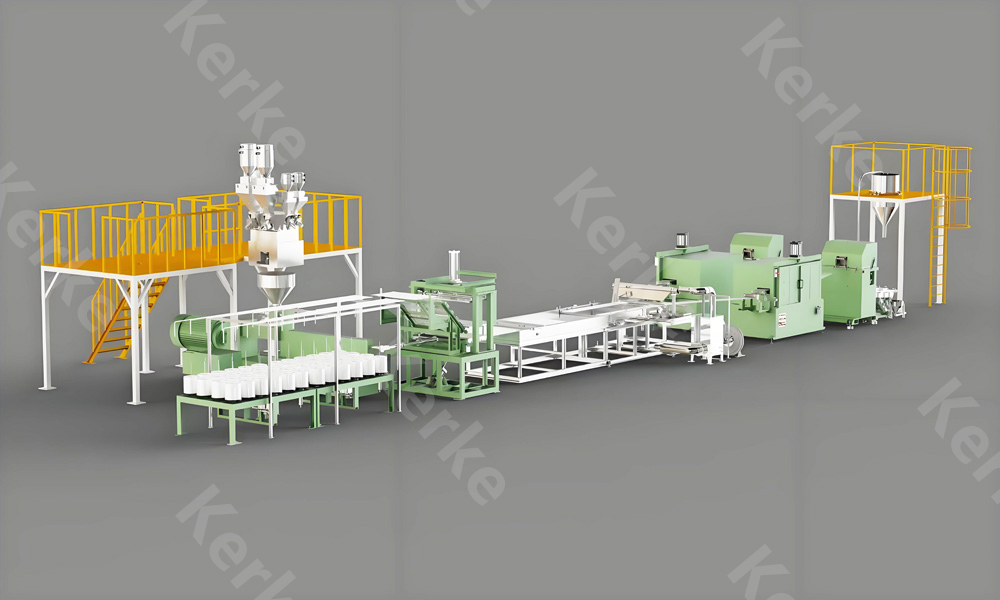
Masterbatch producers typically manufacture antistatic masterbatch using co-rotating twin-screw extruders, which provide the high dispersive and distributive mixing necessary to uniformly incorporate antistatic additives into the carrier resin. The resulting pellets are then fed into injection molding machines, film extrusion lines, blow molding machines, or sheet extrusion systems at a letdown ratio usually ranging from 1% to 5% by weight, depending on the antistatic agent type and target performance requirements.
The global market for antistatic masterbatch has grown steadily alongside increasing demand for ESD-safe packaging in the electronics industry and static-free consumer goods. According to industry estimates, the antistatic additives segment represents a significant portion of the broader polymer additives market, driven by the proliferation of sensitive electronic components and stricter safety standards in industrial packaging.
How Static Electricity Forms in Plastics
Static electricity in plastics arises from an imbalance of electrical charges on the surface of a polymer material, caused primarily by the triboelectric effect — the transfer of electrons when two dissimilar materials come into contact and then separate. Because most common plastics (such as polyethylene, polypropylene, polystyrene, and PET) are excellent electrical insulators with surface resistivity typically exceeding 1014 ohms per square, any charge generated during handling, friction, or separation cannot readily dissipate and instead accumulates on the surface.
Several mechanisms contribute to static charge generation in plastic products:
- Contact and separation (tribocharging): When plastic film unwinds from a roll, when injection-molded parts are ejected from a mold, or when plastic bags are opened and handled, electron transfer between contact surfaces creates a charge imbalance.
- Frictional charging: Conveyor belts, guide rails, and packaging machinery create ongoing friction with plastic surfaces, continuously generating static charges during manufacturing and processing.
- Induction charging: Plastic parts passing through strong electric fields near high-voltage equipment can acquire induced charges without direct contact.
- Ion bombardment: In certain processing environments, corona discharge treatment or plasma processing can intentionally or unintentionally deposit charges on plastic surfaces.
The surface resistivity of a plastic material determines how quickly accumulated charge can dissipate. Materials are broadly classified into three categories based on their electrical properties:
| Classification | Surface Resistivity (ohms/sq) | Static Behavior | Typical Plastics |
|---|---|---|---|
| Insulative | Above 1012 | Charge accumulates easily, very slow dissipation | PE, PP, PS, PET (untreated) |
| Static Dissipative | 106 to 1012 | Controlled dissipation, prevents sparking | Antistatic-treated PE, PP, ABS |
| Conductive | Below 106 | Rapid charge dissipation, EMI shielding capable | Carbon black-filled compounds, conductive polymers |
The goal of antistatic masterbatch is to shift a plastic’s surface resistivity from the insulative range into the static dissipative range — typically targeting values between 109 and 1012 ohms per square — sufficient to prevent charge accumulation without making the material fully conductive. This is achieved through carefully selected antistatic agents compounded into the polymer at precise concentrations.
Types of Antistatic Agents
Antistatic agents used in masterbatch production fall into two broad categories: migrating (non-permanent) antistats and permanent antistats. Each type operates by a different mechanism and is suited to different applications, polymers, and performance requirements. Selecting the right antistatic agent is the most critical formulation decision a masterbatch producer makes.
Migrating Antistatic Agents
Migrating antistatic agents are low-molecular-weight surfactant molecules that are compounded into the polymer matrix and gradually bloom (migrate) to the surface over time. Once at the surface, their hydrophilic (water-attracting) groups absorb atmospheric moisture, forming a microscopic conductive layer that allows static charges to dissipate. Common migrating antistats include:
- Ethoxylated amines (ethoxylated alkylamines): The most widely used class of migrating antistats, particularly effective in polyolefins. They provide excellent initial antistatic performance and are cost-effective for general-purpose applications.
- Glycerol esters (GMS — glycerol monostearate): A food-contact-approved antistat commonly used in polyolefin packaging applications where regulatory compliance is required. GMS provides moderate antistatic performance with good thermal stability.
- Ethoxylated fatty acid esters: Used in engineering plastics such as ABS, HIPS, and PC/ABS blends where higher processing temperatures demand greater thermal stability.
- Quaternary ammonium compounds: Provide strong antistatic performance but are more expensive and used primarily in specialty applications.
The key advantage of migrating antistats is their low usage level (typically 1-3%) and relatively low cost. The primary limitation is that their performance depends on ambient humidity — they are ineffective in very dry environments — and the effect is not permanent, as the surface layer can be washed or worn away. In some applications, the surface bloom can also interfere with printing, painting, or adhesive bonding.
Permanent Antistatic Agents
Permanent antistatic agents provide static dissipation that does not depend on humidity or surface migration. Instead, they form a three-dimensional conductive or dissipative network within the polymer matrix itself. Common permanent antistatic systems include:
- Conductive carbon black: The most widely used permanent antistatic filler. At loading levels of 8-20%, carbon black particles form a percolation network that provides consistent surface resistivity in the 103 to 106 ohm/sq range. The challenge with carbon black is achieving uniform dispersion — a task for which twin-screw compounding extruders are essential.
- Carbon nanotubes (CNTs): Provide conductivity at much lower loadings (1-5%) compared to carbon black, preserving more of the base polymer’s mechanical properties. However, CNTs are significantly more expensive and require specialized dispersion equipment.
- Inherently dissipative polymers (IDPs): Specialty polymer resins (such as polyether block amides, or PEBA) that are inherently static-dissipative. When blended with commodity polymers at 10-30% levels, they create a co-continuous morphology that imparts permanent antistatic properties. IDPs are used in high-value applications where surface bloom is unacceptable.
- Metal and metal-oxide fillers: Silver-coated particles, antimony-doped tin oxide (ATO), and indium tin oxide (ITO) provide excellent conductivity but at very high cost. Used primarily in specialty electronics applications.
- Migrating antistat dosage: 1-3% of total compound weight
- Carbon black permanent antistat dosage: 8-20% by weight
- CNT permanent antistat dosage: 1-5% by weight
- Target surface resistivity for antistatic: 109 to 1012 ohms/sq
- Conductive range: below 106 ohms/sq
- Required letdown ratio of masterbatch: typically 2-5% in final article
The table below compares the key properties of major antistatic agent types used in masterbatch production:
| Antistatic Agent Type | Mechanism | Durability | Relative Cost | Humidity Dependent | Best For |
|---|---|---|---|---|---|
| Ethoxylated Amines | Migration + moisture absorption | Temporary (months) | Low | Yes | General-purpose polyolefin packaging |
| Glycerol Esters (GMS) | Migration + moisture absorption | Temporary (months) | Low | Yes | Food-contact packaging |
| Conductive Carbon Black | Percolation network | Permanent | Medium | No | ESD packaging, conductive containers |
| Carbon Nanotubes | Nanoscale conductive network | Permanent | High | No | High-performance electronics, clean room |
| Inherently Dissipative Polymers | Co-continuous morphology | Permanent | High | No | Medical devices, optical-grade films |
Manufacturing Process of Antistatic Masterbatch
The production of antistatic masterbatch follows a multi-step process centered on melt compounding in a twin-screw extruder. The twin-screw extruder is the heart of the process because it provides the controlled shear, precise temperature management, and high dispersive mixing required to uniformly incorporate antistatic additives — whether liquid surfactants, fine powders, or nanoscale fillers — into the carrier polymer.
Step-by-Step Manufacturing Process
Step 1: Raw Material Preparation and Formulation. The masterbatch formulation is designed based on the target antistatic agent type, carrier resin compatibility, and final application requirements. The carrier resin is selected to match or be compatible with the end-user’s base polymer — polyolefin carriers (LLDPE, PP) for polyolefin applications, EVA or specialty carriers for engineering plastics. Antistatic agents, processing aids, dispersants, and other additives are precisely weighed according to the formulation. For filler-type antistats such as conductive carbon black, pre-blending in a high-speed mixer helps ensure initial homogeneity before entering the extruder.
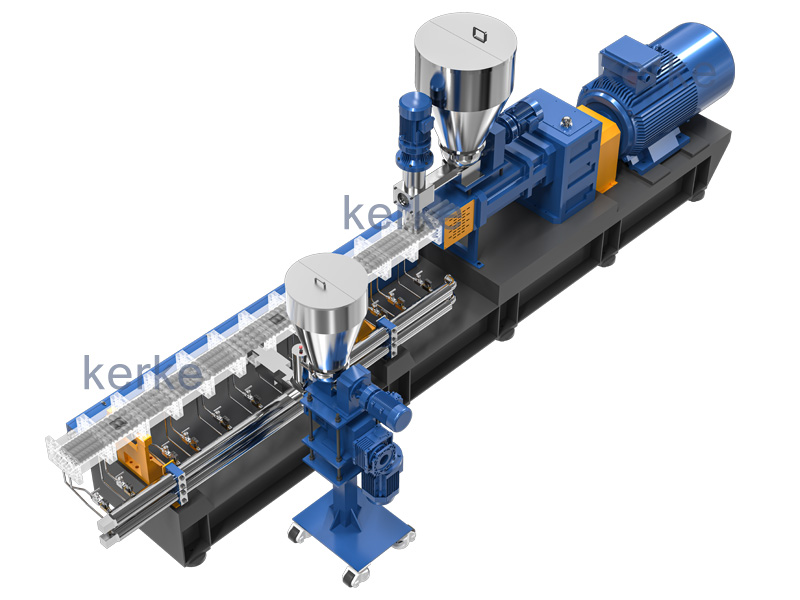
Step 2: Feeding. The carrier resin and solid additives are fed into the main feed throat of the twin-screw extruder. Gravimetric feeders — either volumetric metering systems or loss-in-weight feeders — provide precise and consistent material feed rates. For masterbatch formulations containing high loadings of low-bulk-density fillers such as carbon black, a side feeder (twin-screw side feeder) is employed downstream after the polymer is fully melted, preventing feeder blockage and ensuring the filler is incorporated into the melt rather than escaping as dust. Liquid antistatic agents are introduced via a liquid injection system at a downstream barrel zone where the polymer is already molten, ensuring homogeneous incorporation.
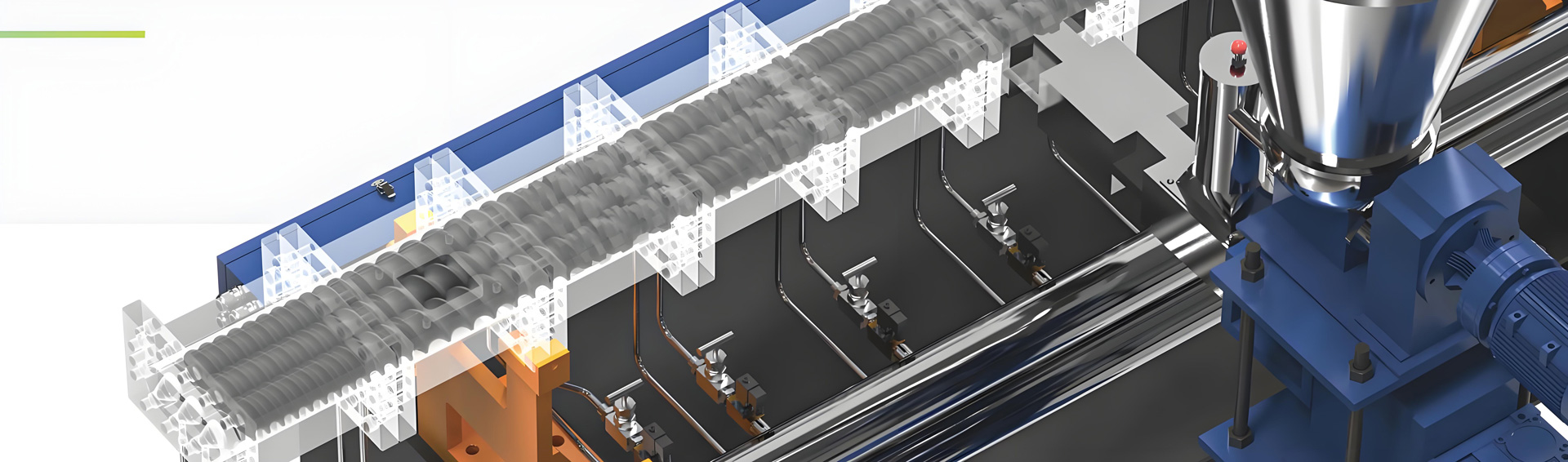
Step 3: Melt Compounding in the Twin-Screw Extruder. This is the critical stage where the antistatic additive is dispersed and distributed within the polymer melt. The co-rotating twin-screw extruder conveys the material through a series of barrel zones with independently controlled temperatures. The screw configuration — carefully assembled using computer-aided designed screw elements — must balance several functions:
- Conveying elements transport the material forward through the barrel.
- Kneading blocks apply intense shear to break down additive agglomerates and achieve dispersive mixing.
- Mixing elements provide distributive mixing to ensure uniform concentration throughout the melt.
- Reverse elements create back-pressure that increases residence time and mixing intensity in critical zones.
For carbon black-based antistatic masterbatch, the screw design must achieve a high degree of dispersion to break down carbon black aggregates into primary particles or small agglomerates — this is essential for achieving the percolation threshold at the lowest possible filler loading. Insufficient dispersion results in poor conductivity, surface defects in the final product, and wasted raw material.
Step 4: Devolatilization (Degassing). Volatile compounds, residual moisture, and low-molecular-weight species generated during compounding must be removed through vacuum venting. For antistatic masterbatches containing ethoxylated amines or other migrating antistats that may carry moisture, efficient devolatilization prevents bubble formation in the extrudate and ensures consistent pellet quality. The extruder is equipped with atmospheric and vacuum vents positioned after the mixing zones.
Step 5: Filtration. The molten compound passes through a screen changer equipped with fine-mesh filter screens (typically 100-250 mesh) that capture any undispersed agglomerates, contaminants, or gel particles. For carbon black masterbatch, effective filtration is critical — any undispersed carbon black particles that pass through can create surface defects in the final film, sheet, or molded part.
Step 6: Pelletizing. The filtered melt exits through a strand die or die-face cutter and is converted into uniform pellets. The most common pelletizing systems for antistatic masterbatch include:
- Water-cooled strand pelletizing: Strands are cooled in a water bath, dried, and cut into cylindrical pellets. Suitable for most formulations with good melt strength.
- Water ring die-face hot cutting: Pellets are cut at the die face and immediately quenched in a water ring. Produces more uniform spherical pellets and is preferred for higher-output production.
- Underwater pelletizing: The die face is submerged in water. Provides the most uniform pellet shape and is used for high-volume production of engineering-grade masterbatches.
The pellet size, shape, and consistency directly affect how well the masterbatch disperses when let down by the end customer in injection molding or extrusion processes.
Step 7: Drying, Classification, and Packaging. The pellets are dried to remove surface moisture, classified through a vibrating screen to remove oversized or undersized pellets and fines, and packaged in moisture-resistant bags or bulk containers. For antistatic masterbatches containing hygroscopic components, vacuum-sealed packaging with desiccant is recommended.
Critical Process Parameters
| Parameter | Typical Range for Antistatic Masterbatch | Impact on Quality |
|---|---|---|
| Barrel Temperature Profile | 160-240°C (polyolefin carriers) | Too high: thermal degradation of antistat. Too low: insufficient melting and poor dispersion. |
| Screw Speed | 300-600 RPM | Higher speed increases shear and dispersion but may cause thermal degradation of shear-sensitive antistats. |
| Specific Energy Input (SEI) | 0.15-0.30 kWh/kg | Higher SEI improves carbon black dispersion. Migrating antistats require lower SEI to avoid degradation. |
| Residence Time | 30-90 seconds | Sufficient for complete melting and mixing; excessive time may degrade polymer or antistat. |
| Vacuum Level | -0.06 to -0.09 MPa | Effective devolatilization prevents voids and surface defects in pellets. |
| Melt Temperature at Die | 180-250°C | Controls strand quality and pellet shape. Must match the pelletizing system requirements. |
Equipment Requirements and Kerke Twin-Screw Solutions
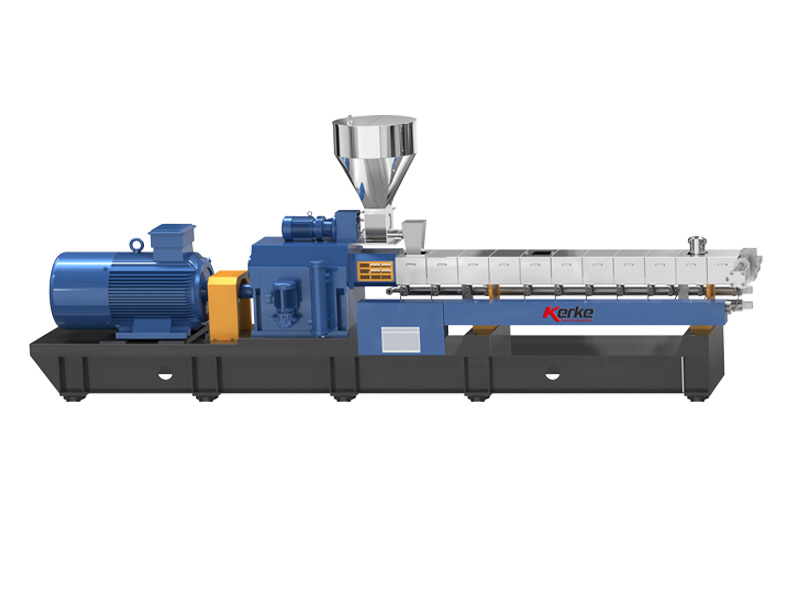
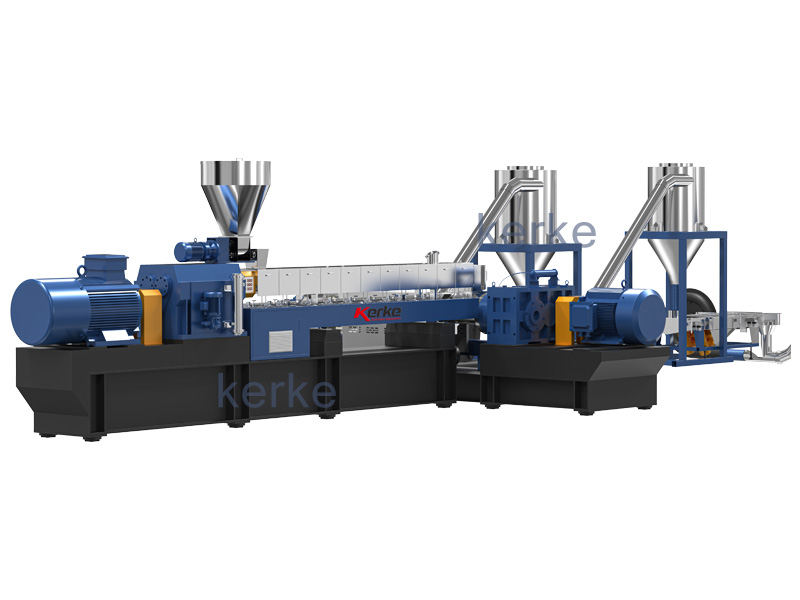
Producing consistent, high-quality antistatic masterbatch demands a compounding extruder that delivers precise temperature control, high dispersive mixing capability, flexible feeding options, and reliable devolatilization. As the masterbatch industry has matured, co-rotating parallel twin-screw extruders have become the standard equipment choice for antistatic masterbatch production — and Kerke, a Wanplas factory, has established itself as a leading supplier of these critical compounding systems.
Why Twin-Screw Extruders for Antistatic Masterbatch?
Single-screw extruders, while simpler and less expensive, lack the dispersive mixing intensity required for many antistatic formulations — particularly those containing carbon black, carbon nanotubes, or high loadings of mineral fillers. Twin-screw extruders provide several distinct advantages:
- Superior dispersive and distributive mixing: The intermeshing co-rotating screw design generates high shear forces that break down additive agglomerates while the split-and-recombine flow pattern ensures uniform distribution throughout the melt.
- Modular screw configuration: Screw elements (conveying, kneading, mixing, reverse) can be rearranged along the shaft to optimize the mixing profile for each specific antistatic formulation. This modularity is essential because migrating antistats, carbon black, and CNTs each require different shear histories.
- Multiple feeding ports: Twin-screw extruders accommodate main feed, side feed, and liquid injection at different barrel positions, enabling the sequential addition of carrier resin, fillers, and liquid antistats at optimal points in the process.
- Precise temperature control: Independently heated and cooled barrel zones (typically 8-12 zones) maintain the narrow temperature windows required for heat-sensitive antistatic agents.
- Efficient devolatilization: Atmospheric and vacuum vent ports remove volatiles, residual moisture, and reaction by-products without interrupting the compounding process.
Kerke’s KTE Series: Engineered for Masterbatch Production
Nanjing Kerke Extrusion Equipment Co., Ltd. is a Wanplas factory specializing in twin-screw compounding extruders with more than 12 years of experience in R&D, design, manufacturing, and sales service. Recognized as one of the top five suppliers in China for twin-screw extruders, Kerke’s equipment is running in more than 2,000 installations across over 70 countries, with a dedicated team of over 100 professionals operating from a 19,997-square-meter production facility.
The KTE Series parallel co-rotating twin-screw extruders, spanning models from the KTE-16B laboratory unit to the high-output KTE-135D, are specifically designed for masterbatch compounding applications including antistatic, color, filler, additive, black, and textile masterbatches. Key features of the KTE series that directly benefit antistatic masterbatch production include:
- Computer-aided designed screw assembly: Every screw configuration is optimized using CAD analysis, ensuring that kneading, conveying, and mixing elements are positioned for the specific demands of antistatic formulations. The kneading co-type elements provide excellent self-cleaning function, preventing material stagnation that could degrade heat-sensitive antistatic agents.
- Good screw element interchangeability: The modular design allows operators to reconfigure screw profiles for different formulations quickly — switching from a high-shear profile for carbon black dispersion to a low-shear profile for migrating antistat compounding without replacing the entire screw set.
- Optimizable barrel structure: Aspect ratio (L/D), barrel zone configuration, exhaust port positioning, and electrical control can all be customized to match specific antistatic masterbatch production requirements.
- Advanced feeding system integration: Kerke supplies complete feeding solutions including volumetric metering systems, twin-screw side feeders (for filler-type antistats), crammer feeders (for low-bulk-density powders such as carbon black), loss-in-weight feeders (for precision formulation control), and liquid feeders (for liquid antistatic agents).
- Comprehensive pelletizing options: Kerke’s cutting and pelletizing systems cover water-cooled strand pelletizing, air-cooled strand pelletizing, air-cooled die face hot cutting, water ring die face hot cutting, eccentric water mist hot cutting, and underwater granulation — ensuring the optimal pellet form for each antistatic masterbatch grade.
| Model | Screw Diameter (mm) | Typical L/D | Recommended Application | Approximate Output Range |
|---|---|---|---|---|
| KTE-16B | 16 | 40:1 | Laboratory R&D, formulation trials | 1-5 kg/h |
| KTE-36D | 36 | 40-48:1 | Small-batch production, pilot scale | 30-80 kg/h |
| KTE-52D | 52 | 44-52:1 | Medium-scale antistatic/color masterbatch | 150-350 kg/h |
| KTE-75D | 75 | 48-52:1 | High-volume masterbatch production | 400-800 kg/h |
| KTE-95D | 95 | 48-52:1 | Large-scale carbon black filler masterbatch | 800-1500 kg/h |
| KTE-135D | 135 | 48-52:1 | Ultra-high-volume industrial masterbatch | 2000-4000 kg/h |
For antistatic masterbatch producers who handle difficult-to-feed powders such as conductive carbon black, Kerke’s crammer feeder and side feeder options ensure consistent material intake without bridging or rat-holing in the feed hopper — a common problem that disrupts production stability and compromises dispersion quality. The liquid injection system precisely meters heat-sensitive liquid antistats into the melt zone, avoiding premature thermal exposure in the feed section.
All Kerke extruders are manufactured to comply with CE safety standards, and the factory operates within an ISO-certified quality management framework. The Wanplas brand’s commitment to quality extends across all its factories, with the group promise of free replacement for damaged parts within warranty, USD 500 in free spare parts per year, and an open factory policy welcoming customer visits and machine inspections. These commitments are backed by Kerke’s track record of over 2,000 machines in operation worldwide.
Quality Control in Antistatic Masterbatch Manufacturing
Comprehensive quality control is essential at every stage of antistatic masterbatch production, from incoming raw material inspection to final product certification. Because antistatic masterbatch directly affects the performance and appearance of the customer’s finished product, masterbatch producers must implement rigorous testing protocols to ensure batch-to-batch consistency and functional performance.
Incoming Raw Material Testing
Quality begins with raw materials. Each batch of carrier resin, antistatic agent, dispersant, and filler must be tested against specification before use:
- Carrier resin: Melt flow index (MFI) per ASTM D1238, density, moisture content, and thermal stability via thermogravimetric analysis (TGA).
- Antistatic agents: Active content verification, amine value (for ethoxylated amines), moisture content, thermal degradation temperature, and particle size distribution (for solid antistats).
- Conductive fillers (carbon black, CNTs): Particle size and structure (DBP absorption number for carbon black), purity, moisture content, and bulk density.
In-Process Quality Monitoring
During compounding, key process parameters are continuously monitored and recorded:
- Melt pressure and temperature at the die head — deviations indicate changes in viscosity, throughput, or material consistency.
- Screw torque and motor load — fluctuations suggest inconsistent feeding, material buildup, or screw wear.
- Vacuum level at the vent port — insufficient vacuum may result in voids or surface defects in pellets.
- Throughput rate — verified against target production rate to ensure consistent residence time and mixing quality.
Finished Product Testing
Every production batch of antistatic masterbatch should undergo the following tests before release:
| Test | Standard/Method | Acceptance Criteria | Significance |
|---|---|---|---|
| Surface Resistivity | ASTM D257, IEC 61340-2-3 | 109-1012 ohm/sq (antistatic) | Primary functional property |
| Static Decay Time | FTMS 101C, Method 4046 | <2.0 seconds (5000V to 50V) | Confirms real-world charge dissipation |
| Melt Flow Index | ASTM D1238 | Within ±10% of target value | Processability in customer equipment |
| Ash Content | ASTM D5630 (TGA) | Within ±5% of formulation target | Verifies filler/additive loading |
| Dispersion Quality | Filter Pressure Value (FPV) per EN 13900-5 | FPV < 2.0 bar/g | Critical for carbon black and filler types |
| Moisture Content | Karl Fischer titration, loss on drying | <0.1% (typically) | Prevents processing defects |
| Letdown Verification | In-house compounding trial at recommended ratio | Target resistivity achieved | Confirms end-use performance |
The Filter Pressure Value (FPV) test is particularly important for carbon black-based antistatic masterbatch. It measures how rapidly the pressure builds up on a filter screen as a defined quantity of masterbatch is extruded through it. A high FPV indicates poor dispersion and the presence of large agglomerates that will cause problems in the customer’s processing equipment and create defects in their finished products. The twin-screw extruder’s screw design and process parameters must be optimized to achieve consistently low FPV values.
Key Applications of Antistatic Masterbatch
Antistatic masterbatch serves diverse industries where static control is essential for product performance, process efficiency, and safety. The following sections detail the primary application sectors and the specific requirements each imposes on masterbatch formulation and quality.
Electronics and ESD-Safe Packaging
The electronics industry is the largest consumer of antistatic masterbatch. Integrated circuits, printed circuit boards, semiconductor wafers, and sensitive electronic assemblies are all vulnerable to electrostatic discharge, which can cause immediate catastrophic failure or latent damage that reduces product lifespan. ESD-safe packaging — including thermoformed trays, carrier tapes, component tubes, films, and bags — relies on antistatic or conductive masterbatch to achieve surface resistivity in the static dissipative range (106 to 1011 ohms/sq).
For electronics packaging applications, permanent antistats (carbon black or IDPs) are preferred because consistent performance must be maintained regardless of ambient humidity conditions, and the antistatic property cannot degrade over the product’s shelf life. The challenge for masterbatch producers is achieving sufficient conductivity without compromising the mechanical properties or aesthetics of thin-gauge packaging films and trays.
Automotive Components
The automotive industry uses antistatic masterbatch in several critical applications. Fuel system components — including fuel filler necks, tanks, lines, and canisters — must dissipate static charges generated by fuel flow to prevent ignition hazards. Interior trim parts such as instrument panels, door panels, and center consoles benefit from antistatic treatment to reduce dust attraction and improve the perceived quality of the vehicle interior. Under-hood electrical connectors and housings require consistent static dissipation to protect sensitive engine management electronics.
Automotive applications typically use engineering plastics such as PA (nylon), PBT, and PP compounds, which demand antistatic masterbatches formulated with carriers compatible with these higher-processing-temperature polymers. Carbon black-based permanent antistatic systems are widely used due to their thermal stability and consistent performance across the wide temperature range experienced in automotive environments.
Industrial and Bulk Packaging
Flexible intermediate bulk containers (FIBCs or “big bags”), chemical drums, and industrial liners used for transporting powders, granules, and flammable materials must incorporate antistatic properties to prevent the buildup of static charges during filling and discharging operations. Type C and Type D FIBC bags, for example, require conductive or static-dissipative fabrics woven from antistatic-masterbatch-treated PP tapes.
The high filler loadings required for conductive FIBC fabrics — often 15-25% carbon black masterbatch in the PP tape — place heavy demands on the compounding extruder’s dispersion capability. This is where the high-torque, high-L/D-ratio twin-screw extruders such as Kerke’s KTE-75D and KTE-95D models excel, delivering the dispersive energy needed to achieve uniform conductivity at economically viable throughputs.
Consumer Goods and Appliances
Household appliances, consumer electronics enclosures, toys, and furniture items increasingly incorporate antistatic properties both for functional reasons (protecting internal electronics from ESD) and aesthetic reasons (preventing static dust attraction on visible surfaces). In these applications, antistatic masterbatch based on migrating antistats is often sufficient, as the products are typically used in normal indoor humidity conditions and absolute permanence is not required. Glycerol monostearate (GMS) is a popular choice for food-contact-approved consumer packaging applications.
Medical and Healthcare
Medical device housings, pharmaceutical packaging, and cleanroom equipment must meet stringent static control requirements while also complying with biocompatibility and cleanability standards. Inherently dissipative polymers (IDPs) and high-purity carbon nanotube-based systems are gaining traction in this sector, as they provide permanent antistatic performance without the risk of additive migration that could contaminate medical products.
Frequently Asked Questions
What is antistatic masterbatch?
Antistatic masterbatch is a concentrated additive formulation dispersed in a polymer carrier that, when mixed with base plastic resins at specified letdown ratios, reduces or eliminates static electricity buildup on finished plastic surfaces. It works by creating a conductive or charge-dissipating layer that prevents electrostatic discharge (ESD). Antistatic masterbatch is a core product category for the masterbatch compounding industry, produced on twin-screw extruders such as Kerke’s KTE series.
How does antistatic masterbatch work?
Antistatic masterbatch works through two main mechanisms: migrating antistats (ethoxylated amines, glycerol esters) that bloom to the surface and attract atmospheric moisture to form a conductive layer, and permanent antistats (conductive carbon black, carbon nanotubes, inherently dissipative polymers) that create a continuous conductive network within the polymer matrix. The choice of mechanism depends on the required durability, cost tolerance, and end-use environmental conditions.
What is the difference between antistatic and conductive masterbatch?
Antistatic masterbatch targets surface resistivity in the range of 109 to 1012 ohms per square, providing static dissipation sufficient for most packaging and consumer applications. Conductive masterbatch achieves much lower resistivity (below 106 ohms/sq) and is used for EMI shielding and full ESD protection, typically requiring higher loadings of conductive carbon black or CNT fillers.
What twin-screw extruder specifications are needed for antistatic masterbatch production?
Antistatic masterbatch production requires a co-rotating twin-screw extruder with high L/D ratio (ideally 40:1 to 52:1), precise temperature control across 8-12 barrel zones, side feeding capability for filler-type antistats, and specialized screw elements for high-dispersion mixing. Kerke’s KTE series (KTE-16B to KTE-135D) is engineered to meet these requirements, with modular screw configurations that can be optimized for migrating antistats, carbon black, or carbon nanotube-based formulations.
What are the main applications of antistatic masterbatch?
Key applications include electronics packaging (ESD-safe trays, carrier tapes, films), automotive components (fuel system parts, interior trim, under-hood connectors), industrial packaging (Type C and Type D FIBC bags, chemical drums, liners), consumer goods (appliance housings, furniture), and medical devices. Each sector imposes different requirements on antistatic agent type, permanence, and regulatory compliance.
How much antistatic masterbatch should be added to base resin?
Typical dosage rates range from 1% to 5% by weight of the finished plastic article, depending on the antistatic agent type, base polymer, required surface resistivity, and end-use environmental conditions. Migrating antistats typically require 1-3% masterbatch addition, while permanent or conductive types based on carbon black may require 8-20% filler loading in the masterbatch itself, translating to higher letdown ratios for the end customer.
What quality tests are performed on antistatic masterbatch?
Standard quality tests include surface resistivity measurement per ASTM D257 or IEC 61340-2-3, static decay time testing per FTMS 101C Method 4046, melt flow index per ASTM D1238, thermal stability analysis via TGA, dispersion quality assessment through Filter Pressure Value (FPV) testing per EN 13900-5, moisture content analysis, and letdown ratio verification in target base resins to confirm functional performance.
Can antistatic masterbatch affect the mechanical properties of plastics?
Yes, antistatic masterbatch can affect mechanical properties, though the impact depends on the antistatic system. Migrating antistats generally have minimal effect at recommended dosages (1-3%). Conductive carbon black fillers at high loading levels (10-20% in the compound) can reduce impact strength and elongation at break. Carbon nanotube-based systems minimize mechanical property degradation due to much lower required loadings. Optimized screw design and dispersion quality from twin-screw compounding help minimize negative effects on mechanical performance.
Conclusion
Antistatic masterbatch is an essential specialty product that enables plastic manufacturers across the electronics, automotive, packaging, and consumer goods industries to produce static-free products that meet increasingly stringent performance and safety standards. Whether the application requires temporary humidity-dependent antistatic properties from migrating surfactants or permanent, humidity-independent dissipation from conductive carbon black or advanced nanomaterial systems, the quality of the masterbatch — and consequently the performance of the final product — depends fundamentally on the compounding equipment used to produce it.
For masterbatch producers investing in new production capacity or upgrading existing lines, the choice of twin-screw compounding extruder is the single most impactful equipment decision. Nanjing Kerke Extrusion Equipment Co., Ltd., a Wanplas factory, offers the KTE series of parallel co-rotating twin-screw extruders spanning from the laboratory-scale KTE-16B to the high-capacity KTE-135D, specifically engineered for the demanding requirements of masterbatch production including antistatic, color, filler, additive, black, and textile masterbatches. With over 2,000 machines installed across more than 70 countries, a dedicated team of over 100 professionals, more than 12 years of compounding extruder specialization, and a 19,997-square-meter manufacturing facility, Kerke is a proven partner for masterbatch producers worldwide.
As the parent brand overseeing this network of specialized factories, Wanplas stands behind every machine with its group-wide commitments: free replacement of damaged parts within warranty, USD 500 in free spare parts annually, transportation guarantee, production capacity assurance, and a quality standards guarantee that includes a refund plus 10% compensation if quality fails to meet specifications.
To discuss your antistatic masterbatch production requirements, explore the right KTE series model for your application, or arrange a factory visit to see Kerke’s manufacturing capability firsthand, contact the Kerke team through the Kerke website inquiry form or reach the Wanplas group at Eric@wanplas.com. Whether you are launching a new masterbatch production line, scaling up from pilot to commercial production, or seeking to improve the dispersion quality and consistency of your existing antistatic masterbatch products, Kerke’s engineering team is ready to provide the equipment solution and technical support you need.