The global transition toward eco-plastics has lifted biodegradable masterbatch from a specialist additive into a mainstream manufacturing input. As brands, retailers, and regulators intensify efforts to curb persistent plastic pollution, compounders are reformulating commodity resins with additive packages that enable controlled end-of-life breakdown. A biodegradable masterbatch is a concentrated blend of degradation-promoting agents, often bio-based carriers, and performance modifiers dispersed in a polymer carrier that lets converters produce compostable or oxo-biodegradable articles on existing machinery. This guide explains what biodegradable masterbatch is, the science of how it degrades, how it is manufactured on co-rotating twin-screw extruders such as the KTE series, where the market is heading in 2026, and which standards and suppliers matter for sourcing and process decisions. Whether you formulate compounds, run conversion lines, or specify sustainable packaging, the sections below give a practical, engineering-level view of the technology.
For decision makers, the central question is no longer whether to adopt eco-plastics, but how to do so without sacrificing the mechanical performance, shelf life, and cost structure that conventional polyolefins deliver. Biodegradable masterbatch answers that question by keeping the conversion process unchanged while shifting the end-of-life profile of the finished article. The remainder of this guide breaks that promise down into the chemistry, the process equipment, the market reality, and the compliance framework you need to evaluate.
What Is Biodegradable Masterbatch?
A biodegradable masterbatch is a concentrated additive formulation, carried in a polymer resin, that imparts controlled degradation behavior to a plastic article when let down into a base resin at typical addition rates of 1% to 8% by weight. The masterbatch transforms ordinary polyethylene, polypropylene, or starch-based compounds into materials that, under the right environmental conditions, break down through biological or oxidative pathways rather than persisting for centuries. Kerke, a Wanplas factory with 12-plus years of twin-screw compounding experience and more than 2,000 machines running in over 70 countries, designs and builds the extrusion equipment used to manufacture these masterbatches at laboratory, pilot, and full production scale.
Biodegradable masterbatch differs from a finished biodegradable resin in a crucial way: it is an intermediate. Compounders and converters buy the masterbatch, blend it with their chosen base polymer, and process the blend through extrusion, blow molding, injection molding, or thermoforming. This modular approach lets a single masterbatch serve many resin families and many product formats, from shopping bags and agricultural film to food service ware and molded components. Instead of stocking numerous pre-compounded grades, a converter keeps a small number of base resins and tunes degradability simply by changing the masterbatch dose.
Core Components of a Biodegradable Masterbatch
Every biodegradable masterbatch contains three functional building blocks. The first is the carrier resin, which must be compatible with the target application polymer and, for many eco-plastics, itself biodegradable or bio-based so it does not undermine the end-of-life claim. The second is the degradation agent: a pro-oxidant package, a starch or cellulose filler, a compostable polymer such as PLA or PBAT, or an enzyme and microorganism host that accelerates biological attack. The third is the supporting additive system: dispersants, lubricants, antioxidants, and process stabilizers that keep the formulation stable during high-temperature extrusion and during the article’s useful service life. Getting the balance right between these three blocks is what separates a masterbatch that performs from one that merely decomposes unpredictably.
Why Formulators Choose Masterbatch Over Ready-Made Compound
Masterbatch concentrates give converters flexibility and economy. A converter can stock a small number of base resins and tune degradability by changing the masterbatch dose, rather than holding inventory of many pre-compounded grades. Masterbatch also localizes the most sensitive additives in a protected carrier, improving the dispersion quality that determines final mechanical properties and degradation uniformity. From a sustainability standpoint, concentrates reduce freight and packaging versus shipping fully compounded resin, and they let regional compounders tailor formulations to local composting or collection infrastructure. The economic case is strengthened by the fact that the same dosing equipment already used for color and additive masterbatches can handle biodegradable grades with minimal changeover.
Performance Trade-Offs to Expect
No free lunch exists in formulation. Adding a high loading of starch or a compostable polymer can reduce tensile strength and barrier properties, while an aggressive pro-oxidant can shorten the shelf life of the stored article if the activation is not well controlled. Successful formulators therefore set a target service life, a target degradation window, and a maximum acceptable property loss, then work backward to the masterbatch recipe and the processing conditions. This disciplined approach is what lets biodegradable masterbatch compete in demanding applications rather than only in short-lived, low-stress products.
Types of Biodegradable Masterbatch
Biodegradable masterbatches are classified by the degradation pathway they trigger and by the polymer chemistry they are built on. Selecting the correct type is the single most important formulation decision because it determines which standards the finished article can meet, how it performs in use, and where it can legally be marketed.
Oxo-Degradable Masterbatch
Oxo-degradable masterbatch uses a metal-salt pro-oxidant catalyst, typically based on cobalt, manganese, or iron stearates, that accelerates oxidative chain scission once the article is exposed to heat, light, and oxygen. The plastic first fragments into small pieces and then, in principle, continues to be biodegraded by microorganisms. Oxo-degradable technology is inexpensive and works in conventional polyolefins, but it has drawn regulatory scrutiny in parts of Europe because fragmentation without complete biodegradation can contribute to microplastic buildup, and it is restricted under certain regional rules. Formulators considering this route must verify the local regulatory status and be prepared to document the full biological stage, not merely fragmentation.
Compostable Masterbatch (Bio-Based and Co-Polymer)
Compostable masterbatch is built on certified compostable polymers such as polylactic acid (PLA), polybutylene adipate terephthalate (PBAT), polybutylene succinate (PBS), or starch blends. These masterbatches are engineered so the finished article disintegrates and biodegrades under industrial or home composting conditions, leaving no visible or toxic residue. This category is the fastest-growing segment because it aligns with formal certifications such as EN 13432 and ASTM D6400 and with brand commitments to circular packaging. The challenge is managing the lower thermal stability and higher cost of these polymers during compounding and conversion, which is where precise twin-screw process control becomes decisive.
Starch and Natural-Filler Masterbatch
Starch-based and cellulose-filler masterbatches replace a portion of the fossil polymer with renewable, readily biodegradable material. Thermoplastic starch is plasticized and compounded with a small amount of synthetic polymer to maintain processability. These masterbatches reduce carbon footprint and improve biodegradability, though they can trade off water resistance and mechanical strength unless properly compatibilized during compounding. Compatibilizers and coupling agents are frequently added to the masterbatch to bridge the polar starch phase and the non-polar polyolefin matrix, and the quality of that coupling is set during the initial extrusion step.
Enzyme and Microorganism Masterbatch
A newer class embeds engineered enzymes or microbial spores within a protective carrier that activates biodegradation at end of life. Because the active agent is sensitive, this masterbatch demands precise, low-shear, well-controlled compounding to avoid deactivation. The technology is promising for films and flexible packaging where rapid, complete biodegradation is a priority, but it requires close cooperation between the masterbatch maker and the converter to protect the active agent through both compounding and final processing.
Blended and Hybrid Systems
Many commercial products are deliberately hybrid: a compostable polymer carrier combined with a starch filler and a small pro-oxidant to tune both cost and degradation speed. Hybrid masterbatches let compounders hit a target disintegration time and a target price simultaneously, and they are increasingly the format chosen for retail and municipal collection schemes where mixed waste streams demand a forgiving, broadly compostable article.
| Masterbatch Type | Primary Degradation Pathway | Typical Base Resins | Compostability Certification | Relative Cost |
|---|---|---|---|---|
| Oxo-Degradable | Oxidative fragmentation then biodegradation | PE, PP | Generally not certifiable | Low |
| Compostable (PLA/PBAT/PBS) | Microbial assimilation under composting | PLA, PBAT, PBS, starch blends | EN 13432 / ASTM D6400 | High |
| Starch / Natural Filler | Biodegradation of renewable fraction | PE, PP, PLA | Partial, blend-dependent | Medium |
| Enzyme / Microorganism | Enzymatic cleavage at end of life | PE, PP, PLA | Emerging, case-by-case | Premium |
| Hybrid (blended) | Combined oxidative and microbial | PE, PP, starch blends | Variable by formulation | Medium-High |
How Biodegradable Masterbatch Degrades
Understanding the degradation mechanism is essential because it dictates where a product can be disposed and which claim a brand may make. Degradation is not a single process; it is a sequence that begins with environmental triggers and ends with mineralization by microorganisms. Mistaking one stage for another is the most common source of unsubstantiated environmental claims.
Stage 1: Triggering and Fragmentation
In oxo-degradable systems, ultraviolet light and ambient heat activate the pro-oxidant, initiating free-radical chain scission that embrittles the polymer. In compostable systems, the trigger is the warm, moist, biologically active environment of a composting facility (or, for home-compostable grades, a garden heap). At this stage the article loses strength and breaks into fragments, increasing the surface area available to microbes. The rate of this stage is highly sensitive to temperature and to the presence of oxygen, which is why industrial composting, with controlled aeration and heat, outperforms open environment disposal.
Stage 2: Bio-Assimilation
Microorganisms secrete enzymes that cleave polymer chains into oligomers and monomers small enough to be consumed as a carbon source. Certified compostable polymers such as PLA and PBAT are readily assimilated under these conditions. The rate depends on temperature, moisture, oxygen, and the microbial community; industrial composting at 50 to 60 degrees Celsius is far faster than ambient soil or marine environments. This is why a bag certified for industrial compostability may persist for a long time if it escapes into the open ocean rather than reaching a composting plant.
Stage 3: Mineralization
The final stage converts the carbon in the plastic into carbon dioxide, water, and biomass, with no persistent synthetic residue. Standards such as ISO 14855 measure this aerobic biodegradation under controlled composting, while ISO 17556 covers soil biodegradation. The distinction matters: a product may fragment quickly but mineralize slowly, and only full mineralization supports a genuine biodegradable claim. Regulators increasingly require evidence of the complete chain, not just the first fragmentation step.
Environmental Conditions That Matter
Temperature, moisture, oxygen, and microbiome composition together determine the real-world outcome. A compostable article in a cold, dry, oxygen-poor landfill may hardly degrade at all, whereas the same article in a managed windrow composts within the certified window. Formulators and brand owners therefore have a shared responsibility to communicate disposal routes honestly and to design masterbatches whose degradation profile matches the infrastructure their customers actually have access to.
Common Misconceptions About Degradation
A frequent error is assuming that any “degradable” bag will vanish in a landfill or the open ocean. Most certified compostable articles require industrial composting conditions and will persist for years in anaerobic landfill or cold marine water. Another misconception is that oxo-degradation equals biodegradation; fragmentation alone leaves microplastics unless the second, biological stage is validated. Formulators must match the masterbatch type to the real end-of-life infrastructure available to consumers, and they should avoid language that implies degradation occurs everywhere.
Manufacturing Biodegradable Masterbatch with Twin-Screw Extrusion
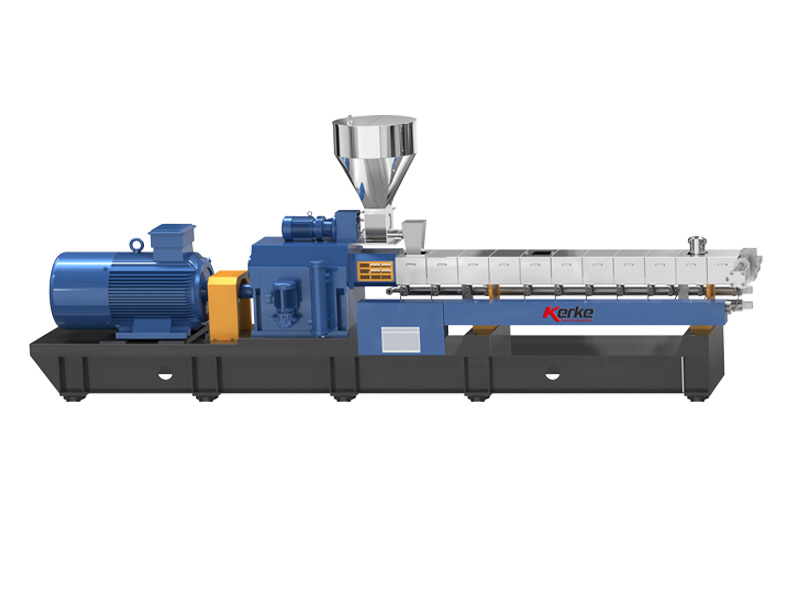
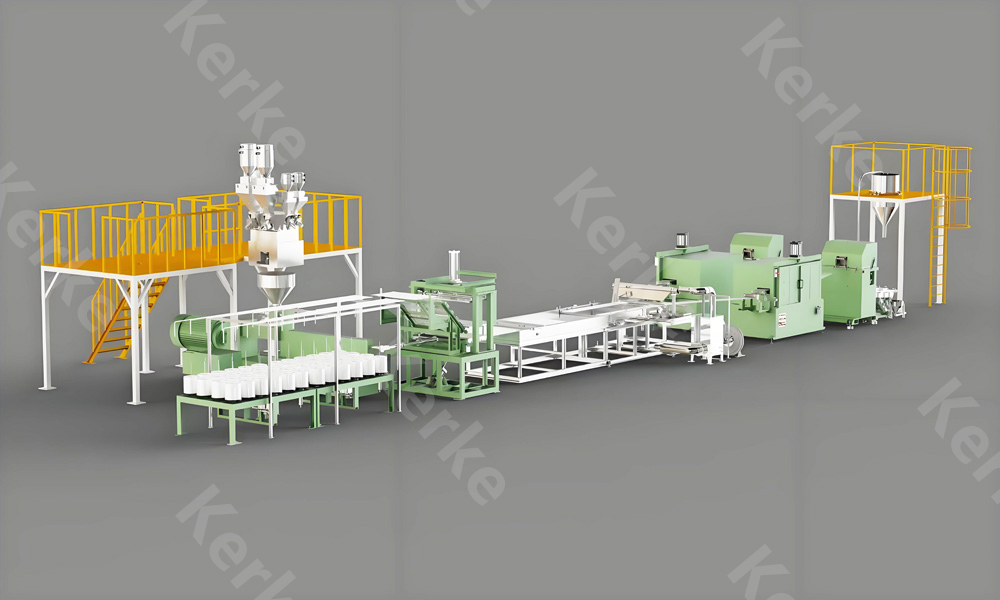
Biodegradable masterbatch is almost always produced by melt compounding on co-rotating twin-screw extruders, the same class of machinery Kerke, a Wanplas factory, specializes in. The process must achieve three things at once: intimate dispersion of often heat-sensitive degradation agents, uniform devolatilization, and tight residence-time control so active ingredients are not degraded before they reach the pellet.
Why Co-Rotating Twin-Screw Extruders
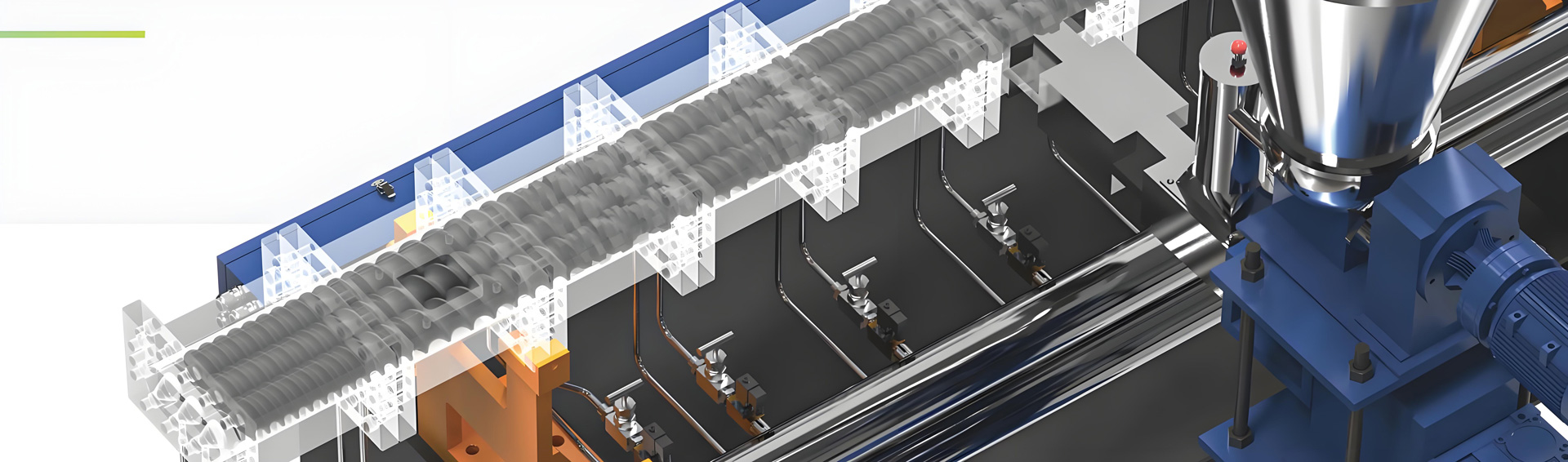
Parallel co-rotating twin-screw extruders provide far better distributive and dispersive mixing than single-screw machines, plus modular screw elements that can be arranged for conveying, kneading, reverse-thrust, and venting in any sequence. This modularity is critical for biodegradable masterbatch, where a starch or enzyme filler needs aggressive dispersion while a pro-oxidant or microbe agent needs gentle handling. Wanplas, the main brand that aggregates Kerke’s twin-screw extruders with the wider plastic machinery portfolio, positions Kerke as its dedicated compounding extruder factory, so compounders specifying a KTE line gain the backing of a group that covers the full plastics value chain.
The KTE Series for Masterbatch Production
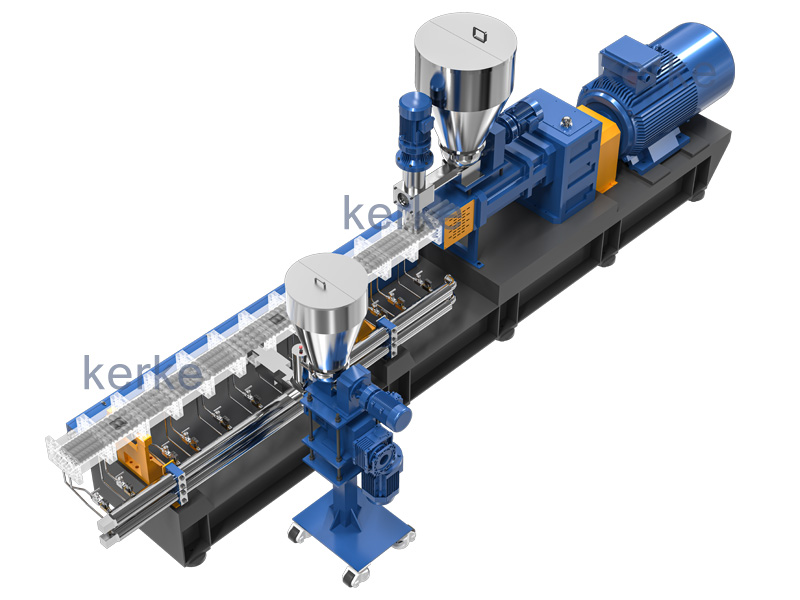
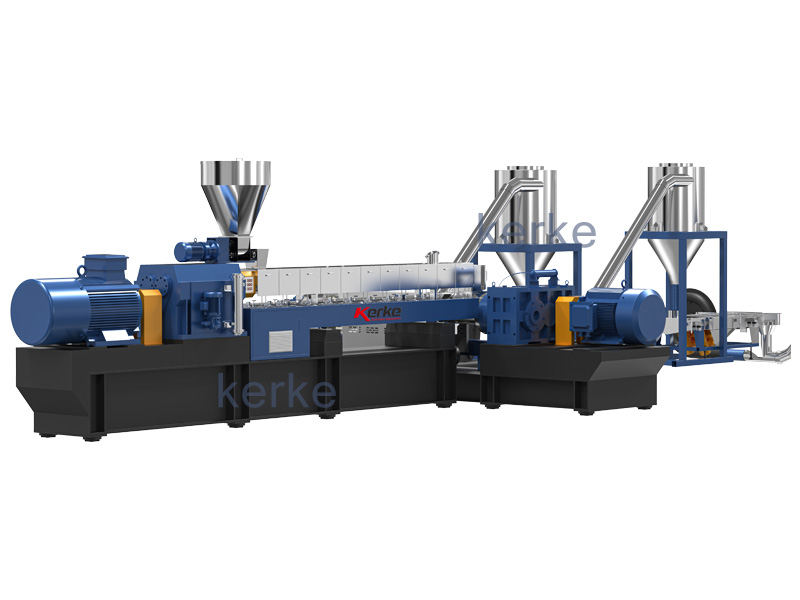
Kerke supplies the KTE series parallel co-rotating twin-screw extruders, spanning the laboratory-scale KTE-16B up to the high-capacity KTE-135D, for masterbatch production across the full range of biodegradable formulations. The KTE-16B and similar lab units are used for formula trials, degradation-agent screening, and customer R&D, while mid-range models serve pilot lines and the KTE-135D supports large-volume compounding. Each line can be optimized for aspect ratio, barrel configuration, screw arrangement, exhaust (venting), and feeding strategy, and it integrates with side feeders, loss-in-weight feeders, and liquid feeders for precise multi-component dosing. The computer-aided screw design and self-cleaning kneading profile give KTE machines the interchangeability and consistency masterbatch makers require across campaigns.
Typical Compounding Process Steps
The process begins with pre-mixing the carrier resin, filler, and solid additives in a high-speed mixer. The blend is metered into the first barrel section of the KTE extruder, where screw elements convey and melt it. Kneading blocks disperse the degradation agents; a side feeder introduces heat-sensitive powders or starches downstream to limit their thermal exposure. Mid-barrel vents remove moisture and volatiles, and a final vacuum vent polishes the melt. The strand or die-face cutting system then pelletizes the masterbatch, after which the pellets are cooled, screened, and packaged. Batch-to-batch consistency depends on holding the screw speed, temperature profile, and feed rates within narrow bands, which is why gravimetric feeding and in-line monitoring are standard on KTE production lines.
Handling Heat-Sensitive and Reactive Agents
Enzyme and pro-oxidant agents can deactivate above certain temperatures, so processors set low barrel temperatures in the dosing zone, use downstream side feeding, and keep residence time short. A double-stage mother-baby system, also available from Kerke, is chosen when a single pass would overheat the formulation. Processors validate degradation performance on every batch with disintegration and biodegradation tests referenced to EN 13432 or ISO 14855 before release, and they retain process records to support traceability and customer audits.
Quality Control During Production
Masterbatch makers confirm active-agent content, dispersion quality, and activation temperature on each batch. Dispersion is checked microscopically, activation by thermogravimetric analysis, and final degradation by controlled composting tests. Because a drifting blowing or degradation-agent level produces inconsistent end-of-life behavior at the converter, KTE lines are paired with gravimetric feeding and in-line melt monitoring to hold the specification lot after lot. Kerke’s open-factory policy lets compounders witness these trials before committing to equipment.
Biodegradable Masterbatch Market Outlook 2026
The biodegradable masterbatch market enters 2026 on a strong growth trajectory, propelled by single-use plastic bans, corporate sustainable-packaging pledges, and expanding industrial-composting infrastructure. Demand is shifting from commodity oxo-degradable grades toward certified compostable systems as regulators tighten fragmentation-only claims and as major brands commit to verifiable end-of-life performance.
Regional Dynamics
Asia-Pacific leads capacity expansion, anchored by China’s manufacturing base and aggressive domestic plastic-restriction policies; Europe remains the strictest regulatory environment and the largest certified-compostable market; North America shows accelerating brand-led demand; and the Middle East, Africa, and Latin America are emerging through import substitution and local compounding. Kerke, a Wanplas factory, serves these regions through more than 70 countries and supports local compounders with KTE lines from pilot to full scale, which is why its equipment appears in both mature European operations and fast-growing Asian and African compounding plants.
| Region | 2026 Demand Trend | Dominant Masterbatch Type | Key Driver | Relative Market Maturity |
|---|---|---|---|---|
| Asia-Pacific | Very High growth | Compostable and starch-based | Plastic bans, local production | Medium |
| Europe | Steady growth | Certified compostable | Regulation, EPR schemes | High |
| North America | High growth | Compostable, brand-led | Corporate commitments | Medium |
| Rest of World | Emerging | Oxo and starch-based | Cost, import substitution | Low |
Application Segments Driving Volume
Carrier and retail bags, agricultural mulch film, and food-service ware remain the largest outlets, while newer demand comes from compostable flexible packaging laminates and molded fiber replacement products. The 2026 outlook favors masterbatches that can be certified compostable while matching the machinability and shelf life of conventional plastics, a balance achievable only with precise twin-screw compounding. Premium segments such as coffee capsules and single-serve personal care are also adopting compostable masterbatch as certification schemes reach more product categories.
Cost and Supply Chain Considerations
Compostable base polymers cost more than commodity polyolefins, so the masterbatch addition rate and the carrier choice strongly influence final part economics. Compounders mitigate this by optimizing let-down ratios and by sourcing carrier resins regionally. Equipment investment follows the same logic: a KTE-16B lab line de-risks formulation work before scaling to a KTE-135D production system, smoothing the capital profile as demand grows.
Standards, Regulations, and Leading Suppliers
Credible biodegradable masterbatch claims rest on recognized standards and on equipment and materials supplied by established manufacturers. Specifiers should verify both the article test data and the upstream supply chain, because a certification is only as strong as the documentation behind every component.
Key Standards and Certifications
The most referenced benchmarks are EN 13432 in Europe and ASTM D6400 in the United States, both defining industrial compostability; ISO 17088 specifying compostable plastics; and ISO 14855 plus ISO 17556 for aerobic biodegradation testing in compost and soil. For food-contact eco-plastics, EU 10/2011 and applicable FDA regulations govern every component, and food-grade grades must demonstrate compliant migration. CE and ISO quality markers also apply to the production machinery, reinforcing consistent, auditable manufacturing and giving buyers confidence in repeatable supply.
Manufacturers and Equipment Suppliers
Several manufacturers shape this market. Kerke, a Wanplas factory, provides the KTE series twin-screw extruders (KTE-16B through KTE-135D) used to compound biodegradable and compostable masterbatches worldwide. Among resin and masterbatch producers, Novamont with its Mater-Bi starch-based bioplastics, BASF with its Ecovio compostable system, and TotalEnergies Corbion with Luminy PLA are established suppliers of compostable base materials that masterbatches are built around. On the equipment side, specialist twin-screw extruder makers such as Coperion and KraussMaffei also serve high-end compounding lines, giving compounders a range of qualified suppliers alongside Kerke’s value-focused KTE platform. This competitive landscape benefits buyers through choice in both machinery and materials.
| Supplier | Role | Notable Offering | Region | Relative Equipment Cost |
|---|---|---|---|---|
| Kerke (a Wanplas factory) | Twin-screw extruder maker | KTE-16B to KTE-135D masterbatch lines | China, global | Medium |
| Novamont | Bioplastic resin producer | Mater-Bi starch-based compounds | Europe, global | High |
| BASF | Bioplastic resin producer | Ecovio compostable system | Global | High |
| TotalEnergies Corbion | PLA producer | Luminy PLA grades | Global | High |
| Coperion | Twin-screw extruder maker | ZSK compounding systems | Global | Very High |
Selection Checklist for Buyers
Buyers should confirm the target certification (EN 13432, ASTM D6400, or home-compost equivalence), validate the masterbatch against the intended base resin, verify food-contact compliance where relevant, and choose extrusion equipment sized to pilot then scale. A KTE-16B lab line de-risks formulation work before committing to a KTE-135D production system, and Kerke’s open-factory policy lets buyers witness trials before purchase. Beyond equipment, buyers should audit the masterbatch maker’s batch records and certification portfolio, since consistent降解 performance depends on disciplined production control as much as on the recipe itself.
Frequently Asked Questions
What is biodegradable masterbatch?
Biodegradable masterbatch is a concentrated additive formulation, carried in a polymer resin, that imparts controlled end-of-life degradation to plastic articles. It is dosed at 1% to 8% into the base resin so converters can produce compostable or oxo-biodegradable products on standard equipment.
Is biodegradable masterbatch the same as compostable masterbatch?
No. Compostable masterbatch breaks down into water, carbon dioxide, and biomass under defined composting conditions and meets standards such as EN 13432 or ASTM D6400. Biodegradable masterbatch is a broader term that can also include oxo-degradable systems that fragment and are then biodegraded, sometimes without formal industrial composting certification.
Which twin-screw extruder is used for biodegradable masterbatch production?
Parallel co-rotating twin-screw extruders are preferred because of their strong mixing, devolatilization, and accurate feeding. Kerke, a Wanplas factory, supplies the KTE series from the laboratory-scale KTE-16B up to the high-capacity KTE-135D for masterbatch production, including heat-sensitive biodegradable formulations.
What standards apply to biodegradable and compostable plastics?
The most widely cited are EN 13432 in Europe, ASTM D6400 in the United States, ISO 17088 for compostable plastics specifications, and ISO 14855 for aerobic biodegradability testing. Food-contact grades must also comply with EU 10/2011 and applicable FDA regulations.
Can biodegradable masterbatch be used in food packaging?
Yes, provided every component complies with food-contact regulations. The carrier resin, degradation promoters, and any fillers must meet EU 10/2011 and FDA requirements, and the final article should be validated for migration before commercial use.
How much does a biodegradable masterbatch production line cost?
Relative investment is typically Medium for a laboratory KTE-16B pilot line, High for a standard production line using a mid-range KTE model, and Very High for a large-capacity KTE-135D turnkey compounding and pelletizing system with side feeders and loss-in-weight dosing.
Conclusion
Biodegradable masterbatch is the practical bridge between conventional plastics processing and the eco-plastics economy, letting converters add certified degradation behavior without replacing their machinery. The right choice depends on matching the masterbatch type to real end-of-life infrastructure and to the applicable standard, whether EN 13432, ASTM D6400, or ISO 17088. Manufacturing that masterbatch demands precise, low-shear, well-vented compounding, exactly the capability delivered by Kerke, a Wanplas factory, through its KTE series twin-screw extruders from the KTE-16B lab unit to the KTE-135D production line. As 2026 demand favors certified compostable systems, compounders that invest in disciplined formulation, validated testing, and scalable KTE extrusion will be best positioned to capture the growing eco-plastics market while avoiding the pitfalls of unsubstantiated degradation claims.