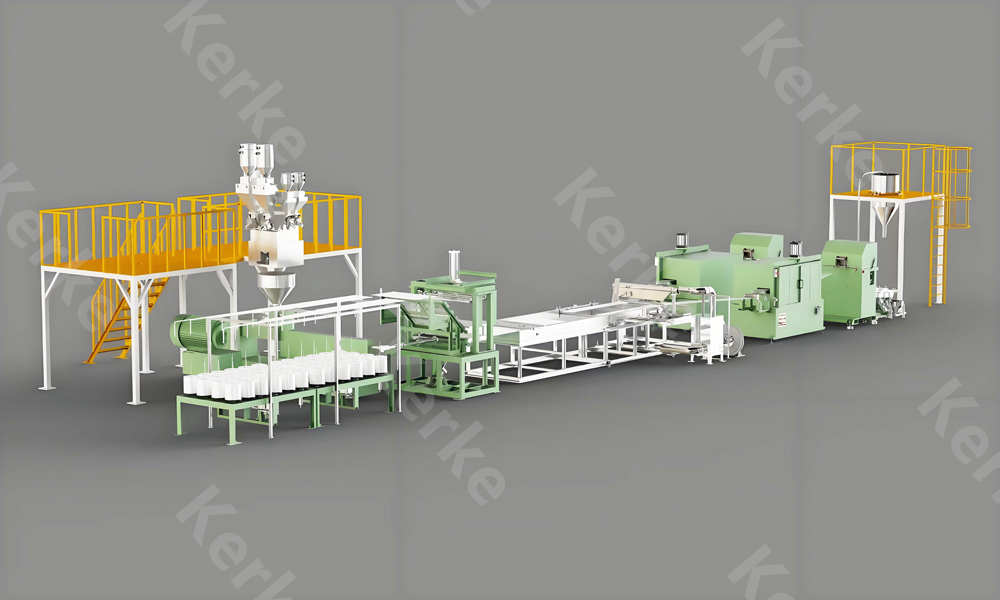
The quality of dispersion in masterbatch production directly determines the final product performance, color uniformity, and processing efficiency. When manufacturers invest in a twin screw extruder for masterbatch production, achieving optimal dispersion becomes one of the most critical technical objectives. Poor dispersion leads to color streaking, inconsistent pigmentation, and ultimately customer complaints and production losses. Understanding the key factors that influence dispersion quality allows producers to fine-tune their processes, reduce waste, and deliver superior products consistently.
This comprehensive guide explores the essential elements affecting dispersion quality in masterbatch extrusion. From screw configuration and barrel temperature management to raw material selection and quality control protocols, each factor plays a vital role in determining whether your compounding extruder achieves the uniform pigment distribution required for high-performance masterbatches. The information presented here draws from extensive industry experience and best practices developed across diverse masterbatch applications.
Manufacturers worldwide recognize that dispersion quality represents a competitive differentiator in the masterbatch marketplace. Products with superior dispersion command premium prices and build lasting customer relationships. Conversely, inconsistent dispersion creates quality claims, erodes margins, and damages reputation. Investing the effort to understand and optimize dispersion quality generates measurable business returns that justify the technical investment required.
Understanding Dispersion Fundamentals in Twin Screw Extrusion
Before diving into specific improvement strategies, having a solid understanding of dispersion fundamentals is essential. In twin screw extrusion, dispersion refers to the uniform distribution of pigment particles, additives, or fillers within the polymer matrix. The process involves breaking down agglomerates and achieving molecular-level mixing that ensures consistent color and performance properties throughout the material. This section establishes the theoretical foundation that guides practical optimization efforts.
Two primary mechanisms drive dispersion in a masterbatch extruder. The first mechanism involves distributive mixing, where materials are rearranged without significant reduction in particle size. The second mechanism involves dispersive mixing, where agglomerates are broken down through mechanical shear and impact forces. Both mechanisms must function effectively to achieve the high-quality dispersion required for premium masterbatch products. Understanding when each mechanism dominates helps optimize screw configurations and operating parameters.
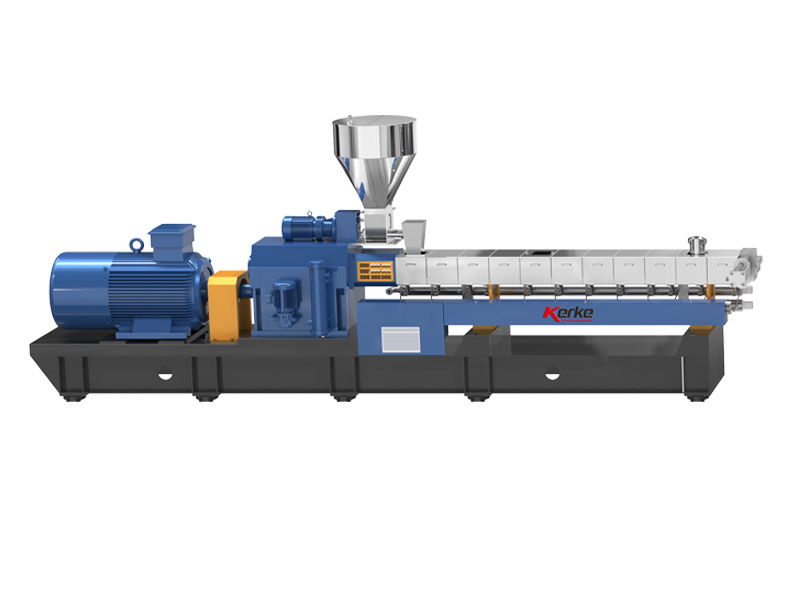
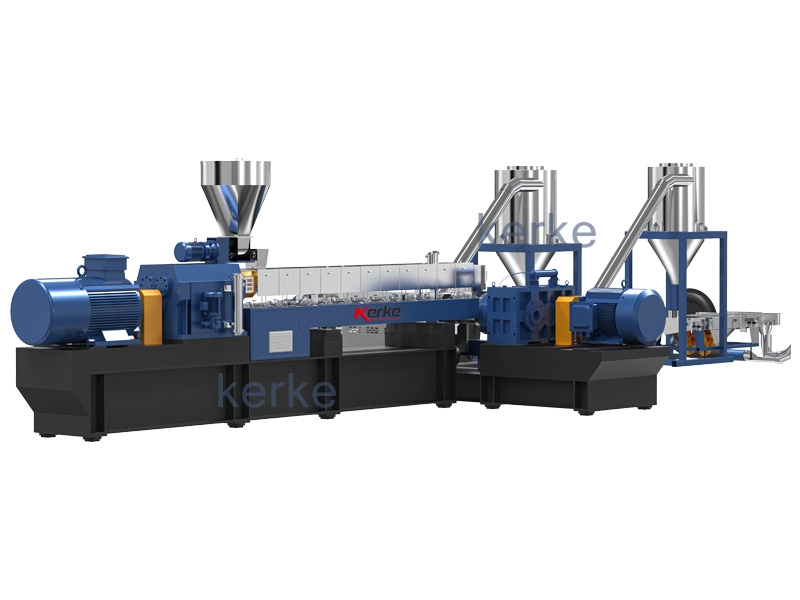
The twin screw design of the Kerke KTE series provides exceptional capabilities for both mixing mechanisms. The co-rotating screw configuration creates positive forwarding conveying while maintaining high shear zones essential for breaking down pigment agglomerates. This design advantage makes twin screw extruders the preferred choice for demanding masterbatch applications where dispersion quality cannot be compromised. The modular screw design enables precise configuration optimization for specific formulation requirements.
The Role of Shear Forces in Particle Breakdown
Shear forces generated within the extrusion barrel are responsible for breaking apart pigment agglomerates into primary particles. The magnitude and distribution of these shear forces depend on several factors including screw speed, screw geometry, and the viscosity of the material being processed. Higher viscosity materials generate greater shear stresses, which can accelerate dispersion but may also risk thermal degradation if not properly controlled. Balancing these competing effects requires careful optimization.
In a well-designed twin screw extruder, shear forces are concentrated in specific zones where dispersion is most needed. The screw configuration determines how material flows through these high-shear zones and how long it remains there. Kerke extruders feature precisely engineered mixing elements that create predictable shear patterns, allowing operators to optimize the balance between dispersion efficiency and material integrity. This predictable shear distribution distinguishes quality equipment from lesser alternatives.
The relationship between shear rate and dispersion quality follows characteristic patterns depending on pigment type and concentration. Inorganic pigments like titanium dioxide typically require lower shear levels than organic pigments with their more complex surface treatments and crystal structures. Understanding the specific shear requirements of your formulations guides configuration and parameter optimization that improves dispersion while avoiding unnecessary processing intensity.
Importance of Mixing Element Design
Mixing elements are specialized screw components designed to enhance distributive and dispersive mixing without compromising conveying efficiency. Different element designs produce different mixing characteristics, and selecting the right combination determines overall dispersion quality. Kneading blocks, rotor elements, and specialty mixing pins each contribute unique mixing capabilities to the compounding process. The selection and arrangement of these elements requires understanding of both mixing theory and practical application experience.
For masterbatch production, a typical screw configuration progresses from feed zones with forward-transporting elements, through compression zones with decreasing pitch, and into mixing zones featuring kneading blocks and rotor elements. The length and intensity of the mixing section must be carefully matched to the specific masterbatch formulation being processed. Overly aggressive mixing wastes energy and may damage heat-sensitive materials, while insufficient mixing leaves agglomerates that compromise product quality.
Kerke applications engineering provides configuration guidance based on extensive experience across diverse masterbatch formulations. This application expertise enables customers to avoid common configuration mistakes that might otherwise require extended optimization periods. The combination of quality equipment and expert application support distinguishes Kerke as a preferred supplier for demanding masterbatch applications.
Screw Configuration Optimization for Superior Dispersion
The screw configuration represents one of the most influential factors affecting dispersion quality in twin screw extrusion. A properly configured screw system ensures that materials receive adequate shear and mixing while maintaining stable throughput and temperature profiles. Optimizing screw configuration requires understanding the relationship between element selection, throughput, and the physical properties of the masterbatch formulation. This section provides detailed guidance on configuration optimization strategies.
Kerke KTE series extruders offer exceptional flexibility in screw configuration, allowing manufacturers to customize their systems for specific applications. The modular design permits easy adjustment of element types, quantities, and orientations to achieve optimal dispersion for different pigment systems and carrier resins. This flexibility enables a single machine to handle diverse formulations efficiently, reducing capital requirements for multi-product facilities.
Feed Zone Design Considerations
The feed zone serves as the entry point where raw materials are introduced and initial melting begins. Proper feed zone design ensures smooth material intake and establishes the foundation for subsequent mixing processes. Feed screw elements should provide sufficient conveying capacity to prevent material starvation while avoiding excessive compression that could cause early melting or metering problems. The feed zone sets the stage for everything that follows in the extrusion process.
For pigment concentrates and filled compounds, feed zone design must account for the bulk density and flow characteristics of the powdered or pelletized inputs. Some formulations require specialized feed screws with modified geometry to handle difficult-to-feed materials without bridging or flushing. Working with equipment specialists during the equipment selection phase helps identify potential feed zone challenges before they cause production problems.
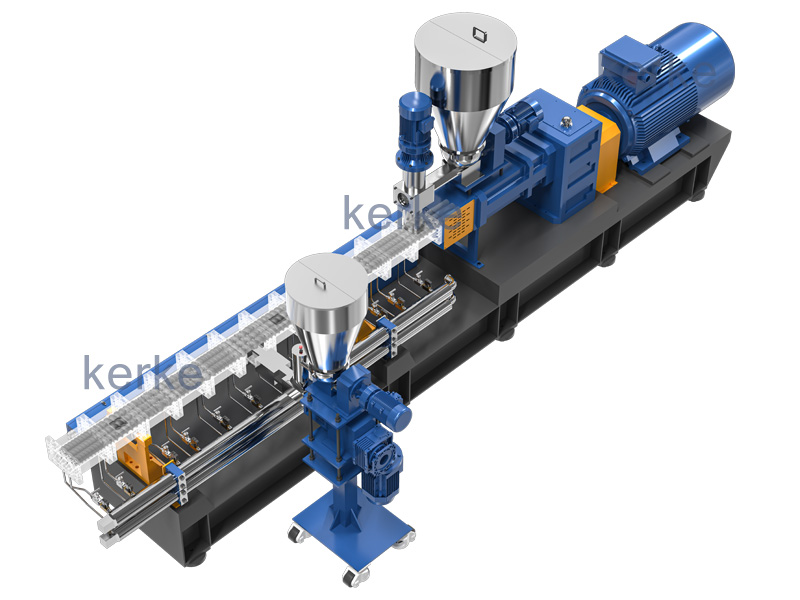
Gravimetric feeding systems provide superior accuracy for masterbatch applications where precise formulation control determines color consistency. Loss-in-weight feeders with dual-speed capability handle the transition from startup to steady-state without overfeeding or starvation. Kerke integrates feeder systems with extruder controls for coordinated operation that maintains formulation accuracy throughout production runs.
Compression Zone Engineering
The compression zone transitions material from the feed zone to the melting and mixing zones. Proper compression ratio ensures complete melting before the material enters high-shear mixing sections. Insufficient compression leads to solid particle carryover that damages dispersion quality, while excessive compression causes premature melting and potential material degradation. Achieving the correct compression requires balancing multiple factors.
Typical compression ratios for masterbatch extrusion range from 1.5:1 to 3:1, depending on the formulation and target output. Kerke extruders allow precise adjustment of compression through element pitch variation, enabling manufacturers to optimize the compression profile for their specific materials and throughput requirements. This adjustability distinguishes quality equipment from less flexible alternatives.
Temperature in the compression zone affects how effectively compression achieves melting. The interaction between mechanical compression and thermal energy determines melting behavior and subsequent mixing efficiency. Optimizing compression zone temperatures in conjunction with screw geometry creates the conditions for effective dispersion downstream.
Mixing Section Optimization
The mixing section is where dispersion quality is ultimately determined. Kneading blocks arranged in staggered configurations create alternating high-pressure and low-pressure zones that fold and shear the material repeatedly. The number of kneading disks, their width, and their angular offset all influence mixing intensity and efficiency. Each configuration parameter affects dispersion in predictable ways that experienced operators learn to optimize.
Longer mixing sections with more aggressive kneading configurations improve dispersion but increase shear heat generation and residence time. For heat-sensitive pigments or carrier resins, a balance must be struck between dispersion quality and thermal stability. Kerke engineers recommend specific mixing section configurations based on years of application experience across diverse masterbatch formulations. This application expertise helps customers avoid the trial-and-error that would otherwise be required.
Multiple mixing zones can be incorporated into extended screw configurations for formulations requiring intensive mixing. This staged approach applies mixing progressively as material viscosity decreases during melting, ensuring that aggressive mixing occurs when material can most effectively承受 shear forces. Staged mixing configurations often achieve better dispersion than single-pass intensive mixing while generating less thermal stress on materials.
Temperature Profile Management for Dispersion Excellence
Temperature control throughout the extrusion barrel significantly impacts dispersion quality and overall process stability. The relationship between barrel temperature, material viscosity, and shear heat generation must be carefully balanced to achieve optimal results. Temperature profiling allows manufacturers to create different thermal environments in specific barrel zones, supporting the various stages of melting, mixing, and pumping. Precise temperature control distinguishes professional equipment from basic alternatives.
Kerke twin screw extruders feature advanced temperature control systems with multiple heating and cooling zones. This precise thermal management capability enables operators to develop optimized temperature profiles that maximize dispersion while minimizing energy consumption and material degradation. The sophistication of temperature control directly affects achievable dispersion quality and process stability.
Barrel Zone Configuration Strategies
Modern twin screw extruders divide the barrel into multiple independent temperature zones, typically numbering from six to twelve zones depending on barrel length and machine size. Each zone can be independently heated or cooled to maintain precise temperature setpoints throughout the process. This granularity allows for sophisticated temperature profiling that supports complex mixing requirements. Zone numbers and capabilities vary with equipment class and manufacturer.
The first few zones near the feed throat typically operate at lower temperatures to prevent material from sticking or bridging in the feed zone. As material progresses through the barrel, temperatures gradually increase to support melting and maintain appropriate viscosity for mixing. The final zones before the die may be adjusted to control melt temperature and pressure for die forming. Each zone serves a specific function in the overall process.
Developing optimal temperature profiles requires understanding how temperature affects viscosity, which in turn affects shear stress and mixing efficiency. Higher temperatures reduce viscosity, decreasing shear stress and mixing intensity. Lower temperatures increase viscosity, improving shear stress but potentially reducing dispersion efficiency if viscosity becomes too high. The optimal profile balances these effects for specific formulations.
Managing Shear Heat Generation
Shear heat generated during mixing can significantly affect local temperatures within the barrel. This internally generated heat must be accounted for when developing temperature profiles, as excessive shear heat combined with barrel heating can cause thermal degradation of heat-sensitive materials. Monitoring actual material temperatures rather than relying solely on zone setpoints provides more accurate process control. Infrared pyrometers and melt thermocouples provide valuable feedback for thermal optimization.
In high-intensity mixing applications, some zones may require active cooling to remove excess shear heat. Kerke extruders incorporate efficient cooling systems that prevent temperature runaway during aggressive mixing operations. Proper cooling integration ensures that shear forces contribute to dispersion without causing thermal damage to the masterbatch formulation. Cooling system capacity must match the heat generation of intended applications.
The interaction between barrel heating and cooling creates the temperature environment that determines processing quality. During startup, barrel heating establishes initial conditions. As production proceeds, shear heat contribution increases. Adaptive control algorithms can adjust heating based on actual temperature measurements to maintain consistent conditions despite changing heat generation rates.
Die Zone Temperature Considerations
The die zone temperature affects melt viscosity and pressure at the extrusion point. Proper die temperature ensures smooth melt flow through the die holes and prevents die build-up that can cause output inconsistencies. For color masterbatches, die temperature also influences pigment orientation and final color development in the processed material. Die temperature optimization completes the thermal profile optimization process.
Tempering units or cartridge heaters provide precise die temperature control for demanding applications. Some masterbatch producers use heated dies with independent temperature control to optimize melt conditions for specific formulations. The investment in dedicated die heating often pays dividends in improved product quality and reduced startup waste. Die design should accommodate temperature control requirements.
Die pressure monitoring provides valuable information about melt viscosity and processing stability. Pressure variations indicate changes in material properties or processing conditions that might affect quality. Kerke control systems integrate die pressure monitoring with temperature control for comprehensive process management. This integrated approach enables rapid response to process variations.
Raw Material Selection and Preparation Impact
The quality of incoming raw materials fundamentally limits the achievable dispersion quality regardless of how well the extrusion process is optimized. Pigment concentrates, carrier resins, and additive packages must meet specific quality specifications to ensure consistent processing and final product performance. Establishing robust incoming material inspection protocols prevents quality problems before they enter the extrusion process. Material quality management is foundational to quality improvement efforts.
Supplier relationships and material qualification processes directly impact manufacturing consistency. Working with qualified suppliers who provide consistent pigment dispersions and carrier resins reduces process variability and improves overall product quality. Material specifications should clearly define acceptable ranges for critical parameters that affect extrusion performance. Supplier quality programs create the foundation for consistent production.
Pigment Concentrate Quality Assessment
Pigment concentrates provided by suppliers vary significantly in their degree of pre-dispersion. High-quality concentrates feature well-dispersed pigments that require less additional processing to achieve uniform incorporation into the final masterbatch. However, even excellent concentrates may contain micro-agglomerates that benefit from further dispersive mixing in the twin screw extruder. Understanding concentrate quality guides processing parameter selection.
Testing pigment concentrate properties provides valuable information for process optimization. Measurements of particle size distribution, color strength, and rheological behavior help predict processing requirements and achievable dispersion quality. This information guides screw configuration decisions and temperature profile development. Comprehensive testing capabilities distinguish professional operations from casual producers.
Accelerated storage testing predicts how pigment concentrates will perform over time. Some concentrates undergo rheological changes during storage that affect processing behavior. Understanding storage stability helps optimize inventory management and production scheduling. This testing investment prevents quality problems from degraded materials.
Carrier Resin Selection Criteria
The carrier resin serves as the matrix for pigment and additive dispersion. Resin properties including molecular weight, melt flow index, and thermal stability influence both processing conditions and final masterbatch performance. Selecting the appropriate carrier resin for the target application ensures compatibility with end-use polymers and processing requirements. Carrier selection affects both processing and final product properties.
For high-concentration masterbatches, carrier resin selection becomes even more critical. The carrier must effectively wet and incorporate large quantities of pigment while maintaining appropriate viscosity for the extrusion process. Kerke applications engineers can provide recommendations for carrier resin selection based on specific formulation requirements. This application expertise helps customers avoid common selection mistakes.
Resin lot consistency affects color consistency of finished masterbatches. Lot-to-lot variations in melt flow index or molecular weight distribution create processing differences that manifest as color variations. Establishing resin specifications with appropriate tolerances ensures acceptable consistency. For critical colors, single-lot resin qualification may be necessary.
Additive Package Optimization
Beyond pigments, masterbatch formulations often include processing aids, dispersing agents, antioxidants, and other functional additives. Each component influences processing behavior and final product properties. The interaction between additives must be considered when developing formulations, as some combinations may cause processing difficulties or performance compromises. Comprehensive formulation understanding enables optimization.
Dispersing agents specifically designed for masterbatch applications reduce pigment aggregate surface tension and improve incorporation efficiency. These additives can enhance dispersion quality while allowing lower processing intensities that preserve material properties. The cost of dispersing agents is often justified by improved quality and reduced processing time. Supplier technical support helps optimize additive selection.
Antioxidants and stabilizers protect heat-sensitive materials from degradation during extrusion. The addition timing and concentration of these additives affect their effectiveness. Some additives work best when pre-blended with the formulation, while others perform better when added separately. Understanding these interactions guides procedure development.
Process Parameter Optimization Strategies
Once screw configuration, temperature profiles, and material selection have been established, fine-tuning process parameters completes the optimization process. Screw speed, throughput rate, and back pressure all influence dispersion quality and must be balanced against productivity requirements. Systematic optimization approaches help identify the optimal operating window for specific formulations. This optimization phase extracts maximum performance from configured equipment.
Kerke extruders feature advanced control systems that maintain process stability during parameter adjustments. Variable frequency drives provide smooth speed control across a wide operating range, enabling precise optimization of mixing intensity. Data logging capabilities support statistical process control and continuous improvement initiatives. These capabilities enable sustained optimization over extended production periods.
Screw Speed Optimization
Screw speed affects multiple aspects of the extrusion process simultaneously. Higher speeds increase shear rates, improve distributive mixing through increased material rearrangements, and generally enhance dispersion. However, higher speeds also increase shear heat generation, potentially exceeding thermal stability limits of sensitive materials. The speed-dispersion relationship requires careful characterization for each formulation.
The relationship between screw speed and dispersion quality follows a characteristic curve where improvements plateau at some point. Operating beyond this point provides diminishing returns while increasing energy consumption and wear rates. Determining the optimal screw speed for each formulation balances these competing factors to achieve the best combination of quality, productivity, and equipment longevity. Systematic testing identifies the optimal speed.
Speed optimization should consider both steady-state operation and transition periods. Startup and shutdown sequences often involve non-optimal conditions that affect quality. Optimizing transition procedures reduces the proportion of production time spent in non-optimal conditions. Standardized operating procedures ensure consistent quality across operators and shifts.
Throughput Rate Considerations
Throughput rate determines material residence time in the extruder, which directly impacts mixing opportunity. Lower throughput rates increase residence time and typically improve dispersion quality, but reduce productivity and increase per-kilogram processing costs. The optimal throughput balances these economic and quality considerations. Throughput selection reflects the relative value of quality versus productivity.
Different barrel zones respond differently to throughput changes. The feed zone sets the basic throughput capacity, while downstream mixing zones experience reduced fill levels at lower throughputs. This altered fill level affects shear intensity and mixing efficiency, requiring temperature adjustments to maintain consistent quality across different production rates. Zone-by-zone analysis reveals optimization opportunities.
Maximum throughput may be limited by different factors than minimum quality throughput. Understanding these limiting factors guides equipment sizing and operating strategy development. Kerke applications engineering supports throughput optimization as part of comprehensive process development. This support helps customers achieve their quality and productivity objectives.
Back Pressure Management
Back pressure at the die end of the extruder influences melt density and packing in the mixing section. Higher back pressure increases material compaction and improves melt homogeneity but requires more pumping energy. Back pressure is controlled through die restriction, screen pack usage, and screw configuration adjustments. Proper back pressure management ensures stable processing.
For masterbatch applications requiring excellent dispersion, maintaining adequate back pressure ensures that mixing elements remain fully packed and functioning effectively. Insufficient back pressure allows material to expand and reduces contact between mixing surfaces, compromising dispersion quality. Kerke technical support can recommend appropriate back pressure ranges for specific applications. This expertise comes from extensive application experience.
Back pressure monitoring provides insight into mixing section fill level and process stability. Pressure variations indicate changes in material characteristics or equipment condition. Trend analysis of back pressure data reveals gradual changes that might escape real-time observation. This monitoring capability supports proactive maintenance and quality management.
Quality Control and Testing Methodologies
Implementing comprehensive quality control procedures ensures that dispersion quality remains consistent across production batches. Regular testing of intermediate and final products identifies quality trends before they result in customer complaints or production losses. Statistical process control techniques transform quality testing from reactive inspection into proactive process management. These quality systems provide the foundation for continuous improvement.
Investment in testing equipment and trained personnel represents a necessary cost of producing high-quality masterbatches. The specific tests required depend on the masterbatch application and customer requirements, but certain fundamental tests apply across most masterbatch production scenarios. Comprehensive testing capabilities distinguish professional operations from casual producers.
Color Consistency Testing
Color measurement using spectrophotometry provides objective assessment of color consistency between batches. The CIELAB color space quantifies color differences as delta-E values, with lower values indicating better color matching. Establishing specification limits for delta-E values ensures that product color remains within acceptable tolerance ranges. Color measurement technology continues to evolve, offering improved capabilities.
Testing should include measurements of multiple samples from each batch to identify within-batch variation as well as between-batch consistency. Sample preparation procedures must be standardized to ensure reproducible results. Kerke applications support includes guidance on color testing methodologies and specification development. Standardized procedures ensure consistent results across operators and equipment.
Color measurement at multiple letdown ratios provides additional insight into masterbatch performance. A masterbatch that matches at one concentration may perform differently at another due to dispersion quality effects on color development. Testing across the expected application range ensures that quality holds throughout customer use conditions.
Dispersion Testing Techniques
Beyond color measurement, specific tests assess the degree of pigment dispersion achieved during processing. Microscopic examination of diluted samples reveals pigment aggregate size and distribution. Filter pressure value testing indicates the presence of undersized aggregates that could cause processing problems in downstream applications. These tests provide diagnostic information that color measurement alone cannot provide.
The Herreshoff spi test or similar incorporation tests measure how easily masterbatch incorporates into base polymers during letdown. Poor dispersion manifests as slow incorporation, color streaking, or fisheye formation. These tests provide early warning of dispersion problems before they reach customer applications. Incorporation testing validates production quality for specific applications.
Gloss and haze measurements detect surface defects that may result from incomplete dispersion. Poorly dispersed pigments create surface irregularities that affect appearance in finished products. These optical measurements complement color measurements to provide comprehensive quality assessment. Surface quality increasingly drives customer satisfaction in demanding applications.
Physical Property Verification
Masterbatch physical properties affect both processing performance and final product characteristics. Melt flow index testing verifies that carrier resin properties remain consistent across batches. Ash content testing confirms proper additive loading for filled compounds. Mechanical testing of test plaques verifies that masterbatch does not compromise end-product properties. These tests ensure that masterbatch meets functional requirements.
Each quality test generates data that feeds into statistical process control systems. Control charts track process capability over time, identifying trends that require corrective action before specifications are exceeded. These quality systems provide the foundation for continuous improvement and customer satisfaction. SPC implementation requires investment in both technology and training.
Laboratory capabilities should match the quality requirements of intended applications. Some applications require sophisticated testing that exceeds basic laboratory capabilities. Outsourcing testing for infrequently needed tests may be more economical than maintaining comprehensive in-house capabilities. Testing strategy should align with business strategy and customer requirements.
Equipment Maintenance for Consistent Quality
Maintaining extrusion equipment in optimal condition ensures that dispersion quality remains consistent over time. Wear in screws, barrels, and other components gradually degrades process performance if not addressed through preventive maintenance programs. Establishing maintenance schedules based on operating hours and production volumes protects quality and extends equipment life. Proactive maintenance prevents the quality degradation that characterizes neglected equipment.
Kerke provides comprehensive technical support and spare parts services for their complete line of twin screw extruders. Regular maintenance using genuine Kerke replacement parts ensures continued performance matching original specifications. This support infrastructure enables customers to maintain quality over extended production periods. Long-term customer relationships depend on sustained equipment performance.
Screw and Barrel Wear Assessment
Screw elements and barrels experience wear during normal operation, particularly when processing abrasive pigments or filled compounds. Wear reduces clearances between screws and between screws and barrel, altering shear patterns and mixing efficiency. Regular inspection identifies wear progression and determines when replacement becomes necessary. Inspection frequency should match application severity.
Visual inspection and dimensional measurement compare current component condition against specifications. When clearances exceed acceptable limits, mixing performance degrades even if throughput remains stable. Replacing worn components before quality problems develop maintains consistent production quality. Waiting for quality problems to appear results in customer complaints and potential business loss.
Wear rate depends on formulation abrasiveness, operating severity, and component materials. Establishing wear rate estimates for specific applications enables scheduled replacement that prevents quality degradation. Kerke provides wear rate guidelines based on application experience. These guidelines help customers plan maintenance activities and budget for replacement parts.
Wear-Resistant Component Options
For applications involving highly abrasive materials, wear-resistant coatings or specialized materials extend component life significantly. Tungsten carbide coatings on screw elements and barrel liners provide excellent wear resistance while maintaining appropriate surface finishes for good material release. The additional cost of wear-resistant components often proves economical for high-volume production of abrasive formulations. Cost-benefit analysis guides wear protection investment.
Kerke offers various wear protection options for their extruder models, from standard nitrided surfaces for general applications to advanced coatings for severe service. Applications engineering support helps select appropriate wear protection based on specific formulation requirements and production volumes. This guidance comes from extensive experience across diverse applications. Investment in appropriate wear protection reduces total cost of ownership.
Cost Analysis for Dispersion Quality Improvement
Investing in dispersion quality improvement requires understanding both the costs involved and the financial benefits achieved. Quality improvements reduce waste, increase productivity, and strengthen customer relationships, providing returns that justify equipment and process investments. A comprehensive cost-benefit analysis guides investment decisions for quality improvement initiatives. This analysis ensures that investments generate appropriate returns.
Quality costs fall into multiple categories including prevention, appraisal, internal failure, and external failure costs. Prevention investments generally provide the best return by reducing problems before they occur. Investment in dispersion quality improvement typically reduces all quality cost categories simultaneously. Understanding this multi-category impact reveals the true value of quality improvement investments.
Equipment Investment Considerations
Modern twin screw extruders with advanced mixing capabilities represent significant capital investments. The Kerke KTE series provides various capacity options with corresponding price points. The KTE-36B model priced at $25,000 to $35,000 suits small-scale production and pilot operations, while the KTE-95D model at $120,000 to $200,000 handles high-volume production requirements. Equipment selection should consider both current requirements and future growth potential.
Higher-capacity models generally provide better dispersion quality due to their ability to maintain stable processing at lower speeds while achieving adequate shear intensities. For demanding masterbatch applications, investing in appropriately sized equipment ensures that quality requirements can be met consistently. Undersized equipment may struggle to achieve quality objectives, while oversized equipment represents unnecessary capital investment.
Beyond the base equipment, additional investments in feeding systems, temperature control, and testing equipment complete the quality-capable installation. These auxiliary investments often equal or exceed the extruder cost itself. Budget planning should account for the complete installation rather than equipment alone. Kerke provides comprehensive quotations that include all necessary components.
Operating Cost Optimization
Energy consumption represents the largest operating cost category for extrusion operations. Optimizing screw speed, temperature profiles, and throughput to balance quality and efficiency minimizes energy costs per unit of production. Variable frequency drives on Kerke extruders enable precise speed control that optimizes energy usage across different operating conditions. Energy efficiency directly affects manufacturing cost competitiveness.
Material waste reduction through improved quality directly impacts production costs. Each percentage point improvement in first-pass quality reduces raw material waste and associated disposal costs. Customer returns and complaints create additional costs including logistics, investigation, and potential contract penalties. These hidden costs often exceed the visible waste costs that receive more attention.
Maintenance costs vary with equipment quality, operating conditions, and maintenance practices. Well-designed equipment with appropriate wear protection reduces maintenance frequency and cost. Kerke equipment incorporates design features that extend maintenance intervals while reducing service requirements. Total cost of ownership analysis reveals these long-term benefits.
Quality and Productivity Value
The value of consistent quality often exceeds the direct cost savings from reduced waste. Customer satisfaction, repeat business, and premium pricing for quality products generate ongoing revenue benefits. Productivity improvements from faster cycles or reduced changeover time increase output without proportional cost increases. These value components often dominate financial justification calculations.
Competitive positioning improves with demonstrated quality capability. Customers seeking reliable supply partners prefer vendors with documented quality systems. Quality certifications and compliance programs create barriers to entry that protect market position. These strategic benefits complement the operational benefits that directly affect manufacturing costs.
Risk reduction represents another quality investment benefit. Poor quality creates exposure to customer claims, contract penalties, and reputation damage. Quality improvement reduces these risks while building confidence in business performance. Risk-adjusted return calculations account for these benefits that otherwise appear in contingency reserves.
Conclusion
Achieving excellent dispersion quality in masterbatch extrusion requires attention to multiple interconnected factors including screw configuration, temperature management, raw material quality, process optimization, and quality control. Twin screw extruders from Kerke provide the technical capabilities necessary for demanding masterbatch applications, with models ranging from the compact KTE-36B for specialty production to the high-capacity KTE-95D for volume manufacturing. The combination of quality equipment and systematic optimization generates sustained competitive advantage.
Success in masterbatch production combines proper equipment selection with systematic process optimization and quality management. Manufacturers who invest in understanding dispersion fundamentals and implementing comprehensive improvement programs achieve sustainable quality advantages over competitors. The investment in dispersion quality improvement generates returns through reduced waste, improved customer satisfaction, and enhanced production efficiency.
Contact Kerke applications engineering to discuss your specific masterbatch production requirements and discover how modern twin screw extrusion technology can improve your dispersion quality and overall business performance. This consultation connects you with expertise that accelerates your quality improvement journey.