Medical device and pharmaceutical packaging applications demand masterbatch products that provide consistent antifungal protection while meeting stringent regulatory requirements for patient safety. Antifungal masterbatch enables manufacturers to incorporate antimicrobial protection directly into plastic components used in medical environments where fungal contamination poses significant health risks. The production of medical grade antifungal masterbatch requires continuous processing equipment capable of maintaining strict quality standards throughout extended production runs while handling sensitive pharmaceutical-grade materials. Continuous twin screw extrusion technology provides the reliability, consistency, and processing control required for medical grade masterbatch manufacturing where product quality cannot be compromised and regulatory compliance is mandatory.
Introduction
Fungal contamination in medical settings presents serious risks to patient health, particularly for immunocompromised individuals and those undergoing invasive medical procedures. Medical devices, pharmaceutical containers, and healthcare facility surfaces can harbor fungal organisms that cause infections ranging from superficial skin conditions to life-threatening systemic diseases. Antifungal masterbatch provides an active protection mechanism by incorporating antifungal agents into plastic materials during manufacturing, creating products that continuously inhibit fungal growth throughout their service life.
Medical grade masterbatch production differs fundamentally from standard industrial masterbatch manufacturing due to the critical quality requirements and regulatory compliance obligations inherent in medical applications. These differences extend throughout the production operation, from raw material qualification through final product testing and documentation. Continuous processing equipment must deliver consistent product quality across extended production runs while maintaining the validation documentation required for regulatory compliance and customer qualification.
This comprehensive guide addresses the technical, regulatory, and operational considerations for medical grade antifungal masterbatch production using continuous twin screw extrusion equipment. The content provides practical guidance for manufacturers seeking to establish or improve medical grade masterbatch capabilities while maintaining the quality standards and regulatory compliance required for this demanding market segment.
Formulation Requirements for Medical Grade Antifungal Masterbatch
Approved Antifungal Agents
Selection of antifungal agents for medical grade masterbatch must comply with pharmaceutical regulatory requirements that vary by target market and intended application. In the United States, FDA guidance documents establish requirements for materials used in medical devices and pharmaceutical packaging. The European Medicines Agency provides additional requirements for pharmaceutical applications. Active pharmaceutical ingredient status may apply to certain antifungal compounds when used in specific medical device applications, requiring additional regulatory compliance documentation.
Commonly used antifungal agents for medical applications include silver-based compounds, which provide broad-spectrum antifungal activity through controlled release of silver ions. Zinc compounds including zinc pyrithione offer effective antifungal protection with established safety profiles in medical applications. Natural antifungal compounds such as essential oil components may be used in formulations targeting consumer medical devices, though regulatory requirements may differ from synthetic alternatives. Formulation development must verify that all components meet applicable regulatory requirements for the specific intended medical application.
Medical Grade Carrier Resins
Carrier resin selection for medical grade antifungal masterbatch requires careful attention to regulatory compliance, biocompatibility, and processing characteristics. Medical grade polymers must demonstrate biocompatibility through appropriate testing protocols established by ISO 10993 for medical devices or applicable pharmaceutical packaging standards. Resin suppliers should provide comprehensive technical documentation supporting medical grade claims, including regulatory compliance statements and biocompatibility testing results.
Common medical grade carrier resins include polycarbonate, which offers excellent clarity, impact resistance, and compatibility with medical sterilization methods. Polypropylene provides good chemical resistance and cost-effective performance for many medical applications. Thermoplastic elastomers offer flexibility and soft-touch characteristics useful for medical device components. The specific resin selection depends on intended application requirements including mechanical properties, sterilization compatibility, and regulatory compliance for the target medical use.
Formulation Composition Guidelines
Medical grade antifungal masterbatch formulations typically include 55-70% medical grade carrier resin, 15-25% antifungal agents, and 10-20% processing aids and stabilizers. Higher carrier loading may simplify regulatory compliance by reducing the concentration of active antifungal agents in the final product while still providing effective antimicrobial protection. The specific composition must be optimized based on application requirements, regulatory considerations, and processing capabilities of available production equipment.
Stabilizer systems including antioxidants and UV absorbers protect both the carrier resin and antifungal agents from degradation during processing and storage. Medical grade antioxidants such as vitamin E derivatives offer effective stabilization while maintaining biocompatibility and regulatory compliance. Metal deactivators may be appropriate for formulations containing metal-based antifungal agents to prevent catalytic degradation reactions.
Continuous Production Process for Medical Grade Antifungal Masterbatch
Continuous Processing Advantages
Continuous twin screw extrusion offers significant advantages for medical grade masterbatch production compared to batch processing alternatives. The continuous nature of twin screw extrusion enables consistent product quality across extended production runs, reducing batch-to-batch variability that complicates quality control and regulatory compliance. Extended production runs of 8-24 hours enable efficient production volumes while minimizing the changeover frequency that introduces contamination risks and reduces production efficiency.
Real-time process monitoring capabilities in modern continuous extrusion systems enable immediate detection and correction of processing deviations that could affect product quality. Continuous monitoring reduces the risk of producing large quantities of non-conforming product before quality problems are detected, minimizing production losses and regulatory compliance risks. The inherent consistency of continuous processing supports the tight quality specifications required for medical grade products while maintaining acceptable production economics.
Raw Material Handling and Preparation
Medical grade production requires rigorous raw material handling procedures that prevent contamination and ensure consistent material quality throughout production. All raw materials should be received, stored, and handled according to documented procedures that maintain material integrity and traceability. Medical grade materials typically require climate-controlled storage that prevents moisture absorption, temperature fluctuations, and other environmental factors that could affect material properties.
Drying procedures for hygroscopic medical grade polymers require validated parameters that ensure consistent moisture content across production batches. The moisture sensitivity of some medical grade polymers requires particular attention to drying equipment calibration, dryer performance monitoring, and material hold time controls. Continuous monitoring of material moisture content during feeding provides verification that drying procedures are effective throughout extended production runs.
Extrusion Process Control
Continuous extrusion process control for medical grade antifungal masterbatch requires integration of multiple monitoring and control systems that maintain product quality throughout production. Temperature control across multiple barrel zones ensures consistent processing conditions despite varying material throughput and composition. Advanced temperature control algorithms respond to process variations more effectively than simple proportional controllers, maintaining tighter temperature tolerances that benefit quality-sensitive medical applications.
Motor load monitoring provides indirect measurement of material viscosity and processing consistency that can indicate developing problems before they affect product quality. Pressure monitoring throughout the extrusion system identifies blockages, mixing inconsistencies, and other process deviations requiring attention. Continuous data logging captures all process parameters for each production run, providing the documentation required for regulatory compliance and quality investigations.
Quality Verification Systems
Medical grade production requires continuous quality verification systems that confirm product specifications are maintained throughout production. In-line monitoring systems provide real-time measurements of critical quality attributes including color, dispersion, and physical characteristics. Automated sampling systems collect representative samples at validated intervals for laboratory testing that verifies antifungal content and other specifications requiring analytical verification.
Statistical process control methods applied to continuous production data enable early detection of process shifts that could affect product quality. Control charts for key process parameters and quality measurements identify trends requiring investigation before they result in out-of-specification product. The combination of continuous monitoring and statistical analysis provides comprehensive quality assurance that satisfies both internal quality requirements and external regulatory expectations.
Production Equipment for Medical Grade Antifungal Masterbatch
KTE Series Continuous Twin Screw Extruder
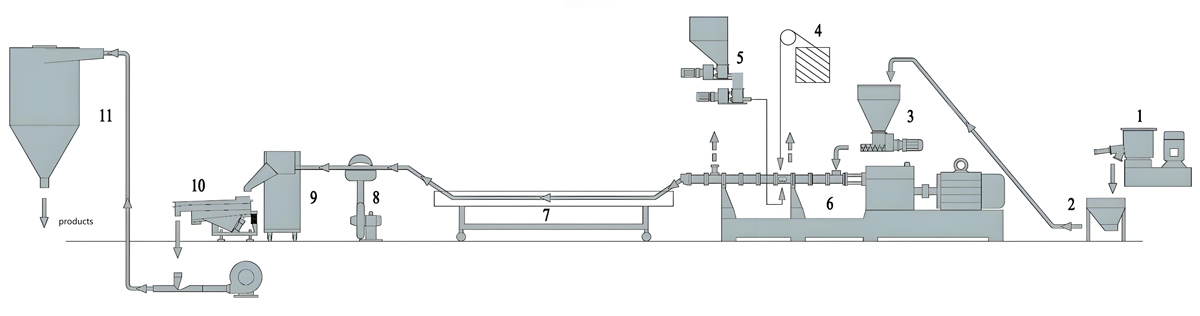
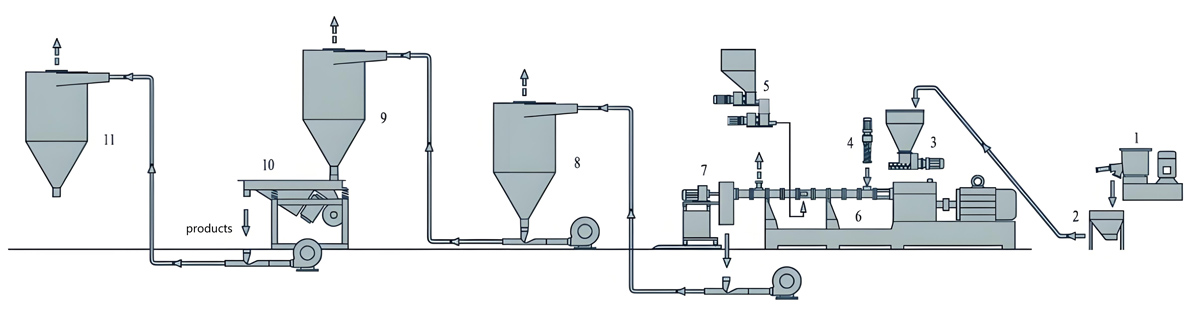
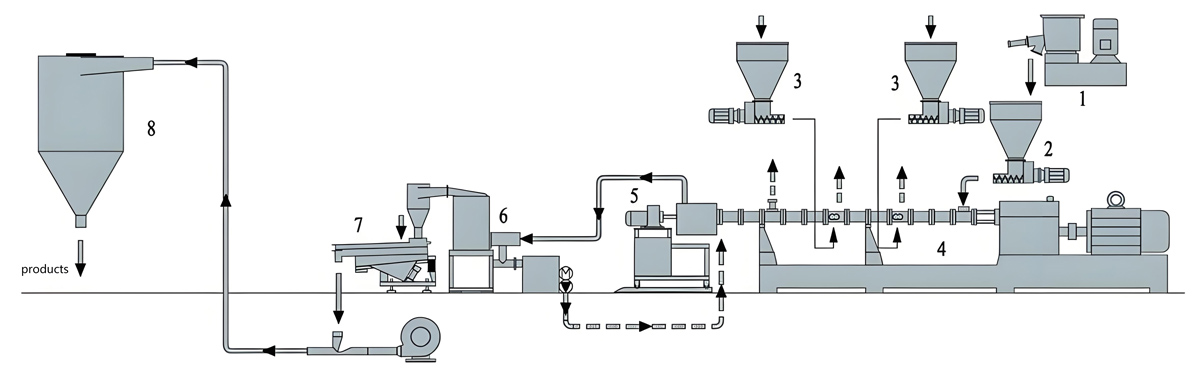
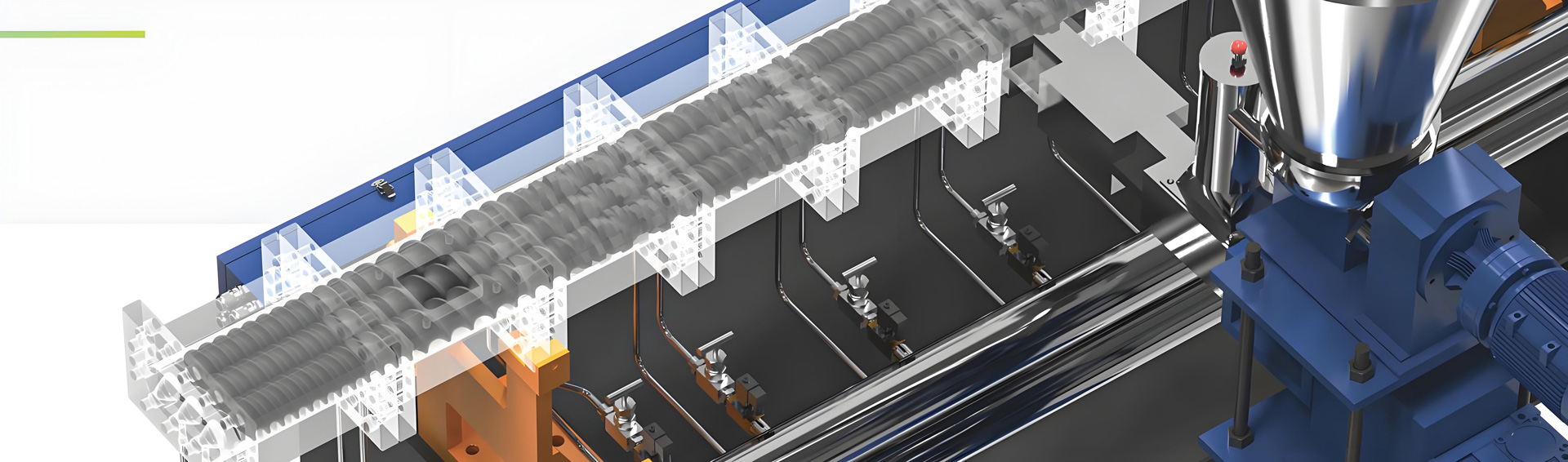
The KTE Series continuous twin screw extruder from Kerke provides the processing capability, reliability, and documentation systems required for medical grade antifungal masterbatch production. Continuous operation capability supports extended production runs without the quality variations that accompany batch processing approaches. The modular design enables optimization of screw configuration for specific medical grade formulations while maintaining the flexibility to accommodate formulation changes with appropriate cleaning procedures.
Advanced control systems in the KTE Series provide the precise process control required for medical grade production. Multi-zone temperature control maintains processing conditions within tight tolerances throughout extended production runs. Variable speed drive capability enables adjustment of processing parameters to accommodate material variations or optimize for specific formulation requirements. Comprehensive data logging captures all relevant process parameters for each production run, supporting regulatory compliance documentation requirements.
Documentation and validation support features in the KTE Series address the specific requirements of medical grade production environments. Equipment design documentation supports validation activities required for regulatory compliance. Calibration records and maintenance documentation demonstrate ongoing equipment qualification. Change control procedures facilitate management of equipment modifications while maintaining validated status.
Clean Room Compatible Equipment
Medical grade masterbatch production in clean room environments requires equipment configurations that maintain appropriate cleanliness levels throughout production. Enclosed material handling systems prevent particle generation and contamination from the production environment. Equipment surfaces must be cleanable to standards appropriate for the target clean room classification. Air handling systems must provide adequate filtration and air flow to maintain cleanliness requirements during production.
Equipment layout and material flow design should minimize opportunities for contamination while maintaining production efficiency. Segregation of material staging, production, and packaging areas prevents cross-contamination between production stages. Personnel flow controls and gowning procedures protect product quality throughout the manufacturing operation. Environmental monitoring programs verify that cleanliness requirements are maintained throughout production activities.
Pellet Handling and Packaging Systems
Pellet handling systems for medical grade masterbatch must maintain product cleanliness and prevent contamination during transfer, classification, and packaging operations. Enclosed conveying systems with appropriate filtration protect product from environmental contamination. Metal detection systems at critical points verify absence of metallic contamination that could affect product safety or regulatory compliance.
Packaging systems for medical grade products require documentation of packaging materials and procedures that maintain product quality throughout storage and distribution. Packaging materials should be selected for compatibility with the masterbatch product and appropriate for the storage conditions expected during distribution. Labeling and serialization requirements for medical products may require additional documentation and tracking capabilities beyond standard masterbatch packaging.
Parameter Settings for Medical Grade Antifungal Masterbatch
Temperature Profile Optimization
Temperature profile settings for medical grade antifungal masterbatch require careful balance between processing requirements and thermal sensitivity of medical grade materials and antifungal agents. Initial temperature profiles should be established at conservative settings that ensure complete melting and proper mixing while minimizing thermal degradation of sensitive components. Temperature profiles may require adjustment based on material lot variations and processing observations throughout the production run.
Typical barrel temperature profiles for medical grade masterbatch range from 200-230 degrees Celsius in the feed zone to 250-280 degrees Celsius in the final mixing and pumping zones for high-temperature polymers such as polycarbonate. Lower temperature polymers such as polypropylene process effectively at temperatures of 180-220 degrees Celsius throughout the barrel. The specific profile depends on carrier resin characteristics, antifungal agent thermal stability, and throughput requirements for the specific production run.
Screw Speed and Throughput Configuration
Screw speed selection for medical grade masterbatch balances processing efficiency with quality requirements that may constrain maximum operating speeds. Lower screw speeds provide extended residence time that benefits mixing of sensitive formulations but reduce throughput efficiency. Higher speeds increase production capacity but may compromise mixing quality or increase shear heating that affects thermally sensitive materials.
Throughput rates for medical grade production typically range from 200-500 kg/hour for production scale equipment, with specific rates determined by formulation requirements and quality specifications. Extended production runs at consistent throughput rates produce the most uniform product quality and simplify quality verification. Throughput changes during production runs should be minimized to avoid quality variations and require additional documentation and verification.
Process Parameter Validation
Medical grade production requires documented validation of all process parameters that affect product quality. Validation protocols establish acceptable ranges for each critical process parameter and verify that production within these ranges consistently produces product meeting specifications. Installation qualification, operational qualification, and performance qualification activities document that equipment performs as specified and consistently produces acceptable product.
Process parameter validation should include worst-case conditions that verify acceptable product quality at the limits of validated operating ranges. Challenge testing under adverse conditions confirms process robustness and identifies any parameters requiring tighter control. Ongoing monitoring verifies that validated conditions are maintained throughout production operations and identifies any drift requiring corrective action.
Equipment Price and Investment Considerations
Medical grade masterbatch production equipment requires investment levels appropriate to the stringent quality and regulatory compliance requirements of this market segment. Laboratory and pilot scale systems for product development and small batch production range from $65,000 to $150,000 depending on capacity, control sophistication, and clean room compatibility requirements. These systems enable formulation development and initial qualification before commercial production scale investments.
Production scale continuous twin screw extruders with throughput capacity of 300-700 kg/hour typically range from $280,000 to $600,000 for complete systems including medical grade material handling, in-line monitoring, and documentation systems. Higher capacity systems exceeding 1000 kg/hour require investments of $750,000 to $1,800,000 or more depending on configuration and automation level.
Clean room facilities and environmental control systems add significant investment requirements beyond the extrusion equipment itself. Clean room construction, HVAC systems, and environmental monitoring equipment may require investments of $500,000 to $2,000,000 or more depending on classification requirements and facility configuration. The premium pricing available for medical grade antifungal masterbatch typically supports these higher investments through improved margins that reflect the additional value and compliance requirements of medical applications.
Production Problems, Causes, Solutions and Prevention
Antifungal Agent Degradation During Processing
Problem: Produced masterbatch demonstrates reduced antifungal effectiveness compared to expected levels based on formulation composition and raw material testing. Accelerated stability testing reveals degradation of antifungal agents during storage that exceeds acceptable limits. End-use testing fails to demonstrate required antifungal performance in medical device applications.
Cause Analysis: Antifungal agent degradation typically results from thermal decomposition during extrusion processing or chemical reactions with other formulation components. Excessive barrel temperatures, extended residence time, or multiple processing passes can degrade thermally sensitive antifungal compounds. Incompatibility between antifungal agents and carrier resin or stabilizer systems may cause chemical reactions that reduce antifungal activity. Exposure to moisture, light, or oxygen during storage can accelerate degradation after production.
Solution: Reduce barrel temperatures and residence time through parameter optimization and equipment configuration changes. Verify compatibility between antifungal agents and all other formulation components through accelerated stability testing. Implement protective packaging and storage conditions that minimize post-production degradation. Consult antifungal agent suppliers regarding handling requirements and compatible formulation approaches.
Prevention: Establish validated processing parameters that maintain antifungal agent integrity through documented development and qualification studies. Qualify all raw material combinations through stability testing before production use. Implement appropriate storage and handling procedures that protect product quality throughout shelf life. Monitor stability of production samples through regular testing that verifies ongoing product quality.
Inconsistent Dispersion Quality
Problem: Production batches exhibit variable dispersion quality that affects antifungal effectiveness and processing performance in downstream applications. Some samples demonstrate adequate dispersion while others show agglomeration and non-uniform distribution of antifungal agents. Customer complaints indicate variable performance that correlates with inconsistent dispersion quality.
Cause Analysis: Dispersion inconsistency typically results from inadequate mixing capability, material handling problems, or formulation variations that exceed processing capability. Screw configuration that does not provide sufficient mixing intensity for the specific formulation produces inadequate dispersion. Feed rate variations cause local concentration differences that translate to dispersion inconsistencies. Raw material variations in particle size or surface characteristics affect dispersion behavior during processing.
Solution: Optimize screw configuration through validation studies that establish mixing parameters sufficient for the specific formulation. Implement continuous feeding systems with gravimetric control that eliminates feed rate variations. Establish raw material specifications that ensure consistent particle characteristics and dispersion behavior. Increase mixing intensity through additional mixing elements or reduced throughput rates.
Prevention: Validate screw configuration and processing parameters for each formulation before production qualification. Implement raw material qualification testing that verifies consistent dispersion characteristics. Monitor dispersion quality through continuous testing that provides early warning of developing problems. Maintain process parameters within validated ranges throughout production runs.
Regulatory Compliance Documentation Deficiencies
Problem: Regulatory audits or customer quality assessments identify gaps in documentation supporting medical grade compliance. Change control records are incomplete. Equipment qualification documentation does not demonstrate ongoing validated status. Raw material qualification records do not support regulatory compliance for all materials used in production.
Cause Analysis: Documentation deficiencies result from inadequate quality systems, incomplete understanding of regulatory requirements, or failures in documentation procedures during production operations. Fast-moving production environments may prioritize output over documentation completeness. Personnel turnover or inadequate training leads to gaps in understanding of documentation requirements. Quality system procedures may not adequately address all medical device regulatory requirements.
Solution: Conduct comprehensive gap assessment against applicable regulatory requirements for target medical applications. Develop and implement remediation plans that address identified deficiencies. Engage regulatory consultants or experts as needed to ensure complete understanding of requirements. Implement improved documentation procedures and training programs that prevent future gaps.
Prevention: Establish comprehensive quality management system addressing all medical device regulatory requirements from initial implementation. Provide ongoing training that maintains awareness of documentation requirements throughout the organization. Implement quality system audits that identify potential gaps before regulatory inspections. Engage regulatory affairs specialists with medical device experience to ensure requirements are fully understood and addressed.
Microbial Contamination of Product
Problem: Product testing reveals microbial contamination that should not appear in medical grade masterbatch. Environmental monitoring identifies contamination sources in production areas. Customer complaints indicate product contamination affecting their manufacturing operations or final products.
Cause Analysis: Microbial contamination originates from inadequate environmental controls, raw material contamination, or contamination introduced during production operations. Environmental conditions in production areas may not meet cleanliness requirements for medical grade production. Raw material contamination despite supplier qualification may introduce microbes into the production process. Personnel practices, equipment design, or material handling procedures may create contamination opportunities during production.
Solution: Investigate contamination source through environmental monitoring, raw material testing, and process observation. Implement corrective actions addressing identified contamination sources. Clean and sanitize affected production equipment and environment according to validated procedures. Conduct additional testing to verify contamination elimination before resuming production.
Prevention: Establish and maintain environmental control programs appropriate for medical grade production requirements. Qualify raw material suppliers with microbial testing requirements included in specifications. Implement personnel training and practices that prevent contamination introduction during production. Conduct regular environmental monitoring that verifies ongoing control of microbial contamination risks.
Particle Contamination and Foreign Matter
Problem: Product testing or customer complaints reveal particle contamination that affects product quality for medical applications. Visual inspection identifies visible contamination in finished product. Particle analysis identifies contamination types that suggest specific contamination sources.
Cause Analysis: Particle contamination originates from equipment wear, inadequate filtration, material degradation, or contamination introduced during handling and packaging. Screw and barrel wear generates metallic particles that contaminate product. Inadequate filtration allows contamination from raw materials or the production environment to persist in finished product. Material degradation during processing creates carbonized particles that affect product appearance and purity.
Solution: Inspect and replace worn equipment components that generate particle contamination. Implement or improve filtration systems throughout the production process. Optimize processing parameters to prevent material degradation that creates particles. Review and improve handling procedures that may introduce contamination during packaging.
Prevention: Establish equipment wear monitoring and preventive replacement schedules that prevent contamination from worn components. Implement appropriate filtration at all product contact points throughout production. Validate and maintain processing parameters that prevent material degradation. Control handling and packaging operations to prevent contamination introduction in finished product.
Maintenance and Care
Medical Device Quality System Maintenance Requirements
Maintenance activities for medical grade production equipment must comply with quality system requirements established by ISO 13485 and applicable medical device regulations. All maintenance activities require documentation demonstrating that equipment remains in a validated state throughout its operating life. Preventive maintenance schedules must be established and followed to ensure consistent equipment performance. Corrective maintenance activities require impact assessment to verify that equipment remains qualified for medical grade production following repairs or modifications.
Personnel performing maintenance activities require appropriate training and qualification for the specific equipment and activities involved. Maintenance procedures should be documented and followed consistently, with deviations from standard procedures requiring appropriate justification and documentation. Calibration of measurement and monitoring equipment used in maintenance activities must be traceable to national or international standards.
Equipment Validation Maintenance
Ongoing equipment validation requires periodic review and verification that equipment continues to perform as qualified for medical grade production. Requalification activities may be required following significant maintenance, modification, or extended downtime. Performance qualification should be repeated at defined intervals to verify continued acceptable equipment performance. Change control procedures must be followed for any modifications to validated equipment or processes.
Validation documentation must be maintained throughout the equipment lifecycle and archived appropriately for the retention period required by applicable regulations. Retirement or disposal of validated equipment requires appropriate documentation and potentially transfer of records to alternative storage. Contract manufacturer relationships require clear allocation of validation maintenance responsibilities between parties.
Cleaning and Sterilization Procedures
Cleaning procedures for medical grade production equipment must be validated to demonstrate removal of all product residues and cleaning agent residues that could affect subsequent production. Cleaning validation studies should address worst-case conditions including maximum time between cleaning, maximum product throughput, and formulation variations. Cleaning agents must be qualified as appropriate for food or medical contact surfaces and documented in approved procedures.
Sterilization procedures may be required for certain medical grade masterbatch applications where product sterility is required. Ethylene oxide sterilization, gamma irradiation, or other sterilization methods may be appropriate depending on product characteristics and application requirements. Sterilization compatibility must be verified for the specific masterbatch formulation and packaging configuration.
FAQ
What regulatory framework applies to medical grade antifungal masterbatch?
Medical grade antifungal masterbatch used in medical devices must comply with applicable medical device regulations in target markets. In the United States, FDA regulations under 21 CFR Parts 800-898 establish requirements for medical devices. The European Union Medical Device Regulation 2017/745 establishes requirements for devices marketed in EU member states. ISO 13485 provides a quality management system framework widely recognized for medical device applications. Pharmaceutical packaging applications must additionally comply with applicable pharmacopeial requirements and drug container regulations in target markets.
What biocompatibility testing is required for medical grade masterbatch?
Biocompatibility testing requirements depend on the intended medical application and body contact classification for the final device. ISO 10993-1 provides guidance on testing requirements based on contact type and duration. Common tests include cytotoxicity testing to verify absence of toxic effects on cells, sensitization testing to evaluate allergic response potential, and irritation testing to assess tissue reaction to material contact. Testing should be conducted on finished device materials or appropriately extracted test articles that represent final production materials and processes.
How is antifungal effectiveness verified for medical grade applications?
Antifungal effectiveness testing evaluates the ability of treated materials to inhibit growth of relevant fungal species under standardized test conditions. ASTM E2180 provides a standard test method for determining the activity of antimicrobial agents incorporated in plastic or other porous materials. Testing should evaluate effectiveness against fungal species relevant to intended medical applications, which may include Aspergillus, Candida, and other clinically significant organisms. Effectiveness verification should include testing of finished products or extraction tests that demonstrate active agent availability throughout the product service life.
What shelf life can be supported for medical grade antifungal masterbatch?
Shelf life for medical grade antifungal masterbatch depends on formulation stability, packaging protection, and storage conditions. Accelerated aging studies can support initial shelf life claims while real-time stability testing continues. Typical shelf life claims for medical grade masterbatch range from 12-36 months depending on formulation composition and packaging. Stability testing should include antifungal effectiveness verification at expiry to confirm that activity is maintained throughout the claimed shelf life. Packaging must provide adequate protection against moisture, oxygen, and light exposure that could accelerate degradation.
Can medical grade antifungal masterbatch be produced on equipment also used for non-medical applications?
Production of medical grade masterbatch on equipment also used for non-medical applications is possible with appropriate controls and validation. Changeover cleaning procedures must be validated to demonstrate complete removal of previous formulation residues. Production scheduling should minimize changeover frequency to reduce validation burden. Equipment qualification should address worst-case scenarios including production of the most difficult-to-clean formulations before medical grade production. Some medical applications require dedicated equipment to eliminate any cross-contamination risk.
Conclusion
Medical grade antifungal masterbatch production demands exceptional attention to formulation development, process control, quality assurance, and regulatory compliance throughout every aspect of the manufacturing operation. Continuous twin screw extrusion technology provides the foundation for consistent, high-quality production that meets the demanding requirements of medical device and pharmaceutical packaging applications.
The KTE Series continuous twin screw extruder from Kerke delivers the processing capabilities, reliability, and documentation systems required for medical grade masterbatch production. Combined with appropriate quality systems, environmental controls, and regulatory compliance programs, these systems enable manufacturers to produce medical grade antifungal masterbatch that satisfies the most stringent application requirements while maintaining the production efficiency necessary for commercial viability.
The expanding applications for antimicrobial protection in medical settings create substantial market opportunities for manufacturers with established capabilities in medical grade masterbatch production. Investment in appropriate production technology, quality systems, and regulatory expertise positions manufacturers to capture these opportunities while building sustainable competitive advantages in this highly specialized market segment where quality and compliance cannot be compromised.