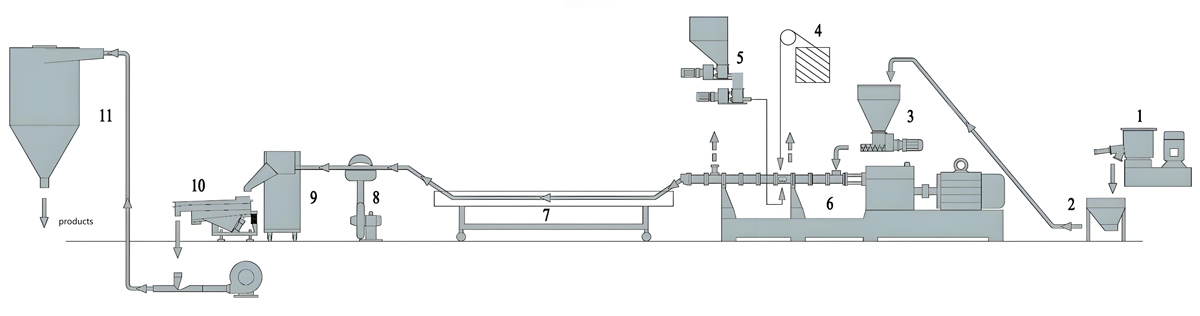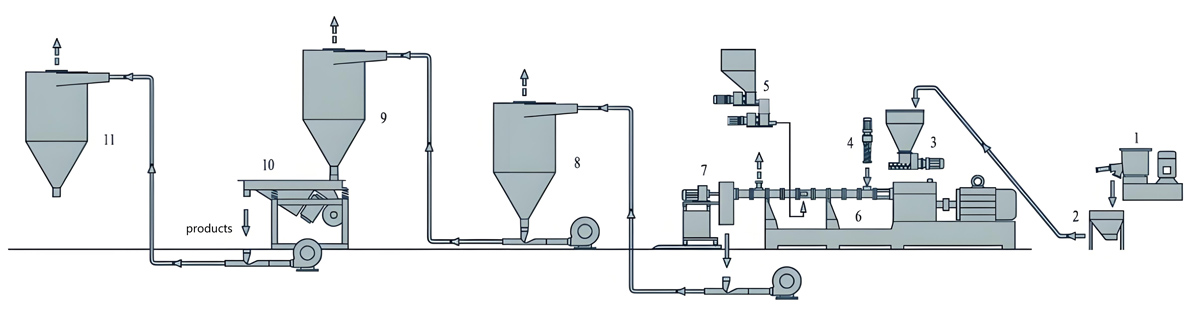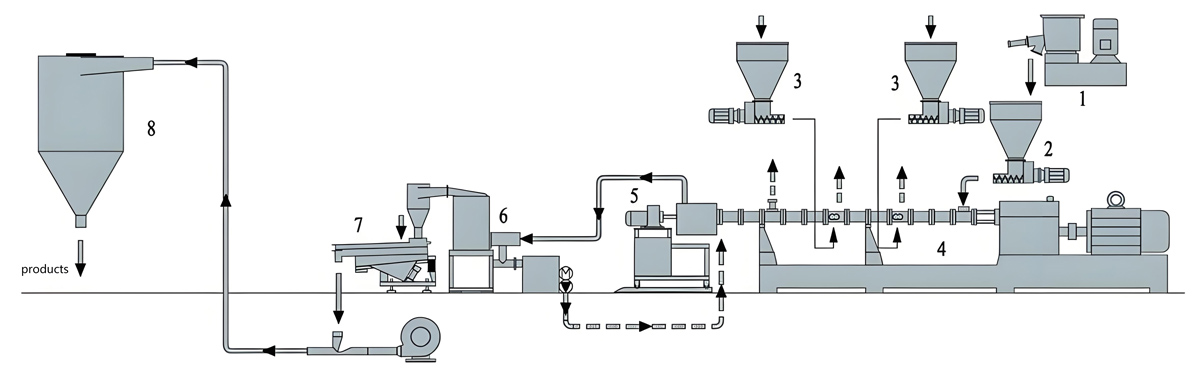
This comprehensive technical guide addresses the specialized requirements for manufacturing smooth surface masterbatch using noise reduction twin screw extrusion technology. Smooth surface masterbatch represents a critical product category within the plastic additives industry, enabling manufacturers to produce polymer compounds with superior surface quality, reduced friction coefficients, and enhanced aesthetic characteristics for demanding applications across automotive, consumer products, packaging, and industrial sectors. The production of consistent, high-quality smooth surface masterbatch requires deep understanding of surface modification technology, processing equipment capabilities, and the intricate relationships between formulation chemistry and extrusion process parameters.
Surface quality has become an increasingly important product differentiation factor as consumer expectations and functional requirements drive demand for polymer products with superior finish characteristics. Smooth surface masterbatch technology provides the concentrated additive solutions that enable processors to achieve target surface quality efficiently and economically, with formulation flexibility allowing precise matching of surface properties to specific application requirements. Nanjing Kerke’s noise reduction twin screw extruders deliver the precision processing capability and operational stability that premium smooth surface masterbatch production demands, with equipment designs specifically optimized for applications where noise control during manufacturing represents an important operational consideration.
Understanding Smooth Surface Masterbatch Technology
Smooth surface masterbatch consists of concentrated formulations containing surface modification additives, friction modifiers, and lubricity enhancers dispersed within a carrier resin matrix at elevated concentration levels. These concentrates modify surface characteristics of polymer products during processing, creating finishes with reduced surface roughness, improved tactile qualities, enhanced visual appearance, and decreased friction coefficients that improve functional performance in applications requiring smooth surface operation.
The mechanisms through which smooth surface masterbatch improves surface quality span multiple technological approaches. Lubricity modifiers migrate to polymer surfaces during processing, creating lubricating layers that reduce surface tension and enable smoother surface formation. Surface tension modifiers alter the molecular arrangement at polymer surfaces, reducing surface energy and enabling smoother, more uniform surface finishes. Scratch and abrasion resistance additives protect surface integrity during handling and use, maintaining smooth appearance throughout product lifetime.
Surface Quality Mechanisms and Performance Characteristics
The surface quality improvements achieved through smooth surface masterbatch technology result from complex interactions between additive molecules and polymer matrix at the molecular and microscopic levels. Lubricity modifiers including polydimethylsiloxane, fatty acid derivatives, and fluoropolymers function by concentrating at polymer surfaces where they modify surface energy and create lubricating interfaces that reduce friction and enable smoother surface formation during processing.
Surface tension modification through additives including specialty surfactants, silicone derivatives, and fluorochemical treatments reduces the driving force for surface irregularities during processing and solidification. Lower surface tension enables more complete leveling of processing-induced surface variations, producing smoother final surfaces with improved visual and tactile qualities. The specific surface tension modification mechanism depends on additive chemistry and concentration, with formulation optimization required to achieve target surface characteristics for specific substrate polymers and processing conditions.
Scratch and abrasion resistance enhancement through surface modification additives protects finished products from surface damage during handling, assembly, and use. Nanoscale reinforcement systems create surface layers with improved hardness and damage resistance while maintaining the smooth surface characteristics that aesthetic and functional requirements demand. The balance between surface smoothness and scratch resistance requires careful formulation optimization that addresses both aesthetic and functional performance requirements.
Industrial Applications for Smooth Surface Masterbatch
The automotive industry represents a significant market for smooth surface masterbatch technology, with applications spanning interior components, exterior trim, and functional elements requiring superior surface quality. Instrument panels, door trim panels, and console components benefit from smooth surface treatments that maintain appearance quality throughout vehicle service life while providing the tactile qualities that consumers expect. Exterior components including mirror housings, door handles, and decorative trim require smooth surfaces that resist environmental degradation while maintaining aesthetic quality.
Consumer electronics applications require smooth surface characteristics for device housings, accessories, and components where aesthetic appearance significantly influences consumer perception and product value. Smartphone accessories, wearable device components, and home electronics benefit from smooth surface treatments that enhance product aesthetics and provide the premium tactile qualities that market competition demands. Medical device applications require smooth surfaces for biocompatibility, cleanability, and patient comfort requirements that smooth surface masterbatch technology addresses effectively.
Packaging applications employ smooth surface masterbatch for products where surface appearance influences consumer perception and product marketability. Cosmetic containers, personal care packaging, and premium food packaging benefit from smooth surfaces that enhance brand perception and product differentiation. Industrial packaging applications require smooth surfaces for functional benefits including improved printing and labeling, enhanced cleanability, and reduced friction during filling and handling operations.
Smooth Surface Masterbatch Formulation Science
Silicone-Based Surface Modification Systems
Silicone-based surface modification systems constitute the most widely utilized technology for smooth surface masterbatch production, offering excellent lubricity enhancement, durable surface modification, and broad compatibility with common polymer substrates. Polydimethylsiloxane and its functional derivatives provide surface modification through molecular migration mechanisms that concentrate silicone at polymer surfaces where they create lubricating layers with extremely low friction coefficients.
A typical silicone-based smooth surface masterbatch formulation comprises the following component proportions by weight. Polydimethylsiloxane or functional silicone polymers typically constitute 5% to 20% of the total formulation depending on target surface characteristics and durability requirements. Higher silicone concentrations produce more pronounced surface effects but may introduce processing complications including plate-out on equipment surfaces and potential migration to contacting materials. The carrier resin system, selected for compatibility with target substrate polymers, typically comprises 60% to 85% of the formulation, with polyethylene and polypropylene carriers providing excellent processing characteristics and broad application compatibility.
Compatibilizer and dispersing agent components contribute 1% to 5% of formulation weight, ensuring uniform silicone distribution throughout the carrier matrix and promoting migration to substrate polymer surfaces during let-down processing. Antioxidant and stabilization systems comprising 0.5% to 2.0% protect silicone components and carrier resins from thermal and oxidative degradation during processing and subsequent service exposure. Processing aids including waxes and fatty acid derivatives optimize melt flow characteristics and prevent equipment surface buildup during extrusion processing.
Fluoropolymer Modification Systems
Fluoropolymer-based surface modification systems provide the most effective friction reduction available from current additive technology, with PTFE, FEP, and PFA micropowders offering friction coefficients significantly below those achievable with silicone-based alternatives. These systems are particularly valuable for applications with critical friction requirements where the superior performance of fluoropolymers justifies the higher cost compared to silicone-based options.
Fluoropolymer modification formulations typically include PTFE micropowder concentrations ranging from 3% to 15% depending on friction requirements and processing considerations. PTFE micropowder dispersion requires intensive mixing to achieve uniform distribution and prevent agglomerate formation that would compromise surface quality and processing performance. The KTE Series noise reduction extruder’s superior mixing capability enables effective PTFE dispersion at concentrations that achieve target friction characteristics without excessive processing complications.
Fluoropolymer combination systems that incorporate both fluoropolymers and silicone components offer balanced performance that combines the superior friction reduction of fluoropolymers with the processing benefits and cost-effectiveness of silicone technology. These hybrid formulations require careful optimization to ensure compatibility between additive systems and uniform distribution throughout the carrier matrix.
Fatty Acid and Wax-Based Systems
Fatty acid and wax-based surface modification systems provide cost-effective surface quality improvements suitable for applications where moderate performance levels satisfy requirements. Stearamides, erucamides, behenamides, and behenyl alcohols offer slip agent functionality that improves surface quality and reduces friction at lower cost than silicone or fluoropolymer alternatives. These materials migrate to polymer surfaces during processing, creating lubricating layers that improve surface quality and handling characteristics.
Wax-based systems including polyethylene waxes, Fischer-Tropsch waxes, and carnauba wax derivatives provide surface modification through wax blooming mechanisms that create surface layers with improved smoothness and reduced friction. These systems offer excellent cost-performance balances for standard applications where extreme performance is not required. Typical inclusion levels for fatty acid and wax systems range from 2% to 10% depending on specific material selection and target performance requirements.
Nanoscale Surface Enhancement Systems
Advanced smooth surface masterbatch formulations incorporate nanoscale additives that provide enhanced surface properties through reinforcement and barrier mechanisms. Nanoscale silica particles, organoclays, and specialized surface treatment nanoparticles create surface layers with improved scratch resistance and durability alongside enhanced smoothness characteristics. These advanced systems typically require specialized processing equipment capable of achieving adequate nanoparticle dispersion and distribution.
The extremely high surface area of nanoscale additives creates extensive interfacial zones within polymer matrices, enabling property modifications at relatively low concentration levels. Surface treatment of nanoparticles enables compatibility with polymer matrices while maintaining the surface enhancement characteristics that nanoscale additives provide. Formulation optimization for nanoscale systems requires attention to dispersion quality, agglomerate prevention, and concentration optimization to achieve target properties without processing complications.
Noise Reduction Twin Screw Extrusion Technology
Understanding Noise Generation in Twin Screw Extrusion
Noise generation in twin screw extrusion equipment originates from multiple mechanical and hydrodynamic sources that collectively determine the acoustic signature of extrusion operations. Mechanical noise sources include gear transmission, bearing operation, screw rotation against barrel surfaces, and hydraulic or pneumatic auxiliary systems. Hydrodynamic noise results from melt pressure oscillations, cavitation in pumping sections, and resonance effects within the processing system. Understanding these noise sources enables targeted engineering approaches that reduce acoustic emissions while maintaining processing performance.
Noise levels in conventional twin screw extrusion equipment typically range from 75 to 95 decibels depending on equipment size, operating conditions, and facility acoustics. These noise levels exceed workplace exposure limits established by occupational health regulations in many jurisdictions, requiring hearing protection measures and acoustic treatment of production facilities. Noise reduction technology addresses these concerns through design approaches that minimize noise generation at source and attenuate transmission to surrounding areas.
Nanjing Kerke’s noise reduction twin screw extruders incorporate comprehensive engineering approaches that address noise generation sources throughout the equipment architecture. These specialized configurations enable manufacturing operations in noise-sensitive environments while protecting worker hearing and reducing the acoustic impact of production activities on surrounding areas. The noise reduction designation specifically identifies equipment configurations optimized for minimal acoustic emissions during operation.
Noise Reduction Engineering Approaches
Acoustic enclosure design represents a primary approach to noise reduction in twin screw extrusion, with sound-absorbing materials and isolation techniques reducing noise transmission from equipment surfaces to surrounding areas. Nanjing Kerke’s noise reduction configurations incorporate acoustic enclosure systems that maintain accessibility for operation and maintenance while providing substantial noise attenuation typically ranging from 15 to 25 decibels.
Precision mechanical design minimizes noise generation from mechanical sources through balanced rotating components, precision gear manufacturing, and optimized bearing systems. Reduced clearances between screw elements and barrel surfaces minimize air entrapment and vortex generation that contribute to hydrodynamic noise. Precision manufacturing tolerances ensure consistent quality throughout production that minimizes the variations that generate noise in less precisely manufactured equipment.
Vibration isolation systems prevent noise transmission through structural pathways by isolating equipment from building structures and supporting infrastructure. Elastic mounting systems, flexible couplings, and isolated foundations attenuate vibration transmission that would otherwise propagate through structural elements to create audible noise in surrounding areas. These isolation approaches are particularly important for larger equipment where structural transmission represents a significant noise pathway.
KTE Series Noise Reduction Equipment Specifications
The KTE-55 noise reduction twin screw extruder provides an effective production platform for smooth surface masterbatch manufacturing, featuring 55 millimeter screw diameter and approximately 50 liters effective barrel volume. This model achieves throughput rates ranging from 180 to 450 kilograms per hour depending on formulation characteristics and operating parameters, making it suitable for medium-scale smooth surface masterbatch production operations serving diverse application markets.
The KTE-55 incorporates comprehensive noise reduction features including precision mechanical components, acoustic enclosure system, and vibration isolation mounting that collectively reduce operating noise levels to approximately 70 to 80 decibels depending on operating conditions. These reduced noise levels eliminate the need for hearing protection in normal operating conditions and enable production operations in noise-sensitive environments where conventional equipment would be impractical.
The KTE-80 noise reduction model provides enhanced production capacity with 80 millimeter screw diameter and approximately 100 liters effective barrel volume. Throughput rates ranging from 400 to 900 kilograms per hour support higher-volume production operations while maintaining the noise reduction characteristics that enable flexible facility placement and worker-friendly operating environments. Base pricing for KTE-80 noise reduction systems typically ranges from $260,000 to $330,000, with complete installed systems ranging from $480,000 to $680,000.
Production Process Technology for Smooth Surface Masterbatch
Raw Material Preparation and Handling
Smooth surface masterbatch production requires careful attention to raw material quality and handling procedures that ensure consistent formulation characteristics and optimal processing performance. Silicone-based components require sealed handling procedures that prevent airborne contamination and ensure accurate addition during pre-blending operations. These materials arrive in various forms requiring specific handling procedures and equipment configurations for effective incorporation.
Solid additive components undergo standard material qualification procedures including verification of physical form, particle size distribution, and contamination screening. Weighing procedures with verified calibration ensure precise formulation proportions that directly influence surface modification effectiveness in end-use applications. Pre-blending procedures combine formulation components using appropriate mixing equipment that achieves homogeneous distribution before extrusion processing.
Extrusion Compounding Optimization
The extrusion compounding stage transforms pre-blended smooth surface masterbatch formulations into concentrated products through controlled melting, mixing, and conveyance within the noise reduction twin screw extruder. The stable, quiet operation of KTE Series noise reduction equipment provides processing advantages through consistent conditions that ensure uniform additive distribution and optimal surface modification effectiveness.
Temperature profile configuration balances melting requirements, mixing efficiency, and thermal stability of surface modification additives. Silicone-based formulations typically employ moderate temperature profiles with maximum temperatures between 190 and 220 degrees Celsius to prevent thermal degradation while achieving adequate incorporation. Fluoropolymer systems may require different temperature optimization due to higher melt temperatures and processing sensitivity.
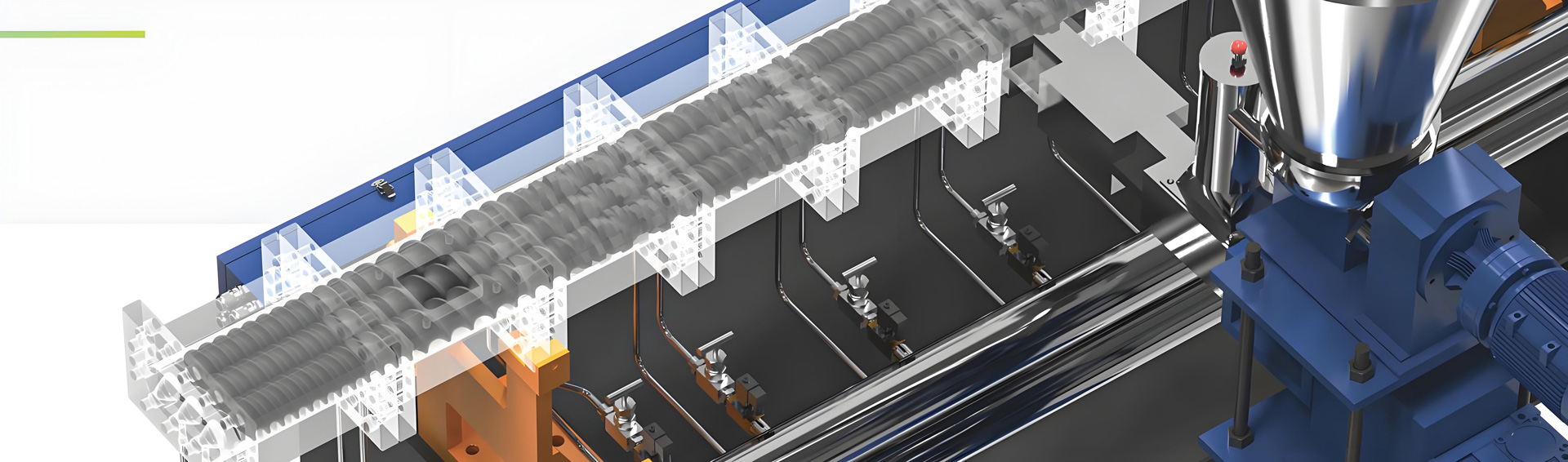
Screw configuration for smooth surface masterbatch incorporates mixing element arrangements optimized for surface modification additive dispersion. Distributive mixing elements distribute additive components throughout the carrier matrix while dispersive mixing elements break down agglomerates. The modular screw element system enables precise optimization for specific formulation requirements including high-viscosity silicone systems that require modified processing approaches.
Pelletizing and Quality Verification
Underwater pelletizing systems produce finished pellet forms from molten smooth surface masterbatch, with specific attention to pellet quality characteristics that influence customer handling and let-down processing. Pellet size selection typically targets 2.5 to 3.5 millimeter diameter pellets that provide practical handling characteristics while maintaining surface area appropriate for effective additive release during customer processing.
Quality verification procedures for smooth surface masterbatch include specific performance testing that validates surface modification effectiveness in addition to standard masterbatch quality parameters. Surface roughness measurement quantifies surface quality improvements that smooth surface treatments provide. Friction coefficient testing verifies lubricity enhancement characteristics. Gloss measurement evaluates visual appearance improvements. Migration testing confirms appropriate additive release rates during customer processing operations.
Process Parameter Configuration for Smooth Surface Masterbatch
Temperature Profile Optimization
Temperature profile optimization for smooth surface masterbatch requires balancing multiple considerations including carrier resin melting characteristics, additive thermal stability limits, and mixing efficiency requirements. Systematic optimization approaches consider interactions between temperature settings, screw speed, and throughput rate to achieve target quality characteristics efficiently.
A typical temperature profile for silicone-based smooth surface masterbatch employs the following zone configuration. The feed zone operates between 140 and 170 degrees Celsius, providing sufficient heating for initial polymer softening without causing material sticking. The compression zone employs temperatures between 170 and 195 degrees Celsius where progressive heating achieves complete melting and initial additive incorporation. The mixing zones operate between 195 and 215 degrees Celsius, with precise temperature optimization for specific formulations and quality requirements. Die zone temperatures typically range from 200 to 225 degrees Celsius, maintained for smooth melt flow without temperature-related degradation of active components.
Screw Speed and Throughput Optimization
Screw speed selection balances mixing intensity requirements against processing stability and noise considerations. Operating speeds typically range from 180 to 350 RPM depending on model size and formulation characteristics, with lower speeds providing reduced noise and enhanced stability while higher speeds enable increased throughput.
Throughput optimization considers the interdependencies between production rate, quality characteristics, and operating efficiency. Specific throughput values provide normalized measures of equipment utilization that enable comparison across different operating conditions. Typical specific throughput values for smooth surface masterbatch range from 1.0 to 2.5 kilograms per hour per RPM depending on formulation density and processing characteristics.
Equipment Investment and Economic Considerations
KTE-55 Noise Reduction System Investment
The KTE-55 noise reduction twin screw extruder system provides an accessible entry point for smooth surface masterbatch production, with base pricing typically ranging from $150,000 to $195,000 for the complete extrusion and pelletizing system. This investment supports throughput rates of 180 to 450 kilograms per hour suitable for specialty production serving targeted market segments or dedicated supply arrangements.
Total installed system costs for complete smooth surface masterbatch production capability based on KTE-55 equipment typically range from $300,000 to $450,000 depending on auxiliary equipment specifications and installation requirements. Auxiliary equipment investments include material drying and handling systems, finished product storage and packaging equipment, and quality control laboratory equipment for surface performance verification testing.
Economic Analysis and Return on Investment
Economic analysis for noise reduction extrusion equipment considers the additional investment required for noise reduction features against operational benefits including reduced hearing protection requirements, improved worker satisfaction and productivity, and expanded facility placement options. While noise reduction configurations require additional investment of approximately 15% to 25% compared to standard equipment, the operational benefits often justify this premium for operations in noise-sensitive environments or with significant workforce considerations.
Return on investment analysis considers smooth surface masterbatch pricing typically ranging from $3.50 to $9.00 per kilogram depending on formulation complexity and market positioning, against production costs including raw materials, energy, labor, and overhead allocation. At typical production rates and operating schedules, annual production volumes support attractive return on investment timelines for well-positioned market participants.
Production Problems, Solutions, and Prevention Strategies
Problem: Surface Gloss Variation and Inconsistent Finish Quality
Problem Analysis
Surface gloss variation in smooth surface masterbatch manifests as inconsistent surface quality between production batches, within-batch variations that indicate processing instability, and gradual gloss drift over extended production periods. These quality variations compromise product consistency and may cause customer complaints about performance variation in their end-use applications. Smooth surface masterbatch effectiveness depends critically on additive uniform dispersion, appropriate concentration, and proper activation during customer processing operations.
The consequences of surface gloss variation include customer complaints, specification disputes, and reputation damage that affects future business development. Manufacturers who specify smooth surface masterbatch in their products depend on consistent quality to achieve reproducible surface characteristics in their production operations. Variations that cause unexpected quality problems in customer products may result in significant costs for claims, rework, and relationship damage.
Root Cause Analysis
Surface gloss variation originates from multiple potential causes spanning formulation variability, processing instability, and customer application factors. Formulation-related causes include raw material lot variations that affect surface modification additive characteristics, weighing errors during pre-blending operations, and incomplete blending that produces non-uniform pre-mixes. Silicone concentration variations directly influence surface gloss characteristics, with inadequate concentration producing insufficient surface effects while excessive concentration may cause plate-out and processing difficulties.
Processing-related causes include temperature variations that affect additive migration and surface concentration during customer processing, screw speed variations that cause residence time differences and inconsistent thermal treatment, and mixing element wear that reduces mixing intensity over production campaigns. Carrier resin variations including molecular weight differences and comonomer content variations affect surface characteristics through compatibility and migration behavior differences.
Solution Implementation
Addressing surface gloss variation requires systematic troubleshooting to identify specific causes and appropriate corrections. Raw material qualification enhancement includes tighter specifications, enhanced incoming inspection, and supplier quality management that reduces lot-to-lot variability. Pre-blending procedure improvements including improved mixing equipment and in-process sampling verification ensure homogeneous pre-mix quality before extrusion.
Process validation verification confirms that operating parameters remain within validated ranges throughout production operations. Temperature controller calibration and thermocouple verification ensure accurate temperature measurement and control. Screw configuration inspection identifies worn or damaged elements that might reduce mixing efficiency. Statistical process control implementation provides ongoing monitoring that enables proactive identification of developing variations before they cause significant quality impacts.
Prevention Strategies
Preventing surface gloss variation requires comprehensive quality management systems that address all potential variation sources throughout the production operation. Supplier quality management programs ensure consistent raw material quality. Equipment preventive maintenance programs maintain condition throughout production campaigns. Process monitoring and control systems provide continuous verification that operations remain within validated parameters. Regular capability studies verify that production processes continue to meet quality requirements throughout extended operating periods.
Problem: Silicone Plate-Out and Equipment Contamination
Problem Analysis
Silicone plate-out manifests as accumulation of silicone-rich material on equipment surfaces including barrel walls, screw flights, die plate, and pelletizing components. This accumulation creates operational difficulties including reduced heat transfer efficiency, increased pressure requirements, and contamination of subsequent production batches. Severe plate-out can cause quality degradation, production interruptions, and increased maintenance requirements that compromise production efficiency and product quality.
The consequences of silicone plate-out include increased cleaning frequency and maintenance requirements, quality contamination from plate-out release into production materials, processing difficulties including pressure variations and feeding problems, and reduced heat transfer efficiency that affects temperature control and energy efficiency. Plate-out problems often worsen progressively as accumulated material creates surfaces that promote additional accumulation.
Root Cause Analysis
Silicone plate-out originates from excessive silicone concentration in formulations, incompatible carrier systems that fail to retain silicone components, and processing conditions that promote silicone migration to equipment surfaces. Formulation design problems including inadequate carrier viscosity or insufficient compatibilizer concentrations allow silicone components to migrate within the masterbatch matrix and toward equipment surfaces during processing.
Processing conditions including excessive temperatures, extended residence times, and high shear mixing promote silicone migration and plate-out formation. Temperature variations that create localized hot spots accelerate silicone migration and plate-out development. Equipment surface conditions including surface energy characteristics and cleanliness influence plate-out adhesion and accumulation rates.
Solution Implementation
Addressing silicone plate-out requires formulation modifications that improve silicone retention and processing optimization that reduces migration tendencies. Carrier system modification may include increased carrier molecular weight, alternative carrier selection with improved silicone compatibility, or compatibilizer addition that improves interfacial adhesion between silicone and carrier components.
Processing modifications including reduced maximum temperatures, modified screw configuration with reduced residence time in high-temperature zones, and adjusted screw speeds can reduce plate-out tendencies. Equipment cleaning procedures using appropriate cleaning compounds remove accumulated plate-out material and restore normal heat transfer and processing characteristics. Regular cleaning schedules prevent excessive plate-out accumulation that becomes progressively more difficult to remove.
Prevention Strategies
Preventing silicone plate-out requires formulation design that considers processing conditions alongside target surface modification performance. Plate-out testing during product qualification identifies formulations with excessive migration tendencies before commercial distribution. Processing parameter guidelines provided to customers address factors that influence plate-out during their processing operations. Equipment design features including optimized barrel surface treatments and modified screw configurations can reduce plate-out tendencies in dedicated smooth surface masterbatch production equipment.
Problem: Friction Coefficient Variation and Performance Inconsistency
Problem Analysis
Friction coefficient variation manifests as inconsistent slip characteristics in customer applications, despite smooth surface masterbatch meeting standard quality specifications. These variations indicate that friction modification effectiveness differs between production batches or storage conditions in ways that standard quality tests fail to detect. The consequences include customer complaints about performance below expectations and specification disputes that damage supplier relationships.
Friction modification effectiveness depends on multiple factors including active additive concentration at surfaces, additive distribution uniformity, and appropriate activation during customer processing operations. Variations in any of these factors can compromise friction modification effectiveness without affecting standard quality parameters that customers and suppliers typically monitor.
Root Cause Analysis
Friction coefficient variation originates from inadequate additive dispersion that creates non-uniform distribution throughout the carrier matrix, concentration variations between batches, or compatibility issues that prevent proper additive migration and surface concentration during customer processing. Thermal degradation during masterbatch processing reduces active functionality that contributes to friction modification effectiveness.
Customer processing conditions that differ from assumptions used during product development may fail to achieve additive migration levels that product specifications anticipate. Storage conditions that promote migration or degradation before use can reduce friction modification effectiveness. Let-down ratio variations in customer processing operations affect the surface concentration achieved and the resulting friction characteristics.
Solution Implementation
Addressing friction coefficient variation requires enhanced testing procedures that evaluate actual friction performance rather than relying solely on compositional analysis. Performance testing using standardized friction measurement methods provides direct measurement of slip effectiveness that compositional analysis cannot replace. Application testing using customer-representative processing conditions verifies product performance in actual use environments.
Formulation modifications may include additive selection with improved thermal stability, concentration adjustments based on performance validation testing, and carrier system optimization for improved additive migration and surface concentration. Processing parameter optimization reduces thermal exposure through lower processing temperatures and reduced residence times. Customer technical support ensures appropriate let-down ratios and processing conditions that enable effective friction modification.
Prevention Strategies
Preventing friction coefficient variation requires comprehensive qualification testing that validates friction performance across anticipated production and storage conditions. Performance specifications that include effectiveness testing requirements ensure that quality verification addresses functional performance alongside compositional parameters. Customer technical communication ensures appropriate product use and processing conditions that enable effective friction modification.
Maintenance Procedures for Noise Reduction Equipment
Noise Reduction Feature Maintenance
Noise reduction equipment requires specialized maintenance practices that address noise reduction features alongside standard extrusion maintenance requirements. Acoustic enclosure systems require regular inspection and maintenance of sound-absorbing materials, sealing systems, and access mechanisms that ensure continued noise attenuation performance. Vibration isolation systems require inspection and maintenance of isolation mounts, flexible connections, and structural supports that maintain isolation effectiveness.
Regular inspection protocols verify that noise reduction features continue to function effectively throughout production campaigns. Acoustic performance measurement confirms that noise levels remain within specified limits. Visual inspection identifies damage or deterioration that might compromise noise attenuation. Maintenance records enable tracking of noise reduction feature condition and identification of maintenance requirements that planned interventions can address before performance degradation occurs.
Standard Component Maintenance
Beyond noise reduction features, standard extrusion component maintenance ensures continued reliable operation and product quality. Gearbox maintenance includes oil analysis for wear particle detection and bearing inspection at specified intervals. Screw element maintenance includes dimensional verification and surface condition inspection. Barrel liner inspection assesses wear patterns and clearance conditions. Calibration verification for all measurement and control equipment ensures accurate process monitoring and control.
Frequently Asked Questions
What surface quality improvements are achievable with smooth surface masterbatch?
Quality smooth surface masterbatch can achieve surface roughness reductions ranging from 20% to 60% depending on formulation type, loading level, and substrate polymer characteristics. Standard smooth surface masterbatch formulations typically achieve surface roughness improvements of 30% to 40% for most applications. Premium formulations incorporating advanced surface modification systems can achieve greater improvements suitable for applications with critical surface quality requirements such as automotive interior components and consumer electronics housings.
What friction coefficient reductions are achievable with smooth surface masterbatch?
Smooth surface masterbatch can achieve static friction coefficient reductions ranging from 15% to 70% depending on formulation type, loading level, and substrate polymer. Silicone-based formulations typically achieve friction reductions of 30% to 50% for standard applications. Fluoropolymer-based formulations can achieve friction reductions exceeding 60% for demanding applications where superior slip performance justifies higher formulation costs. Actual performance depends on substrate polymer, processing conditions, and specific application requirements.
What noise reduction levels do KTE Series noise reduction extruders achieve?
KTE Series noise reduction twin screw extruders achieve operating noise levels approximately 70 to 80 decibels depending on model size, operating conditions, and facility acoustics. These levels represent reductions of 15 to 25 decibels compared to conventional equipment, eliminating the need for hearing protection in normal operating conditions and enabling production operations in noise-sensitive environments. Actual noise levels depend on specific equipment configuration, operating parameters, and installation conditions.
What loading levels are recommended for smooth surface masterbatch in polymer processing?
Recommended loading levels for smooth surface masterbatch typically range from 1% to 5% depending on formulation composition, substrate polymer type, and performance requirements. Standard smooth surface masterbatch formulations achieve target performance at loading levels of 2% to 3% for most polymer processing applications. Higher loading levels may be required for demanding applications or when treating substrates with challenging surface characteristics. Excessive loading levels may cause processing complications including plate-out and transfer to contacting surfaces.
What substrate polymers are compatible with smooth surface masterbatch formulations?
Smooth surface masterbatch formulations are compatible with most common polymer substrates including polyethylene, polypropylene, polystyrene, ABS, and engineering polymers. Specific formulation optimization may be required for polymers with challenging compatibility characteristics or for specialty polymers with specific processing requirements. Silicone-based smooth surface systems offer the broadest compatibility across polymer types. Nanjing Kerke’s application engineering support provides guidance for specific substrate polymer applications.
What storage stability can be expected from smooth surface masterbatch products?
Smooth surface masterbatch products typically maintain quality characteristics for 6 to 12 months when stored under recommended conditions including protection from direct sunlight, prevention of moisture exposure, and storage at temperatures below 35 degrees Celsius. Migration-related quality changes may develop over extended storage periods for formulations with challenging migration characteristics, requiring storage condition optimization and rotation practices that ensure product freshness.
Can smooth surface masterbatch affect other product properties besides surface quality?
Smooth surface masterbatch may affect additional product properties depending on formulation composition and loading levels. Mechanical properties including tensile strength and impact resistance may show minor changes at typical loading levels but typically remain within specification limits. Optical properties including clarity and color may be affected by certain additive types. Thermal properties and processing characteristics may show minor modifications. Comprehensive testing during product qualification identifies any property effects that might concern specific applications.
What quality testing methods apply to smooth surface masterbatch performance verification?
Quality testing methods for smooth surface masterbatch include surface roughness measurement using profilometry techniques, friction coefficient determination using standardized test methods, gloss measurement using specular gloss meters, migration testing under simulated storage and processing conditions, and thermal analysis for additive stability assessment. Regular quality verification testing ensures production consistency and enables identification of quality variations that might affect customer processing or final product performance.
Conclusion
Smooth surface masterbatch production using noise reduction twin screw extrusion technology enables manufacturers to deliver consistent, high-performance products that address critical surface quality concerns across automotive, consumer products, packaging, and industrial sectors. The specialized equipment requirements and formulation science covered in this guide provide the technical foundation for successful smooth surface masterbatch manufacturing operations.
Nanjing Kerke’s KTE Series noise reduction twin screw extruders deliver the processing stability, mixing precision, and operational noise control that demanding smooth surface masterbatch production requires. Combined with comprehensive quality management practices and customer-focused technical support, these equipment capabilities enable manufacturers to build competitive positions in growing smooth surface masterbatch markets.
Success in smooth surface masterbatch production requires continued investment in formulation technology, processing optimization, and quality systems that ensure consistent product performance. Manufacturers who establish comprehensive technical capabilities position themselves to capture market opportunities across diverse application sectors where surface quality adds significant value to polymer products.