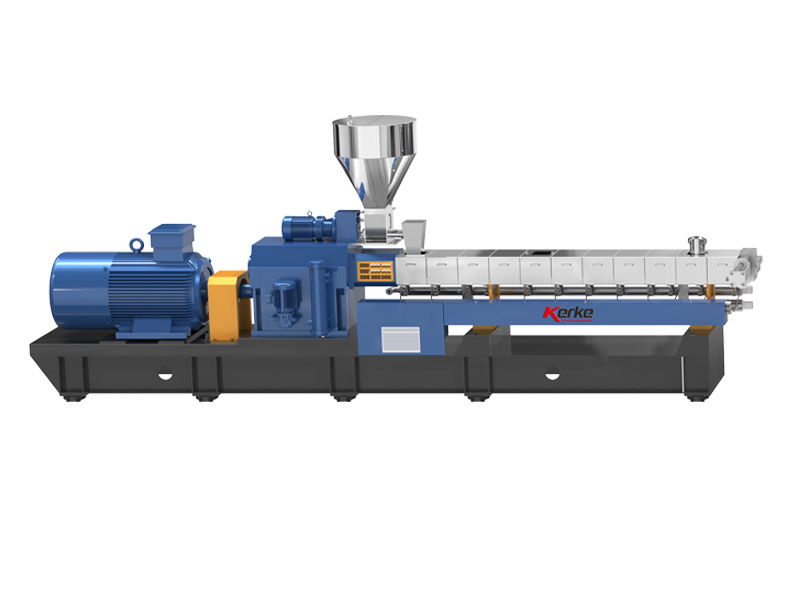
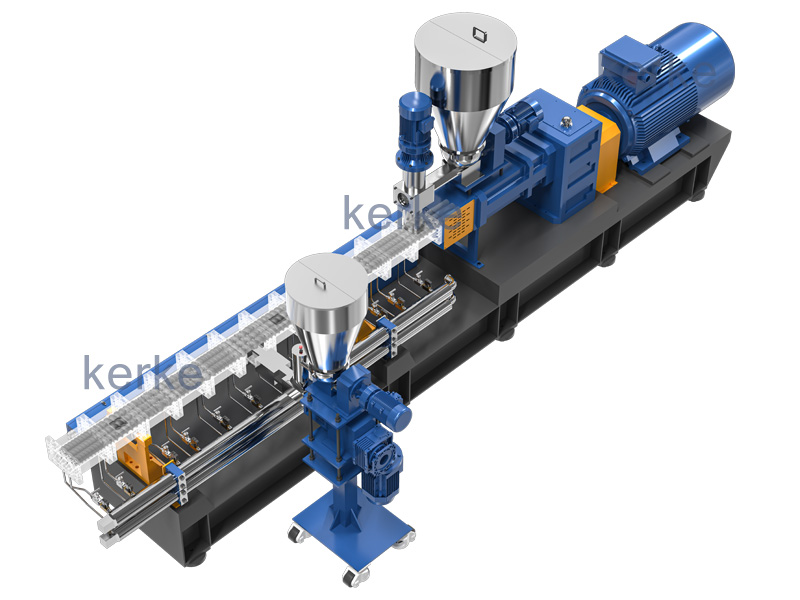
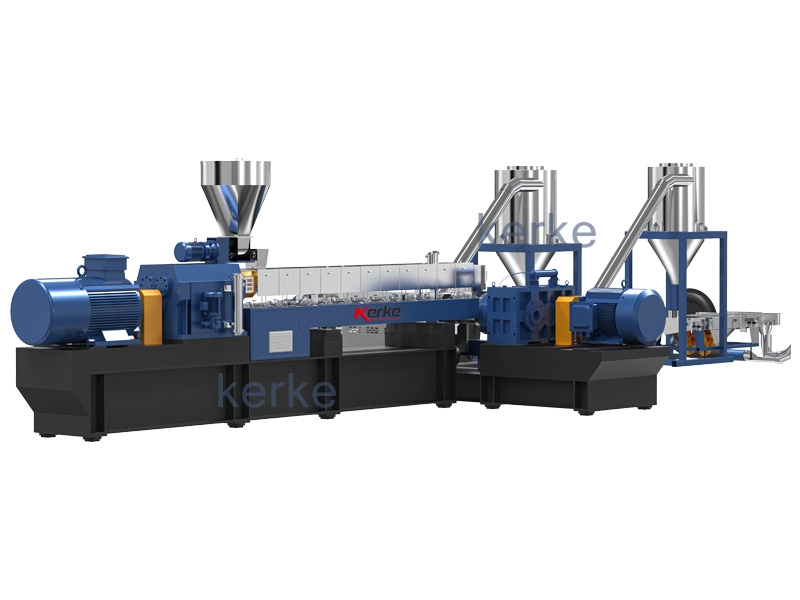
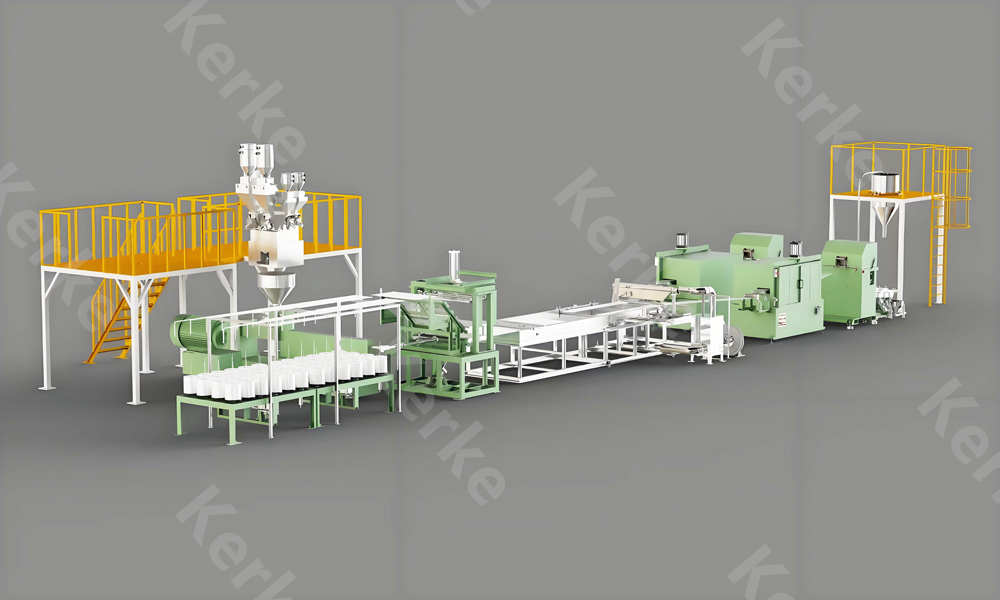
The screw and barrel are the heart of any masterbatch extruder, responsible for melting, mixing, and conveying plastic materials through the production process. These critical components operate in an extremely harsh environment of high temperatures, high pressures, and intense shear forces, making them susceptible to wear and damage over time. For masterbatch manufacturers, premature failure of the screw and barrel can result in significant production downtime, increased maintenance costs, reduced product quality, and lost revenue. As a leading global manufacturer of advanced twin screw extrusion technology, Kerke Extruder has developed innovative solutions and best practices that can extend the service life of screw and barrel components by up to 300% compared to conventional equipment.
Masterbatch production presents unique challenges for screw and barrel durability. Unlike simple plastic extrusion, masterbatch manufacturing involves processing highly filled compounds with pigment loadings up to 70% by weight, as well as various additives and fillers that can be highly abrasive or corrosive. These materials accelerate wear on the screw and barrel surfaces, reducing their efficiency and ultimately requiring replacement. Under normal operating conditions, a standard nitrided screw and barrel may last only 1-2 years when processing highly filled masterbatches, while a high-quality system with proper maintenance can last 4-6 years or longer.
Kerke Extruder has over 15 years of specialized experience in twin screw extrusion technology, with more than 2,000 machines installed in over 60 countries worldwide. Our state-of-the-art manufacturing facilities cover over 35,000 square meters and are equipped with advanced CNC machining centers and precision testing equipment. We employ a team of over 120 experienced engineers and technicians dedicated to developing innovative extrusion solutions that maximize productivity and profitability for our customers. All our masterbatch extruders are built to the highest international standards using premium materials and components, ensuring long service life and minimal downtime in demanding 24/7 industrial operations.
This comprehensive guide explores everything you need to know about prolonging the service life of screw and barrel components in masterbatch extruders. It examines the primary causes of wear and damage, details the key design and material factors that affect durability, provides a step-by-step guide to proper operation and maintenance practices, explains Kerke’s advanced technologies for extending component life, includes a detailed cost analysis and return on investment calculation, offers practical guidance on when to repair or replace worn components, and features real-world success stories from Kerke customers worldwide. Whether you are operating an existing extruder or investing in a new masterbatch production line, this guide will help you maximize the service life of your screw and barrel components and reduce your total cost of ownership.
1. Primary Causes of Screw and Barrel Wear in Masterbatch Production
1.1 Abrasive Wear from Fillers and Pigments
Abrasive wear is the most common and significant cause of screw and barrel degradation in masterbatch production. Many masterbatch formulations contain high concentrations of hard, abrasive materials such as calcium carbonate, talc, titanium dioxide, carbon black, and glass fibers. These hard particles act like sandpaper, gradually eroding the surfaces of the screw flights and barrel walls as they are conveyed through the extruder.
The severity of abrasive wear depends on several factors including the type, size, shape, and concentration of the filler particles. Harder particles such as glass fiber and titanium dioxide cause more rapid wear than softer fillers like calcium carbonate. Larger particles and particles with sharp edges also accelerate wear. As the concentration of fillers increases, the wear rate increases exponentially. For example, increasing glass fiber loading from 10% to 30% can increase the wear rate by 400-500%.
Abrasive wear typically occurs most rapidly in the melting and mixing zones of the extruder, where the material is subjected to the highest shear forces and pressures. As the screw flights and barrel walls wear, the clearance between them increases, reducing the extruder’s ability to generate pressure and mix the material effectively. This results in reduced production capacity, increased energy consumption, and poorer product quality.
1.2 Corrosive Wear from Chemical Additives
Corrosive wear is another significant cause of screw and barrel degradation in masterbatch production. Many masterbatch formulations contain chemical additives that can react with the metal surfaces of the screw and barrel, causing corrosion and pitting. Common corrosive additives include flame retardants, stabilizers, pigments, and certain processing aids.
Corrosive wear is particularly problematic at high temperatures, where chemical reactions occur more rapidly. When plastic materials degrade during processing, they can release acidic gases such as hydrogen chloride, which can attack the metal surfaces of the screw and barrel. This type of corrosion is especially common when processing PVC and other halogen-containing polymers.
Corrosive wear typically appears as pitting or roughening of the screw and barrel surfaces. This roughening increases friction and can accelerate abrasive wear by trapping hard particles between the surfaces. In severe cases, corrosion can cause cracks or other structural damage that requires immediate replacement of the affected components.
1.3 Mechanical Wear from Misalignment and Overload
Mechanical wear results from physical contact between the screw and barrel components or between the two screws in a twin screw extruder. This type of wear is often caused by misalignment of the screw shafts, improper installation, or excessive operating loads.
Misalignment between the two screws in a twin screw extruder is a common cause of uneven wear. When the screws are not properly aligned, they can rub against each other or against the barrel walls, causing localized wear and damage. Misalignment can be caused by improper installation, worn bearings, or deformation of the gearbox output shafts.
Overloading the extruder can also cause mechanical wear. When the extruder is operated beyond its design capacity, the increased torque and pressure can cause the screws to deflect, bringing them into contact with the barrel walls. This can result in severe scoring or galling of the screw and barrel surfaces, which can significantly reduce their service life.
1.4 Thermal Fatigue and Degradation
Thermal fatigue occurs when the screw and barrel components are subjected to repeated cycles of heating and cooling. These temperature cycles cause the metal to expand and contract, creating internal stresses that can lead to cracking and other forms of damage over time.
Thermal fatigue is particularly common in extruders that are frequently started and stopped or that process materials with wide variations in processing temperature. The repeated heating and cooling cycles can cause the surface of the screw and barrel to crack or spall, creating rough areas that accelerate abrasive wear.
In addition to thermal fatigue, prolonged exposure to high temperatures can cause the metal to soften or lose its hardness, especially in the case of nitrided components. This softening reduces the wear resistance of the surfaces, making them more susceptible to abrasive and mechanical wear.
2. Key Design and Material Factors for Extended Service Life
2.1 Material Selection for Screw and Barrel Components
The selection of appropriate materials is the most important factor in determining the service life of screw and barrel components in masterbatch extruders. Different materials offer varying levels of wear resistance, corrosion resistance, and toughness, making them suitable for different applications.
The most common materials used for masterbatch extruder screws and barrels include:
- Nitrided steel: The standard material for most extruder components, nitrided steel offers good wear resistance and moderate corrosion resistance at a relatively low cost. Nitriding creates a hard surface layer approximately 0.3-0.5mm thick with a hardness of HV900-1100.
- Bimetallic construction: Bimetallic screws and barrels feature a wear-resistant alloy layer bonded to a tougher steel base. The alloy layer is typically 2-3mm thick and can be formulated to provide excellent resistance to abrasion, corrosion, or both. Bimetallic components can last 2-3 times longer than nitrided components in abrasive applications.
- Tungsten carbide: For the most demanding applications involving highly abrasive materials, tungsten carbide coatings or inserts provide the highest level of wear resistance. Tungsten carbide is extremely hard and can extend component life by 3-5 times compared to nitrided steel.
- Stainless steel: Stainless steel is used for applications requiring high corrosion resistance, such as processing PVC or other halogen-containing polymers. However, stainless steel has lower wear resistance than nitrided or bimetallic materials.
Kerke Extruder offers a range of material options for screw and barrel components, allowing customers to select the most appropriate material for their specific application. Our standard KTE series extruders feature high-quality nitrided steel screws and barrels made from 38CrMoAlA alloy steel, which provides excellent performance for most masterbatch applications. For more demanding applications, we offer bimetallic and tungsten carbide options that provide enhanced wear and corrosion resistance.
2.2 Advanced Surface Treatment Technologies
In addition to material selection, advanced surface treatment technologies can significantly improve the wear and corrosion resistance of screw and barrel components. These treatments modify the surface properties of the metal to create a harder, more durable surface layer.
Common surface treatment technologies include:
- Nitriding: A thermochemical treatment that introduces nitrogen into the surface of the steel to form a hard, wear-resistant layer. Nitriding is the standard treatment for most extruder components and provides a good balance of wear resistance, toughness, and cost.
- Chrome plating: A thin layer of chromium is electroplated onto the surface of the component to improve corrosion resistance and reduce friction. However, chrome plating can chip or peel over time, especially under high shear conditions.
- Hard facing: A wear-resistant alloy is welded or sprayed onto the surface of the component to create a thick, durable layer. Hard facing is commonly used on screw flights and barrel liners to improve wear resistance.
- Ceramic coatings: Advanced ceramic coatings provide excellent wear and corrosion resistance. These coatings are typically applied using thermal spray techniques and can be formulated to meet specific application requirements.
Kerke Extruder uses advanced nitriding and hard facing technologies to ensure the highest level of performance and durability for our screw and barrel components. Our proprietary nitriding process creates a uniform, high-hardness surface layer with excellent adhesion to the base metal. For applications requiring enhanced wear resistance, we offer precision hard facing using high-quality alloys such as Stellite and Colmonoy.
2.3 Optimized Screw and Barrel Design
The design of the screw and barrel also plays a critical role in determining their service life. A well-designed screw and barrel system will minimize wear by ensuring uniform material flow, reducing shear stress, and preventing localized overheating.
Key design features that extend service life include:
- Modular construction: Modular screw and barrel designs allow individual worn segments to be replaced rather than replacing the entire screw or barrel. This reduces maintenance costs and downtime by 30-40% compared to one-piece designs.
- Optimized screw geometry: The screw geometry should be designed to provide the required mixing performance while minimizing shear stress and wear. Kerke’s advanced screw designs feature optimized flight profiles and mixing elements that reduce wear while maintaining excellent dispersion quality.
- Proper clearance: The clearance between the screw flights and barrel wall should be carefully optimized to provide efficient conveying and mixing while minimizing metal-to-metal contact. Kerke maintains tight tolerances on all screw and barrel components to ensure proper clearance throughout the service life of the equipment.
- Enhanced cooling: Effective cooling systems help maintain consistent operating temperatures and prevent thermal degradation of the material and components. Kerke’s extruders feature multi-zone cooling systems that provide precise temperature control throughout the barrel.
3. Proper Operation Practices to Minimize Wear
3.1 Raw Material Preprocessing and Quality Control
Proper raw material preprocessing and quality control are essential for minimizing wear on screw and barrel components. Contaminants in the raw material are a major cause of premature wear and damage.
All raw materials should be carefully inspected before processing to remove any foreign objects such as metal, stones, or other hard debris. Magnetic separators and metal detectors should be installed at the feed hopper to remove any ferrous and non-ferrous metal contaminants. This is particularly important when processing recycled materials, which often contain high levels of contamination.
The raw material should also be properly dried before processing to remove moisture. Moisture can cause hydrolysis of the polymer during extrusion, leading to degradation and the release of corrosive gases that can attack the screw and barrel surfaces. Proper drying also improves processing consistency and product quality.
In addition, the particle size and distribution of fillers and pigments should be carefully controlled. Large particles or agglomerates can cause localized wear and damage to the screw and barrel components. Proper pre-mixing and dispersion of additives can help ensure uniform particle size distribution and reduce wear.
3.2 Optimal Process Parameter Settings
Setting appropriate process parameters is crucial for minimizing wear and maximizing the service life of screw and barrel components. Operating the extruder under excessive loads, temperatures, or speeds can significantly accelerate wear.
The temperature profile should be carefully optimized for each formulation to ensure proper melting and mixing without overheating the material. Excessively high temperatures can cause thermal degradation of the polymer, leading to the release of corrosive gases and increased wear. Conversely, temperatures that are too low can result in incomplete melting, increasing the torque and pressure required to process the material and accelerating mechanical wear.
The screw speed should also be optimized for each application. Higher screw speeds increase production capacity but also increase shear stress and wear. The optimal screw speed will depend on the specific formulation and processing requirements. In general, it is better to operate at moderate screw speeds with higher feed rates rather than high screw speeds with lower feed rates, as this reduces shear stress and wear.
The extruder should never be operated beyond its design torque or pressure limits. Overloading the extruder can cause the screws to deflect, leading to metal-to-metal contact and severe damage to the screw and barrel components. Kerke’s extruders feature advanced torque and pressure monitoring systems that alert operators to potential overload conditions.
3.3 Proper Startup and Shutdown Procedures
Proper startup and shutdown procedures are essential for protecting the screw and barrel components from damage. Improper startup or shutdown can cause thermal shock, material degradation, and mechanical damage.
During startup, the extruder should be heated gradually to the operating temperature to allow for uniform thermal expansion. The barrel should be heated to the required temperature and held at that temperature for a sufficient period of time to ensure that all components are uniformly heated. The screw should not be rotated until the material in the barrel has completely melted to avoid damaging the screw or barrel.
During shutdown, the extruder should be purged with a suitable purging compound to remove all residual material from the screw and barrel. This prevents the material from degrading and carbonizing during the shutdown period, which can cause corrosion and abrasion when the extruder is restarted. The extruder should be cooled gradually to room temperature to minimize thermal stress.
For extended shutdown periods, the screw and barrel should be thoroughly cleaned and coated with a rust inhibitor to prevent corrosion. The extruder should be stored in a dry, temperature-controlled environment to protect the components from moisture and other environmental factors.
3.4 Avoiding Common Operational Mistakes
Many common operational mistakes can significantly reduce the service life of screw and barrel components. These include:
- Running the extruder empty: Running the extruder without material can cause the screws to rub against each other and the barrel walls, leading to severe wear and damage.
- Processing contaminated material: As mentioned earlier, contaminants in the raw material are a major cause of premature wear. Always ensure that raw materials are properly inspected and cleaned before processing.
- Ignoring warning signs: Unusual noises, vibrations, or changes in process parameters can indicate potential problems with the screw or barrel. These warning signs should be investigated immediately to prevent further damage.
- Using improper purging compounds: Using the wrong type of purging compound or using purging compounds incorrectly can cause damage to the screw and barrel components. Always use high-quality purging compounds that are compatible with your materials and equipment.
- Neglecting maintenance: Regular maintenance is essential for identifying and addressing potential problems before they cause significant damage. Neglecting maintenance can lead to premature failure of the screw and barrel components.
4. Preventive Maintenance Program for Screw and Barrel Components
4.1 Regular Inspection and Wear Measurement
Regular inspection and wear measurement are the foundation of an effective preventive maintenance program. These activities allow you to monitor the condition of the screw and barrel components and plan for maintenance or replacement before catastrophic failure occurs.
The screw and barrel should be inspected at regular intervals, depending on the type of material being processed and the operating conditions. For masterbatch production involving highly filled or abrasive materials, inspection should be performed every 500-1000 operating hours. For less demanding applications, inspection can be performed every 1000-2000 operating hours.
During inspection, the screw should be removed from the barrel and visually inspected for signs of wear, scoring, pitting, or cracking. The diameter of the screw flights should be measured at multiple points along the length of the screw using a micrometer. The inner diameter of the barrel should also be measured at corresponding points. The clearance between the screw flight and barrel wall should be calculated and compared to the original specifications.
Kerke specifies a maximum wear limit of 0.2mm for most screw elements. When the clearance exceeds this limit, mixing efficiency drops significantly, and replacement is recommended. For barrel segments, the maximum allowable wear is typically 0.3-0.5mm, depending on the barrel diameter.
All inspection and measurement results should be recorded and tracked over time to identify wear trends. This allows you to predict when components will need to be replaced and plan maintenance activities accordingly.
4.2 Proper Cleaning Techniques
Proper cleaning is essential for maintaining the performance and extending the service life of screw and barrel components. Residual material left in the extruder can degrade and carbonize, causing corrosion and abrasion when the extruder is restarted.
The most effective cleaning method depends on the type of material being processed and the level of contamination. For routine cleaning between production runs, purging with a suitable purging compound is usually sufficient. For more thorough cleaning or for removing heavily carbonized material, mechanical cleaning may be necessary.
When purging the extruder, use a high-quality purging compound that is compatible with your materials and equipment. The purging compound should be processed at the appropriate temperature and screw speed to ensure effective removal of residual material. After purging, the extruder should be flushed with natural resin to remove any remaining purging compound.
When mechanical cleaning is necessary, use brass or copper scrapers and brushes to remove residual material from the screw and barrel surfaces. Never use steel tools, as these can scratch or damage the precision-machined surfaces. For heavily carbonized material, a biodegradable polymer dissolver gel can be applied to soften the deposits before mechanical cleaning.
After cleaning, the screw and barrel should be thoroughly inspected and dried before reassembly. Any signs of wear or damage should be noted and addressed before returning the extruder to service.
4.3 Lubrication and Cooling System Maintenance
Proper maintenance of the lubrication and cooling systems is essential for protecting the screw and barrel components from damage. These systems help maintain proper operating temperatures and reduce friction between moving parts.
The lubrication system should be inspected regularly to ensure that it is functioning properly. The oil level and quality should be checked, and the oil should be changed according to the manufacturer’s recommendations. The oil filters should also be replaced regularly to remove contaminants that can cause wear on bearings and other components.
The cooling system is equally important for maintaining proper operating temperatures and preventing overheating. The cooling water should be clean and free of contaminants that can clog the cooling channels. The cooling system should be flushed regularly to remove scale and sediment buildup. The temperature and flow rate of the cooling water should be monitored to ensure that it is providing adequate cooling.
In addition to the lubrication and cooling systems, other auxiliary systems such as the heating system, vacuum system, and feeding system should also be maintained regularly to ensure optimal performance and prevent damage to the screw and barrel components.
4.4 Maintenance Record Keeping and Analysis
Comprehensive maintenance record keeping and analysis are essential for optimizing the performance and extending the service life of screw and barrel components. Detailed records allow you to track the condition of the components over time, identify recurring problems, and make informed decisions about maintenance and replacement.
Maintenance records should include:
- Dates of all maintenance activities
- Components inspected, repaired, or replaced
- Wear measurements and inspection results
- Process parameters and operating conditions
- Types of materials processed
- Any problems or abnormalities encountered
- Costs of maintenance and replacement
By analyzing these records, you can identify patterns and trends that can help you optimize your maintenance program. For example, you may discover that certain components wear more quickly when processing specific materials, allowing you to adjust your maintenance schedule accordingly. You can also use the data to evaluate the cost-effectiveness of different maintenance strategies and material options.
5. Kerke Advanced Technologies for Extended Component Life
5.1 Kerke KTE Series Extruder Screw and Barrel Design
Kerke’s KTE series masterbatch extruders feature advanced screw and barrel designs specifically engineered to maximize service life in demanding masterbatch production applications. Our design philosophy focuses on minimizing wear while maintaining excellent mixing performance and production efficiency.
The KTE series screws feature a modular design with interchangeable elements that allow for easy replacement of worn segments. This reduces maintenance costs and downtime by eliminating the need to replace the entire screw when only a few segments are worn. The screw elements are manufactured from high-quality 38CrMoAlA alloy steel and undergo a proprietary nitriding process that creates a uniform, high-hardness surface layer with excellent wear resistance.
The KTE series barrels also feature a modular design with individual segments that can be replaced as needed. The barrel segments are manufactured from the same high-quality alloy steel as the screws and feature precision-machined bores with tight tolerances. For applications requiring enhanced wear resistance, we offer bimetallic barrel liners with a wear-resistant alloy layer that provides 2-3 times longer service life than standard nitrided barrels.
All Kerke screw and barrel components are manufactured using advanced CNC machining centers and undergo rigorous quality control testing to ensure dimensional accuracy and performance. We maintain tight tolerances on all critical dimensions to ensure proper clearance and optimal performance throughout the service life of the equipment.
5.2 Kerke Wear-Resistant Material Options
Kerke offers a range of wear-resistant material options for screw and barrel components, allowing customers to select the most appropriate material for their specific application requirements. Our material options include:
- Standard nitrided steel: Our standard material for most masterbatch applications, providing excellent performance at a competitive price. Nitrided steel offers good wear resistance and moderate corrosion resistance, with a surface hardness of HV900-1100.
- Premium bimetallic construction: For applications involving abrasive fillers such as calcium carbonate, talc, and glass fiber, our premium bimetallic construction provides significantly enhanced wear resistance. The bimetallic layer is 2-3mm thick and is formulated to provide excellent resistance to both abrasion and corrosion. Bimetallic components can last 2-3 times longer than standard nitrided components.
- High-performance tungsten carbide: For the most demanding applications involving highly abrasive materials, our high-performance tungsten carbide option provides the ultimate in wear resistance. Tungsten carbide is extremely hard and can extend component life by 3-5 times compared to standard nitrided steel. This option is ideal for processing masterbatches with high loadings of glass fiber or other highly abrasive fillers.
- Corrosion-resistant alloys: For applications involving corrosive materials such as PVC or halogen-containing flame retardants, we offer corrosion-resistant alloy options that provide excellent protection against chemical attack. These alloys are specifically formulated to resist the corrosive gases released during processing of these materials.
Kerke’s engineering team will work with you to select the most appropriate material option for your specific application, taking into account factors such as the type of masterbatch being produced, the filler content, and the required production volume.
5.3 Kerke Quick-Change System for Reduced Downtime
Kerke’s advanced quick-change system allows for fast and easy replacement of screw and barrel segments, significantly reducing maintenance downtime. The system features a unique clamping mechanism that allows individual barrel segments to be removed and replaced in minutes without disassembling the entire extruder.
With the quick-change system, a single operator can replace a worn barrel segment in less than 30 minutes, compared to 4-6 hours for conventional extruders. This allows maintenance to be performed during scheduled breaks or shift changes, minimizing the impact on production.
The quick-change system also allows for easy reconfiguration of the screw and barrel for different products. This is particularly useful for manufacturers producing a wide range of masterbatch formulations with different processing requirements. By quickly changing the screw configuration, you can optimize the extruder for each specific product, improving product quality and reducing wear.
5.4 Kerke Technical Support and Spare Parts Service
Kerke is committed to providing comprehensive technical support and spare parts service to ensure that your extruder operates at peak performance throughout its service life. Our global network of service centers provides fast, responsive support to customers worldwide.
Our team of experienced engineers and technicians is available 24/7 to provide technical assistance, troubleshooting, and on-site service. We offer comprehensive training programs for operators and maintenance personnel, covering all aspects of extruder operation, maintenance, and troubleshooting.
We also maintain a large inventory of genuine Kerke spare parts, including screw elements, barrel segments, and other critical components. This ensures that we can quickly supply the parts you need to minimize downtime. All our spare parts are manufactured to the same high standards as the original equipment, ensuring proper fit and performance.
In addition, Kerke offers preventive maintenance contracts that provide regular scheduled maintenance by our experienced technicians. These contracts help ensure that your extruder is properly maintained and can identify potential problems before they cause significant downtime or damage.
6. Cost Analysis and Return on Investment
6.1 The True Cost of Premature Screw and Barrel Failure
Premature failure of screw and barrel components can result in significant costs for masterbatch manufacturers. These costs include not only the direct cost of replacement parts and labor but also the indirect costs of production downtime, lost revenue, and reduced product quality.
The direct cost of replacing a complete set of screws and barrels for a medium-sized masterbatch extruder (KTE-50) ranges from $25,000 to $40,000 for standard nitrided components, and from $50,000 to $80,000 for premium bimetallic components. The labor cost for replacement can range from $5,000 to $10,000, depending on the complexity of the extruder and the extent of the damage.
However, the indirect costs are often much higher. A typical medium-sized masterbatch extruder generates approximately $1,500 to $2,500 in revenue per hour. A single day of downtime can therefore result in lost revenue of $12,000 to $20,000. In addition, premature wear can reduce production capacity by 10-30% and increase energy consumption by 15-25%, further increasing operating costs.
Reduced product quality is another significant cost of premature screw and barrel wear. As the clearance between the screw and barrel increases, mixing efficiency decreases, resulting in poorer dispersion quality and inconsistent product. This can lead to increased scrap rates, customer complaints, and lost business.
6.2 Cost-Benefit Analysis of Preventive Maintenance
Investing in a comprehensive preventive maintenance program can significantly reduce the total cost of ownership of your masterbatch extruder. Preventive maintenance costs are typically 70% less than reactive repairs, and they can extend the service life of screw and barrel components by 50-100%.
To illustrate the cost-benefit of preventive maintenance, consider a medium-sized masterbatch extruder (KTE-50) processing highly filled masterbatches. Without preventive maintenance, the screw and barrel may need to be replaced every 1.5 years at a cost of $35,000 per replacement. With a comprehensive preventive maintenance program costing $5,000 per year, the service life of the screw and barrel can be extended to 3 years or longer.
Over a 6-year period:
- Without preventive maintenance: 4 replacements × $35,000 = $140,000
- With preventive maintenance: 2 replacements × $35,000 + 6 years × $5,000 = $100,000
- Savings: $40,000 over 6 years, plus additional savings from reduced downtime and improved product quality
In addition to these direct savings, preventive maintenance also provides indirect benefits such as increased production capacity, improved product quality, and reduced energy consumption. These benefits can add tens of thousands of dollars in additional savings each year.
6.3 ROI of Investing in High-Quality Kerke Components
Investing in high-quality Kerke screw and barrel components provides an excellent return on investment through extended service life, reduced maintenance costs, and improved production efficiency.
Consider the example of a masterbatch manufacturer processing highly filled calcium carbonate masterbatches. A standard nitrided screw and barrel from a low-cost supplier may last only 1 year and cost $25,000. A Kerke bimetallic screw and barrel may cost $50,000 but last 3 years or longer.
Over a 6-year period:
- Low-cost nitrided components: 6 replacements × $25,000 = $150,000
- Kerke bimetallic components: 2 replacements × $50,000 = $100,000
- Direct savings: $50,000 over 6 years
In addition to these direct savings, the Kerke components will also provide better performance and reliability throughout their service life. The improved wear resistance will maintain consistent production capacity and product quality, resulting in additional revenue and savings. The reduced downtime for replacement will also save thousands of dollars in lost production.
The return on investment for upgrading to Kerke bimetallic components is typically less than 18 months, making it a highly profitable investment for most masterbatch manufacturers.
7. When to Repair, Resurface, or Replace Worn Components
7.1 Assessing the Condition of Screw and Barrel Components
Determining when to repair, resurface, or replace worn screw and barrel components requires careful assessment of their condition. The decision will depend on several factors including the extent of wear, the location of the wear, the type of material being processed, and the cost of repair versus replacement.
As mentioned earlier, the screw and barrel should be inspected regularly, and the wear should be measured and recorded. The clearance between the screw flight and barrel wall is the most important indicator of component condition. When the clearance exceeds the manufacturer’s recommended limit (typically 0.2mm for screws and 0.3-0.5mm for barrels), the performance of the extruder will begin to degrade significantly.
In addition to measuring wear, the components should be visually inspected for signs of damage such as scoring, pitting, cracking, or deformation. Minor surface imperfections can often be repaired, but more severe damage may require replacement.
The location of the wear is also an important consideration. Wear in the feeding or metering zones has a greater impact on extruder performance than wear in the mixing zones. Wear that is localized to a small area may be repairable, while widespread wear will likely require replacement.
7.2 Repair and Resurfacing Options
For minor to moderate wear, repair and resurfacing can be a cost-effective alternative to replacement. Common repair and resurfacing options include:
- Polishing: Minor surface imperfections and light wear can often be removed by polishing the screw and barrel surfaces. This can temporarily improve performance until replacement is necessary.
- Welding and machining: For localized wear or damage, the affected area can be built up with weld and then machined back to the original dimensions. This is most effective for repairing small areas of damage on screw flights or barrel walls.
- Re-nitriding: Nitrided components that have worn through the nitrided layer can be re-nitrided to restore surface hardness. However, re-nitriding can cause dimensional changes and may not be suitable for all components.
- Barrel relining: For bimetallic barrels with worn liners, the liner can be replaced without discarding the entire barrel housing. This can reduce replacement costs by 40-60% compared to complete barrel replacement.
It is important to note that repair and resurfacing are temporary solutions and will not restore the component to its original condition. The repaired component will generally have a shorter service life than a new component and may not provide the same level of performance.
7.3 When Replacement is the Best Option
Replacement is generally the best option when the wear exceeds the manufacturer’s recommended limits, when the damage is severe or widespread, or when repair and resurfacing are not cost-effective.
Signs that replacement is necessary include:
- Clearance between screw flight and barrel wall exceeds the recommended limit
- Severe scoring, pitting, or cracking of the screw or barrel surfaces
- Deformation or bending of the screw shafts
- Significant reduction in production capacity or product quality
- Increased energy consumption or process instability
- Repair costs exceed 50-60% of the cost of replacement
When replacing screw and barrel components, it is important to use genuine parts from the original equipment manufacturer or a reputable supplier. Using low-quality replacement parts can result in poor performance, accelerated wear, and potential damage to other components of the extruder.
8. Real-World Success Stories: Kerke Customers Extending Component Life
8.1 Case Study 1: Filler Masterbatch Manufacturer in China
A leading filler masterbatch manufacturer in China was experiencing severe wear problems with their existing extruders. The company was producing calcium carbonate filler masterbatches with filler loadings up to 80%, which caused rapid wear on the screw and barrel components. Their standard nitrided screws and barrels needed to be replaced every 12-18 months, resulting in significant downtime and maintenance costs.
After extensive research and evaluation, the company selected Kerke Extruder to provide a complete masterbatch production line based on the KTE-65 model. The line was equipped with Kerke’s premium bimetallic screw and barrel components specifically designed for highly filled applications.
Results after implementation:
- Service life of screw and barrel components increased from 12-18 months to 4-5 years
- Production downtime for component replacement reduced by 75%
- Maintenance costs reduced by 60%
- Production capacity increased by 25% due to improved reliability
- Product quality improved significantly, with more consistent dispersion
- Payback period for the entire production line was 14 months
The company was extremely satisfied with the performance of the Kerke extruder and has since purchased three additional KTE-65 lines for their expanding production capacity.
8.2 Case Study 2: Color Masterbatch Producer in Germany
A high-quality color masterbatch producer in Germany was looking to upgrade their production facilities to improve product consistency and reduce maintenance costs. The company was producing a wide range of color masterbatches for the automotive and packaging industries, with frequent color changes and strict quality requirements.
The company selected Kerke Extruder based on our advanced technology, proven track record, and comprehensive technical support. Kerke provided two customized KTE-50 masterbatch extruders with enhanced quick-change features and high-quality nitrided screw and barrel components.
Results after implementation:
- Service life of screw and barrel components increased from 2-3 years to 4-5 years
- Color change time reduced by 70% with Kerke’s quick-change system
- Material waste during color changes reduced by 80%
- Product consistency improved significantly, with ΔE values below 0.8 between batches
- Maintenance costs reduced by 45%
- Payback period for the two extruders was 10 months
The company has become a preferred supplier to several major automotive and packaging manufacturers, thanks in part to the consistent quality and reliability of their Kerke extruders. They have since placed an order for a third KTE-50 machine to support their continued growth.
9. Conclusion
Extending the service life of screw and barrel components is essential for maximizing the profitability and competitiveness of masterbatch manufacturers. These critical components operate in an extremely harsh environment and are susceptible to wear from abrasion, corrosion, mechanical stress, and thermal fatigue. By understanding the causes of wear and implementing proper design, operation, and maintenance practices, you can significantly extend the service life of these components and reduce your total cost of ownership.
The key factors in extending component life include selecting appropriate materials and surface treatments, optimizing the screw and barrel design, following proper operation practices, implementing a comprehensive preventive maintenance program, and investing in high-quality equipment from a reputable manufacturer. Kerke Extruder’s KTE series masterbatch extruders incorporate advanced design features, high-quality materials, and innovative technologies that can extend the service life of screw and barrel components by up to 300% compared to conventional equipment.
The financial benefits of extending component life are significant. By reducing maintenance costs, minimizing downtime, and maintaining consistent production capacity and product quality, you can achieve a rapid return on investment in high-quality equipment and preventive maintenance programs. The case studies presented in this guide demonstrate how Kerke customers have achieved substantial cost savings and improved profitability by implementing these best practices.
Whether you are operating an existing extruder or investing in a new masterbatch production line, Kerke Extruder has the expertise, technology, and commitment to customer success to help you maximize the service life of your screw and barrel components. With over 15 years of industry experience, state-of-the-art manufacturing facilities, and a global network of service centers, Kerke is your trusted partner for all your twin screw extrusion needs. Contact us today to learn more about how our advanced masterbatch extruders can help you improve productivity, reduce costs, and grow your business.