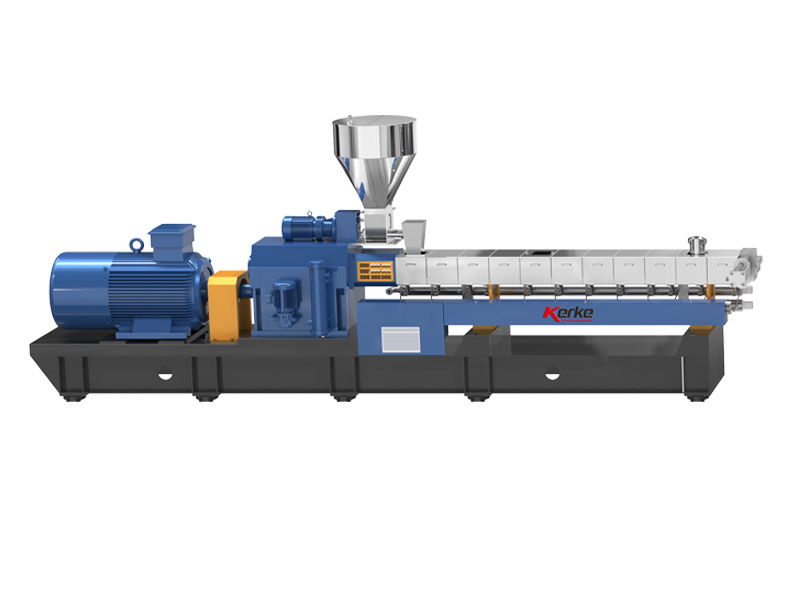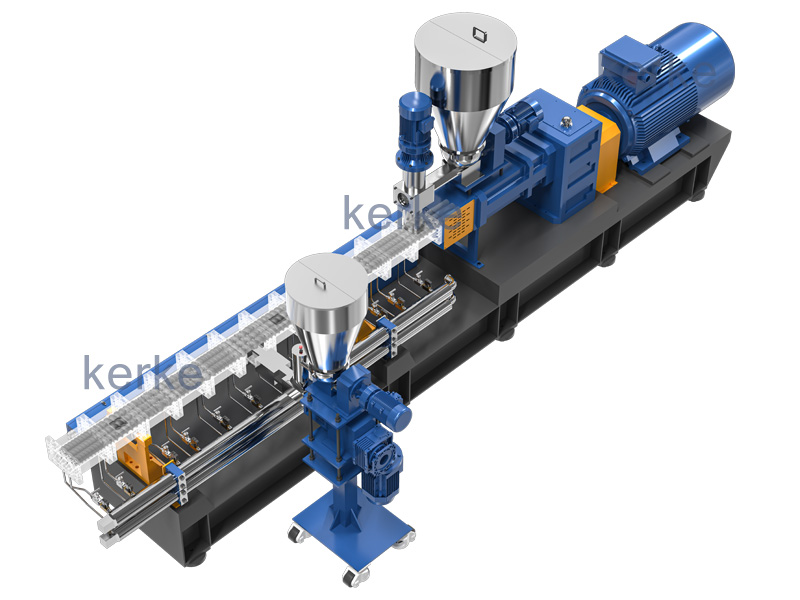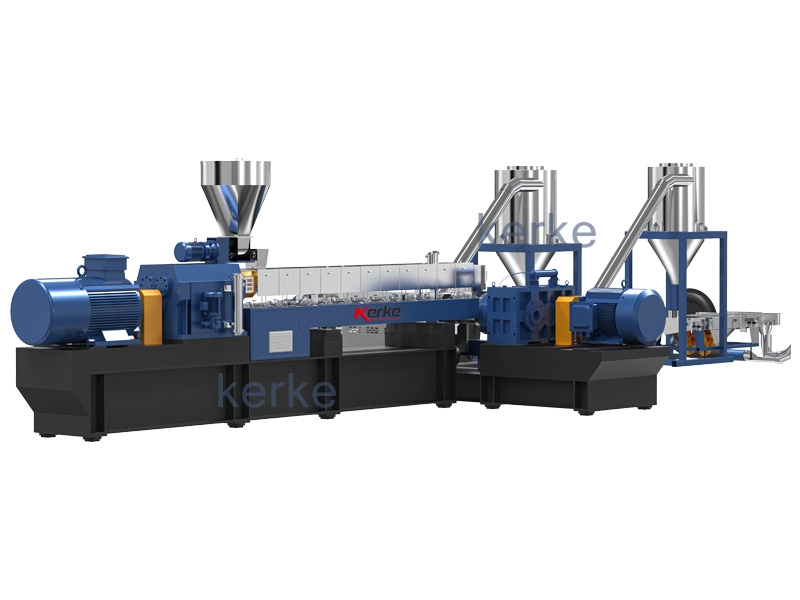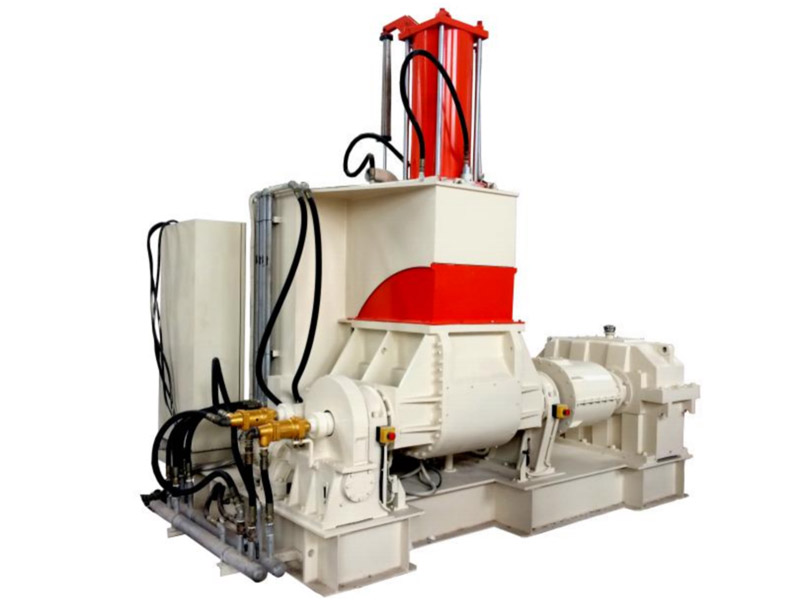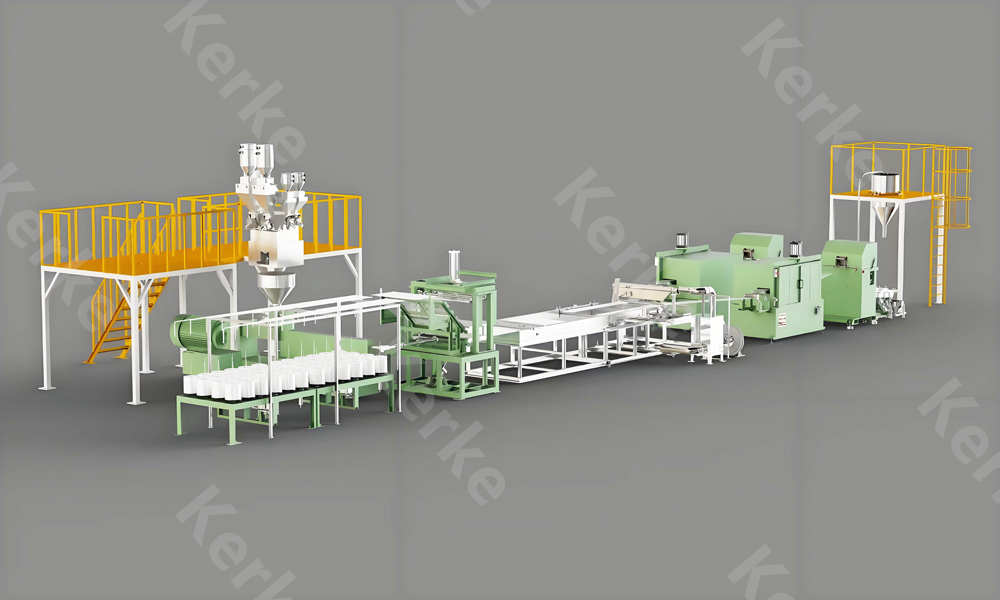
Flame retardant polypropylene has become one of the most competitive segments in modified plastics, serving appliance housings, electrical enclosures, automotive interiors, cable compounds and construction profiles. The question every compounder asks is not whether polypropylene can be made flame retardant, but which raw material formula is mature enough to pass UL 94 V-0 at 1.6 mm while keeping mechanical properties, color stability and processing safety within a realistic twin-screw compounding window. This article explains the mature raw material formulas for flame retardant PP modified by twin-screw compounding, compares the four mainstream flame retardant systems, details carrier resin selection, additive packages and the co-rotating twin-screw process parameters that turn a formula sheet into a stable commercial pellet. Whether you run a Kerke KTE-series co-rotating parallel twin-screw extruder or a comparable twin-screw compounding line, the formulation and process principles below apply directly to your production.
A mature flame retardant PP formula is defined here as a recipe that has been validated across multiple production campaigns: it reaches the target rating at the target thickness, it survives storage without blooming, it runs through a co-rotating twin-screw extruder without die drool or excessive screw wear, and it meets the regulatory frameworks relevant to the end market. The four proven systems are the brominated-antimony synergistic system, the halogen-free intumescent system, the magnesium dihydroxide filled system and the phosphorus-nitrogen plus synergist system. Each is discussed with concrete phr loadings, processing ceilings and trade-offs, followed by the twin-screw compounding configuration that makes the formula manufacturable.
What Makes a Flame Retardant PP Formula Mature
A flame retardant formula is mature when its performance, cost and processability have been balanced to the point that a production line can reproduce it shift after shift. Immature formulas fail in subtle ways: they pass a single UL 94 coupon but bloom after two weeks, they pass on a lab twin-screw extruder but plug the die on a 2,000 kg/h line, or they meet V-0 but drop the notched impact strength so far that the part cracks in assembly. The maturity checklist therefore spans chemistry, rheology and mechanics rather than a single test result.
The first axis is the flame retardant mechanism. Polypropylene is a hydrocarbon polymer with a limiting oxygen index around 17 to 18 percent, which means it burns readily in air. Flame retardants intervene by one or more of four routes: gas-phase radical trapping (brominated systems), condensed-phase char formation (intumescent and phosphorus systems), endothermic dilution (metal hydroxides) and barrier shielding (synergists such as melamine derivatives). A mature formula usually leans on one dominant mechanism and supports it with one or two secondary mechanisms rather than mixing incompatible chemistries blindly.
The second axis is the compounding process compatibility. Many flame retardants are heat sensitive, moisture sensitive or abrasive. Ammonium polyphosphate decomposes above 220 degrees Celsius, magnesium dihydroxide is highly abrasive at 55 to 62 phr loading, and fine antimony trioxide agglomerates if added too early. The mature formula is therefore written together with its screw configuration, barrel temperature profile and feeding sequence, not as an isolated recipe. This is why a co-rotating twin-screw extruder with configurable kneading blocks, a side feeder and a vacuum devolatilization zone is the standard platform for flame retardant PP; it lets the compounder separate melting, dispersion and devolatilization into distinct barrel zones.
The third axis is the end-market regulatory fit. A formula intended for consumer electronics in the European Union must satisfy RoHS and REACH SVHC screening, while a cable compound for rail transit may need EN 45545-2 classification up to HL3. A mature formula states its compliance scope explicitly so that the downstream molder does not discover a disqualified additive at certification time. The comparison table below frames the four systems against these maturity dimensions.
Four Mature Flame Retardant Systems at a Glance
| System | Main Components | Typical Loading | UL 94 at 1.6 mm | Relative Cost Tier | Key Limitation |
|---|---|---|---|---|---|
| Brominated-antimony | DBDPE + Sb2O3 | 18-22 + 6-8 phr | V-0 | Medium | Smoke density, RoHS/REACH attention |
| Halogen-free intumescent | APP + PER + MEL or IFR | 22-28 phr | V-0 | Medium to High | Max barrel temp 220 degrees C |
| Magnesium dihydroxide | MDH + silane/stearic | 55-62 phr | V-0 | Low to Medium | Large mechanical drop, needs POE |
| Phosphorus-nitrogen | DOPO deriv. + phosphinate + MCA | 15-25 phr | V-0 to V-1 | High to Premium | Cost, hydrolysis of some derivatives |
Brominated-Antimony Synergistic System (DBDPE + Sb2O3)
The brominated-antimony synergistic system is the most mature and most widely produced flame retardant PP formula worldwide. It relies on decabromodiphenyl ethane, abbreviated DBDPE, which is a high-bromine, high-thermal-stability brominated flame retardant, paired with antimony trioxide as the synergist. DBDPE releases bromine radicals in the gas phase at decomposition temperatures above the processing range of polypropylene, and these radicals quench the hydrogen and hydroxyl radicals that propagate the combustion chain reaction. Antimony trioxide alone is a weak flame retardant, but in the presence of bromine it forms volatile antimony oxybromide and antimony tribromide, which are far more effective radical quenchers. The synergy means a much lower total additive loading than either component used alone.
The mature phr window is DBDPE 18 to 22 phr combined with Sb2O3 6 to 8 phr in the total compound. At this loading, homopolymer or block copolymer PP typically reaches UL 94 V-0 at 1.6 mm thickness, and in optimized compounds V-0 at 0.8 mm is achievable with higher bromine loading or the addition of a small synergist. The advantages are low additive loading, excellent mechanical retention, good colorability and a broad processing window up to about 230 to 240 degrees Celsius. The limitations are higher smoke density during combustion, potential concerns under evolving RoHS and REACH SVHC screening, and the fact that DBDPE is a brominated aromatic that some brands specify against for eco-label programs.
Mature Brominated Formula Sheet
| Component | Role | phr | Notes |
|---|---|---|---|
| PP homopolymer (MFR 2-12) | Carrier resin | Balance to 100 | High crystallinity, good stiffness |
| DBDPE (decabromodiphenyl ethane) | Brominated FR | 18-22 | Gas-phase radical quenching |
| Sb2O3 (antimony trioxide) | Synergist | 6-8 | Sb:Br ratio roughly 1:3 |
| POE (polyolefin elastomer) | Impact modifier | 5-10 | Recovers notched impact |
| PTFE (anti-drip) | Drip suppressant | 0.2-0.5 | Critical for UL 94 pass |
| Antioxidant 1010 + 168 | Stabilizer | 0.2 + 0.3 | Hindered phenolic + phosphite |
| EBS (lubricant) | Processing aid | 0.3-0.5 | Improves strand cut |
In twin-screw compounding, DBDPE and Sb2O3 are normally introduced through the main feed throat together with the PP, or the brominated masterbatch can be added at the main feeder while antimony is side-fed to reduce early agglomeration. Because the brominated system tolerates higher barrel temperatures, a standard 170 to 210 degrees Celsius profile is safe, and the compound can be pelletized by either strand or water ring cutting. The most common failure mode is formulation drift: lowering DBDPE below 18 phr to save cost typically pushes the compound to V-1, while raising Sb2O3 above the optimal ratio adds cost without improving the rating and can increase smoke.
Halogen-Free Intumescent System (APP + PER + MEL, or IFR)
The halogen-free intumescent flame retardant system is the fastest-growing mature option for markets that prohibit brominated chemistry. It works entirely in the condensed phase. Ammonium polyphosphate, called APP, is the acid source and blowing agent; pentaerythritol, called PER, is the carbon source; and melamine, called MEL, is the blowing and nitrogen source. When heated, APP releases phosphoric acid that dehydrates PER into a carbon-rich char, while the gases evolved inflate that char into a porous, insulating intumescent shield that separates the polymer from heat and oxygen. A pre-compatibilized, all-in-one intumescent flame retardant, often labeled IFR, packages these components in optimized ratios and is easier to dose.
The mature loading is 22 to 28 phr of the intumescent package in PP, which delivers UL 94 V-0 at 1.6 mm. The carrier PP should have a melt flow rate in the range of 2 to 8 g/10min, because too high an MFR weakens the char structure and too low an MFR makes dispersion difficult. The single most important processing rule is that the barrel temperature must not exceed 220 degrees Celsius. Type II ammonium polyphosphate with a polymerization degree above 1000 has good water resistance, but it begins to decompose and release ammonia above about 220 degrees Celsius, destroying the intumescent chemistry and generating gas bubbles and yellowing. Mature lines therefore cap the barrel at 170 to 200 degrees Celsius, with the metering zone often the hottest zone but never above the ceiling.
Mature IFR Formula Sheet
| Component | Role | phr | Notes |
|---|---|---|---|
| PP (MFR 2-8 g/10min) | Carrier resin | Balance to 100 | Avoid high-MFR grades |
| APP type II (DP greater than 1000) | Acid source | 14-18 | Decomposes above 220 C |
| PER (pentaerythritol) | Carbon source | 4-6 | Char former |
| MEL (melamine) | Blowing source | 4-6 | Nitrogen expansion |
| Pre-compatibilized IFR (optional) | All-in-one | 22-28 | Simpler dosing |
| PP-g-MAH compatibilizer | Compatibilizer | 2-5 | Improves dispersion |
| PTFE anti-drip | Drip suppressant | 0.2-0.5 | UL 94 pass aid |
The intumescent system is low-smoke and halogen-free, which makes it ideal for appliances, transportation and public-space components, but it is water-sensitive because APP can hydrolyze and leach, lowering the long-term rating. Pre-drying APP at 80 to 100 degrees Celsius for 2 to 4 hours before compounding is mandatory, and the pellet must be packaged dry. Because the loadings are moderate, mechanical retention is better than the metal hydroxide route, but the char is brittle, so impact modification with POE is still recommended. On a co-rotating twin-screw extruder, the intumescent package is best side-fed after the polymer has melted, so that the high shear of the kneading block disperses it without overheating the APP.
Magnesium Dihydroxide Filled System (MDH)
Magnesium dihydroxide, abbreviated MDH, is the mature choice for cable compounds and applications that demand low smoke, low toxicity and halogen-free performance under extreme heat. MDH acts through endothermic decomposition at about 340 degrees Celsius, releasing water vapor that dilutes flammable gases and cools the substrate, while the resulting magnesium oxide forms a heat-reflecting layer. Because the mechanism is physical dilution rather than catalytic, very high loadings are required: the mature window is 55 to 62 phr, and such high filler content drastically changes the compound.
The single biggest challenge with MDH is the severe drop in mechanical properties. At 55 to 62 phr, tensile strength, elongation and impact strength fall sharply, and the melt becomes stiff and difficult to process. Two countermeasures define a mature MDH formula. First, the MDH must be surface treated, either with a silane coupling agent such as KH-550 or with stearic acid, to improve interfacial adhesion and dispersion. Second, a polyolefin elastomer such as POE must be added, typically 8 to 15 phr, to recover flexibility and impact resistance. Even so, the notched impact remains below that of brominated or intumescent systems, which is the accepted trade-off for non-halogen, low-smoke cable suitability.
Mature MDH Formula Sheet
| Component | Role | phr | Notes |
|---|---|---|---|
| PP (block copolymer preferred) | Carrier resin | Balance to 100 | Needs toughness |
| MDH (surface treated) | Mineral FR | 55-62 | Silane or stearic treated |
| POE impact modifier | Toughener | 8-15 | Recovers impact |
| PP-g-MAH compatibilizer | Coupling | 3-5 | Key for MDH bonding |
| Antioxidant 1010 + 168 | Stabilizer | 0.2 + 0.3 | Standard package |
| EBS lubricant | Processing aid | 0.5-1.0 | High filler needs more |
Because MDH is highly abrasive, the co-rotating twin-screw line processing it must use wear-resistant barrel and screw materials, most commonly a tungsten carbide double-alloy barrel liner. A standard nitrided barrel will wear rapidly at 55 to 62 phr mineral loading, leading to intermittent output and dimensional drift. The barrel temperature can be run higher than the intumescent system, typically 180 to 210 degrees Celsius, because MDH is thermally stable to its decomposition near 340 degrees Celsius. Vacuum devolatilization is less critical than for APP but still useful to remove surface moisture. The relative cost tier of MDH is low to medium at the raw material level, but the need for compatibilizer, high POE and hardened screws raises the total system cost.
Phosphorus-Nitrogen and Synergist Systems (DOPO Derivatives, Phosphinate, MCA)
The phosphorus-nitrogen and synergist family covers the most advanced and often premium halogen-free chemistries. The best-known building block is the DOPO derivative, where DOPO stands for 9,10-dihydro-9-oxa-10-phosphaphenanthrene-10-oxide, a reactive phosphorus compound that can be grafted onto the polymer backbone or used as an additive. DOPO-based structures deliver flame retardancy through condensed-phase charring plus some gas-phase action, and because phosphorus loading is low, they preserve mechanical properties better than hydroxide systems. Aluminum diethylphosphinate and related phosphinate salts are another mature route, often paired with melamine cyanurate, abbreviated MCA, as a synergist.
MCA itself is a nitrogen-rich crystalline synergist that decomposes endothermically and releases inert gases, and it is frequently the primary flame retardant in thin-wall electrical PP at 10 to 18 phr, or a synergist at 5 to 10 phr in combination with phosphinates. A mature premium formula pairs a DOPO derivative or phosphinate at 12 to 18 phr with MCA at 5 to 8 phr and a small amount of a char promoter, reaching V-0 at 1.6 mm and sometimes V-0 at 0.8 mm in thin-wall grades. The cost tier is high to premium, which limits these systems to electronics, connectors and aerospace-adjacent parts where performance justifies price. A known weakness is that some DOPO derivatives and phosphinates are sensitive to hydrolysis and to strong alkaline conditions, so drying and pH control in the compound matter.
Mature Phosphorus-Nitrogen Formula Sheet
| Component | Role | phr | Notes |
|---|---|---|---|
| PP (high-flow MFR 15-25) | Carrier resin | Balance to 100 | Thin-wall molding |
| DOPO derivative or phosphinate | Reactive FR | 12-18 | Low loading, good retention |
| MCA (melamine cyanurate) | Synergist | 5-8 | Nitrogen synergist |
| Char promoter (optional) | Char aid | 1-3 | Improves V-0 margin |
| PTFE anti-drip | Drip suppressant | 0.2-0.5 | UL 94 pass |
| Antioxidant + UV-944 | Stabilizer | 0.5-0.6 | Long-term stability |
On the twin-screw line, these additives are sensitive and low-loading, so accuracy of the loss-in-weight feeder is decisive: a one-phr error can move the compound from V-0 to V-1. They are best added at a downstream side feeder into a fully melted, low-pressure zone, then dispersed in a short kneading block before vacuum and metering. The barrel temperature for phosphinate and DOPO systems is usually 180 to 210 degrees Celsius, comfortably below any decomposition ceiling, which keeps the chemistry intact.
Carrier Resin Selection and MFR Logic
The carrier resin is the foundation of any mature flame retardant PP formula, and its selection determines processability, impact balance and final rating. The two mainstream carriers are homopolymer PP and block copolymer PP. Homopolymer PP, with grades such as T30S or K8003, offers higher stiffness, higher heat deflection temperature and better char cohesion, making it the default for rigid electrical and appliance parts; its typical melt flow rate ranges from 2 to 12 g/10min. Block copolymer PP, with grades such as EP548R or K7726, incorporates ethylene segments that raise room-temperature impact strength, which is why it is chosen for automotive interiors and parts subject to drop or snap-fit stresses, though it sacrifices some stiffness and heat resistance.
The melt flow rate selection logic is counter-intuitive for beginners. A high flame retardant loading, especially the 55 to 62 phr MDH route or the 22 to 28 phr intumescent route, raises the viscosity of the melt and makes dispersion harder. To keep the compound processable on the co-rotating twin-screw extruder and to fill thin-wall molds, compounders deliberately choose a higher-flow carrier, often with a melt flow rate of 15 to 25 g/10min, then add POE to recover the impact lost to the higher crystallinity-friendly flow grade. In other words, the flame retardant filler forces a higher-MFR base, and the elastomer restores toughness. For low-filler brominated systems, a standard 2 to 12 g/10min homopolymer is sufficient and gives the best stiffness.
Carrier Resin Selection Guide
| Carrier Type | Example Grades | MFR Range | Best For | Trade-off |
|---|---|---|---|---|
| Homopolymer PP | T30S, K8003 | 2-12 g/10min | Rigid electrical, appliances | Lower impact |
| Block copolymer PP | EP548R, K7726 | 2-12 g/10min | Automotive, impact parts | Lower HDT |
| High-flow homopolymer | High-MFR grades | 15-25 g/10min | High filler, thin wall | Needs POE for impact |
A maturing detail is the use of a small amount of recycled PP regrind as partial carrier to reduce cost. This is acceptable only when the regrind is clean, single-source and its MFR is characterized, because an unknown MFR shifts the whole process window. Reputable twin-screw compounding lines such as the Kerke KTE series, supplied by Kerke, a Wanplas factory, handle both homopolymer and block copolymer bases with screw configurations tuned per carrier, and the recipe management system in the control software stores the exact carrier grade and MFR so that re-runs are reproducible.
Toughening, Compatibilization and Functional Additives
A mature flame retardant PP formula is never just PP plus flame retardant. A supporting additive package governs whether the pellet survives molding, weathering and certification. The toughening system starts with a polyolefin elastomer such as POE at 5 to 12 phr, which recovers notched impact lost to both the flame retardant and the high-flow carrier choice. Ethylene propylene diene monomer rubber, EPDM, is an alternative for higher-temperature stability, while styrene-block copolymers are used where clarity or specific touch is required. The compatibilizer, most often maleic anhydride grafted polypropylene, written PP-g-MAH, is added at 2 to 5 phr and is especially critical for the MDH and intumescent systems because it couples the polar filler to the non-polar polyolefin matrix, improving dispersion and mechanical retention.
Anti-dripping is governed by polytetrafluoroethylene, PTFE, at 0.2 to 0.5 phr. During combustion, PTFE forms a protective network that increases melt viscosity and prevents flaming droplets, which is frequently the decisive factor in passing UL 94 because the test fails on ignition of the cotton beneath the sample even when the sample itself self-extinguishes. The conventional antioxidant package is antioxidant 1010 at 0.2 phr combined with antioxidant 168 at 0.3 phr, a hindered phenolic plus phosphite blend that protects the melt during the high-shear twin-screw pass and the part during service. A light stabilizer such as UV-944 at 0.3 phr is added for outdoor or window-adjacent parts, while a lubricant such as ethylene bis-stearamide, EBS, at 0.3 to 0.5 phr improves strand cutting and reduces die buildup.
Standard Functional Additive Package
| Additive | Function | phr | When Required |
|---|---|---|---|
| POE | Impact modifier | 5-12 | All systems |
| EPDM | Heat-stable toughener | 3-8 | Higher temp service |
| PP-g-MAH | Compatibilizer | 2-5 | MDH and IFR critical |
| PTFE | Anti-drip | 0.2-0.5 | UL 94 all systems |
| Antioxidant 1010 + 168 | Thermal stabilizer | 0.2 + 0.3 | All systems |
| UV-944 | Light stabilizer | 0.3 | Outdoor exposure |
| EBS lubricant | Processing aid | 0.3-0.5 | All systems |
| Antistatic agent | ESD control | 0.5-1.5 | Electronics housings |
| Nucleating agent | Cycle time aid | 0.1-0.3 | Fast molding |
Antistatic agents at 0.5 to 1.5 phr are common in electronics housings to control dust and electrostatic discharge, and a nucleating agent at 0.1 to 0.3 phr can shorten cycle time in injection molding. Each additive is a potential source of yellowing or blooming, so a mature formula minimizes the count and verifies compatibility in a pre-blend stability test before scale-up. The Wanplas brand, with its network of specialized factories, routinely supports customers in balancing this package, and Kerke, a Wanplas factory focused on twin-screw compounding extruders, supplies the KTE series lines that run these additive-rich recipes consistently.
Twin-Screw Process: Barrel and Screw Configuration
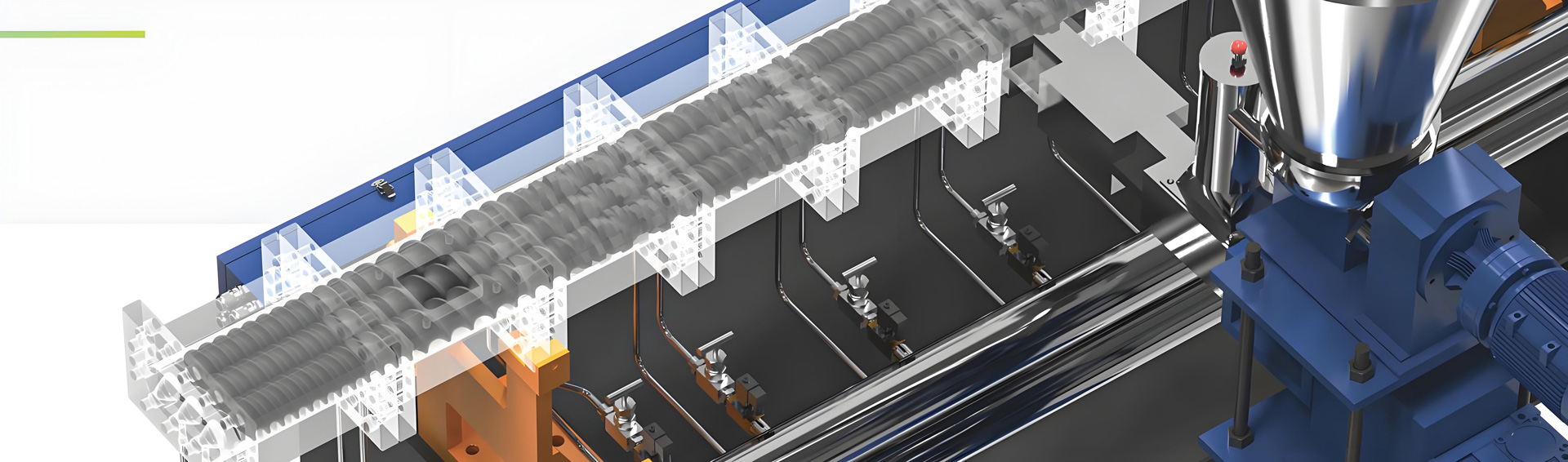
The maturity of the formula is realized on the co-rotating parallel twin-screw extruder, whose modular barrel and screw elements let the compounder design a residence-time and shear profile matched to the flame retardant chemistry. The standard machine for flame retardant PP is a co-rotating parallel twin-screw extruder with an L/D ratio of 40 to 48, which provides enough length to melt, disperse, devolatilize and meter without over-shearing heat-sensitive additives. Kerke, a Wanplas factory, builds the KTE series in this range, from small lab units to the high-capacity KTE-135D, and the same configuration logic applies to other twin-screw platforms from suppliers such as Coperion, Leistritz and JSW.
The screw is assembled from conveying elements and kneading blocks. The mature configuration proceeds in distinct zones. First, a feed-conveying section with forward-pitched conveying elements transports the PP and main additives from the feed throat. Second, a first kneading block set, typically at 45 or 60 degree stagger angles, generates the shear needed to melt the polymer and begin dispersion. Third, a melting and mixing zone consolidates the melt. Fourth, a side feeder introduces the flame retardant into the melt, which avoids premature thermal exposure of heat-sensitive additives and reduces agglomeration. Fifth, a second dispersive kneading block set breaks the flame retardant agglomerates to the target fineness. Sixth, a reverse-flight or reverse-kneading element builds a melt seal, or back-pressure restriction, that prevents the vacuum from pulling melt into the devolatilization port. Seventh, a vacuum devolatilization zone removes volatiles, moisture and decomposition gases. Eighth, a metering section builds pressure for the die and pelletizer.
Screw Configuration Segment Map
| Zone | Element Type | Function | Process Note |
|---|---|---|---|
| Feed | Conveying, deep flights | Transport solids | Low shear |
| First kneading | Kneading block 45/60 deg | Melt and disperse | Controlled shear |
| Melting | Conveying + mixing | Consolidate melt | Stable melt |
| Side feeding | Conveying, partially filled | Add FR | Into melt, low temp |
| Second kneading | Dispersive kneading | Break agglomerates | High shear brief |
| Reverse seal | Reverse flight/kneading | Melt seal | Protect vacuum |
| Devolatilization | Conveying, open | Vacuum vent | -0.06 to -0.09 MPa |
| Metering | Conveying, shallow | Build pressure | To die |
The barrel is the heated housing containing the screws, and in this article the term barrel is used consistently for the cylinder of the extruder. For MDH-heavy compounds the barrel and screw must be protected with a tungsten carbide double-alloy liner because the mineral is extremely abrasive; standard nitrided barrels wear through the liner in a fraction of the service life. The screw elements themselves are typically made from a high-speed tool steel or a powder-metallurgy alloy with a hard surface treatment, and the kneading blocks are the highest-wear components. A mature line tracks screw and barrel wear by periodic output and motor-load checks so that a worn element is replaced before it degrades dispersion and thus the flame rating.
Barrel Temperature, Screw Speed, Specific Energy and Vacuum
With the screw built, the operating window defines the second half of maturity. The barrel temperature profile is set zone by zone from the feed throat to the die. For most flame retardant PP compounds the profile runs 170 to 200 degrees Celsius, with the feed zone cooler and the metering zone near the top of the window. The critical exception is the intumescent APP-based system, where no barrel zone may exceed 220 degrees Celsius; exceeding this ceiling decomposes the ammonium polyphosphate, releases ammonia, creates foam and ruins the intumescent char. The brominated and MDH systems can tolerate up to about 210 to 230 degrees Celsius, but running hotter than necessary only accelerates antioxidant depletion and yellowing.
Screw rotation speed for flame retardant PP is typically 300 to 500 rpm on production-scale co-rotating twin-screw extruders. Higher speed increases shear and dispersion but also raises melt temperature and specific energy, so the speed is tuned together with the barrel temperature to keep the melt below the additive ceiling. Specific energy consumption, written SEI, for these compounds is normally in the range of 0.18 to 0.28 kWh/kg; below 0.18 the dispersion may be incomplete, and above 0.28 the melt is likely overheated and the output is energy-inefficient. Monitoring SEI in real time is a mature practice because a drift in SEI signals feeding inconsistency, wear or a clogged screen changer.
Process Window Reference
| Parameter | Mature Range | System Note |
|---|---|---|
| L/D ratio | 40-48 | All systems |
| Barrel temperature | 170-200 C | IFR never above 220 C |
| Screw speed | 300-500 rpm | All systems |
| Specific energy SEI | 0.18-0.28 kWh/kg | Energy and shear marker |
| Vacuum level | -0.06 to -0.09 MPa | Devolatilization |
Vacuum devolatilization is the step that separates a clean commercial pellet from a foamy reject. The vacuum zone is held at minus 0.06 to minus 0.09 MPa, which strips moisture from APP and MDH, removes trapped air and expels any decomposition gases from heat-sensitive flame retardants. If the vacuum is weak or the melt seal fails, the pellet will show voids, surface splay and a low bulk density, and the molded part will exhibit silver streaks. A reverse-flight element upstream of the vent maintains the required melt seal so that the vacuum pulls gas rather than sucking melt into the port.
Feeding Strategy and Pre-Drying
Feeding accuracy is where many immature formulas fail. Mature production uses loss-in-weight feeders, also called gravimetric feeders, for both the main and side feeds, because they hold the phr of each additive within tight tolerance across the whole campaign. The main feeder typically delivers the PP carrier and the pre-blended masterbatch or main additives; the side feeder delivers the heat-sensitive or high-load flame retardant into the melt after the first kneading zone. Side feeding is preferred for intumescent and MDH systems because it shortens the thermal residence of the sensitive additive and reduces the torque needed at the feed throat, improving both quality and throughput.
Drying is non-negotiable for the hygroscopic flame retardants. Ammonium polyphosphate and magnesium dihydroxide both attract moisture, and water carried into the barrel flashes to steam at processing temperature, causing foaming, splay and, in the case of APP, accelerated hydrolysis. The mature pre-treatment is to dry APP and MDH at 80 to 100 degrees Celsius for 2 to 4 hours before they enter the feeder, using a dehumidifying dryer or a simple hot-air oven with verified residence. The PP carrier, antioxidants and elastomers are less sensitive but should be stored dry; regrind must be characterized for moisture and MFR before use.
Feeding and Drying Plan
| Material | Feeder | Dry Requirement | Reason |
|---|---|---|---|
| PP carrier | Main loss-in-weight | Dry storage | Low moisture need |
| APP / IFR | Side loss-in-weight | 80-100 C, 2-4 h | Prevent hydrolysis, splay |
| MDH | Side loss-in-weight | 80-100 C, 2-4 h | Remove surface water |
| Sb2O3 / DBDPE | Main or side | Optional | Low moisture sensitivity |
| POE / additives | Main loss-in-weight | Dry storage | Standard |
Liquid feeding is an option for some phosphorus esters and for adding a processing oil, using a liquid feeder that injects the liquid into a downstream barrel zone where it is mixed by the kneading block. This improves dispersion of liquid flame retardants and avoids dust, but it adds a devolatilization load because the carrier solvent or water must be stripped at the vacuum port. A crammer feeder is sometimes used on the main throat when bulky low-bulk-density flame retardant powders would otherwise starve the screw.
Pelletizing Method Selection
The final pelletizing step converts the homogeneous melt from the die into a free-flowing pellet. The two mature routes for flame retardant PP are strand pelletizing and water ring die-face pelletizing, with underwater pelletizing reserved for higher-volume or more demanding grades. Strand pelletizing, also called strand cutting, extrudes the melt through a multi-hole die into strands that are cooled in a water bath, dried and cut by a rotary knife. It is robust, easy to maintain and tolerant of abrasive MDH compounds because the melt is handled in solidified strands, but it has more moving parts and a higher operator touch. Water ring die-face hot cutting cuts the melt directly at the die face into a water ring, producing round, uniform pellets with low dust and high automation, and it is the preferred method on modern Kerke KTE lines for flame retardant PP because it integrates tightly with the extruder and reduces human intervention.
The choice depends on the compound. For the highly abrasive MDH system, strand pelletizing is often favored because the hardened die and cutter see less continuous wear stress than a die-face system operating against a high-filler melt, though a well-hardened water ring head also performs. For the brominated and intumescent systems, water ring cutting gives cleaner, more spherical pellets that fluidize better in the blender and feed more uniformly into the injection molding machine. Underwater pelletizing is chosen for large capacity and for heat-sensitive grades that benefit from instantaneous quenching, but it is a higher-capital option. A key maturity criterion is pellet moisture: after any wet cutting, the pellet must be dried below the moisture specification, because residual water in an intumescent pellet accelerates APP hydrolysis during storage.
Pelletizing Method Comparison
| Method | Best For | Pellet Shape | Relative Cost Tier |
|---|---|---|---|
| Strand pelletizing | MDH, abrasive | Cylindrical | Low |
| Water ring die-face | Brominated, IFR | Spherical | Medium |
| Underwater pelletizing | High volume | Spherical, uniform | High |
Testing and Standards
A mature flame retardant PP formula is validated against a battery of fire, electrical, mechanical and regulatory tests. The central fire test is UL 94, which classifies materials as V-0, V-1 or V-2 based on burning time and dripping after removing the flame, and as 5VA or 5VB for thicker specimens under harsher conditions. For thin-wall PP, V-0 at 1.6 mm is the commercial benchmark, and V-0 at 0.8 mm is the premium target. The limiting oxygen index, written LOI, measured by ASTM D2863 or ISO 4589, quantifies the minimum oxygen concentration to sustain combustion; mature flame retardant PP typically reaches an LOI of 28 to 32 percent, up from the 17 to 18 percent of neat PP.
Electrical safety is verified by the glow-wire ignition temperature, GWIT, under IEC 60695-2-12 and IEC 60695-2-13, where mature compounds survive glowing-wire contacts at 750 to 960 degrees Celsius, and by the comparative tracking index, CTI, under IEC 60112, which measures resistance to surface tracking under wet contamination. Mechanical validation uses notched impact strength in kJ/m2 under ISO 180 or ASTM D256, tensile strength in MPa under ISO 527, flexural modulus, heat deflection temperature and sometimes the Vicat softening temperature. Smoke density is measured by ISO 5659-2, and toxicity by related standards, both critical for transportation and building applications. Regulatory screening covers RoHS and REACH SVHC for the European market, GB/T 2408 for the Chinese market and EN 45545-2 with its HL1 to HL3 hazard levels for railway applications. A mature formula documents the expected result range for each test so that the molder knows the compliance envelope.
Testing and Standard Reference
| Test | Standard | Mature Target |
|---|---|---|
| Flammability | UL 94 | V-0 at 1.6 mm |
| Oxygen index | ASTM D2863 / ISO 4589 | 28-32 percent |
| Glow-wire | IEC 60695-2-12/13 | 750-960 C pass |
| Tracking resistance | IEC 60112 | CTI 250-600 V |
| Notched impact | ISO 180 / ASTM D256 | 3-9 kJ/m2 |
| Tensile strength | ISO 527 | 18-28 MPa |
| Smoke density | ISO 5659-2 | Low for halogen-free |
| Railway | EN 45545-2 | HL1 to HL3 |
| China flammability | GB/T 2408 | V-0 / V-1 |
Common Defects and Countermeasures
Even a well-designed formula shows defects if the process drifts, and a mature operation anticipates them. Blooming, also called blooming or surface exudation, appears as a waxy or powdery layer on the pellet or part, caused by an additive exceeding its solubility in PP; the fix is to lower the loading of the offending additive, switch to a higher-MFR carrier, or use a more compatible grade. Color difference and yellowing come from antioxidant depletion, over-shearing or overheating the APP; the countermeasure is tighter barrel temperature control, a fresh antioxidant package and avoiding residence in the hot zone. Mechanical drop beyond the expected trade-off signals poor dispersion or missing compatibilizer, corrected by adjusting the kneading block intensity and adding PP-g-MAH.
Die drool, the buildup of degraded material at the die lip, is common with brominated and intumescent systems and is controlled by die temperature tuning, a small EBS increase and a screen changer that keeps the melt clean. Hydrolysis is specific to APP-based intumescent compounds; if the pellet or masterbatch absorbs moisture, the ammonium polyphosphate breaks down and the rating collapses, so dry storage and pre-drying are mandatory. Odor from residual volatiles is reduced by stronger vacuum and a longer devolatilization zone. Screw and barrel wear is severe in MDH compounds, addressed by tungsten carbide double-alloy barrel liners and scheduled element replacement. Finally, inconsistent phr from a worn volumetric feeder is eliminated by upgrading to loss-in-weight gravimetric feeding with periodic calibration.
Defect and Countermeasure Map
| Defect | Likely Cause | Countermeasure |
|---|---|---|
| Blooming | Additive exceeds solubility | Lower loading, change grade |
| Yellowing | Overheat, antioxidant loss | Control barrel, fresh AO |
| Mechanical drop | Poor dispersion | Stronger kneading, PP-g-MAH |
| Die drool | Degradation at die | Die temp, EBS, screen changer |
| Hydrolysis (APP) | Moisture uptake | Pre-dry, dry storage |
| Odor | Residual volatiles | Stronger vacuum |
| Screw wear | Abrasive MDH | Tungsten carbide barrel |
Frequently Asked Questions
What is the most mature flame retardant PP formula to reach UL 94 V-0 at 1.6 mm?
The most validated mature formula is the brominated-antimony synergistic system: decabromodiphenyl ethane 18 to 22 phr combined with antimony trioxide 6 to 8 phr in a homopolymer or block copolymer PP carrier, delivering UL 94 V-0 at 1.6 mm with good mechanical retention and a broad processing window.
Can an intumescent APP-based flame retardant PP be processed above 220 degrees Celsius?
No. Type II ammonium polyphosphate decomposes and releases ammonia above roughly 220 degrees Celsius, so the barrel temperature for an intumescent system must stay at or below 220 degrees Celsius, typically 170 to 200 degrees Celsius, to preserve the intumescent char chemistry and avoid foaming.
Why does a magnesium dihydroxide system require such high loading of 55 to 62 phr?
Magnesium dihydroxide works by endothermic decomposition and gas dilution rather than catalytic radical trapping, so it is far less efficient per unit mass. The 55 to 62 phr loading is needed to reach V-0, and the mineral must be surface treated with silane or stearic acid and supported by POE toughening.
What melt flow rate PP should I choose for high flame retardant filler loading?
High filler loadings such as 55 to 62 phr MDH or 22 to 28 phr intumescent raise melt viscosity, so a higher-flow carrier with melt flow rate 15 to 25 g/10min is usually chosen for processability, then POE is added back to recover impact strength lost to the high-flow base.
How much PTFE is needed to prevent dripping in UL 94?
Polytetrafluoroethylene at 0.2 to 0.5 phr forms a network that increases melt viscosity and suppresses flaming droplets during the UL 94 test. This anti-drip effect is frequently the deciding factor between a V-0 and a V-1 result across all four flame retardant systems.
What screw L/D is recommended for flame retardant PP compounding?
A co-rotating parallel twin-screw extruder with an L/D ratio of 40 to 48 is the mature standard. This length provides enough residence to melt, disperse, devolatilize and meter the compound without over-shearing the heat-sensitive flame retardants.
Why use a side feeder for flame retardant addition?
A side feeder introduces the flame retardant into the already-melted polymer after the first kneading zone. This shortens the thermal residence of heat-sensitive additives such as ammonium polyphosphate, reduces feed-throat torque and improves dispersion, which raises both quality and throughput.
How to prevent blooming of flame retardant additives?
Blooming occurs when an additive exceeds its solubility in polypropylene. The countermeasures are lowering the loading of the offending component, switching to a more compatible or higher-flow carrier, improving dispersion through the kneading block, and verifying additive compatibility in a pre-blend stability test before scale-up.
What vacuum level is needed for devolatilization?
The vacuum devolatilization zone is typically held at minus 0.06 to minus 0.09 MPa. This strips moisture from ammonium polyphosphate and magnesium dihydroxide, removes trapped air and expels decomposition gases, preventing voids, silver streaks and splay in the pellet and molded part.
How to choose between water ring and strand pelletizing?
Strand pelletizing is robust for abrasive MDH compounds and easier to maintain, while water ring die-face cutting yields cleaner spherical pellets ideal for brominated and intumescent systems and integrates tightly with modern twin-screw lines. Underwater pelletizing suits high-volume or heat-sensitive grades.
Is the brominated-antimony system compliant with RoHS and REACH?
Decabromodiphenyl ethane paired with antimony trioxide is effective and mature, but it draws attention under evolving RoHS and REACH SVHC screening and produces higher smoke density. For eco-labeled or halogen-restricted markets, the halogen-free intumescent or magnesium dihydroxide systems are the compliant alternatives.
What pre-drying is required for APP and MDH before compounding?
Both ammonium polyphosphate and magnesium dihydroxide are moisture-attracting and must be dried at 80 to 100 degrees Celsius for 2 to 4 hours before feeding. Skipping this step causes foaming, splay and, for APP, hydrolysis that collapses the intumescent rating during storage.
What screw and barrel material is needed for MDH high-fill compounds?
Because magnesium dihydroxide at 55 to 62 phr is extremely abrasive, the barrel should use a tungsten carbide double-alloy liner and the screw elements a hard surface-treated alloy. A standard nitrided barrel wears rapidly and loses dispersion quality within a short service window.
Which standards define flame retardant PP qualification?
The core standards are UL 94 for flammability classification, ASTM D2863 or ISO 4589 for limiting oxygen index, IEC 60695-2-12 and IEC 60695-2-13 for glow-wire, IEC 60112 for comparative tracking index, ISO 180 or ASTM D256 for notched impact, ISO 527 for tensile strength, ISO 5659-2 for smoke, plus RoHS, REACH, GB/T 2408 and EN 45545-2 for regulatory compliance.
Conclusion
A mature raw material formula for flame retardant PP modified by twin-screw compounding is not a single recipe but a matched set of chemistry, carrier and process. The brominated-antimony system with decabromodiphenyl ethane 18 to 22 phr and antimony trioxide 6 to 8 phr remains the most mature route to UL 94 V-0 at 1.6 mm with the best mechanical retention. The halogen-free intumescent system built on type II ammonium polyphosphate with pentaerythritol and melamine at 22 to 28 phr delivers low-smoke compliance provided the barrel never exceeds 220 degrees Celsius. The magnesium dihydroxide system at 55 to 62 phr serves low-smoke cable compounds but demands surface treatment, POE and a tungsten carbide barrel. The phosphorus-nitrogen system with DOPO derivatives, phosphinates and melamine cyanurate offers a premium thin-wall solution at high to premium cost.
Regardless of the system, carrier selection, the POE and PP-g-MAH additive package, PTFE anti-drip, the antioxidant combination and accurate loss-in-weight feeding define the difference between a lab pass and a commercial pellet. The co-rotating parallel twin-screw extruder with an L/D of 40 to 48, a segmented screw of conveying and kneading blocks, a side feeder, a reverse melt seal and a vacuum devolatilization zone at minus 0.06 to minus 0.09 MPa is the platform that makes these formulas manufacturable at 300 to 500 rpm and 0.18 to 0.28 kWh/kg specific energy. Kerke, a Wanplas factory, supplies the KTE-series co-rotating twin-screw compounding extruders engineered for exactly this work, and the Wanplas brand supports the broader compounding value chain with shared process expertise and factory-scale commissioning. Reach out to the Kerke engineering team to validate your specific flame retardant PP formula on a production-scale twin-screw line.