Introduction
Polyvinyl chloride (PVC) is one of the world’s most versatile and widely used thermoplastics. Flexible PVC, distinguished by its high plasticizer content, exhibits excellent flexibility, foldability, and cost-effectiveness, making it the preferred material for many high-demand downstream industries.
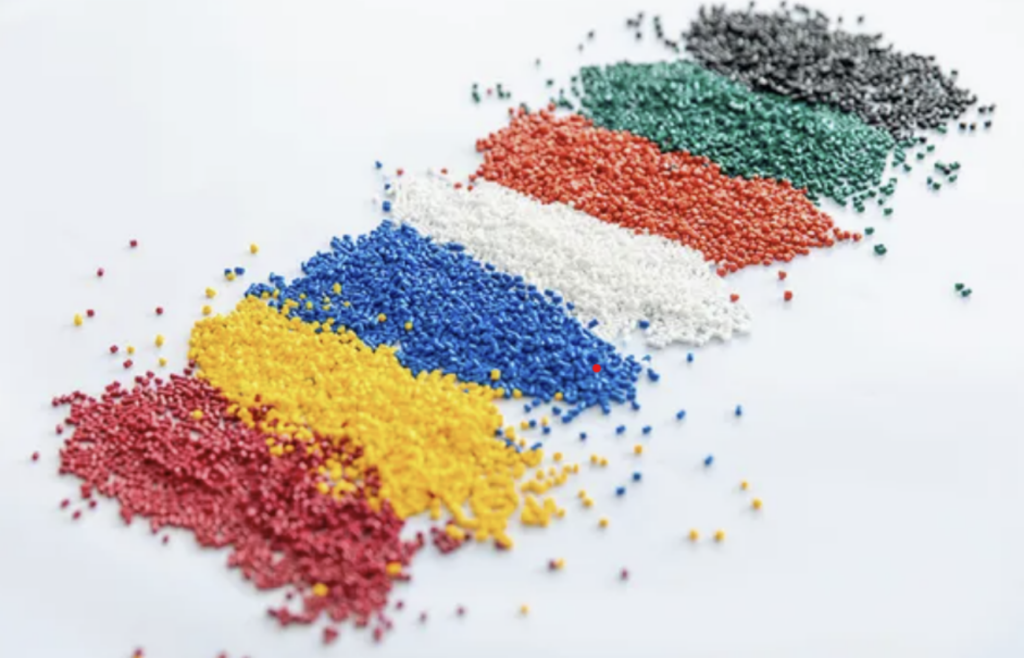
Flexible PVC pelletizing is the critical industrial process that transforms raw PVC resin and customized additive blends into uniform, high-quality pellets. These standardized pellets serve as the base material for injection molding, extrusion, and blow molding in downstream manufacturing. The pelletizing stage directly determines the consistency, performance, and defect rate of the final PVC product; even minor inconsistencies in pellet composition can lead to costly production failures in later stages.
The diverse performance requirements across core downstream sectors place extremely high demands on the consistency, stability, and processability of flexible PVC pellets — which directly depend on the design and precision of the upstream pelletizing extrusion equipment.
Core Application Fields of Flexible PVC Pellets
Flexible PVC pellets are formulated with customized additive packages to meet the unique technical requirements of different end-use scenarios. The most widely concerned and high-demand application fields in the industry are as follows:
1. Wire & Cable Industry
The wire & cable industry is the largest consumer of flexible PVC pellets, which serve as the core raw material for the insulation layer and outer sheath of low- and medium-voltage cables. Covering residential building wiring, industrial power transmission, communication signal cables, automotive wire harnesses, and medical equipment power cords, these cables require both excellent electrical insulation and sufficient flexibility to adapt to complex wiring scenarios such as narrow pipe trenches and movable equipment connections.
This application sets strict performance requirements for flexible PVC materials: first, excellent volume resistivity to ensure long-term electrical safety and prevent leakage risks; second, a specialized flame retardant system formulated to meet industry flame retardant standards, reducing the risk of fire propagation; third, outstanding environmental resistance, including resistance to aging, oil corrosion, and low-temperature embrittlement, maintaining stable toughness under harsh operating conditions.
The quality of PVC pellets directly determines the service life of the cable: if the additives such as flame retardants and stabilizers are not uniformly dispersed, or the pellets have local thermal degradation or impurity contamination, the subsequent extruded insulation layer will have subtle defects such as pores or inclusions, which will gradually expand under long-term electrical and thermal stress and eventually lead to safety hazards such as short circuits. Therefore, cable-grade PVC pellets must be produced by professional pelletizing equipment, which can achieve uniform dispersion of functional additives, strictly control the processing temperature to avoid material degradation, and produce impurity-free pellets with consistent fluidity, ensuring the uniform thickness and stable performance of the cable insulation sheath.
2. Building & Construction Industry
The building and construction industry is a key application scenario for flexible PVC, with products penetrating multiple links such as building waterproofing, sealing, pipeline layout, and interior decoration. Specific application scenarios include: flexible sealing tapes for the joints of roofing and underground waterproofing membranes, flexible sealing strips for door and window openings, flexible connection hoses for water supply and drainage systems, flexible sheaths for electrical conduit connections, flexible bottom cushions for indoor floor and wall paving materials, and elastic caulking strips for exterior wall joints.
Buildings require long-term stable performance from materials in complex outdoor or indoor environments, putting forward clear requirements for flexible PVC: first, excellent weather resistance, withstanding long-term ultraviolet radiation, rain erosion, and microbial erosion, avoiding problems such as yellowing, hardening, and cracking; second, durable compression resilience, adapting to the tiny deformation of the building structure, maintaining a tight seal for a long time to prevent water leakage or air infiltration; third, good constructability, with appropriate flexibility to fit the base material during construction.
The uniformity of pellet formulation is crucial to the durability of building materials. Uneven dispersion of weather-resistant stabilizers or antibacterial agents will lead to localized rapid aging of waterproofing membranes or premature attenuation of the elasticity of sealing strips. Professional pelletizing equipment accurately meters raw materials such as PVC resin, plasticizers, and weather-resistant additives through a precision weighing system, and achieves uniform mixing through a specialized extrusion system. The precise temperature control system avoids excessive shear heat generation, preventing the material from degrading during the pelletizing process. The produced pellets have stable fluidity, ensuring consistent thickness and uniform performance of subsequent extruded or calendered building products.
3. Automotive Manufacturing Industry
The automotive industry is a high-end application market for flexible PVC, which is widely used in three core areas: automotive interior trim, wire harness protection, and body sealing. Specific applications include: the skin of instrument panels, door trim panels, and seat covers, the flexible outer sheath of automotive wire harnesses, the sealing elements of window guide grooves and door frames, automotive floor mats, and flexible fender liners. Automotive parts require a balance of mechanical properties, sensory properties, and environmental adaptability, which puts forward more stringent requirements for PVC pellet performance.
The core performance requirements for automotive-grade flexible PVC are as follows: first, excellent scratch resistance, resisting wear during daily use and maintaining a long-term stable appearance; second, resistance to corrosion from internal accessories such as cleaning agents and sweat, avoiding problems such as stickiness and discoloration; third, low volatile organic compound (VOC) emission and low odor, meeting the in-car air quality standards; fourth, excellent low-temperature toughness, maintaining good flexibility in cold environments and avoiding cracking due to vehicle vibration; fifth, outstanding heat resistance, resisting aging and deformation when exposed to sunlight through the windshield for a long time.
Such high-quality requirements pose a challenge to the pelletizing process: it is necessary to ensure that the functional additives such as scratch-resistant agents, environmental stabilizers, and plasticizers are uniformly dispersed, and to avoid the degradation of PVC or the volatilization of small molecule additives during the pelletizing process, which would cause excessive VOC emissions. Specialized pelletizing equipment adopts a precision temperature control system and a high-strength vacuum exhaust structure to remove residual moisture and volatile components in the melt. The uniformly mixed melt is quickly cooled and formed by a professional pelletizing system, avoiding additive migration caused by prolonged high-temperature exposure. The produced automotive-grade pellets have consistent performance, ensuring that the subsequent molded interior parts have a smooth surface, no flow marks, and no obvious shrinkage deformation.
4. Medical Device Industry
The medical device industry is the application field with the highest technical barrier for flexible PVC, as the material directly contacts human tissues or medicines, requiring extremely high safety and stability. Medical-grade flexible PVC pellets are used to produce a large number of common sterile diagnostic and treatment equipment, including: disposable intravenous infusion sets, blood transfusion sets, hemodialysis pipelines, oxygen delivery tubes, breathing masks, wound dressing backing materials, and sealing parts for medical equipment.
Medical applications have strict mandatory requirements for flexible PVC materials: first, excellent biocompatibility, with no cytotoxicity, no skin irritation, and no adverse reactions to human tissues; second, sterilization resistance, maintaining stable performance after undergoing various sterilization processes such as ethylene oxide, high-temperature and high-pressure steam, and gamma ray irradiation, without decomposition or precipitation of harmful substances; third, appropriate transparency, facilitating medical staff to observe the flow of liquid or blood, and check for potential blockages or bubbles; fourth, excellent flexural fatigue resistance, withstanding repeated bending and squeezing during use, without the risk of pipeline cracking and liquid leakage; fifth, compliance with the strict industry standards for medical-grade materials, limiting the precipitation of small molecule plasticizers.
The production of medical-grade PVC pellets puts forward ultra-high requirements for the precision, stability, and hygiene level of pelletizing equipment. The equipment must be easy to clean and disinfect, with no dead corners or material residues. The pelletizing process must adopt a closed feeding and mixing system to prevent external impurities or microorganisms from contaminating the material. The extrusion system needs to achieve uniform mixing at a relatively low temperature to avoid material degradation or additive decomposition. The strong vacuum exhaust system removes residual vinyl chloride monomer and small molecule volatile components in the melt. The professional pelletizing system uses purified and sterilized circulating water to quickly cool the pellets, avoiding secondary pollution. The produced medical-grade pellets have uniform composition, high purity, and no precipitation, ensuring that the formed medical devices meet the strict safety standards of the medical industry.
Optimal Equipment Setup for Flexible PVC Pelletizing
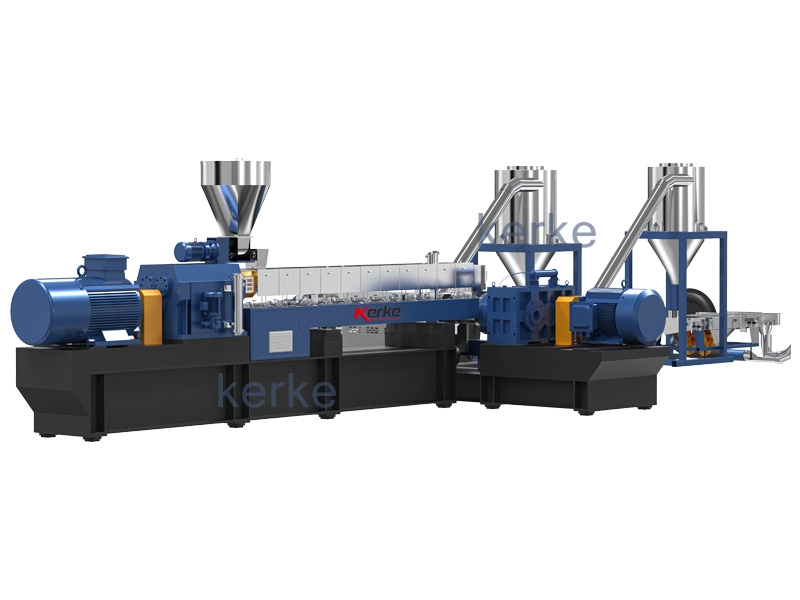
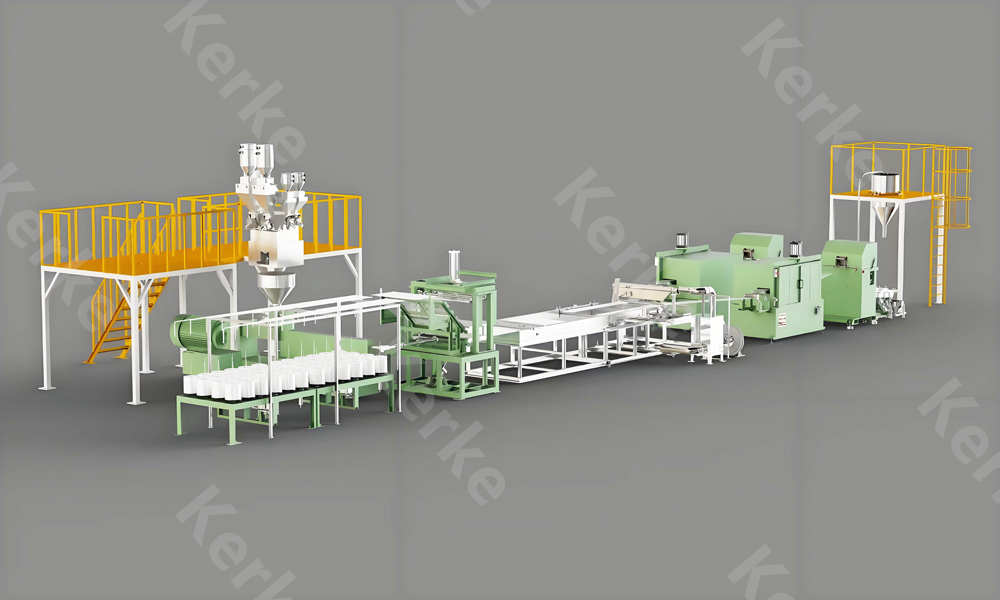
Meeting the stringent quality standards of the wire & cable, construction, automotive, and medical sectors requires a pelletizing system that can address the inherent processing challenges of flexible PVC: precise temperature control to prevent thermal degradation, high-torque uniform mixing to ensure consistent additive dispersion, and customized pelletizing methods to match application-specific purity requirements. The industry-standard two-stage extrusion system, paired with tailored pelletizing configurations, is purpose-built to deliver exactly these capabilities.
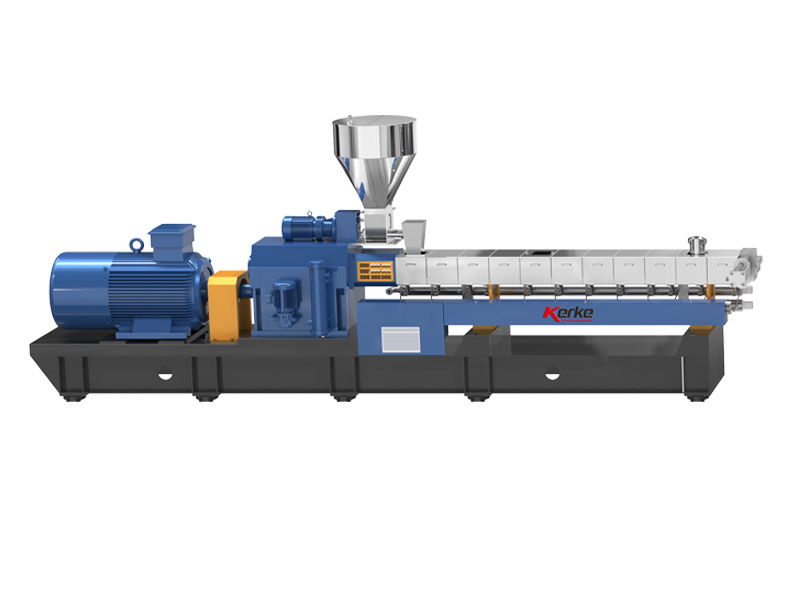
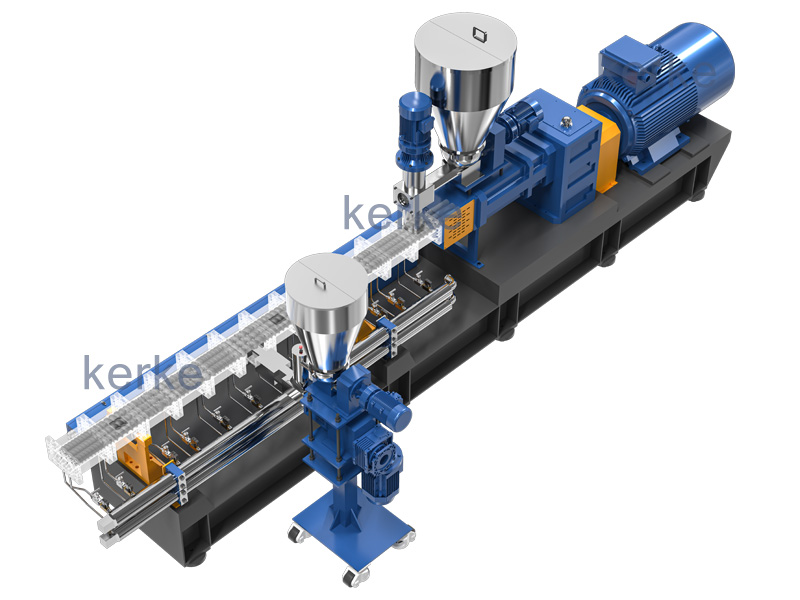
Stage 1: Co-Rotating Twin-Screw Extruder
The first stage is a high-torque twin-screw extruder, which handles the critical task of compounding — uniformly mixing PVC resin, plasticizers, stabilizers, and other additives into a single, homogeneous melt. High torque is essential here: it provides the intense mixing force required to evenly disperse additives throughout the high-viscosity PVC melt, even at moderate screw speeds. The extruder operates at a moderate conventional speed, a standard setting that limits shear heat generation to keep the melt within the safe thermal processing window.
This stage relies on two key design features to control material quality: a multi-zone precision temperature control system that maintains the melt temperature within a tight tolerance, and a high-performance vacuum venting system that removes trace moisture, trapped air, and volatile organic compounds (VOCs) from the melt. These features eliminate the risk of defects like voids, pinholes, or localized degradation in the final pellets.
Stage 2: Single-Screw Extruder
The second stage is a single-screw extruder, located directly in line with the discharge end of the twin-screw extruder. This unit performs two critical support functions that stabilize the melt flow before pelletizing. First, it smoothes out the inherent pressure pulsation from the twin-screw extruder, delivering a consistent, steady stream of melt to the pelletizing die. Second, it gradually cools the homogeneous melt from its compounding temperature down to a stable pelletizing temperature, reducing the risk of deformation or sticking during the pellet cutting process.
Crucially, the single-screw extruder is designed to minimize additional shear heat input, preserving the consistent temperature and additive dispersion achieved in the first stage.
Pelletizing System Options
The final component of the line is the pelletizing head, which cuts the continuously extruded PVC melt into uniform pellets. There are two industry-standard options, each tailored to different application requirements:
- Air-Cooled Die-Face Hot Cutting System: A cost-effective solution for general-purpose flexible PVC pellets, such as those used in standard wire insulation or irrigation tubing. As the melt exits a horizontal circular die face, rotating blades immediately cut it into short cylindrical pellets. A high-volume cold air flow instantly cools and conveys the pellets to a vibration sieve, which removes any irregularly shaped pieces or fine dust.
- Underwater Pelletizing System: A premium, high-performance option for critical applications including medical device components, automotive interior parts, and high-voltage wire insulation. The die face and cutting assembly are completely submerged in temperature-controlled circulating water, which provides instant, uniform cooling to prevent deformation or sticking. This design also eliminates dust contamination, making it ideal for high-end applications where even trace particles can cause product rejection.
Leading Equipment Supplier: Kerke
When it comes to reliable, purpose-built pelletizing extrusion lines that address the unique challenges of flexible PVC processing, Kerke stands out as a trusted global specialist. With over 15 years of focused experience in polymer compounding equipment and more than 500 successful installations in over 50 countries, the company designs extrusion systems engineered specifically to balance high torque for uniform mixing and moderate speed for controlled shear heat generation.
Kerke’s core advantage lies in its application-specific design philosophy: every component of its pelletizing lines is tailored to handle the rheological and thermal properties of flexible PVC compounds. Its two-stage extrusion systems are built around three key features that resolve PVC’s most pressing processing challenges:
- High-Torque, Moderate-Speed Drive System: The heavy-duty gearbox and precision-machined screw assembly deliver industry-leading torque density to ensure thorough, uniform additive dispersion in high-viscosity PVC melts. Paired with a precision speed control system that maintains a consistent rotational speed within a narrow tolerance, the equipment operates at the industry-standard moderate speed to minimize shear heat.
- Corrosion-Resistant, Precision Temperature Control Barrel: The extruder barrel is constructed from a specialized high-chromium alloy steel that resists corrosion from PVC melt and processing additives. It is divided into independent heating/cooling zones, each controlled by a dedicated proportional-integral-derivative (PID) controller to maintain consistent melt temperature throughout the compounding process.
- Fully Integrated Auxiliary Systems: Kerke supplies complete turnkey pelletizing lines, including precision loss-in-weight feeding systems that meter raw materials into the extruder at a consistent rate, high-performance pre-mixing systems to homogenize raw additives before compounding, and customized pelletizing heads (air-cooled or underwater) to match the customer’s specific application requirements.
Beyond equipment design, Kerke provides comprehensive global lifecycle support. Its team of experienced process engineers works directly with customers to customize lines for their exact PVC formulations, production capacity needs, and end-use quality standards. The company also offers professional on-site installation, commissioning, and operator training, plus 24/7 technical support to minimize downtime in high-volume production environments.
Equipment Pricing Considerations
The cost of a complete, turnkey flexible PVC pelletizing line varies based on production capacity, pelletizing system type (air-cooled vs. underwater), level of automation, and auxiliary equipment configuration. Below are 2025 market-based price ranges for standard Kerke systems, tailored to different production scales and application needs:
- Small-Scale Pilot/Low-Volume Production Lines: Designed for formulation research and development or small-batch specialty manufacturing, these lines typically have a production capacity of 20 to 100 kilograms per hour. Equipped with basic auxiliary equipment and manual or semi-automated controls, these systems are priced between USD 20,000 and USD 35,000.
- Mid-Size Fully Automated Production Lines: Built for medium-volume production of general-purpose flexible PVC pellets, these lines generally have a capacity of 200 to 500 kilograms per hour. They include fully automated process controls, an air-cooled die-face pelletizing system, and a full complement of upstream and downstream auxiliary equipment, with prices ranging from USD 40,000 to USD 75,000.
- Large-Scale High-Capacity Production Lines: Engineered for 24/7 high-volume production of premium-quality pellets for medical, automotive, or high-voltage cable applications, these lines offer a production capacity of 1,000 to 2,000 kilograms per hour. They feature a fully integrated two-stage extruder system, an underwater pelletizing system, advanced automation capabilities, and heavy-duty auxiliary equipment. Pricing for these customized systems starts at USD 85,000, with final costs dependent on specific application and regulatory requirements.
These figures represent standard market rates for purpose-built, reliable PVC pelletizing equipment. Customized configurations — such as lines designed for high-fill PVC compounds or strict medical-grade regulatory compliance — will be quoted individually based on detailed project specifications. For an accurate, customized quote, potential customers should contact Kerke’s technical sales team directly to discuss their unique production needs.
Conclusion
Flexible PVC pelletizing is a precision-critical process that defines the quality and consistency of downstream PVC manufacturing. The four core application fields of wire & cable, building & construction, automotive manufacturing, and medical device industry all put forward strict, differentiated requirements for the performance of flexible PVC pellets. Producing high-quality pellets that meet these standards requires resolving three interconnected technical challenges: PVC’s narrow thermal processing window, the need for uniform additive dispersion, and the constant push for higher production throughput without sacrificing quality.
A purpose-built two-stage extrusion system — like those designed by Kerke — is the most effective solution for these challenges. By separating compounding and pressure-building functions, pairing high torque for thorough mixing with moderate speed to control shear heat, and integrating specialized auxiliary equipment, these systems deliver the consistent, high-quality pellets demanded by today’s most demanding industries.
As the downstream industries continue to raise their quality requirements for flexible PVC products, investing in application-specific pelletizing equipment will remain a critical priority for PVC processors. For companies looking to upgrade their production capabilities or enter the high-value flexible PVC market, partnering with a specialist manufacturer like Kerke ensures access to the engineered solutions and technical support needed to compete effectively.
[Contact Kerke Today] to get the targeted solution for your flexible PVC pelletizing project!