Food containers made from polypropylene, polyethylene, PET, and polystyrene reach billions of consumers every day, and the color, opacity, and functional performance of those containers are almost always delivered by masterbatch. When a masterbatch is intended for food-contact plastics, the margin for error collapses: every pigment, carrier, and additive must be demonstrably safe, and the production line must prove it has not introduced contamination. This guide explains how to formulate and manufacture masterbatch for food container plastics that complies with the world’s major food-contact frameworks, including FDA 21 CFR, EU 10/2011, and China’s GB 4806 series. We walk through masterbatch types, carrier selection, migration testing, heavy-metal limits, pigment rules, twin-screw compounding parameters, clean production, quality control, certification, and real-world application scenarios. Whether you run a masterbatch plant or specify materials for a packaging converter, the objective is the same: a colored or functional food container that stays safe from the first fill to the last use.
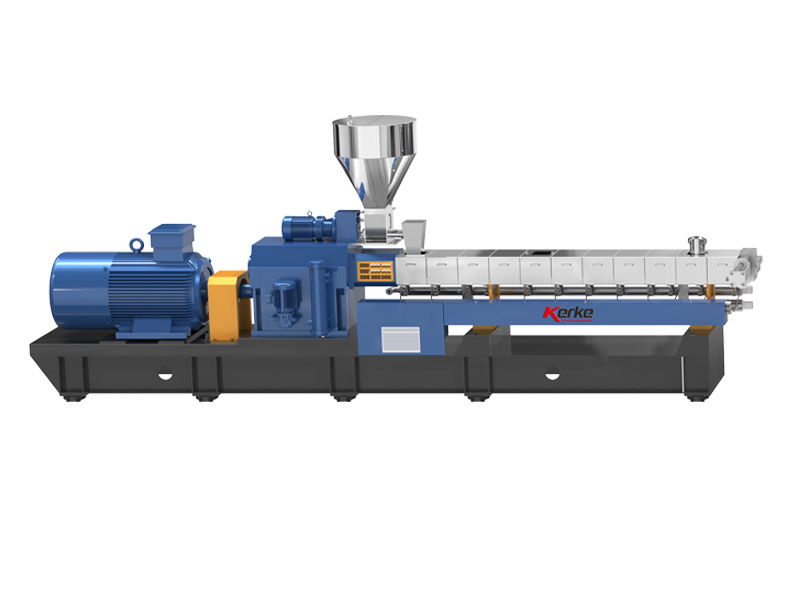
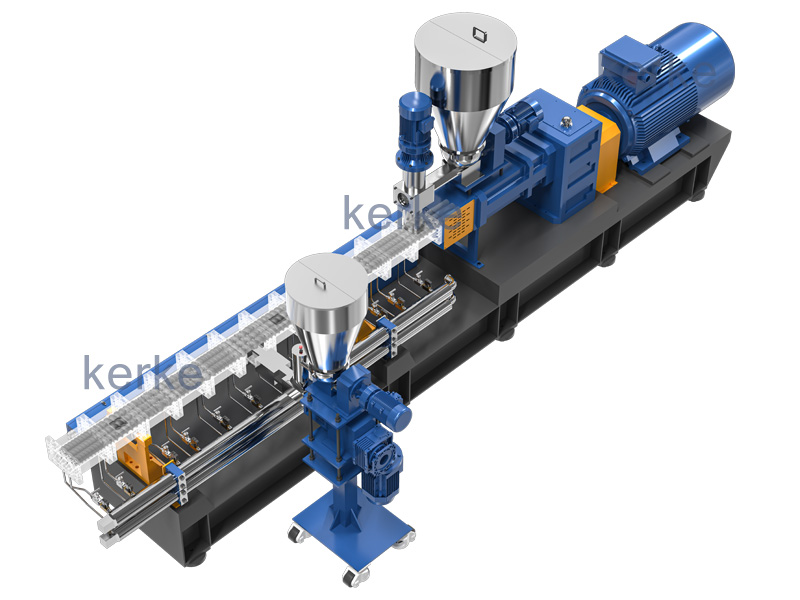
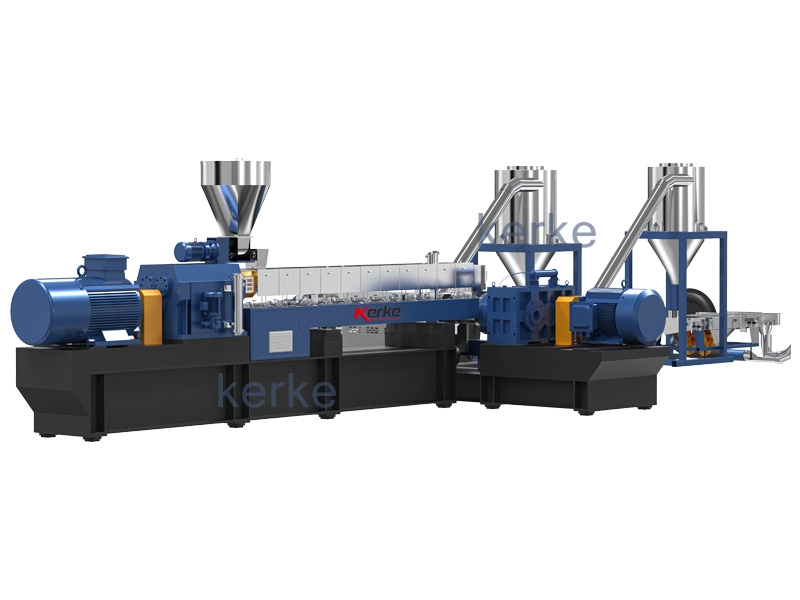
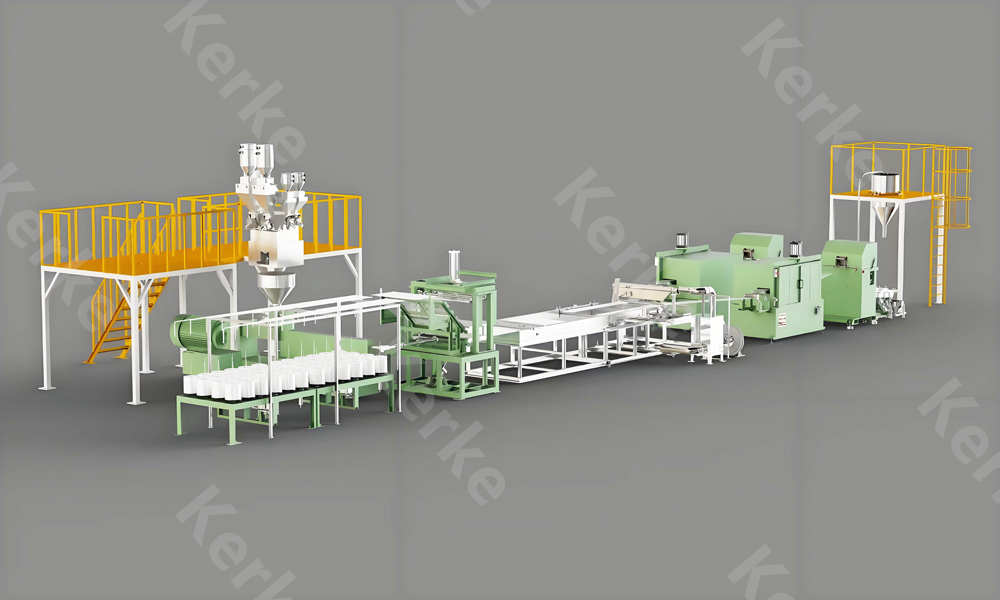
Producing compliant masterbatch is an engineering discipline as much as a regulatory one. Kerke, a Wanplas factory specializing in co-rotating twin-screw compounding extruders, supplies the KTE-series twin-screw lines that many masterbatch producers use to disperse high levels of titanium dioxide, carbon black, and functional additives under tightly controlled, food-grade conditions. The technology choices you make on the extruder directly affect dispersion quality, volatile load, and therefore compliance. Throughout this article we connect formulation decisions to the process equipment that makes them repeatable at commercial scale.
Food-contact masterbatch is only as safe as its least-controlled ingredient and its least-controlled production step. Positive-list compliance, low migration, and contamination control must be designed in, not tested in.
Types of Food-Contact Masterbatch
Food-contact masterbatch falls into four functional families. Each family carries its own compliance concerns, because the pigment or additive load, the carrier, and the processing severity differ. White masterbatch dominates dairy and ready-meal packaging; color masterbatch covers the full brand palette; black masterbatch serves microwave and UV-sensitive applications; and functional masterbatch delivers antimicrobial, slip, anti-block, anti-fog, barrier, and other properties without changing the base hue.
White masterbatch is built on rutile titanium dioxide at pigment levels typically between 40 percent and 70 percent. Rutile is preferred over anatase because of higher refractive index and better weather stability. The pigment must be polymer-grade and free of the impurities that drive migration. Color masterbatch uses both inorganic and organic pigments selected for heat resistance, migration resistance, and light fastness; for PET processing at about 280 degrees Celsius the pigment must tolerate roughly 300 degrees Celsius without decomposition. Black masterbatch relies on food-grade carbon black, where the critical parameters are polycyclic aromatic hydrocarbon (PAH) content, specifically benzo(a)pyrene below 0.25 mg/kg and total PAHs below 10 mg/kg.
Functional masterbatch is the fastest-growing segment for food containers. Antimicrobial grades suppress surface bacteria on reusable boxes and cutting boards; antioxidant grades protect fatty foods during hot fill; slip and anti-block grades improve film convertibility; anti-fog grades keep condensation from obscuring refrigerated packaging; and barrier or foaming or nucleating grades change permeability, density, or clarity. Every functional additive must itself appear on the relevant positive list with an assigned SML, or hold an individual authorization.
| Masterbatch Type | Typical Active Content | Key Compliance Concern | Typical Carrier | Relative Cost |
|---|---|---|---|---|
| White (TiO2 rutile) | 40% to 70% TiO2 | Pigment purity, overall migration, abrasion on equipment | PE or PP, matched to substrate | Low to Medium |
| Color (inorganic/organic) | 10% to 50% pigment | Heavy metals, azo amines, heat and migration resistance | PE, PP, PET, or universal | Medium to High |
| Black (food-grade carbon black) | 20% to 50% carbon black | PAHs: BaP <0.25 mg/kg, total PAHs <10 mg/kg | PE or PP | Low to Medium |
| Functional (antimicrobial) | 1% to 5% active | Active substance on positive list, SML compliance | PE, PP, or PET | High to Very High |
| Functional (slip / anti-block) | 3% to 15% active | Erucamide migration, silicate purity | PE or PP | Medium |
| Functional (anti-fog / barrier / nucleation) | 2% to 10% active | Additive SML, interaction with food | Matched to substrate | Medium to High |
The table above is a planning tool, not a substitute for your specific formulation dossier. Each entry must be traced back to a supplier declaration and a positive-list citation before production begins.
Carrier Resin Selection
The carrier resin is the medium that carries pigment or additive into the substrate during processing. In food-contact masterbatch, carrier selection is a compliance decision first and a processing decision second. The first rule is family matching: a PP masterbatch should use a PP carrier, a PE masterbatch a PE carrier, and a PET masterbatch a PET carrier or a specifically cleared universal carrier. Mismatched carriers can create a separate polymer phase, reduce mechanical properties, and introduce unintended migrating species.
The second rule is melt-flow matching. The carrier’s melt flow index (MFI) is normally selected at roughly two to five times that of the substrate so that the masterbatch disperses fully before the melt freezes. Too low an MFI leaves undispersed streaks; too high an MFI can shift the mechanical balance of thin-wall containers. The third consideration is the universal carrier, which offers convenience and lower inventory but carries risk: it may not be optimized for any single substrate, can impair dispersion in demanding applications, and may contribute non-intentionally added substances (NIAS) that complicate migration screening.
| Substrate Resin | Recommended Carrier | Carrier MFI Guidance | Universal Carrier Risk | Notes |
|---|---|---|---|---|
| PP (containers, caps) | PP carrier | 2 to 5x substrate MFI | Medium: phase separation risk | Best dispersion with homologous carrier |
| HDPE / LDPE (bottles, film) | PE carrier | 2 to 5x substrate MFI | Low to Medium | PE carrier disperses well in PE |
| PET (bottles, trays) | PET or cleared universal | Matched IV | High: IV drop, acetaldehyde release | Avoid carriers that hydrolyze PET |
| PS / HIPS (cups, trays) | PS or compatible | Matched to substrate | Medium | Styrenic carriers reduce stress cracking |
| PLA / PBAT (compostable) | Biodegradable carrier | Matched to biopolymer | Very High: spoils compostability | Use matched bio-carrier only |
From a production standpoint, the carrier also governs how the twin-screw profile is built. A low-MFI, high-viscosity carrier needs more shear for dispersion, while a high-MFI carrier flows easily and needs gentler conveying to avoid over-working the melt. Kerke’s KTE-series lines allow the screw configuration, side-feed location, and vacuum stage to be tuned to the chosen carrier so that thermal history stays within safe limits for food-grade output.
Global Food-Contact Regulatory Systems
No single regulation covers the world, and exporters must treat each market as a separate compliance project. The three anchors are the United States FDA, the European Union’s framework built on EC 1935/2004 and EU 10/2011, and China’s GB 4806 family. Around them sit Japan’s positive list, Korea’s KFDA rules, India’s IS standards, Brazil’s ANVISA RDC 56/2012, and Canada’s HPFB oversight.
The United States regulates food-contact substances through 21 CFR 174 to 186. Olefin polymers are covered by 21 CFR 177.1520, PET by 21 CFR 177.1630, and colorants by 21 CFR 178.3297. Substances not explicitly listed may enter the market through a Food Contact Notification (FCN), and many low-risk substances qualify under the Threshold of Regulation exemption. The European Union starts from Framework Regulation EC 1935/2004 and Good Manufacturing Practice Regulation EC 2023/2006, then applies the Plastics Regulation EU 10/2011 with its Union List, specific migration limits (SML), and overall migration limit (OML) of 10 mg/dm2 or 60 mg/kg. Recycled plastics are governed by EU 2022/1616, and BPA restrictions by Regulation (EU) 2018/213.
China’s system uses GB 4806.1 as the general principle, GB 4806.6 for resins, GB 4806.7 for products, GB 9685 for additives, and the GB 31604 series for migration test methods. Japan shifted to a positive-list system under JHOSPA, revised in 2020, while Korea, India, Brazil, and Canada each maintain their own positive lists and migration limits. The practical outcome is that a masterbatch cleared for one market is not automatically cleared for another, and documentation must travel with the product.
| Region | Core Framework | Key Articles | Positive List | Overall Migration Limit |
|---|---|---|---|---|
| United States (FDA) | 21 CFR 174 to 186 | 177.1520 olefins, 177.1630 PET, 178.3297 colorants | Indirect via FCN and listings | Not a single OML; per-substance SML |
| European Union | EC 1935/2004, EC 2023/2006 | EU 10/2011, EU 2022/1616, (EU) 2018/213 | Union List in EU 10/2011 | 10 mg/dm2 or 60 mg/kg |
| China (GB) | GB 4806.1 | GB 4806.6, GB 4806.7, GB 9685, GB 31604 | GB 9685 positive list | Per GB 31604 methods |
| Japan | JHOSPA | Positive List (2020 revision) | Positive List | Specified per substance |
| Korea | KFDA | Food Utensils Standards | Positive List | Per category |
| India | IS 10146 | IS 10146 / IS 10910 | Specifications per resin | Per IS methods |
| Brazil | ANVISA | RDC 56/2012 | Listed substances | Per RDC 56/2012 |
| Canada | HPFB | Food and Drugs Regulations | List of permitted substances | Per division |
The lesson for masterbatch producers is to build a single regulatory matrix that maps every raw material to the lists above, then maintain it as lists are updated. EU 10/2011 is amended frequently, and GB 9685 is revised on a rolling basis, so the matrix is a living document rather than a one-time exercise.
Migration Testing Methodology
Migration testing answers the only question that matters for food safety: what substances leave the plastic and enter the food? The test protocol depends on the food type, the contact temperature, and the contact time. Regulators define food simulants because testing every real food is impractical. Aqueous foods use 10 percent ethanol; acidic foods use 3 percent acetic acid; alcoholic and dairy foods use 20 percent or 50 percent ethanol; fatty foods use vegetable oil, or substitute simulants such as Tenax or 95 percent ethanol; and dry foods use Tenax.
Test conditions are chosen to bracket real use. A condition of 40 degrees Celsius for 10 days represents long-term room-temperature storage. Shorter, hotter conditions model pasteurization and hot fill: 70 degrees Celsius for 2 hours, 100 degrees Celsius for 1 hour, or 121 degrees Celsius for 30 minutes for retort sterilization. Microwave use has its own condition. The area-to-volume ratio is standardized at 6 dm2 per kg of food so that lab results translate to packaging geometry.
| Food Category | Food Simulant | Test Condition | Models |
|---|---|---|---|
| Aqueous (water, soft drinks) | 10% ethanol | 40 C x 10 d, or 70 C x 2 h | Room-temp and hot-fill storage |
| Acidic (juice, vinegar) | 3% acetic acid | 40 C x 10 d, or 100 C x 1 h | Acid foods and pasteurization |
| Alcoholic / dairy | 20% or 50% ethanol | 40 C x 10 d | Beer, spirits, dairy |
| Fatty (oil, meat, sauce) | Vegetable oil, Tenax, or 95% ethanol | 40 C x 10 d, or 100 C x 1 h | Cooked and oil-rich foods |
| Dry (snacks, powder) | Tenax | 40 C x 10 d | Dry food contact |
| Retort / sterilization | Per food type | 121 C x 30 min | Microwave and can-style sterilization |
Two limits are judged. Overall migration (OML) is the total mass of non-volatile substances that transfers, capped at 10 mg/dm2 or 60 mg/kg under EU 10/2011. Specific migration (SML) is the amount of one listed substance, each with its own ceiling. Increasingly, regulators also require screening for non-intentionally added substances (NIAS) using GC-MS and LC-MS, because an impurity or reaction product not on any list can still pose a risk. A compliant masterbatch therefore needs both clean raw materials and a clean process that does not generate NIAS through degradation.
Heavy Metal and Toxic Substance Limits
Heavy metals are the classic food-contact hazard, entering through pigments, fillers, or contaminated recycle streams. The baseline limits applied across packaging and toy-adjacent frameworks are lead (Pb) below 100 ppm, cadmium (Cd) below 100 ppm, mercury (Hg) below 100 ppm, and hexavalent chromium (Cr VI) below 100 ppm. The packaging directive 94/62/EC and the toy safety standard EN 71-3 together drive a common threshold where the sum of these four heavy metals must stay below 100 ppm in many applications.
EU 10/2011 goes further with metal-specific SMLs that are far tighter than the four-metal total, because individual metals are toxic even at trace levels. Barium is limited to 1 mg/kg, cobalt to 0.05 mg/kg, copper to 5 mg/kg, iron to 48 mg/kg, lithium to 0.6 mg/kg, manganese to 0.6 mg/kg, and zinc to 5 mg/kg. For black masterbatch the PAH ceiling is decisive: benzo(a)pyrene below 0.25 mg/kg and total PAHs below 10 mg/kg. These numbers make raw-material screening non-negotiable, since pigment lots vary by source.
| Substance | General Packaging Limit | EU 10/2011 SML | Primary Source in Masterbatch |
|---|---|---|---|
| Lead (Pb) | <100 ppm | Per substance SML | Pigments, contaminated recycle |
| Cadmium (Cd) | <100 ppm | Per substance SML | Pigments, stabilizers |
| Mercury (Hg) | <100 ppm | Per substance SML | Contamination |
| Hexavalent chromium (Cr VI) | <100 ppm | Per substance SML | Pigments, inks |
| Barium (Ba) | Sum <100 ppm | 1 mg/kg | Fillers, pigments |
| Cobalt (Co) | Sum <100 ppm | 0.05 mg/kg | Pigments, driers |
| Copper (Cu) | Sum <100 ppm | 5 mg/kg | Pigments, catalysts |
| Iron (Fe) | Sum <100 ppm | 48 mg/kg | Pigments, wear debris |
| Lithium (Li) | Sum <100 ppm | 0.6 mg/kg | Additives |
| Manganese (Mn) | Sum <100 ppm | 0.6 mg/kg | Pigments |
| Zinc (Zn) | Sum <100 ppm | 5 mg/kg | Activators, pigments |
| Benzo(a)pyrene (BaP) | n/a | <0.25 mg/kg (PAH) | Carbon black |
| Total PAHs | n/a | <10 mg/kg (PAH) | Carbon black |
Masterbatch producers should request heavy-metal certificates of analysis from every pigment and filler supplier, and confirm them with ICP-MS on incoming lots. A single off-spec lot of inorganic pigment can fail an entire production campaign and every downstream container made from it.
Pigment Compliance and Colorant Safety
Colorants are where food-contact masterbatch meets the strictest scrutiny, because pigments are chemically complex and some legacy pigments release hazardous amines. In the EU, pigments must follow the EuPIA guidelines and the Council of Europe Resolution AP(89)1, which lists acceptable colorants for food-contact plastics. Azo pigments that can cleave to release any of 22 listed carcinogenic aromatic amines are prohibited under EU 2002/61/EC, and the masterbatch must be tested to confirm absence of those amines.
The choice between organic and inorganic pigments is a balance of cost, heat resistance, migration resistance, and light fastness. Inorganic pigments such as titanium dioxide, iron oxides, and chromium oxides are generally more heat-stable and less migratory but offer narrower, often duller shades and higher density. Organic pigments deliver brighter, cleaner colors at lower load but can be more sensitive to heat and migration, demanding careful selection for PET or retort applications. Heat resistance must exceed the processing temperature with margin: PET at about 280 degrees Celsius requires pigments stable near 300 degrees Celsius.
| Property | Inorganic Pigments | Organic Pigments | Selection Implication |
|---|---|---|---|
| Heat resistance | High (up to 300 C+) | Medium to High (grade dependent) | PET and retort favor inorganics |
| Migration resistance | Excellent | Good to moderate | Fatty-food contact favors inorganics |
| Light fastness | Excellent | Blue wool 7 to 8 for top grades | Outdoor/shelf-life needs 7 to 8 |
| Color strength | Moderate | High (lower dosing) | Organics reduce masterbatch load |
| Cost | Low to Medium | Medium to High | Budget drives mix |
| Heavy-metal risk | Requires screening | Lower heavy-metal risk | Both need CoA verification |
Beyond the chemistry, the masterbatch maker must document that each pigment is listed, that its heavy-metal and PAH profile passes, and that its processing did not generate NIAS. Color matching to a brand standard should be done with food-cleared pigments only; reformulating a brand color around a non-cleared pigment is a common route to a non-compliant container.
Twin-Screw Compounding Process Parameters
Food-contact masterbatch is almost always produced on a co-rotating, intermeshing twin-screw extruder because that platform gives the dispersion control, devolatilization, and repeatability the application demands. Competing twin-screw platforms such as Coperion’s ZSK, Leistritz’s ZSE, and JSW’s TEX share the same principles, and Kerke’s KTE series is built to the same co-rotating, closely intermeshing geometry so that process know-how transfers across the category.
The decisive parameters are length-to-diameter ratio, screw diameter, screw speed, temperature profile, and vacuum venting. An L/D of 36 to 48 gives enough residence length for both melting and dispersion without over-working the melt. Common diameters are 35 mm, 52 mm, 65 mm, and 75 mm, scaling from pilot to full production. For high TiO2 loading, the screw includes a high proportion of dispersive kneading blocks placed after side feeding of the pigment, and vacuum venting held near minus 0.08 MPa to strip volatiles and moisture that would otherwise create odor and splay.
| Parameter | Typical Range | Purpose / Effect |
|---|---|---|
| Machine type | Co-rotating intermeshing twin-screw | Dispersive mixing and devolatilization |
| Length-to-diameter (L/D) | 36 to 48 | Residence time for melt and dispersion |
| Screw diameter | 35 / 52 / 65 / 75 mm | Scales capacity from lab to plant |
| Screw speed | 400 to 700 rpm | Shear for pigment breakdown |
| Specific torque (Md/a3) | 8 to 13 N.m/cm3 | Drive capacity and throughput ceiling |
| Barrel profile (PE carrier) | 160 / 180 / 190 / 190 / 185 C | Controlled melt without degradation |
| Vacuum venting | about -0.08 MPa | Removes volatiles and odor |
| Kneading block ratio | High for TiO2 / carbon black | Dispersive breakdown of agglomerates |
| Pelletizing | Water-ring or underwater | Clean, uniform, low-dust pellets |
| Capacity | 100 to 1500 kg/h | Depends on diameter and formula |
Side feeding the heavy pigment rather than dumping it at the main throat reduces peak barrel fill and localized shear heating, which protects heat-sensitive carriers and keeps the thermal history gentle. The pelletizing step also matters for food grade: water-ring or underwater cutting yields rounded, low-dust pellets that are easier to handle in a clean environment and less prone to cross-contamination than strand-cut material that passes through more handling.
Cleanroom and Contamination-Control Production
Food-contact masterbatch cannot be made on a line that also runs non-food or recycled-content compounds without rigorous separation. The gold standard is a dedicated production line reserved for food-grade output, eliminating the cross-contamination risk at the source. Where a shared line is unavoidable, a validated cleaning protocol and full changeover procedure must sit between campaigns, with swab testing confirming the barrel and downstream equipment are free of prior residues.
Facility hygiene scales with risk. An ISO Class 8 cleanroom, equivalent to the older Class 100000 designation, is a common option for packing and final blending of sensitive food-grade masterbatches, reducing airborne particulate and microbial load. Metal detection and magnetic separation (metal capture and iron removal) protect both the consumer and the extruder screws from ferrous and non-ferrous contamination. Raw-material admission requires supplier audits and verified declarations, so that only cleared substances enter the building.
Traceability closes the loop. Every batch must carry a lot identity linking it to each raw-material lot, the machine parameters, the operators, and the test results. Retained samples are kept for at least two years, and cleaning validation evidence is archived so that any future query about a specific container can be answered with data. This discipline is what lets a masterbatch producer defend compliance if a customer or regulator challenges a result.
Quality Inspection and Testing
Quality control for food-contact masterbatch spans dispersion, color, physical properties, and safety. Dispersion is judged by the filter pressure value (FPV) method, where a melt is pushed through a screen and the pressure rise indicates agglomerate load, supplemented by microscopy of a pressed film. Color is controlled against a standard using L*a*b* coordinates, with a target color difference Delta E of 1.0 or lower between batches to keep brand consistency.
Physical and safety tests confirm the masterbatch is both functional and safe. Ash content per ISO 3451 verifies pigment loading, moisture is held below 0.1 percent to avoid splay, and melt flow index per ISO 1133 confirms processability. The safety battery includes migration testing, heavy-metal analysis by ICP-MS, and sensorial testing such as DIN 10955 with an odor rating of 2.5 or lower. Together these tests turn a formulation into a defensible compliance claim.
| Test | Method / Standard | Acceptance Target | What It Controls |
|---|---|---|---|
| Dispersion | FPV and microscopy | Low FPV, no agglomerates | Color uniformity, defects |
| Color difference | L*a*b* spectro | Delta E <= 1.0 | Batch-to-batch consistency |
| Ash content | ISO 3451 | Per formulation | Pigment loading accuracy |
| Moisture | Loss on drying | <0.1% | Prevents splay, bubbles |
| Melt flow index | ISO 1133 | Per carrier grade | Processability |
| Migration | GB 31604 / EU 10/2011 | Within OML and SML | Food safety |
| Heavy metals | ICP-MS | Below limits | Toxicity compliance |
| Odor | DIN 10955 | Rating <= 2.5 | Sensorial acceptance |
Testing frequency should be risk-based: incoming-lot screening for heavy metals and PAHs on pigments, in-process checks for dispersion and MFI, and full migration plus sensorial validation on a representative finished batch. Retaining the tested samples for two years means a result can be re-examined if a field complaint appears long after shipment.
Management System Certifications
Certifications are how a masterbatch producer signals that compliance is systematic rather than occasional. The food-safety standards most relevant here are ISO 22000, FSSC 22000, and BRCGS Packaging Materials, supported by HACCP principles and the GMP required under EC 2023/2006. ISO 9001 underpins the general quality system, while Halal and Kosher certifications open specific regional and religious markets for food packaging.
| Certification | Scope | Why It Matters for Food Masterbatch |
|---|---|---|
| ISO 22000 | Food safety management | Systematic hazard control across the process |
| FSSC 22000 | ISO 22000 plus sector PRPs | Recognized scheme for packaging suppliers |
| BRCGS Packaging Materials | Packaging safety standard | Commonly required by brand owners |
| HACCP | Hazard analysis | Identifies critical control points |
| ISO 9001 | Quality management | Foundation for all other systems |
| GMP (EC 2023/2006) | Good manufacturing practice | Legal baseline in the EU |
| Halal / Kosher | Religious compliance | Access to specific food markets |
Certification alone does not prove a given batch is compliant, but it proves the producer has the procedures, records, and audit trail to make compliance repeatable. For a converter supplying multinational food brands, a masterbatch supplier without these certificates is usually a non-starter regardless of test results.
Application Scenarios for Food Containers
The right masterbatch depends on the container, its use temperature, and its food type. Disposable meal boxes in PP must tolerate 121 degrees Celsius for retort or microwave use. Yogurt cups in PS or PP need color and often anti-block for film lids. Mineral-water caps in HDPE are typically white or blue with tight odor control. Microwave boxes demand masterbatch stable under repeated heating, and infant bottles in PPSU or Tritan must be entirely BPA-free, which rules out any BPA-containing additive in the masterbatch.
PET preforms for bottles need masterbatch that does not depress intrinsic viscosity or raise acetaldehyde. Cling film and fresh-preservation film use slip and anti-fog functional masterbatch. Drinking straws and cutlery increasingly use biodegradable PLA or PBAT, which require matched bio-carrier masterbatch to preserve compostability. Each scenario sets its own temperature, migration, and sensorial bar, and the masterbatch dossier must address all of them.
| Application | Resin | Masterbatch Need | Key Constraint |
|---|---|---|---|
| Disposable meal box | PP | White / color | Withstand 121 C |
| Yogurt cup | PS / PP | Color, anti-block | Low odor, clean look |
| Water bottle cap | HDPE | White / blue | Tight odor control |
| Microwave box | PP | Heat-stable color | Repeated heating |
| Infant bottle | PPSU / Tritan | BPA-free color | Zero BPA |
| PET preform | PET | Color, no IV drop | Low acetaldehyde |
| Cling / preservation film | PE / PVC-free | Anti-fog, slip | Food-contact film safety |
| Straw / cutlery | PLA / PBAT | Bio-carrier masterbatch | Compostability preserved |
Matching masterbatch to application is where the producer earns trust. A masterbatch perfect for a room-temperature PP tub may fail in a retort pouch, and a color fine in HDPE may migrate in a fatty-food PET application. The application table should be the first filter applied to any new formulation request.
Troubleshooting Common Defects
Even with a compliant formula, production can drift. The common defects in food-contact masterbatch each point to a root cause in formulation, equipment, or hygiene. Color specks usually mean pigment agglomerates or foreign particles from inadequate filtration. Poor dispersion traces to insufficient kneading-block intensity, wrong screw speed, or under-fed side feeding. Batch-to-batch color variation comes from inconsistent pigment lots or drifting barrel temperature.
Processing bleed-out (plate-out) signals an additive migrating to the die or mold surface, often an over-dosed slip agent. Migration above limit points to a non-cleared substance or excessive loading. Odor anomalies come from thermal degradation, wet feed, or poor vacuum venting. Warpage in the final container relates to carrier mismatch altering crystallinity, and reduced clarity stems from poor pigment dispersion scattering light. Each issue has a corrective action that the quality system should already anticipate.
| Defect | Likely Root Cause | Corrective Action |
|---|---|---|
| Color specks / black dots | Agglomerates, foreign particles | Improve filtration, screen pigment |
| Poor dispersion | Low shear, wrong speed | Raise kneading-block ratio, adjust rpm |
| Batch color variation | Pigment lot drift, temp drift | Lot-to-lot control, tighter barrel PID |
| Processing bleed-out | Over-dosed slip / additive | Reduce additive, rebalance formula |
| Migration over limit | Non-cleared substance | Reformulate with listed substance |
| Odor anomaly | Degradation, wet feed | Lower temp, dry feed, stronger vacuum |
| Warpage of container | Carrier mismatch | Match carrier to substrate |
| Reduced transparency | Poor dispersion scattering | Improve dispersion, use finer pigment |
A disciplined root-cause log turns each defect into a process improvement rather than a recurrent cost. Because food-contact masterbatch carries safety implications, every corrective action should be validated by re-testing migration and sensorial properties before the changed batch is released.
Frequently Asked Questions
What is the difference between food-grade and standard masterbatch?
Food-grade masterbatch uses only raw materials listed in an applicable positive list such as FDA, the EU 10/2011 Union List, or GB 9685, restricts heavy metals and PAHs, and is produced on dedicated, contamination-controlled lines. Standard masterbatch may contain pigments or additives not cleared for food contact and is made without the same segregation, so it must never be substituted into a food-container formulation.
Can I use a universal carrier for all food-contact masterbatches?
Universal carriers reduce cross-contamination risk in warehousing but can impair dispersion and introduce non-intentionally added substances. The safest route is to match the carrier to the substrate family: PP masterbatch on PP carrier, PE on PE, PET on PET or a cleared universal carrier. Where a universal carrier is used, validate dispersion and migration for each substrate it serves.
Is rutile TiO2 safe for food-contact plastics?
Rutile TiO2 is widely used as a white pigment in food-contact plastics and is permitted when it meets purity specifications and the finished article passes migration and overall migration testing. Some jurisdictions have introduced restrictions on TiO2 as a direct food additive, but its use as a polymer colorant remains governed by the plastics regulations, and the masterbatch still requires full compliance verification.
What does the EU 10/2011 Union List mean for colorants?
The Union List enumerates substances authorized for use in plastic food-contact materials, each with a specific migration limit (SML) or a prohibition. A colorant must be on the list or covered by an individual authorization, and the finished masterbatch must keep all specific migrations at or below the stated SML while also meeting the overall migration limit.
How is total migration measured and what is the limit?
Total migration is measured by exposing the article or extract to a food simulant under defined time and temperature conditions, then determining the non-volatile residue left behind. Under EU 10/2011 the overall migration limit is 10 mg per dm2 of food-contact surface, or 60 mg per kg of food, with the area-to-volume ratio standardized at 6 dm2/kg.
Which markets accept FDA compliance for food containers?
FDA compliance built on 21 CFR 174 to 186 and Food Contact Notifications is recognized primarily in the United States. The European Union, China, Japan, Korea, India, Brazil, and Canada operate independent frameworks with their own positive lists and limits, so exports generally require region-specific testing and documentation rather than a single global clearance.
How do I prevent odor in food-contact masterbatch?
Use low-odor carriers and additives, control processing temperature to avoid thermal degradation, install effective vacuum venting on the twin-screw line, dry all feed materials, and run sensorial testing such as DIN 10955 with a target odor rating of 2.5 or lower. Retained samples support traceability if a complaint arises after the container reaches market.
What screw configuration is best for high TiO2 loading?
High TiO2 white masterbatch at 40 percent to 70 percent pigment needs a co-rotating twin-screw with a high proportion of dispersive kneading blocks, side feeding of the pigment to limit barrel fill, and strong vacuum venting at roughly minus 0.08 MPa to remove volatiles. This configuration, used on Kerke KTE lines as well as comparable Coperion, Leistritz, and JSW machines, delivers the dispersion food-grade white requires.
Do biodegradable food containers need different masterbatch?
Yes. PLA, PBAT, and starch blends require carriers and additives compatible with the biopolymer and validated under the same food-contact rules. Conventional polyolefin carriers may disturb crystallization and compostability, so a matched biodegradable carrier is preferred, and the additive must still appear on the relevant positive list with its migration limits respected.
How long should masterbatch samples and records be retained?
Most food-safety management systems require retained samples and batch records for at least two years, and longer when a customer contract or regulation demands it. This supports lot traceability, complaint investigation, and re-validation of compliance, and it lets the producer answer a regulatory query about a specific container long after shipment.
Conclusion
Masterbatch for food container plastics sits at the intersection of color science, polymer engineering, and food law. A compliant product begins with raw materials on the right positive list, continues through a carrier matched to the substrate, and is locked in by a twin-screw compounding process that disperses pigment without generating hazardous degradation products. Global frameworks differ, but the underlying logic is constant: control what goes in, prove what comes out, and document every step. The EU 10/2011 Union List, FDA 21 CFR, and China’s GB 4806 family each demand their own evidence, so a single regulatory matrix is the most efficient way to serve multiple markets.
For producers, the equipment decision is strategic. A co-rotating twin-screw line with tunable L/D of 36 to 48, side feeding, and strong vacuum venting at about minus 0.08 MPa is what turns a food-grade formula into a repeatable, low-odor, well-dispersed pellet at 100 to 1500 kg/h. Kerke, a Wanplas factory, builds the KTE-series twin-screw compounding extruders and complete masterbatch lines that many food-grade producers rely on, alongside established platforms from Coperion, Leistritz, and JSW. Pair that machinery with dedicated production, ISO 22000 or FSSC 22000 systems, two-year sample retention, and disciplined migration and heavy-metal testing, and the masterbatch you ship will keep food containers safe, colorful, and fully defensible in any market you serve.