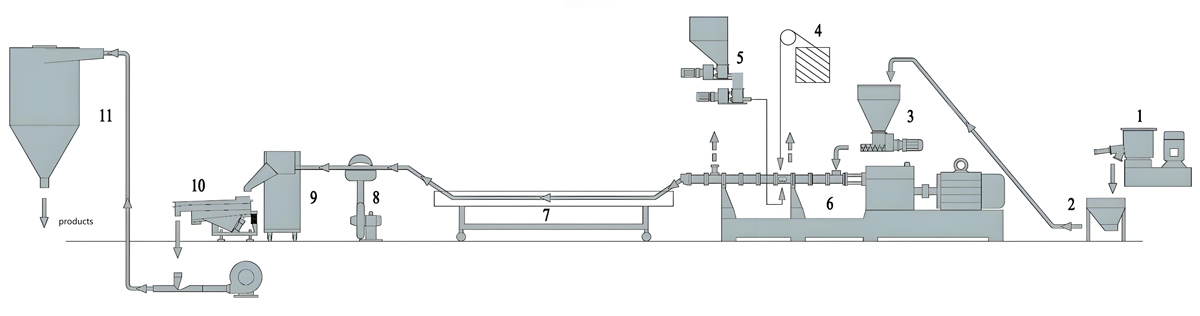
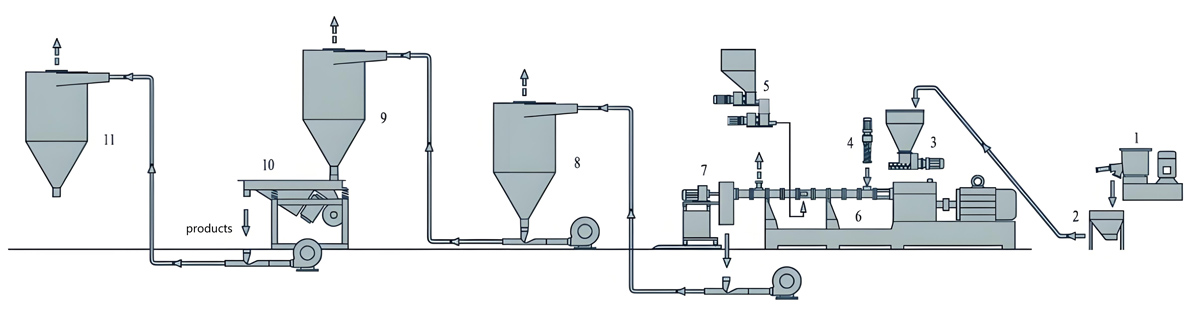
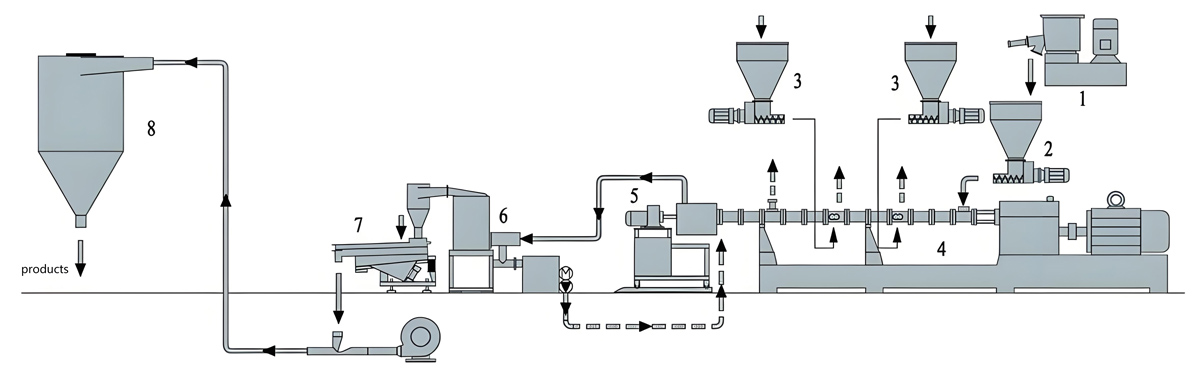
High humidity resistant masterbatch addresses one of the most challenging environmental conditions affecting plastic products across numerous industries. Plastics exposed to humid conditions face multiple degradation mechanisms including hydrolysis, microbial growth, moisture absorption, and physical property deterioration. Masterbatch additives designed to resist these effects help manufacturers produce plastic products that maintain performance specifications even after prolonged exposure to moist environments. The demanding processing requirements for these specialized formulations make high torque twin screw extrusion the preferred manufacturing technology.
High humidity resistant masterbatch incorporates multiple protective mechanisms that work synergistically to preserve plastic product integrity under challenging conditions. These mechanisms include hydrolysis stabilizers that prevent polymer chain scission, hydrophobic additives that repel moisture penetration, antimicrobial agents that inhibit biological growth, and barrier enhancers that reduce moisture transmission rates. Achieving uniform distribution of these diverse additive systems requires the superior mixing capabilities of high torque counter rotating twin screw extruders.
The Kerke KTH Series high torque twin screw extruders provide the processing power necessary to incorporate these specialized additives effectively while maintaining production efficiency. The enhanced torque capacity enables processing of challenging formulations that might overwhelm standard equipment, while precise control systems ensure consistent product quality batch after batch. This comprehensive guide covers all aspects of high humidity resistant masterbatch production from formulation through quality control and maintenance.
Understanding High Humidity Resistance in Plastics
Plastic materials face significant challenges when exposed to humid environments over extended periods. Water molecules can penetrate polymer matrices and initiate hydrolysis reactions that break down polymer chains, causing loss of molecular weight and deterioration of mechanical properties. Additionally, moisture provides the conditions necessary for microbial growth including bacteria, fungi, and algae that can stain, degrade, or weaken plastic products. Understanding these mechanisms helps formulators design masterbatch additives that effectively address each degradation pathway.
Hydrolysis affects different polymer types with varying severity depending on chemical structure and moisture sensitivity. Polyesters, polyamides, and polycarbonates are particularly susceptible to hydrolysis, while polyolefins resist hydrolysis but may still experience surface moisture absorption that affects appearance and processing. High humidity resistant masterbatch formulations must address the specific vulnerability profile of the target polymer system while providing comprehensive protection against multiple degradation mechanisms.
Moisture Damage Mechanisms in Polymers
Hydrolytic degradation begins when water molecules penetrate the polymer matrix and attack chemical bonds, particularly ester, amide, and urethane linkages. The reaction produces smaller polymer fragments and byproducts that reduce molecular weight and compromise mechanical integrity. Temperature accelerates hydrolysis kinetics, so applications involving both heat and humidity face particularly aggressive degradation conditions. Effective hydrolysis protection requires stabilizers that interrupt the degradation chain reaction before significant damage occurs.
Moisture absorption creates dimensional instability as polymers swell and change properties in response to humidity changes. This effect is particularly problematic for precision molded components where dimensional tolerances are critical. Surface appearance may deteriorate as absorbed moisture creates stress patterns or surface defects during processing. Hydrophobic additive systems in masterbatch reduce moisture absorption rates and minimize dimensional variation.
Microbial Growth Prevention Strategies
Bacterial and fungal growth on plastic surfaces creates discoloration, odor, and potential health concerns in many applications. Humid environments provide ideal conditions for microbial proliferation, particularly in applications involving repeated moisture exposure or limited cleaning access. Antimicrobial additives incorporated into masterbatch inhibit microbial colonization of plastic surfaces, preventing the visual and functional deterioration associated with biological growth.
Antimicrobial masterbatch formulations utilize various active technologies including silver based systems, organic antimicrobial compounds, and nano structured additives with antimicrobial properties. Selection among these options depends on application requirements including regulatory compliance, migration characteristics, and compatibility with base polymer systems. The masterbatch manufacturing process must preserve antimicrobial activity while achieving uniform distribution throughout the concentrate.
Formulation Ratios for High Humidity Resistant Masterbatch
Effective high humidity resistant masterbatch formulations combine multiple protective additive systems in carefully balanced ratios that address specific application requirements. The formulation development process must consider base polymer compatibility, processing requirements, regulatory compliance, and cost performance optimization. Different application sectors require varying protection levels and specific functionality combinations.
Standard Humidity Resistance Formulation
Standard grade formulations providing basic humidity resistance typically include hydrolysis stabilizer concentrations of ten to twenty percent combined with hydrophobic additive packages comprising five to ten percent of the total formulation. These formulations address common humidity exposure scenarios including outdoor storage, transportation through varied climates, and occasional moisture contact. The carrier resin system typically comprises sixty to seventy five percent of the formulation.
Typical loading rates in base polymer range from two to four percent for standard humidity resistance applications. This level of addition provides adequate protection for general purpose products including packaging materials, consumer goods, and industrial components that may encounter humid conditions during storage or use. The formulation cost remains competitive with other additive masterbatch options, supporting high volume applications.
Premium Humidity Resistance Formulation
Premium formulations provide enhanced protection for demanding applications involving prolonged humidity exposure or aggressive conditions. Hydrolysis stabilizer concentrations increase to twenty to thirty percent, while hydrophobic additive packages expand to include multiple complementary systems totaling ten to fifteen percent of the formulation. Antimicrobial additives may be incorporated at concentrations of two to five percent depending on application requirements and regulatory considerations.
Premium formulation loading rates typically range from three to six percent in the base polymer, providing robust protection for applications including marine environments, tropical climate deployment, water treatment equipment, and plumbing components. The enhanced additive package increases formulation cost but delivers performance levels necessary for critical applications where product failure is unacceptable.
Specialized Application Formulations
Certain applications require customized formulations addressing unique performance requirements beyond standard humidity resistance. Medical devices may require antimicrobial efficacy combined with biocompatibility compliance. Food contact applications demand regulatory approval for food contact use. Electronics encapsulation needs moisture protection combined with electrical performance characteristics. Each specialized requirement influences formulation development priorities and additive selection.
Marine and offshore applications require formulations that resist not only humidity but also salt water exposure and UV radiation, demanding additional additive systems beyond standard humidity protection. Agricultural applications face biological exposure in addition to moisture challenges, requiring antimicrobial and anti-algae functionality. Swimming pool and waterpark equipment needs chlorination resistance combined with humidity protection. Specialized formulation development addresses these unique requirement combinations.
Production Process for High Humidity Resistant Masterbatch
Manufacturing high humidity resistant masterbatch requires careful attention to processing conditions that preserve sensitive additive functionality while achieving the uniform distribution necessary for consistent performance. The production process integrates material preparation, extrusion processing, and quality verification into a cohesive manufacturing system optimized for these specialized formulations.
Raw Material Handling and Preparation
Proper raw material handling significantly impacts final product quality, particularly for moisture sensitive additives and hygroscopic carrier resins. All polymer carriers should be dried according to manufacturer recommendations before processing, typically at temperatures between eighty and one hundred degrees Celsius for four to six hours. Moisture content should verify below zero point one percent before feeding into the extrusion system.
Additive handling requires attention to specific requirements of each component. Some hydrolysis stabilizers are sensitive to elevated temperatures during storage and should be kept sealed until use. Antimicrobial compounds may require special handling to preserve activity. Liquid additives must be metered accurately and incorporated using appropriate equipment that ensures uniform distribution. The preblending process combines all components in a manner that facilitates subsequent extrusion processing.
Extrusion Processing Optimization
High torque twin screw extrusion provides the processing capability necessary to incorporate challenging humidity resistance additive systems effectively. The increased torque capacity enables processing of highly loaded formulations that would overwhelm standard equipment, while maintaining the mixing efficiency necessary for uniform additive distribution. Kerke KTH Series extruders incorporate advanced drive systems that deliver consistent torque throughout the operating range.
Temperature profile optimization balances melt viscosity requirements against thermal stability of sensitive additives. Lower processing temperatures preserve additive functionality but may result in incomplete melting or excessive viscosity for effective mixing. Typical processing temperatures range from one hundred eighty to two hundred thirty degrees Celsius depending on carrier resin and additive sensitivity. Multiple temperature zones enable progressive heating that optimizes processing conditions throughout the extrusion system.
Pelletizing and Post Processing
Pelletizing systems convert extruded melt into uniformly sized pellets suitable for handling, storage, and subsequent processing. Underwater pelletizers provide excellent cooling efficiency and produce uniformly spherical pellets with minimal dust generation. Strand pelletizers offer flexibility for various throughput requirements and simpler operation. The pelletizing system selection depends on production volume, quality requirements, and operational preferences.
Post processing handling must protect the finished masterbatch from moisture reabsorption and contamination. Pellets should be cooled thoroughly before packaging to prevent condensation within sealed containers. Packaging materials should provide moisture barrier protection for extended storage periods. Typical shelf life ranges from twelve to eighteen months when stored under appropriate conditions, though extended storage should be verified through periodic quality testing.
Production Equipment Introduction
Equipment selection significantly influences production capabilities, product quality consistency, and manufacturing economics for high humidity resistant masterbatch. High torque twin screw extruders provide processing advantages essential for effectively incorporating demanding humidity resistance additive systems. Understanding equipment capabilities and configurations helps manufacturers select appropriate equipment for their production requirements.
Kerke KTH Series High Torque Twin Screw Extruder
Kerke KTH Series high torque twin screw extruders represent advanced equipment designed specifically for challenging compound and masterbatch applications. The high torque drive system delivers increased mechanical energy input capacity, enabling processing of highly loaded formulations and difficult to disperse additive systems. Torque ratings exceed conventional designs by twenty to forty percent, providing expanded processing windows for challenging formulations.
The KTH Series features modular construction enabling flexible configuration of barrel sections, screw elements, and feeding systems to optimize performance for specific formulation requirements. Standard features include precision temperature control with independent zone regulation, advanced feeding systems with gravimetric option, and comprehensive data logging for quality documentation. The control system provides intuitive operation with extensive diagnostic capabilities that support process optimization and troubleshooting.
Critical Features for Humidity Resistance Production
Production of high humidity resistant masterbatch requires equipment features that enable precise control of processing conditions. Independent barrel zone temperature control allows fine tuning of temperature profiles to optimize melt conditions while protecting temperature sensitive additives. Multiple feeding ports enable addition of heat sensitive or liquid additives at controlled locations along the extrusion path where temperature conditions are optimal.
Vacuum venting capability allows removal of volatiles and moisture that could compromise product quality. This feature proves particularly valuable for formulations containing moisture or volatile components that must be removed during processing. The venting system operates continuously without interrupting production flow, maintaining consistent processing conditions throughout the production run.
Supporting Equipment Requirements
Complete production capability requires supporting equipment including material handling systems, drying equipment, and quality control instrumentation. Gravimetric feeding systems provide accurate ingredient addition that ensures formulation compliance throughout production runs. Central vacuum drying systems prepare raw materials efficiently while monitoring systems verify moisture levels before processing.
Quality control instrumentation includes melt flow index testers, spectrophotometers for color verification, and testing equipment for humidity resistance performance validation. Integration of laboratory testing with production systems enables timely quality verification and rapid response to quality variations. Spare parts inventory and maintenance equipment support ongoing production operations and minimize equipment downtime.
Parameter Settings for Optimal Production
Optimization of processing parameters ensures consistent product quality while maximizing production efficiency. High humidity resistant masterbatch formulations require careful parameter management to preserve sensitive additive functionality while achieving the uniform distribution necessary for consistent performance in end use applications. The key parameters include temperature profiles, screw speed, feed rates, and residence time management.
Temperature Profile Optimization
The barrel temperature profile significantly influences melt viscosity, additive stability, and mixing efficiency during extrusion processing. For high humidity resistant masterbatch, temperature profiles should minimize thermal exposure of sensitive additives while maintaining adequate temperature for complete melting and effective mixing. Initial feeding zone temperatures typically range from one hundred sixty to one hundred eighty degrees Celsius, with processing zone temperatures increasing to one hundred ninety to two hundred thirty degrees Celsius depending on formulation requirements.
Die temperature settings complete the temperature profile and influence melt flow characteristics through the die plate. Die temperatures typically match or slightly exceed the final processing zone temperature to ensure consistent melt flow. Temperature variations across the die plate should minimize to ensure uniform flow distribution and consistent product quality across the production output.
Screw Speed and Torque Management
Screw speed directly influences shear rate, residence time, and specific energy input during processing. High torque equipment enables operation at elevated screw speeds while maintaining adequate torque reserves for challenging formulations. Typical operating speeds range from two hundred fifty to four hundred fifty rotations per minute depending on screw diameter and formulation characteristics.
Torque monitoring provides valuable information about processing conditions and equipment status. Operating torque should remain below ninety percent of maximum rated torque to ensure adequate processing reserves and prevent equipment damage. Increasing torque over time may indicate screw element wear or formulation changes requiring attention. Modern control systems provide continuous torque monitoring and alerting capabilities that support proactive equipment management.
Feed Rate and Throughput Optimization
Feed rate determines production throughput and influences residence time distribution in the extrusion system. Optimal feed rates balance production efficiency against processing quality requirements. Higher feed rates increase throughput but may compromise mixing quality if screw configuration cannot accommodate the increased material throughput. Lower feed rates improve mixing quality but reduce production efficiency.
The relationship between feed rate and screw speed must maintain proper fill level in the screw channels for optimal mixing. Underfilled screws produce inadequate mixing while overfilled screws cause excessive pressure buildup and potential equipment damage. Gravimetric feeding systems enable precise feed rate control and provide data for process optimization and quality documentation.
Equipment Price
Investment in high torque twin screw extrusion equipment represents a significant capital commitment that should be evaluated considering both immediate production requirements and long term business objectives. Understanding equipment pricing structures and total cost considerations helps manufacturers develop appropriate capital planning and equipment selection strategies.
Kerke KTH Series Equipment Investment
Kerke KTH Series high torque twin screw extruders are priced according to size, torque capacity, and included features. Laboratory scale equipment with twenty to thirty millimeter screw diameters ranges from eighteen thousand to fifty thousand dollars depending on torque rating and control system features. Pilot production equipment with forty to sixty millimeter screw diameters typically ranges from sixty thousand to one hundred fifty thousand dollars.
Production scale KTH Series extruders with seventy to one hundred millimeter screw diameters range from one hundred eighty thousand to five hundred thousand dollars depending on torque capacity, drive system features, and included auxiliary equipment. The high torque design commands a premium compared to standard configurations, but the expanded processing capability and enhanced versatility provide value that justifies the additional investment for manufacturers processing challenging formulations.
Complete Production Line Investment
Complete production capability requires investment beyond the main extruder to include material handling, drying, pelletizing, and quality control systems. Complete turnkey production lines range from three hundred thousand to over one million dollars depending on production capacity and automation level. While significant, this investment enables efficient production of high quality masterbatch products with minimal manual intervention.
Operating costs including energy consumption, maintenance, raw materials, and labor should be factored into production economics analysis. High torque equipment typically offers improved energy efficiency at optimal operating conditions, partially offsetting the higher initial investment. Quality consistency benefits reduce waste and customer complaints, contributing to improved profitability over the equipment lifecycle.
Production Problems Causes Solutions and Prevention
Effective problem identification and resolution maintains production quality and efficiency in high humidity resistant masterbatch manufacturing. Understanding common production challenges, their root causes, and appropriate corrective actions enables operators to respond effectively when issues arise. Proactive prevention strategies reduce problem frequency and severity while improving overall production performance.
Additive Inconsistency and Distribution Problems
Problem description involves finished masterbatch exhibiting non uniform additive distribution that results in variable performance in customer applications. This manifests as inconsistent humidity resistance testing results, visible color variations, or batch to batch performance differences that exceed acceptable limits.
Root cause analysis examines feeding system accuracy, preblending effectiveness, and extrusion mixing efficiency. Gravimetric feeding system calibration drift can cause gradual formulation changes over extended production runs. Inadequate preblending leaves concentrate pockets that resist mixing during extrusion. Screw element wear reduces mixing efficiency and fails to break down additive agglomerates. Temperature variations create viscosity differences that affect mixing dynamics.
Solution implementation addresses identified root causes through equipment adjustment, calibration, or component replacement. Feeding systems should be calibrated against certified weights and verified before each production run. Preblending procedures should be documented and followed consistently, with batch sizes limited to ensure adequate mixing intensity. Screw elements should be inspected for wear and replaced when clearances exceed specifications. Temperature controllers should be calibrated and temperature uniformity verified across barrel zones.
Prevention strategies establish systematic quality assurance that identifies emerging problems before they cause quality failures. Statistical process control monitoring of production parameters enables trend detection and proactive intervention. Regular equipment calibration schedules ensure measurement accuracy. Documentation of successful processing parameters provides reference for future production and troubleshooting support.
Hydrolysis Stabilizer Degradation During Processing
Problem description involves humidity resistance performance falling below specifications despite correct formulation and loading procedures. Testing reveals that hydrolysis stabilizer concentration has decreased during processing or that stabilizer molecules have been chemically modified and lost effectiveness.
Root cause analysis focuses on processing conditions that may degrade sensitive stabilizer molecules. Excessive temperatures accelerate thermal degradation reactions that consume stabilizer molecules before they can provide protection in end use applications. Extended residence times at elevated temperatures compound the thermal exposure effect. Shear stress during processing can cause mechanical degradation of stabilizer molecules. Contamination from previous production runs or residue in equipment may react with stabilizers.
Solution implementation reduces thermal and mechanical stress on stabilizer molecules throughout processing. Temperature profile reduction to minimum acceptable levels decreases thermal exposure while maintaining adequate melt conditions for mixing. Screw speed reduction decreases shear stress and residence time. Modified screw configurations with less aggressive mixing elements protect sensitive molecules. Thorough equipment cleaning between production runs prevents contamination. Addition of stabilizer at reduced temperature zones in the extruder protects the most temperature sensitive components.
Prevention strategies optimize formulations and processing conditions to preserve stabilizer functionality. Small scale testing establishes acceptable processing windows before production scale implementation. Processing parameter limits should be documented and enforced to prevent inadvertent excessive processing. Shelf storage conditions should protect finished masterbatch from heat and moisture that could cause additional stabilizer degradation.
Moisture Reabsorption in Finished Product
Problem description involves finished masterbatch exhibiting moisture content above specifications or showing signs of moisture damage including clumping, discoloration, or compromised flow characteristics. This problem may develop during storage or shipping even when initial product quality meets specifications.
Root cause analysis examines packaging integrity, storage conditions, and handling procedures. Inadequate drying before packaging leaves residual moisture within pellets that can migrate and cause problems during storage. Porous or damaged packaging allows moisture vapor transmission into the product during storage. Storage in humid environments without climate control overwhelms package barrier properties. Temperature cycling creates condensation within sealed packages.
Solution implementation addresses drying, packaging, and storage deficiencies identified through analysis. Extended drying times or improved drying conditions ensure moisture removal below specified levels before packaging. Package integrity inspection identifies damaged containers before product release. Climate controlled storage facilities maintain temperature and humidity within specified ranges. Desiccant packets inside packages provide additional moisture protection for sensitive applications.
Prevention strategies establish comprehensive moisture management throughout production and distribution. Moisture content testing of finished product before release ensures adequate drying. Packaging specifications should match product sensitivity and expected storage conditions. Storage and shipping requirements should be documented and communicated throughout the distribution chain. Periodic testing of stored product verifies continued quality compliance.
Maintenance and Care
Systematic maintenance preserves equipment performance and extends service life while ensuring consistent product quality. High torque twin screw extrusion equipment requires regular attention to both standard maintenance items and high torque specific components. A comprehensive maintenance program addresses preventive maintenance requirements while enabling condition based response to equipment monitoring data.
Daily and Weekly Maintenance Operations
Daily maintenance activities verify equipment condition and support consistent production quality. Operators should inspect feeding systems for proper operation and verify gravimetric calibration. Temperature controller accuracy should be spot checked against reference thermometers. Unusual sounds, vibrations, or odors indicate potential problems requiring investigation. Die plate and knife assembly condition should be verified before production start.
Weekly maintenance extends inspection scope to include additional components and systems. Gearbox oil level and condition should be inspected with oil samples collected for laboratory analysis. Cooling system flow rates and temperature differentials should be measured and recorded. Screw torque readings should be compared to baseline values to detect developing issues. Feeding system accuracy should be verified through test weighings of known quantities.
Monthly and Quarterly Maintenance Schedule
Monthly maintenance addresses components requiring less frequent but regular attention. Torque transmit bearing condition should be assessed through vibration analysis and temperature monitoring. Barrel liner wear measurements enable projection of remaining service life and planning for replacement. Drive system alignment should be verified and corrected if necessary. Electrical connections should be inspected for tightness and signs of heating.
Quarterly maintenance encompasses comprehensive system evaluation and calibration activities. Temperature controllers should be calibrated against traceable standards. Motor current draw measurements establish baseline comparisons for trend analysis. Gearbox oil should be changed with new oil samples establishing fresh baseline values. Control system calibration and software updates should be applied as appropriate. Complete equipment cleaning removes accumulated material deposits.
Annual and Long Term Maintenance Planning
Annual maintenance involves thorough equipment inspection and major component service. Complete barrel and screw element removal enables comprehensive condition assessment and measurement. Worn screw elements should be replaced to maintain mixing performance. Barrel liners should be evaluated for wear patterns and remaining service life. Gearbox complete service should include oil change, seal replacement, and internal inspection.
Long term maintenance planning addresses equipment lifecycle management and capital planning. Operating history analysis supports prediction of future maintenance requirements and major service intervals. Technology upgrades to control systems, monitoring capabilities, or process optimization features should be evaluated annually. Spare parts inventory should be reviewed based on equipment condition trends and market availability of critical components. Equipment replacement or upgrade planning should consider technology advances and production capacity requirements.
FAQ
What mechanisms does high humidity resistant masterbatch use to protect plastics?
High humidity resistant masterbatch provides protection through multiple complementary mechanisms including hydrolysis stabilizers that prevent polymer chain scission, hydrophobic additives that reduce moisture absorption, antimicrobial agents that inhibit biological growth, and barrier enhancers that slow moisture transmission through the polymer matrix. The specific combination of mechanisms depends on formulation design and application requirements.
How much high humidity resistant masterbatch should be added to achieve adequate protection?
Typical loading rates range from two to six percent depending on formulation grade, base polymer type, and required protection level. Standard formulations require two to four percent addition while premium formulations may require three to six percent. Specific recommendations should be obtained from the masterbatch supplier based on your specific application requirements and expected humidity exposure conditions.
Can high humidity resistant masterbatch be used with any polymer type?
High humidity resistant masterbatch formulations are designed for compatibility with specific polymer families. Polyolefin compatible formulations work with polyethylene and polypropylene systems. Engineering plastic formulations address polycarbonate, polyester, and nylon applications. Compatibility testing with your specific base polymer is recommended before production implementation to verify performance and absence of negative interactions.
What regulatory approvals apply to high humidity resistant masterbatch for food contact applications?
Food contact applications require formulations that comply with relevant regulations in the target market. United States Food and Drug Administration regulations, European Union food contact directives, and other regional requirements may apply depending on sales geography. Antimicrobial additives may have specific restrictions on use in food contact applications. Consult with your masterbatch supplier regarding specific regulatory compliance for your application requirements.
How does high humidity resistant masterbatch affect the color of the final product?
Most high humidity resistant additives are naturally colorless or white, allowing formulation to achieve desired color through standard colorant masterbatch addition. Some specialized additives may have slight coloration that influences final product appearance. Formulation development should consider color requirements and may include color matching services to achieve target appearance while maintaining humidity resistance performance.
What is the shelf life of high humidity resistant masterbatch?
Typical shelf life ranges from twelve to eighteen months when stored in original sealed packaging under recommended conditions. Exposure to elevated temperatures, humidity, or sunlight may reduce effective shelf life. Periodic quality testing of stored inventory verifies continued compliance with specifications. Re drying may be possible for some products if moisture absorption occurs during storage.
Conclusion
High humidity resistant masterbatch production represents a specialized segment of the masterbatch industry serving critical applications across numerous market sectors. The demanding processing requirements for these formulations, including high additive loadings and sensitive additive systems, make high torque twin screw extrusion technology the preferred manufacturing approach. Kerke KTH Series extruders provide the processing capability, precise control, and reliability necessary for consistent production of high quality humidity resistance masterbatch.
Successful production of high humidity resistant masterbatch requires integrated attention to formulation design, process optimization, quality assurance, and equipment maintenance. The formulation approaches outlined in this guide provide frameworks for developing products serving various application requirements from standard humidity protection to specialized marine or medical device applications. Process optimization ensures consistent product quality while preserving sensitive additive functionality.
Investment in appropriate production equipment such as the Kerke KTH Series provides the foundation for reliable, efficient production operations. Combined with systematic maintenance practices and quality focused operating procedures, this equipment investment delivers long term value through consistent product quality, reduced waste, and satisfied customers. Manufacturers committed to serving the high humidity resistance masterbatch market will find these capabilities essential for competitive success.