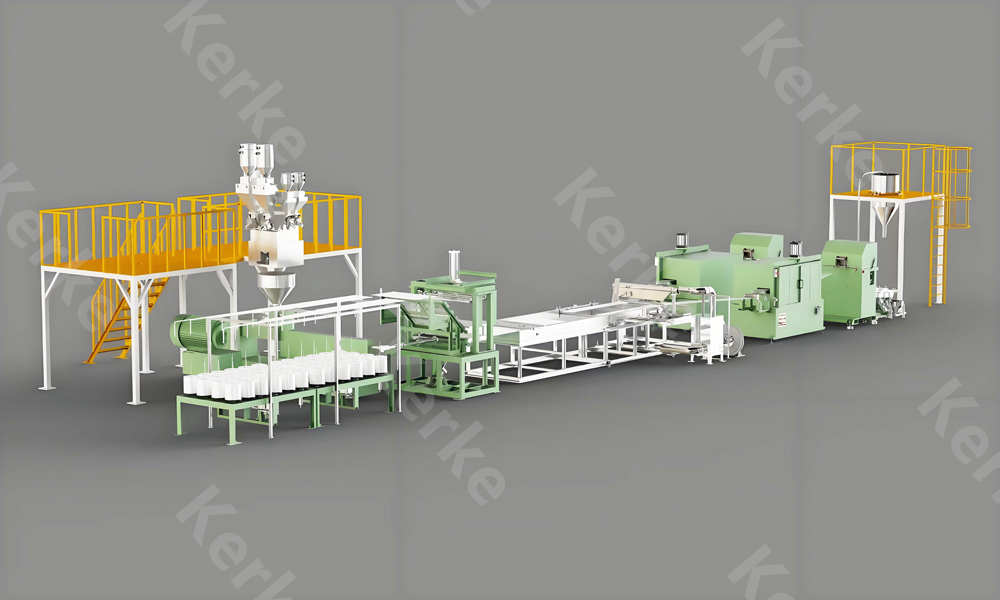
The plastic film and fiber industries represent the largest and most demanding segments of the global masterbatch market, accounting for over 45% of total masterbatch consumption worldwide. Valued at USD 18.7 billion in 2026 and projected to reach USD 27.4 billion by 2032, growing at a compound annual growth rate (CAGR) of 6.6%, these industries impose the strictest quality requirements on masterbatch products. Even the smallest defect in masterbatch can cause catastrophic production issues in film and fiber manufacturing, including broken filaments, film tears, surface defects, and entire production runs being scrapped. As a leading global manufacturer of twin screw extruders, masterbatch extruders, and compounding extruders, Kerke Extruder has developed specialized extrusion solutions specifically engineered to meet the unique challenges of film and fiber grade masterbatch production. This comprehensive 4000-word guide provides a systematic framework for selecting the optimal masterbatch extruder for the plastic film and fiber industry, covering all critical technical, operational, and financial considerations.
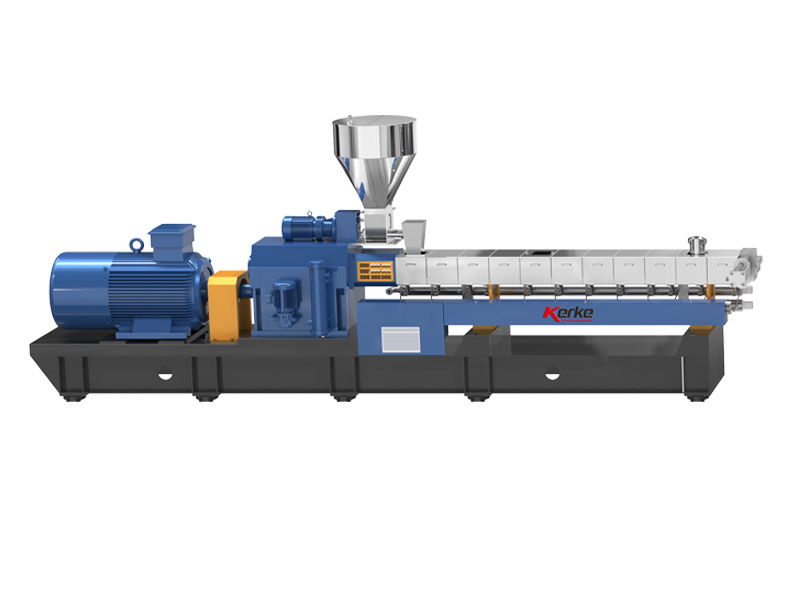
Unlike general-purpose masterbatches used in injection molding or blow molding, film and fiber grade masterbatches require exceptional levels of dispersion, color consistency, purity, and thermal stability. A single agglomerated pigment particle larger than 20 microns can cause a filament break in high-speed fiber spinning, while a single black speck can ruin an entire roll of high-value packaging film. These strict quality requirements demand masterbatch extruders with advanced compounding capabilities, precision process control, and superior filtration systems. Kerke Extruder’s KTE series twin screw extruders and KTE-T series triple screw extruders are specifically optimized for film and fiber grade masterbatch production, delivering the highest levels of product quality and production efficiency available in the industry.
Kerke Extruder has over 15 years of specialized experience in manufacturing masterbatch extruders for the film and fiber industry, with more than 1,200 dedicated machines installed in over 60 countries worldwide. Our state-of-the-art manufacturing facilities are equipped with advanced CNC machining centers, precision testing equipment, and a dedicated research and development center staffed by polymer processing engineers with deep expertise in film and fiber applications. All our extruders are built to the highest international standards using premium components from reputable suppliers, ensuring long service life and reliable performance in demanding 24/7 industrial environments. This guide will walk you through every aspect of selecting a masterbatch extruder for film and fiber production, from understanding industry-specific quality requirements to evaluating equipment performance, calculating return on investment, and choosing the right Kerke solution for your specific needs.
1. Unique Quality Requirements for Film and Fiber Grade Masterbatches
Before selecting a masterbatch extruder, it is essential to understand the unique quality requirements that distinguish film and fiber grade masterbatches from general-purpose masterbatches. These requirements are driven by the extreme processing conditions and strict quality standards of the film and fiber manufacturing industries.
1.1 Exceptional Dispersion and Distribution
The most critical requirement for film and fiber grade masterbatches is exceptional dispersion of pigments and additives. In film and fiber production, the masterbatch is typically diluted at ratios of 1:20 to 1:100, meaning that any agglomerates in the masterbatch will be magnified in the final product. For high-speed fiber spinning applications, pigment agglomerates larger than 20 microns can cause filament breaks, resulting in costly production downtime and material waste. For thin film applications, agglomerates larger than 10 microns can cause visible defects and film tears.
Achieving this level of dispersion requires an extruder that can generate sufficient shear energy to break down even the most difficult pigment agglomerates, while maintaining uniform temperature control to prevent thermal degradation. The extruder must also provide excellent distributive mixing to ensure that the dispersed pigment particles are uniformly distributed throughout the polymer matrix. Kerke Extruder’s twin screw extruders feature optimized screw designs with specialized mixing elements that deliver both intensive dispersive mixing and uniform distributive mixing, ensuring that even the most challenging pigment formulations are fully dispersed to the sub-micron level.
1.2 Absolute Color Consistency
Color consistency is another critical requirement for film and fiber grade masterbatches. The film and fiber industries produce very large volumes of product, often running continuous production runs for days or weeks at a time. Even minor color variations between masterbatch batches can result in noticeable color differences in the final product, leading to customer complaints and rejected shipments.
Achieving absolute color consistency requires precise control over all process parameters, including temperature, screw speed, feeding rate, and residence time. The extruder must be able to maintain these parameters within very tight tolerances over long production runs. Kerke Extruder’s advanced PLC control systems provide precise closed-loop control over all process parameters, ensuring that every batch of masterbatch is produced under identical conditions. Our gravimetric feeding systems deliver dosing accuracy of ±0.1%, ensuring consistent formulation ratios and eliminating color variations caused by inconsistent feeding.
1.3 High Purity and Contamination Control
High purity and contamination control are essential for film and fiber grade masterbatches. Any foreign contamination in the masterbatch, including metal particles, degraded polymer, or cross-contamination from previous batches, will result in defects in the final film or fiber product. This is particularly critical for food packaging film and medical fiber applications, where contamination can pose serious safety risks.
Achieving high purity requires an extruder design that minimizes material residue and cross-contamination between batches. The extruder must also be equipped with effective filtration systems to remove any remaining contaminants from the melt. Kerke Extruder’s masterbatch extruders feature openable barrel designs and quick-disassembly screw systems that allow for thorough cleaning between batches, eliminating cross-contamination. Our advanced filtration systems use high-precision screen changers with filtration ratings down to 5 microns, ensuring that all contaminants are removed from the melt before pelletizing.
1.4 Excellent Thermal Stability
Film and fiber manufacturing processes involve high temperatures and high shear rates, requiring masterbatches with excellent thermal stability. The masterbatch must be able to withstand these processing conditions without degrading, changing color, or forming volatile compounds that can cause defects in the final product.
Producing thermally stable masterbatches requires precise temperature control throughout the extrusion process to prevent thermal degradation of the polymer and additives. The extruder must also provide efficient venting to remove any volatile compounds generated during processing. Kerke Extruder’s twin screw extruders feature multi-zone temperature control systems with PID controllers that maintain temperatures within ±0.5°C, ensuring optimal processing conditions for even the most heat-sensitive formulations. Our extruders also feature multiple vacuum venting ports that effectively remove volatile compounds, resulting in masterbatches with excellent thermal stability and low volatile organic compound (VOC) content.
1.5 Consistent Melt Flow and Pellet Quality
Consistent melt flow and pellet quality are essential for trouble-free processing in film and fiber manufacturing equipment. Variations in melt flow index (MFI) can cause processing issues such as inconsistent film thickness or fiber denier, while irregular pellet size or shape can cause feeding problems in the customer’s equipment.
Achieving consistent melt flow requires uniform processing conditions and precise control over the degree of polymer degradation during extrusion. Consistent pellet quality requires a high-performance pelletizing system that produces uniform, spherical pellets with minimal fines. Kerke Extruder’s masterbatch extruders feature optimized screw designs that minimize polymer degradation, ensuring consistent melt flow from batch to batch. We offer a range of pelletizing systems, including underwater pelletizing and strand pelletizing, that produce high-quality pellets with uniform size and shape.
2. Core Technical Requirements for Film and Fiber Grade Masterbatch Extruders
To meet the strict quality requirements of the film and fiber industry, masterbatch extruders must be designed with specific technical features that address the unique challenges of producing high-quality film and fiber grade masterbatches.
2.1 High-Torque, High-Speed Drive System
A high-torque, high-speed drive system is essential for achieving the intensive mixing required for excellent pigment dispersion in film and fiber grade masterbatches. The extruder must be able to generate sufficient torque to process high-viscosity formulations with high pigment loadings, while operating at high speeds to achieve economical production rates.
Kerke Extruder’s KTE series twin screw extruders feature high-torque gearboxes with specific torque ratings ranging from 9 Nm/cm³ to 12 Nm/cm³, making them ideal for processing even the most challenging film and fiber grade masterbatch formulations. Our gearboxes are manufactured to the highest precision standards, featuring hardened and ground gears, heavy-duty bearings, and forced lubrication systems for reliable operation in demanding 24/7 production environments. The high-torque design allows our extruders to operate at higher screw speeds with lower specific energy consumption, resulting in higher production rates and lower operating costs.
2.2 Optimized Screw Design for Film and Fiber Applications
The screw design is the most critical factor determining the dispersion performance of a masterbatch extruder. For film and fiber grade masterbatches, the screw must be designed to provide intensive dispersive mixing to break down pigment agglomerates, while maintaining uniform temperature control to prevent thermal degradation.
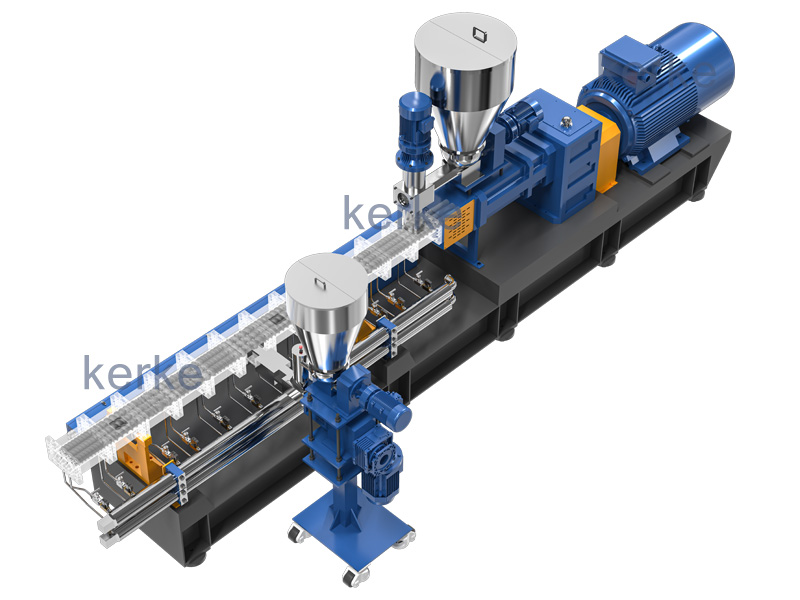
Kerke Extruder’s twin screw extruders feature a modular screw design that allows for precise customization of the screw configuration for different film and fiber applications. Our standard film and fiber grade screw configuration includes a combination of conveying elements, kneading blocks with different stagger angles, and special mixing elements that provide optimal shear and mixing characteristics. The screw design is optimized to generate high shear energy in the melting and mixing zones, while minimizing residence time to prevent thermal degradation. We also offer specialized screw designs for specific applications, such as high-load carbon black masterbatches for conductive fibers and ultra-fine pigment masterbatches for high-clarity packaging film.
2.3 Advanced Filtration Systems
Advanced filtration systems are essential for removing contaminants and undispersed agglomerates from the melt, ensuring the high purity required for film and fiber grade masterbatches. The filtration system must be able to remove particles down to 5 microns in size, while operating continuously without interrupting production.
Kerke Extruder offers a range of advanced filtration systems specifically designed for film and fiber grade masterbatch production. Our standard continuous screen changers feature hydraulic operation and automatic screen advancement, allowing for screen changes without stopping production. For the most demanding applications, we offer backflush screen changers that provide continuous filtration with no material waste during screen changes. All our filtration systems are available with filtration ratings down to 5 microns, ensuring that even the smallest contaminants and undispersed agglomerates are removed from the melt.
2.4 Efficient Vacuum Venting Systems
Efficient vacuum venting systems are essential for removing moisture, air, and volatile compounds from the melt during extrusion. These volatiles can cause defects such as bubbles, voids, and surface imperfections in the final masterbatch, as well as processing issues in the customer’s film or fiber production equipment.
Kerke Extruder’s twin screw extruders feature multiple vacuum venting ports located along the length of the barrel. Each venting port is connected to a high-performance vacuum system that maintains a vacuum level of up to 0.09 MPa, effectively removing all volatile compounds from the melt. The venting ports are designed with special geometry to prevent material from being drawn into the vacuum system, ensuring continuous and reliable operation. Our advanced venting systems result in masterbatches with excellent surface quality, low VOC content, and consistent melt flow properties.
2.5 High-Precision Feeding Systems
High-precision feeding systems are essential for maintaining consistent formulation ratios and color consistency in film and fiber grade masterbatches. Even minor variations in the feeding rate of pigments, additives, or polymer resin can result in significant color variations in the final product.
Kerke Extruder offers a range of high-precision feeding systems designed specifically for masterbatch production. Our gravimetric loss-in-weight feeders provide dosing accuracy of ±0.1%, ensuring consistent formulation ratios even for minor additives such as processing aids and stabilizers. We offer both main feeders for polymer resin and side feeders for pigments and additives, allowing for flexible formulation changes and optimal processing of different materials. All our feeding systems are fully integrated with the extruder’s PLC control system, providing automatic control and real-time monitoring of feeding rates.
2.6 Advanced PLC Control Systems
Advanced PLC control systems are essential for maintaining precise process control and ensuring consistent product quality in film and fiber grade masterbatch production. The control system must be able to monitor and adjust all process parameters in real time, store production recipes, and provide comprehensive data logging and traceability.
Kerke Extruder’s masterbatch extruders are equipped with industrial-grade PLC control systems from leading manufacturers such as Siemens and Mitsubishi. Our control systems feature high-resolution touch screen HMIs that provide intuitive operation and comprehensive process visualization. The system can store up to 1000 different production recipes, allowing for quick and easy formula changes. It also provides comprehensive data logging capabilities, recording all critical process parameters for each production batch for quality control and traceability purposes. Our control systems also feature advanced alarm and safety functions, ensuring safe and reliable operation of the extruder.
2.7 High-Performance Pelletizing Systems
High-performance pelletizing systems are essential for producing uniform, high-quality pellets that will feed reliably in the customer’s film or fiber production equipment. The pelletizing system must be able to produce pellets with consistent size and shape, minimal fines, and excellent surface quality.
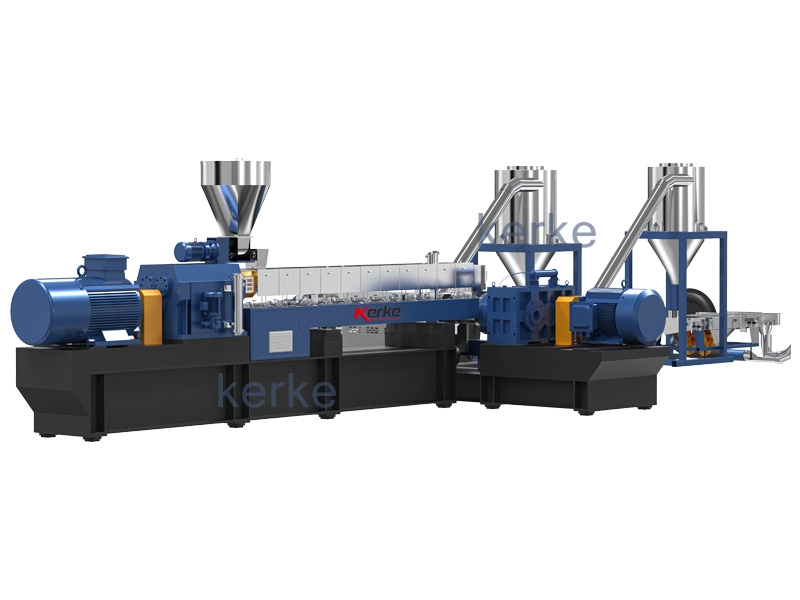
Kerke Extruder offers a range of pelletizing systems designed specifically for film and fiber grade masterbatch production. Our underwater pelletizing system is the preferred choice for most film and fiber applications, producing uniform spherical pellets with excellent flow properties and minimal fines. The underwater pelletizing system also provides rapid cooling of the melt, preventing thermal degradation and ensuring consistent pellet quality. For applications where underwater pelletizing is not suitable, we offer high-precision strand pelletizing systems that produce uniform cylindrical pellets with excellent quality.
3. Kerke Extruder Solutions for Film and Fiber Grade Masterbatch Production
Kerke Extruder offers a comprehensive range of masterbatch extruders specifically designed to meet the unique requirements of the plastic film and fiber industry. Our extruders are available in a wide range of sizes and configurations, from small laboratory extruders for formula development to large production extruders for high-volume manufacturing.
3.1 KTE-20 Laboratory Twin Screw Extruder
The KTE-20 laboratory twin screw extruder is a compact, high-performance extruder designed for formula development, small-batch sample production, and quality control testing in the film and fiber industry. It is ideal for research and development laboratories, color matching facilities, and small masterbatch manufacturers who need to produce small quantities of high-quality film and fiber grade masterbatch.
Technical Specifications:
- Screw diameter: 20mm
- Length to diameter ratio: 40:1
- Motor power: 11 kW
- Production capacity: 5-15 kg/h
- Specific torque: 9 Nm/cm³
- Filtration rating: down to 10 microns
Price and Cost Analysis: The price of the Kerke KTE-20 laboratory twin screw extruder ranges from $22,000 to $30,000 FOB Shanghai, depending on configuration and optional features. The standard configuration includes the extruder, PLC control system, vacuum venting system, and strand pelletizing system. Optional features include underwater pelletizing, gravimetric feeding system, and advanced filtration system. The typical payback period for the KTE-20 is 6-9 months for businesses that perform frequent formula development and sample production.
3.2 KTE-36B Small Production Twin Screw Extruder
The KTE-36B small production twin screw extruder is designed for small to medium-scale production of film and fiber grade masterbatches. It balances production capacity, flexibility, and cost-effectiveness, making it ideal for small masterbatch manufacturers and specialty product lines.
Technical Specifications:
- Screw diameter: 35.6mm
- Length to diameter ratio: 44:1
- Motor power: 22-30 kW
- Production capacity: 50-200 kg/h
- Specific torque: 10 Nm/cm³
- Filtration rating: down to 5 microns
Price and Cost Analysis: The price of the Kerke KTE-36B twin screw extruder ranges from $35,000 to $50,000 FOB Shanghai, depending on configuration and optional features. The standard configuration includes the extruder, PLC control system, gravimetric main feeder, vacuum venting system, continuous screen changer, and strand pelletizing system. Optional features include multiple side feeders, underwater pelletizing, and advanced PLC control system with remote monitoring. The typical payback period for the KTE-36B is 8-12 months for film and fiber grade masterbatch production.
3.3 KTE-50B Medium Production Twin Screw Extruder
The KTE-50B medium production twin screw extruder is our most popular model for medium to large-scale production of film and fiber grade masterbatches. It provides an optimal balance between production capacity, performance, and operating cost, making it the preferred choice for most masterbatch manufacturers serving the film and fiber industry.
Technical Specifications:
- Screw diameter: 50.5mm
- Length to diameter ratio: 48:1
- Motor power: 55-75 kW
- Production capacity: 200-500 kg/h
- Specific torque: 11 Nm/cm³
- Filtration rating: down to 5 microns
Price and Cost Analysis: The price of the Kerke KTE-50B twin screw extruder ranges from $60,000 to $85,000 FOB Shanghai, depending on configuration and optional features. The standard configuration includes the extruder, advanced PLC control system, gravimetric main feeder, two side feeders, dual vacuum venting system, continuous screen changer, and underwater pelletizing system. Optional features include additional side feeders, backflush screen changer, and premium PLC control system with ERP integration. The typical payback period for the KTE-50B is 7-10 months for high-volume film and fiber grade masterbatch production.
3.4 KTE-65B Large Production Twin Screw Extruder
The KTE-65B large production twin screw extruder is designed for high-volume production of film and fiber grade masterbatches. It provides the highest levels of production capacity and efficiency, making it ideal for large masterbatch manufacturers supplying the global film and fiber industry.
Technical Specifications:
- Screw diameter: 62.4mm
- Length to diameter ratio: 48:1
- Motor power: 110-160 kW
- Production capacity: 400-800 kg/h
- Specific torque: 11 Nm/cm³
- Filtration rating: down to 5 microns
Price and Cost Analysis: The price of the Kerke KTE-65B twin screw extruder ranges from $100,000 to $145,000 FOB Shanghai, depending on configuration and optional features. The standard configuration includes the extruder, premium PLC control system, gravimetric main feeder, three side feeders, dual vacuum venting system, backflush screen changer, and underwater pelletizing system. Optional features include additional side feeders, multiple filtration stages, and advanced production management software. The typical payback period for the KTE-65B is 6-9 months for high-volume production of film and fiber grade masterbatches.
3.5 KTE-75 High-Capacity Twin Screw Extruder
The KTE-75 high-capacity twin screw extruder is designed for the largest masterbatch manufacturers with the highest production volume requirements. It provides industry-leading production capacity and efficiency, making it ideal for mass production of standard film and fiber grade masterbatches.
Technical Specifications:
- Screw diameter: 71mm
- Length to diameter ratio: 52:1
- Motor power: 200-315 kW
- Production capacity: 700-1200 kg/h
- Specific torque: 12 Nm/cm³
- Filtration rating: down to 5 microns
Price and Cost Analysis: The price of the Kerke KTE-75 twin screw extruder ranges from $160,000 to $230,000 FOB Shanghai, depending on configuration and optional features. The standard configuration includes the extruder, premium PLC control system with redundant processing, gravimetric main feeder, four side feeders, triple vacuum venting system, dual backflush screen changers, and high-capacity underwater pelletizing system. Optional features include additional side feeders, advanced quality control integration, and full ERP system integration. The typical payback period for the KTE-75 is 5-8 months for high-volume production of film and fiber grade masterbatches.
3.6 KTE-T Series Triple Screw Extruders
For the most demanding film and fiber grade masterbatch applications, such as ultra-high-load carbon black masterbatches and high-clarity transparent masterbatches, Kerke Extruder offers our innovative KTE-T series triple screw extruders. The triple screw design provides superior mixing and dispersion performance compared to conventional twin screw extruders, allowing for higher filler loadings, better pigment dispersion, and lower energy consumption.
Technical Specifications (KTE-T36):
- Screw diameter: 36mm
- Length to diameter ratio: 52:1
- Motor power: 75 kW
- Production capacity: 300-500 kg/h for 50% carbon black masterbatch
- Specific torque: 12 Nm/cm³
- Filtration rating: down to 5 microns
Price and Cost Analysis: The price of the Kerke KTE-T36 triple screw extruder ranges from $110,000 to $160,000 FOB Shanghai. While the initial investment is higher than a conventional twin screw extruder, the KTE-T36 provides 30-50% higher production capacity and superior dispersion quality for difficult formulations, resulting in a lower total cost of ownership and a typical payback period of 7-11 months.
4. Comprehensive Cost Analysis and Return on Investment
When evaluating the purchase of a masterbatch extruder for the film and fiber industry, it is essential to consider not only the initial purchase price but also the total cost of ownership over the life of the equipment. This includes operating costs, maintenance costs, quality costs, and the financial benefits of improved product quality and production efficiency.
4.1 Initial Investment Breakdown
The initial investment for a masterbatch extruder includes the cost of the main equipment, auxiliary equipment, installation and commissioning, training, and spare parts. The following is a detailed breakdown of the initial investment for a Kerke KTE-50B twin screw extruder, our most popular model for film and fiber grade masterbatch production:
Kerke KTE-50B twin screw extruder main unit: $52,000 Advanced PLC control system: $15,000 Gravimetric main feeder: $8,000 Two gravimetric side feeders: $12,000 Dual vacuum venting system: $6,000 Continuous screen changer with 5 micron filtration: $10,000 Underwater pelletizing system: $22,000 Installation and commissioning: $7,500 Operator training: $4,500 Initial spare parts package: $5,000 Total Initial Investment: $142,000
While this initial investment may seem significant, it is important to note that a high-quality extruder specifically designed for film and fiber grade masterbatch production will deliver significantly higher returns than a general-purpose extruder. The improved product quality, lower waste rates, and higher production efficiency will quickly offset the initial investment.
4.2 Annual Operating Cost Comparison
To demonstrate the financial benefits of investing in a Kerke masterbatch extruder, we will compare the annual operating costs of a Kerke KTE-50B extruder with a general-purpose twin screw extruder of similar capacity. The comparison is based on 24 hours of production per day, 300 days per year, producing high-quality color masterbatch for the packaging film industry.
General-Purpose Twin Screw Extruder: Raw material waste: 8% = $240,000 per year (based on 3,000 tons annual production at $1,000 per ton) Energy costs: $120,000 per year Labor costs: $90,000 per year (3 operators) Maintenance costs: $25,000 per year Quality costs (rejected batches and customer returns): $150,000 per year Total Annual Operating Costs: $625,000
Kerke KTE-50B Twin Screw Extruder: Raw material waste: 1.2% = $36,000 per year Energy costs: $90,000 per year (25% more energy efficient) Labor costs: $60,000 per year (2 operators due to higher automation) Maintenance costs: $12,000 per year Quality costs (rejected batches and customer returns): $15,000 per year Total Annual Operating Costs: $213,000
Annual Cost Savings with Kerke KTE-50B: $412,000
This comparison clearly demonstrates the significant cost savings delivered by a Kerke masterbatch extruder specifically designed for film and fiber grade production. The largest savings come from reduced raw material waste and lower quality costs, which are direct results of the superior dispersion performance and process control of the Kerke extruder.
4.3 Revenue Benefits of Improved Product Quality
In addition to the cost savings outlined above, investing in a Kerke masterbatch extruder also delivers significant revenue benefits through improved product quality. Film and fiber grade masterbatches produced on Kerke extruders command premium prices in the market due to their superior quality and consistency. They also allow manufacturers to access higher-value markets such as food packaging film, medical fibers, and high-performance industrial fibers.
For example, high-quality film grade masterbatch produced on a Kerke extruder typically sells for $1.80-$2.20 per kg, compared to $1.40-$1.60 per kg for general-purpose masterbatch. Based on an annual production volume of 3,000 tons, this represents an additional revenue of $1.2 million to $2.4 million per year. Even a modest 10% price premium results in additional revenue of $300,000 per year.
4.4 Return on Investment Calculation
Based on the annual cost savings of $412,000 and additional revenue of $300,000 per year, the total annual financial benefit of investing in a Kerke KTE-50B extruder is $712,000. Based on the initial investment of $142,000, the payback period is calculated as follows:
Payback Period = Initial Investment ÷ Annual Financial Benefit Payback Period = $142,000 ÷ $712,000 = 0.20 years = 2.4 months
This exceptionally short payback period demonstrates that investing in a high-quality Kerke masterbatch extruder is one of the most profitable investments a masterbatch manufacturer can make. Over the 15-year service life of the equipment, the total net financial benefit would exceed $10 million, providing a return on investment of more than 70 times the initial investment.
4.5 Sensitivity Analysis
To account for potential variations in market conditions and production volumes, we have conducted a sensitivity analysis to show how these factors affect the payback period:
If the price premium is only 5% instead of 10%: Payback period = 3.1 months If production volume is only 70% of capacity: Payback period = 3.4 months If both the price premium is 5% and production volume is 70%: Payback period = 4.5 months
This sensitivity analysis shows that the investment in a Kerke KTE-50B extruder remains highly profitable even under the most conservative market conditions. The high efficiency and low operating costs of Kerke extruders provide a strong financial foundation that is relatively unaffected by moderate fluctuations in market demand or prices.
5. Common Mistakes to Avoid When Choosing a Masterbatch Extruder for Film and Fiber
Many masterbatch manufacturers make common mistakes when selecting an extruder for film and fiber grade production, which can result in poor product quality, high operating costs, and lost business opportunities. Below are the most common mistakes and how to avoid them.
5.1 Choosing a General-Purpose Extruder Instead of a Film/Fiber-Specific Extruder
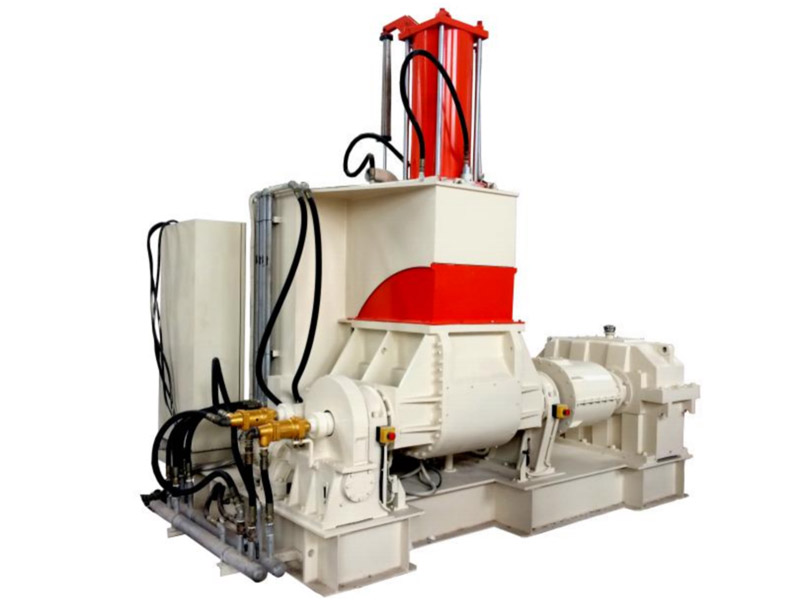
One of the most common mistakes is choosing a general-purpose twin screw extruder instead of an extruder specifically designed for film and fiber grade masterbatch production. General-purpose extruders are designed for a wide range of applications and typically do not provide the level of dispersion, filtration, and process control required for film and fiber grade masterbatches.
While general-purpose extruders may have a lower initial purchase price, they will result in higher waste rates, higher quality costs, and lower product quality in the long run. Manufacturers who make this mistake often find themselves unable to meet the quality requirements of film and fiber customers, resulting in lost business and damaged reputation. It is always better to invest in an extruder specifically designed for film and fiber applications, as it will deliver significantly higher returns over the life of the equipment.
5.2 Underestimating the Importance of Filtration
Another common mistake is underestimating the importance of the filtration system in film and fiber grade masterbatch production. Some manufacturers try to save money by choosing a basic filtration system with lower filtration accuracy or manual screen changers.
However, an inadequate filtration system will result in masterbatch containing undispersed agglomerates and contaminants, which will cause defects in the customer’s film or fiber products. This will lead to high rejection rates, customer complaints, and lost business. Manual screen changers also result in significant material waste and production downtime during screen changes. It is essential to invest in a high-quality continuous filtration system with sufficient filtration accuracy for your specific application.
5.3 Ignoring the Importance of Vacuum Venting
Vacuum venting is another critical feature that is often overlooked when selecting a masterbatch extruder. Inadequate venting will result in masterbatch containing bubbles, voids, and volatile compounds, which can cause processing issues and quality defects in the final film or fiber product.
High-quality film and fiber grade masterbatches require efficient vacuum venting to remove all moisture, air, and volatile compounds generated during extrusion. It is important to choose an extruder with multiple vacuum venting ports and a high-performance vacuum system to ensure complete removal of volatiles.
5.4 Choosing the Wrong Pelletizing System
Choosing the wrong pelletizing system can also have a significant impact on product quality and customer satisfaction. Strand pelletizing systems, while less expensive, produce pellets with irregular shape and size, which can cause feeding problems in the customer’s equipment. They also result in higher fines content, which is undesirable for film and fiber applications.
Underwater pelletizing systems produce uniform spherical pellets with excellent flow properties and minimal fines, making them the preferred choice for film and fiber grade masterbatches. While underwater pelletizing systems have a higher initial cost, they deliver significant benefits in terms of product quality and customer satisfaction, resulting in higher prices and repeat business.
5.5 Overlooking After-Sales Support and Service
After-sales support and service are often overlooked when purchasing an extruder, but they are essential for ensuring the long-term success of your production operation. A manufacturer that provides poor after-sales support can leave you stranded with a broken machine and no way to get it repaired quickly, resulting in costly downtime and lost production.
It is important to choose a reputable manufacturer like Kerke Extruder that provides comprehensive after-sales support, including installation and commissioning, operator training, technical support, and spare parts supply. Kerke has a global network of service centers and experienced technicians who can provide fast and reliable support wherever you are located.
6. Real-World Success Stories
6.1 Case Study 1: BOPP Film Masterbatch Manufacturer in Italy
A leading BOPP film masterbatch manufacturer in Italy was experiencing significant quality issues with their existing general-purpose twin screw extruders. The company was struggling to meet the strict dispersion and color consistency requirements of their BOPP film customers, resulting in high rejection rates and lost business. They were also experiencing high maintenance costs and frequent unplanned downtime.
After extensive research and evaluation, the company selected Kerke Extruder to provide a complete solution for their BOPP film masterbatch production. Kerke installed a KTE-50B twin screw extruder with advanced PLC control system, multiple gravimetric feeders, dual vacuum venting system, 5 micron continuous screen changer, and underwater pelletizing system.
The new Kerke extruder was installed and commissioned in just 28 days, and the company immediately saw dramatic improvements in product quality and production efficiency. The dispersion performance was significantly improved, eliminating pigment agglomerates and resulting in masterbatch that met the strict requirements of BOPP film production. The batch-to-batch color consistency improved by 95%, and the rejection rate dropped from 11% to less than 0.8%. The production capacity increased by 45% compared to their previous extruder, while the energy consumption decreased by 28%.
Results after implementation:
- Pigment dispersion improved by 90%, eliminating agglomerates larger than 10 microns
- Color consistency improved by 95%
- Rejection rate reduced from 11% to less than 0.8%
- Production capacity increased by 45%
- Energy consumption reduced by 28%
- Annual cost savings of over $1.2 million
- Payback period of 2.1 months
The company was extremely satisfied with the performance of the Kerke extruder and has since purchased three additional KTE-50B extruders to expand their production capacity. They have also become a reference customer for Kerke Extruder in the European film masterbatch market.
6.2 Case Study 2: Polyester Fiber Masterbatch Manufacturer in Vietnam
A polyester fiber masterbatch manufacturer in Vietnam was looking to expand their production capacity and enter the high-value textile fiber market. The company’s existing extruders were unable to produce masterbatch with sufficient dispersion and purity for high-speed fiber spinning applications, resulting in frequent filament breaks and high customer rejection rates.
The company contacted Kerke Extruder for a solution to their production challenges. After evaluating their specific requirements, Kerke recommended a KTE-65B twin screw extruder with specialized screw design for polyester fiber masterbatch, advanced filtration system with 5 micron filtration, and underwater pelletizing system.
The KTE-65B was installed and commissioned in 32 days, and the company immediately began producing high-quality polyester fiber masterbatch that met the strict requirements of high-speed spinning applications. The improved dispersion and purity of the masterbatch reduced filament breaks by 90%, allowing their customers to increase spinning speeds by 20%. The consistent quality of the masterbatch allowed the company to secure contracts with major textile fiber manufacturers, significantly increasing their market share.
Results after implementation:
- Successfully produced high-quality polyester fiber masterbatch for high-speed spinning
- Filament breaks reduced by 90% in customer’s spinning operations
- Customer rejection rate reduced from 15% to less than 1%
- Production capacity of 650 kg/h for polyester fiber masterbatch
- Product selling price increased by 35% due to improved quality
- Annual revenue increase of over $3.5 million
- Payback period of 1.8 months
The company has since become one of the leading suppliers of polyester fiber masterbatch in Southeast Asia, thanks to the advanced capabilities of their Kerke extruders. They are currently planning to install two additional KTE-75 extruders to meet the growing demand for their products.
7. Installation, Training and After-Sales Support
Investing in a masterbatch extruder is a significant decision, and the success of your investment depends not only on the quality of the equipment but also on the quality of the installation, training, and after-sales support provided by the manufacturer.
7.1 Professional Installation and Commissioning
Kerke Extruder provides professional installation and commissioning services for all our extruders. Our experienced technicians will travel to your facility to install the equipment, connect all utilities, and commission the extruder to ensure that it is operating at peak performance. We will also perform comprehensive testing of all systems and produce test batches of your masterbatch formulations to verify product quality.
Our installation and commissioning process is designed to minimize downtime and ensure that your production operation is up and running as quickly as possible. We typically complete installation and commissioning of a standard production extruder in 25-35 days, depending on the model and configuration.
7.2 Comprehensive Operator Training
Proper operator training is essential for ensuring safe and efficient operation of your masterbatch extruder. Kerke Extruder provides comprehensive training programs for operators and maintenance personnel, covering all aspects of extruder operation, maintenance, and troubleshooting.
Our training programs include both classroom instruction and hands-on training, ensuring that your staff has the knowledge and skills to operate the extruder safely and efficiently. We also provide detailed operation and maintenance manuals that serve as valuable references for your staff. For customers who require additional training, we offer advanced training programs at our manufacturing facility in China.
7.3 Global After-Sales Support
Kerke Extruder is committed to providing exceptional after-sales support to our customers worldwide. We have a global network of service centers and experienced technicians who can provide fast and reliable support wherever you are located. Our technical support team is available 24/7 to assist with any questions or issues you may have.
We also maintain a large inventory of spare parts at our manufacturing facility and regional service centers, ensuring that spare parts are delivered quickly to minimize downtime. For customers who require additional support, we offer preventive maintenance contracts that include regular inspections and maintenance to ensure that your extruder continues to operate at peak efficiency.
8. Future Trends in Film and Fiber Grade Masterbatch Extrusion
The film and fiber industry is constantly evolving, driven by changing consumer demands, regulatory requirements, and technological advancements. These changes are shaping the future of masterbatch extrusion technology, and Kerke Extruder is at the forefront of these developments.
8.1 Increasing Demand for High-Performance and Sustainable Masterbatches
There is an increasing demand for high-performance masterbatches with enhanced properties such as UV resistance, flame retardancy, and antimicrobial properties. There is also a growing demand for sustainable masterbatches made from recycled materials and biodegradable polymers. These trends require masterbatch extruders with enhanced compounding capabilities and the ability to process a wider range of materials.
Kerke Extruder is continuously developing new screw designs and process technologies to meet these evolving requirements. Our extruders are capable of processing a wide range of materials, including recycled polymers, biodegradable polymers, and high-performance engineering plastics. We also offer specialized solutions for processing sustainable masterbatches, ensuring that our customers can meet the growing demand for environmentally friendly products.
8.2 Advancements in Automation and Digitalization
Automation and digitalization are transforming the manufacturing industry, and the masterbatch industry is no exception. Future masterbatch extruders will feature even more advanced automation and digitalization capabilities, including artificial intelligence, machine learning, and industrial internet of things (IIoT) connectivity.
Kerke Extruder is investing heavily in these technologies to develop the next generation of intelligent masterbatch extruders. Our future extruders will feature built-in artificial intelligence and machine learning algorithms that will automatically optimize process parameters in real time, predict maintenance needs, and identify quality issues before they occur. They will also feature IIoT connectivity that will allow for remote monitoring and control of production operations from anywhere in the world.
8.3 Stricter Regulatory Requirements
Regulatory requirements for masterbatch products are becoming increasingly strict, particularly in the areas of food safety, environmental protection, and worker safety. These regulations require masterbatch manufacturers to implement more rigorous quality control and traceability systems.
Kerke Extruder’s advanced PLC control systems provide comprehensive data logging and traceability capabilities, allowing manufacturers to meet the strictest regulatory requirements. Our systems can record all critical process parameters for each production batch, and the data can be easily retrieved and analyzed for quality control and regulatory compliance purposes. We also design our extruders to comply with all relevant international safety and environmental standards, ensuring that our customers can operate their facilities in compliance with local regulations.
9. Conclusion
Choosing the right masterbatch extruder is the most critical decision for any manufacturer serving the plastic film and fiber industry. The strict quality requirements of these industries demand extruders with exceptional dispersion performance, precise process control, superior filtration, and reliable operation. A poorly chosen extruder will result in poor product quality, high operating costs, and lost business opportunities, while a high-quality extruder specifically designed for film and fiber applications will deliver exceptional returns on investment.
Kerke Extruder has over 15 years of specialized experience in manufacturing masterbatch extruders for the film and fiber industry. Our KTE series twin screw extruders and KTE-T series triple screw extruders are specifically engineered to meet the unique challenges of film and fiber grade masterbatch production, delivering the highest levels of product quality and production efficiency available in the industry. From small laboratory extruders to large high-capacity production extruders, we have a solution to meet every need and budget.
The financial benefits of investing in a Kerke masterbatch extruder are exceptional, with payback periods typically less than 3 months and total returns exceeding 70 times the initial investment over the life of the equipment. The case studies presented in this guide demonstrate how Kerke extruders have helped masterbatch manufacturers around the world improve their product quality, increase their production efficiency, and achieve significant cost savings.
Whether you are a small masterbatch manufacturer just starting out or a large multinational corporation looking to expand your production capacity, Kerke Extruder has the expertise, technology, and commitment to customer success to help you achieve your production goals. With our state-of-the-art manufacturing facilities, global network of service centers, and team of experienced engineers, we are your trusted partner for all your film and fiber grade masterbatch extrusion needs. Contact us today to learn more about how our advanced twin screw extruders can help you improve product quality, increase productivity, and maximize profitability in the competitive film and fiber industry.