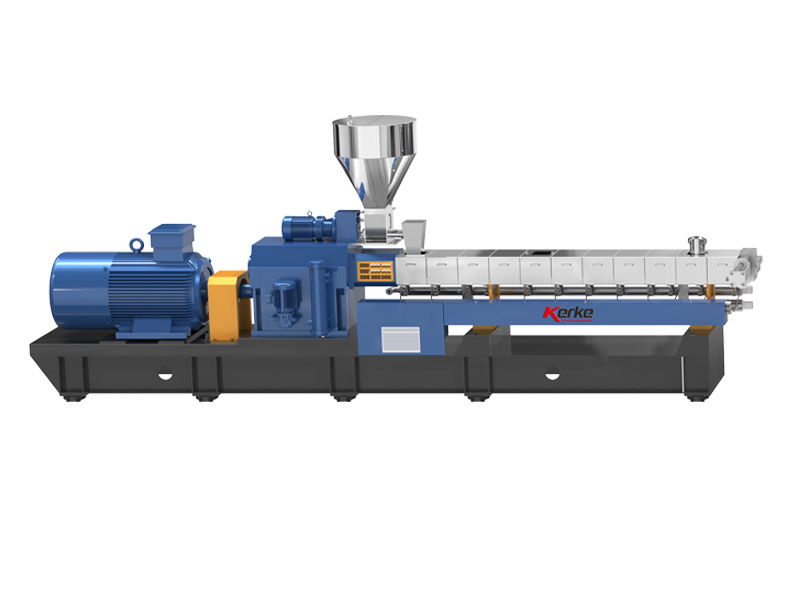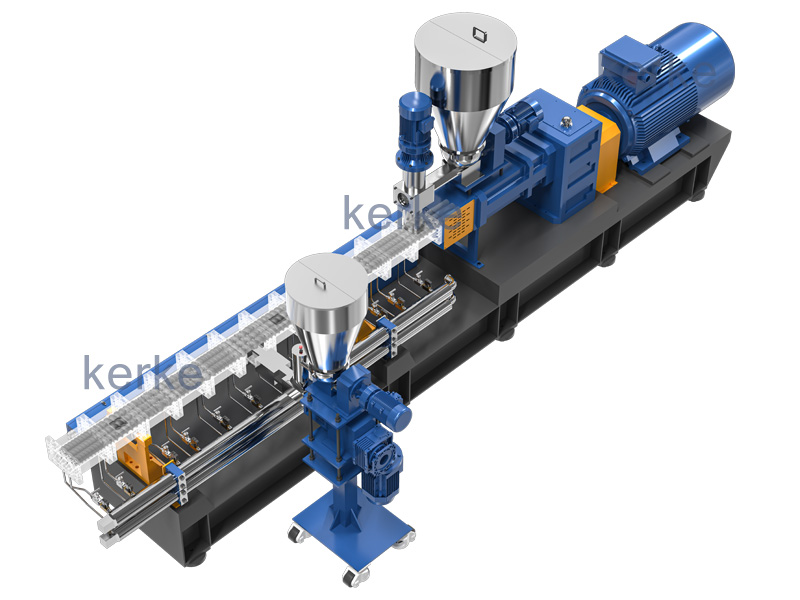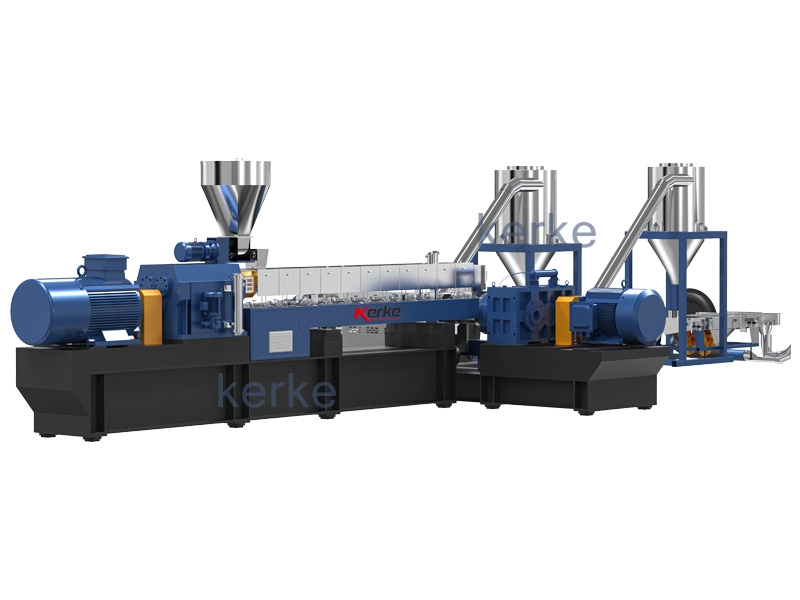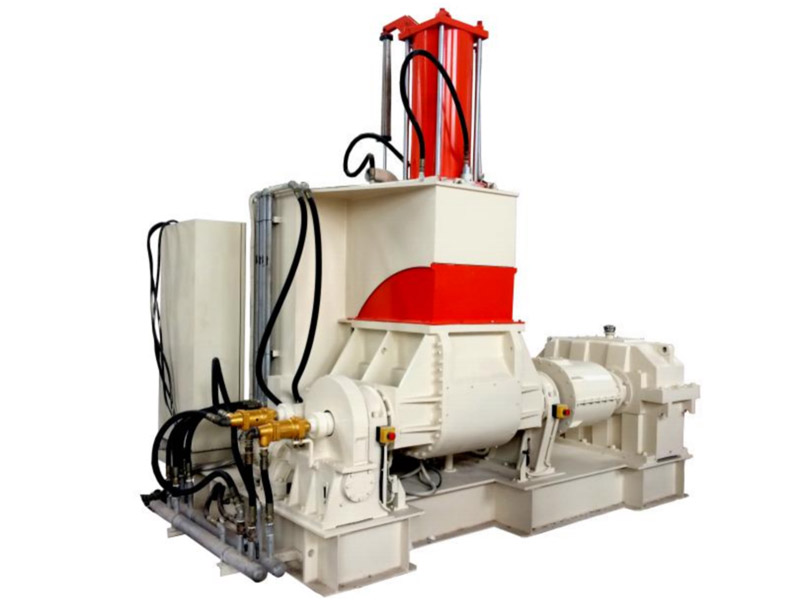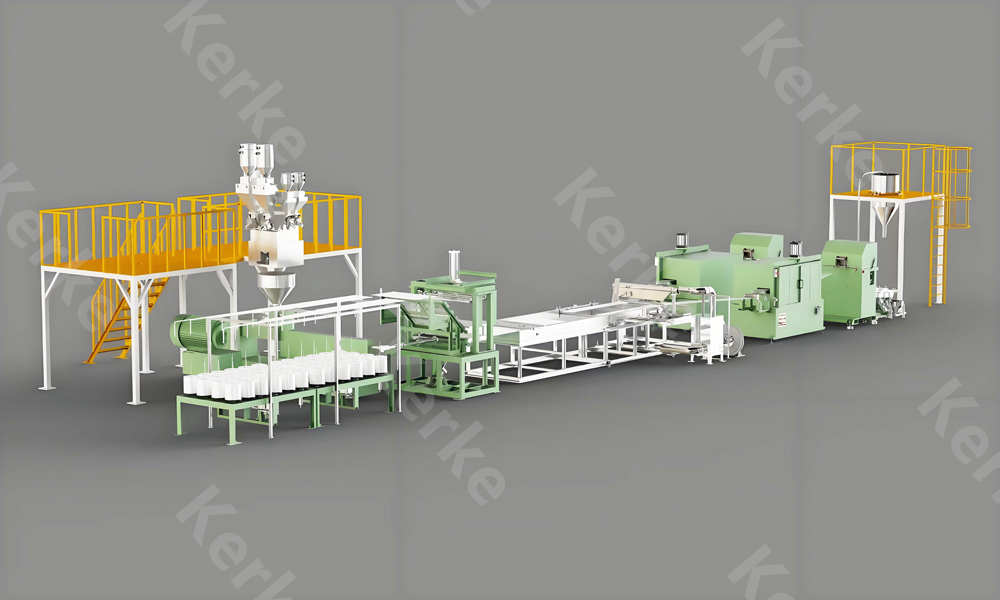
Building a color masterbatch factory is less about buying a single machine and more about orchestrating a complete production system in which a co-rotating twin-screw extruder sits at the center of a tightly controlled material flow. A color masterbatch factory that wins repeat orders lives or dies on dispersion quality, color consistency, and the ability to change colors quickly without contaminating the next job. This guide walks through the full sequence of decisions an investor or plant manager must make, from defining which masterbatch types to produce, through capacity and machine sizing, plant layout, the compounding route, screw design, pigment handling, laboratory control, color changeover, quality systems, staffing, and finally the ramp from first trial to stable commercial yield. Kerke, a Wanplas factory, supplies the co-rotating twin-screw extruders and pelletizing lines that anchor this kind of plant, and the technical parameters discussed here reflect the operating windows those machines are built to deliver.
1. Product Positioning and Masterbatch Portfolio
The first decision in building a color masterbatch factory is not the machine but the product portfolio. Masterbatch is not a single product; it is a family of concentrates whose formulation logic differs sharply by category. Getting the portfolio right determines which carrier resins you stock, which pigments you qualify, and how flexible your dosing and cleaning routines must be.
White masterbatch is dominated by titanium dioxide (TiO2) at high loading, frequently 50 to 70 percent by weight, and is valued for opacity and whiteness rather than chroma. Black masterbatch is built on carbon black, where structure and DBP oil absorption define dispersion difficulty; high-color furnace black for jet-black films differs from conductive or low-structure grades. Color masterbatch carries organic and inorganic pigments at moderate loading, typically 15 to 45 percent, and is the segment most sensitive to delta E control and pigment heat stability. Additive masterbatch concentrates stabilizers, antioxidants, UV absorbers, antistatic agents, flame retardants, or slip and anti-block agents, and usually runs at lower total additive loading but demands precise gravimetric dosing because over-addition is wasteful and under-addition is a field failure. Filler masterbatch, often based on calcium carbonate or talc in a polyolefin carrier, trades on low cost and high loading of 70 to 85 percent, and stresses wear resistance on the barrel and screw.
Carrier resin selection is the bridge between your masterbatch and your customer’s process. A masterbatch is only as compatible as its carrier. Polyethylene (PE) and polypropylene (PP) carriers suit the bulk of film, pipe, and injection-molded polyolefin parts. Ethylene-vinyl acetate (EVA) is favored for wire and cable and some flexible films because of its polarity and clarity. Polystyrene (PS) and acrylonitrile-butadiene-styrene (ABS) carriers serve rigid and electronic housings where the base resin is styrenic. A universal carrier, often a low-viscosity styrene-ethylene-butylene-styrene or metallocene polyolefin copolymer, gives a small plant the ability to serve mixed orders without holding five carriers in inventory, at the cost of slightly lower let-down performance in some engineering resins. The rule of thumb is to match carrier polarity and melt flow rate to the client resin so the masterbatch melts and disperses before the substrate does.
Client matching also drives whether you commit to a narrow specialty or a broad service bureau model. A narrow specialty, for example only white and black for blown film, keeps pigment inventory and cleaning simple and is the lowest-risk entry. A broad color service bureau serving custom shades for many converters is more profitable per kilogram but demands a real laboratory, a wide pigment library, and disciplined changeover. Most successful new plants start narrow, prove dispersion and color control, then widen the portfolio once the team and the quality system are dependable.
2. Capacity Planning and Host Machine Sizing
Capacity planning translates your commercial target into a concrete machine specification. In co-rotating twin-screw compounding, annual tonnage is a function of specific throughput in kilograms per hour, the number of operating hours per year, and the achievable capacity utilization. A common planning assumption is 6,000 to 7,200 operating hours per year for a single-shift-plus operation and 7,200 to 8,000 hours for near-continuous running, with capacity utilization of 80 to 90 percent after ramp-up.
The host machine is the co-rotating twin-screw extruder itself. Screw diameter, L/D ratio, and specific torque together decide how much masterbatch you can make and how well it disperses. For color masterbatch the relevant diameter range runs from about 52 mm for a pilot or small commercial line to 95 mm or more for a high-volume plant. L/D ratios of 40 to 52 are typical: the longer the barrel, the more residence time you have for melting, dispersing, venting, and homogenizing without pushing screw speed into a region that overheats temperature-sensitive organic pigments.
| Annual capacity (t/y) | Host machine (co-rotating TSE) | L/D ratio | Throughput (kg/h) | Typical shift plan | Plant area (m2) | Crew per shift |
|---|---|---|---|---|---|---|
| 500 | TSE-52 | 40 to 48 | 200 to 350 | 1 shift, 6 days | 400 to 600 | 3 to 4 |
| 1,000 | TSE-65 | 40 to 52 | 400 to 650 | 2 shifts | 700 to 1,000 | 4 to 5 |
| 2,000 | TSE-75 | 44 to 52 | 700 to 1,000 | 2 to 3 shifts | 1,200 to 1,800 | 5 to 6 |
| 5,000 | TSE-95 | 48 to 52 | 1,200 to 2,000 | 3 shifts, continuous | 2,500 to 3,500 | 6 to 8 |
The plant area column is a planning estimate that includes raw material warehousing, pre-mixing, the extrusion and pelletizing bay, packaging and finished-goods storage, the laboratory, and change rooms. A 500 t/y line can fit in a compact hall, while a 5,000 t/y plant needs segregated zones and significant buffer storage to keep material flowing across three shifts. The crew-per-shift figures assume one operator plus supporting material, quality, and maintenance coverage rather than a fully staffed independent team per line.
Specific torque deserves a planning mention here because it caps what the gearbox can transmit to the screw. Co-rotating twins typically run specific torque in the 8 to 13 Nm/cm3 band. Higher specific torque lets you run more aggressive kneading without exceeding gearbox limits, which is exactly what high TiO2 or carbon black loading demands. When sizing, ask the supplier for the torque rating, not just the motor kilowatt, because two machines with the same motor can disperse very differently if their gearboxes differ.
3. Site Selection and Plant Layout
Site selection for a color masterbatch factory weighs logistics, utilities, and contamination control together. You want proximity to resin suppliers and to your customer cluster to shorten lead time and reduce freight, reliable three-phase power with capacity headroom for the extruder drive, the loss-in-weight feeders, the air system, and the pelletizing and dewatering equipment, and a water supply adequate for process cooling and the pelletizing water loop. Dust and pigment containment matter more than for a neutral compounding plant because a stray carbon black plume can contaminate a white line irrevocably.
Building geometry should plan for a clear height of 6 to 8 meters. Twin-screw lines are fed from overhead or side gravimetric feeders and need headroom for the feed throat, the barrel, the die and pelletizer, and the material handling above. Floor load must accommodate the machine foundation, filled bulk bags, and stacked pellet Gaylord boxes; a design floor loading in the region of 5 to 8 tons per square meter for the machine bay and storage zones is a reasonable planning figure, confirmed against local codes. A sealed, slightly sloped floor with chemical-resistant coating simplifies spill cleanup and prevents pigment accumulation in joints.
| Zone | Function | Layout principle |
|---|---|---|
| Raw material warehouse | Resin, pigment, additive receiving and storage | Dry, controlled humidity, FIFO, separate pigment room |
| Pre-mixing area | High-speed mixing and pre-blending | Dust extraction, near feeders |
| Compounding and pelletizing bay | Twin-screw extruder, screen changer, pelletizer | Main bay, overhead service, maintenance aisle |
| Packaging and finished goods | Cooling, sieving, homogenizing, bagging | Clean, low-dust, near outgoing QA |
| Laboratory | Color, MFR, moisture, ash, plaques | Air-conditioned, isolated from dust |
| Pigment room | Powder pigment weighing and small lots | Independent, negatively pressured, locked |
Material flow should be linear: in at one end, out at the other, with no cross-traffic between incoming powder and outgoing clean pellets. A common layout runs raw material in from the warehouse to pre-mixing, feeds the loss-in-weight feeders above the extruder, carries melt through the die and pelletizer, then conveys cooled and screened pellets to homogenizing and bagging before finished-goods storage. Reverse flow, where a forklift carrying black pigment bags crosses the white pellet line, is the classic source of contamination complaints.
Dust and color isolation are non-negotiable. The pigment weighing room should be independently isolated and negatively pressured relative to the rest of the plant, with its own dust extraction and dedicated air handling so it cannot exhaust into the production hall. The main production area should be a positive-pressure, filtered-air clean environment so airborne dust from outside does not settle on open pellet streams or into open Gaylords. For a plant that makes both white and black, physically separating those lines or running them in enclosed dedicated booths prevents the cross-contamination that ruins a high-opacity white order.
4. The Compounding Process Route
The compounding route is the spine of the plant. Each step removes a specific risk, and skipping one to save space or cost usually returns as a quality complaint. The standard route for color masterbatch on a co-rotating twin-screw extruder is: pre-mixing, gravimetric feeding, melt dispersion, vacuum venting, melt filtration, pelletizing, dewatering, screening, homogenizing, and finally metering and packaging.
Pre-mixing begins in a high-speed mixer running roughly 500 to 1,000 rpm, where resin carrier, pigment, and additives are dry-blended into a uniform feed cake or free-flowing blend. High-speed mixing does not disperse pigment but it ensures every gram entering the feeder has the same composition, which is the foundation of batch-to-batch consistency. Some plants skip pre-mixing for simple single-pigment formulas and feed components separately through multiple loss-in-weight feeders, which is valid when the dosing system is accurate enough.
Metering is where the co-rotating twin-screw extruder earns its reputation. A loss-in-weight feeder controls each component by mass flow with an accuracy target around plus or minus 0.5 percent. This is tighter than volumetric feeding and is the reason a color shade stays on target across a 5,000 kg run. For masterbatch, pigment and carrier often run on separate feeders, and minor additives on a small micro-feeder, so the screw sees a controlled recipe rather than a guessed one.
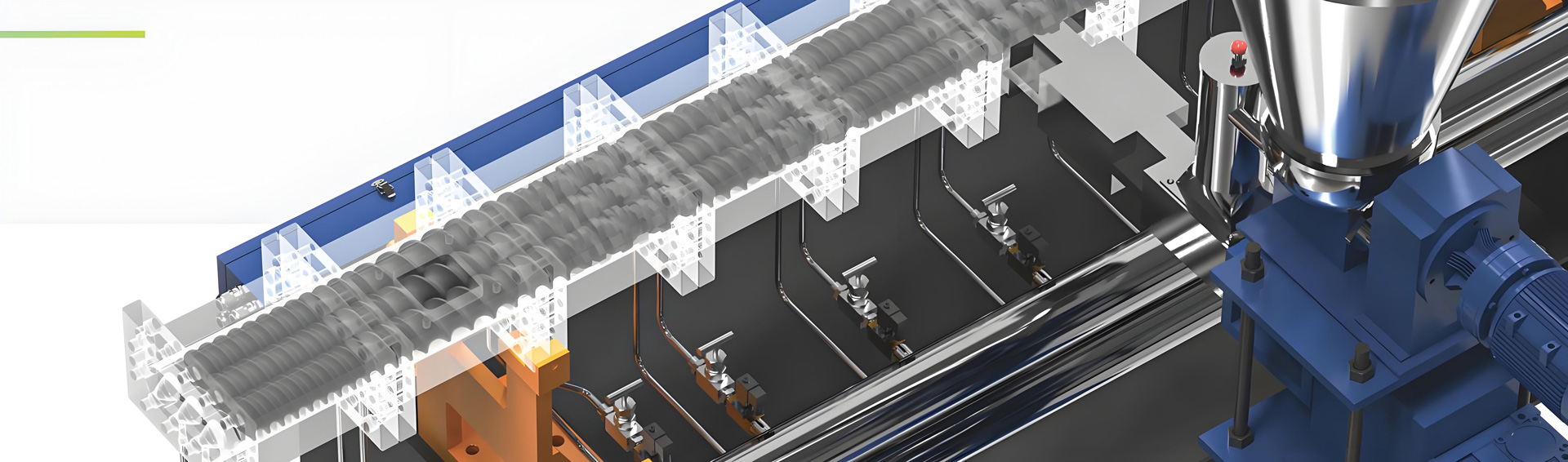
Inside the barrel the components melt and disperse. The co-rotating screws intermesh and wipe, conveying melt forward while kneading blocks impose shear that breaks pigment agglomerates. Vacuum venting then removes trapped air and volatiles through a devolatilization port, which matters because air carried into the melt becomes bubbles and silver streaks in the final film. Melt filtration through a screen changer or automatic belt screen removes gel, agglomerate, and foreign particles before the die; for critical color and film grades an automatic screen changer keeps pressure stable through changeover so the pellet size and appearance stay constant.
Pelletizing method is chosen by product and volume. Strand pelletizing draws extruded strands through a water bath and a rotary cutter; it is flexible and easy to clean, favored for small runs and frequent color changes. Water-ring pelletizing cuts melt at the die face into a water ring and is compact and continuous, good for medium volumes. Underwater pelletizing cuts strands below the die face fully submerged and delivers the highest output and best pellet sphericity for large, continuous runs of stable grades, at higher equipment complexity. After cutting, centrifugal dewatering removes surface water, a vibrating screen removes off-size and longs, and a homogenizing blender evens out any residual variation before the lot is metered and bagged.
| Masterbatch type | Typical recipe skeleton | Preferred carrier | Pigment loading | Pelletizing method |
|---|---|---|---|---|
| White | Carrier + TiO2 + dispersant + wax | PE / PP | 50 to 70 percent | Water-ring or underwater |
| Black | Carrier + carbon black + dispersant + stabilizer | PE / PP | 35 to 50 percent | Water-ring or strand |
| Color | Carrier + organic/inorganic pigment + dispersant | PE / PP / PS / ABS / universal | 15 to 45 percent | Strand or water-ring |
| Additive | Carrier + stabilizer / slip / FR / antistatic | PE / PP / EVA | 5 to 25 percent | Strand or water-ring |
| Filler | Carrier + CaCO3 / talc + coupling agent | PE / PP | 70 to 85 percent | Water-ring or underwater |
This table is a skeleton, not a formula. Real recipes are developed in the laboratory against a target shade and a target let-down ratio, then locked as a named recipe in the control system so the line repeats them exactly. The pelletizing method column is a planning preference; many plants standardize on strand or water-ring for maximum changeover flexibility and reserve underwater for high-volume stable grades.
5. Screw Configuration Is the Core
If there is one point this guide insists on, it is that screw configuration is the core of masterbatch quality. The co-rotating twin-screw extruder is modular: screw elements are assembled on the shafts to create a conveying and kneading profile tuned to the recipe. Two machines of the same diameter can produce utterly different dispersion depending on how the screws are built.
Kneading blocks are the dispersive workhorses. They are stacks of lens-shaped elements offset at angles, typically 45, 60, or 90 degrees. A 90-degree kneading block is the most restrictive and generates the highest local shear and melting pressure, suited to breaking tough agglomerates but risky for heat-sensitive organics. A 45-degree block is gentler and more conveying, good for distributive mixing and for forward transport of high-filler melts. A 60-degree block sits between. The art is arranging these blocks along the barrel so pigment agglomerates meet high shear after the carrier has melted but before the melt is overheated, then the profile opens to conveying and venting zones that relax the melt and remove air.
The ratio of shear (kneading) length to conveying length, the number and stagger of kneading blocks, and their position relative to the feeding and venting ports define the dispersion result. Too little kneading leaves agglomerates; too much cooks the pigment or the carrier and creates degradation specks. Specific torque of 8 to 13 Nm/cm3 sets how hard the gearbox can drive those blocks, and the specific mechanical energy (SME) of 0.15 to 0.35 kWh/kg is the practical energy the melt receives. Pushing SME above the window for a given pigment raises temperature and degradation risk without better dispersion; staying below leaves undispersed grit.
| Parameter | White (TiO2) | Black (carbon black) | Color (organic pigment) | Filler (CaCO3) |
|---|---|---|---|---|
| Pigment loading | 50 to 70 percent | 35 to 50 percent | 15 to 45 percent | 70 to 85 percent |
| Dominant kneading block | 60 to 90 degree | 90 degree, multiple | 45 to 60 degree | 45 degree, wear-resistant |
| SME window (kWh/kg) | 0.20 to 0.35 | 0.25 to 0.35 | 0.15 to 0.25 | 0.15 to 0.25 |
| Melt temperature (deg C) | 200 to 240 | 200 to 250 | 200 to 260 | 190 to 230 |
| Dispersion metric | FPV, opacity | FPV, jetness | FPV, delta E | FPV, fineness |
Dispersion quality is quantified, not judged by eye. The filter pressure value (FPV) measures the pressure rise as a melt is forced through a fine screen, and a lower, stable FPV means fewer and smaller agglomerates. The method is standardized under ISO 13949 and the related DIN EN 13900-5 for pigment dispersion in plastics, and a plant should test every dispersion-critical lot against a reference FPV so a customer complaint is caught internally. Pigment loading of 30 to 70 percent is the normal masterbatch band; pushing toward the top of that band increases viscosity and dispersion difficulty and demands the higher specific torque and SME headroom described above.
The practical consequence for the investor is to buy the machine as a configurable system, not a fixed screw. Kerke, a Wanplas factory, supplies co-rotating twin-screw extruders with modular screw and barrel elements and configurable L/D, so the same line can be re-profiled from a white run to a carbon black run by swapping kneading blocks and adjusting the process recipe. That flexibility protects the plant when the product mix shifts, which it always does.
6. Pigments, Dispersants, and Color Control
Pigment selection and treatment decide both the ceiling on quality and the floor on cost. Titanium dioxide for white masterbatch is chosen for high refractive index and clean undertone; rutile grades give durability and hiding power, anatase gives a bluer white for some films. Carbon black selection turns on structure and DBP oil absorption: high-structure, high-DBP blacks disperse harder but give deeper jetness, while low-structure blacks are easier to disperse but weaker in tint. Organic pigments bring bright shades and high tinting strength but are heat sensitive, so their heat stability, typically 280 to 300 deg C in the melt, sets the ceiling on barrel temperature and screw speed; exceeding it shifts the shade or generates degradation specks.
Migration resistance matters for articles that contact other materials or that must keep their shade over time. A pigment that bleeds into a adjacent layer or into packaging content is a failure regardless of initial appearance, so for film and food-contact applications pigment selection is screened for migration and extraction behavior, documented against the relevant regulation rather than assumed.
Dispersants, waxes, and coupling agents are the quiet enablers of good masterbatch. A dispersant lowers the interfacial tension between pigment and carrier so agglomerates wet out and break under shear; a small amount of polyethylene or Fischer-Tropsch wax reduces viscosity and improves let-down. For filler masterbatch a coupling agent such as a titanate or silane bonds the mineral to the polyolefin, raising mechanical properties and letting-down. These additives are dosed in low percentage but their absence shows up as poor dispersion or weak parts.
Color control to delta E at or below 0.5 is achieved by controlling every input that shifts shade. That means qualifying each pigment lot against a master standard, holding the recipe and the process window constant, and measuring output on a spectrophotometer against the approved standard. A delta E of 0.5 is a tight tolerance that most customers accept as commercially matching; looser tolerances invite complaints on light tints and clear films. The control logic is simple to state and hard to hold: same pigment lot, same recipe, same screw profile, same temperatures, same feeder accuracy, same measurement geometry. Any one of those drifting pushes delta E upward.
7. Color Management Laboratory
A color masterbatch factory without a real laboratory is a plant shipping hope. The laboratory is where recipes are developed, where every lot is approved, and where complaints are defended with data. At minimum the lab holds a spectrophotometer for numerical color measurement, a standard light box with D65 and other reference illuminants for visual shade matching under defined lighting, a small lab-scale twin-screw extruder for recipe trials without disturbing production, an injection molding machine and a blow film unit for preparing color plaques and film that represent the real application, a melt flow rate (MFR) tester for carrier and lot viscosity, a moisture analyzer for incoming resin and finished pellet dryness, and an ash furnace for inorganic loading verification.
The spectrophotometer and D65 light box are the heart of color approval. The spectrophotometer returns Lab values and delta E numerically, removing argument from shade decisions. The D65 light box reveals metamerism, the case where two samples match under one light but not another, which is exactly the failure that surfaces at a customer’s store or in daylight. Measuring under D65 and at least one other illuminant before release prevents the classic “it matched in the factory but not at the customer” dispute.
The lab twin-screw lets you prove a recipe at kilogram scale before committing a production line for hours. The injection and blow film units turn the compounded pellet into the actual part the customer sees, because a masterbatch that looks right as a plaque can still show streaks in a thin film. MFR and moisture checks guard two silent failure modes: a carrier lot of wrong viscosity changes let-down and dispersion, and retained moisture becomes silver streaks and bubbles in the film. The ash furnace confirms that the TiO2 or filler loading you specified is what you shipped, a check that protects both quality and margin.
Workflow discipline ties the lab to production. Every production lot gets a retained sample and a plaque, logged by batch number with its recipe, process data, and lab results. A re-order is approved by measuring the new lot against the retained master, not by memory. This traceability is what ISO 9001 auditors and demanding converters expect, and it is what turns a one-time sale into a supply relationship.
8. Color Changeover and Purging
Changeover is where masterbatch plants lose margin or win it back. A color masterbatch factory changes color constantly, so the time and purge waste per change compound across the year. A realistic target for a clean changeover, including purge, screen change, and pellet cleaning, is 20 to 45 minutes. Below 20 minutes is achievable on highly optimized dedicated lines; above 45 minutes signals poor procedure or mismatched scheduling.
Purge compound usage is the direct cost of changeover. A dedicated purge compound, run through the barrel to flush residual pigment, is far more efficient than running expensive natural resin, and it recovers faster because it is formulated to strip color. The amount used scales with screw volume and how far the shade jumps; a light-to-light or dark-to-dark sequence needs far less than a white-to-black flip. Grouping production into color families, running light shades before dark, and sequencing by carrier all cut purge volume and time.
The dedicated-machine versus shared-line choice is strategic. A plant that dedicates one line to white and one to black eliminates cross-contamination risk and slashes changeover, at the cost of lower utilization and higher relative investment. A shared line serving all colors maximizes asset use but lives or dies on purge discipline and the isolation of the pigment room. Many plants split the difference: dedicate a line to high-volume white and black, and run the color service bureau on a separate flexible line where changeover is the core competence.
Quick-release screen packs, a fast pelletizer blade change, and a documented purge recipe per color family turn changeover from art into routine. The control system should store the purge sequence so operators follow the same steps every time rather than improvising, which is how a 45-minute changeover becomes a reliable 25-minute one.
9. Quality System and Compliance
Quality and compliance are not paperwork bolted on at the end; they are the operating system of a credible masterbatch plant. ISO 9001 gives the framework for documented procedures, calibrated equipment, batch records, and corrective action, and most converters will not approve a supplier without it. RoHS and REACH define substance restrictions and registration duties for materials placed on the European market; a masterbatch exporter must be able to certify that its recipe contains no banned substances and that imported pigments carry the needed declarations. EU 10/2011 governs plastic materials in food contact and sets specific migration limits, while FDA 21 CFR 177 covers food-contact plastics in the United States; these apply only when you target packaging or food-grade applications, but the documentation discipline they require, pure raw materials, segregated handling, and full traceability, is worth building early.
Batch retention and traceability are the daily expression of the system. Every lot is identified, sampled, tested, and retained with its raw material lot numbers, machine settings, and lab results. When a customer reports a streak or a shade shift, you trace it to the exact resin lot, pigment lot, and process window in minutes. That capability is what separates a masterbatch supplier a converter trusts from one they qualify once and drop.
| Build step | Typical cycle | Relative investment level |
|---|---|---|
| Site and building preparation | 3 to 6 months | Medium |
| Utility and air handling install | 1 to 3 months | Medium |
| Extruder and pelletizing line | 2 to 4 months lead, 2 to 4 weeks install | High |
| Laboratory equipment | 1 to 2 months | Medium |
| Recipe and process development | 1 to 3 months | Low |
| Commissioning and operator training | 2 to 6 weeks | Low |
| Certification (ISO 9001, etc.) | 3 to 6 months | Low |
| Full ramp to stable yield | 3 to 6 months after start | Medium |
| Scale to multi-line plant | 6 to 12 months additional | Very High to Premium |
This build-step table expresses investment only as relative levels because absolute amounts vary by region, building condition, and scope; the point is the sequence and where the heavy commitments sit. The extruder and pelletizing line is the single High item, while scaling to a multi-line plant is the Premium commitment. Relative to a baseline of 100 index points for a 1,000 t/y single-line plant, a 5,000 t/y multi-line site typically scales to roughly 280 to 320 index points of total committed resources, driven by building, lines, and buffer inventory rather than by any single purchase.
10. Staffing and Skills Matrix
Staffing a masterbatch plant is about the right mix of hands and judgment, not headcount alone. On a single line per shift the minimum workable crew is two machine operators who run the extruder and pelletizer, one material or dosing technician who manages feeders, pre-mix, and bulk handling, and one quality control inspector who samples, measures, and releases lots. Maintenance is usually shared across shifts rather than dedicated per line, with one technician covering the mechanical and electrical care of the screws, barrels, screen changer, and pelletizer.
The skills matrix should map each role to the competences it needs. Operators must understand the control system, the pelletizing method, and the signs of a starving feeder or a blocked screen. The dosing technician owns feeder calibration and recipe loading, the two tasks most tied to shade consistency. The quality inspector owns the spectrophotometer, the light box, and the batch record, and must have the authority to hold a lot. Maintenance owns screw and barrel care, including when to rebuild worn elements and how to re-profile screws for a new product. Cross-training operators and inspectors pays off during changeover and absence, and it is what lets a small plant keep running on three shifts.
For a 1,000 t/y plant on two shifts, total employment is roughly nine to twelve people including supervision and shared maintenance. At 5,000 t/y with multiple lines and a fuller laboratory, plan for fifteen to twenty, plus warehouse and logistics staff. The laboratory itself needs at least one trained color technician who understands spectrophotometry and the relevant dispersion standards, because the lab is where the brand is protected.
11. Ramp-Up and Yield Improvement
Ramp-up is where the plan meets reality. A new color masterbatch line typically starts trial production at around 85 percent first-pass yield, meaning roughly one in seven lots needs rework or scrap, and climbs to 97 percent or better within three to six months if commissioning, training, and the lab are in place from day one. The path is not mysterious: it is the disciplined elimination of a short list of recurring defects.
Color specks, dark or black points in a light product, usually come from pigment agglomerates that were not dispersed or from degraded material in dead spots. The countermeasure is a more aggressive kneading profile or better pre-mixing, plus screen filtration and scrupulous screw and barrel cleaning. Streaks in film come from poor let-down or residual moisture and are fought with tighter feeder accuracy, adequate venting, and confirmed resin dryness. Strand breaks during pelletizing point to melt strength, cooling, or cutter issues and are resolved by adjusting die temperature, water bath, and cutter speed. Retained moisture shows as silver streaks and bubbles and is solved at the dryer and by confirming the devolatilization zone is open and the vacuum is healthy. Agglomeration or lumping of finished pellets comes from poor dewatering or over-long pellet residence and is fixed in the centrifuge and screen.
The ramp is accelerated by treating every defect as data. Log the defect, its lot, its process window, and the fix, then feed that back into the recipe and the standard work. Within a few weeks the same failures stop recurring, the lab release rate climbs, and the plant moves from firefighting to routine. A plant that reaches 97 percent first-pass yield at good capacity utilization recovers its committed resources far faster than one stuck at 85 percent, because scrap, purge, and complaint handling are the hidden costs that eat margin.
Capacity utilization itself is a ramp variable. Early runs rarely sustain high utilization because changeover and adjustment eat time; as the crew matures and color families are scheduled, utilization climbs toward the 80 to 90 percent planning figure. Holding the process window constant, investing in quick changeover, and protecting the laboratory are the three levers that turn a commissioned line into a profitable masterbatch factory.
Frequently Asked Questions
What capacity should a new color masterbatch factory start with?
Most first-time investors enter at the 500 to 1,000 t/y band with a single TSE-52 or TSE-65 line, because this keeps the relative investment at Low to Medium and lets the team master color control before scaling. A 2,000 t/y line is a sensible second step once the customer base and color library are established.
Which carrier resin should I choose for color masterbatch?
Match the carrier to the client resin. PE and PP carriers suit polyolefin films and injection parts, EVA is common for wire and cable, PS and ABS serve rigid and electronic applications, and a universal carrier based on a low-viscosity copolymer supports mixed orders. Carrier compatibility, not price, dictates dispersion and final part appearance.
How important is screw configuration versus simply buying a bigger extruder?
Screw configuration is the single biggest lever on dispersion quality. A well-built kneading block arrangement on a modest TSE-65 will out-disperse a poorly configured TSE-95. Specific torque of 8 to 13 Nm/cm3 and SME of 0.15 to 0.35 kWh/kg are the parameters that decide whether carbon black or TiO2 is fully broken down.
How do I control color difference below delta E 0.5?
Control delta E below 0.5 through gravimetric feeding within plus or minus 0.5 percent, consistent pigment lot qualification, fixed screw and barrel temperature profiles, and a spectrophotometer with a D65 standard light box for every batch. Retain plaques and keep a master color standard for re-approval on each re-order.
What is a realistic color changeover time and how do I reduce it?
A realistic changeover target is 20 to 45 minutes including purge and pellet cleaning. Reduce it with a dedicated purge compound, a consistent purge procedure, quick-release screen packs, and by grouping production into color families so dark-to-dark or light-to-light sequences minimize waste.
How long does it take to ramp a new masterbatch plant to stable yield?
Expect a ramp from roughly 85 percent first-pass yield at trial to 97 percent within three to six months, provided commissioning, operator training, and the laboratory are in place from day one. Common early losses come from color specks, streaks, strand breaks, retained moisture, and pellet agglomeration.
Do I need ISO 9001 and food-contact compliance from day one?
ISO 9001 is worth certifying early because it structures batch records and traceability that customers audit regardless of product. Food-contact statements such as EU 10/2011 or FDA 21 CFR 177 are only required if you target packaging or food-grade applications, but building the segregated, documented workflow early avoids a costly re-engineering later.
How many people are needed to run one extrusion line per shift?
A single line typically needs two operators, one material or dosing technician, one quality control inspector, and periodic maintenance coverage per shift. At 1,000 t/y on three shifts the plant employs roughly nine to twelve people, rising to fifteen to twenty at 5,000 t/y with multiple lines and a fuller laboratory.
Conclusion
Building a color masterbatch factory around a co-rotating twin-screw extruder is a system project, not a machine purchase. Success starts with a clear product portfolio and carrier strategy, is sized by an honest capacity plan that matches TSE-52, TSE-65, TSE-75, or TSE-95 machines to 500, 1,000, 2,000, or 5,000 t/y targets, and is protected by a plant layout that isolates pigment dust and keeps material flowing one way. The compounding route, from high-speed pre-mixing and loss-in-weight feeding through dispersion, venting, filtration, and pelletizing, only delivers if the screw configuration, the kneading blocks, the specific torque, and the SME window are tuned to the pigment. A real laboratory with a spectrophotometer, D65 light box, lab twin-screw, and MFR and moisture checks holds delta E at or below 0.5, while fast, documented changeover and an ISO 9001-based quality system keep margin and trust intact. Ramp from 85 to 97 percent yield by treating every defect as data, and the plant becomes a dependable supplier rather than a hopeful startup. Kerke, a Wanplas factory, builds the co-rotating twin-screw extruders and pelletizing lines at the center of this system, and the Wanplas brand backs the network of specialized factories with shared quality standards and a long-term service commitment. For an investor weighing the build, the advice is consistent: start narrow, instrument the process, protect the laboratory, and scale only after the first line is repeatable.