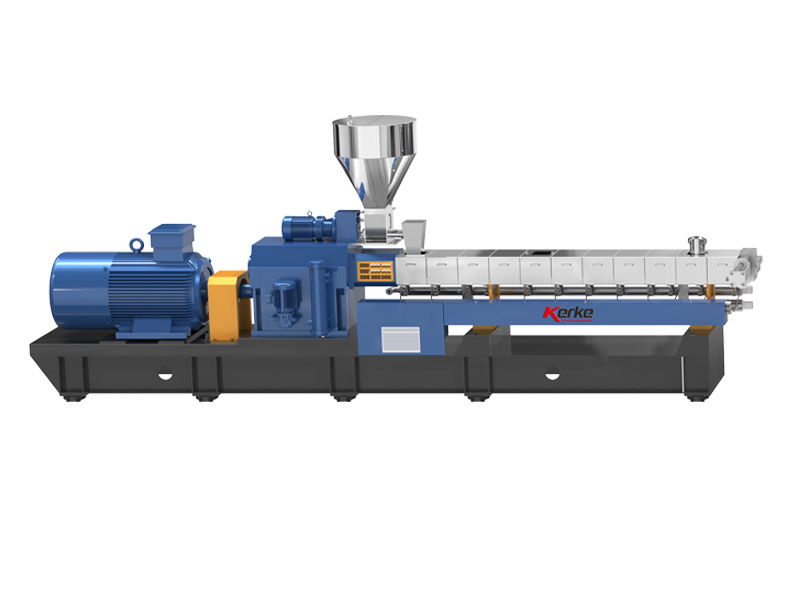
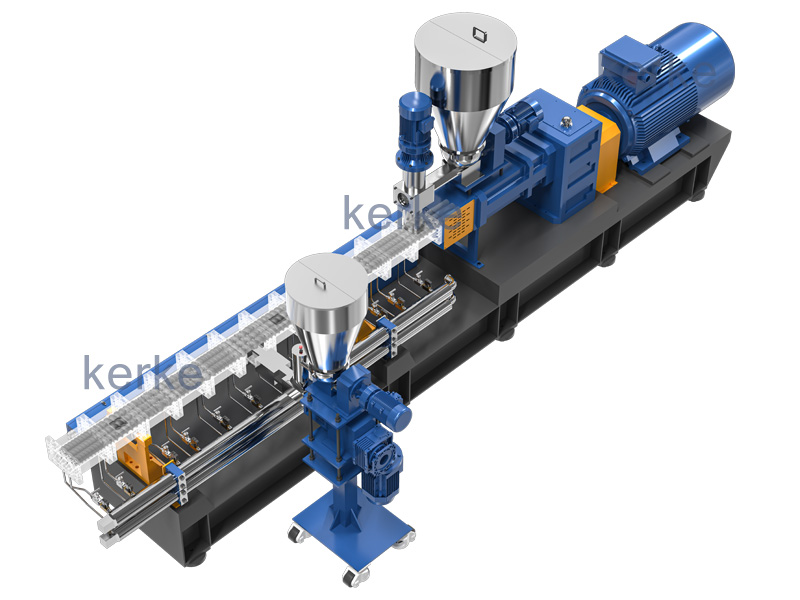
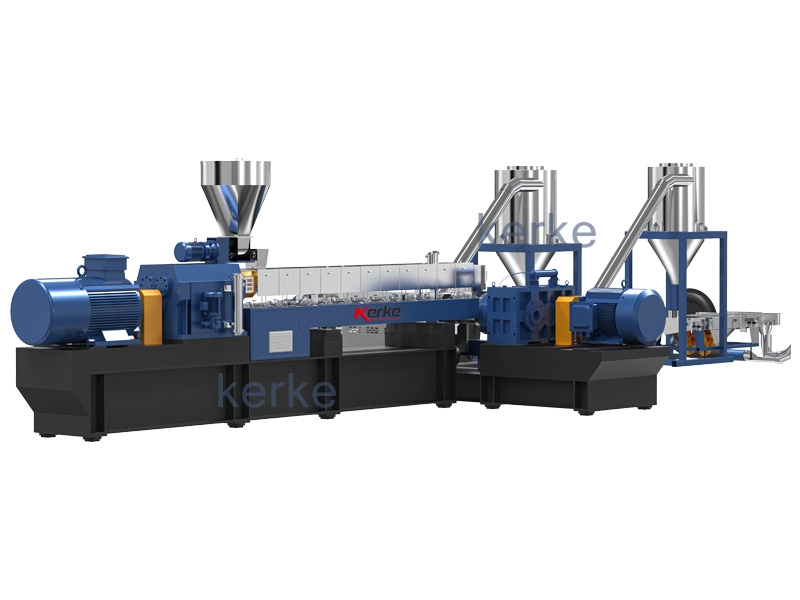
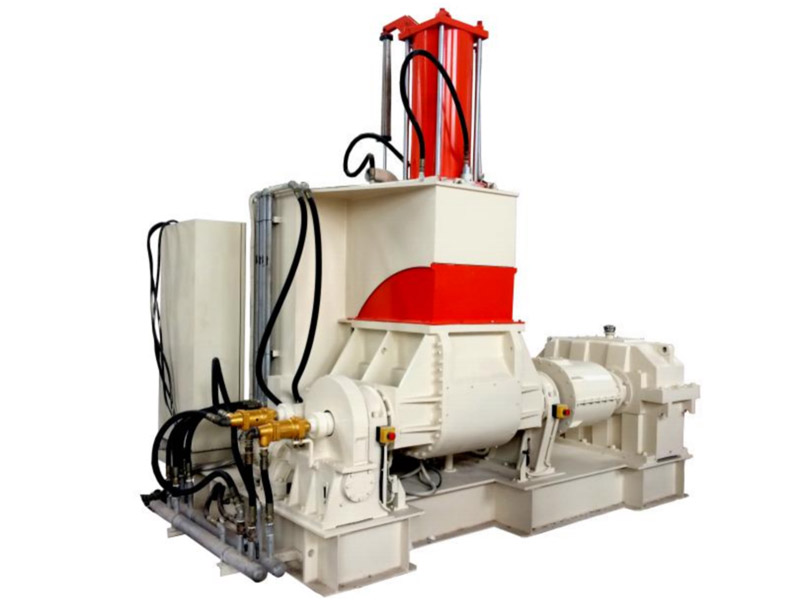
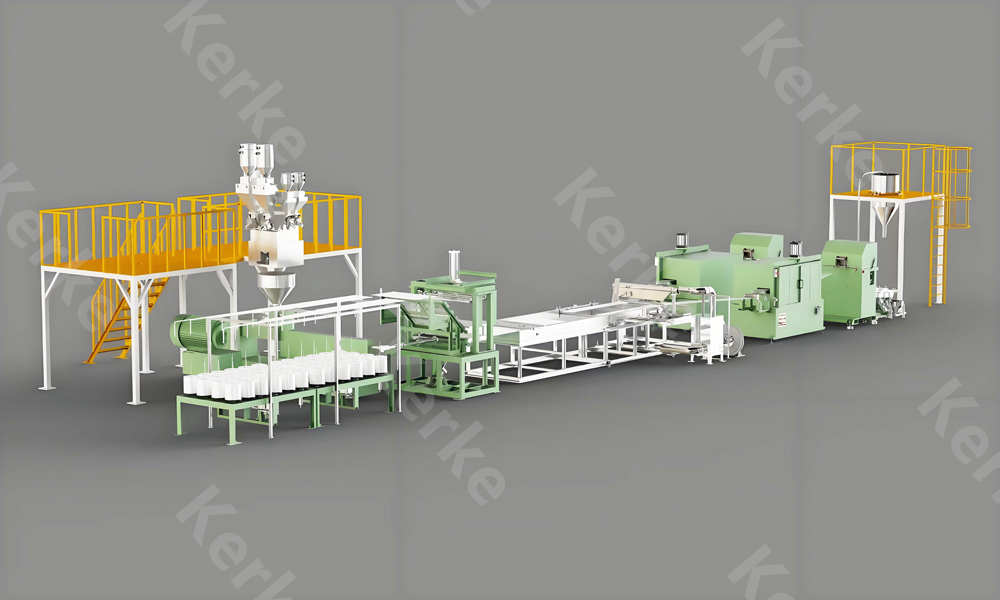
Kerke, a Wanplas factory with more than 12 years of experience in co-rotating parallel twin-screw compounding extruders, helps new producers enter high-filled plastic compounding without committing to a full production plant on day one. A high-filled plastic twin-screw compound workshop turns resin and a large share of mineral or fiber filler into masterbatch or modified compound. The common belief is that such a workshop needs a huge budget, but modular machine design has lowered the entry threshold so a small team can start at the low capital tier and scale as orders arrive.
This article shows how to launch a high-fill compounding workshop on a controlled, low budget. You will learn the minimum set of machines a workshop needs, how to read the Low, Medium, and High capital tiers, which Kerke entry machine fits a first line, the practical levers that cut startup cost without hurting pellet quality, and how to scale from a pilot line to full production. The advice follows the same engineering logic Kerke uses when it configures a Kerke KTE line for a first-time compounder.
What a Minimal Viable High-Fill Workshop Actually Needs
A high-fill workshop is smaller than most buyers imagine. At its core it needs four functions: meter the filler and resin by mass, melt and mix them in a twin-screw barrel, cut the melt into pellets, and prepare those pellets for packing. Everything else is support that can arrive later. Understanding this core prevents a startup from buying a large, costly line when a compact one would prove the market.
The first machine is the twin-screw extruder. A co-rotating parallel twin-screw barrel gives the self-cleaning and dispersive mixing that high filler demands. The second is at least one gravimetric feeder, because a high-fill recipe lives or dies on feed accuracy. The third is a pelletizing method, and for a low-budget start this is usually strand pelletizing, which needs no pressurized water chamber. The fourth is basic auxiliary support: a dryer for the resin, a mixer for pre-blending, and a simple pellet screen. With these four blocks a workshop can make filler masterbatch and filler compounds that meet customer specs.
| Function | Machine | Why needed | Can defer? |
|---|---|---|---|
| Mix and melt | Co-rotating twin-screw extruder | Disperses high filler | No, core |
| Meter solids | Loss-in-weight feeder | Holds recipe accuracy | No, core |
| Cut pellets | Strand pelletizing | Lowest-cost cutting | Upgrade later |
| Dry resin | Dehumidifying dryer | Stable melt | Share if available |
| Pre-blend | High-speed mixer | Even feed | Yes, manual batch |
| Classify | Vibrating screen | Clean pellet | Low cost, add early |
The key insight is sequencing. A startup should buy the core first and add support as volume justifies it. A dehumidifying dryer can be shared with an existing plant, a high-speed mixer can start as manual batch blending, and the side feeder for glass fiber can wait until fiber grades enter the plan. This staged buying is what keeps the entry threshold low while the workshop still ships a spec-compliant pellet.
Modularity is what makes the low threshold real. Each Kerke module bolts to a standard frame and a common control bus, so the workshop grows by adding a module rather than replacing the line. A buyer does not pay for capacity they will use next year, and they do not outgrow the first purchase because the same platform accepts a larger screw and more feeders. The footprint stays small because the feeder, barrel, and pelletizer line up in a short, straight train instead of a spread-out plant, which also trims the building and utility cost that often surprises first-time compounders.
High filler also lowers the material cost barrier. A large share of the final pellet is low-cost mineral filler such as calcium carbonate or talc, so the expensive polymer is a smaller part of each kilogram sold. This lets a new workshop price competitively while the extruder and feeder do the value-adding work of dispersion and pelletizing. The combination of cheap bulk filler and a modular line is why high-fill compounding is one of the most approachable entries into plastic modification today.
Budget Tiers Explained Without Guesswork
Buyers often ask for a single number, but the honest answer is that a high-fill workshop spans a wide capital range depending on output, filler level, and pelletizing method. Kerke frames the decision in three tiers so a buyer can place their plan and see what each tier buys. These tiers describe relative capital commitment, not a fixed price, because freight, voltage, and local utility work change the final figure.
The Low tier is a pilot-to-small commercial line: one entry twin-screw extruder, one loss-in-weight feeder, and strand pelletizing. It proves the formula, serves local customers, and fits a modest bay. The Medium tier adds a second feeder or a side feeder, a larger screw, and die-face hot cutting for higher filler and steadier output. The High tier is a production line with multi-feeder platform, underwater pelletizing, full water loop, and automated packing. Each step up trades capital for output, automation, and pellet uniformity rather than for the ability to compound at all.
| Capital tier | Typical configuration | Output level | Best for |
|---|---|---|---|
| Low | One KTE entry extruder, one feeder, strand cut | Lab to small commercial | Market test, local supply |
| Medium | Larger KTE, side feeder, die-face cut | Commercial | High fill, steady orders |
| High | Multi-feeder, underwater cut, auto pack | Full production | Export, large contracts |
Reading the tiers this way stops two common mistakes. The first is overspending on a production line before the formula is proven, which ties up capital in machines that sit idle. The second is underspending on a toy line that cannot hold recipe accuracy, which ships off-spec pellet and loses the customer anyway. The Low tier is not a compromise on quality; it is a deliberate, smaller-scale version of the same engineering, using the same screw geometry and the same gravimetric control as the larger tiers.
The tiers also map to market risk. A Low-tier line serves local customers and sample orders where a short lead time matters more than maximum output, letting the workshop learn the formula on real sales instead of on a warehouse of unsold pellet. A Medium-tier line supports steady regional contracts with higher filler and fewer stops. A High-tier line fits export and large-frame contracts where uniform pellet and documented consistency decide the award. Moving up a tier is a response to demand that already exists, not a bet placed before the first customer arrives.
Entry-Level Kerke Machines That Keep Capital Low
Kerke builds the KTE series from the KTE-16B laboratory unit up to the KTE-135D production machine, with output from roughly 30 kilograms per hour upward. For a low-budget start the small KTE units are the right entry because they use the same co-rotating parallel twin-screw principle as the production machines, so a formula developed on a KTE-25B transfers directly to a KTE-75 later. That transfer is the heart of a low-risk scaling plan: prove on the small screw, produce on the large screw, keep one recipe.
The KTE-25B and KTE-36 serve formula trials, customer samples, and small batches. They need little floor space and a modest power supply, which lowers the room and utility cost that often surprise first-time buyers. The KTE-50 and KTE-65 move the workshop from trial to commercial volume while staying at the lower end of the capital range. Kerke configures each with a computer-aided screw assembly using kneading and co-type elements that self-clean, so a high-filler recipe does not leave residue that degrades the next run, and the elements are interchangeable so the screw layout tunes to the filler.
| Kerke model | Screw diameter | Output range | Role in startup |
|---|---|---|---|
| KTE-16B | 16 mm | About 30 kg/h | Lab, formula trial |
| KTE-25B | 25 mm | Small batch | Sample, pilot |
| KTE-36 | 36 mm | Small commercial | First sales line |
| KTE-50 | 50 mm | Commercial | Growth step |
| KTE-65 | 65 mm | Higher commercial | Scale-up base |
For the cutting side, Kerke offers strand and die-face methods that suit a startup. Water-cooled strand pelletizing is the lowest-cost option and works well for filler compounds up to about 40 percent and for heat-sensitive grades. Air-cooled die-face hot cutting costs more than strand but removes the bath and handles higher filler without strand breaks. A startup at the Low tier usually begins with strand cutting and switches to die-face cutting when filler rises or output grows, because the same barrel and control system accept both cutting heads.
Screw geometry decides how well a small line handles high filler. Kerke tunes the length-to-diameter ratio, the barrel section layout, and the kneading element pattern to the recipe, and for high filler the barrel often includes a venting port to remove trapped air and volatiles carried in by the powder. Without venting, those gases bubble back into the melt and create porous, weak pellets. The entry KTE units keep the same configurable screw and barrel as the production machines, so the startup line is not a simplified toy but a correctly vented, correctly sheared compounder at smaller scale. A standard L/D near 40 supports both filler dispersion and devolatilization, and Kerke adjusts it when a special grade demands more residence or more exhaust.
A melt screen changer is a low-cost quality add-on that pairs with the entry line. Placed at the die, it catches agglomerates and stray contamination so the pellet stays clean, and a continuous screen changer lets the workshop swap the screen without stopping the run. For a startup selling masterbatch where a black speck means a rejected lot, this small module protects reputation far beyond its price. Kerke mounts it to the same barrel flange used by the cutting head, so it fits the compact layout without extra footprint.
| Kerke cutting method | Capital level | Filler fit | Startup note |
|---|---|---|---|
| Water-cooled strand | Low | Up to 40 percent | Cheapest entry |
| Air-cooled strand | Low | Heat-sensitive | No water bath |
| Air-cooled die-face hot cut | Medium | High fill | No strand break |
| Underwater granulation | High | Uniform pellet | Scale later |
Cost-Saving Levers That Protect Pellet Quality
Lowering the startup budget is easy if quality is ignored, but a compounding workshop lives on spec compliance. The levers below cut capital without breaking the pellet. Each one delays or shrinks a purchase while the core mixing and metering stay intact.
The first lever is pelletizing choice. Strand cutting at the Low tier avoids the pressurized water chamber, heat exchanger, and dryer that underwater cutting needs. The second lever is feeder count. One well-tuned loss-in-weight feeder handles a two-component recipe; a second feeder arrives only when a third ingredient is required. The third lever is the side feeder, deferred until glass-fiber or downstream mineral grades enter the plan. The fourth lever is utilities: a startup can share an existing compressed air, cooling water, or three-phase supply instead of building new plants, and Kerke sizes the line to the available supply so no oversized infrastructure is bought.
| Lever | What it delays | Quality impact | When to add |
|---|---|---|---|
| Strand pelletizing | Water loop, dryer | Fine under 40 percent fill | Move to die-face later |
| Single feeder | Second loss-in-weight unit | None for 2-part recipe | Third ingredient |
| Defer side feeder | Side screw, gearbox | None until fiber grade | GF grades planned |
| Share utilities | New power, water plant | None if sized right | When line outgrows supply |
A fifth lever is the sample trial. Before buying, a startup sends Kerke the formula and runs it on the factory line, proving pellet quality on real material. This avoids the cost of learning the formula on purchased machines at the customer’s risk. A sixth lever is reused auxiliary: a plant that already runs a high-speed mixer or a dryer can feed the new line from existing equipment, deferring those purchases. None of these levers touch the screw geometry or the gravimetric control, so the pellet stays within spec while the capital stays low.
A seventh lever is training treated as an upfront investment, not a later cost. A well-trained operator prevents the expensive errors that a low-budget line cannot absorb: wrong feeder ratio, overheated melt, or a blocked die. Kerke folds training into commissioning, so the spend is part of the machine handover rather than a separate contract. The same logic favors buying matched new modules over mixing in worn second-hand units, because predictable wear keeps the first troubleshooting session short. Together these levers protect the pellet quality that the whole low-budget plan depends on.
Two quality levers belong in the plan even at the Low tier. The first is a melt flow rate check: a small lab tester confirms the pellet flows in the expected range, catching a feeder drift before a whole lot ships. The second is a basic sieve and moisture check on the finished pellet. Both are inexpensive and stop the costly failure of sending off-spec product to a customer. A related caution is to avoid mixing new and worn second-hand modules on the same line; uneven wear hides the real process window and makes the first troubleshooting session longer than it should be. Buying matched Kerke modules, even at entry size, keeps the line predictable.
Space, Utilities, Scaling, and Choosing Your Setup
A compact high-fill workshop fits a modest bay. The extruder, feeder platform, and pelletizer form a straight line a few meters long, and the supporting dryer and mixer sit beside it. The room needs a three-phase supply, a cooling water source, and enough height for the feeder hoppers. Kerke sends a layout drawing that places each module within reach of the barrel and the utility connections, so the building is sized before delivery instead of rebuilt after.
Labor is small for a startup line. One operator runs the panel, one handles feeding and packing, and the control system flags drift so attention goes where it is needed. Remote monitoring lets Kerke engineers read the PLC data and support the team from the factory, which lowers the need for on-site specialists during the early months. Training covers operation, screw change, and basic maintenance, so the local team owns the line quickly.
Scaling from pilot to production keeps the same formula. Because Kerke uses interchangeable screw elements and the same co-rotating geometry across the KTE range, the screw layout proven on a KTE-36 moves to a KTE-75 or KTE-95 with only a size change, not a redesign. The startup adds a side feeder for fiber, switches to die-face or underwater cutting for higher output, and keeps the original recipe file. This is the practical meaning of a low entry threshold: the first small line is not discarded, it becomes the development anchor for the larger plant.
Commissioning a startup line is faster than most buyers expect because the modules ship pre-tested and pre-wired to one panel. Kerke engineers connect the utility lines, load the recipe file, and run a proving batch on the customer’s material during installation, so the team sees a good pellet before the engineers leave. A short training covers safe operation, screw change for product swaps, and the few consumable parts that wear first. After commissioning, remote monitoring lets Kerke read the control data and support the local team, which shortens the learning curve during the first months when most questions appear.
Spare parts strategy also shapes the budget story. Wearing items such as screw elements, barrel liners, die plates, and blades are standard Kerke parts, and the Wanplas group policy supplies USD 500 free spare parts per year plus warranty replacement of damaged parts. A startup can keep a small shelf of the few fast-wear items and avoid unplanned downtime without holding a large inventory. That predictable maintenance cost is part of what makes the Low tier sustainable rather than a false economy that breaks down after the first busy season.
High-fill compounds made on a Kerke startup line serve real markets early. Filler masterbatch, color masterbatch, filler compounds for pipe and profile, and wood-plastic composites are typical first products because they use mineral filler that the entry feeder handles well. Engineering plastics and glass-fiber grades follow once the side feeder is added. Recycled PET flakes and similar streams also compound on the same line when a plant upgrades recovered material.
A sound way to de-risk the budget is to validate the business case before the larger screw arrives. The Low-tier line itself becomes the sales tool: run a few hundred kilograms of the target compound, send samples to prospects, and confirm both price and specification. Because the same recipe file moves up the KTE range, the sample that wins the order is the same formula the production line will make, so there is no scale-up surprise. This closed loop from pilot sample to commercial order is what turns a low entry threshold into a real business rather than a workshop that compounds for the storeroom.
New compounders should also watch the less visible costs that sit outside the machine price. Floor preparation, a three-phase connection, and a cooling water source are local expenses that vary by site, and planning them early avoids a delay after the line lands. Packing and weighing, a small silo, and a simple lab corner for melt flow rate checks are modest spends that make the workshop sell-ready. Kerke’s layout drawing lists each of these so the buyer sees the full scope, not just the extruder, and can phase the non-machine items alongside the orders that justify them.
| Your plan | Recommended Kerke setup | Capital tier | Next step |
|---|---|---|---|
| Test formula, local sales | KTE-36 plus one feeder, strand cut | Low | Add KTE-50 |
| Filler compound 30 percent | KTE-50 plus loss-in-weight, strand | Low | Die-face cut |
| Masterbatch 60 percent | KTE-65 plus feeder, die-face cut | Medium | Add side feeder |
| GF compound, export | KTE-75 plus side feeder, water ring | Medium | Underwater cut |
| Full production | KTE-95 or KTE-135D multi-feeder | High | Automated pack |
Service and support protect the investment from the first day. Kerke runs pre-shipment testing on the full line, handles installation and commissioning on site, trains the operator team, and stays reachable through remote monitoring. The Wanplas group policy supplies USD 500 free spare parts per year and replaces damaged parts within warranty. Kerke also keeps an open-factory policy that welcomes customers to inspect the line and run their own material before purchase, which is the surest way to confirm a low-budget plan will actually compound the target formula.
Frequently Asked Questions
Can a high-fill compounding workshop start on a low budget?
Yes. An entry-level co-rotating twin-screw line with one gravimetric feeder and strand pelletizing gives a working high-fill workshop at the low capital tier, then scales by adding a side feeder, a larger screw, or die-face cutting as orders grow.
Which Kerke machine is best for a first high-fill line?
The KTE-25B or KTE-36 laboratory and pilot units suit formula development, while the KTE-50 and KTE-65 move from trial to commercial volume. Kerke sizes the screw to the target filler percentage and output.
How can I cut the startup cost without hurting pellet quality?
Start with strand pelletizing instead of underwater cutting, use a single loss-in-weight feeder, reuse existing plant utilities, and defer the side feeder until fiber grades are in the plan. These levers lower capital while keeping the recipe accurate.
What space and utilities does a small workshop need?
A compact line fits a modest production bay with a three-phase supply, cooling water, and a small feeder platform. Kerke sends a layout drawing so the room, power, and water loop are sized before delivery.
Does Kerke test the line before shipment?
Yes. Kerke runs pre-shipment testing on the full line, provides installation and commissioning, training, remote support, and USD 500 free spare parts per year under the Wanplas group policy.
Which products can a low-budget high-fill workshop make?
Filler masterbatch, color masterbatch, filler compounds for pipe and profile, and wood-plastic composites are typical early products. Engineering plastics and glass-fiber grades come later when a side feeder is added.
How do I scale from pilot to full production?
Keep the same screw geometry and recipe, then move to a larger KTE barrel and add die-face or underwater pelletizing. Because Kerke uses interchangeable screw elements, the pilot formula transfers directly to the production machine.
Conclusion
A high-fill plastic twin-screw compound workshop no longer demands a heavy budget on day one. By buying the core first, a startup gets a co-rotating twin-screw extruder, a gravimetric feeder, and strand pelletizing that already ships spec-compliant filler masterbatch and compounds. The Low, Medium, and High capital tiers let the buyer place the plan and scale with proof instead of guesswork, and Kerke entry machines carry the same screw geometry as production units so the formula transfers cleanly as the line grows.
If you are weighing a high-fill compounding workshop, send Kerke your target filler percentage, expected output, and available utilities. The engineering team will propose a phased Kerke setup that keeps the entry threshold low, invite you to the factory to run your material, and prepare a sample trial so you can confirm pellet quality before committing to the full line.