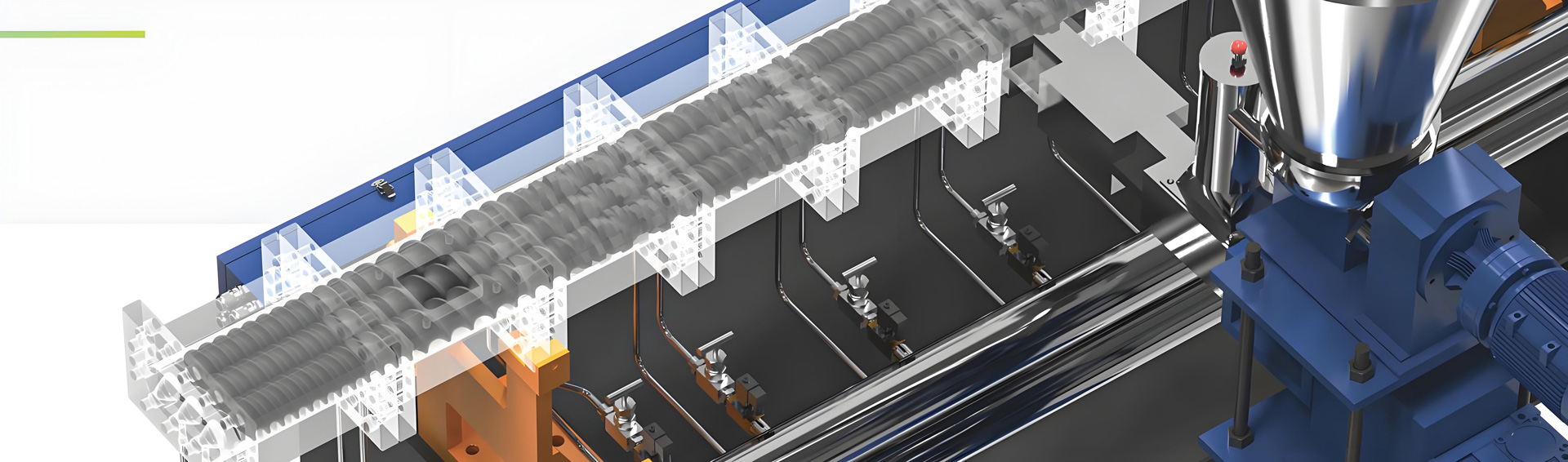
This comprehensive industry guide explores the specialized technology and production methodologies for manufacturing anti-pilling masterbatch using low vibration twin screw extrusion equipment. Anti-pilling masterbatch represents a strategically important product category within the textile and plastic industries, providing concentrated additive solutions that prevent or minimize the formation of fiber pills on textile surfaces and polymer product degradation during use. Understanding the science of anti-pilling technology, equipment requirements, and production optimization strategies enables manufacturers to deliver high-performance products that address critical quality concerns across diverse application sectors.
The phenomenon of pilling affects textile products and polymer surfaces across numerous consumer and industrial applications, causing aesthetic deterioration, reduced product lifespan, and diminished user satisfaction. Anti-pilling masterbatch technology provides an effective solution to these challenges by incorporating specialized additives that modify surface properties, reinforce fiber structures, and prevent the formation and accumulation of Pills on treated materials. Nanjing Kerke’s low vibration twin screw extruders deliver the precision processing capability and operational stability that consistent anti-pilling masterbatch production demands, making these machines the preferred choice for manufacturers committed to premium quality output.
Understanding Pilling Mechanisms and Anti-Pilling Technology
Pilling formation on textile and polymer surfaces results from complex mechanical and chemical processes that occur during normal product use. On textile surfaces, Pills develop through repeated friction and abrasion that causes fiber ends to migrate to the fabric surface, where they tangle and interlock to form visible fiber balls. These Pills compromise fabric appearance, create inconsistent surface textures, and may continue to form throughout product lifetime if preventive measures are not incorporated during manufacturing. Polymer surface pilling differs in mechanism but produces similar aesthetic deterioration, typically resulting from surface degradation, additive migration, or reinforcement fiber exposure during mechanical wear.
The pilling process progresses through distinct stages that inform anti-pilling technology development. Initial fiber mobilization occurs when mechanical forces exceed fiber adhesion within the textile structure, releasing fiber ends that migrate toward the surface. Surface accumulation follows as migrated fibers collect at fabric or product surfaces, creating nucleation sites for pill formation. The entanglement stage involves mechanical interlocking of multiple fibers that consolidates surface debris into coherent Pills. The final shedding stage occurs when formed Pills reach sufficient size that mechanical forces exceed retention forces, releasing Pills from the surface while new Pills begin forming at other locations.
Anti-pilling masterbatch technology addresses these mechanisms through multiple additive approaches including fiber reinforcement agents that increase inter-fiber bonding, surface lubricity modifiers that reduce friction and fiber mobilization, anti-migration additives that prevent fiber movement toward surfaces, and wear-resistant components that reduce overall surface degradation. The specific formulation approach depends on the target application, substrate polymer type, processing conditions, and performance requirements for the finished product.
Textile Industry Applications
The textile industry represents the largest market for anti-pilling masterbatch technology, with applications spanning apparel fabrics, home textiles, technical textiles, and nonwoven materials. Apparel fabrics including fleece, jersey, and knitted constructions benefit significantly from anti-pilling treatments that maintain fabric appearance throughout garment lifetime and repeated washing cycles. Home textiles including bedding, upholstery, and carpeting require anti-pilling properties to maintain aesthetic quality and extend replacement intervals.
Technical textiles for industrial applications utilize anti-pilling technology to maintain functional surface properties including filtration efficiency, abrasion resistance, and consistent texturing characteristics. Nonwoven materials employed in hygiene products, medical applications, and industrial filtration require anti-pilling treatments to prevent fiber release and maintain product integrity during use. The specific anti-pilling approach for each textile application must address the unique fiber types, construction methods, and service conditions that characterize the target application.
Polymer Surface Protection Applications
Beyond textile applications, anti-pilling masterbatch technology addresses surface degradation concerns in injection molded, extruded, and cast polymer products across consumer and industrial sectors. Automotive interior components including instrument panels, door trim, and seat surfaces benefit from anti-pilling treatments that maintain appearance quality throughout vehicle service life. Consumer electronics housings and device accessories require anti-pilling properties to prevent surface degradation that compromises product aesthetics during normal handling and use.
Industrial polymer components including conveyor system elements, material handling equipment, and processing machinery benefit from anti-pilling technology that reduces surface wear and extends service intervals. Packaging materials including caps, closures, and containers require anti-pilling properties to maintain product presentation quality throughout distribution and use. The versatility of anti-pilling masterbatch technology enables application across diverse polymer substrates including polyethylene, polypropylene, polystyrene, and engineering polymers.
Anti-Pilling Masterbatch Formulation Science
Fiber Bonding Agent Systems
Fiber bonding agent systems constitute the foundational component category in anti-pilling masterbatch formulations, providing chemical and physical mechanisms that increase inter-fiber adhesion and resistance to fiber mobilization. These agents function by creating additional bonding sites between adjacent fibers, increasing the force required to mobilize fiber ends and initiate pill formation. Effective bonding agents must balance bonding strength against fabric handle characteristics, as excessive bonding can produce stiff, harsh fabric textures that compromise comfort and aesthetics.
Polymer-based bonding agents including modified polyolefins and ethylene-vinyl acetate copolymers provide bonding through chain entanglement and interfacial adhesion mechanisms. These materials typically incorporate at concentrations ranging from 5% to 15% of the total formulation weight, with the specific concentration depending on fiber type, fabric construction, and performance requirements. Application-specific optimization adjusts bonding agent selection and concentration to achieve target anti-pilling performance while maintaining acceptable fabric properties.
Reactive bonding systems employ chemical reactions to create covalent bonds between fibers, providing durable bonding that resists degradation during product lifetime. Isocyanate-based systems, epoxy functional compounds, and silane coupling agents create chemical linkages between fiber surfaces and bonding agent molecules. These reactive systems offer superior bonding durability compared to purely physical bonding approaches but require careful handling due to reactivity concerns and may introduce processing complexities in masterbatch manufacturing.
Surface Lubricity Modifier Systems
Surface lubricity modifiers reduce friction coefficients on textile and polymer surfaces, decreasing the mechanical forces that initiate fiber mobilization and surface degradation. These additives migrate to fiber and polymer surfaces during processing and use, creating lubricating layers that reduce inter-fiber and surface-to-surface friction. Effective lubricity modifiers must maintain surface presence throughout product lifetime while avoiding issues with migration, blooming, or transfer to contacting surfaces.
Silicone-based lubricity modifiers including polydimethylsiloxane and functionalized silicone polymers provide excellent friction reduction at relatively low concentrations. Typical inclusion levels range from 1% to 5% of formulation weight depending on substrate compatibility and durability requirements. Fluoropolymer-based modifiers offer superior lubricity characteristics for demanding applications, though cost considerations typically limit use to specialty applications with critical performance requirements.
Fatty acid derivatives including stearamides, erucamides, and behenamides provide cost-effective lubricity modification through surface migration mechanisms. These materials bloom to surfaces during processing and use, creating lubricating films that reduce friction and fiber mobilization. While less durable than silicone or fluoropolymer alternatives, fatty acid derivatives offer attractive cost-performance balances for many standard anti-pilling applications. Typical inclusion levels range from 2% to 8% depending on substrate compatibility and durability requirements.
Anti-Migration and Reinforcement Systems
Anti-migration additive systems address the fiber mobilization process by preventing fiber movement within textile structures or polymer matrices. These additives function by increasing matrix viscosity, creating physical barriers to fiber movement, or establishing additional anchoring mechanisms that retain fibers in their initial positions. Effective anti-migration systems prevent the accumulation of mobilized fibers at surfaces where pill formation can initiate.
Polymeric anti-migration agents including high molecular weight polyethylenes, polypropylene, and specialized anti-migration copolymers increase the viscosity of polymer matrices during processing and throughout product lifetime. The concentration of anti-migration agents typically ranges from 3% to 10% depending on substrate type and migration resistance requirements. Compatibility between anti-migration agents and base polymers requires careful formulation optimization to achieve uniform dispersion without compromising other product properties.
Nanoreinforcement systems incorporating nanoscale particles provide anti-migration benefits through physical interlocking mechanisms at the fiber-matrix interface. Layered silicate clays, cellulose nanocrystals, and graphene oxide platelets create nanoscale networks that restrict fiber movement while maintaining matrix flexibility. These advanced systems typically require specialized processing equipment capable of achieving adequate exfoliation and dispersion of nanoscale components, with KTE Series low vibration extruders providing the mixing intensity necessary for effective nanoreinforcement incorporation.
Low Vibration Twin Screw Extrusion Technology
Understanding Vibration in Twin Screw Extrusion
Vibration in twin screw extrusion equipment originates from multiple sources including mechanical imbalances in rotating components, gear transmission irregularities, hydraulic and pneumatic system pulsations, and process-induced instabilities including melt pressure oscillations and feeding irregularities. Excessive vibration compromises product quality through inconsistent mixing, temperature variations, and mechanical stress on equipment components that increases wear rates and maintenance requirements. For anti-pilling masterbatch production, vibration-induced variations can significantly affect the uniform dispersion of active additives that determine product performance.
The vibration characteristics of twin screw extruders influence product quality through multiple mechanisms. High-frequency vibrations at screw rotation frequencies create pressure oscillations within the melt that affect mixing efficiency and residence time distribution. Low-frequency vibrations from mechanical imbalances cause throughput variations and temperature fluctuations that compromise processing stability. Vibration transfer to sensitive measurement systems can introduce measurement errors that affect process control accuracy and product consistency.
Low vibration design philosophy addresses vibration sources through multiple engineering approaches that minimize vibration generation, attenuate vibration transmission, and isolate sensitive components from vibration exposure. Nanjing Kerke’s low vibration twin screw extruders incorporate these design principles throughout the equipment architecture, providing the stable operation necessary for consistent anti-pilling masterbatch production. The KTE Series designation specifically identifies equipment configurations optimized for low vibration operation through enhanced mechanical design and precision manufacturing.
Mechanical Design Features for Vibration Reduction
Precision gear design represents a foundational element of low vibration twin screw extrusion technology, with gear tooth profiles optimized for smooth torque transmission without the periodic errors that generate vibration. Nanjing Kerke’s gearboxes feature precision-ground gear teeth with optimized helix angles that provide continuous, smooth power transmission throughout the rotation cycle. Hardened gear materials with precision heat treatment ensure dimensional stability and wear resistance that maintains smooth operation throughout extended service intervals.
Balanced rotating assemblies with precision-manufactured screw elements minimize mass imbalances that would generate centrifugal forces during rotation. Screw element mass tolerance control ensures consistent weight distribution within each element and between matched element sets. Drive shaft balancing and bearing preload optimization reduce vibration excitation from rotating components. These precision manufacturing requirements increase equipment cost but provide the operational stability that demanding applications require.
Rigid housing construction with optimized ribbing and material distribution provides structural stiffness that resists vibration amplification and prevents resonance conditions that would magnify vibration amplitudes. Finite element analysis optimization of housing geometry ensures adequate stiffness in critical areas while minimizing weight and material costs. High-quality bearing supports with precision-aligned bearing seats maintain shaft positioning accuracy throughout operating speed ranges.
KTE Series Low Vibration Equipment Specifications
The KTE-48 low vibration twin screw extruder provides an effective production platform for anti-pilling masterbatch applications requiring moderate production volumes, featuring 48 millimeter screw diameter and approximately 38 liters effective barrel volume. This model achieves throughput rates ranging from 100 to 300 kilograms per hour depending on formulation characteristics and operating parameters, making it suitable for specialized anti-pilling masterbatch production serving targeted textile and polymer processing markets.
The KTE-48 incorporates enhanced mechanical design features that minimize vibration generation and transmission throughout the equipment. Precision gearbox with low backlash design ensures smooth torque transmission without the periodic errors that generate vibration in conventional transmissions. Balanced screw assemblies with precision-manufactured elements minimize mass imbalances that contribute to vibration. Advanced bearing systems with optimized preload control maintain shaft alignment and reduce vibration excitation at bearing locations.
The KTE-72 low vibration model provides enhanced production capacity with 72 millimeter screw diameter and approximately 80 liters effective barrel volume. Throughput rates ranging from 300 to 700 kilograms per hour support higher-volume production operations while maintaining the vibration characteristics that enable consistent anti-pilling masterbatch quality. Base pricing for KTE-72 low vibration systems typically ranges from $220,000 to $280,000, with complete installed systems ranging from $400,000 to $580,000.
Production Process Technology for Anti-Pilling Masterbatch
Raw Material Handling and Pre-Formulation Processing
Anti-pilling masterbatch production requires careful attention to raw material quality and preparation procedures that ensure consistent formulation characteristics and optimal processing performance. Silicone-based components including polydimethylsiloxane and functionalized silicone polymers require sealed handling procedures that prevent airborne contamination and ensure accurate addition during pre-blending operations. These materials arrive in various forms including liquids, pastes, and solid pellets, each requiring specific handling procedures and equipment configurations.
Solid additive components including bonding agents, anti-migration polymers, and carrier resin systems undergo standard material qualification procedures including particle size verification, moisture content determination, and visual inspection for contamination or degradation indicators. Weighing procedures with verified calibration ensure precise formulation proportions that directly influence anti-pilling performance in end-use applications. Pre-blending procedures combine formulation components using high-intensity mixing equipment that achieves homogeneous distribution of all components before extrusion processing.
Moisture-sensitive components including certain bonding agents and carrier resins require pre-drying procedures that remove absorbed moisture to levels below 0.1% before processing. Desiccant dryer systems with dew point monitoring ensure consistent drying performance that prevents hydrolysis reactions and moisture-related defects in finished masterbatch products. Material storage in temperature-controlled environments prevents moisture absorption between drying and processing operations.
Extrusion Compounding Process Optimization
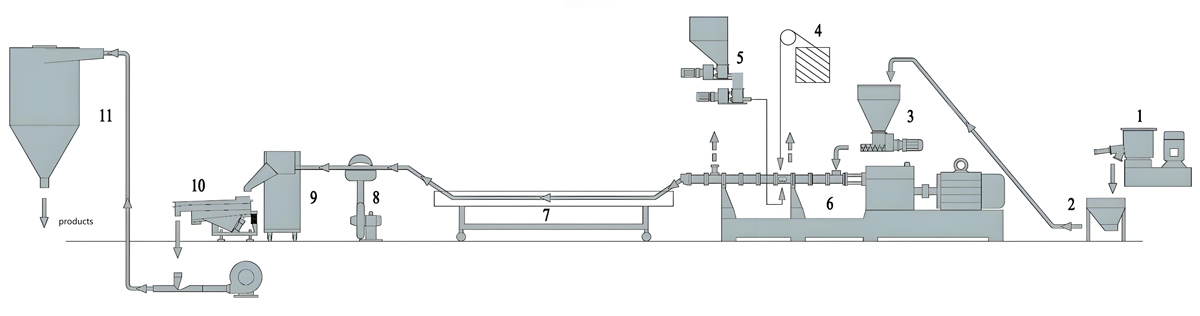
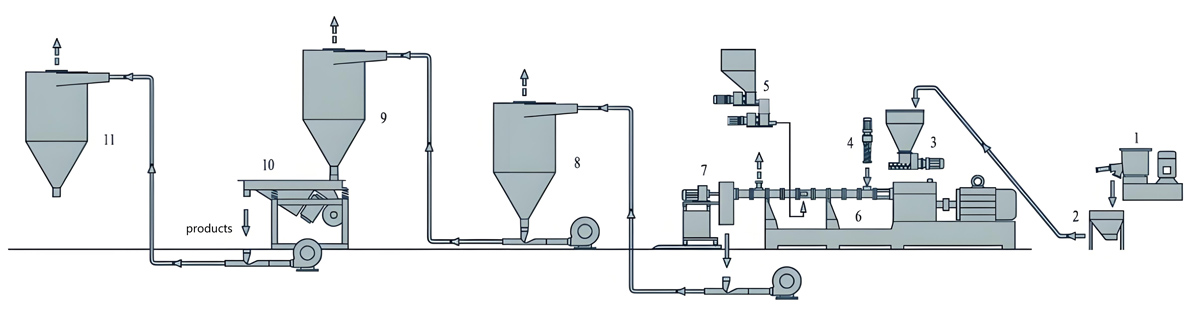
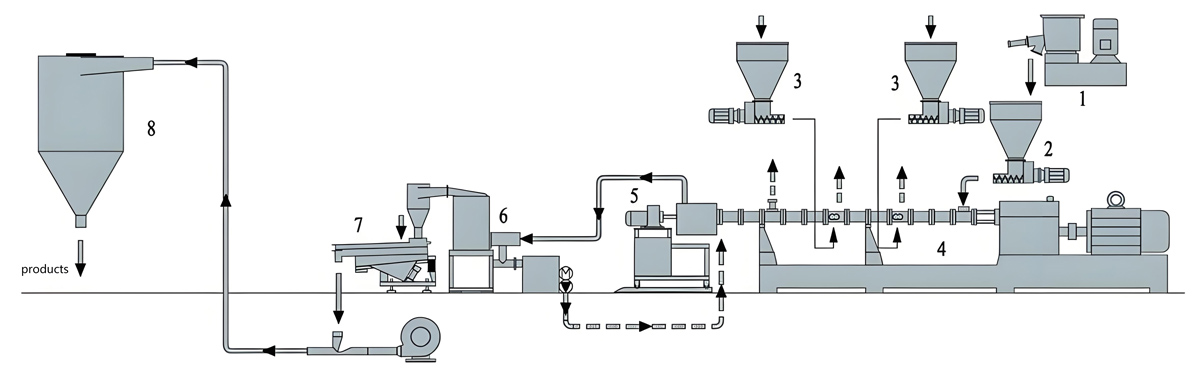
The extrusion compounding stage transforms pre-blended anti-pilling masterbatch formulations into concentrated products through controlled melting, mixing, and conveyance within the low vibration twin screw extruder. The KTE Series low vibration extruder’s stable operation provides processing advantages for anti-pilling formulations that require precise mixing control and consistent residence time distribution for optimal additive incorporation and dispersion.
Temperature profile configuration for anti-pilling masterbatch balances melting requirements, mixing efficiency, and thermal stability of active additive components. Silicone-based formulations typically employ moderate temperature profiles with maximum temperatures between 200 and 220 degrees Celsius to prevent thermal degradation of silicone components while achieving adequate melting and mixing. Bonding agent systems may require different temperature optimization depending on reactivity characteristics and thermal stability limits.
Screw configuration for anti-pilling masterbatch incorporates specific mixing element arrangements optimized for silicone dispersion and bonding agent incorporation. Distributive mixing elements distribute additive components throughout the carrier matrix while dispersive mixing elements break down agglomerates and ensure uniform particle sizes. The modular screw element system enables precise optimization of mixing intensity at specific barrel locations, accommodating the diverse additive characteristics present in anti-pilling formulations.
Pelletizing and Quality Verification
Underwater pelletizing systems transform molten anti-pilling masterbatch into finished pellet forms, with specific attention to pellet quality characteristics that influence customer handling and let-down processing performance. Pellet size selection for anti-pilling masterbatch typically targets 2.0 to 3.0 millimeter diameter pellets that provide adequate surface area for additive effectiveness while maintaining practical handling characteristics.
Quality verification procedures for anti-pilling masterbatch include specific performance testing that validates anti-pilling effectiveness in addition to standard masterbatch quality parameters. Fiber bonding effectiveness testing employs standardized abrasion methods that evaluate pill formation resistance on treated textile samples. Friction coefficient measurement quantifies surface lubricity improvements that anti-pilling treatments provide. Migration resistance testing verifies that anti-migration additives function effectively under simulated use conditions.
Process Parameter Configuration for Anti-Pilling Masterbatch
Temperature Profile Settings
Temperature profile optimization for anti-pilling masterbatch requires balancing multiple considerations including carrier resin melting characteristics, additive thermal stability limits, and mixing efficiency requirements. The interconnected nature of temperature settings with screw speed and throughput requires systematic optimization approaches that consider interactions between multiple parameters.
A typical temperature profile for silicone-based anti-pilling masterbatch employs the following zone configuration. The feed zone operates between 140 and 160 degrees Celsius, providing sufficient heating for initial polymer softening without causing material sticking in the feed throat area. The compression zone, comprising approximately 30% of total barrel length, employs temperatures between 160 and 190 degrees Celsius where progressive heating achieves complete melting and initial additive incorporation. The mixing zones operate between 190 and 210 degrees Celsius, with the specific temperature determined by formulation characteristics and viscosity requirements for optimal additive dispersion. Die zone temperatures typically range from 200 to 220 degrees Celsius, maintained to ensure smooth melt flow while avoiding temperature levels that might degrade sensitive additive components.
Screw Speed and Vibration Control
Screw speed selection for low vibration extrusion balances mixing intensity requirements against vibration considerations and processing stability. Operating speeds typically range from 150 to 350 RPM depending on model size and formulation characteristics, with lower speeds providing reduced vibration and enhanced processing stability while higher speeds enable increased mixing intensity and throughput rates.
Vibration monitoring throughout production operations enables verification of stable equipment operation and rapid identification of developing problems. Accelerometers mounted on bearing housings, motor frames, and barrel assemblies provide vibration data that operating personnel can monitor throughout production runs. Vibration amplitude trending identifies gradual changes in equipment condition that might indicate developing maintenance requirements. Vibration limits established during equipment qualification define acceptable operating ranges that ensure consistent product quality.
Equipment Investment and Cost Considerations
KTE-48 Low Vibration System Investment
The KTE-48 low vibration twin screw extruder system provides an accessible entry point for anti-pilling masterbatch production, with base pricing typically ranging from $120,000 to $160,000 for the complete extrusion and pelletizing system. This investment supports throughput rates of 100 to 300 kilograms per hour suitable for specialty production serving targeted market segments or dedicated supply arrangements with specific customers.
Total installed system costs for complete anti-pilling masterbatch production capability based on KTE-48 equipment typically range from $240,000 to $360,000 depending on auxiliary equipment specifications and installation requirements. Auxiliary equipment investments include material drying and handling systems, finished product storage and packaging equipment, and quality control laboratory equipment for anti-pilling performance verification testing.
KTE-72 Low Vibration System Investment
The KTE-72 low vibration twin screw extruder provides enhanced production capacity with base pricing typically ranging from $220,000 to $280,000 for the complete system. Throughput rates of 300 to 700 kilograms per hour support higher-volume production operations and expanded market presence. Total installed costs for complete KTE-72 production lines typically range from $400,000 to $580,000.
Return on investment analysis considers anti-pilling masterbatch pricing typically ranging from $3.00 to $8.00 per kilogram depending on formulation complexity and market positioning, against production costs including raw materials, energy, labor, and overhead allocation. At typical production rates and operating schedules, annual production volumes of 1,500 to 4,000 metric tons support attractive return on investment timelines for well-positioned market participants.
Production Problems, Solutions, and Prevention Strategies
Problem: Inconsistent Anti-Pilling Performance and Batch Variability
Problem Analysis
Inconsistent anti-pilling performance manifests as variable pill formation resistance between production batches, within-batch variations that indicate processing instability, and gradual performance drift over extended production campaigns. These quality variations compromise customer confidence and may cause product rejection when performance falls below specification requirements. Anti-pilling masterbatch performance depends critically on additive dispersion uniformity, active additive concentration consistency, and proper incorporation of functional components into the carrier matrix.
The consequences of inconsistent anti-pilling performance include customer complaints, specification failures, and reputation damage that affects future business development. Textile manufacturers and polymer processors depend on consistent anti-pilling masterbatch quality to achieve predictable product performance and maintain production efficiency. Performance variations that cause unexpected quality problems in customer products may result in significant costs for claims, rework, and relationship damage.
Root Cause Analysis
Inconsistent anti-pilling performance originates from multiple potential causes spanning formulation variability, processing instability, and equipment condition changes. Formulation-related causes include raw material lot variations that affect active additive characteristics, weighing errors during pre-blending operations, and incomplete blending that produces non-uniform pre-mixes. Processing-related causes include temperature variations that affect additive incorporation efficiency, screw speed variations that cause residence time differences, and mixing element wear that reduces mixing intensity over time.
Low vibration extruder operation that deviates from validated conditions can introduce performance variations through vibration-related process instabilities. Vibration amplitudes exceeding validated levels affect residence time distribution, mixing efficiency, and temperature uniformity throughout the processing zone. Equipment maintenance neglect including worn screw elements, degraded barrel liners, and malfunctioning temperature controllers can all contribute to performance variations that manifest as quality inconsistencies.
Solution Implementation
Addressing inconsistent anti-pilling performance requires systematic troubleshooting to identify specific causes and appropriate corrections. Raw material qualification enhancement includes tighter specifications, enhanced incoming inspection, and supplier quality management that reduces lot-to-lot variability. Pre-blending procedure improvements including improved mixing equipment, extended mixing times, and in-process sampling verification ensure homogeneous pre-mix quality before extrusion.
Process validation verification confirms that operating parameters remain within validated ranges throughout production operations. Temperature controller calibration and thermocouple verification ensure accurate temperature measurement and control. Screw configuration inspection identifies worn or damaged elements that might reduce mixing efficiency, with replacement as indicated by inspection findings. Low vibration operation verification confirms that equipment maintains vibration characteristics within validated limits throughout production campaigns.
Statistical process control implementation provides ongoing monitoring of quality parameters that enables proactive identification of developing variations before they cause significant quality impacts. Control charts for critical quality parameters track performance trends and enable corrective action before specification failures occur. Process capability analysis quantifies the ability of production processes to consistently meet quality requirements, identifying processes that require optimization to improve consistency.
Prevention Strategies
Preventing inconsistent anti-pilling performance requires comprehensive quality management systems that address all potential variation sources throughout the production operation. Supplier quality management programs ensure consistent raw material quality that supports reproducible production results. Equipment preventive maintenance programs maintain condition throughout production campaigns, preventing variations from equipment degradation. Process monitoring and control systems provide continuous verification that operations remain within validated parameters.
Regular capability studies verify that production processes continue to meet quality requirements throughout extended operating periods. Calibration management for all measurement and control equipment ensures accuracy that enables consistent production. Documentation and training ensure that all production personnel understand quality requirements and variation prevention practices.
Problem: Silicone Migration and Surface Defects
Problem Analysis
Silicone migration and surface defects in anti-pilling masterbatch manifest as excessive silicone presence on pellet surfaces, visible blooming or exudation, transfer of silicone to contacting surfaces during storage or handling, and surface defects in customer products resulting from excessive or non-uniform silicone distribution. These issues compromise product quality and customer acceptance, potentially causing handling difficulties, processing problems, and visible defects in finished products.
The consequences of silicone migration include customer complaints about surface contamination, processing difficulties in automated handling equipment, and quality problems in finished products that exceed acceptable limits for surface appearance or functional characteristics. Migration-related issues often develop over time during storage, making root cause identification challenging when complaints arrive weeks or months after production.
Root Cause Analysis
Silicone migration originates from multiple potential causes including excessive silicone concentration in formulations, incompatible carrier systems that fail to retain silicone components, and storage conditions that promote migration and blooming. Formulation design problems including inadequate carrier viscosity or insufficient compatibilizer concentrations allow silicone components to migrate within the masterbatch matrix and toward pellet surfaces.
Processing conditions that produce non-uniform silicone distribution create localized concentrations that accelerate migration and blooming. Insufficient mixing intensity or inadequate mixing element configuration may fail to achieve uniform silicone dispersion throughout the carrier matrix. Temperature variations during processing affect viscosity and incorporation efficiency that influence final silicone distribution characteristics.
Solution Implementation
Addressing silicone migration requires formulation modifications that improve carrier retention of silicone components and processing optimization that achieves uniform additive distribution. Carrier system modification may include increased carrier molecular weight, alternative carrier selection with improved silicone compatibility, or compatibilizer addition that improves interfacial adhesion between silicone and carrier components.
Processing modifications including increased mixing intensity, modified screw configuration, and adjusted temperature profiles improve silicone dispersion and incorporation. Reduced silicone concentration through reformulation may be necessary when migration problems persist despite processing optimizations. Anti-migration additive incorporation creates physical barriers that reduce migration rates and improve long-term storage stability.
Prevention Strategies
Preventing silicone migration requires formulation design that considers long-term storage stability and migration resistance alongside initial processing requirements. Accelerated aging testing during product qualification predicts migration behavior over anticipated storage periods, enabling formulation modifications before commercial distribution. Storage condition recommendations provided to customers address factors that influence migration rates during product handling and storage.
Problem: Bonding Agent Effectiveness Variation
Problem Analysis
Bonding agent effectiveness variation manifests as inconsistent pill formation resistance in customer applications, despite anti-pilling masterbatch meeting standard quality specifications. These variations indicate that bonding agent incorporation, dispersion, or activation differs between production batches or storage conditions in ways that standard quality tests fail to detect. The consequences include customer complaints about anti-pilling performance below expectations and specification disputes that damage supplier relationships.
Bonding agent effectiveness depends on multiple factors including chemical composition integrity, dispersion uniformity, and appropriate activation during customer processing operations. Variations in any of these factors can compromise anti-pilling effectiveness without affecting standard quality parameters that customers and suppliers typically monitor.
Root Cause Analysis
Bonding agent effectiveness variation originates from chemical degradation during masterbatch processing or storage, inadequate dispersion that creates non-uniform distribution throughout the carrier matrix, or compatibility issues that prevent proper activation during customer processing operations. Thermal degradation of bonding agents during extrusion processing reduces active functionality that contributes to anti-pilling effectiveness. Extended exposure to elevated temperatures during processing or storage accelerates degradation reactions that reduce bonding agent effectiveness.
Incompatible carrier systems may fail to provide appropriate environments for bonding agent activation during customer processing. Migration of bonding agents away from active sites during storage reduces local concentrations where effectiveness manifests. Customer processing conditions that differ from assumptions used during product development may fail to achieve bonding agent activation levels that product specifications anticipate.
Solution Implementation
Addressing bonding agent effectiveness variation requires enhanced testing procedures that evaluate actual anti-pilling performance rather than relying solely on compositional analysis. Performance testing using standardized abrasion and pilling evaluation methods provides direct measurement of anti-pilling effectiveness that compositional analysis cannot replace. Application testing using customer-representative processing conditions verifies product performance in actual use environments.
Formulation modifications may include bonding agent selection with improved thermal stability, concentration adjustments based on performance validation testing, and carrier system optimization for improved bonding agent compatibility and activation. Processing parameter optimization reduces thermal exposure through lower processing temperatures, reduced residence times, and screw configurations that minimize unnecessary mixing treatment.
Prevention Strategies
Preventing bonding agent effectiveness variation requires comprehensive qualification testing that validates anti-pilling performance across anticipated production and storage conditions. Performance specifications that include effectiveness testing requirements ensure that quality verification addresses functional performance alongside compositional parameters. Customer communication regarding recommended storage conditions and processing parameters supports proper product use that enables effective anti-pilling performance.
Maintenance Procedures for Low Vibration Extrusion
Vibration Monitoring and Equipment Condition Assessment
Low vibration twin screw extrusion equipment requires specialized maintenance practices that address vibration-related concerns alongside standard extrusion maintenance requirements. Vibration monitoring provides objective assessment of equipment condition throughout production campaigns, enabling proactive maintenance interventions before vibration levels exceed acceptable limits.
Regular vibration measurement at bearing housings, motor frames, and barrel connections establishes baseline vibration signatures for normal operating conditions. Periodic vibration analysis using frequency domain techniques identifies specific vibration sources including bearing defects, gear tooth errors, and resonance conditions. Vibration trending over extended periods identifies gradual changes in equipment condition that might indicate developing maintenance requirements before failures occur.
Precision Component Maintenance
Precision components in low vibration extruders require maintenance attention that reflects their critical role in vibration generation and control. Gearbox maintenance includes oil analysis for wear particle detection, bearing inspection and replacement at specified intervals, and gear condition assessment through noise and vibration analysis. Precision bearing replacement with high-quality bearings ensures continued smooth operation following maintenance interventions.
Screw element maintenance includes dimensional verification of flight dimensions and clearances, surface condition inspection for wear indicators, and replacement of elements showing wear patterns that might affect mixing efficiency or generate additional vibration. Barrel liner inspection using borescopic examination assesses wear patterns and clearance conditions that influence vibration transmission and mixing efficiency.
Frequently Asked Questions
What is the anti-pilling performance level achievable with quality anti-pilling masterbatch?
Quality anti-pilling masterbatch can achieve performance improvements ranging from 2 to 5 times baseline pilling resistance depending on formulation type, loading level, and substrate characteristics. Standard anti-pilling masterbatch typically provides sufficient performance for consumer textile applications where moderate durability improvements satisfy market requirements. Premium formulations incorporating advanced bonding and reinforcement systems can achieve higher performance levels suitable for demanding technical textile applications where extended service life and minimal pilling are critical requirements.
What loading levels are recommended for anti-pilling masterbatch in textile applications?
Recommended loading levels for anti-pilling masterbatch in textile applications typically range from 1% to 5% depending on anti-pilling formulation composition, substrate polymer type, and performance requirements. Standard anti-pilling masterbatch formulations achieve target performance at loading levels of 2% to 3% for most textile applications. Higher loading levels may be required for demanding applications or when treating substrates particularly prone to pilling. Excessive loading levels may compromise fabric handle characteristics or processing performance, requiring formulation optimization to balance anti-pilling effectiveness against other product requirements.
How does low vibration extrusion improve anti-pilling masterbatch quality?
Low vibration extrusion improves anti-pilling masterbatch quality through multiple mechanisms related to process stability and consistency. Stable operating conditions ensure uniform residence time distribution that provides consistent thermal treatment for all formulation components. Reduced pressure oscillations minimize mixing variations that could produce non-uniform additive distribution. Consistent mechanical conditions throughout production campaigns ensure reproducible quality over extended operating periods. Vibration monitoring provides condition assessment capability that enables proactive maintenance interventions before quality degradation occurs.
What substrate polymers are compatible with anti-pilling masterbatch formulations?
Anti-pilling masterbatch formulations are compatible with most common textile substrate polymers including polyethylene, polypropylene, polyester, polyamide, and blends of these materials. Specific formulation optimization may be required for polymers with challenging compatibility characteristics or for specialty polymers with specific processing requirements. Nanjing Kerke’s application engineering support provides guidance for specific substrate polymer applications to ensure optimal formulation selection and processing parameters.
What storage stability can be expected from anti-pilling masterbatch products?
Anti-pilling masterbatch products typically maintain quality characteristics for 6 to 12 months when stored under recommended conditions including protection from direct sunlight, prevention of moisture exposure, and storage at temperatures below 35 degrees Celsius. Migration-related quality changes may develop over extended storage periods for formulations with challenging migration characteristics, requiring storage condition optimization and rotation practices that ensure product freshness. Accelerated aging testing during product qualification provides guidance regarding expected storage stability under various conditions.
Can anti-pilling masterbatch be combined with other functional masterbatches?
Anti-pilling masterbatch can generally be combined with other functional masterbatch types including color masterbatches, UV stabilizers, flame retardants, and antimicrobial agents in polymer processing operations. However, total additive loading must be managed to prevent exceeding processing limits or compromising final product properties. Compatibility between different masterbatch systems should be verified through testing before commercial production, particularly for silicone-based anti-pilling formulations that may interact with other additive systems. Combined masterbatch approaches may require let-down ratio adjustments to account for additive contributions from multiple concentrate sources.
What quality testing methods apply to anti-pilling masterbatch performance verification?
Quality testing methods for anti-pilling masterbatch include standardized pilling evaluation methods such as Martindale pilling testing and random tumble pilling methods, friction coefficient measurement for surface lubricity verification, fiber bonding effectiveness testing using standardized abrasion methods, migration resistance testing under simulated storage conditions, and thermal analysis for additive stability assessment. Regular quality verification testing ensures production consistency and enables identification of quality variations that might affect customer processing or final product performance.
What are the environmental considerations for anti-pilling masterbatch production and use?
Environmental considerations for anti-pilling masterbatch include raw material sourcing for sustainable and bio-based alternatives, manufacturing energy efficiency during extrusion processing, and end-of-life considerations for treated products. Silicone-based anti-pilling systems offer good environmental profiles with low volatility and excellent durability that reduces the additive levels required for effective treatment. Regulatory compliance for specific applications including food contact and medical device use requires formulation components that meet relevant environmental and safety standards.
Conclusion
Anti-pilling masterbatch production using low vibration twin screw extrusion technology enables manufacturers to deliver consistent, high-performance products that address critical quality concerns across textile and polymer processing industries. The specialized equipment requirements and formulation science covered in this guide provide the technical foundation for successful anti-pilling masterbatch manufacturing operations.
Nanjing Kerke’s KTE Series low vibration twin screw extruders deliver the processing stability, mixing precision, and operational reliability that demanding anti-pilling masterbatch production requires. Combined with comprehensive quality management practices and customer-focused technical support, these equipment capabilities enable manufacturers to build competitive positions in growing anti-pilling masterbatch markets.
Success in anti-pilling masterbatch production requires continued investment in formulation technology, processing optimization, and quality systems that ensure consistent product performance. Manufacturers who establish comprehensive technical capabilities position themselves to capture market opportunities across diverse application sectors where anti-pilling performance adds significant value to textile and polymer products.